
Nothing unsettles a cat owner like watching a normally fastidious cat visit the litter box over and over — straining, crying, and leaving behind only a few drops. If you are searching for cat UTI symptoms because your cat is struggling in the litter box, you are right to take it seriously: urinary problems in cats range from uncomfortable infections to a blocked bladder that can turn fatal within 24–48 hours.
The tricky part is that early urinary problems in cats look alike — an infection, sterile bladder inflammation, crystals, and a full urinary blockage can all start with the same straining and frequent trips. In this 2026 vet-informed guide, we will walk you through the warning signs of a cat UTI, the causes behind them, the male-cat blockage emergency every owner must recognize, what happens at the vet, and how to prevent urinary problems at home.
Table of Contents
- What Is a UTI in Cats?
- Cat UTI Symptoms: The Warning Signs
- Male Cat Urinary Blockage: The Emergency
- Cat UTI vs. Urinary Blockage: How to Tell
- What Causes Urinary Problems in Cats?
- What Happens at the Vet Visit?
- How Cat UTIs and Urinary Problems Are Treated
- Preventing Cat Urinary Problems at Home
- Frequently Asked Questions
What Is a UTI in Cats?
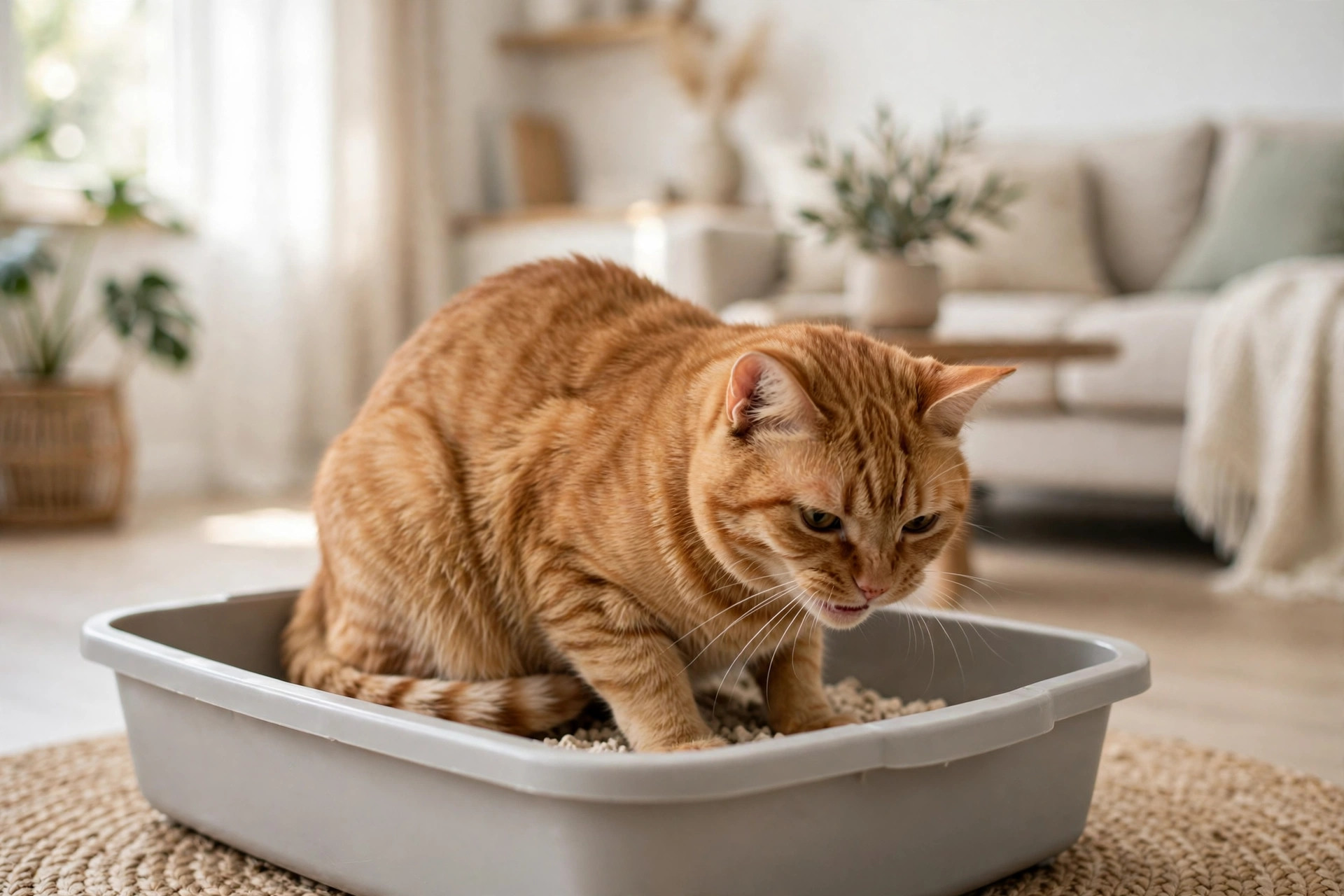
A urinary tract infection (UTI) in cats is an infection of the bladder or urethra, usually caused by bacteria. Veterinarians often group UTIs with several lookalike conditions under the umbrella term feline lower urinary tract disease (FLUTD) — including feline idiopathic cystitis (sterile bladder inflammation), bladder stones, and urethral blockage.
One fact surprises most owners: true bacterial UTIs are actually uncommon in young, healthy cats. When a young cat shows urinary symptoms, the cause is more often sterile inflammation (FIC) or crystals. Bacterial infections become more likely in senior cats and cats with diabetes or kidney disease. That is why a vet diagnosis matters — the symptoms overlap, but the treatments do not. According to veterinary references including PetMD, determining the underlying cause is the key step in treating FLUTD correctly.
Cat UTI Symptoms: The Warning Signs
Cats are masters at hiding discomfort, so urinary problems often show up first in litter-box behavior. Watch for these cat UTI symptoms — any one of them is a reason to call your vet:
- Frequent trips to the litter box with only small amounts of urine, or no urine at all
- Straining to urinate — squatting for a long time with little result
- Crying or vocalizing while using the litter box, a sign of pain
- Blood in the urine — pink-tinged or cloudy urine
- Urinating outside the litter box, often on cool, smooth surfaces like tile or the bathtub
- Excessive licking of the genital area or over-grooming of the belly
- Strong-smelling urine
- Drinking more water than usual
- Behavior changes — hiding, irritability, lethargy, or a sudden loss of appetite
One behavior often confuses owners: a cat straining in the litter box can look exactly like a cat struggling to defecate. If you see repeated, unproductive straining and are not sure which end the problem is, assume it could be urinary and call your vet — it is the more dangerous possibility.
Also Read: Why Is My Cat Not Eating? Warning Signs & When to Worry (2026) — loss of appetite often accompanies urinary illness.
Male Cat Urinary Blockage: The Emergency Every Owner Must Know
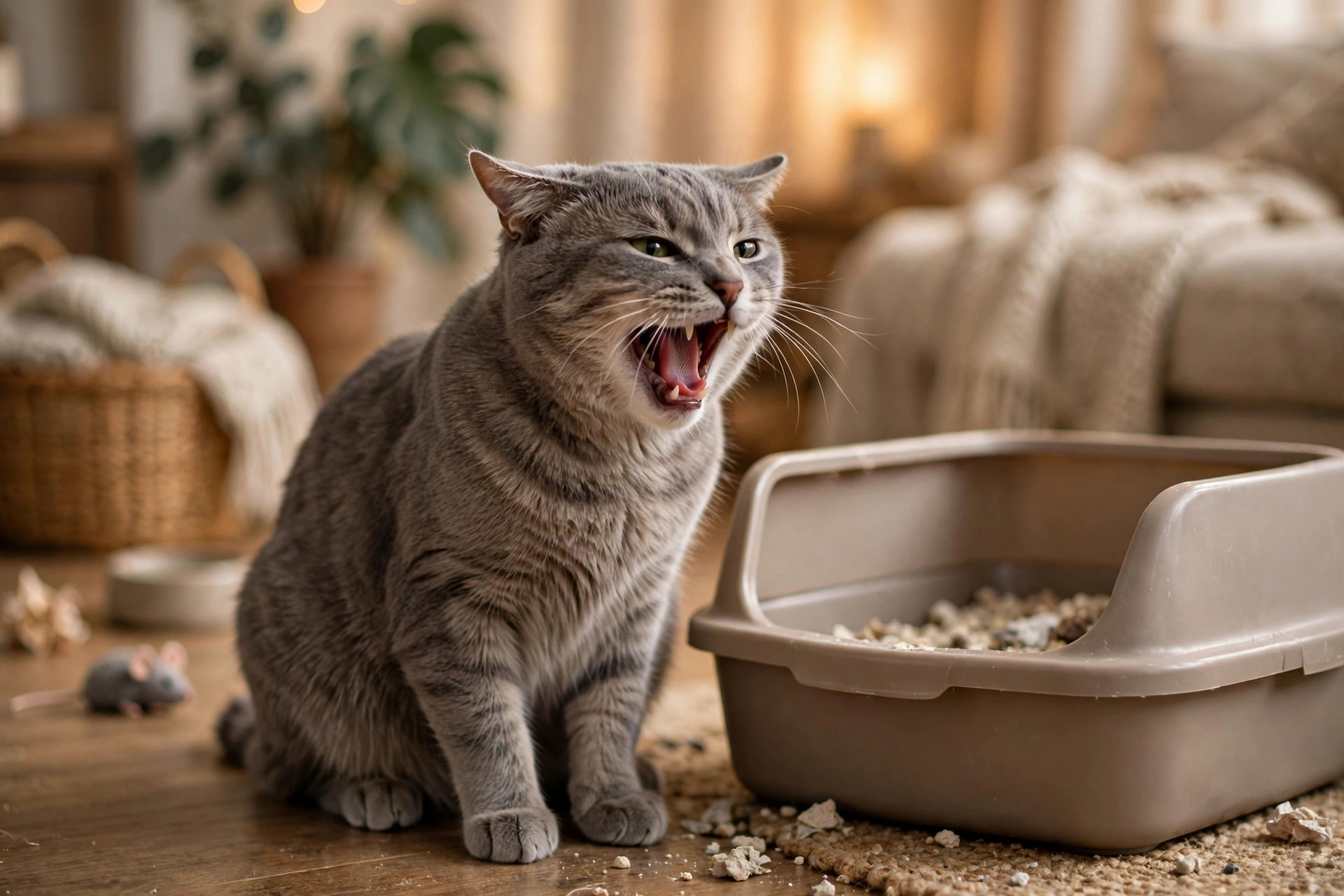
A male cat urinary blockage is one of the true emergencies in feline medicine. Because a male cat’s urethra is much longer and narrower than a female’s, it can become physically plugged by crystals, mucus, or inflammation — the dreaded “blocked cat.” Urine cannot leave the body, toxins build up in the blood, potassium rises, and the bladder can rupture. Without treatment, a blocked cat can die within 24–48 hours.
Signs of a urinary blockage in a male cat include:
- Repeated, unproductive trips to the litter box — straining hard but producing little or no urine
- Crying, howling, or vocalizing while straining
- A firm, swollen, painful abdomen
- Lethargy, hiding, or weakness
- Vomiting
- Restlessness or panting
The rule: if your male cat is straining and you cannot confirm he is actually producing urine, do not wait until morning — go to an emergency vet immediately. This is never a “watch and see” situation. Female cats rarely obstruct, but a female with visible blood in the urine, lethargy, or no urine output for many hours still needs same-day veterinary care.
Cat UTI vs. Urinary Blockage: How to Tell
Since both conditions start with straining, use this quick comparison:
| Sign | Likely UTI / Cystitis | Possible Blockage (Emergency) |
|---|---|---|
| Urine output | Small amounts, but the cat still pees | Drops or nothing at all despite straining |
| Pain level | Discomfort, crying in the box | Severe distress, restlessness, howling |
| Abdomen | Usually soft and normal | Firm, swollen, painful to touch |
| Other symptoms | Blood in urine, peeing outside box | Vomiting, lethargy, collapse |
| Urgency | Vet visit within 24 hours | Emergency vet immediately |
What Causes Urinary Problems in Cats?
Urinary problems in cats have several distinct causes, and they cannot be told apart from symptoms alone:
1. Bacterial Infection (True UTI)
Bacteria enter the urinary tract through the urethra. Rare in young, healthy cats; more common in seniors, diabetic cats, and cats with kidney disease or weakened immunity. Diagnosed with a urinalysis and bacterial culture, treated with antibiotics.
2. Feline Idiopathic Cystitis (FIC)
The most common cause of urinary symptoms in young to middle-aged cats — sterile inflammation of the bladder with no infection and no stones. Stress is a major trigger: multi-cat tension, moves, new schedules, or a dirty litter box can all set off an episode. Symptoms usually resolve within 2–7 days with treatment, but recurrences are common.
3. Bladder Stones and Crystals
Mineral crystals (most often struvite or calcium oxalate) form in the urine and irritate the bladder lining; larger crystals can become stones. In male cats, crystals can clump into a plug that blocks the urethra. Diet, urine concentration, and hydration all play a role.
4. Anatomical and Other Factors
Risk rises with obesity, an inactive indoor lifestyle, a dry-food-only diet (concentrated urine), and poor litter-box hygiene. Overweight, indoor, middle-aged cats — especially males — are the classic FLUTD profile.
Also Read: Ragdoll Cat Breed Guide (2026) — includes a section on urinary tract issues and bladder stones in cats, with prevention tips.
What Happens at the Vet Visit?
Knowing what to expect makes a stressful visit easier. For cat UTI symptoms or any urinary complaint, your vet will typically:
- Take a history: when the straining started, urine output, accidents outside the box, water intake, diet, stress changes at home.
- Do a physical exam, including gently feeling the bladder — a large, firm, painful bladder in a male cat signals a blockage emergency.
- Run a urinalysis to check for blood, crystals, pH, and concentration.
- Run a bacterial culture to confirm a true infection and choose the right antibiotic.
- Order X-rays or an ultrasound if stones or an obstruction are suspected, plus blood work if the cat is very ill or senior.
Never give your cat human painkillers (many are toxic to cats) or leftover antibiotics while waiting for the appointment — they can mask symptoms and harm your cat.
How Cat UTIs and Urinary Problems Are Treated
Treatment depends entirely on the diagnosis:
- Bacterial UTI: antibiotics prescribed by your vet, usually clearing the infection within a few days. Always finish the full course.
- FIC (sterile inflammation): pain medication, anti-spasm drugs in some cases, and above all stress reduction and hydration. Pheromone diffusers and environmental enrichment can lower recurrence.
- Stones and crystals: prescription urinary diets that adjust urine pH and mineral content can dissolve some stone types; large stones may need surgical removal.
- Urinary blockage: an emergency — the vet passes a catheter to relieve the blockage, then hospitalizes the cat on IV fluids and monitoring. Caught early, recovery rates are high.
Preventing Cat Urinary Problems at Home
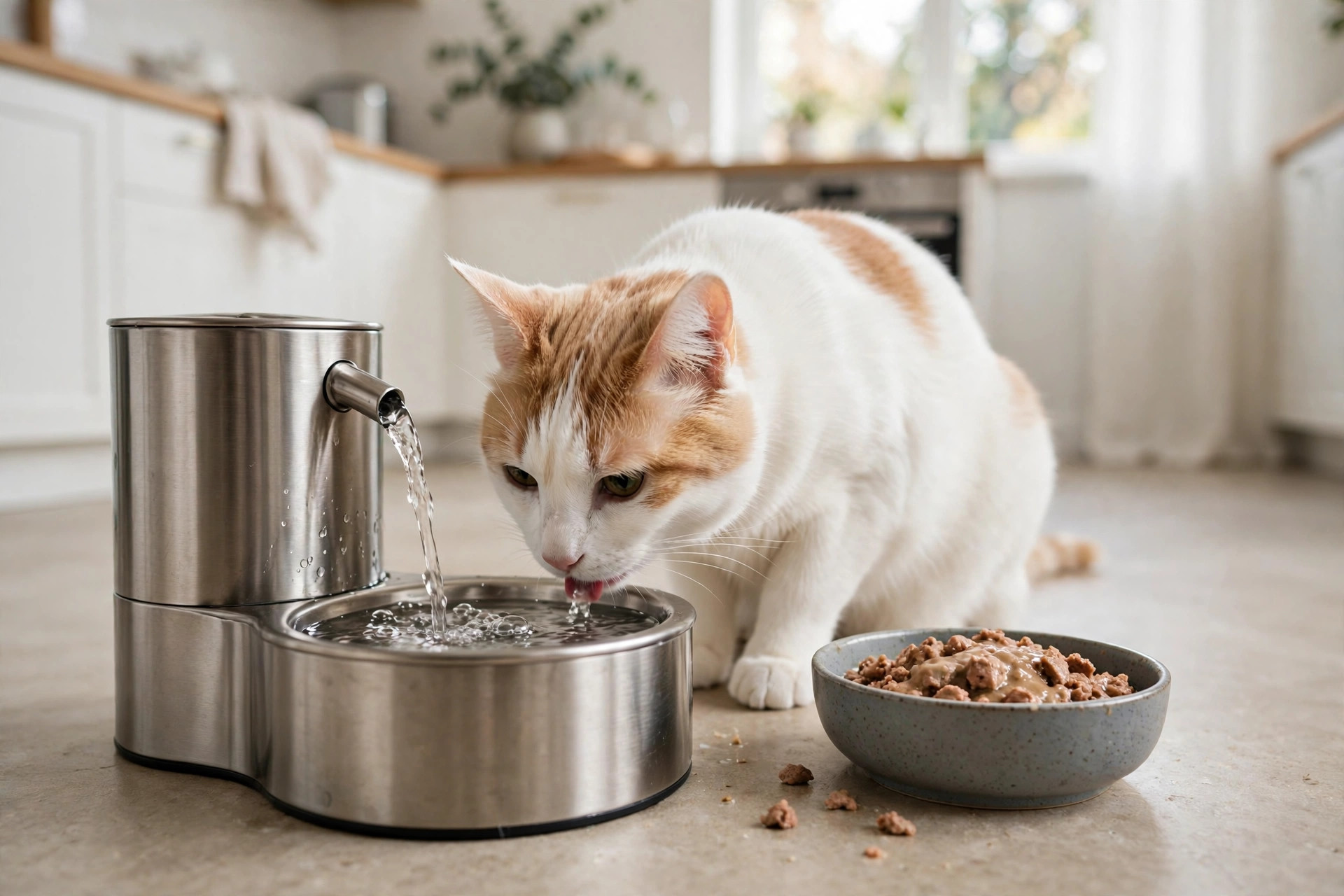
Urinary problems are one of the most preventable cat health issues. The two pillars are hydration and stress management:
- Feed wet food — canned food is roughly 70–80% water and keeps urine diluted. If your cat eats dry food, add a wet-food meal.
- Use a water fountain — many cats drink noticeably more from moving water. Place multiple water stations away from food bowls and litter boxes.
- Keep litter boxes spotless — scoop daily, and provide one box per cat plus one extra. A dirty box makes some cats hold their urine.
- Reduce stress — keep routines predictable, provide vertical space and hiding spots, and add enrichment like play sessions. Indoor-only cats benefit from safe outdoor stimulation.
- Manage weight — obesity is a risk factor; measure meals and play daily.
- Don’t delay vet checkups — annual exams with urinalysis catch early problems in senior and at-risk cats.
Also Read: Catio Ideas: Safe Outdoor Cat Enclosure Guide (2026) — safe enrichment that reduces the stress behind many urinary episodes.
Frequently Asked Questions
How do I know if my cat has a UTI?
The hallmark signs are frequent litter-box trips with little urine, straining or crying while urinating, blood or cloudiness in the urine, and urinating outside the box. Because these same signs occur with sterile cystitis and crystals, only a vet’s urinalysis can confirm a true infection — don’t assume antibiotics are the answer.
Can a cat UTI go away on its own?
Sometimes mild sterile inflammation (FIC) improves in 2–7 days, but you should never wait to find out. Urinary symptoms can escalate to a blockage, and bacterial infections need antibiotics. Any urinary sign deserves a vet call within 24 hours.
How long can a male cat go without peeing?
Not long — a male cat straining without producing urine for more than a few hours may be blocked, and a blockage can be fatal within 24–48 hours. If your male cat hasn’t passed meaningful urine in over 8–12 hours, treat it as an emergency.
Are female cats at risk too?
Yes — female cats get UTIs, cystitis, and stones just like males. They are simply much less likely to obstruct, because their urethra is shorter and wider. A female cat with urinary symptoms should still see a vet within 24 hours.
Can diet really prevent cat urinary problems?
Diet is one of the strongest prevention tools. Prescription urinary diets adjust urine pH and mineral content to prevent crystals, and simply adding wet food keeps urine diluted. Ask your vet which diet fits your cat — don’t switch to a prescription food without guidance.
Should I give my cat cranberry supplements?
Evidence for cranberry in cats is limited. It is not a treatment for an active infection and shouldn’t delay a vet visit. Focus on the proven measures: hydration, wet food, clean litter boxes, and stress reduction.
Final Thoughts
Spotting cat UTI symptoms early is one of the most valuable skills a cat owner can have. Frequent trips, straining, crying in the litter box, blood in the urine, and accidents outside the box are never “just behavior” — they are your cat’s way of asking for help. Most urinary problems are highly treatable, and many are preventable with wet food, fresh water, clean litter boxes, and a low-stress home.
Remember the single most important rule: a male cat that strains without peeing is an emergency, not a wait-and-see. When in doubt, call your vet — with urinary problems in cats, early action saves lives.