
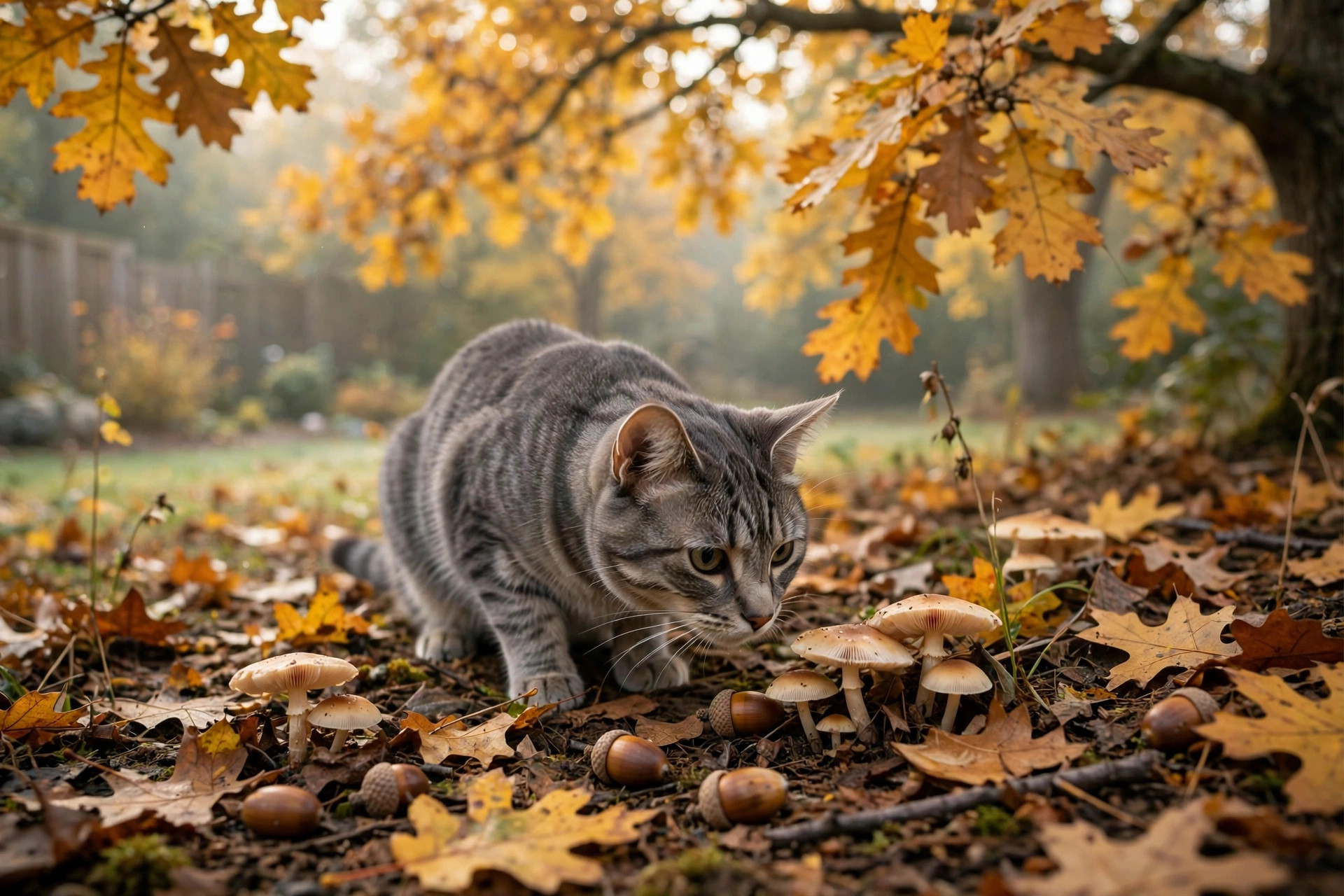
As the leaves start to fall and the air turns crisp, most cat owners are thinking about cozy evenings and shorter days. But here is what autumn really brings for your cat: a whole new set of outdoor dangers. Autumn pet hazards — from toxic mushrooms and poisonous acorns to sweet-tasting antifreeze — quietly multiply this season, and curious cats that sniff, chew, and explore are the most at risk.
The good news is that every one of these dangers is preventable once you know what to look for. In this 2026 guide: the 7 most serious autumn pet hazards for cats, the warning signs that need a vet right away, what to do if your cat eats something dangerous, and the simple steps that keep the season safe.
Table of Contents
- Why Autumn Is Risky for Cats
- 7 Autumn Pet Hazards Every Cat Owner Must Know
- Warning Signs That Need a Vet Right Away
- How to Keep Your Cat Safe This Autumn
- What to Do If Your Cat Eats Something Toxic
- Frequently Asked Questions
- Final Thoughts
Why Autumn Is Risky for Cats
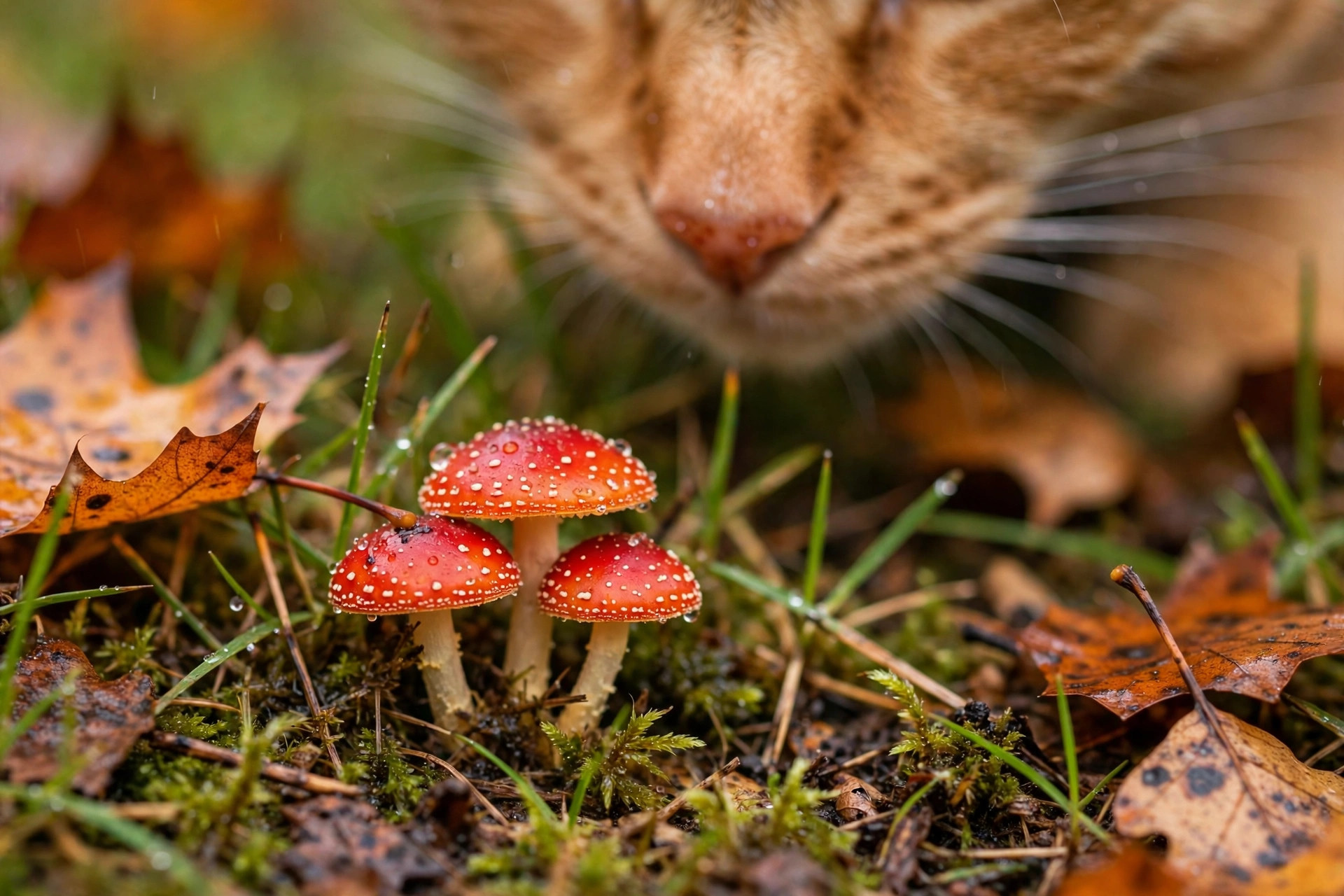
Fall feels calm, but nature is at its most changeable. Damp soil and fallen leaves trigger an explosion of wild mushrooms, oak and chestnut trees drop acorns and conkers, and gardeners turn to compost heaps and mulches that grow invisible molds. Meanwhile, rodents move indoors for the cold, which means rodent bait appears in garages, sheds, and basements — and fall radiator maintenance puts antifreeze within reach.
Cats explore the world with their mouths. A cat does not need to eat a whole mushroom to be in trouble — chewing a cap, licking antifreeze off a paw, or catching a poisoned mouse can be enough. Indoor cats are not automatically safe either: hazards come inside on shoes and through open windows.
7 Autumn Pet Hazards Every Cat Owner Must Know
1. Wild Mushrooms and Toadstools
Fall moisture brings an explosion of mushrooms in yards, parks, and wooded areas. Some species cause vomiting, diarrhea, neurological symptoms, liver failure, and even death — and toxic and safe mushrooms can look nearly identical. Treat every wild mushroom as toxic: signs can appear immediately or be delayed for a day or more. Remove mushrooms from your lawn regularly (wear gloves), and never let your cat sniff around rotting logs, mulch beds, or damp leaf piles where fungi thrive.
2. Acorns and Fallen Nuts
Acorns contain tannins that irritate the stomach and intestines, causing vomiting, diarrhea, drooling, and lethargy. In larger amounts they can damage the liver and kidneys — green, unripe acorns are the most toxic. Whole acorns are also a choking and intestinal-blockage risk.
Other falling nuts are dangerous too: black walnuts, horse chestnuts (conkers), and hickory nuts are toxic to cats in varying degrees. Rake fallen nuts up promptly.
3. Antifreeze and Garage Chemicals
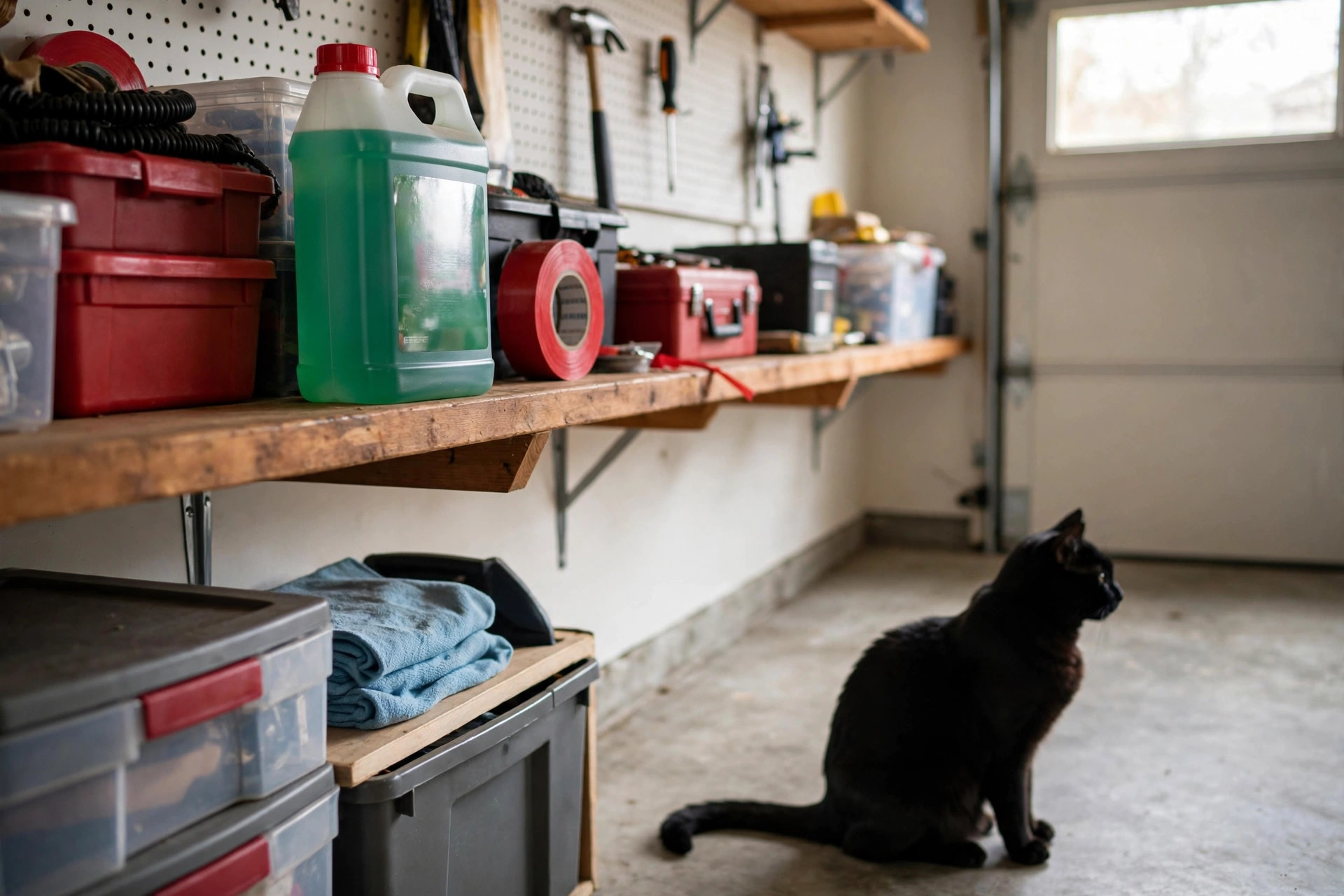
Fall is radiator-flush season, which makes autumn peak season for ethylene glycol (antifreeze) poisoning. Conventional antifreeze tastes sweet, pets drink it willingly, and the toxic dose is tiny — cats are the most sensitive of all animals, and a few licks off a garage floor can be fatal.
Early signs look like intoxication: stumbling, vomiting, and increased drinking and urinating. Then comes the cruel part — many cats appear to improve for a day or two before kidney failure sets in, so “she seems fine now” is never reassurance. Wipe spills immediately, store containers sealed and high, and consider less-toxic propylene-glycol antifreeze.
4. Rodent Bait and Secondary Poisoning
As nights turn cold, rodents move indoors and bait stations appear in garages, sheds, basements, and neighbors’ yards. Rodenticides fall into classes that behave very differently: anticoagulants interfere with blood clotting and may show no signs for days; bromethalin is a neurotoxin with no specific antidote; and cholecalciferol (concentrated vitamin D3) drives blood calcium up and damages the kidneys.
The scariest part is secondary poisoning: a cat that catches and eats a poisoned mouse absorbs the poison too. Photograph the active-ingredient panel of any bait you find, use enclosed tamper-resistant placements only, and keep cats away from areas where bait is used.
5. Toxic Fall Plants
The autumn crocus (Colchicum autumnale) — not to be confused with harmless spring crocuses — contains colchicine and can cause bloody vomiting, shock, and organ damage. Chrysanthemums contain pyrethrins that cause drooling, vomiting, and loss of coordination. Yew trees are extremely toxic in every part, and true lilies (Easter, Asiatic, daylilies) can trigger acute kidney failure in cats from pollen or vase water alone. Check fall greenery against the ASPCA’s list of plants poisonous to pets before bringing it home.
6. Ticks and Fleas Stay Active
Fleas stay active until temperatures drop below about 8°C (46°F), and ticks until below 4°C (40°F) — ticks will even come out during winter thaws. And parasites that hitch a ride on your cat become active again in your warm house.
Keep flea and tick prevention current all year, and check your cat after outdoor time — hot spots are between the toes and in and around the ears.
7. Compost Heaps and Moldy Leaf Piles
Compost heaps and piles of decaying leaves or grass cuttings can contain harmful bacteria and molds. Certain molds produce tremorgenic mycotoxins that can trigger tremors and seizures within hours of ingestion. Wet leaves can also hide traces of toxic plant matter and parasites.
Rake and remove leaves from your property regularly, fence off compost rather than trusting a lid, and steer your cat away from rotting logs and mulch beds.
Also Read: Catio Ideas: Safe Outdoor Cat Enclosure Guide (2026) — a catio lets your cat enjoy autumn air without scavenging hazards.
Warning Signs That Need a Vet Right Away
Poisoning symptoms vary by substance, but call your veterinarian immediately — do not wait for symptoms to worsen — if you notice any of these:
- Sudden vomiting or diarrhea, especially bloody
- Drooling, pawing at the mouth, or oral pain
- Lethargy, weakness, or collapse
- Loss of balance, wobbliness, or tremors
- Seizures
- A sharp increase in drinking and urinating (possible antifreeze)
- Yellowing of the eyes, gums, or ears (possible liver damage)
- Stumbling as if drunk (early antifreeze sign)
With mushroom poisoning, signs can be delayed for up to a day or more; with anticoagulant rodenticides, for several days. A delay in symptoms does not mean your cat is safe — it often means the opposite.
How to Keep Your Cat Safe This Autumn
Most autumn pet hazards are defeated by simple habits:
- Patrol the yard daily. Remove mushrooms (wear gloves), rake fallen acorns and nuts, and clear damp leaf litter where fungi hide.
- Supervise outdoor time. Keep cats on a harness, in a catio, or at least within sight — especially near oak trees, mulch, and compost.
- Store chemicals sealed and high. Antifreeze, fertilizers, herbicides, and rodenticides belong in locked cabinets, never on the garage floor.
- Use enclosed, tamper-resistant bait stations if you must use rodenticide — and photograph the active-ingredient panel first.
- Audit your plants against the ASPCA toxic-plant list.
- Keep parasite prevention current through fall and winter.
What to Do If Your Cat Eats Something Toxic
Speed matters more than anything:
- Remove your cat from the source immediately so no more is ingested.
- Do not try to make your cat vomit unless a veterinarian specifically tells you to — it can cause further harm with some substances.
- Identify what was eaten. Photograph the mushroom, plant, or substance, note the time, and estimate how much was eaten.
- Call your veterinarian or an animal poison control line immediately — even if your cat seems fine. The ASPCA Animal Poison Control Center can be reached at (888) 426-4435. Bring the photo or sample to the clinic.
Also Read: Why Is My Cat Not Eating? Warning Signs & When to Worry (2026) — appetite loss can be an early sign that something is wrong after toxin exposure.
Frequently Asked Questions
Are acorns poisonous to cats?
Yes. Acorns contain tannins that are poisonous to cats, causing vomiting, diarrhea, drooling, and lethargy. In larger amounts they can damage the liver and kidneys, and whole acorns are a choking and blockage risk. Green, unripe acorns are the most toxic.
What happens if a cat eats a wild mushroom?
Some species cause only stomach upset; others cause liver failure or neurological collapse. Because toxic and safe mushrooms look nearly identical, treat every wild mushroom as an emergency: call your vet immediately and bring a photo or sample.
Is antifreeze really that dangerous for cats?
Yes — cats are the most sensitive of all animals to ethylene-glycol antifreeze. A few licks can be fatal, and cats often seem to recover for a day or two before kidney failure sets in. Any suspected antifreeze contact is an immediate vet emergency.
Should I keep using flea and tick prevention in autumn?
Absolutely. Fleas stay active until about 8°C (46°F), ticks until below 4°C (40°F), and parasites your cat carries indoors become active again in a warm house. Keep prevention current year-round.
Can my cat get poisoned by a mouse that ate rat poison?
Yes — this is called secondary poisoning. A cat that catches and eats a poisoned rodent absorbs the poison, and treatments differ sharply between rodenticide types. Avoid rodenticides when possible, use enclosed tamper-resistant stations only, and keep cats away from areas where bait is used.
Final Thoughts
Autumn is one of the best times of the year to be a cat owner — crisp air, crunchy leaves, and endless new smells. But autumn pet hazards like wild mushrooms, acorns, antifreeze, rodenticides, and toxic fall plants can turn an innocent sniff into an emergency. Remember the pattern: patrol the yard, store chemicals sealed and high, supervise outdoor time, keep parasite prevention current, and call your vet immediately if your cat eats anything suspicious.
A little vigilance about what is sprouting underfoot keeps the season joyful instead of terrifying.
Also Read: Halloween Pet Safety Tips for Dogs and Cats (2026) — October’s other big seasonal hazard guide.