
Every indoor cat deserves a taste of the great outdoors — the sunshine on their fur, the rustle of leaves, the thrill of watching birds from a safe distance. But letting a cat roam free outdoors brings real dangers: traffic, predators, parasites, and fights with other animals. That’s exactly why so many cat owners are searching for catio ideas right now: a catio — a fully enclosed outdoor cat enclosure, or “cat patio” — gives your feline the best of both worlds.
In this complete 2026 guide, we’ll walk you through everything you need to build, buy, and furnish the perfect catio: the different types of catios, their real benefits, a vet-informed safety checklist, DIY tips, and enrichment ideas that keep indoor cats happy, active, and healthy.
Table of Contents
- What Is a Catio for Cats?
- Benefits of an Outdoor Cat Enclosure
- 6 Catio Ideas for Every Space and Budget
- Catio Safety Checklist: What Vets Want You to Know
- DIY Catio Tips: Materials That Last
- Must-Have Catio Enrichment Essentials
- Introducing Your Cat to a Catio
- Common Catio Mistakes to Avoid
- Frequently Asked Questions
What Is a Catio for Cats?
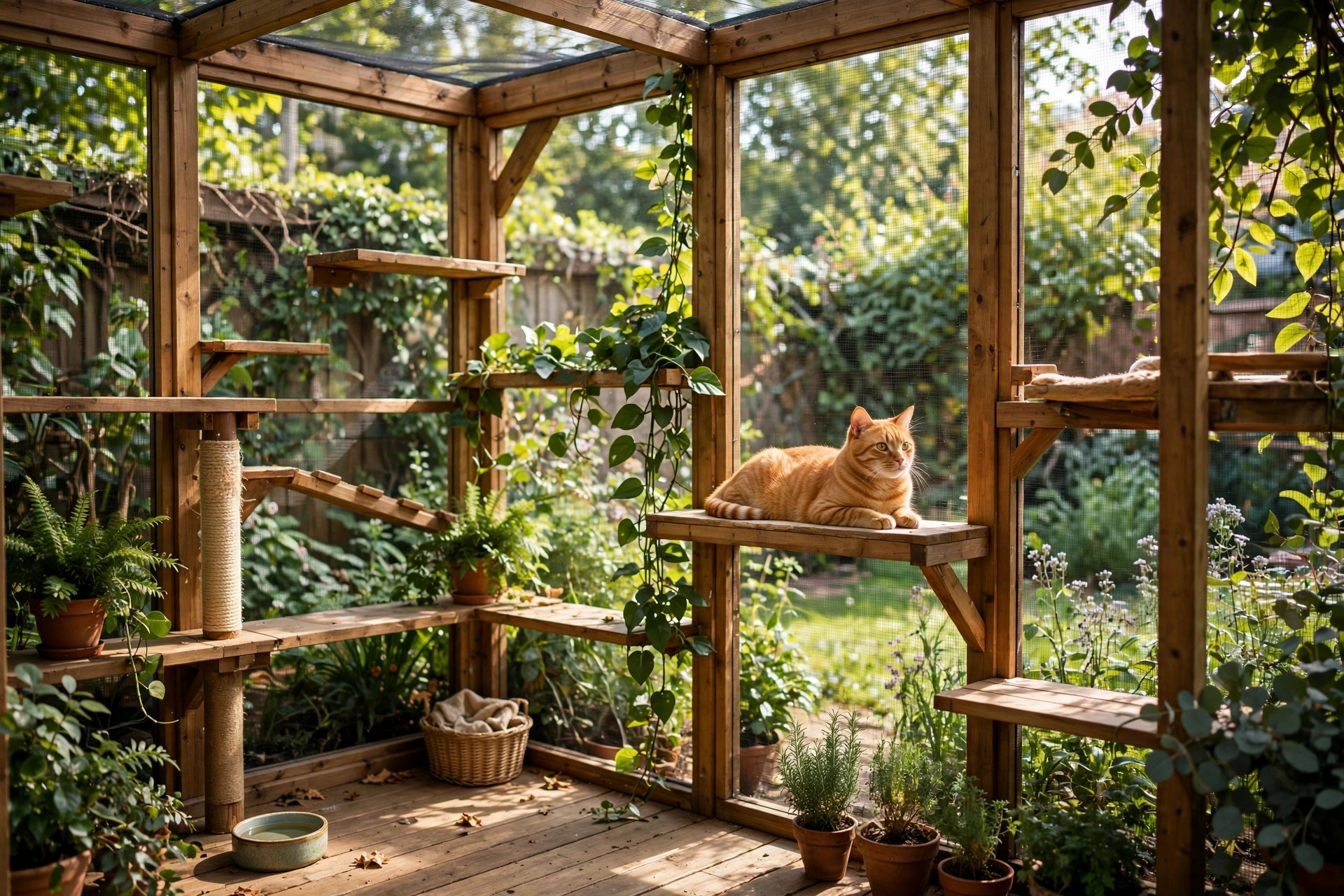
A catio is an enclosed outdoor structure — think of it as a patio built just for cats — that gives indoor cats safe access to fresh air, sunlight, and outdoor sights and sounds. The structure is fully enclosed with strong mesh or wire on all sides, including the roof, so your cat can watch birds, sniff the breeze, and nap in the sun without ever facing the dangers of free roaming.
Catios range from tiny window boxes barely bigger than a bookshelf to elaborate backyard enclosures with climbing walls, tunnels, and furniture for the humans too. According to the ASPCA Pet Health Insurance guide on catios, they come in many sizes, styles, and price points — but every good catio shares the same purpose: letting your cat explore the outdoors safely.
Why not just let your cat outside? Studies estimate that free-roaming cats kill billions of birds and small mammals each year, and the outdoors exposes cats to cars, dogs, coyotes, diseases, and parasites. An outdoor cat enclosure solves both problems at once.
Benefits of an Outdoor Cat Enclosure
A well-built catio is one of the best investments you can make in an indoor cat’s quality of life. Here’s what your cat gains:
1. Mental Stimulation That Fights Boredom
Bored indoor cats develop behavior problems — scratching furniture, overeating, nighttime zoomies, and stress grooming. A catio is a living playground: moving leaves, passing insects, shifting sunlight, and distant bird calls provide endless novelty. Environmental enrichment like safe outdoor access helps prevent stress-related disorders and keeps cats mentally agile.
2. Safe Sunbathing and Fresh Air
Cats are natural sun-seekers, and sunshine supports vitamin D balance and healthy sleep cycles. In a catio, your cat can bask safely without the burn, traffic, and flea risks of an open yard.
3. Gentle Exercise
Climbing shelves, jumping between perches, and patrolling a larger territory keep your cat active. Regular movement helps maintain a healthy weight — important since indoor cats are prone to obesity.
4. Reduced Stress and Anxiety
Fresh air and natural light have a calming effect on many cats. Owners often report that anxious cats settle faster and sleep more deeply once they have catio access. Give your cat free access to come and go as they please, and the catio becomes a sanctuary they choose on their own terms.
5. Wildlife Stays Safe Too
Your birdwatching cat watches the birds — but never touches them. A catio protects local wildlife while satisfying your cat’s hunting instincts visually.
Also Read: Best Heated Cat Bed for Outdoor Cats 2025 – Vet-Tested Top 5
6 Catio Ideas for Every Space and Budget
There is no single “right” catio — the best design is the one that fits your home, your space, and your cat’s personality. Here are the six most popular catio ideas:
1. Window Box Catio
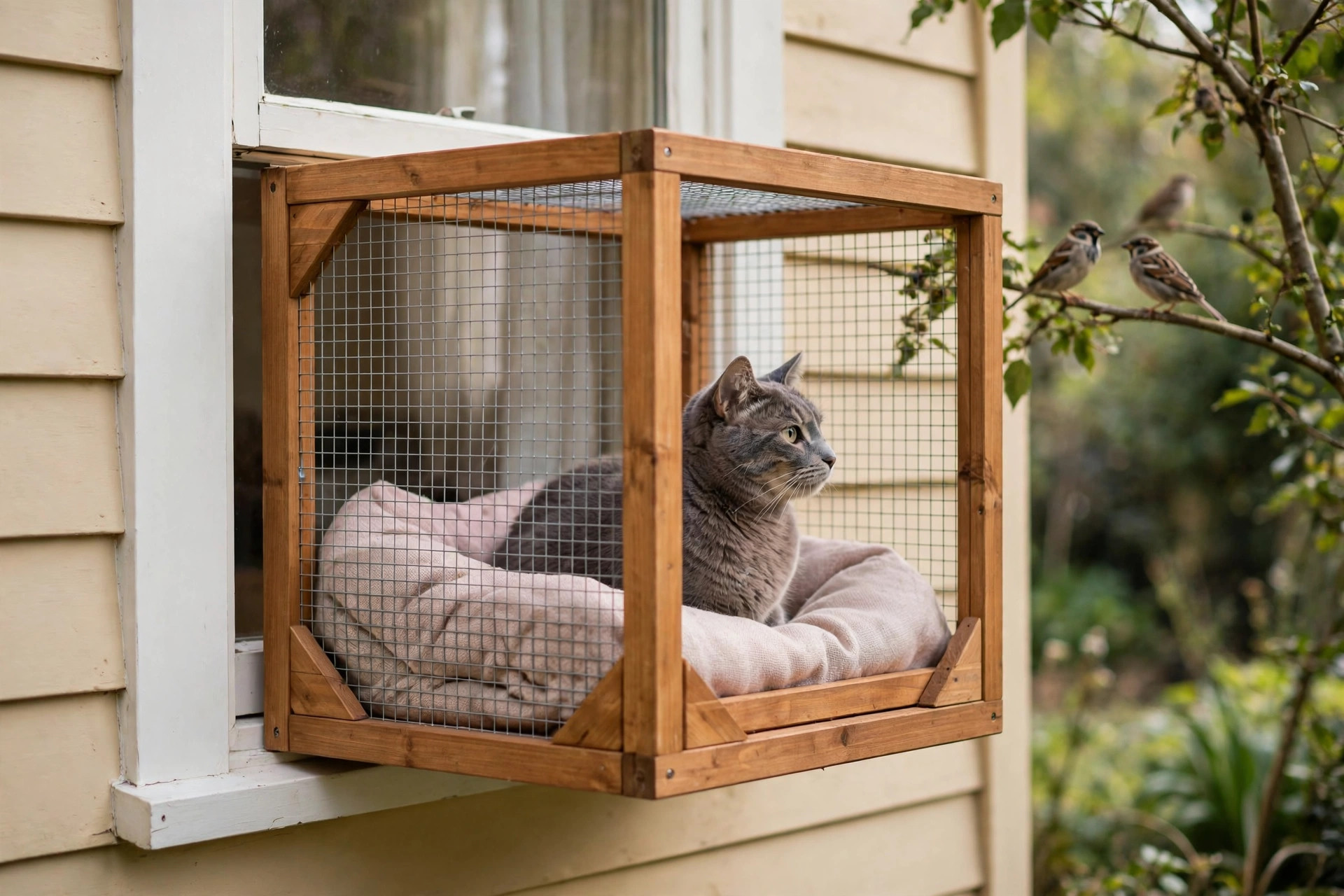
The perfect starter catio. A compact mesh box that mounts outside a window, giving your cat a sunny perch and a breeze without leaving the house. Ideal for apartments and renters. Costs range from ready-made kits to simple DIY builds, and installation usually takes an afternoon.
2. Balcony Catio
Enclose your balcony with sturdy mesh or netting secured around the railings. Balcony catios offer panoramic views and plenty of room for perches — just make sure the enclosure is tall enough that your cat can’t climb over the top, and never rely on a standard balcony railing alone.
3. Porch or Patio Conversion
Screen in an existing porch or patio and you’ve instantly created a catio. This is one of the most affordable catio ideas because the structure already exists — you only need escape-proof screening, a secure door, and furnishings.
4. Freestanding Backyard Catio
A standalone enclosure in the yard, connected to the house by a cat door, window tunnel, or walkway. Freestanding catios can be as large as you like — some are full play yards with bridges, towers, and gardens. Use weather-resistant lumber like cedar, and always include a solid roof.
5. Cat Tunnel and Run Systems
Flexible mesh tunnels that link the house to a larger enclosure or run along a fence line. These modular systems are great for renters and small yards, and they let you expand the catio later.
6. Luxury Multi-Level Catio
The dream build: staggered shelves, wall-mounted walkways, hanging bridges, live cat-safe plants, and seating for the humans. These elaborate catios double as garden features — and your cat will never be bored again.
| Catio Type | Best For | Typical Cost Range |
|---|---|---|
| Window box | Apartments, renters | Low |
| Balcony enclosure | Condos, small spaces | Low–Medium |
| Porch conversion | Homes with a porch | Low–Medium |
| Freestanding yard catio | Multi-cat households | Medium–High |
| Tunnel and run | Small yards, renters | Low–Medium |
| Multi-level luxury | Dedicated cat parents | High |
Catio Safety Checklist: What Vets Want You to Know
A catio is only as safe as its weakest point. Before your cat’s first outing, work through this safety checklist:
- Escape-proof mesh on every surface — sides, roof, and any tunnel connections. Inspect regularly for tears, rust, and loose staples.
- Strong enough to keep predators out — raccoons can tear flimsy screening, and hawks can strike from above. Choose vinyl-coated wire or stainless steel mesh, never plain chicken wire.
- A solid roof — protects against aerial predators, rain, and harsh midday sun.
- Secure, lockable doors and latches — every access point must close tightly and lock, especially where the catio connects to your home.
- Shade and fresh water always available — cats overheat quickly. Provide shaded areas and a clean water bowl or fountain.
- Non-toxic everything — use pet-safe paint and untreated or naturally rot-resistant wood like cedar. Avoid treated lumber with harsh chemicals.
- Supervision for new catios — stay nearby during the first outings, and only let your cat use the catio when you’re home until you’re confident the structure is fully secure.
- No gaps at connections — where a tunnel or cat door meets the house, there must be zero escape gaps.
DIY Catio Tips: Materials That Last
Building your own catio is a satisfying weekend project. These material choices make the difference between a catio that lasts years and one that needs repairs every season:
- Frame: weather-resistant lumber such as cedar or redwood — naturally resistant to rot and insects. Avoid chemically treated lumber near cats.
- Mesh: heavy-gauge vinyl-coated wire or stainless steel hardware cloth. Chicken wire is too weak — cats can claw through it and predators can break it.
- Roof: corrugated polycarbonate or metal panels for weather protection with good airflow. Cover at least part of the roof solid; use shade cloth over the rest.
- Flooring: sealed wood decking, outdoor pavers, or artificial turf rated pet-safe. Keep the floor dry and easy to clean.
- Fasteners: exterior-grade screws and hinges that won’t rust. Check latches twice a year.
Plan the layout before you buy materials: include climbing routes, a sunny spot, a shaded retreat, and room for a litter area away from food and water. For multi-cat households, provide enough space that each cat can claim a separate resting spot.
Must-Have Catio Enrichment Essentials
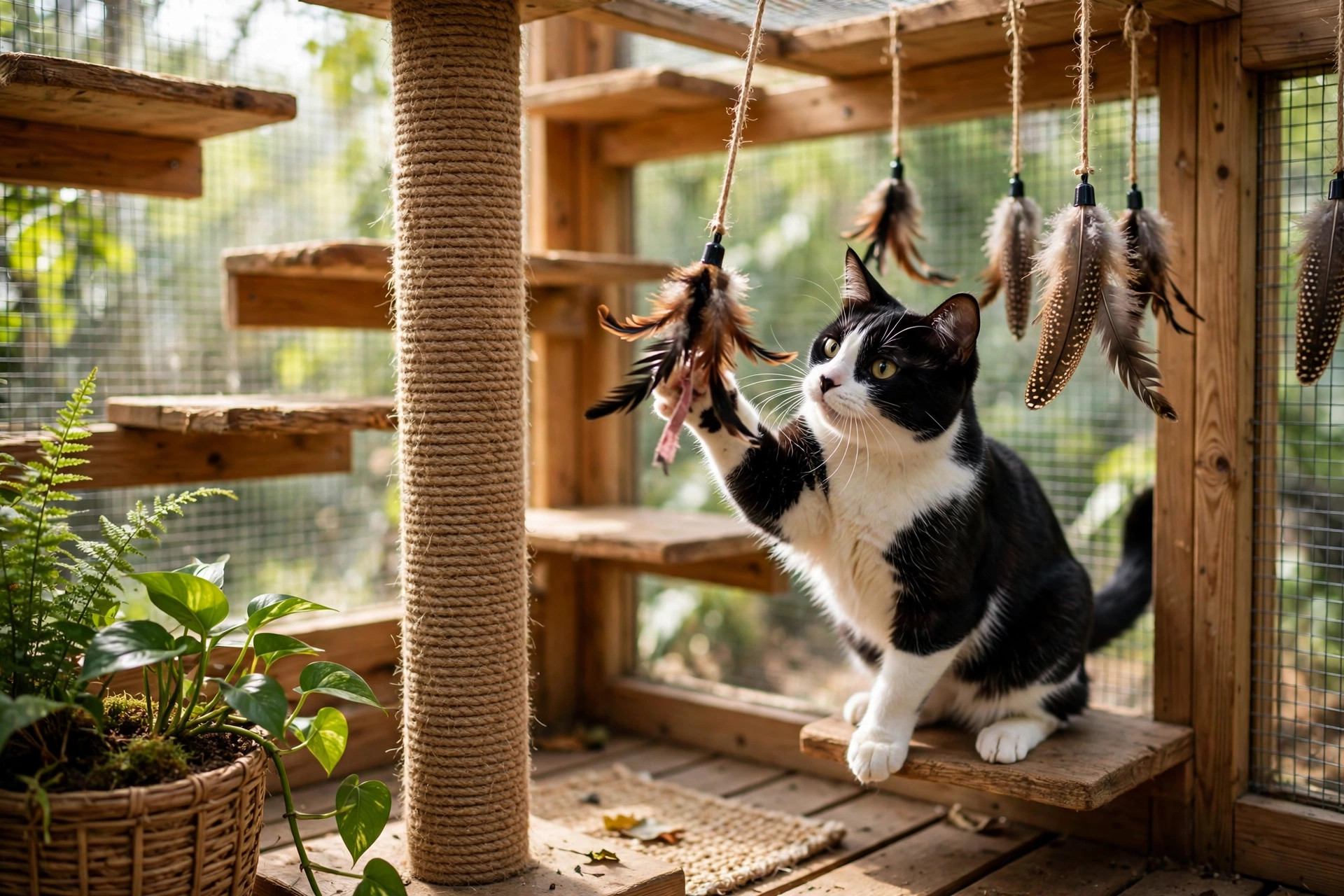
An empty catio is just a cage with a view. Turn yours into a feline paradise with these enrichment essentials:
- Vertical perches and shelves — cats feel safest up high. Stagger shelves at different heights for climbing and lounging.
- A scratching post or climbing tree — sisal-wrapped posts encourage natural scratching and keep claws healthy.
- Hiding spots — enclosed boxes, tunnels, or covered beds give shy cats a secure retreat when the world feels overwhelming.
- Hanging toys — feather wands, crinkle toys, and dangling balls encourage active play.
- Cat-safe plants — cat grass, catnip, spider plants, and Boston ferns add greenery and nibbling fun. Cross-check every plant against the ASPCA’s toxic-plant list before planting.
- A bird feeder nearby — placed a few feet outside the catio, it works like kitty television. Your cat watches; the birds stay safe.
- Fresh water — a spill-proof bowl or a pet water fountain. Many cats drink more from moving water.
- Cozy resting spots — hammocks, cushioned beds, and sun-warmed blankets for long afternoon naps.
Also Read: Can Cats Eat Tuna? Vet Safety Guide (2026)
Introducing Your Cat to a Catio
Most cats don’t march into a new catio on day one — and that’s fine. Let your cat explore at their own pace:
- Leave the catio door open and let your cat discover it. Never force or carry a reluctant cat inside.
- Place familiar-smelling items — their bed, a worn t-shirt, favorite treats — in the catio.
- Sprinkle catnip or place treats along the entrance to spark curiosity.
- Join them for the first sessions with play and gentle petting.
- Give it time. Some cats settle in within hours; others need a couple of weeks before the catio feels like home.
Once your cat loves the catio, a cat door in a window or wall gives them independent access — the true indoor-outdoor dream, minus every outdoor danger.
Common Catio Mistakes to Avoid
- Using chicken wire — it’s too flimsy for determined cats and hungry predators alike.
- Skipping the roof — an open-top “catio” is an escape route for cats and an invitation for hawks.
- No shade — a fully sun-exposed enclosure can overheat a cat in minutes on a warm day.
- Placing food and water next to the litter area — keep them well separated, just as you would indoors.
- Forgetting about insects and parasites — keep flea and tick prevention current, and pick up any uneaten food so it doesn’t attract ants or raccoons.
- Leaving the catio unsupervised indefinitely — inspect the structure regularly and bring cats in during severe weather.
Also Read: Can Cats Eat Cheese? Vet Safety Guide (2026)
Frequently Asked Questions
What exactly is a catio?
A catio is a fully enclosed outdoor enclosure — a “cat patio” — that lets your cat experience fresh air, sunlight, and outdoor sights while staying protected from traffic, predators, and disease. It can be as small as a window box or as large as a backyard play yard.
Are catios cruel to cats?
No — catios are designed to give cats more freedom, not less. Most catios allow free access so cats can come and go as they please. Introduce the catio gradually with treats and familiar items, and never force your cat inside.
How big should a catio be?
There’s no strict minimum, but bigger is better — especially with multiple cats. Even a compact window-box catio works if it includes vertical height for perches. Plan enough space for climbing, a hiding spot, and separate areas for resting, water, and litter.
Can I build a catio myself?
Yes. A basic DIY catio needs only lumber, strong wire mesh, screws, and a weekend. Use weather-resistant wood like cedar, predator-proof mesh (not chicken wire), and a solid roof. Ready-made kits are a good alternative if you’d rather not build.
Do catios need to be supervised?
Supervise the first outings and inspect the enclosure regularly for damage. Once the structure is proven secure, many owners give their cats independent access via a cat door — but always bring cats in during severe weather.
What plants are safe for a catio?
Cat grass, catnip, spider plants, and Boston ferns are popular cat-safe choices. Always verify each plant against the ASPCA’s toxic and non-toxic plant list, and use only organic soil and non-toxic fertilizers.
Final Thoughts
With the right catio ideas, any home — from a studio apartment to a sprawling backyard — can give an indoor cat a safe slice of the outdoors. Start with a design that fits your space, build it with escape-proof materials and a solid roof, then furnish it with perches, scratching posts, shade, and fresh water. Your cat gets sunshine, birdsong, and adventure; you get total peace of mind.
Take it slow on introductions, keep the structure in good repair, and watch your cat discover their new favorite room — the one with the sky for a ceiling.