
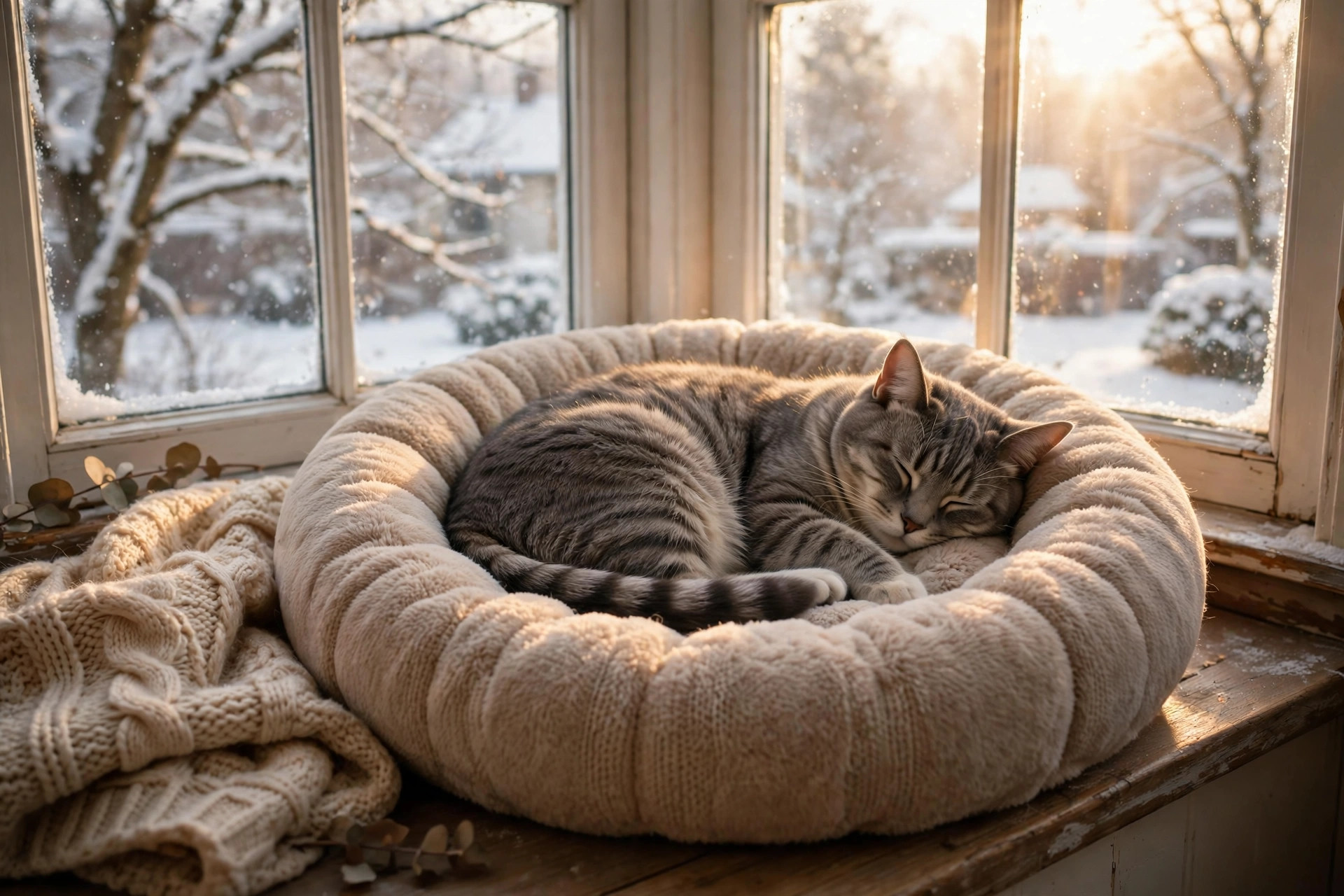
As the days get shorter and the cold settles in, you may have noticed your cat changing. The zoomies stop. The sunny windowsill naps stretch longer. Your once-playful cat now spends most of the day curled in a ball, barely interested in toys. It is natural to wonder: do cats get the winter blues, or is something else going on?
The honest answer is that cats probably do not experience seasonal affective disorder (SAD) the way people do — but winter genuinely changes how many cats behave. Shorter days, colder rooms, and less activity can leave your cat sleeping more, playing less, and seeming a little flat. The tricky part is that the same signs can also point to pain or illness, so knowing the difference matters.
In this complete 2026 guide, we will walk you through what the science actually says about cats and winter mood, the 7 signs to watch for, how to tell normal winter sluggishness from a problem that needs a vet, and 7 simple ways to lift your cat’s spirits through the darkest months.
Table of Contents
- Do Cats Get the Winter Blues?
- Why Do Cats Get the Winter Blues in the First Place?
- 7 Signs Your Cat Has the Winter Blues
- Winter Blues or Something Medical?
- When to See the Vet
- 7 Ways to Lift Your Cat’s Winter Mood
- Do Indoor Cats Get It Worse?
- Frequently Asked Questions
Do Cats Get the Winter Blues?
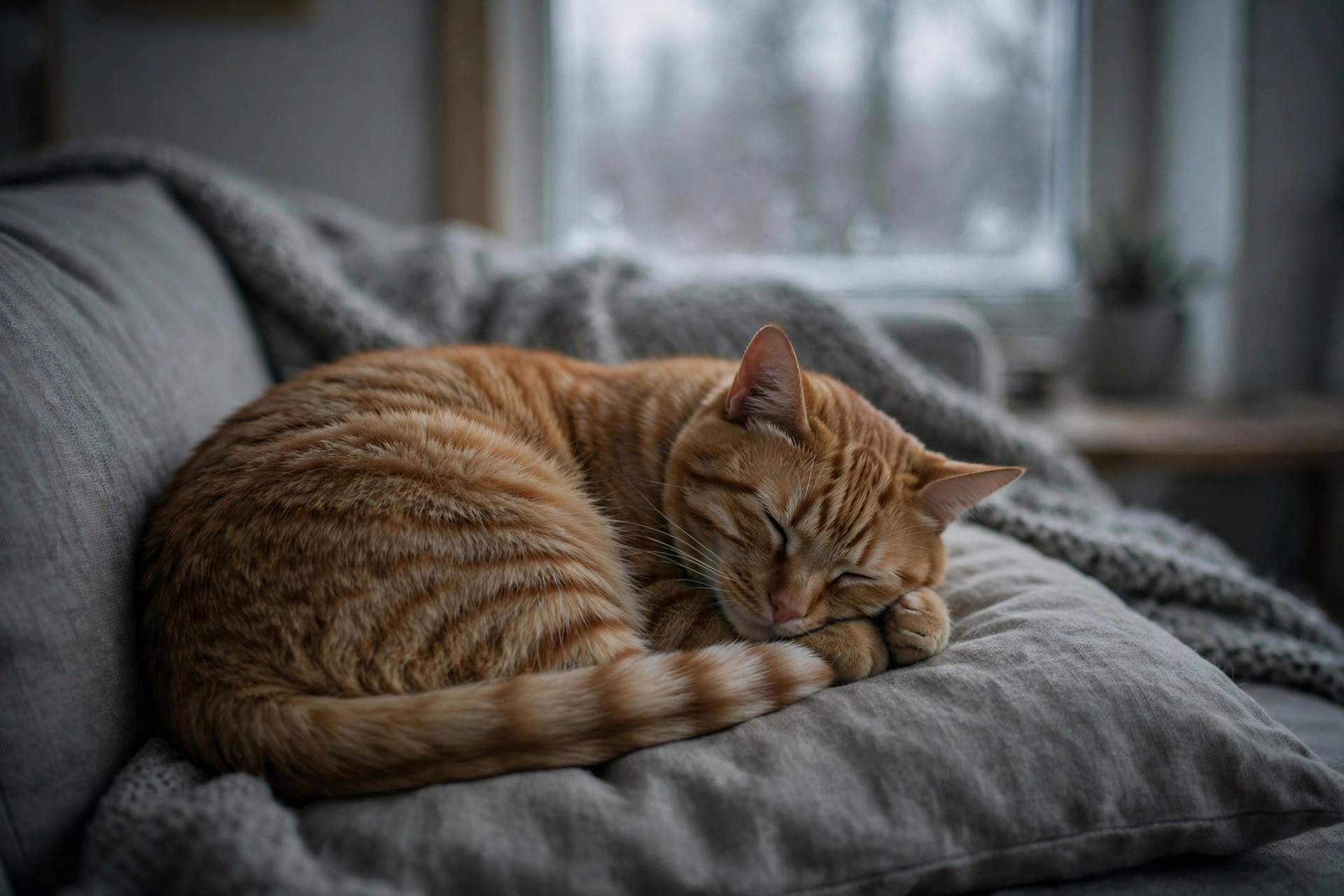
Strictly speaking, there is no proven feline version of seasonal affective disorder. In people, SAD is a recognised type of depression linked to reduced sunlight, which shifts melatonin and serotonin levels and brings low mood, extra sleep, and low energy through the darker months. Cats share much of the same brain chemistry, including those same hormones — but as PetMD notes, there is no known scientific evidence that SAD affects pets, even though behaviour and mood changes in pets during autumn and winter are widely reported.
PetMD reports that around one in three pet owners in the United States — roughly 30 million pets — notice changes in their pet’s mental state and energy levels during the winter months. That is a lot of sleepy, subdued animals. The question is what is actually causing it, and the answer is usually a mix of several ordinary winter effects rather than a single mood disorder.
So, do cats get the winter blues? Think of it this way: your cat almost certainly feels the season, even if she does not have SAD in the human sense. Less daylight changes her body clock, cold air changes how well she sleeps, and a quieter, darker house gives her less to do. The result looks a lot like a low mood — and for most cats, it is a normal seasonal adjustment, not an illness.
Why Do Cats Get the Winter Blues in the First Place?
Four winter changes combine to slow your cat down. Understanding them helps you tell a normal seasonal shift from a real problem.
1. Less daylight resets the body clock
Cats are strongly tuned to light. Research has shown that light exposure affects feline sleep duration, food intake, and even hormone balance. When days shorten, the light-driven signals that organise your cat’s sleep-wake cycle weaken, and many cats simply sleep longer and move less. This is the closest thing to a real seasonal effect — and it is driven by biology, not sadness.
2. Cold weather makes sleep worse, not better
This one surprises most owners. Cats sleep 12 to 16 hours a day in any season, but in winter they often sleep even more — and not because the sleep is good. Studies suggest that as temperatures drop, cats are woken more often during REM sleep, so the sleep they get is less restorative. They compensate by sleeping longer overall. Older cats feel this most: cold-related sleep disruption is stronger with age, which is why a senior cat may seem to do nothing but nap all winter.
3. Less to do indoors
In spring and summer, cats that go outside get hours of sights, sounds, and scents to investigate. In cold, wet winter months they stay inside far more — and the house offers the same rooms, the same windows, and the same toys day after day. Boredom looks a lot like low mood: less play, more sleeping, and a cat that seems uninterested in everything. Indoor-only cats feel this too, since their world shrinks to whatever stimulation you provide.
4. Cats mirror their owners
Cats are far more tuned in to our moods than they let on. If you are spending grey winter days indoors feeling sluggish and low, your cat is likely to pick up on the slower pace of the household — fewer games, less chatter, earlier nights. Vets note that pets can be affected by the emotions of the people they live with, so a quiet winter household can quietly produce a quiet cat.
7 Signs Your Cat Has the Winter Blues
One or two of these on their own usually mean nothing. Several together, appearing as the days shorten, paint the classic winter-blues picture:
- Sleeping noticeably more than usual. Beyond the normal 12–16 hours — your cat is hard to wake, naps through playtime, and seems groggy when she does get up.
- Less interest in play. The wand toy that used to trigger instant zoomies now gets a half-hearted paw swipe, or is ignored completely.
- Hiding or withdrawing. Spending long stretches under the bed, in a closet, or in a quiet corner instead of her usual social spots.
- Appetite changes. Eating a little less — or, just as commonly, eating a little more and putting on winter weight while moving less.
- Clinginess. The opposite of hiding: following you from room to room and demanding to be near you at all times.
- Irritability. A shorter fuse than usual — swatting, grumbling, or walking away when petted in ways she normally enjoys.
- Grooming changes. Either overgrooming from boredom and stress, or undergrooming because she simply cannot be bothered — a dull, unkempt coat is a common winter sign.
Keep a simple note of when the changes started. A gradual slide that matches the shortening days points toward a seasonal cause; a sudden change overnight points toward something else entirely.
Winter Blues or Something Medical?
This is the most important section of this guide, because almost every winter-blues sign can also be a symptom of illness. Cornell University College of Veterinary Medicine advises owners to get a veterinary assessment to rule out medical or environmental causes before assuming an emotional explanation — and that advice is worth following.
| What You See | Winter-Blues Explanation | Medical Cause to Rule Out |
|---|---|---|
| Sleeping much more | Short days, cold-disrupted sleep | Arthritis pain, thyroid disease, infection |
| Less interest in play | Boredom, less daylight | Joint pain, dental pain, illness |
| Eating less | Mild seasonal appetite dip | Dental disease, nausea, kidney disease |
| Hiding or withdrawing | Seeking warmth and quiet | Pain, fever, urinary blockage, stress |
| Irritability when touched | Low mood, overstimulation | Pain anywhere in the body |
| Weight gain | Less activity, more eating | Thyroid or metabolic problems |
| Litter-box changes | Stress from routine changes | Urinary infection, kidney disease, diabetes |
Senior cats deserve extra caution. Cognitive decline in older cats can mimic winter low mood — disorientation, staring, sleeping more, and withdrawing — and it needs a vet’s assessment, not just extra playtime. The same goes for any cat whose behaviour changes suddenly rather than gradually.
Also Read: Why Is My Cat Not Eating? Warning Signs & When to Worry (2026) — appetite loss is the winter-blues sign that most often turns out to be medical, and cats should never go 24 hours without food.
When to See the Vet
Call your veterinarian promptly — do not wait for spring — if you notice any of these:
- Your cat has not eaten for 24 hours (12 hours for a kitten) — this can trigger dangerous fatty liver disease
- Sudden behaviour change rather than a gradual seasonal slide
- Repeated vomiting, diarrhoea, or straining in the litter box
- Drinking much more water than usual, or urinating much more
- Weight loss despite eating, or rapid unexplained weight gain
- Limping, stiffness, or crying out when picked up or touched
- Drooling, pawing at the mouth, or dropping food while eating
- Hiding constantly and refusing to come out for food, water, or the litter box
- Any change that lasts more than two weeks without improving
A vet visit for a suspected winter-blues cat is usually straightforward: a physical exam, blood work to check kidneys, liver, and thyroid, and a dental check. If everything comes back normal, you have your answer — and you can focus on cheering your cat up with confidence.
7 Ways to Lift Your Cat’s Winter Mood
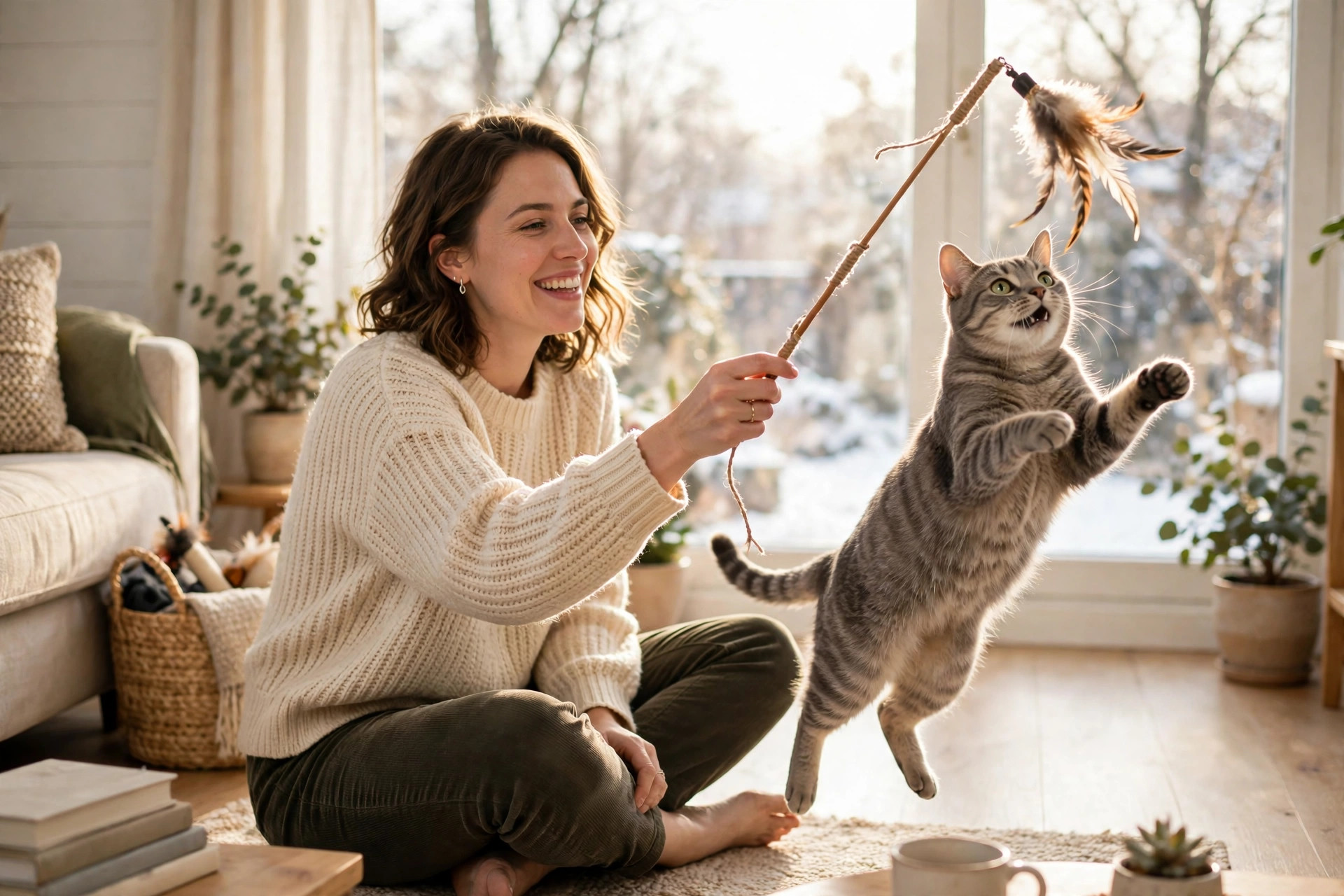
Once illness is ruled out, these seven steps reliably pull most cats out of their winter slump. Start with the first three — they make the biggest difference.
1. Play every day, twice a day
Two short play sessions of 10–15 minutes beat one long one. Use a wand toy that mimics prey — darting, hiding behind furniture, pausing so your cat can stalk. End each session with a small treat so the “hunt” ends in a catch. This single habit fixes most boredom-driven winter blues.
2. Give her the sun
Clear a windowsill or set up a perch in the sunniest window in the house. Cats seek out light and warmth instinctively, and a bright resting spot helps reset the body clock that short days have disrupted. If your windows get little direct sun, a warm spot near a safe heat source works too.
3. Make a warm, enclosed nest
A raised-rim donut bed or a covered cave bed in a quiet corner gives your cat a warm, sheltered place to sleep properly — which matters, since cold-disrupted sleep is part of why she is napping so much. Put the bed where she already likes to sleep rather than where you think it looks best.
Also Read: Do Calming Cat Beds Work? Vet-Approved Guide (2026) — the raised-rim design genuinely helps many cats feel more secure in winter.
4. Rotate toys and add puzzle feeders
Put half the toys away and swap them every few days so old toys feel new again. A puzzle feeder or treat ball turns mealtime into a hunting game and gives an indoor cat something to work at when she cannot go outside.
5. Keep the routine steady
Cats are creatures of habit, and winter already changes enough around them. Feed at the same times, play at the same times, and keep the household calm and predictable. A steady routine is one of the most effective anti-stress tools you have.
6. Watch the food bowl, not just the mood
Winter weight gain sneaks up fast when activity drops. Keep portions measured rather than free-feeding, and weigh your cat monthly through winter. If she is eating more and moving less, a small portion cut now prevents a bigger weight problem by spring.
7. Spend quiet time together
Not every fix involves a toy. Sitting with your cat, gentle brushing, or simply being in the same room while she naps all count. Cats that feel connected to their people cope better with a dull season — and honestly, most owners feel a bit better too.
Do Indoor Cats Get It Worse?
Often, yes. An indoor-only cat loses the most when winter arrives: the garden, the birds at the window, the long sunny naps on warm paving. Outdoor cats still get some of that on milder days, while an indoor cat’s entire world is whatever you provide. That makes winter enrichment — play, window perches, puzzle feeders, and new scents like cat-safe herbs — more important for indoor cats than at any other time of year.
Outdoor and community cats face the opposite problem: cold itself is the danger, not boredom. If you care for outdoor cats, shelter and unfrozen water matter far more than mood.
Also Read: How to Keep Outdoor Cats Warm in Winter (2026) — shelter, straw bedding, and unfrozen water cover almost everything an outdoor cat needs.
Frequently Asked Questions
Do cats get seasonal affective disorder?
There is no scientific proof that cats get SAD the way humans do. However, seasonal changes in light and temperature do affect cats: they sleep more, play less, and can seem withdrawn in winter. Vets treat it as a seasonal behaviour change, not a diagnosed mood disorder.
Why is my cat sleeping so much in winter?
Cats normally sleep 12–16 hours a day, and winter adds to that. Cold temperatures disrupt the quality of REM sleep, so cats compensate by sleeping longer. Less daylight and less activity add to the effect. Extra sleep alone is usually normal — but sleeping more plus not eating or hiding needs a vet check.
Can cats get depressed in winter?
Cats can show low mood, low energy, and withdrawal in winter, and owners often describe it as depression. It is usually a mix of less light, colder sleep, boredom, and mirroring a quieter household. True depression as a medical diagnosis is not established in cats, so any persistent change should be checked by a vet to rule out pain or illness first.
How can I tell if my cat is sad or sick?
Seasonal changes come on gradually as days shorten and improve with play, light, and warmth. Illness usually arrives suddenly or comes with extra signs: not eating for 24 hours, vomiting, drinking much more water, limping, drooling, or hiding constantly. When in doubt, a vet visit settles it.
Do cats eat more in winter?
Many cats do eat a little more in winter, partly because they burn extra calories staying warm and partly out of boredom. Outdoor cats genuinely need more food in cold weather. Indoor cats usually do not — watch portions and weigh your cat monthly so winter snacking does not become spring weight gain.
What helps a cat with the winter blues?
Daily play sessions, a sunny window perch, a warm enclosed bed, puzzle feeders, a steady routine, and quiet time with you. If the low mood does not lift within two weeks of extra enrichment — or if appetite drops — book a vet check.
Final Thoughts
So, do cats get the winter blues? Not in the clinical sense — but the season genuinely changes them. Shorter days reset their body clocks, cold nights make their sleep less restful, and a quieter house gives them less to do. For most cats, a few weeks of extra play, sunlight, and warmth is all it takes to bring the sparkle back.
The golden rule is simple: treat a gradual winter slowdown with enrichment, and treat anything sudden, or anything involving appetite, with a vet visit. Your cat cannot tell you whether she is bored or unwell — but with a little attention, you can usually tell the difference. And if the naps stretch a little longer this winter, do not worry too much: somewhere in a sunny window, she is probably exactly where she wants to be.
By Dr. Ayaz Ali