
Big, blue-eyed, and famously floppy — the Ragdoll is one of the most loved cat breeds in the world. But behind that angelic face sits a gentle giant with very specific needs, from heart screening to daily companionship. If you’re wondering whether this “puppy-like cat” fits your life, this ragdoll cat breed guide covers everything you need to know before you commit: temperament, size, grooming, health risks, diet, and the real cost of ownership.
Ragdolls earned their name from their habit of going completely limp — like a child’s ragdoll — when picked up and cuddled. They are large, slow-maturing cats that follow their people from room to room and prefer a calm indoor life. Understanding this breed properly is the key to a happy, healthy Ragdoll.
Table of Contents
- What Is a Ragdoll Cat?
- Ragdoll Breed at a Glance
- Ragdoll Cat Temperament & Personality
- Size, Appearance & Coat
- Ragdoll Cat Care: Daily Needs
- Ragdoll Cat Health Issues to Know
- Is a Ragdoll Right for You?
- Ragdoll Kitten & Breeder Tips
- Frequently Asked Questions
What Is a Ragdoll Cat?
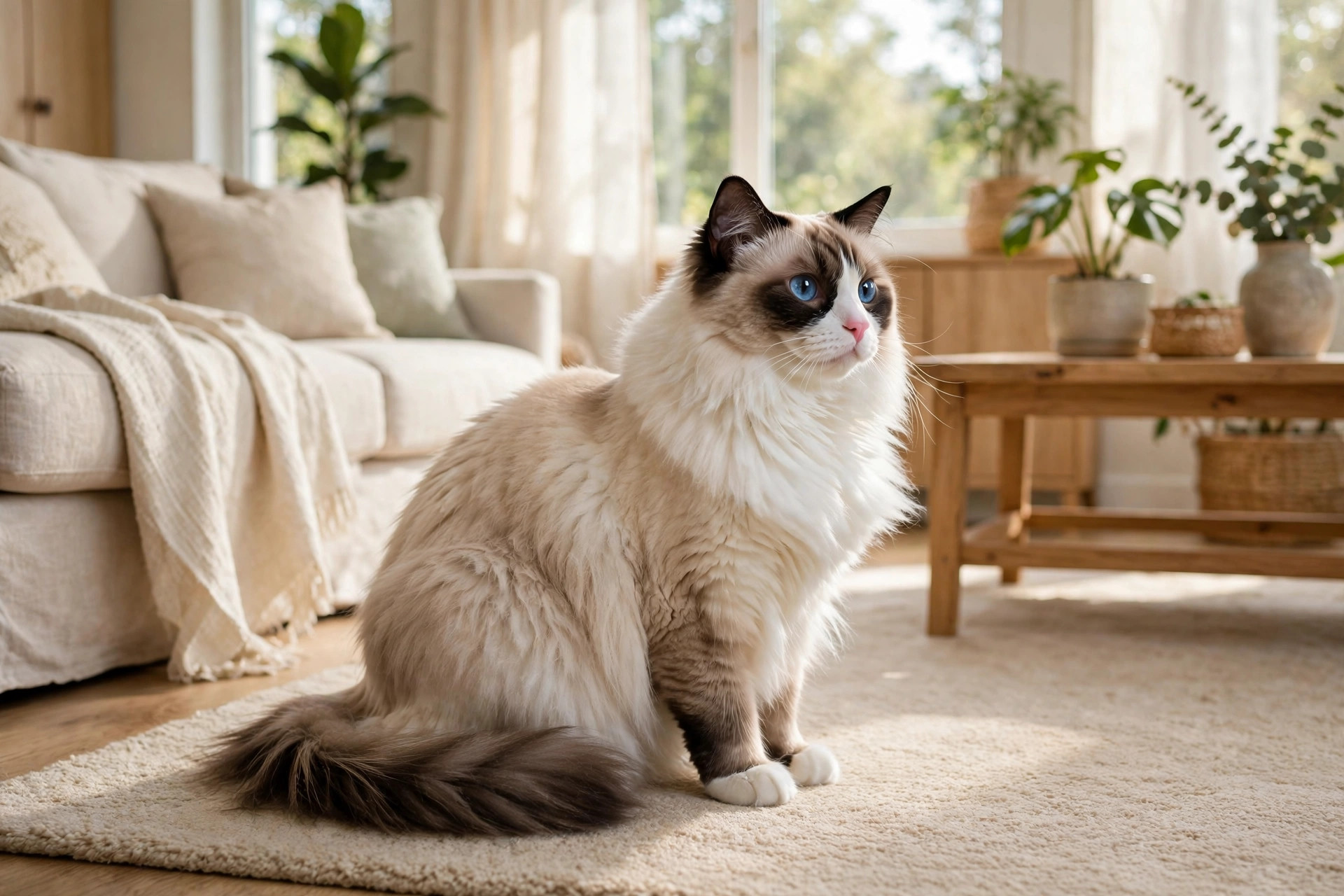
The Ragdoll is a large, semi-longhaired breed developed in California in the 1960s. It was selectively bred for one thing above all else: temperament. Generations of careful breeding produced a cat that is exceptionally tolerant of handling, deeply attached to its humans, and famously relaxed.
According to veterinary references including PetMD, the Ragdoll’s signature trait is going loose and floppy when held — the behavior that gave the breed its name. This is not a myth: most Ragdolls genuinely relax in arms rather than squirming to escape, which makes them unusually easy to handle for grooming and vet visits.
Don’t mistake gentleness for low intelligence. Ragdolls are smart, routine-driven cats that learn household patterns quickly, respond well to positive reinforcement, and can even be leash-trained. They simply prefer to spend their energy near you rather than racing around the house.
Ragdoll Breed at a Glance
| Trait | Details |
|---|---|
| Origin | California, USA (1960s) |
| Size | Large — males 15–20 lbs (7–9 kg), females 10–15 lbs (4.5–6.8 kg) |
| Maturity | Slow — full size and coat at 3–4 years |
| Coat | Semi-long, silky, minimal undercoat — moderate shedding |
| Eye color | Always blue (deeper shades prized) |
| Patterns | Colorpoint, mitted, bicolor; seal, blue, chocolate, lilac, red, cream |
| Lifespan | 12–17 years with proper care |
| Best for | Families, seniors, first-time owners, calm households |
Ragdoll Cat Temperament & Personality
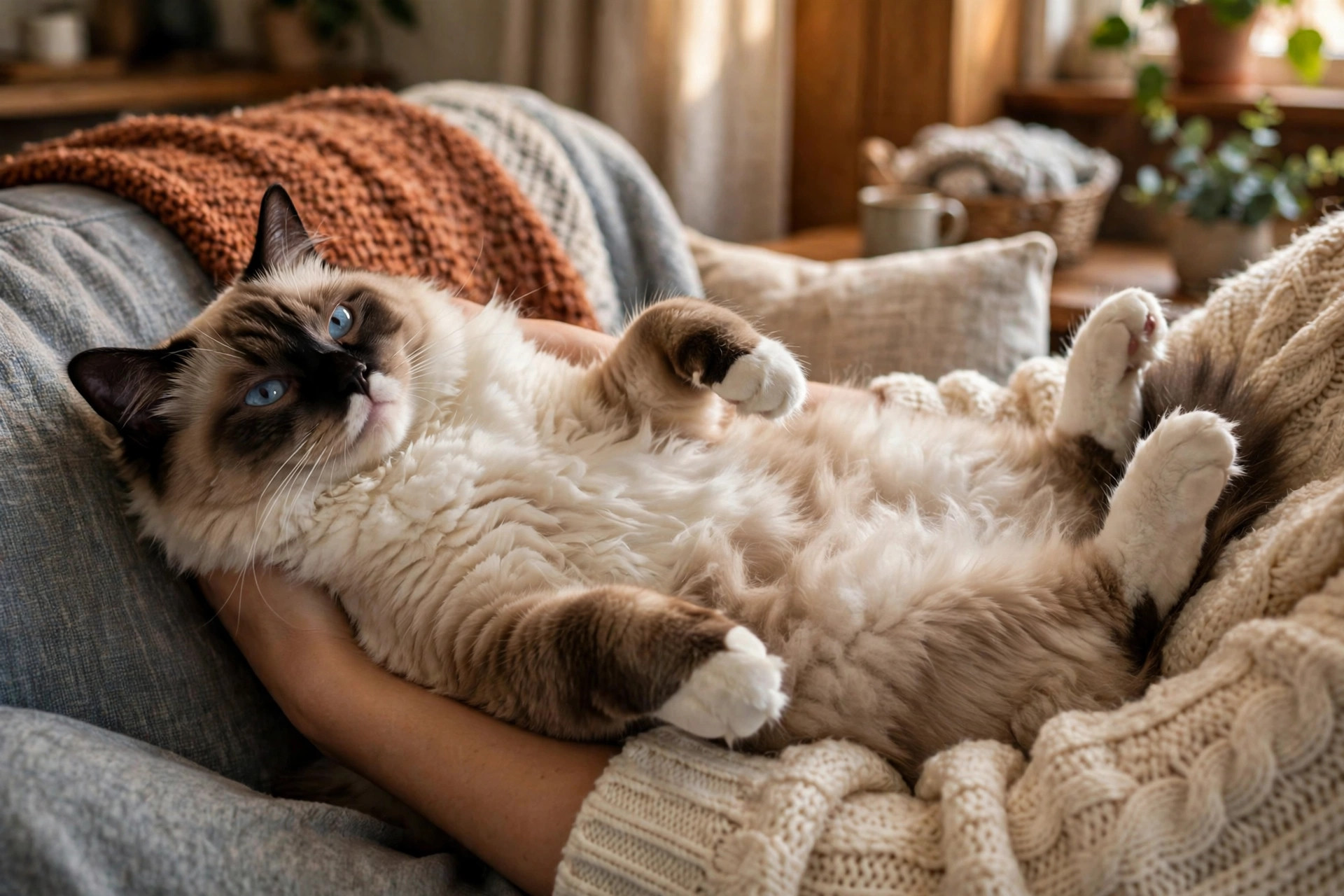
Ragdoll temperament is the reason the breed exists — and the reason it stays popular. Here’s what living with one actually feels like:
1. Exceptionally Affectionate and People-Oriented
Ragdolls are often called “puppy-like” because they greet you at the door, follow you from room to room, and settle beside you — or on you — whenever you sit down. They crave human company far more than the average cat, which makes them wonderful companions but a poor choice for a household that’s empty 12 hours a day.
2. Calm, Gentle, and Rarely Aggressive
This is one of the most tolerant breeds alive. Ragdolls typically stay gentle with children, guests, and other pets, and they rarely bite or scratch even when annoyed. Their quiet communication style — soft chirps and trills rather than demanding yowls — suits apartments and noise-sensitive homes.
3. Trusting to a Fault — Indoor Only
That trusting nature is a double-edged sword. Ragdolls have very little street sense and tend to approach strangers and dangers instead of fleeing. Veterinarians and breeders agree: Ragdolls must be indoor-only cats. If you want safe outdoor enrichment, a secure enclosure is the answer.
Also Read: Catio Ideas: Safe Outdoor Cat Enclosure Guide (2026)
4. Trainable and Routine-Driven
Ragdolls respond beautifully to positive reinforcement. Short daily training sessions with treats teach them tricks, leash walking, and household routines fast. They thrive on predictability — regular feeding times, play sessions, and bedtime keep them calm and confident.
Size, Appearance & Coat
Ragdolls are one of the largest domestic cat breeds, and they take their time getting there. Kittens are born white, with their point coloration developing over the first months; full size and coat don’t arrive until 3–4 years of age. So don’t panic if your 8-month-old “giant” still looks gangly — there’s years of filling out ahead.
The coat is the breed’s visual signature: semi-long, plush, and silky with minimal dense undercoat. This structure means it mats far less than a Persian’s coat, but it still sheds — moderately, with a heavier seasonal shed in spring. Adult Ragdolls develop a luxurious ruff around the neck and “knickerbockers” (longer fur) on the hind legs.
All Ragdolls are pointed cats: darker color on the ears, mask, legs, and tail with a lighter body. The three accepted patterns are:
- Colorpoint: dark points, no white anywhere
- Mitted: dark points with white paws and a white belly stripe
- Bicolor: an inverted white “V” blaze on the face with white legs and belly
Colors include seal, blue, chocolate, lilac, red, and cream, with lynx (tabby) and tortoiseshell variations in every shade.
Ragdoll Cat Care: Daily Needs
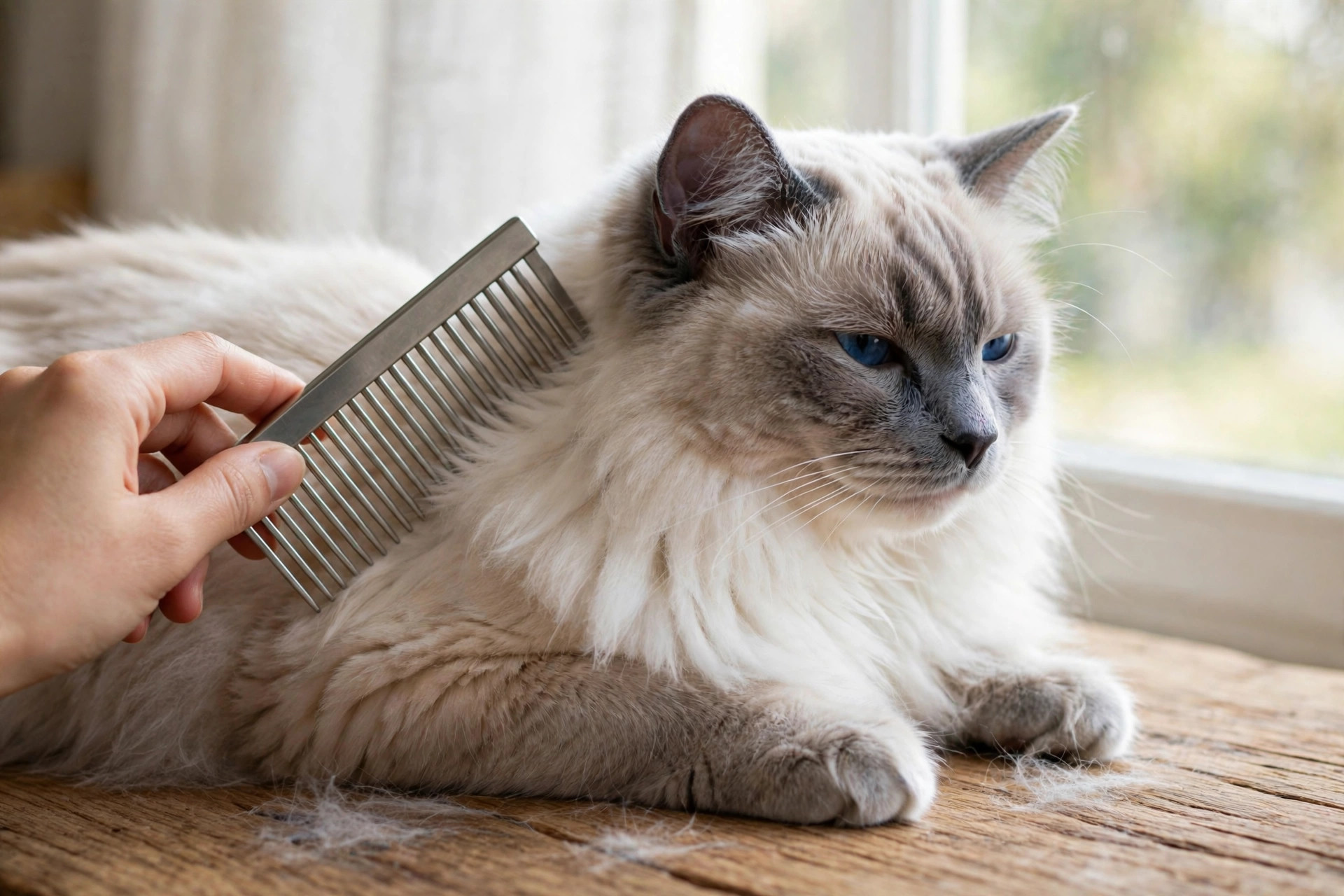
Ragdolls are lower-maintenance than their luxurious looks suggest, but they are not no-maintenance. Here’s the daily care routine:
Grooming: 2–3 Times a Week
Brush your Ragdoll with a wide-toothed metal comb two to three times a week, paying extra attention to the belly, armpits, and the ruff around the neck where tangles start. The low undercoat means mats are uncommon — but skip grooming for a couple of weeks and you’ll find them. Trim nails every 2–3 weeks and clean ears as needed.
Diet and Feeding
Feed a high-quality, protein-rich diet with measured portions — never free-feed. Ragdolls are calm, indoor, and slow to mature, which makes them prone to quiet weight gain. Obesity strains their large frames and worsens heart risk, so keep treats (including protein treats) within the 10% treat rule: all extras combined stay under 10% of daily calories. Moisture-rich wet food supports urinary health, which matters for this breed.
Also Read: Can Cats Eat Eggs? Vet-Reviewed Safety Guide (2026)
Exercise and Enrichment
Ragdolls are moderate-energy, not hyper — but they still need 20–30 minutes of interactive play daily to stay lean and happy. Feather wands, puzzle feeders, and low climbing shelves suit them better than tall cat trees, since most Ragdolls prefer staying close to the ground. A sunny window perch plus a catio or supervised balcony time covers their enrichment needs beautifully.
Litter Box and Routine
Use a large, low-sided litter box (a big cat needs a big box), scoop daily, and keep the routine predictable. Because Ragdolls bond so strongly with their humans, sudden schedule changes can stress them — a second cat or a pet sitter who visits in person helps when you’re away.
Ragdoll Cat Health Issues to Know
Ragdolls are generally healthy and long-lived, but the breed has a few well-documented concerns every owner — and every breeder you consider — must know about:
1. Hypertrophic Cardiomyopathy (HCM)
HCM — thickening of the heart muscle — is the most serious breed-specific concern. Ragdolls carry a specific mutation (MYBPC3) linked to the disease, and studies suggest a significant share of the breed carries at least one copy. A DNA test exists, and responsible breeders test both parents. Ask for the results in writing before you buy — no exceptions.
2. Polycystic Kidney Disease (PKD)
Less common in Ragdolls than in Persians, but present in some lines. Fluid-filled cysts develop in the kidneys over time, eventually impairing function. A DNA test is available; ethical breeders test and only breed PKD-negative cats.
3. Urinary Tract Issues and Bladder Stones
Ragdolls can be prone to urinary discomfort and bladder stones. Prevention is straightforward: a moisture-rich diet (wet food over dry), constant fresh water — many Ragdolls drink more from a fountain — and clean, multiple litter boxes. Straining to urinate or blood in the urine is a vet emergency, especially in males.
4. Obesity
A calm, indoor, food-motivated cat is an obesity risk. Weigh your Ragdoll regularly, measure meals, and keep up daily play. Extra weight doesn’t just slow them down — it compounds heart and joint strain in an already large breed.
5. Dental Disease
Like many purebreds, Ragdolls benefit from dental attention: regular tooth brushing, dental treats, and vet dental checks. Dental disease is painful and easily missed in a stoic cat.
Schedule vet checkups every 6–12 months, keep vaccinations current, and ask your vet about periodic heart screening (echocardiogram) as your Ragdoll ages — especially if the parents’ HCM status is unknown.
Is a Ragdoll Right for You?
A Ragdoll is a great fit if: you want a deeply affectionate, gentle companion; you have children or other pets and need a tolerant breed; you work from home or have family around most of the day; and you can commit to regular grooming, measured feeding, and an indoor-only lifestyle.
Reconsider if: you’re away from home for very long hours (Ragdolls can suffer from loneliness); you want an independent, low-interaction cat; you hoped for a hypoallergenic breed (Ragdolls are not hypoallergenic); or you want a cat that roams the neighborhood freely.
Ragdoll Kitten & Breeder Tips
If you decide on a Ragdoll, choose your source carefully. A responsible breeder will:
- Provide written HCM and PKD DNA test results for both parents
- Raise kittens in a home environment with early handling and socialization
- Offer a written health guarantee (typically 1–3 years for genetic conditions)
- Ask you questions about your home — good breeders screen buyers too
- Never sell unvaccinated, unregistered kittens “cheap, no papers”
Expect to pay roughly $800–$2,500+ for a pet-quality kitten from a reputable breeder. Also consider breed-specific rescues — adult Ragdolls and Ragdoll mixes regularly need homes, and an adult’s temperament and size are already predictable.
Frequently Asked Questions
Are Ragdoll cats hypoallergenic?
No. No cat breed is truly hypoallergenic. Ragdolls shed moderately and produce the Fel d 1 protein like all cats. Some allergy sufferers tolerate them slightly better because of the low-matting coat, but don’t get a Ragdoll expecting allergy-free living.
How long do Ragdoll cats live?
A healthy Ragdoll typically lives 12–17 years with proper nutrition, regular vet care, and a safe indoor environment.
Do Ragdoll cats shed a lot?
Moderately. Their semi-long coat lacks a dense undercoat, so they shed less than you’d expect — but expect more shedding in spring and regular loose hair on furniture. Brushing 2–3 times a week keeps it manageable.
Are Ragdolls good with kids and dogs?
Yes — they’re among the best breeds for families. Their gentle, tolerant nature handles children and cat-friendly dogs exceptionally well. Always supervise young children with any pet.
Can Ragdoll cats go outside?
No, not unsupervised. Their trusting nature makes them vulnerable to traffic, predators, theft, and disease. A secure catio or leash walks are the safe ways to give them outdoor time.
How much does a Ragdoll cat cost?
From a reputable breeder, expect $800–$2,500+ for a pet-quality kitten, with show-quality lines costing more. Budget also for quality food, grooming supplies, litter, and annual vet care.
Do Ragdolls really go limp when picked up?
Most do, yes — it’s the trait the breed was named for. Not every individual goes fully limp, but the vast majority relax noticeably in arms compared to other breeds.
Final Thoughts
So, is the Ragdoll the right cat for you? If you want a large, gentle, deeply affectionate companion that treats you like the center of its world, few breeds deliver like the Ragdoll. Just go in with open eyes: commit to indoor-only living, brush that silky coat a few times a week, measure the meals, insist on HCM and PKD testing from your breeder, and give them the daily companionship they crave.
Do that, and you’ll understand why Ragdoll owners so often say the same thing: once you live with one, no other cat quite compares.