
When your cat turns seven, you might notice small changes: longer naps, a little stiffness after resting, maybe a bit less interest in the high shelf she used to conquer in one leap. It’s easy to chalk these up to “just getting older” — but here’s the truth: senior cat checkups are the single best tool you have for catching age-related disease early, when it is most treatable.
Cats are masters at hiding illness. By the time an older cat shows obvious symptoms, a condition like kidney disease or hyperthyroidism may be well advanced. That is why veterinarians recommend stepping up preventive care once your cat hits the senior years — and why knowing exactly what happens at a senior cat checkup matters.
In this vet-informed 2026 guide, we’ll walk through the 7 essential screenings every cat over 7 should get at the vet, how often to go, what the tests actually detect, and the subtle at-home signs that mean “book an appointment now.”
Table of Contents
- When Does a Cat Become “Senior”?
- How Often Should Senior Cats See the Vet?
- 1. Full Physical Exam & Weight Tracking
- 2. Blood Work: CBC & Chemistry Panel
- 3. Urinalysis (Urine Testing)
- 4. Thyroid (Total T4) Test
- 5. Blood Pressure Measurement
- 6. Dental & Oral Health Exam
- 7. Imaging & Heart Screening (When Indicated)
- Warning Signs: Book a Vet Visit Now
- What Does a Senior Cat Checkup Cost?
- Frequently Asked Questions
- Final Thoughts
When Does a Cat Become “Senior”?
A cat is generally considered senior from age 7 and geriatric from around 11–14, depending on the guidelines your vet follows. Thanks to better nutrition, indoor living, and modern veterinary care, cats routinely live into their late teens and even twenties — but the conditions that shorten those years start quietly.
The most common age-related conditions in cats include chronic kidney disease (CKD), hyperthyroidism, high blood pressure (hypertension), diabetes mellitus, arthritis, dental disease, and cancer. Cornell University College of Veterinary Medicine stresses a key point: “growing older is not a disease.” Gradual behavior changes — sleeping more, jumping less — are often early signs of a treatable condition, not just age.
How Often Should Senior Cats See the Vet?
Per current feline senior-care guidelines (including the updated iCatCare CKD guidelines reported by dvm360):
- Ages 7–10: a full senior wellness exam once a year, with blood work and urine testing.
- Over 10: twice a year — a complete senior cat checkup every six months, since health status can change rapidly at this stage.
Think of it this way: one year in your senior cat’s life is roughly equivalent to four to five years of a human’s. Skipping an annual visit is like a person skipping their doctor for half a decade.
Also Read: Cat UTI Symptoms: Urinary Problems Every Owner Must Know (2026)
1. Full Physical Exam & Weight Tracking
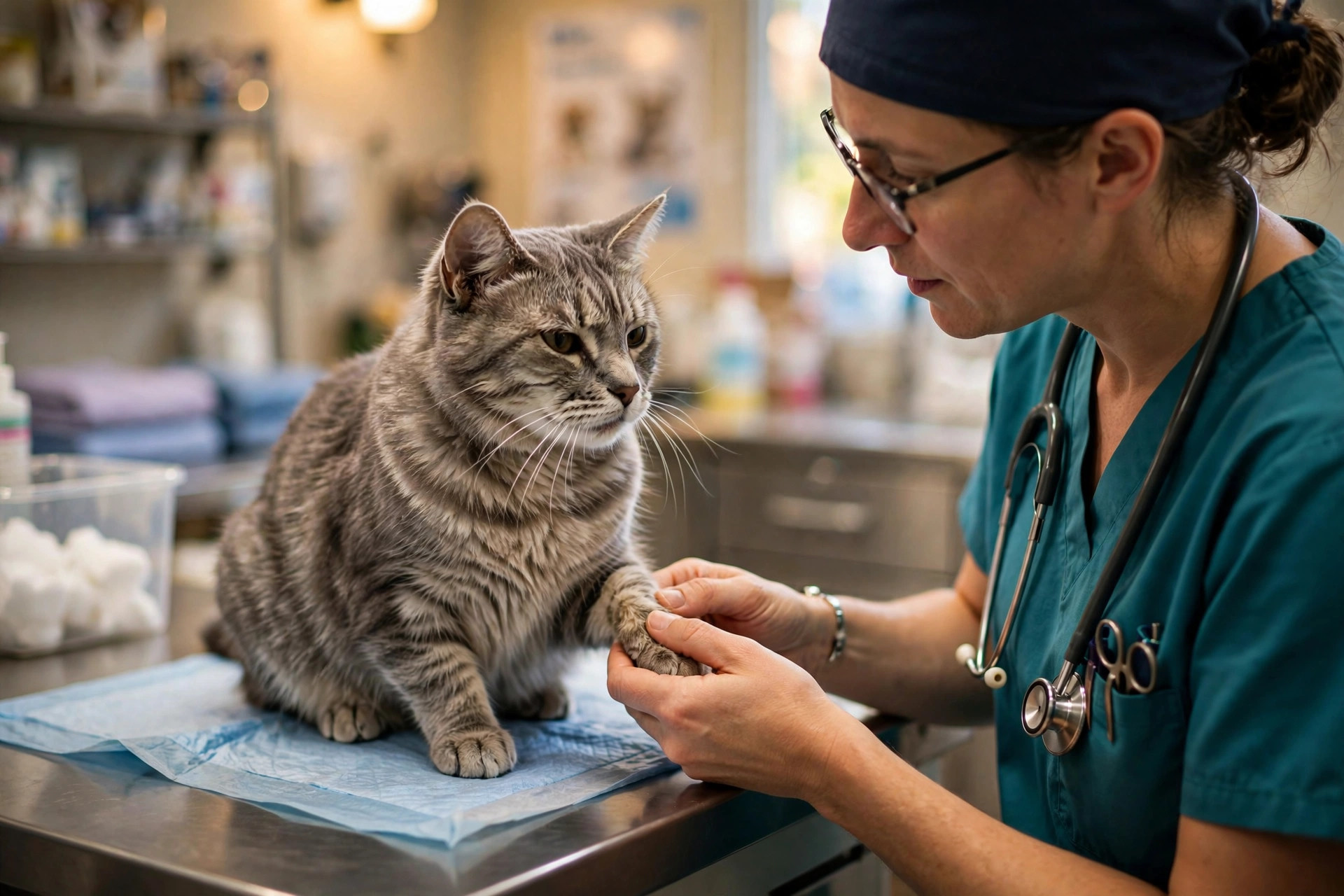
Every senior cat checkup starts with a nose-to-tail physical exam: eyes, ears, mouth, skin and coat, lymph nodes, heart and lungs, abdomen, joints, and nails. Your vet will also record a body condition score — a hands-on assessment of whether your cat is under, at, or over ideal weight.
Weight trends matter more than any single weigh-in. Slow, unintentional weight loss in a senior cat is one of the most important early red flags — it is a hallmark of hyperthyroidism, kidney disease, diabetes, and even cancer. Many clinics keep a weight chart on file so small changes (a few ounces lost between visits) get flagged before they become pounds.
2. Blood Work: CBC & Chemistry Panel
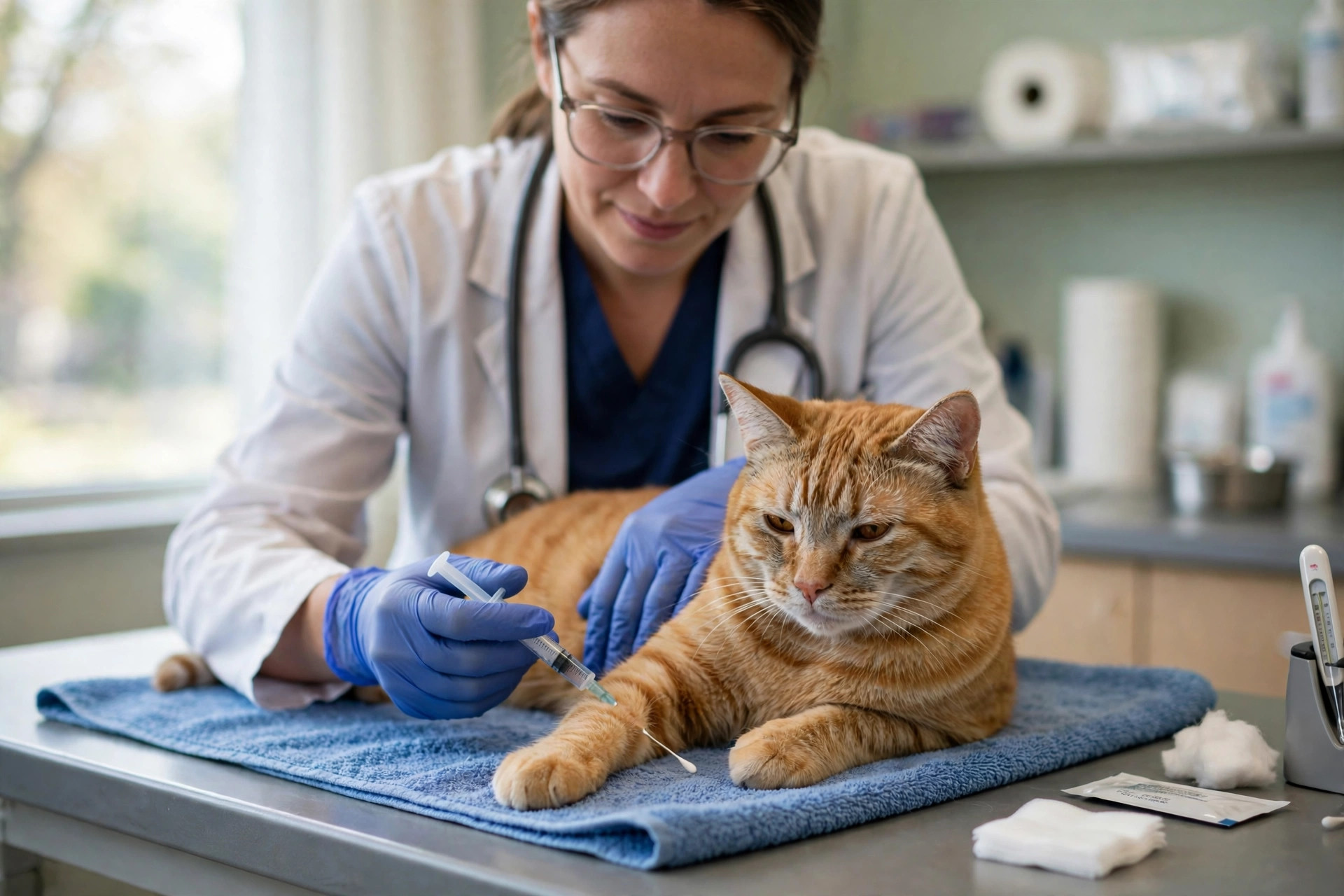
Blood work is the backbone of senior cat checkups. The standard senior panel includes:
- Complete blood count (CBC): detects anemia, infection, and blood-cell abnormalities.
- Serum chemistry panel with electrolytes: kidney values (BUN, creatinine), liver enzymes (ALT, ALP), total protein, calcium, phosphorus, sodium, and potassium.
- SDMA (symmetric dimethylarginine): a newer kidney biomarker that can flag declining kidney function months before creatinine rises. Current guidelines propose a higher threshold (18 µg/dL) for older cats compared with the standard 14 µg/dL cutoff.
- Fructosamine or blood glucose: screens for diabetes.
Early kidney detection is the big win here: vets consider a declining urine specific gravity — before BUN and creatinine even leave the normal range — one of the earliest clues of fading kidney function. That is why blood work is always paired with the next screening on our list.
3. Urinalysis (Urine Testing)
Urinalysis checks how well your cat’s kidneys are concentrating urine, and screens for urinary infections, glucose (diabetes), and protein loss. A urine specific gravity below 1.035 in a cat is one of the earliest signs of declining kidney function — often the first abnormality vets see in early chronic kidney disease.
Many clinics collect the sample by cystocentesis (a quick, nearly painless sterile draw directly from the bladder), because urinary tract infections — uncommon in cats generally — become more likely in older patients.
4. Thyroid (Total T4) Test
Hyperthyroidism is one of the most common diseases of middle-aged and senior cats, and thyroid disease is far more common in the geriatric cat. A total T4 blood test is the standard screen — cats over 8 should have thyroid function checked as part of every routine senior wellness panel.
Typical signs of hyperthyroidism include unexplained weight loss despite a good or increased appetite, restlessness, increased thirst and urination, and sometimes vomiting or diarrhea. The good news: it is highly treatable when caught early, with medications, diet, or radioiodine therapy.
Also Read: Feline Diabetes: Symptoms, Causes & Treatment Options
5. Blood Pressure Measurement
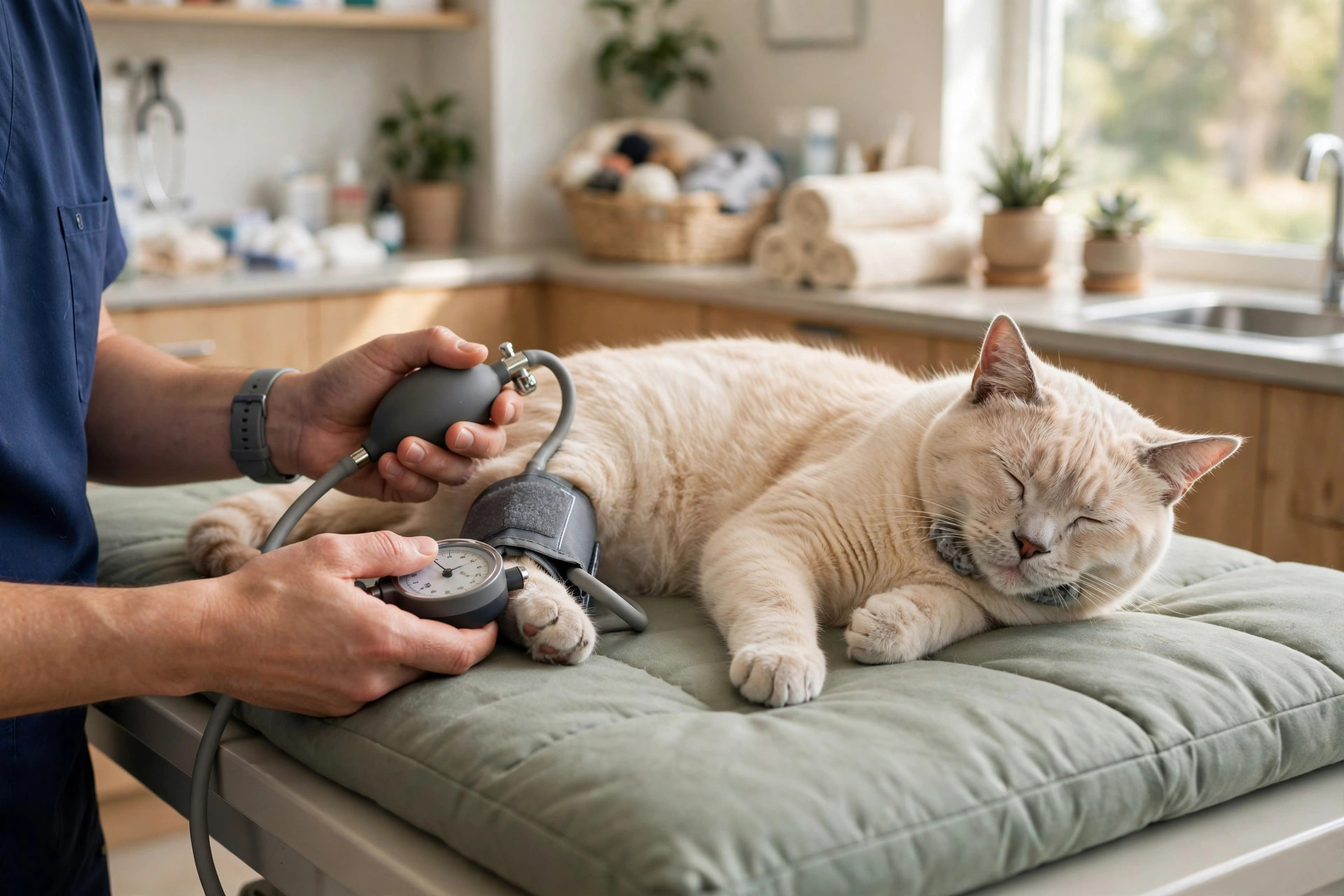
High blood pressure (hypertension) is common — and commonly silent — in older cats. It is strongly linked to kidney disease, hyperthyroidism, and diabetes, and left untreated it can damage the eyes, brain, heart, and kidneys.
Veterinary guidance recommends routine blood pressure checks in all cats over 10, and in any cat with kidney disease, diabetes, or hyperthyroidism. The measurement is done with a small cuff on the leg or tail using a Doppler instrument, and it is painless. A systolic reading persistently above 160 mmHg typically warrants investigation.
6. Dental & Oral Health Exam
Dental disease is extremely common in older cats — Cornell calls it one of the most prevalent conditions of senior cats — and it can cause significant pain while quietly reducing appetite. During senior cat checkups, your vet will grade tartar buildup, check for red or bleeding gums, loose or broken teeth, and painful conditions like feline tooth resorption.
Watch at home for bad breath, drooling, pawing at the mouth, or suddenly avoiding dry food. A professional dental cleaning under anesthesia (with full-mouth X-rays) is the gold standard when disease is found — and many cats eat noticeably better afterward.
7. Imaging & Heart Screening (When Indicated)
Not every senior cat needs imaging every year, but your vet may recommend it based on exam findings: chest X-rays to check heart size and lungs when a murmur or breathing change is found; abdominal ultrasound to visualize kidneys, liver, and other organs; and heart screening (echocardiogram/ECG) when a murmur or arrhythmia is detected, since feline heart disease often goes undiagnosed until it is advanced.
Also Read: Signs of Arthritis in Cats & How to Manage It
Warning Signs: Book a Vet Visit Now
Don’t wait for the next scheduled senior cat checkup if you notice any of these — cats hide illness, so visible signs deserve prompt attention:
- Increased thirst or urination
- Unexplained weight loss or gain
- Appetite changes — eating much more or refusing food
- Bad breath, drooling, or difficulty eating
- Reluctance to jump, stiffness after rest, or trouble using the litter box
- Increased vocalization, agitation, or confusion (especially at night — cognitive dysfunction affects up to 80% of cats over 15)
- Coughing or breathing changes
- New lumps, bumps, or non-healing sores
- Changes in litter-box habits or coat quality
What Does a Senior Cat Checkup Cost?
Costs vary by clinic, but as a rough 2026 guide: a senior wellness exam runs roughly $60–$120, a senior blood panel $150–$300, urinalysis $40–$75, blood pressure check $25–$50, and imaging $150–$400 when needed. A complete senior cat checkup with labs typically lands in the $250–$500 range — far cheaper than treating advanced disease.
Frequently Asked Questions
How often do senior cats need vet checkups?
Cats aged 7–10 need a full wellness exam with blood work and urinalysis once a year. After age 10, vets recommend a senior cat checkup every six months, because health status can change quickly in geriatric cats.
What blood tests do senior cats need?
The standard senior panel includes a complete blood count (CBC), serum chemistry panel with electrolytes, total T4 (thyroid) test, and ideally SDMA for early kidney detection. A urinalysis and blood pressure measurement complete the core senior screening set.
What are the most common diseases in senior cats?
Chronic kidney disease, hyperthyroidism, high blood pressure, diabetes mellitus, arthritis, dental disease, and cancer are the conditions vets see most in cats over 7–10 years old. Most are far more manageable when caught early through routine screening.
Is anesthesia safe for dental cleanings in older cats?
Modern anesthesia with pre-procedure blood work, monitoring, and tailored protocols is generally safe even for senior cats — the risk of untreated dental disease (chronic pain, infection spreading to organs) usually outweighs anesthetic risk. Your vet will assess your individual cat’s risk first.
My senior cat seems fine — do I really need blood work?
Yes. Cats instinctively hide illness, and early kidney disease, hyperthyroidism, and hypertension have no visible symptoms. Blood work and urinalysis at senior cat checkups catch these months before you would ever notice a problem — and early detection is what makes treatment successful.
Final Thoughts
Senior cat checkups are not about treating old age — they are about outsmarting it. The 7 screenings above (physical exam, blood work, urinalysis, thyroid test, blood pressure, dental exam, and imaging when indicated) form a safety net that catches kidney disease, hyperthyroidism, hypertension, and diabetes while they are still quiet and highly treatable.
So mark your calendar: once a year for cats 7–10, twice a year after 10. And if your senior cat starts drinking more, eating less, sleeping differently, or simply “seems off” — trust your instincts and call your vet. You know your cat better than anyone, and that vigilance is the most important screening of all.