
You notice it while your cat is kneading your lap — a thin string of saliva hanging from its chin. Or maybe you find a damp spot on the couch cushion where your cat was napping. If you are asking why is my cat drooling, the answer can be completely harmless — or it can be your cat’s way of telling you something hurts.
Here is the reassuring part: some cats drool when they are happy, and that kind of drooling never needs fixing. But new, sudden, or heavy drooling is a different story — it is one of the most common visible signs of dental disease, nausea, oral pain, or even toxin exposure in cats.
Table of Contents
- When Is Drooling Normal in Cats?
- 7 Serious Causes of Cat Drooling
- Red-Flag Symptoms: When to Call the Vet
- What to Do When Your Cat Starts Drooling
- Drooling During Car Rides and Vet Visits
- Frequently Asked Questions
When Is Drooling Normal in Cats?
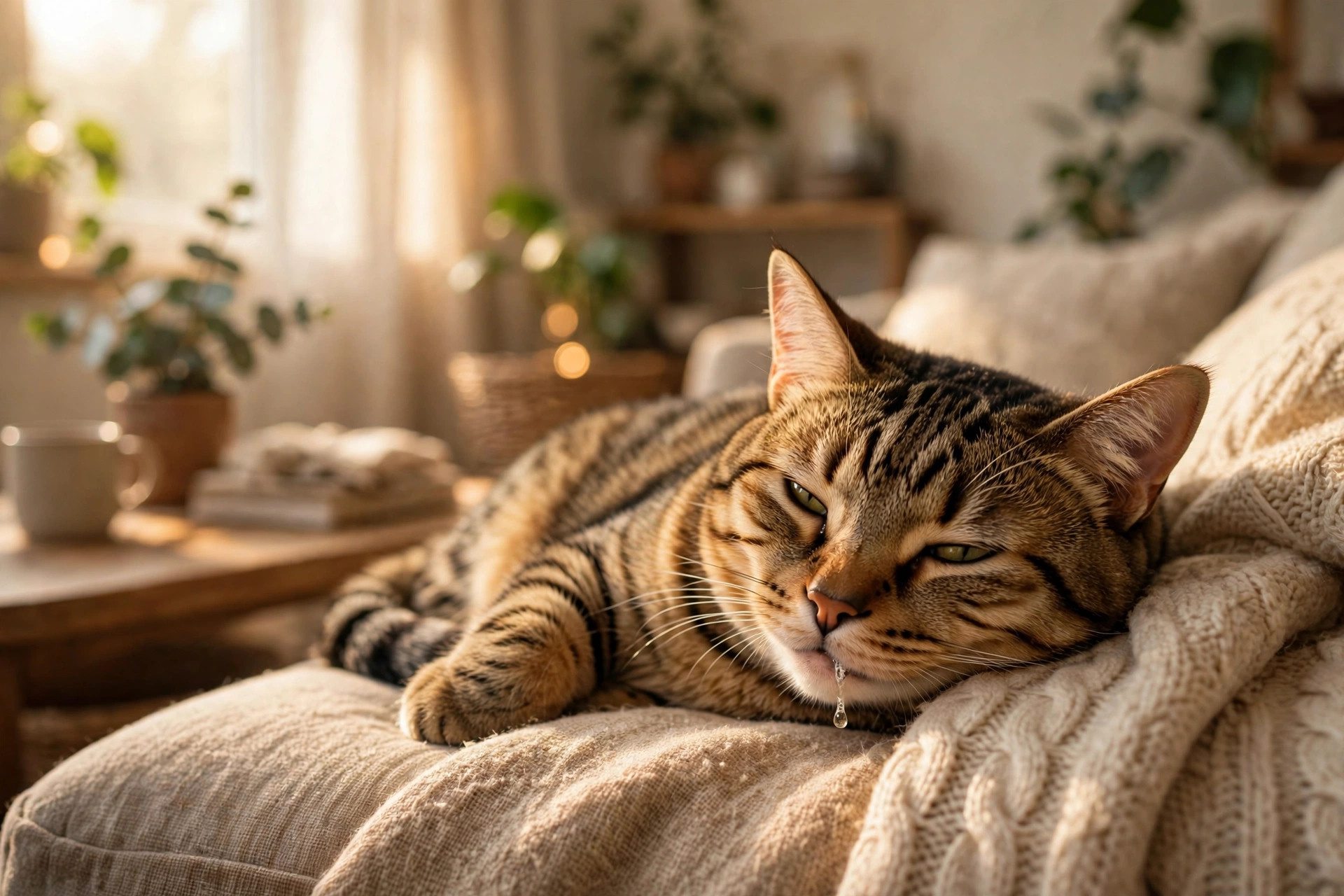
Some cats have drooled since kittenhood and never stop — usually with the same trigger: contentment. If your cat’s drooling matches the patterns below, it is almost certainly normal.
1. “Happy drool” while purring and kneading
Many cats dribble saliva when they purr, knead with their paws, or get their favorite head scratches — a habit that likely traces back to kittenhood nursing, when kneading stimulated milk flow. If your cat has done this since it was young, only while relaxed, and shows no other symptoms, it is perfectly normal: your cat is blissful.
2. Drool from the smell or taste of food
Like people, cats can salivate in anticipation of a favorite meal. Opening a can of tuna or warming wet food can trigger a little drool before the first bite. This stops as soon as the cat eats.
3. Tasting something bitter or unpleasant
A cat that licks something bitter — a medication, a plant leaf, a cleaning residue — may drool briefly while its mouth flushes the taste away. A little water usually ends it. If drooling lasts more than an hour or comes with vomiting, treat it as possible toxin exposure.
Also Read: Why Is My Cat Not Eating? Warning Signs & When to Worry (2026)
7 Serious Causes of Cat Drooling
New, sudden, or heavy drooling usually means one of the following. Note when the drooling started, what the saliva looks like, and what else your cat is doing.
1. Dental disease — the most common cause
About 70% of cats over age 3 have some form of dental disease, and it is the single most common reason for ongoing drooling. Tartar inflames the gums, broken or resorbing teeth cause sharp pain, and abscesses can form under the gumline. Typical clues: bad-smelling or blood-tinged saliva, red or bleeding gums, dropping food, and backing away from the bowl even though the cat seems hungry. Diagnosis usually requires an oral exam under sedation.
2. Stomatitis (severe mouth inflammation)
Feline stomatitis is an intense, painful inflammation of the soft tissues at the back of the mouth. The hallmark sign is a cat that approaches the food bowl eagerly and then backs away, crying. Drool is often thick and stringy. In severe cases the most effective treatment is removal of the affected teeth — and most cats feel dramatically better afterward.
3. Something stuck in the mouth or throat
String, grass, splinters, or bone fragments can wedge between teeth or under the tongue. Watch for pawing at the mouth, exaggerated chewing, or gagging. Never yank a visible string — it may be anchored deeper inside. Let your vet remove it.
4. Nausea and stomach problems
Drooling often surges just before vomiting — the body’s way of preparing. Hairballs, motion sickness, pancreatitis, or gastrointestinal disease can all trigger nausea drool. If the drool only happens on car trips, motion sickness is the likely culprit.
5. Poisoning or toxin exposure
Lily plants (even pollen or vase water can cause kidney failure in cats), household cleaners, insecticides, certain medications, and toxic foods can cause sudden, heavy, foamy drooling. This is a veterinary emergency — call your vet or an animal poison-control line immediately and bring the suspected toxin with you.
6. Kidney disease (advanced stages)
In advanced chronic kidney disease, toxin buildup in the blood (uremia) causes painful mouth ulcers and nausea, both of which produce persistent drooling. An ammonia-like breath odor is the key identifying feature. Drooling in an older cat should never be dismissed as “just aging.” Also Read: Senior Cat Checkups: 7 Vet Screenings for Cats Over 7 (2026)
7. Oral tumors or growths
Mouth cancer in cats can cause drooling identical to dental-disease drooling in its early stages. Persistent one-sided drool, bleeding from the mouth, a visible lump, or facial swelling needs a prompt vet exam — usually with a biopsy to tell the difference.
Also Read: Autumn Pet Hazards: Fall Dangers for Cats (2026)
Red-Flag Symptoms: When to Call the Vet
Any single red flag below means a same-day vet call; the emergency rows mean go now. Saliva alone cannot diagnose anything — the trigger, duration, and other symptoms are what guide the vet’s exam.
| What You See | What It May Mean | How Urgent |
|---|---|---|
| Bloody or foul-smelling saliva | Dental disease, mouth injury, oral tumor | Same-day vet |
| Pawing at mouth, dropping food | Oral pain, broken tooth, foreign object | Same-day vet |
| Drooling + not eating for 24 hours | Dental disease, nausea, systemic illness | Same-day vet |
| Thick, ropey saliva that persists | Dehydration, oral infection, kidney disease | Same-day vet |
| Ammonia-like breath + drooling | Advanced kidney disease (uremia) | Urgent vet visit |
| Foamy drool after possible toxin contact | Poisoning (lilies, chemicals, medications) | Emergency — go now |
| Drooling + collapse, seizures, breathing trouble | Severe poisoning or neurological emergency | Emergency — go now |
What to Do When Your Cat Starts Drooling
- Check the context first. Did it start during petting or purring? That is likely happy drool. Did it start suddenly, out of nowhere? Treat it as a possible medical issue.
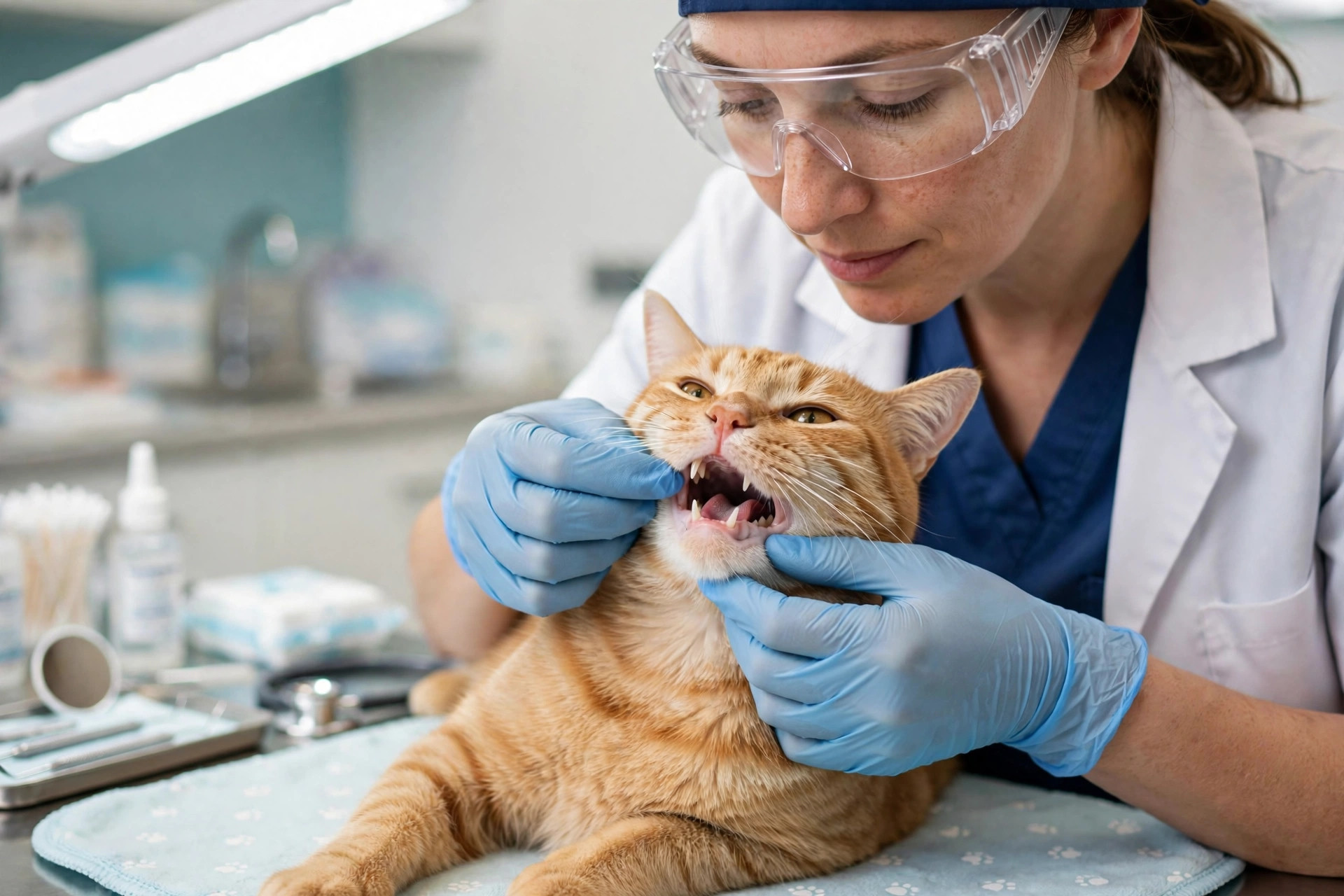
- Look inside the mouth — carefully. Lift the lip and check for red or bleeding gums, broken teeth, or a bad smell. Stop if your cat shows pain.
- Offer fresh water. A drink can flush a bitter taste and shows whether your cat can swallow normally.
- Note everything for the vet. When it started, what the saliva looks like, and the accompanying symptoms.
- Do not “wait and see” on red flags. Drooling plus not eating, lethargy, or vomiting is never a wait-and-see situation — call your vet the same day.
For dental-related drooling, treatment depends on the cause: a professional cleaning under anesthesia for tartar disease, extraction for damaged teeth, and targeted treatment for stomatitis.
Drooling During Car Rides and Vet Visits
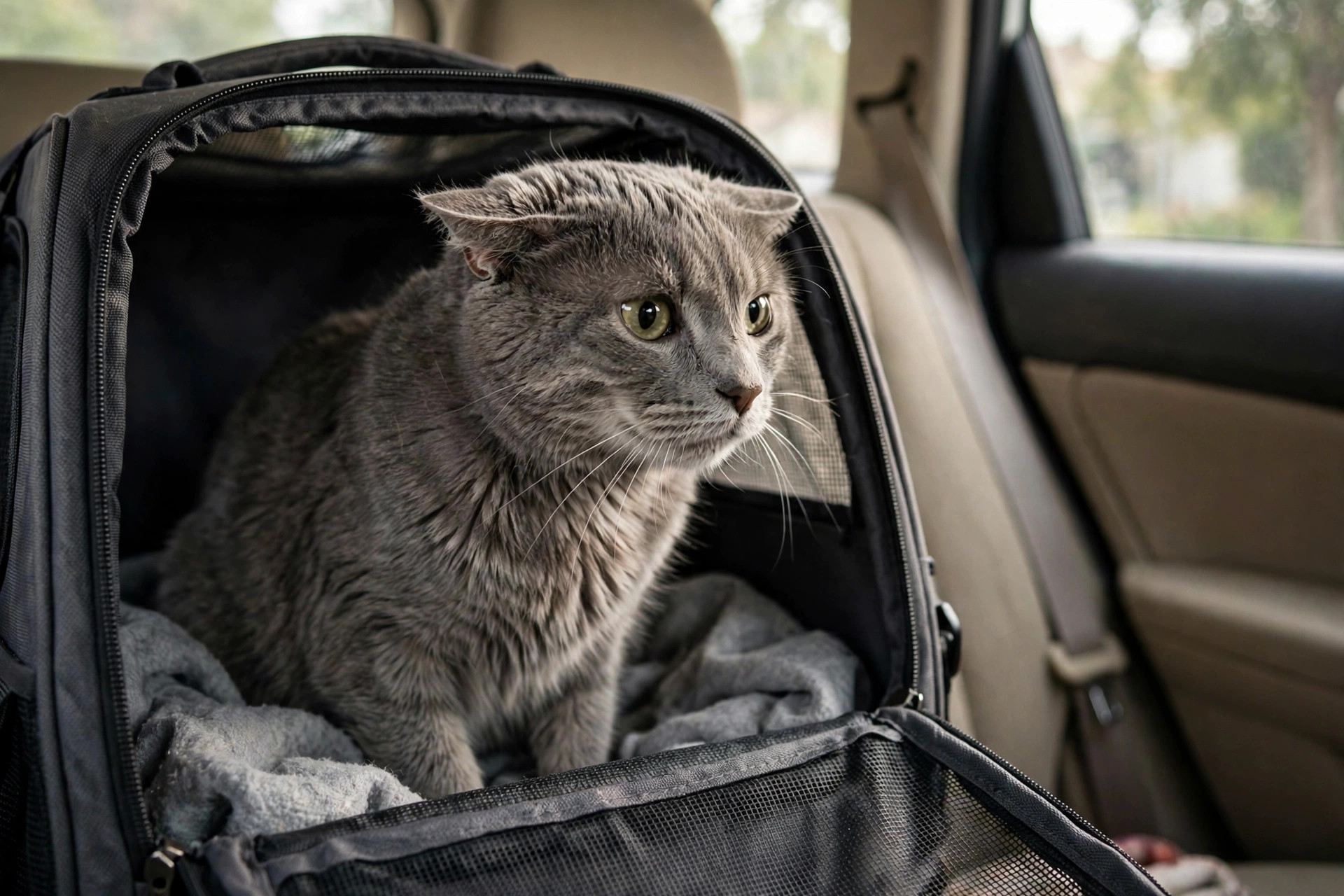
Stress drooling is the exception that proves the rule: situational, mild, and it stops when the stressor ends. Car rides and vet visits are the two most common triggers.
If your cat drools only in the carrier, the drooling itself is not a disease — but repeated stress is worth managing. Talk to your vet about calming options: leaving the carrier out at home as a cozy spot, pheromone sprays, short practice trips, and, for severely anxious cats, prescription anti-anxiety medication before travel days. Note that car-ride drooling can also be motion-sickness nausea — your vet can help you tell the two apart.
As PetMD’s veterinary guide to cat drooling notes, fear, nausea, oral pain, and toxin exposure are the four big categories — and sorting by context is exactly what your vet will do at the exam.
Frequently Asked Questions
Is it normal for a cat to drool while being petted?
Yes — this is the classic “happy drool.” Many cats dribble saliva when purring or kneading, especially if they have done it since kittenhood. As long as it only happens during relaxed moments, it is perfectly normal.
Why is my cat drooling thick saliva all of a sudden?
Sudden thick, ropey saliva usually points to dehydration, dental infection, or oral pain rather than the light, watery drool of contentment. Offer fresh water first; if the thickness persists or your cat avoids water, book a vet visit.
Why is my cat drooling and not eating?
Drooling plus appetite loss strongly signals mouth pain — dental disease, a broken tooth, or a foreign object — or nausea. Because cats risk fatty liver disease after 24–48 hours without food, call your vet the same day.
Why is my cat drooling with bad breath?
Drooling plus foul-smelling breath is one of the most reliable signs of dental disease or a mouth infection. Schedule a veterinary dental exam; most cases need a professional cleaning under anesthesia.
When is cat drooling an emergency?
Go to the emergency vet immediately if drooling comes with collapse, seizures, breathing trouble, or suspected toxin exposure (lilies, cleaners, medications). Sudden heavy foamy drool after contact with a possible poison is always an emergency.
Final Thoughts
So, why is my cat drooling? Often the answer is simple joy — a little saliva while purring and kneading is just your cat being blissful. But new, heavy, or thick drooling is your cat’s way of waving a flag: mouth pain, nausea, kidney disease, or something toxic. You know your cat’s normal — when the drooling changes, or other symptoms join in, call your veterinarian.
By Dr. Ayaz Ali