
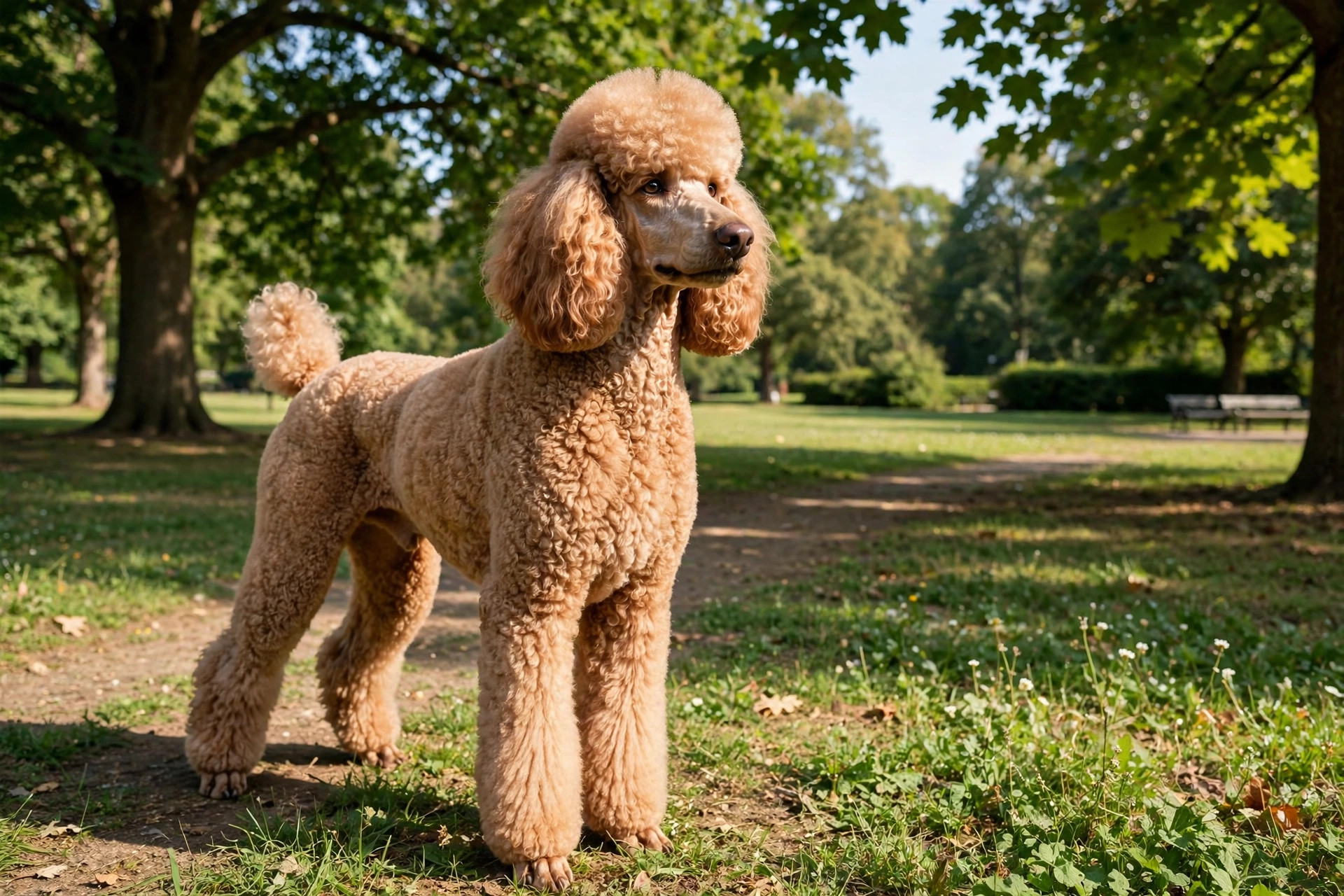
If you picture a Poodle, you probably picture a fancy haircut and a dog-show strut. But behind the famous clip is one of the smartest, most athletic, and most people-focused breeds in the world. This poodle breed guide gives you the honest, complete picture: temperament, the three sizes, grooming, exercise, health risks, and the real cost of owning one, so you can decide if a Poodle truly fits your life.
Poodles were bred as water retrievers, not lap ornaments, and that working-dog brain is still in there. A bored Poodle will invent its own entertainment, usually at your expense. A well-exercised, well-trained Poodle, on the other hand, is one of the most rewarding companions you can own.
Table of Contents
- Poodle Breed at a Glance
- Poodle Temperament & Personality
- Three Sizes, One Breed
- Exercise & Training Needs
- Grooming & Coat Care
- Feeding Your Poodle
- Poodle Health Issues to Know
- Are Poodles Hypoallergenic?
- Is a Poodle Right for You?
- Poodle Puppy & Breeder Tips
- Frequently Asked Questions
Poodle Breed at a Glance
| Trait | Details |
|---|---|
| Origin | Germany, developed as a water retriever; national dog of France |
| AKC group | Non-Sporting (Toy Poodles in the Toy Group) |
| Size | Standard over 15 in, 40–70 lbs; Miniature 10–15 in, 10–15 lbs; Toy under 10 in, 4–6 lbs |
| Lifespan | 10–18 years (smaller sizes live longest) |
| Coat | Dense, curly, single coat; very low shedding |
| Energy level | High (Standard) to moderate (Toy) |
| Temperament | Intelligent, people-focused, adaptable, energetic, friendly |
| Good with kids/pets | Good, with early socialization (supervise small children with Toys) |
| Barking | Moderate — alert barkers, can become noisy if bored |
| Best for | Active owners who enjoy training, grooming, and dog sports |
The Poodle descends from old European water dogs used to retrieve waterfowl, and its French name, Caniche, comes from “cane,” a female duck. The fancy clip has a practical origin: the shaved body and pom-poms were designed to protect a working retriever’s joints and chest in cold water while keeping the rest of the coat light enough to swim. For the authoritative breed standard, see the Poodle Club of America’s AKC breed standard.
Poodle Temperament & Personality
The poodle temperament is the breed’s biggest selling point, and its biggest trap. Poodles rank near the very top of canine intelligence studies: they learn commands quickly and remember them for life. That cleverness needs an outlet, or it turns into mischief, anxiety, or destructive chewing. Here is what living with one actually feels like:
1. Intelligent and Eager to Please
Poodles love to learn and love to work with their people. They excel at obedience, agility, rally, and trick training, and they genuinely enjoy the process. The flip side is that they notice everything, including your inconsistencies. Training has to be fair and consistent, because a Poodle will quickly learn which rules are optional.
2. Deeply People-Focused
A Poodle bonds hard with its family and wants to be wherever you are. Standards tend to be calm and dignified at home; Toys can be more sensitive and bond tightly to one person. That devotion has a shadow: Poodles cope poorly with long periods alone and can develop separation anxiety, shown through barking, pacing, or destructive chewing.
Also Read: Separation Anxiety in Dogs: Signs, Causes & How to Help (2026) — Poodles are a high-risk breed, so learn the early warning signs.
3. Sensitive, Not Tough
Poodles respond badly to raised voices and harsh corrections. A sharp tone can shut a sensitive Poodle down, while patient, reward-based training gets enthusiastic cooperation. They are usually sociable with children, other dogs, and cats when well socialized, but Toy and Miniature Poodles are small and fragile, so teach children to sit on the floor to cuddle them and never to carry them around.
4. Playful With an Off Switch (Mostly)
Poodles are cheerful, humorous dogs that stay playful well into adulthood. Standards are the most athletic of the three sizes, while Toys are the most companion-oriented. All three sizes love water and retrieving, the breed’s original trade, so do not be surprised when your Poodle tries to jump into every puddle, pool, and lake it finds.
Three Sizes, One Breed
All three Poodle sizes follow the same breed standard, with the same square build, coat, and temperament. Size changes exercise needs, fragility, and cost, not personality. Here is how they compare:
| Size | Height | Weight | Exercise | Best for |
|---|---|---|---|---|
| Standard | Over 15 in (most 22–27 in) | 40–70 lbs | 1–2 hours a day | Active families, dog sports, swimming |
| Miniature | 10–15 in | 10–15 lbs | 30–60 minutes a day | Smaller homes that still want an athletic dog |
| Toy | Under 10 in | 4–6 lbs | 30–45 minutes a day | Apartments, true companion living |
A word of warning: “teacup” Poodles are not a recognized size. Dogs marketed that way are usually undersized Toys bred for extreme smallness, and they carry higher risks of fragile bones, low blood sugar, and dental problems. Stick to the three official sizes.
Exercise & Training Needs
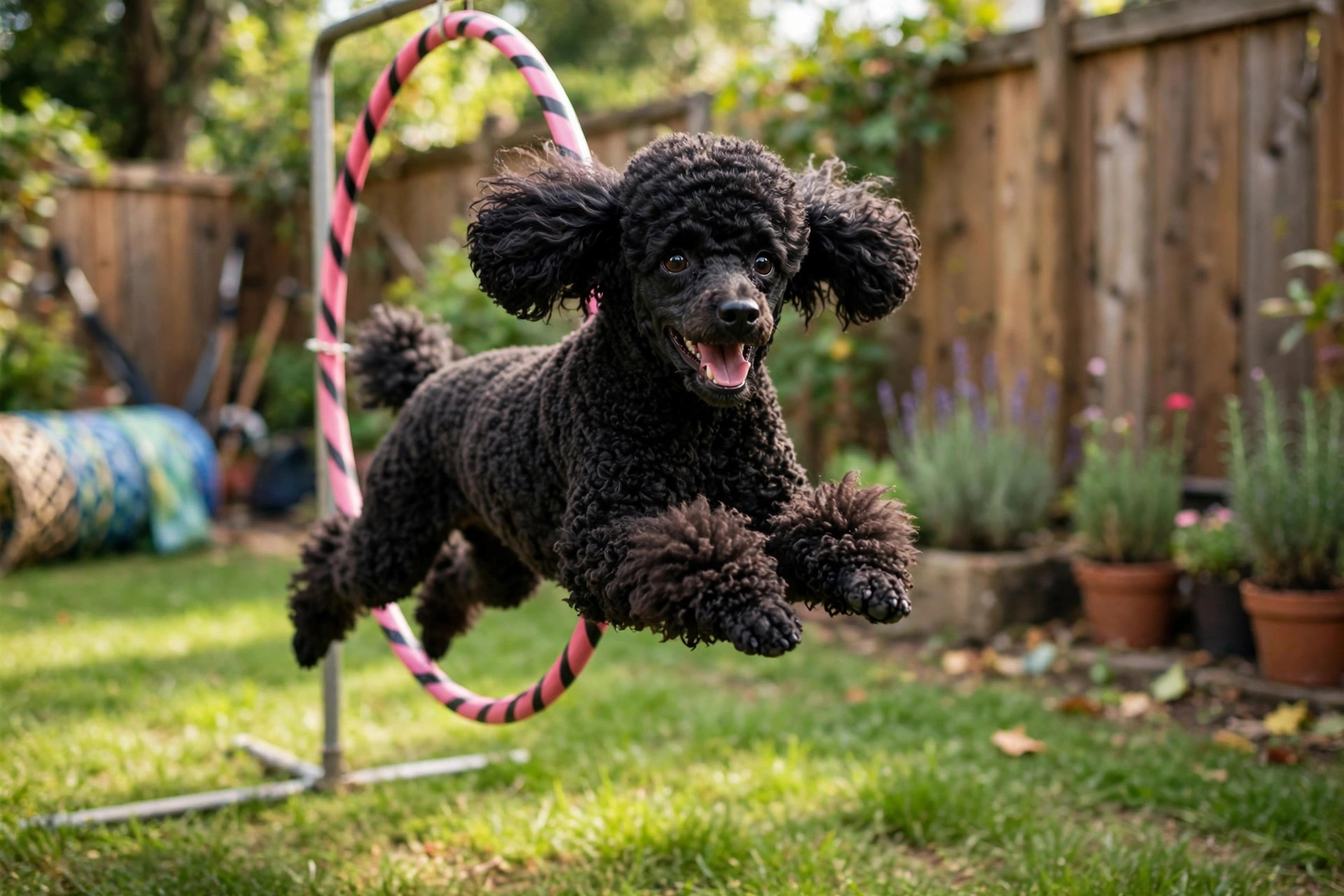
Poodles need both physical exercise and mental work. A Standard that gets two walks a day but no training will still be bored, and a bored Poodle is a destructive Poodle. A good daily plan looks like this:
- Standards: 1–2 hours of daily exercise, walks, fetch, swimming, plus training or puzzle games.
- Miniatures: 30–60 minutes of exercise a day, with regular training sessions to keep the brain busy.
- Toys: 30–45 minutes a day, plus play and short training games indoors.
Training a Poodle is genuinely fun, because they pick things up so fast. Use reward-based training and vary the exercises: tricks, obedience, agility, and retrieving games all suit them. Teach your Poodle to stand still for brushing, nail trims, and handling of the feet, ears, and face from the first weeks, because grooming is a weekly fact of life with this breed. And treat a Toy like a dog, not a toy: small Poodles still need real training, real socialization, and real boundaries.
Start socialization early. Expose your puppy to new people, dogs, sounds, and environments in a positive way, and keep it going through adolescence. A well-socialized Poodle is confident and friendly; an under-socialized one can become nervous, barky, and reactive.
Grooming & Coat Care
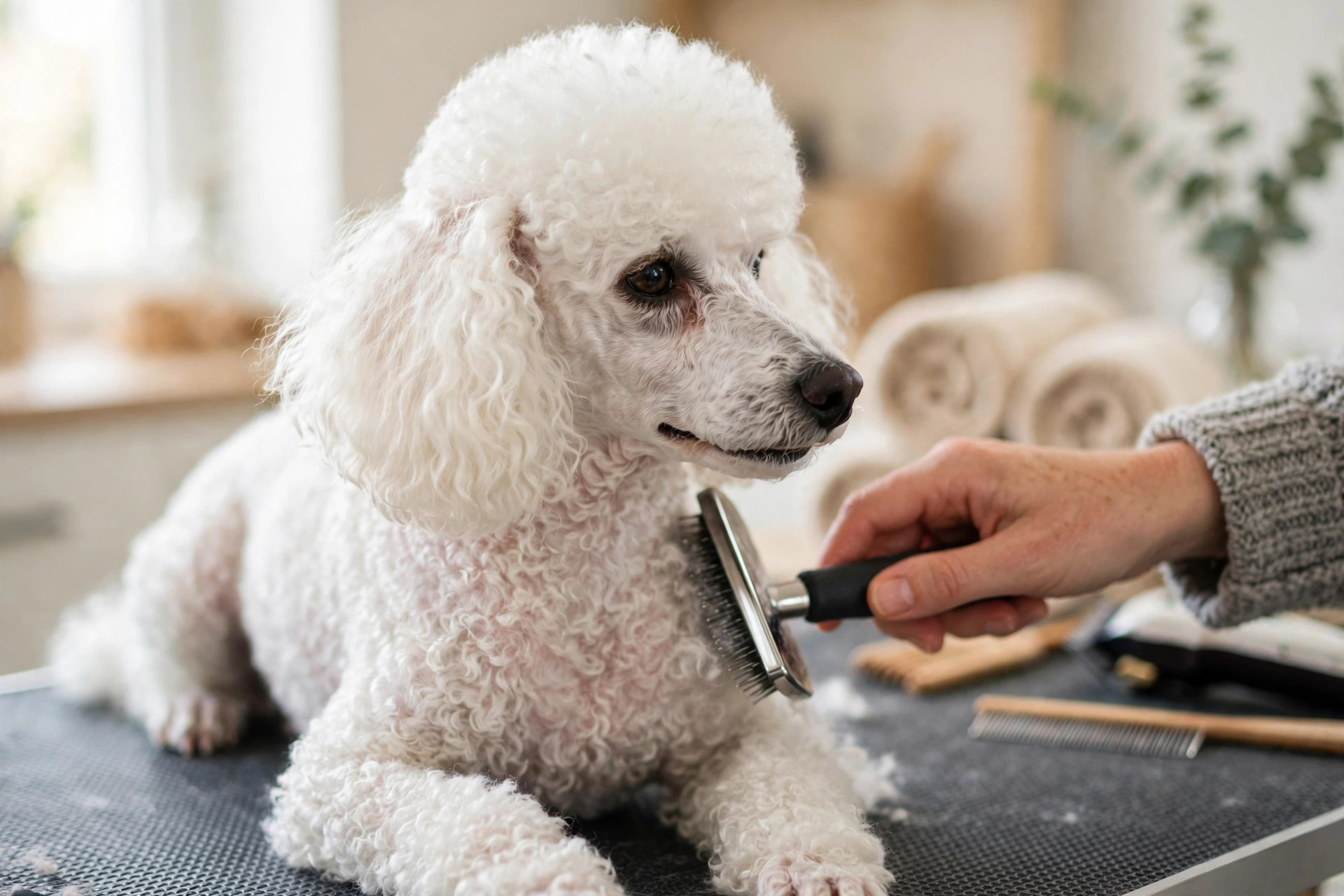
Grooming is the biggest ongoing commitment of Poodle ownership, and it is the reason many people rehome them. The low-shedding curly coat does not fall out on its own, which means loose hair stays trapped in the coat and mats quickly without regular care. The realistic routine:
- Brushing: several times a week, right down to the skin, with a slicker brush followed by a metal comb. Brushing only the surface leaves mats hiding underneath.
- Professional clip: every 4–6 weeks, either at a groomer or learned at home. Popular pet clips include the puppy cut and the lamb cut; the elaborate Continental clip is for the show ring, not the dog park.
- Bathing: every 3–4 weeks, or as needed, with a dog-specific shampoo. Always dry the coat thoroughly and brush it out, or mats will form as it dries.
- Ears: check and clean weekly. The hairy, drop ears trap moisture and invite infection, so watch for head shaking, scratching, redness, or smell.
- Teeth: brush several times a week. Small Poodles are especially prone to dental disease from crowded teeth.
- Nails: trim every 3–4 weeks, or whenever you hear them clicking on hard floors.
Never shave a Poodle down to the skin without a reason. A short clip is fine in summer, but the coat protects against sunburn and temperature extremes. And never skip brushing between grooms: a matted Poodle is a painful Poodle, and severe matting may force a groomer to shave the coat right down.
Also Read: Golden Retriever Breed Guide: Temperament, Care & Health (2026) — another intelligent family breed, with very different grooming demands.
Feeding Your Poodle
Feed a high-quality, balanced dog food appropriate for your Poodle’s age and size, with measured portions, never free-fed. Standards typically eat roughly 1.5–2.5 cups of dry food per day split into two meals, Miniatures about 3/4–1 cup, and Toys about 1/2–3/4 cup, but follow your vet’s guidance for your individual dog.
Two feeding rules matter more than the brand on the bag. First, keep treats under 10% of daily calories, because extra weight worsens nearly every health problem Poodles are prone to, especially joint issues. Second, Standards are a deep-chested breed at risk of bloat, so feed two smaller meals a day instead of one large meal, use a slow feeder bowl if your dog gulps food, and avoid vigorous exercise for an hour before and after meals.
Poodle Health Issues to Know
Poodles are generally healthy and long-lived, but the breed carries several well-documented risks, and they differ by size. Responsible breeders carry out health screening, and you should ask for written proof before committing.
1. Bloat (Gastric Dilatation-Volvulus) — Standards
Deep-chested Standard Poodles can develop bloat, where the stomach fills with gas and twists on itself. It is a life-threatening emergency: signs include a swollen belly, restlessness, drooling, retching without vomiting, and collapse. Feed smaller meals, avoid exercise around mealtimes, and ask your vet about preventive gastropexy surgery if your Standard is at high risk.
2. Hip Dysplasia and Joint Problems — Standards
Standards are prone to hip dysplasia, a developmental joint disorder that causes pain and arthritis. Ask breeders for hip screening results, keep your dog lean, and avoid repetitive high-impact jumping in puppies while their joints are still developing.
3. Progressive Retinal Atrophy (PRA) — All Sizes
PRA is an inherited eye disease that causes gradual vision loss, eventually leading to blindness. A DNA test exists, and responsible breeders screen for it. A dog with PRA can still live a full, happy life with a consistent home layout and patient guidance.
4. Patellar Luxation (Slipping Kneecap) — Miniatures and Toys
Small Poodles are prone to kneecaps that slip out of place, causing skipping, hopping, or a sudden limp that resolves on its own. Mild cases need weight control and muscle-building exercise; severe cases may need surgery. Ask breeders for patella screening results.
5. Ear Infections — All Sizes
Those long, hairy ears trap moisture and reduce airflow, making ear infections common in every size. Weekly ear checks and cleaning are the best prevention, and some groomers pluck ear hair on vet advice, though opinions on this vary.
6. Addison’s Disease and Sebaceous Adenitis — Standards
Standards have higher-than-average rates of Addison’s disease, a hormone disorder that causes lethargy, vomiting, and appetite loss, and sebaceous adenitis, a skin condition that causes hair loss and scaling. Both need veterinary diagnosis and long-term management, so budget for regular vet checkups.
With attentive care, Standards typically live 12–15 years, Miniatures 13–15, and Toys 12–18. Schedule vet checkups at least annually, twice a year for seniors, and keep vaccinations and parasite prevention current.
Are Poodles Hypoallergenic?
Not truly, but they are one of the best choices for allergy sufferers. No dog is completely hypoallergenic, because allergies are triggered by proteins in dander, saliva, and urine, not just shed hair. Poodles shed very little and produce less airborne dander than heavy shedders, which is why many allergy-prone owners do well with them. The honest advice: spend real time with a Poodle, ideally in the breeder’s home, before committing, and keep the coat brushed and bathed regularly to keep dander down.
Is a Poodle Right for You?
A Poodle is a great fit if: you are active and enjoy training and dog sports; you want one of the smartest, most trainable breeds alive; you can commit to brushing several times a week and a groomer every 4–6 weeks; you want a low-shedding dog; and someone is home most of the day.
Reconsider if: you want a low-maintenance, wash-and-go dog (Poodles are high-maintenance by design); you are away 10+ hours a day; you cannot budget for regular grooming plus potentially significant vet costs; or you dislike brushing, clipping, and ear cleaning as a weekly routine.
Poodle Puppy & Breeder Tips
Because Poodles are so popular, they are heavily exploited by puppy mills and backyard breeders. A responsible breeder will:
- Provide written health clearances for both parents, hips, eyes, patellas, and DNA tests appropriate to the size, not just a verbal “they’re healthy”
- Raise puppies in a home with early socialization, and offer a written health guarantee (typically 1–2 years for genetic conditions)
- Ask you questions about your home and lifestyle, because good breeders screen buyers too
- Be transparent about the breed’s grooming and health demands rather than downplaying them
Expect to pay roughly $1,200–$4,000 for a well-bred pet-quality puppy in 2026, plus $1,000–$2,000 in first-year supplies and vet costs, and roughly $1,300–$2,400 per year after that, including grooming. Also consider Poodle-specific rescues: breed rescue groups regularly have wonderful Poodles, including adults whose temperament and size are already known.
Also Read: French Bulldog Breed Guide: Temperament, Care & Health (2026) — another hugely popular companion breed, with very different exercise and health trade-offs.
Frequently Asked Questions
Are Poodles good family dogs?
Yes, especially Standards and Miniatures. Poodles are intelligent, friendly, and good with children when socialized early. Supervise small children around Toy Poodles, since they are fragile and can be injured by rough handling.
Do Poodles shed a lot?
No. Poodles shed very little, which is why they are often recommended for allergy sufferers. The trade-off is heavy grooming: brush several times a week and clip every 4–6 weeks to prevent matting.
How much exercise does a Poodle need?
Standards need 1–2 hours a day, Miniatures 30–60 minutes, and Toys 30–45 minutes, plus daily training or mental enrichment. All sizes need brain work as well as walks.
Are Poodles easy to train?
Yes, they are among the easiest breeds to train. They learn fast and love working with their people. Keep sessions short, positive, and varied, and use reward-based methods rather than harsh corrections, which sensitive Poodles handle badly.
How long do Poodles live?
10–18 years overall. Standards typically live 12–15 years, Miniatures 13–15, and Toys 12–18. Keeping your Poodle lean, well-groomed, and on a vet-monitored health plan gives it the best shot at the long end of that range.
Are Poodles hypoallergenic?
No dog is truly hypoallergenic, but Poodles are one of the best choices for allergy sufferers because they shed very little. Spend time with the breed before committing to test your own reaction.
Which Poodle size is best for apartments?
Miniature and Toy Poodles suit apartments best, thanks to their smaller size and lower exercise needs. Standards can live in apartments too, but only with a committed owner who provides 1–2 hours of daily exercise and mental work.
Final Thoughts
So, is the Poodle the right breed for you? If you want one of the smartest, most trainable dogs alive, you can commit to the grooming routine, and you enjoy an active life with a dog that truly wants to be part of everything you do, few breeds reward you like a Poodle.
Just go in with open eyes: accept the brushing and the groomer bills, commit to the exercise and training, insist on health-tested parents, and stay vigilant about ears, weight, and joints for your dog’s whole life. Do that, and you will understand why Poodle owners keep saying the same thing: once you live with one, no other dog quite compares.
By Dr. Ayaz Ali