
You are packing for a holiday trip, the suitcase is by the door, and your cat is watching you from the hallway. It is the question every cat owner asks sooner or later: how long can you leave a cat alone — for a workday, overnight, or a whole weekend?
Cats have a reputation for independence, and it is partly deserved. A healthy adult cat sleeps 12 to 16 hours a day and does not need walks or constant supervision the way a dog does. But independence has limits, and they are shorter than many owners assume. Leave a cat alone too long and you risk dehydration, a filthy litter box, separation stress, and a medical problem nobody is home to notice.
In this 2026 guide, we will walk you through exactly how long you can leave a cat alone by age and health, what can go wrong, how to set up your home before you leave, and when to book a sitter instead.
Table of Contents
- How Long Can You Leave a Cat Alone?
- Can You Leave a Cat Alone Overnight?
- Can You Leave a Cat Alone for a Weekend?
- What Can Go Wrong When a Cat Is Left Alone Too Long?
- How to Set Up Your Home Before You Leave
- Pet Sitter vs Boarding: What to Book for Longer Trips
- Signs Your Cat Struggles With Being Alone
- Frequently Asked Questions
How Long Can You Leave a Cat Alone?
The honest answer is that it depends on your cat’s age, health, and personality — but veterinary guidance converges on a clear set of limits. PetMD advises that healthy adult cats can generally be left alone for 8 to 12 hours at a time, and that any absence longer than 24 hours calls for a pet sitter who visits daily.
| Cat | Comfortable Alone Time | Absolute Maximum |
|---|---|---|
| Kitten under 4 months | 2 to 3 hours | 4 hours |
| Kitten 4 to 6 months | 3 to 5 hours | 6 hours |
| Kitten 6 to 12 months | 4 to 6 hours | 8 hours |
| Healthy adult (1 to 7 years) | 8 to 12 hours | 24 hours |
| Senior cat (7+ years) | 4 to 8 hours | 12 to 24 hours, with check-ins |
| Cat with a medical condition | Varies — ask your vet | Often only a few hours |
Think of the “comfortable” column as your everyday rule and the “maximum” column as an occasional exception, not a routine. A cat that copes fine with a 10-hour workday can still become stressed, dehydrated, or ill on a 24-hour stretch if the setup is wrong.
Kittens Need Much Shorter Absences
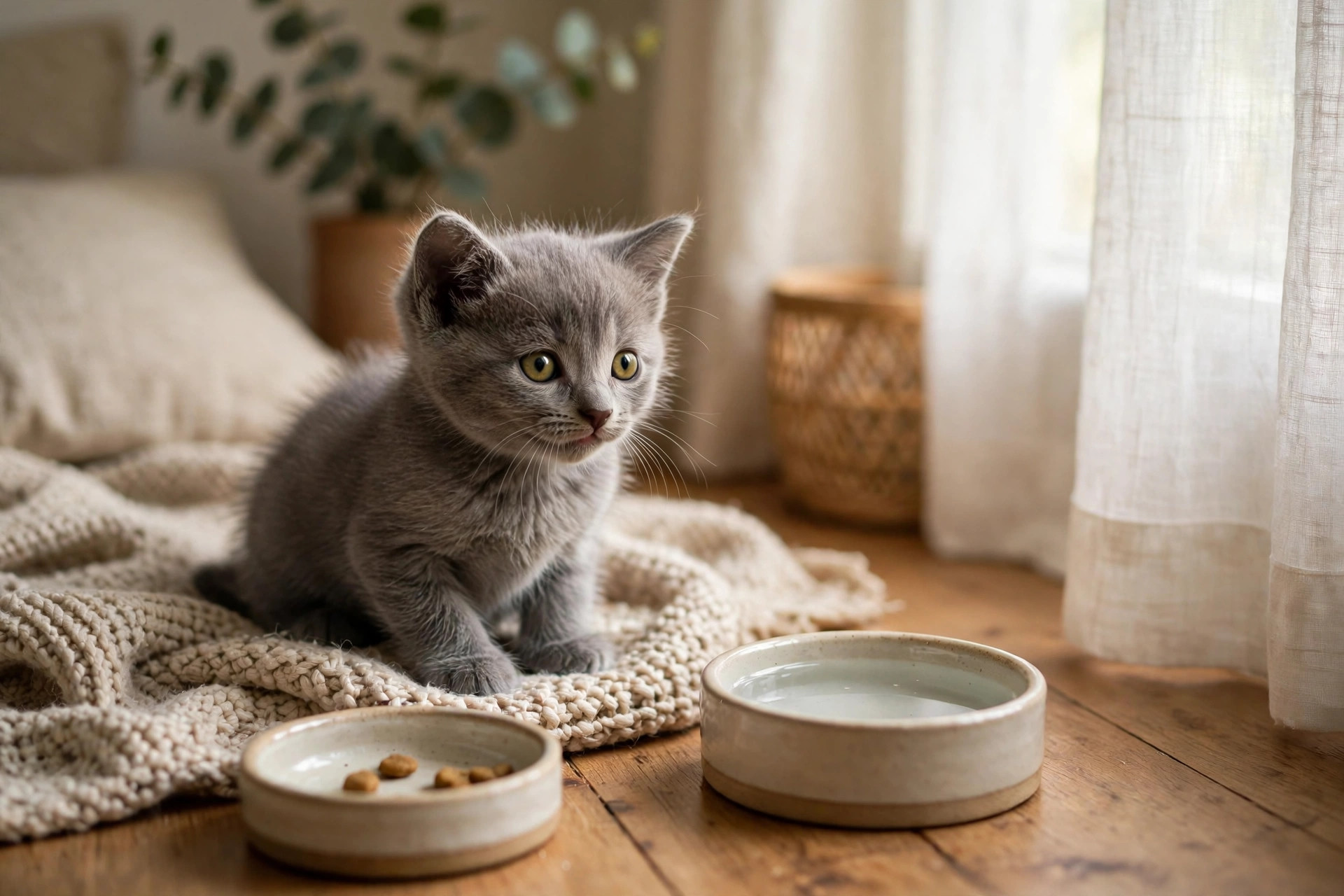
Kittens are the group most owners underestimate. Young kittens eat three to four small meals a day, have tiny stomachs, and are experts at finding trouble — chewing cords, climbing curtains, swallowing small objects. Kittens under 4 months old should not be left alone for more than about 4 hours, and very young kittens still on milk replacer need feeding every 2 to 3 hours.
By 6 months, most kittens can manage 6 to 8 hours during a normal day, as long as they have food, water, a clean litter box, and safe toys. But kittens should never be left alone overnight. If you work full-time with a young kitten, arrange a midday visit from a family member, friend, or sitter — or consider adopting two kittens, who keep each other company and learn social skills together.
Also Read: First-Time Cat Owner Checklist: 12 Things to Buy & Do (2026)
Senior Cats Creep Back Toward Kitten-Level Needs
Once a cat reaches 7 to 8 years old, shorter absences become safer again. Older cats are more likely to have kidney disease, thyroid problems, arthritis, or diabetes — and many take daily medication that cannot be skipped. A senior cat that seems fine may still need water refreshed more often, help reaching the litter box, or a check that it actually ate. For any senior, treat a daily visit as the minimum for trips, and for a frail or medicated senior, do not leave the cat without coverage at all.
Personality and Breed Matter Too
Some cats genuinely prefer solitude. British Shorthairs, Persians, Ragdolls, and Norwegian Forest Cats are among the breeds least likely to seek constant human contact, and many cope happily with a working day alone. At the other end, Siamese, Oriental breeds, Abyssinians, Maine Coons, and Devon Rex cats are famously people-oriented — research has found they seek human companionship far more often, and they are the cats most likely to develop separation-related stress when left alone for long stretches.
Can You Leave a Cat Alone Overnight?
For a healthy, confident adult cat, a single overnight — up to about 24 hours — is usually fine, provided the setup is right. Most vets put the safe overnight window at 12 to 24 hours, and feline welfare organizations such as Cats Protection recommend keeping routine absences to 12 hours or less.
An overnight stay works only if all of this is true:
- Your cat is a healthy adult with no medical condition or daily medication.
- There is more fresh water than your cat could possibly drink, in more than one spot.
- Food is measured out as dry food — never leave wet food sitting out, because it spoils within a few hours and can cause stomach upset.
- There is a clean litter box, ideally a second one, so a full box never forces your cat to go elsewhere.
- The home is cat-proofed: cords tucked away, toxic plants removed, windows secured, toilet lids closed.
- Your cat is comfortable being alone — a clingy or anxious cat should not be left overnight at all.
If any of those points fails, the overnight is too long. Cats that need regular medication, eat only wet food, or have kidney disease, diabetes, or urinary problems should not be left overnight without a visitor.
Can You Leave a Cat Alone for a Weekend?
No — not without help. A weekend takes you past the 24-hour threshold that every major veterinary source treats as the hard limit for a solo cat. Even with a mountain of dry food and extra water bowls, too much can quietly go wrong with nobody home to catch it: the water bowl gets knocked over, the automatic feeder jams, the litter box fills up, or your cat becomes ill and nobody notices.
For a two- or three-day trip, arrange at least one daily drop-in from a trusted neighbor, friend, or professional sitter who refreshes the water, scoops the litter, feeds your cat, and — most importantly — actually lays eyes on the animal. For trips of four days or more, book daily professional visits, ideally twice a day for anxious cats or multi-cat homes, or a house sitter who stays over. Auto-feeders and water fountains are supplements to a person, never a replacement for one.
One practical rule worth remembering: do not leave a cat alone for a week or more on auto-feeders alone. A real person should check in at least once a day on any trip beyond two to three days.
What Can Go Wrong When a Cat Is Left Alone Too Long?
The 24-hour limit is not about loneliness alone. It is about the things that quietly go wrong when nobody is watching:
1. Dehydration
Cats are already poor drinkers, and a spilled or dirty water bowl can leave a cat with nothing to drink for hours. Dehydration is especially dangerous for cats with kidney disease or urinary problems, and it can develop fast in warm weather.
2. A Full or Avoided Litter Box
Most cats refuse to use a dirty litter box. A cat that holds its urine or starts going outside the box risks urinary tract problems — and in male cats, a urinary blockage can become fatal within 24 to 48 hours.
3. Spoiled Food and Missed Meals
Wet food left out for more than a few hours grows bacteria. And a cat that does not eat for 24 hours risks fatty liver disease, a serious condition that can develop after just one to two days without food — faster in overweight cats.
4. Separation Stress and Anxiety
Cats look stoic, but many suffer when their routine breaks. Overgrooming, hiding, refusing food, house-soiling, and excessive meowing are all signs a cat is struggling with too much alone time. Stress itself can trigger illness, including stress-related bladder inflammation.
5. Unnoticed Emergencies
A cat can choke, injure itself, eat something toxic, or fall ill at any hour. Alone, there is nobody to spot the problem, call the vet, or give first aid. This is the real reason the 24-hour rule exists: beyond a day, the risk is not boredom, it is an emergency with no witness.
How to Set Up Your Home Before You Leave
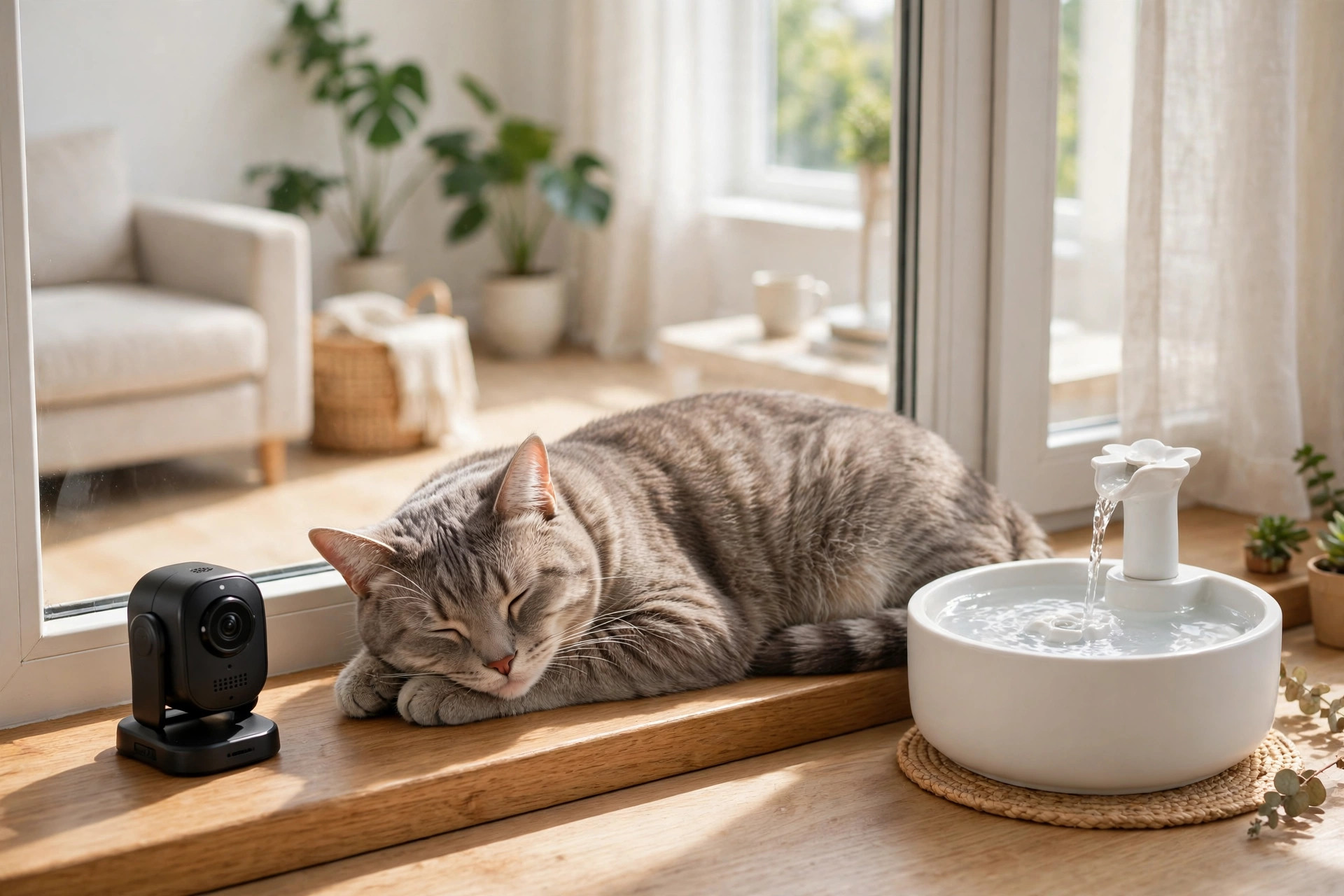
A good setup does most of the work while you are gone. Run through this checklist before any absence longer than a workday:
- Water in two places: one bowl plus a second bowl or a pet water fountain in a different room, so a single spill never leaves your cat dry.
- Measured dry food: portion out your cat’s normal daily amount. For a timed feeder, test it for a full day before you rely on it.
- An extra litter box: the rule is one box per cat, plus one extra. Scoop and top up both boxes right before you leave.
- Enrichment: a puzzle feeder or scattered kibble treasure hunt, a window perch, a cardboard box or tunnel, and a couple of rotated toys keep a home-alone cat occupied.
- A pet camera: a cheap camera lets you check that your cat is eating, drinking, and moving normally — and catch problems early.
- Cat-proofing: hide cords, lock away medicines and cleaning products, close toilet lids, secure windows and balcony doors, and move toxic plants out of reach.
- Comfort: leave a worn item of your clothing near your cat’s bed — your scent is calming — and keep the home at a normal temperature.
- Emergency info: leave your vet’s number and a spare key with a neighbor or friend, even for a single overnight.
Also Read: Indoor Cat Enrichment for Winter: 10 Ideas for Cold, Dark Months (2026)
Pet Sitter vs Boarding: What to Book for Longer Trips
For any trip longer than 24 hours, you need a person — the only question is which kind:
| Option | Best For | Watch Out For |
|---|---|---|
| Friend or neighbor drop-in | Short trips of 1 to 3 days | Make sure they know the feeding, litter, and vet details in writing |
| Professional pet sitter | Any trip over 24 hours; cats on medication | Book early for holidays; ask for photo updates at each visit |
| House sitter staying over | Long trips; anxious or senior cats | Costs more, but gives your cat company overnight |
| Boarding cattery | Last resort for longer trips | Cats are territorial — a strange place with other animals is stressful for many |
Most cats do far better staying in their own home with a sitter than in a boarding facility. Cats are territorial animals, and a cattery adds the stress of an unfamiliar place, strange smells, and other animals on top of your absence. Boarding makes sense mainly when your cat needs round-the-clock medical supervision that a sitter cannot provide.
Whichever option you choose, do a trial run first: leave your cat with the sitter or facility for a single day before a long trip, so you learn how your cat reacts while you are still nearby to fix problems.
Signs Your Cat Struggles With Being Alone
Not every cat handles alone time the same way. After any absence, watch for these signs that your cat found it harder than you expected:
- Hiding for hours after you return, or hiding in a new place
- Refusing food, or eating far less than usual
- Overgrooming, bald patches, or a dull, unkempt coat
- Litter-box accidents, or urinating outside the box
- Excessive meowing, clinginess, or following you from room to room
- Vomiting, diarrhea, or a sudden change in litter-box habits
- Destructive behavior, such as scratching furniture more than usual
One difficult trip is a learning experience — shorten the next absence, add a sitter visit, or try a pet camera so you can see what actually happens while you are gone. But if the signs persist for more than a day or two, or come with not eating or litter-box changes, book a vet visit: stress and illness look identical from the outside, and only an exam can tell them apart.
Also Read: Why Is My Cat Suddenly Hiding? Illness Warning Signs (2026)
Frequently Asked Questions
How long can you leave a cat alone during a workday?
A healthy adult cat handles a normal 8 to 12 hour workday without trouble, as long as it has fresh water, food, a clean litter box, and a safe, enriching home. Kittens under 6 months need a midday check-in.
Can I leave my cat alone overnight?
Yes, for one night — up to about 24 hours — if your cat is a healthy adult with no medication needs, and you leave extra water, measured dry food, and a second clean litter box. Cats that eat only wet food or take daily medication should not be left overnight without a visitor.
Can cats be left alone for a weekend?
Not without help. A weekend passes the 24-hour limit, so arrange at least one daily visit from a friend, neighbor, or professional sitter who refreshes water, scoops litter, feeds your cat, and checks that it is well.
How long can you leave a kitten alone?
Kittens under 4 months should not be alone for more than about 4 hours. Kittens aged 4 to 6 months can manage 3 to 5 hours, and kittens over 6 months can handle 6 to 8 hours. Kittens should never be left alone overnight.
Do cats get lonely when left alone?
Some do. Cats are often called independent, but many — especially Siamese, Orientals, Abyssinians, and Maine Coons — are deeply bonded to their people and can develop separation stress. Hiding, overgrooming, appetite loss, and litter-box changes after your return are the signs to watch for.
Is a pet camera worth it for a cat left alone?
Yes. A camera lets you confirm your cat is eating, drinking, and moving normally while you are away, and it catches problems — a knocked-over water bowl, a cat that has not moved all day — hours earlier than you would find them on your return.
Final Thoughts
So, how long can you leave a cat alone? For a healthy adult cat, a workday of 8 to 12 hours is fine, and a single overnight of up to 24 hours is manageable with the right setup. Kittens, seniors, and cats on medication need far shorter absences and daily human check-ins. And no cat should ever be left alone for more than 24 hours without someone visiting.
The real question is not how independent your cat is — it is how well your home is set up and who is checking in. Extra water, a second litter box, measured food, a pet camera, and a sitter on speed dial turn a stressful absence into an ordinary one. Plan the trip around your cat’s needs, not just your calendar, and your cat will be waiting at the door — probably unimpressed — when you get home.
By Dr. Ayaz Ali