
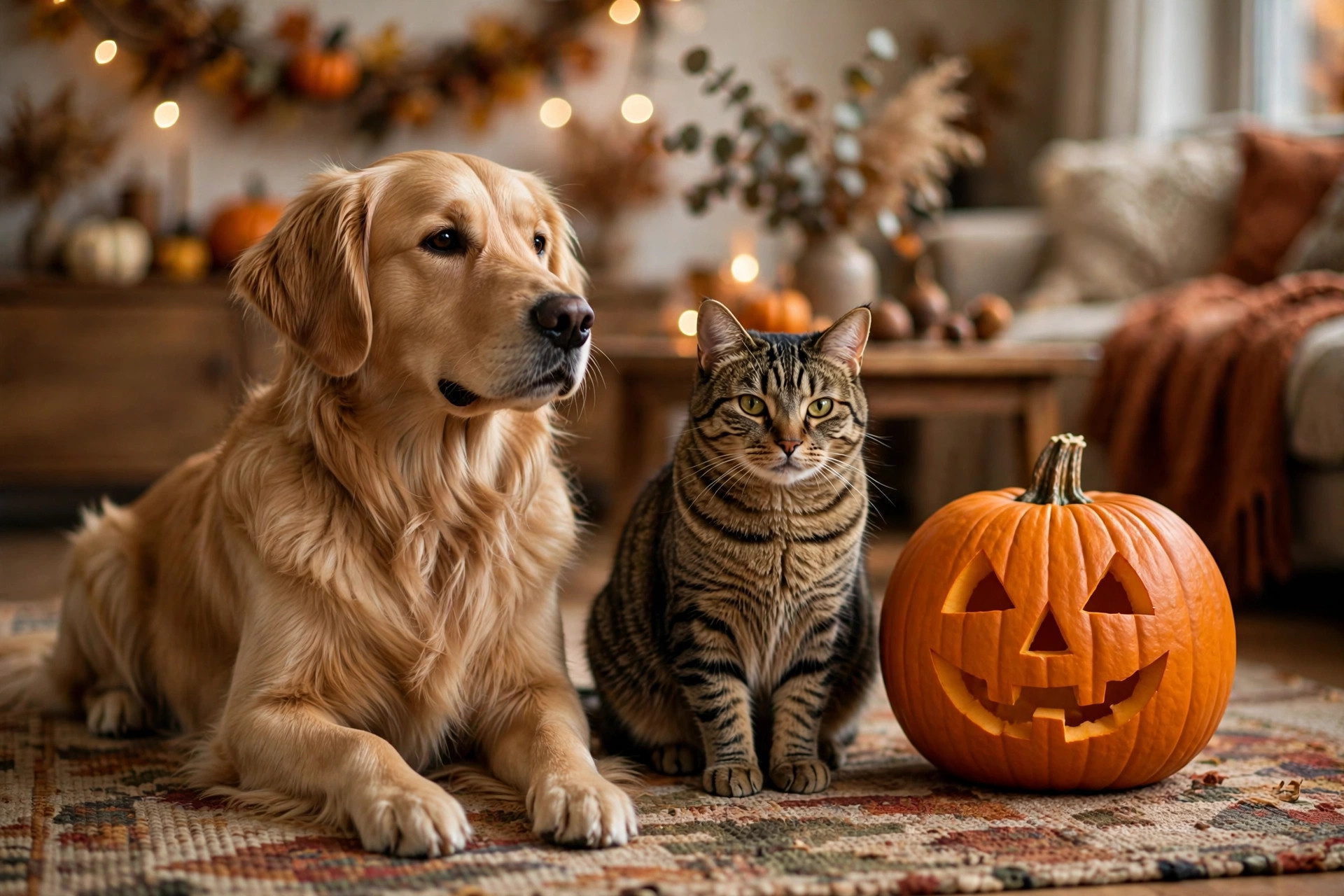
Halloween night is one of the most exciting — and most dangerous — nights of the year for pets. While you’re putting out candy bowls and lighting jack-o’-lanterns, your dog or cat is navigating toxic treats, tripping decorations, and a parade of costumed strangers ringing the doorbell. These halloween pet safety tips are the plan every pet parent should follow.
Poison hotlines report a spike in calls every Halloween: chocolate toxicity, xylitol poisoning, blockages from candy wrappers, and pets bolting out open doors. Almost every Halloween pet emergency is preventable with a little preparation. This 2026 guide covers candy dangers, costume rules, decoration hazards, quiet-room setups, and what to do if something goes wrong.
Table of Contents
- Why Halloween Is So Risky for Pets
- Halloween Candy Dangers for Dogs and Cats
- Pet Costume Safety: Comfort First
- Halloween Decorations That Can Harm Pets
- Set Up a Quiet Room for Halloween Night
- Escape-Proof Your Home on Halloween Night
- Pet-Safe Treats for a Halloween Party
- What to Do If Your Pet Eats Halloween Candy
- Frequently Asked Questions
Why Halloween Is So Risky for Pets
Halloween compresses three pet hazards into one evening: toxic foods (chocolate, xylitol, raisins), physical hazards (costumes, wires, glow sticks, candle flames), and stress plus escape risk (endless doorbell ringing, masked strangers, doors swinging open all night). Dogs are usually the candy thieves, while cats go after dangling decorations and wrappers — so a safety plan has to cover both.
Halloween Candy Dangers for Dogs and Cats
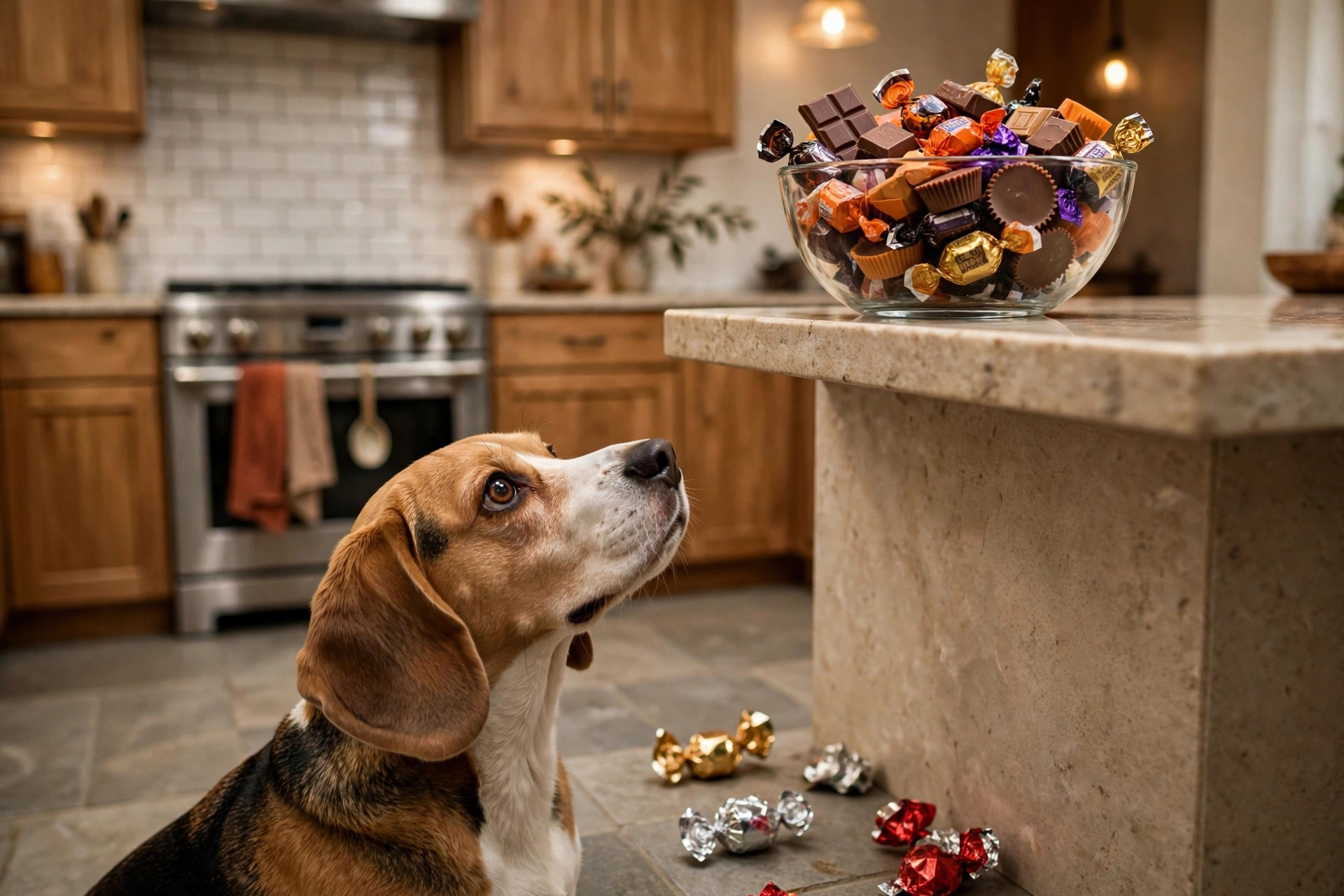
Candy is the number-one Halloween threat to pets. Stash every bowl, bag, and bucket in a high latching cabinet — and teach kids that trick-or-treat loot stays off the floor and out of bedrooms.
1. Chocolate
Chocolate contains theobromine and caffeine, stimulants that dogs and cats metabolize very slowly. Dark and baker’s chocolate are the most dangerous; milk chocolate is a step below, white chocolate the least risky. Symptoms include vomiting, diarrhea, hyperactivity, increased thirst and urination, abnormal heart rhythms, tremors, and seizures. Even small amounts can make a small dog very sick.
2. Xylitol (Sugar-Free Sweetener)
Candy and gum containing xylitol — sometimes listed as “birch sugar” — are extremely poisonous to dogs. Even a small amount can cause a sudden, life-threatening drop in blood sugar within 10–60 minutes: vomiting, weakness, lack of coordination, collapse, and seizures. Larger doses can cause liver failure. In cats the effects appear to be limited to digestive upset, but take no chances with either species. Keep the original candy packaging so your vet can assess any exposure.
3. Raisins, Grapes, and Macadamia Nuts
Raisinets and trail-mix candies can cause acute kidney failure in dogs; sensitivity varies from dog to dog. Macadamia nuts, often found in chocolate-covered treats, cause weakness, vomiting, tremors, and lethargy in dogs.
4. Candy Wrappers and Foil
Don’t forget the packaging. Cats love to bat and chew shiny foil and cellophane wrappers, and dogs will swallow candy wrapper and all. Ingesting foil or plastic can cause choking, vomiting, and intestinal blockage that may require surgery. After trick-or-treating, sweep the house for dropped wrappers before your pets find them.
Also Read: Can Dogs Eat Apples? Safety, Benefits & Risks (2026)
Pet Costume Safety: Comfort First
Dressing up pets is adorable — but only if the pet agrees. Follow these costume rules, recommended by the ASPCA:
- The costume must never limit movement, sight, hearing, breathing, barking, meowing, eating, or drinking.
- Remove all small, dangling, or chewable pieces that could become choking hazards or be swallowed.
- Do a trial run days before Halloween. If your pet freezes, struggles, hides, or acts unlike themselves, skip the costume — a festive bandana or Halloween-themed collar is a perfectly good alternative.
- Never leave a costumed pet unsupervised, and remove the costume once the photos are done.
Halloween Decorations That Can Harm Pets
Your spooky setup is full of hazards from a pet’s point of view:
- Lit candles and jack-o’-lanterns: a wagging tail or a curious cat can knock a candle over and start a fire — or get burned. Use battery-operated flameless candles instead.
- Glow sticks: the liquid inside is extremely bitter. A punctured glow stick causes dramatic drooling and distress (though usually not serious poisoning). Keep them out of reach.
- Wires and cords: strung lights and decorations invite chewing, which can cause mouth burns from broken glass or plastic, or even a lethal electrical shock.
- Fake cobwebs, fake blood, rubber eyeballs, small toys: choking and strangulation hazards — especially dangling strings for cats.
- Pumpkins and decorative corn: plain pumpkin flesh is relatively non-toxic, but too much causes stomach upset — and a rotting pumpkin can harbor dangerous bacteria. Block pets from nibbling on carved decorations.
Set Up a Quiet Room for Halloween Night
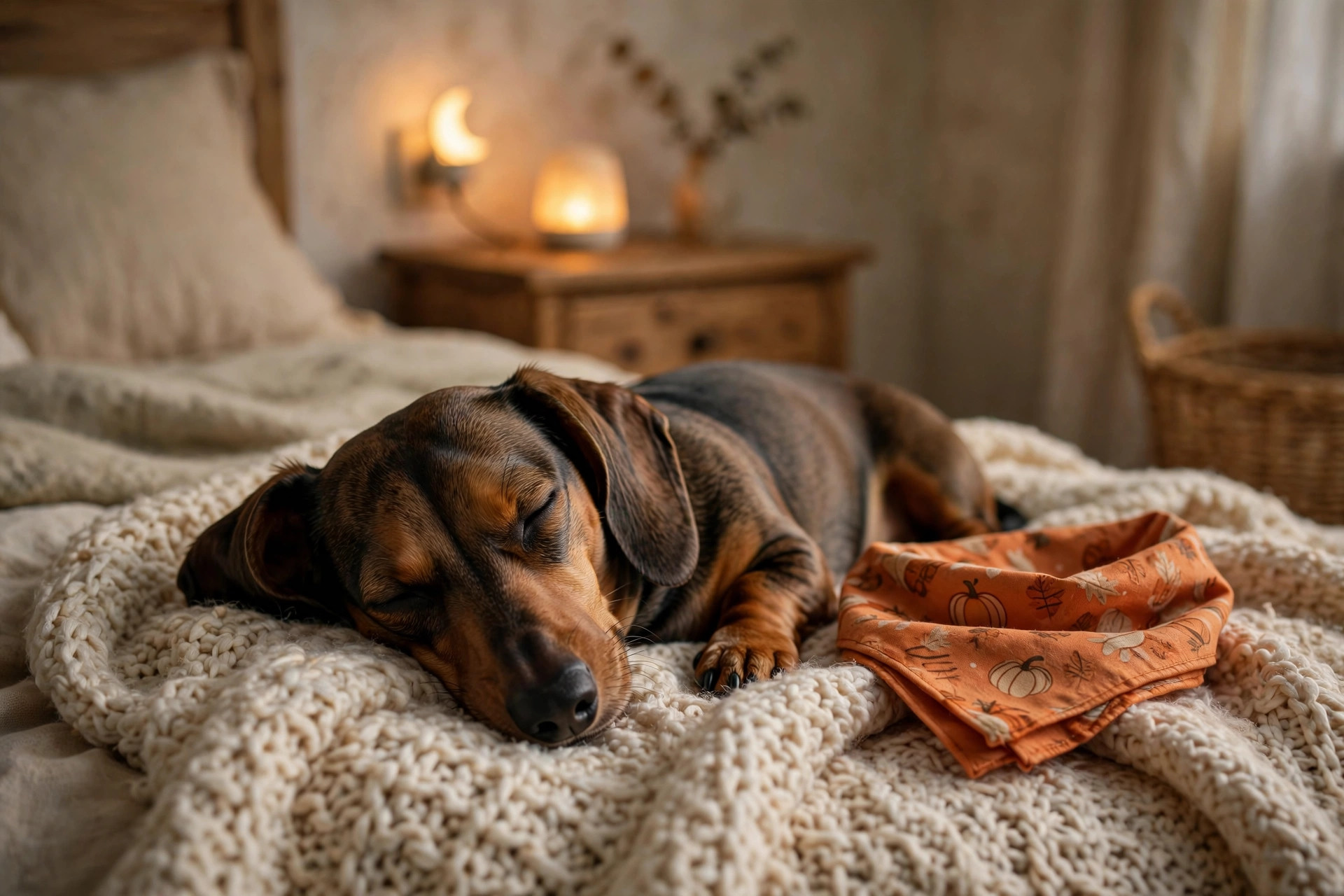
For most pets, the best Halloween party is one they don’t attend. Before trick-or-treaters arrive, set up a quiet room far from the entrance:
- Choose a back bedroom or den — anywhere far from the front door to muffle doorbell and footsteps.
- Add familiar bedding, fresh water, and a favorite chew toy or puzzle feeder for dogs; a hiding box and familiar blanket for cats.
- Run soft white noise — a fan or a calming music loop — to mask the worst of the doorbell shocks.
- Close windows and curtains so flashing lights and sidewalk commotion stay outside.
Even better: sit outside to hand out candy yourself. No doorbell, no knocks, no open-door chaos — and your pets barely notice Halloween is happening.
Escape-Proof Your Home on Halloween Night
Halloween produces more lost pets than almost any other night — a frightened animal can bolt past a costumed stranger in a second.
- Keep all cats indoors — black cats in particular can be targets for pranks or cruelty around Halloween.
- Make sure every pet wears a collar with an up-to-date ID tag, and confirm microchip registration details are current.
- Brief kids and visitors: the front door stays closed, and the quiet-room door stays shut.
- If you take your dog out, use a secure leash and a well-fitted collar or harness. Leave pets at home when you go trick-or-treating — crowds, masks, and noise overwhelm even confident animals.
Pet-Safe Treats for a Halloween Party
Your pet doesn’t need Halloween candy to feel included. Offer these pet-safe festive alternatives instead:
- Small pieces of plain, cooked pumpkin (not pie filling) — a gentle, fiber-rich treat.
- Regular dog or cat treats, plus a long-lasting chew or frozen stuffed Kong for dogs to work on during the evening.
- A sprinkle of catnip or a new toy for cats.
Also Read: Can Cats Eat Carrots? Vet Safety Guide (2026)
What to Do If Your Pet Eats Halloween Candy
Act fast — with chocolate and xylitol, time matters:
- Secure the evidence. Keep the wrapper or packaging so your vet can identify the ingredient and amount.
- Call for help immediately. Contact your veterinarian, your nearest emergency clinic, or the ASPCA Animal Poison Control Center at (888) 426-4435 (available 24/7; a consultation fee may apply). Do not wait for symptoms to appear.
- Note the details: what was eaten, how much, your pet’s weight, and when it happened. Do not induce vomiting unless a professional tells you to — with some substances, vomiting can cause more harm.
- Watch for warning signs: vomiting, diarrhea, restlessness, tremors, drooling, weakness, or seizures.
Frequently Asked Questions
Is Halloween candy bad for dogs?
Yes — very. Chocolate is toxic, xylitol in sugar-free candy can be fatal even in small amounts, and raisins can cause kidney failure. Keep all candy out of your dog’s reach.
Can cats eat Halloween candy?
No. Cats are less likely to eat sweets, but chocolate and xylitol are still dangerous, and foil wrappers can cause intestinal blockages. Cats mainly get into trouble with wrappers, strings, and decorations.
Should I dress up my pet for Halloween?
Only if your pet is genuinely comfortable. The costume must not restrict movement, sight, hearing, or breathing — and skip it entirely if your pet seems stressed. A festive bandana is a safer choice for most animals.
How do I keep my pet calm on Halloween night?
Set up a quiet room far from the front door with bedding, water, toys, and white noise. Handing out candy from outside the house eliminates doorbell stress entirely.
Are glow sticks dangerous for pets?
The liquid inside glow sticks is extremely bitter but usually not seriously toxic. If punctured, it causes intense drooling and distress — rinse your pet’s mouth and call your vet if symptoms continue.
What should I do if my dog eats chocolate on Halloween?
Save the wrapper, note how much was eaten and when, and call your vet or the ASPCA Animal Poison Control Center at (888) 426-4435 immediately. Dark chocolate is the most dangerous, and small dogs are at highest risk.
Final Thoughts
These halloween pet safety tips come down to one simple idea: Halloween should be fun for you and boring for your pets. Lock the candy away, keep costumes optional, swap real candles for battery lights, set up a quiet room, and double-check IDs before the doorbell rings.
With a little preparation, October 31st becomes just another cozy night in — no emergency vet visit required. Happy (and safe) Halloween from Pets Addicters!