
You walk in from work, your cat blinks up at you — and something looks off. One eye is watery, a little red, maybe crusted shut at the corner. If you are wondering whether your cat has a cat eye infection, you are asking the right question at the right time: most feline eye infections are very treatable, but a few can threaten vision if they are ignored.
In this complete 2026 guide, we will walk you through what a cat eye infection actually is, the most common causes (from conjunctivitis to herpesvirus flare-ups), how to read your cat’s eye discharge like a clue, safe home care steps, and the red-flag signs that mean call your veterinarian today — not next week.
Table of Contents
- What Is a Cat Eye Infection?
- Signs Your Cat Has an Eye Infection
- What Your Cat’s Eye Discharge Is Telling You
- 7 Common Causes of Cat Eye Infections
- Safe Home Care for a Cat With an Eye Infection
- What Happens at the Vet Visit
- Red Flags: When to Call the Vet Immediately
- How to Prevent Cat Eye Infections
- Frequently Asked Questions
What Is a Cat Eye Infection?
Veterinary sources including PetMD note that conjunctivitis in cats is a common, often painful condition that can be caused by viruses, bacteria, allergies, irritants, or underlying disease. A cat eye infection is inflammation or infection of the eye’s surface tissues. The most common form is conjunctivitis — sometimes called cat pink eye — which is inflammation of the conjunctiva, the thin membrane that lines the inside of the eyelids and covers the white of the eye.
Eye infections can affect one eye or both. One-sided problems more often point to an injury, a foreign object, or a blocked tear duct, while both eyes together more often suggest a virus, allergies, or an upper respiratory infection. Either way, the eye is a delicate organ — and cats are experts at hiding discomfort — so any change in the eyes deserves a close look.
Signs Your Cat Has an Eye Infection
Cats rarely announce eye pain the way you might expect. Instead, watch for this cluster of signs:
- Redness or pinkness in the white of the eye or the inner eyelid
- Watery, cloudy, yellow, or green discharge
- Squinting, blinking more than usual, or holding one eye shut
- Swollen or puffy eyelids
- Pawing or rubbing at the face
- Crusty buildup around the eyes, especially after sleep
- Cloudiness on the surface of the eye, or a visible third eyelid
- Light sensitivity — turning away from bright rooms or windows
Eye symptoms often travel with company. If your cat is also sneezing, has a runny nose, or has gone off food, an upper respiratory virus is a likely culprit. Also Read: Why Does My Cat Keep Sneezing? Vet Guide (2026)
What Your Cat’s Eye Discharge Is Telling You
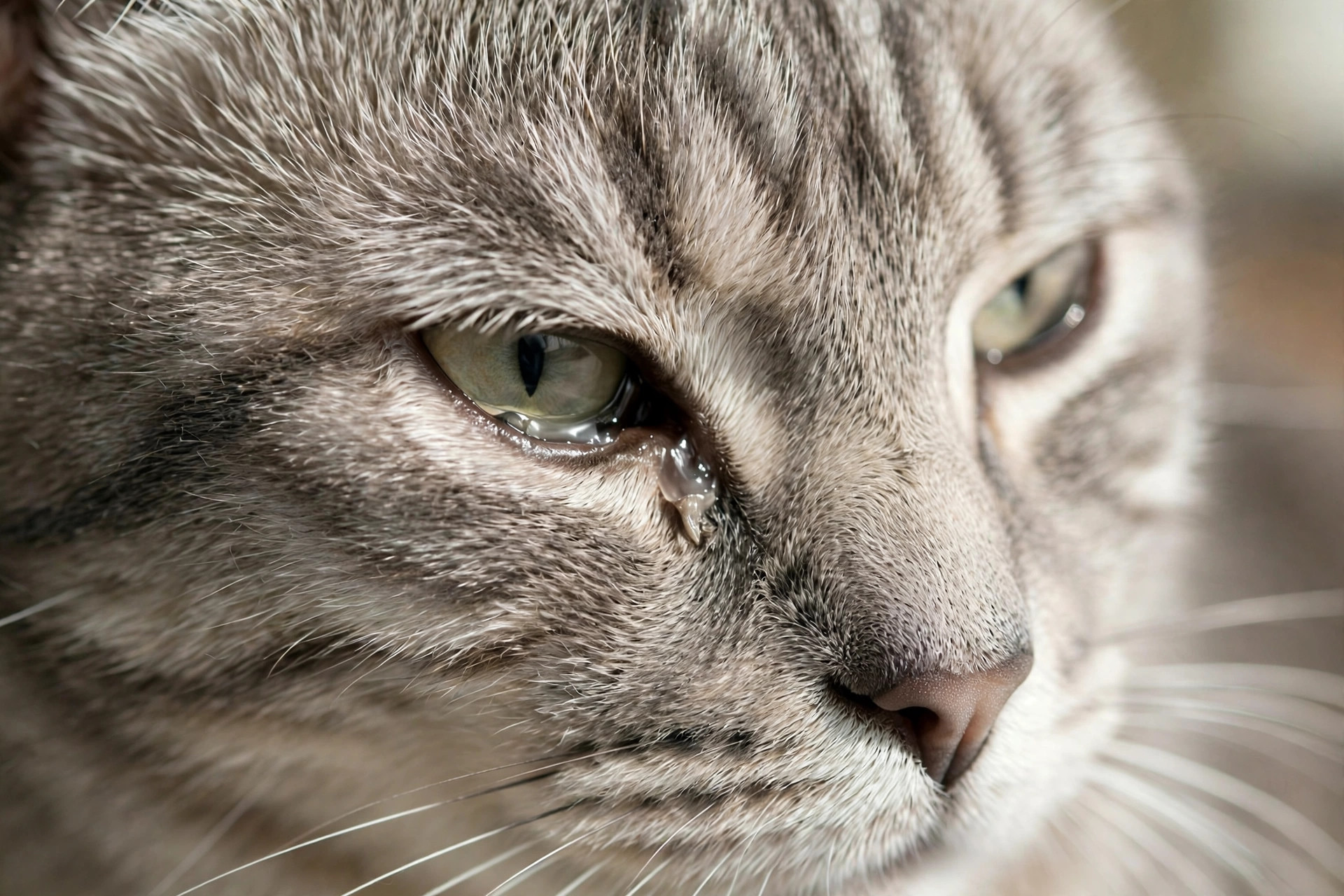
Not all goopy eyes mean the same thing. The color and texture of the discharge is one of the most useful clues you can report to your veterinarian:
| Discharge Type | What It Often Means | Urgency |
|---|---|---|
| Clear and watery | Allergies, irritants, or early viral infection | Monitor closely; vet if it lasts more than a day or two |
| Thick, white or grey mucus | Ongoing viral or chronic conjunctivitis, dry eye | Book a vet visit |
| Yellow or green | Bacterial infection — often needs antibiotic drops | Vet visit promptly |
| Bloody or brown-red | Injury, ulcer, or bleeding inside the eye | Vet visit the same day |
| Dark crusts after sleep | Normal overnight tearing in some cats — or mild irritation | Usually minor if eyes look clear underneath |
A small amount of dark, crusty “sleep” in the corner of the eye is normal for many cats, especially flat-faced breeds like Persians. The warning sign is a change: more discharge than usual, a new color, or discharge paired with squinting or redness.
7 Common Causes of Cat Eye Infections
1. Feline Herpesvirus (FHV-1) — The #1 Cause
Feline herpesvirus type 1 is the most common cause of conjunctivitis in cats, especially chronic or recurring cases. Once infected, a cat carries the virus for life, and stress — a move, a new pet, a vet stay — can wake it up years later, causing a fresh round of watery eyes and sneezing. There is no cure, but your veterinarian can manage flare-ups, sometimes with antiviral medication for severe cases.
2. Bacterial Infection
Bacteria such as Chlamydia felis and Mycoplasma often cause eye infections in kittens and cats from shelters or multi-cat homes, where close contact spreads them easily. Bacterial infections typically produce the thick yellow-green discharge that signals a vet visit and prescription antibiotic drops or ointment.
3. Upper Respiratory Infections
The same viruses behind the “cat cold” — herpesvirus and calicivirus — inflame the eyes as well as the nose. If your cat’s goopy eyes arrive with sneezing, nasal discharge, or a reduced appetite, treat it as one illness, not two separate problems.
4. Allergies and Irritants
Dust, pollen, smoke, scented candles, cleaning sprays, and dusty litter can all irritate a cat’s eyes. Allergic eye problems usually affect both eyes at once, produce clear watery discharge, and come with itching or sneezing — but no fever or colored discharge.
5. Injury or Foreign Object
A scratch from another cat, a grass seed, or a speck of litter can injure the cornea — the clear window at the front of the eye. These injuries usually affect one eye, cause sudden squinting and tearing, and can develop into a corneal ulcer if untreated. Any one-eyed squinting after play or a scuffle deserves a prompt vet check.
6. Blocked Tear Ducts
Tears normally drain through tiny ducts into the nose. When a duct is blocked or narrow — common in flat-faced breeds — tears overflow constantly, leaving wet fur tracks below the eye and encouraging skin irritation and secondary infection.
7. Underlying Disease
Less commonly, eye inflammation is a window into something deeper: feline immunodeficiency virus (FIV), feline leukemia virus (FeLV), high blood pressure, or even tumors inside the eye. That is why eye problems that keep coming back, or that appear alongside weight loss, lethargy, or appetite changes, always deserve a full workup. Also Read: Why Is My Cat Not Eating? Warning Signs & When to Worry (2026)
Safe Home Care for a Cat With an Eye Infection
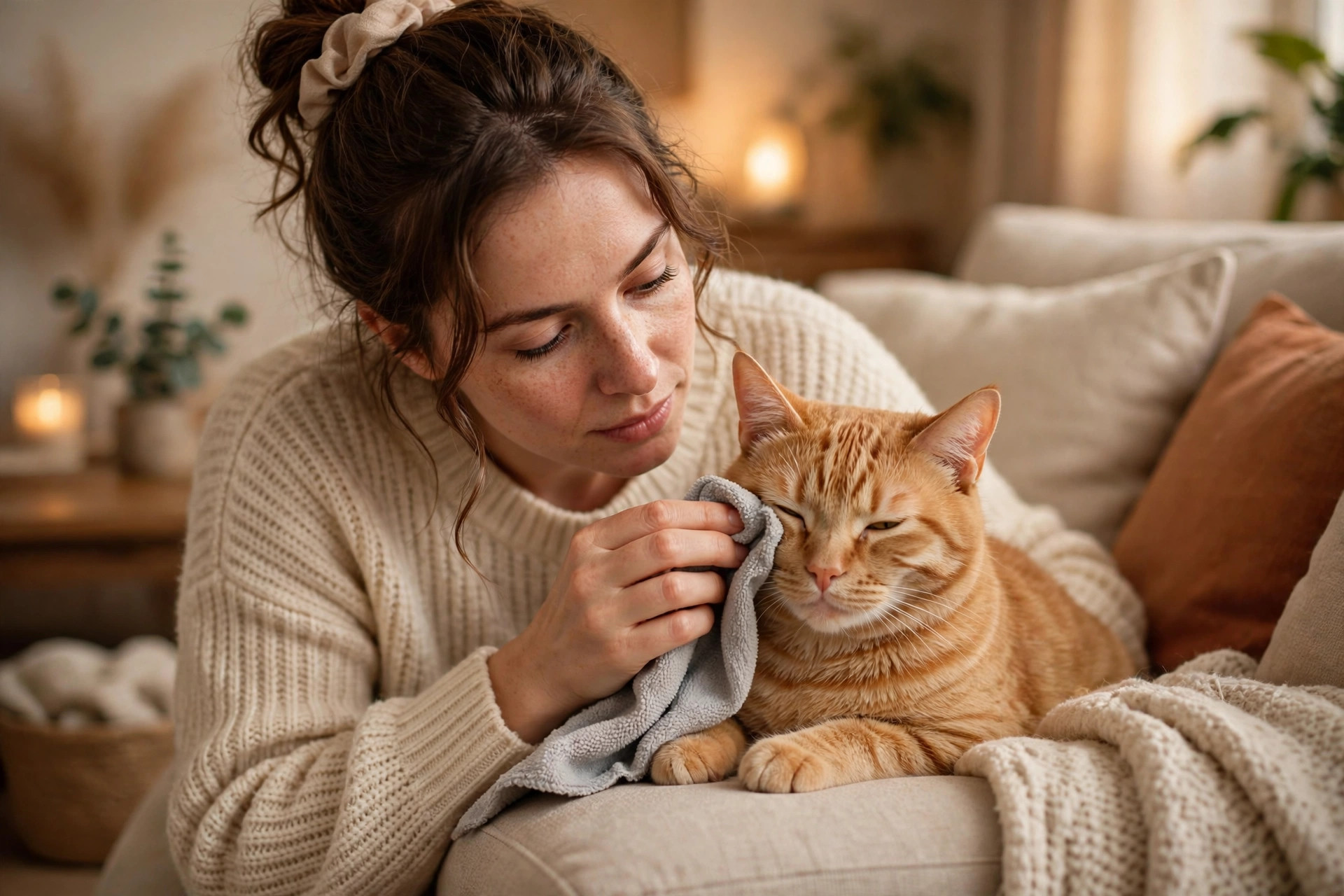
For mild cases — a cat that is eating, drinking, and acting normally with only mild wateriness — these steps help while you decide whether a vet visit is needed:
- Keep the eyes clean. Gently wipe discharge away with a soft cloth or cotton ball dampened with warm water or sterile saline. Use a fresh cloth for each eye so you do not spread infection from one eye to the other.
- Cut the irritants. Switch to low-dust, unscented litter, stop using scented candles and plug-ins near your cat, and keep smoke out of their resting areas.
- Reduce stress. Herpesvirus flare-ups are stress-driven. Keep routines calm and predictable, especially after moves, new pets, or vet visits.
- Isolate from other cats. Infectious eye problems spread through shared bowls, grooming, and close contact. Keep a sick cat separate until symptoms resolve, and wash your hands between cats.
- Watch the food bowl. A cat that stops eating alongside eye symptoms needs a vet call within 24 hours — appetite loss in cats escalates fast.
What not to do matters just as much: never use human eye drops, leftover antibiotic drops from a previous illness, or over-the-counter “red eye” drops on your cat. Some human drops contain steroids or preservatives that can worsen an ulcer or mask a serious problem. If you think your cat needs medication, let your veterinarian prescribe it.
What Happens at the Vet Visit
Knowing what to expect makes the appointment easier. For a cat eye infection, your veterinarian will typically:
- Examine both eyes with a light and magnification, checking the eyelids, conjunctiva, and cornea
- Apply fluorescein dye — a harmless orange stain — to reveal corneal ulcers or scratches under blue light
- Measure tear production if dry eye is suspected
- Take a swab for testing if herpesvirus, chlamydia, or another specific infection is likely
- Check blood pressure and overall health if the eye problem keeps recurring
Treatment depends on the cause: antibiotic drops or ointment for bacterial infections, antiviral medication for severe herpesvirus cases, anti-inflammatory drops for immune-mediated inflammation, and pain relief where needed. Most simple cases resolve within 7 to 10 days of proper treatment — but finish the full course even if the eye looks better after a few days, or the infection may bounce back.
Red Flags: When to Call the Vet Immediately
Do not wait out these signs — some eye conditions can damage vision within 24 to 48 hours:
- An eye held shut, or heavy squinting that does not ease
- A cloudy, blue, or white film over the eye surface
- Yellow-green or bloody discharge
- A visible scratch, wound, or bulging of the eyeball
- Sudden blindness — bumping into furniture or walls
- Eye symptoms plus not eating for 24 hours, lethargy, or hiding
- A kitten, senior cat, or immunocompromised cat with any eye symptoms at all
Senior cats deserve extra caution: eye changes in older cats can signal high blood pressure or other systemic disease. Also Read: Senior Cat Checkups: 7 Vet Screenings for Cats Over 7 (2026)
How to Prevent Cat Eye Infections
- Keep vaccinations current. The FVRCP vaccine protects against herpesvirus and calicivirus — it may not prevent infection entirely, but it greatly reduces severity.
- Keep new cats separate at first. Quarantine a new kitten or rescue for two weeks and watch for sneezing or watery eyes before mixing households.
- Control dust and irritants. Low-dust litter, regular vacuuming, and no smoking indoors go a long way for sensitive eyes.
- Wipe flat-faced breeds daily. Persians and similar breeds benefit from a gentle daily wipe of the eye area to prevent tear staining and skin infection.
- Reduce stress. Predictable routines, safe hiding spots, and slow introductions keep herpesvirus dormant.
- Book routine checkups. Annual exams catch early eye changes before they become infections.
Frequently Asked Questions
Can cat eye infections spread to humans?
Almost never. Feline herpesvirus and calicivirus do not infect people. Some bacteria (like Chlamydia felis) can rarely cause mild conjunctivitis in humans, so wash your hands after handling a sick cat and avoid touching your own eyes.
Can I use human eye drops on my cat?
No. Human eye drops — including “red eye” drops and leftover antibiotic drops — can harm a cat’s cornea or mask a serious ulcer. Only use drops your veterinarian prescribes for your cat.
How long does a cat eye infection last?
Most simple cases clear within 7 to 10 days of proper veterinary treatment. Viral flare-ups may take a little longer, and chronic or recurring cases need ongoing management rather than a single course of drops.
Is it normal for cats to have eye discharge?
A small amount of dark crust in the corner of the eye after sleep is normal for many cats. Ongoing discharge, colored discharge, squinting, or redness is not normal and should be checked.
Can a cat eye infection heal on its own?
Mild irritation from dust sometimes clears on its own within a day. True infections — especially bacterial ones or herpesvirus flare-ups — usually need veterinary treatment, and waiting risks corneal ulcers or vision damage.
Why does my cat have goopy eyes every morning?
Daily morning goop can mean chronic low-grade conjunctivitis (often herpesvirus), allergies, a blocked tear duct, or dry eye. If it happens every day, your cat needs a vet exam to find the underlying cause rather than repeated wiping.
Final Thoughts
So, what should you do about a cat eye infection? Start by reading the discharge: clear and watery with a bright, eating cat can be watched briefly, but colored discharge, squinting, cloudiness, or an eye held shut means call your veterinarian. Keep the eyes clean, never reach for human drops, and finish any prescribed course even when the eye looks better.
Your cat cannot tell you when an eye hurts — squinting and goop are how they ask for help. A quick vet visit now can be the difference between a week of drops and lasting vision damage, so when in doubt, get the eye checked.
By Dr. Ayaz Ali