
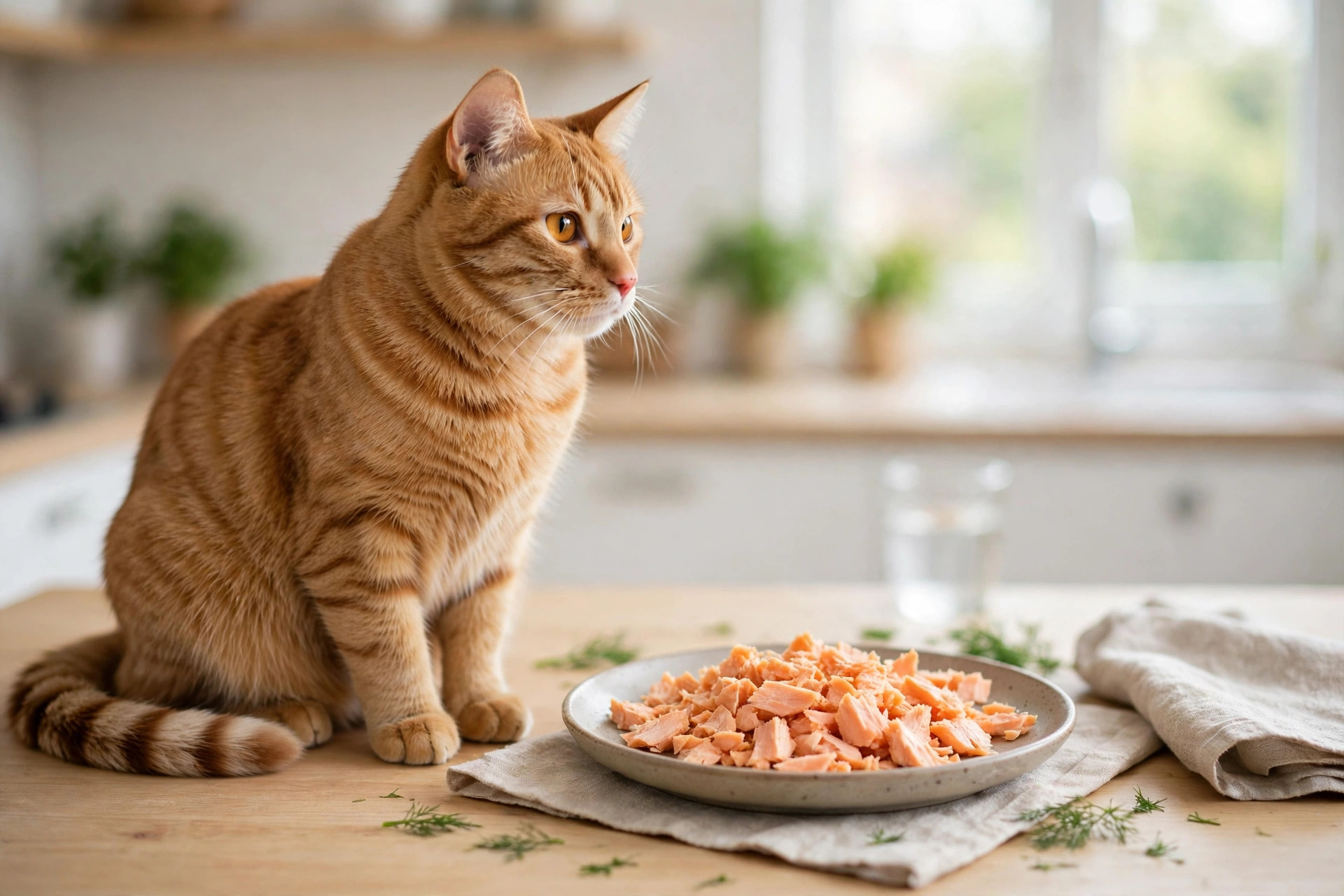
As a cat owner, you’ve probably been there: you’re cooking a beautiful salmon fillet for dinner, and your cat is circling the kitchen, nose in the air, utterly convinced some of it belongs to them. It’s only natural to wonder: can cats eat salmon, or should this popular fish stay off your cat’s menu?
The good news is yes, cats can eat salmon — but only when it is cooked, plain, boneless, and served in small amounts as an occasional treat. Salmon is rich in protein and omega-3 fatty acids that genuinely benefit cats, yet raw, smoked, or heavily seasoned salmon can cause real problems.
In this complete guide, we’ll walk you through everything you need to know about feeding salmon to cats: the health benefits, the risks of raw and smoked salmon, safe serving sizes, how to prepare it, and answers to the most common questions cat owners ask.
By Dr. Ayaz Ali
Table of Contents
- Is Salmon Safe for Cats?
- Nutritional Benefits of Salmon for Cats
- Risks of Feeding Salmon to Cats
- Can Cats Eat Raw Salmon?
- How Much Salmon Can Cats Eat?
- How to Prepare Salmon for Cats
- What If My Cat Eats Too Much Salmon?
- Can Kittens Eat Salmon?
- Healthy Alternatives to Salmon
- Frequently Asked Questions
Is Salmon Safe for Cats?
Yes, plain cooked salmon is generally safe for healthy cats when served correctly. Veterinary sources including PetMD confirm that salmon is fine to share with cats, as long as it is properly cooked, deboned, and unseasoned.
Cats are obligate carnivores, so animal protein is the foundation of their diet — and salmon delivers high-quality protein plus fats their bodies cannot make on their own. But the key word is moderation. Salmon is a treat, not a complete meal: it does not contain enough taurine on its own to support heart and vision health long-term, so it should only supplement a balanced cat food, never replace it.
Before offering salmon, make sure you serve only:
- Fresh salmon, fully cooked through
- Flaked into small, boneless pieces
- Completely plain — no salt, spices, butter, oil, garlic, or onion
- In a small portion, as an occasional treat
Nutritional Benefits of Salmon for Cats
Salmon is one of the more nutritious human foods you can share with a cat, because its benefits go well beyond flavour.
1. High-Quality Protein
Salmon is packed with complete animal protein, which supports your cat’s muscles, energy, and overall body maintenance. For an obligate carnivore, protein quality matters more than almost any other nutrient.
2. Omega-3 Fatty Acids for Skin, Coat, and Eyes
Salmon is an excellent source of the omega-3 fatty acids EPA and DHA, which cats cannot produce themselves. These fats support healthy skin and a soft, shiny coat, help keep eyes healthy, and support brain and nervous system function.
3. Anti-Inflammatory Support
The same omega-3s help reduce inflammation in the body, which may ease joint discomfort in senior cats and support heart health as your cat ages.
4. B Vitamins and Minerals
Salmon provides vitamin B12, vitamin B6, vitamin D, selenium, and potassium. Vitamin B12 in particular is essential for your cat’s nervous, digestive, and immune systems.
Also Read: Can Cats Eat Tuna? Vet Safety Guide (2026)
Risks of Feeding Salmon to Cats
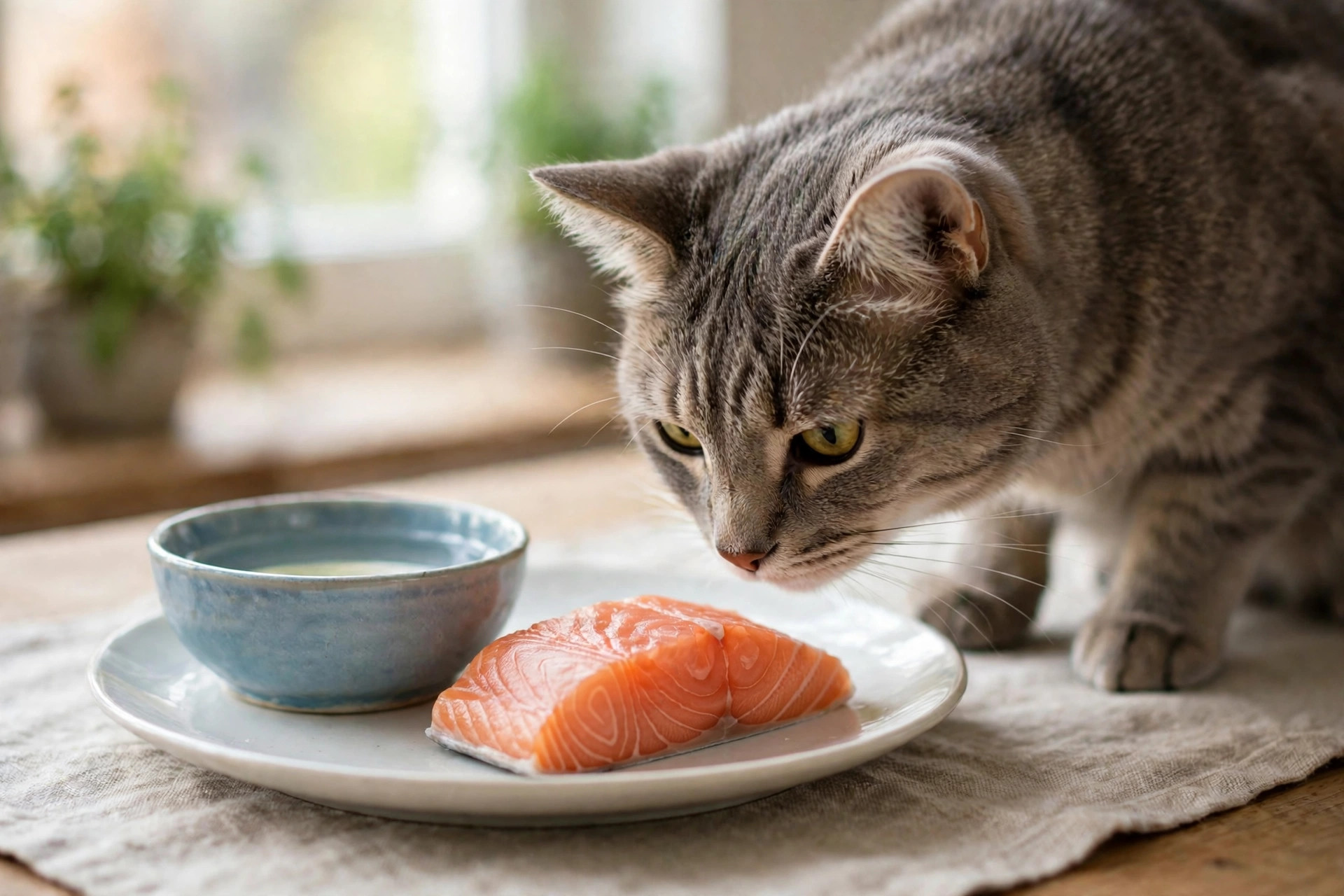
Although cooked salmon is safe for many cats, feeding it the wrong way — or too often — can cause real problems.
1. Raw Salmon: Bacteria, Parasites, and Thiaminase
Raw salmon can carry Salmonella, E. coli, and Listeria, plus a parasite called Nanophyetus salmincola. Raw fish also contains thiaminase, an enzyme that breaks down thiamine (vitamin B1); a diet heavy in raw fish over time can lead to thiamine deficiency, which affects the nervous system. Cooking destroys thiaminase completely, which is why cooked salmon is the only safe choice.
2. Bones Are a Choking and Injury Hazard
Even small salmon bones can choke a cat or get lodged in the mouth, throat, or intestines, and swallowed bones can cause perforations or blockages. Always debone salmon completely before serving.
3. Smoked, Cured, and Canned Salmon Are Too Salty
Smoked and cured salmon are preserved with high levels of salt and often sugar and seasonings — far too much sodium for a cat and a dehydration risk. Canned salmon for humans usually contains added salt, preservatives, or oil. Skip all of these and stick to fresh, plain, cooked fillet.
4. Seasonings, Butter, and Oil
Garlic and onion are toxic to cats, and butter or cooking oil adds fat and calories that can trigger vomiting, diarrhea, or even pancreatitis. Cook your cat’s portion separately, with nothing added.
5. Allergies and Mercury
Though uncommon, some cats are allergic to fish protein — watch for itchy skin, overgrooming, vomiting, or diarrhea after the first taste. Salmon is also lower in mercury than tuna, but it is not mercury-free, which is another reason to keep portions small and occasional.
Can Cats Eat Raw Salmon?
Technically, cats can digest raw salmon, but that does not mean they should eat it. The bacterial and parasite risks, plus the thiaminase problem, make raw salmon a gamble with no upside — cooking keeps all the nutritional benefits and removes the dangers. Sushi-grade or flash-frozen salmon reduces some risk but does not eliminate it. If you want to share salmon with your cat, cooked is simply the safer call every time.
How Much Salmon Can Cats Eat?
Salmon should only ever be an occasional treat — once or twice a week at most — and treats in total should stay under 10% of your cat’s daily calories. Use this simple serving guide:
| Cat Size | Weight | Safe Serving (cooked, flaked) |
|---|---|---|
| Small cats | Under 8 lbs | About 1 tablespoon |
| Average cats | 8–12 lbs | 1–2 tablespoons |
| Large cats | Over 12 lbs | Up to 2–3 tablespoons |
When in doubt, start with a single small flake and see how your cat reacts before offering more.
How to Prepare Salmon for Cats
Safe preparation takes just a few minutes:
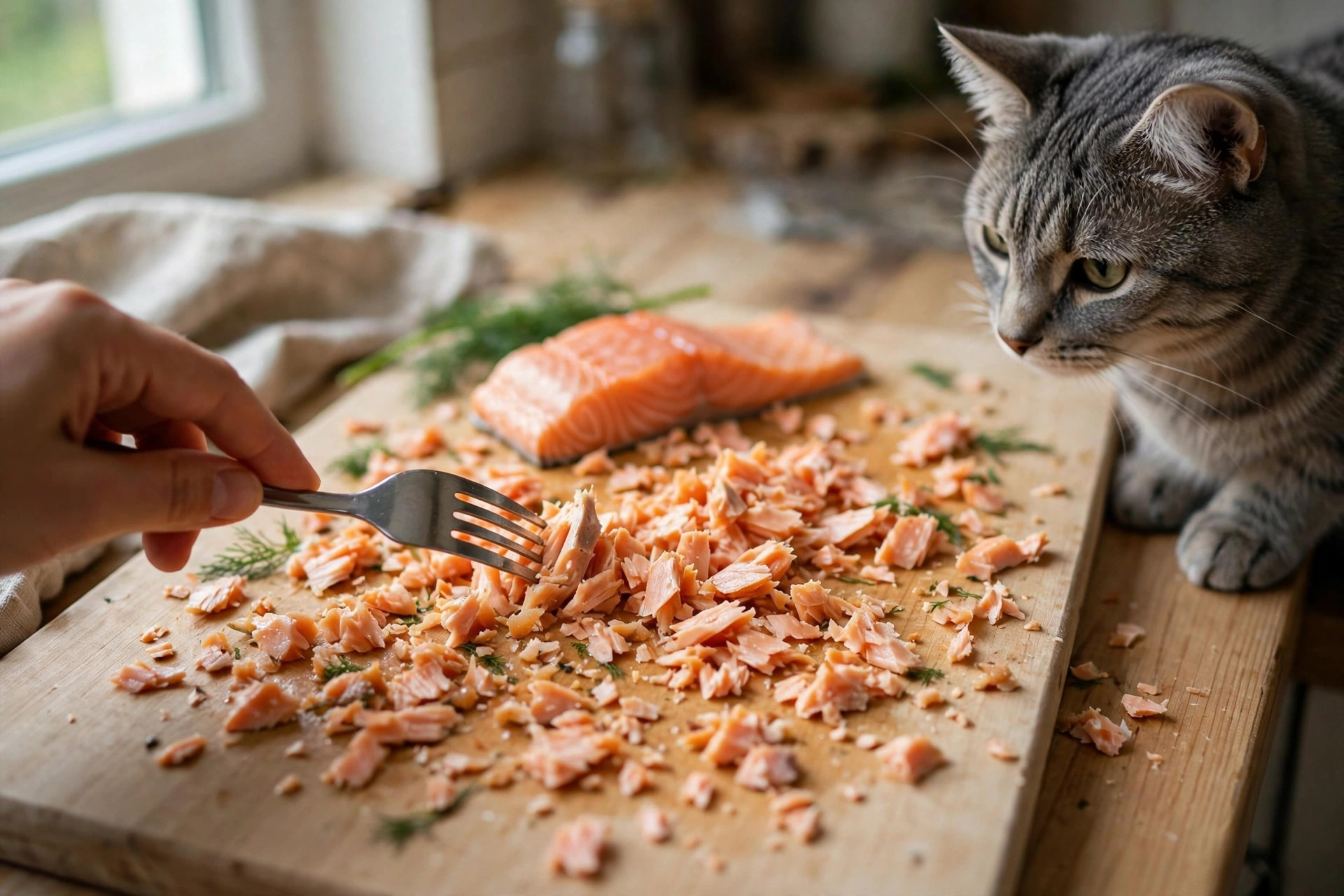
- Choose a fresh salmon fillet and cook it fully — bake, poach, steam, or grill it plain, with no oil, butter, salt, or seasoning.
- Let it cool completely, then remove all bones, fins, and the head.
- Flake the flesh into small, bite-sized pieces appropriate for your cat.
- Serve plain — never add sauce, lemon, garlic, or onion.
- Offer a small amount as an occasional treat, or mix a spoonful into their regular food.
Salmon skin is rich in omega-3s and is safe in small amounts only if it is thoroughly cooked and completely unseasoned — when in doubt, leave the skin off.
What If My Cat Eats Too Much Salmon?
If your cat raids the dinner table and eats a large amount of salmon, don’t panic — but do monitor them closely. Too much salmon most often causes temporary digestive upset: vomiting, diarrhea, or gas.
Contact your veterinarian right away if you notice severe or ongoing vomiting or diarrhea, lethargy, loss of appetite lasting more than 24 hours, or if your cat ate raw salmon, bones, or smoked salmon (salt-poisoning and blockage risks).
Can Kittens Eat Salmon?
Yes, kittens can eat a tiny amount of plain cooked salmon once they are fully weaned and eating solid food. Because kittens have sensitive digestive systems, start with one very small flake and watch for any stomach upset over the next 24 hours before offering more. As with adults, keep it an occasional treat only.
Healthy Alternatives to Salmon
If your cat doesn’t care for salmon — or you’d like to rotate their treats — these foods are also safe in moderation:
- Tuna — plain, in water, only occasionally (higher in mercury than salmon)
- Cooked eggs — plain, no seasoning
- Cooked chicken — plain, boneless, unseasoned
- Plain yogurt — in tiny amounts, if your cat tolerates dairy
Always introduce any new food gradually and in small portions.
Also Read: Can Cats Eat Eggs? Benefits, Risks & Safe Feeding Guide (2026)
Also Read: Can Cats Eat Yogurt? Benefits, Risks & Safe Feeding Guide (2026)
Frequently Asked Questions
Can cats eat salmon every day?
No. Salmon’s calorie and fat content — plus its trace mercury — make it an occasional treat only, once or twice a week at most, in the small portions listed above.
Can cats eat raw salmon?
It is not recommended. Raw salmon can carry Salmonella, E. coli, Listeria, and parasites, and it contains thiaminase, which destroys vitamin B1. Cooking removes all of these risks.
Can cats eat salmon skin?
Yes, in small amounts, as long as the skin is thoroughly cooked and completely unseasoned. If the salmon was cooked with butter, oil, or seasoning, leave the skin off.
Can cats eat smoked salmon?
No. Smoked and cured salmon are far too salty for cats and often contain sugar and seasonings. The high sodium can cause dehydration and salt poisoning.
Can cats eat canned salmon?
Not the kind sold for humans — it usually contains added salt, preservatives, or oil. Stick to fresh, plain, cooked fillet.
Is salmon better than tuna for cats?
For an occasional treat, yes — salmon is lower in mercury than tuna and richer in omega-3s. Both should still be occasional only, not daily foods.
Final Thoughts
So, can cats eat salmon? Absolutely — when it’s cooked, plain, boneless, and served in moderation. A few small flakes make a protein- and omega-3-rich treat most cats love. Just remember the golden rules: cooked only, no bones, no seasoning, no smoked or canned versions, and keep portions small.
As with any new food, introduce salmon slowly and watch how your cat responds. And when in doubt, your veterinarian is always the best source of advice for your individual cat’s diet.