
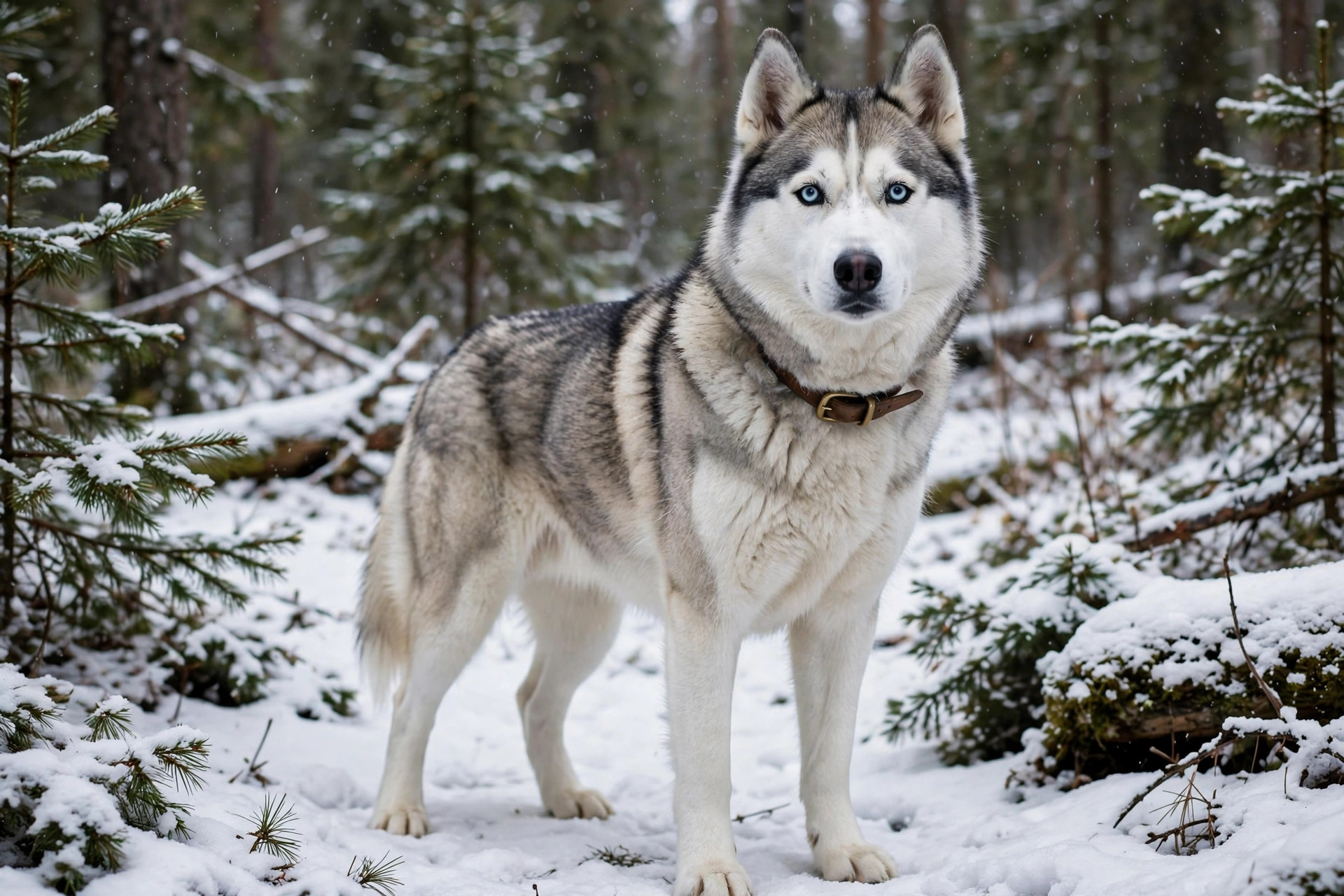
If you have ever locked eyes with a Siberian Husky — those piercing blue eyes, that thick wolf-like coat, that grin that says trouble is coming — you know why this breed stops people in their tracks. But behind the stunning looks of the Siberian Husky breed is one of the most high-energy, independent, and escape-prone dogs you can bring home. This guide covers everything you need to know before committing: temperament, exercise, grooming, health, training, and the real cost of living with a Husky.
Bred by the Chukchi people of Siberia to pull light loads across vast frozen distances, the Siberian Husky was built for endurance, cold, and teamwork. The American Kennel Club recognized the breed in 1930, and it has been a firm family favorite ever since — but it is not a dog for every household. Read on before you fall for those eyes.
Table of Contents
- Siberian Husky Temperament: Friendly, Mischievous, Independent
- Siberian Husky Facts at a Glance
- Exercise & Energy: How Much Does a Husky Need?
- Training a Siberian Husky: The Honest Truth
- Grooming & Shedding: Surviving the Coat Blow
- Siberian Husky Health Problems to Watch For
- Feeding Your Siberian Husky
- Is a Siberian Husky Right for You?
- Frequently Asked Questions
Siberian Husky Temperament: Friendly, Mischievous, Independent
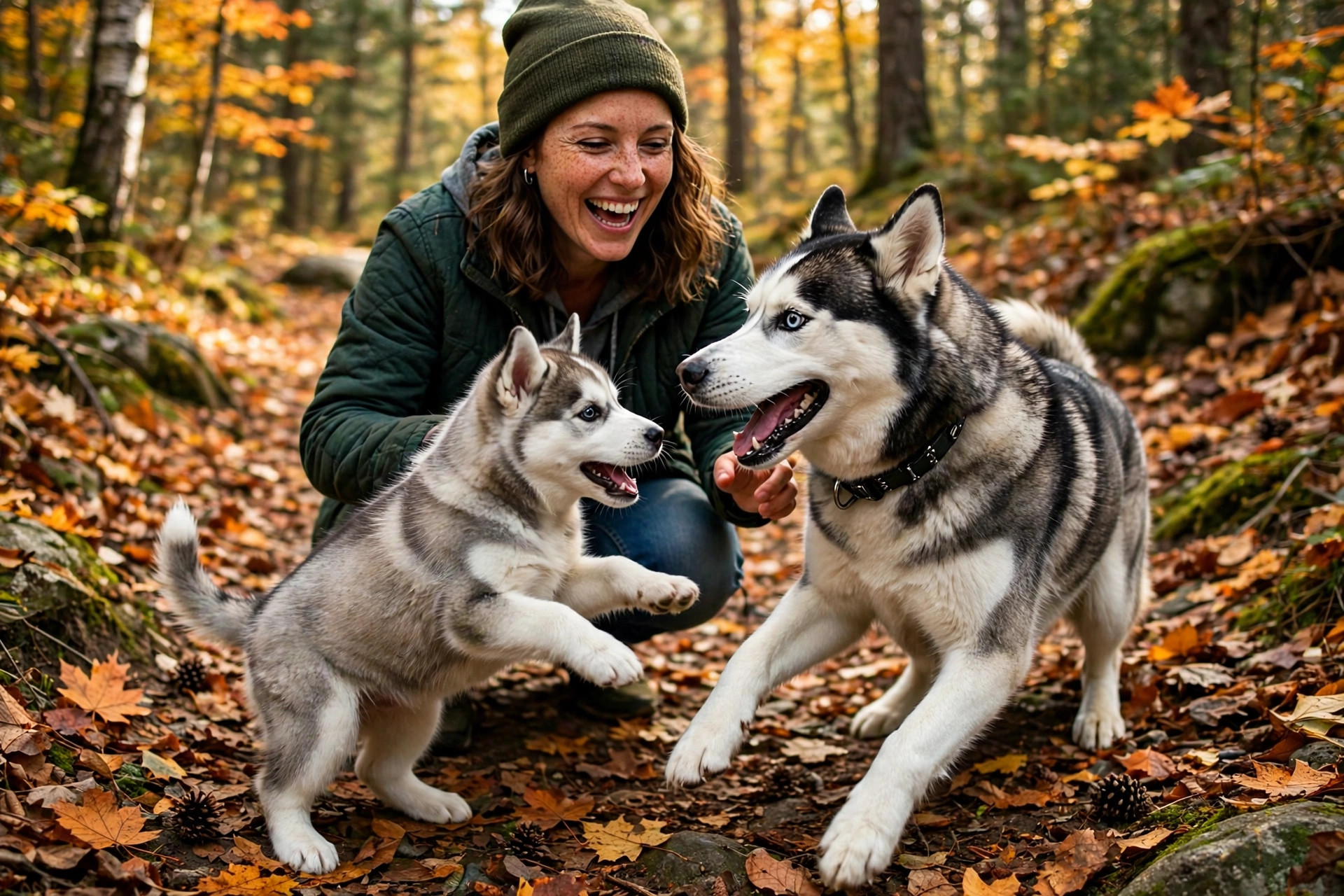
The American Kennel Club describes the Siberian Husky as loyal, outgoing, and mischievous — and owners will tell you all three are true at once. Huskies are pack dogs through and through: they love their people, love other dogs, and generally greet strangers as friends. That makes them terrible guard dogs and wonderful family dogs in the same breath.
What surprises most new owners is the independence. A Husky is not a dog that lives to obey you the way a Labrador or German Shepherd does. They are clever, willful, and famously selective about when they feel like listening. They are also vocal in a way few breeds match: howling, yowling, woo-wooing, and full “talking back” are all normal Husky communication, especially when they are bored or under-exercised.
With children, Huskies are usually gentle, playful, and tolerant — a good match for active families. With small pets, caution is needed: the same sled dog that loves your kids may see a cat, rabbit, or small dog as prey. Early socialization helps, but prey drive in this breed is real and should never be assumed away.
The escape artist problem
No Siberian Husky breed guide is honest without this warning: Huskies are legendary escape artists. They jump fences, dig under them, slip collars, and bolt through open doors — then run for miles. A Husky should never be trusted off-leash outside a fully enclosed area, and your yard needs a tall, dig-proof fence (many owners bury wire along the fence line). A GPS tracker and a secure harness are sensible insurance, not overkill.
Siberian Husky Facts at a Glance
| Trait | Siberian Husky |
|---|---|
| Size | Medium; males 21–23.5 inches, 45–60 lbs; females 20–22 inches, 35–50 lbs |
| Lifespan | 12–14 years |
| Coat | Thick double coat; many colors including black, grey, red, agouti, and white |
| Eyes | Brown, blue, or one of each (heterochromia) — all normal for the breed |
| Exercise | 1–2 hours of vigorous activity daily, plus mental stimulation |
| Shedding | Heavy; coat “blows” twice a year |
| Good with kids | Yes — friendly and playful, best with active families |
| Good with small pets | Caution — high prey drive |
| Barking | Low barking, high howling and vocalizing |
| Best for | Active owners with secure yards and time for daily exercise |
For the breed standard and official history, see the American Kennel Club’s Siberian Husky breed page.
Exercise & Energy: How Much Does a Husky Need?
A Siberian Husky was bred to run all day, and that engine does not switch off in a pet home. Plan for at least an hour — and ideally closer to two hours — of hard activity every day: running, hiking, bikejoring, canicross, or fast-paced fetch in a fenced area. A gentle stroll around the block will not cut it, and an under-exercised Husky will invent its own entertainment: digging up the garden, chewing furniture, howling at the neighbors, or escaping to find adventure elsewhere.
Mental work matters as much as physical work. Puzzle feeders, scent games, trick training, and food-dispensing toys tire a Husky’s brain and take the edge off destructive behavior. Rotate enrichment so it stays novel — a bored Husky is a destructive Husky.
Also Read: How Cold Is Too Cold for Dogs? Winter Walking Guide (2026) — Huskies handle cold far better than most breeds, but every dog has limits.
One important caution: Huskies overheat far more easily than they freeze. Their thick double coat is superb insulation in winter but a liability in summer heat. Exercise in the cool of morning or evening during warm months, watch for heavy panting, and never shave a Husky — the coat regulates temperature both ways and shaving can damage it permanently.
Training a Siberian Husky: The Honest Truth
Huskies are intelligent and learn quickly — they just do not always see the point in obeying. Training works best when it is short, fun, reward-based, and started early. Use high-value treats, keep sessions to 5–10 minutes, and end on a success. Harsh corrections backfire with this breed: a Husky that feels bullied simply stops cooperating.
Three training priorities stand out for this breed:
- Recall — with realistic expectations. Train recall from puppyhood in safe, enclosed spaces, but accept that most Huskies can never be trusted off-leash in unfenced areas. Prey drive plus wanderlust beats recall for many Huskies, even well-trained ones.
- Loose-leash walking. A 50-pound dog bred to pull will drag you if you let it. Start leash manners early, reward slack-leash walking generously, and consider a front-clip harness for management.
- Settling and alone time. Huskies are social and can develop separation anxiety. Build up alone time gradually, pair departures with enrichment, and never leave a Husky unsupervised in a yard it can escape from.
Also Read: Stop Your Dog Pulling on the Leash: 7 Trainer Tips (2026) — the be-a-tree method and reward timing work well for strong pullers like Huskies.
Grooming & Shedding: Surviving the Coat Blow
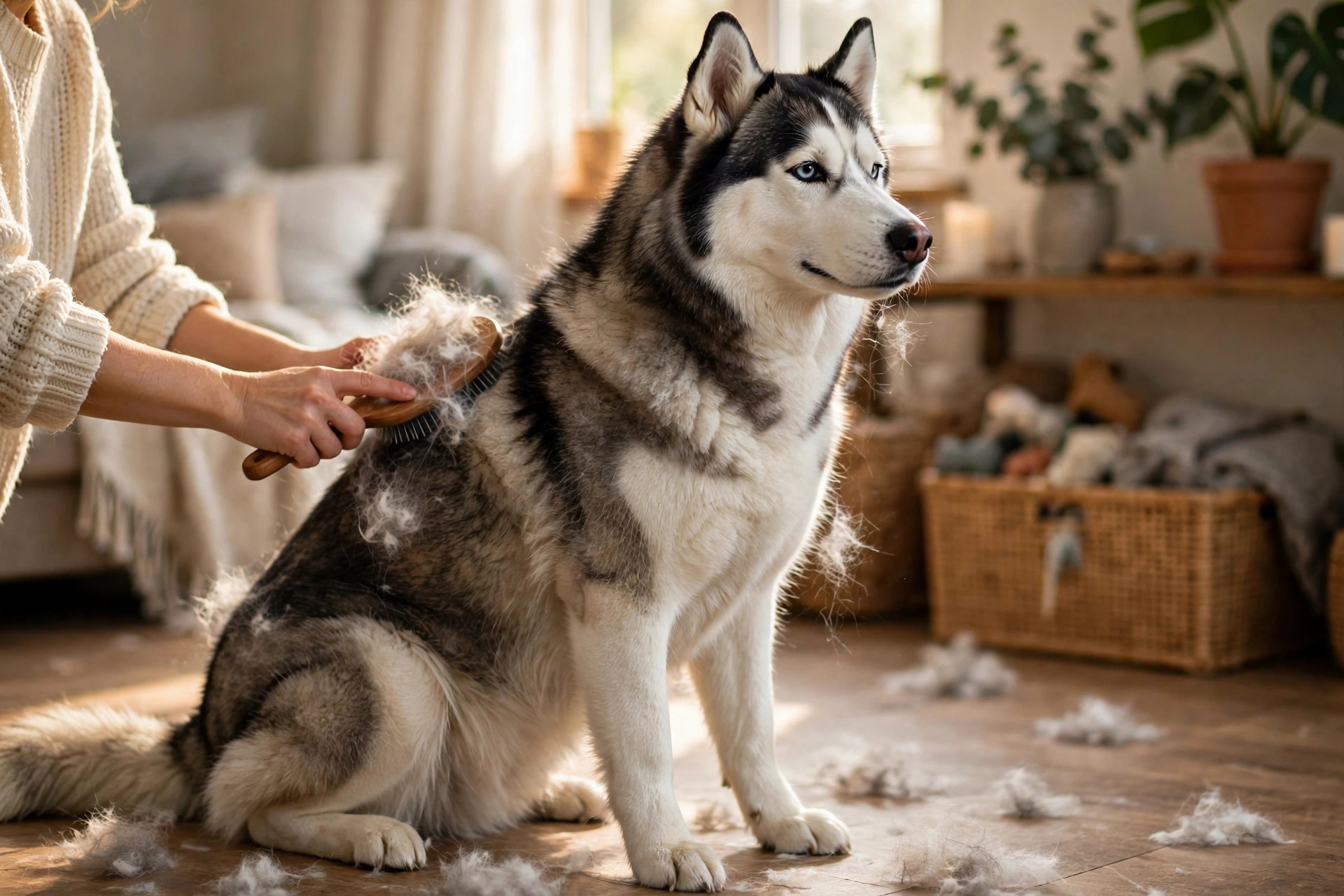
The good news: Huskies are famously clean dogs with little doggy odor, and they rarely need baths — a few times a year is plenty unless they roll in something foul. The bad news: they shed constantly, and twice a year they “blow” their undercoat in spectacular fashion, dropping clumps of fur for weeks.
Your grooming routine should be:
- Weekly brushing most of the year with a pin brush or slicker brush, plus a metal comb for the undercoat.
- Daily brushing during coat blows (usually spring and autumn) — an undercoat rake helps, and a good vacuum becomes your best friend.
- Never shave or clip the coat short. The double coat insulates against both cold and heat; shaving can cause sunburn, overheating, and coat damage that never fully recovers.
- Regular nail trims, ear checks, and teeth brushing — Huskies need the same routine care as any breed, and starting young makes it easy.
If anyone in your household has allergies, note that Huskies are heavy shedders and are not a hypoallergenic breed. Fur on clothes, furniture, and food is a permanent feature of Husky life — embrace it or pick another breed.
Siberian Husky Health Problems to Watch For
Siberian Huskies are generally a healthy, hardy breed with a long lifespan, but they are prone to a few conditions worth screening for:
- Eye problems: cataracts (including juvenile cataracts), progressive retinal atrophy, and corneal dystrophy are the breed’s best-known issues. Annual eye checks matter, and reputable breeders screen breeding dogs.
- Hip dysplasia: less common than in giant breeds but still seen — ask breeders for hip scores.
- Hypothyroidism: an underactive thyroid can cause weight gain, lethargy, and coat thinning; it is manageable with daily medication once diagnosed.
- Zinc-responsive dermatosis: Huskies absorb zinc less efficiently than other breeds, which can cause crusty skin lesions, especially around the face and paws. Your vet can test and supplement if needed.
- Heat sensitivity: not a disease, but a real risk — Huskies overheat in hot, humid weather and need shade, water, and cool-hour exercise.
Choose a breeder who health-tests breeding dogs (eyes, hips, thyroid) and provides the results in writing, or adopt from a Husky rescue — many wonderful Huskies end up in rescue precisely because owners underestimated the exercise and escape needs described above.
Also Read: Winter Paw Care for Dogs: Salt, Ice & Cracked Pads (2026) — even cold-loving Huskies need paw checks after salted or icy walks.
Feeding Your Siberian Husky
Huskies are famously efficient eaters — sled dogs evolved to do huge amounts of work on relatively little food, and pet Huskies often eat less than other dogs their size. That is normal, not a problem, but it makes portion control important in the other direction: it is easy to overfeed a dog that does not need much.
Feed a high-quality, complete dog food appropriate for your Husky’s age and activity level, split into two meals a day for adults. Active working dogs may need more protein and calories in winter; couch-potato Huskies need less. Watch body condition rather than the bowl: you should be able to feel ribs under a thin layer of fat but not see them prominently. Treats, including training treats, should stay within 10% of daily calories — and remember, Huskies gain weight just like any dog when treats pile up.
Is a Siberian Husky Right for You?
A Siberian Husky could be perfect for you if you are an active person or family with a securely fenced yard, you can commit to 1–2 hours of vigorous exercise daily, you do not mind heavy shedding and constant fur, and you enjoy a dog with personality, humor, and opinions. Runners, hikers, and outdoorsy families tend to thrive with Huskies.
Think twice if you live in a small apartment with no yard, you are away from home all day, you need reliable off-leash recall, you want a calm or highly obedient dog, or you have small pets you cannot keep fully separate. None of these are failures — they are simply mismatches, and recognizing one now saves a heartbreaking rehoming later.
Frequently Asked Questions
Are Siberian Huskies good family dogs?
Yes, for active families. Huskies are friendly, playful, and usually great with children. They do best in homes that can meet their exercise needs and tolerate their shedding, vocalizing, and independent streak.
Can Siberian Huskies live in hot climates?
Yes, with care. Huskies live happily in warm climates if they get shade, fresh water, air conditioning indoors, and exercise only in the cool hours. Never shave their coat, and watch closely for overheating.
Do Siberian Huskies shed a lot?
Yes — heavily, all year, with two major coat blows annually when the undercoat comes out in clumps. Weekly brushing, daily during blows, and a good vacuum are essential.
Can you let a Siberian Husky off the leash?
Only in a fully fenced, secure area. Huskies have strong prey drive and wanderlust, and most cannot be trusted off-leash in open spaces even with training.
Are Siberian Huskies easy to train?
They learn fast but obey selectively. Short, fun, reward-based sessions work best. Expect a dog that understands the command perfectly and sometimes decides not to follow it.
How long do Siberian Huskies live?
Typically 12–14 years — a long commitment, especially given their energy levels in the early years.
Final Thoughts
So, is the Siberian Husky breed right for you? If you want a beautiful, funny, athletic companion and you can honestly meet its exercise, fencing, and grooming needs, a Husky will reward you with loyalty, laughter, and adventure for well over a decade. If you want a calm, obedient, low-shedding dog that stays where you put it — look elsewhere, and love Huskies from a respectful distance.
Either way, meet adult Huskies before you commit, talk to breeders and rescues, and be honest about your lifestyle. The right match makes all the difference — for you and for the dog.
By Dr. Ayaz Ali