
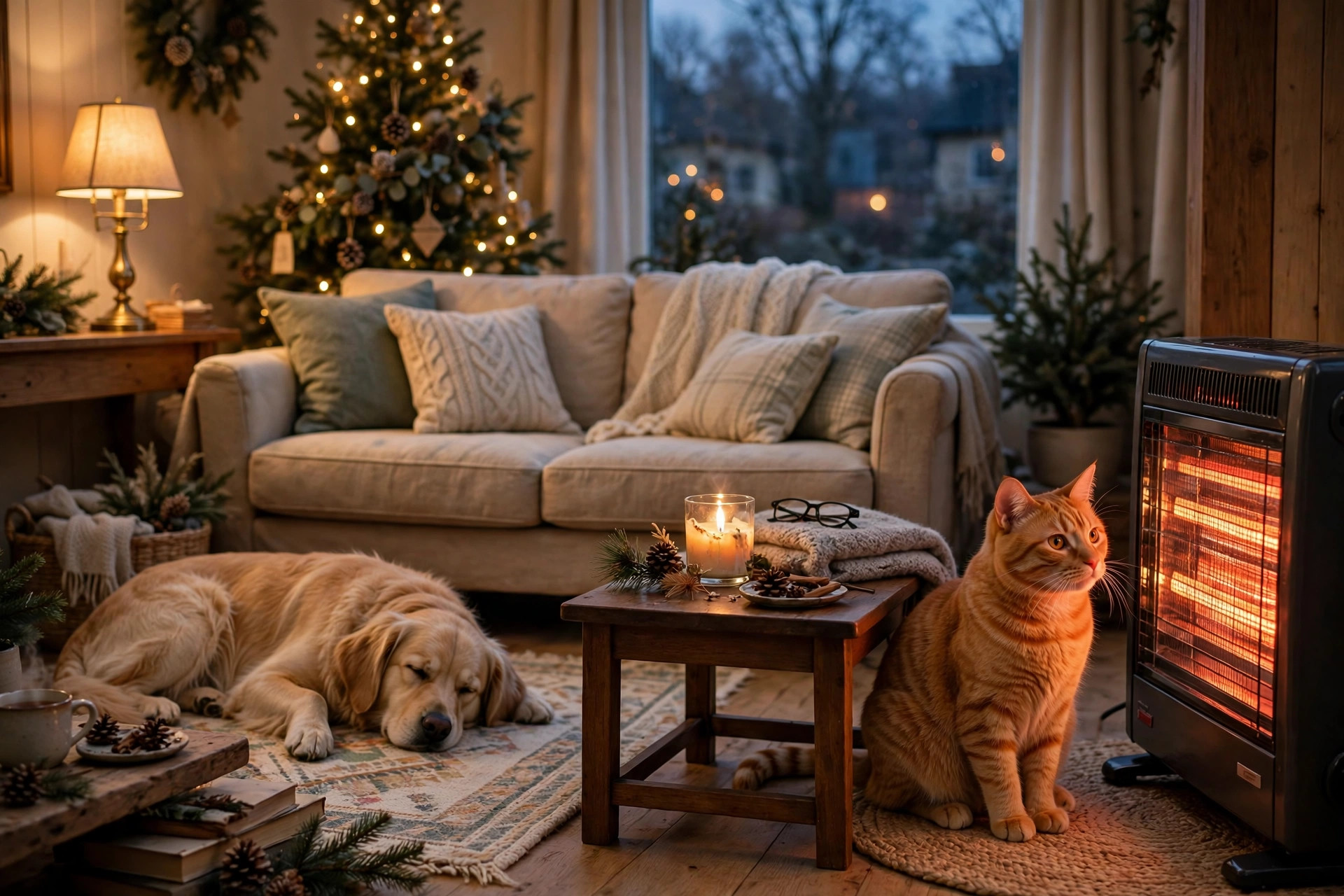
When the cold weather arrives, most pet owners focus on what happens outside: icy sidewalks, freezing rain, and short daylight walks. But some of the most serious winter risks are already inside your home. Winter household dangers for pets — from space heaters and scented candles to antifreeze in the garage and holiday decorations — send thousands of dogs and cats to emergency vets every cold season.
The good news is that nearly all of these dangers are preventable once you know what to look for. In this complete 2026 guide, we’ll walk you through the 8 biggest indoor winter hazards for dogs and cats, the warning signs that need a vet right away, and the simple habits that keep your home safe all season.
Table of Contents
- Why Winter Moves Danger Indoors
- 1. Antifreeze: The Deadliest Winter Chemical
- 2. Space Heaters, Fireplaces & Open Flames
- 3. Scented Candles & Essential Oils
- 4. Holiday Decorations & Toxic Plants
- 5. Electrical Cords & Fairy Lights
- 6. De-Icing Salts Tracked Indoors
- 7. Rodent Bait & Winter Pests
- 8. Holiday Foods & Guest Hazards
- Winter Hazard Cheat Sheet
- What to Do in a Winter Pet Emergency
- Frequently Asked Questions
Why Winter Moves Danger Indoors
In summer, your pet’s risks are mostly outdoors — heat, traffic, and open water. In winter, pets spend far more hours inside, and so do the hazards. Heating equipment runs around the clock, cars get topped up with antifreeze in the garage, holiday decorations appear in every room, and guests bring food, gifts, and unfamiliar bags through the door.
Cats are especially at risk indoors: they climb, squeeze into warm spots, chew cords, and bat at dangling decorations. Dogs, meanwhile, explore with their mouths — a spilled puddle in the garage or a dropped chocolate is gone before you can react. Indoor cats are not automatically safe either, as the autumn hazards guide shows: dangers come inside on shoes, through open windows, and in shopping bags.
Also Read: Autumn Pet Hazards: Fall Dangers for Cats (2026)
1. Antifreeze: The Deadliest Winter Chemical
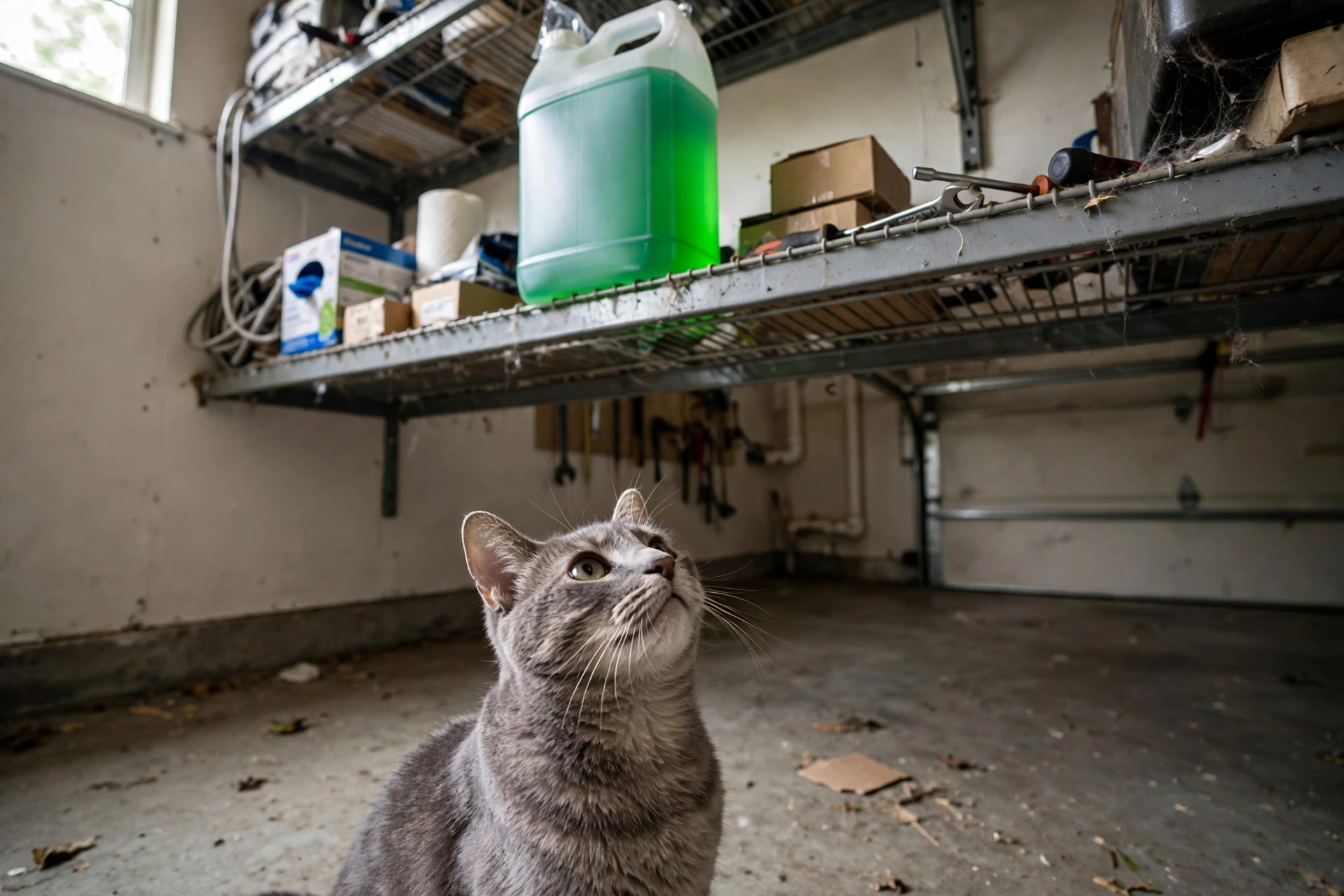
Antifreeze is the single most dangerous winter household product for pets. Conventional antifreeze contains ethylene glycol, which tastes sweet — so pets drink it willingly — and is devastatingly toxic. Cats are the most sensitive of all animals: as little as a teaspoon can be fatal, while a few tablespoons can kill a medium dog.
Early signs look like intoxication: stumbling, vomiting, increased thirst and urination. Then comes the cruel part — many pets appear to improve for a day or two before kidney failure sets in, so “she seems fine now” is never reassurance. Treatment must start within about 3 hours for cats and 8–12 hours for dogs to have the best chance of working.
The ASPCA advises storing all antifreeze in sealed containers high up where pets cannot reach, and cleaning up any spill thoroughly before letting pets back into the area. If a car is leaking coolant, fix the leak before your pet goes near the garage. Consider switching to propylene-glycol antifreeze, which has a much wider margin of safety — though it is still not safe to drink.
2. Space Heaters, Fireplaces & Open Flames
Pets love warmth, and that is exactly the problem. Dogs and cats curl up against radiators, press against space heaters, and nap dangerously close to fireplaces. The result can be contact burns, singed fur, or worse — a knocked-over heater starting a fire.
- Keep space heaters at least 3 feet from pet beds, blankets, and curtains, and never leave one running unattended in a room with a pet.
- Use a fireplace screen at all times — embers can pop, and a curious cat can walk straight onto a hot hearth.
- Watch for overheating: pets that pant, drool, or move restlessly away from heat may be too warm, especially flat-faced breeds and seniors.
- Check that gas and kerosene heaters are properly vented — faulty heaters can leak carbon monoxide, which is dangerous to pets and people alike.
3. Scented Candles & Essential Oils
Winter is candle season, but open flames and scented products are a double hazard. A cat can knock a candle off a table with one swat of a tail, and essential oil diffusers release compounds that cats in particular struggle to process — their livers cannot break down many essential oils the way a dog’s or human’s can.
Oils to keep away from cats include tea tree, eucalyptus, peppermint, citrus oils, and pine. Signs of trouble include drooling, vomiting, pawing at the mouth, lethargy, and difficulty breathing. If you use a diffuser, run it only in a room your cat can leave, never in a closed space, and never apply undiluted essential oils to your pet’s skin or fur. Battery-operated flameless candles give you the glow without the fire risk.
4. Holiday Decorations & Toxic Plants

Holiday decorations turn your living room into a playground of hazards. Tinsel and ribbon are the worst offenders for cats: swallowed strands can cause a linear foreign body in the intestines, which is a surgical emergency. Fragile glass ornaments shatter into sharp pieces, and Christmas tree water often contains preservatives, fertilizers, or stagnant bacteria that cause vomiting and diarrhea if a pet drinks it.
Holiday plants carry their own risks. Lilies are deadly to cats — even pollen or vase water can trigger acute kidney failure. Mistletoe can cause vomiting, low blood pressure, and heart problems if eaten in quantity. Holly berries cause vomiting and diarrhea, and poinsettias, while less toxic than their reputation suggests, still cause stomach upset. Choose pet-safe decorations, secure the tree so it cannot topple, cover the tree-water reservoir, and hang fragile ornaments high and out of reach.
5. Electrical Cords & Fairy Lights
Fairy lights, heated blankets, and space-heater cords all multiply in winter — and chewing pets do not distinguish a light string from a toy. A chewed live cord can cause electrical burns around the mouth, and in rare cases fluid can build up in the lungs hours later, so any cord-chewing incident deserves a vet call even if your pet looks fine.
Hide cords behind furniture, use cord covers, unplug decorations when you leave the house, and never let a pet chew on a string of lights. Battery-operated lights remove the shock risk entirely and are a safer choice for homes with dedicated chewers.
6. De-Icing Salts Tracked Indoors
De-icing products do not stay outside. Salt and chemical ice melt ride in on shoes, paws, and boots, and end up on floors where pets walk, lie, and groom. Direct contact dries and cracks paw pads, and licking salted paws can cause vomiting, diarrhea, drooling, and — in larger amounts — salt poisoning with excessive thirst, tremors, and disorientation.
Wipe or rinse paws after every winter walk, keep a towel by the door, and use only pet-safe ice melt on your own paths (and keep even that out of reach — it is still not for eating). For the full paw-care routine, see our winter paw guide.
Also Read: Winter Paw Care for Dogs: Salt & Ice Guide (2026)
7. Rodent Bait & Winter Pests
As nights turn cold, rodents move indoors — and bait stations appear in garages, sheds, basements, and neighbors’ yards. Rodenticides behave very differently by type: anticoagulants interfere with blood clotting and may show no signs for days; bromethalin is a neurotoxin with no specific antidote; and cholecalciferol (concentrated vitamin D3) drives blood calcium up and damages the kidneys.
The scariest part is secondary poisoning: a cat that catches and eats a poisoned mouse absorbs the poison too. Avoid rodenticides when possible, use enclosed tamper-resistant stations only, photograph the active-ingredient panel of any bait you find, and keep pets away from areas where bait is used.
8. Holiday Foods & Guest Hazards
Winter gatherings fill homes with chocolate, xylitol-sweetened treats, alcohol, rich fatty foods, and unattended handbags. Chocolate contains theobromine, which is toxic to dogs and cats; xylitol (birch sugar) in sugar-free gum and desserts can cause a dangerous blood-sugar crash and liver failure in dogs. Even “safe” extras like fatty turkey skin can trigger pancreatitis.
Set the ground rules before guests arrive: no table scraps, no unattended plates, handbags and coats behind closed doors, and trash bins secured. Give your pet its own safe treat so it is not begging for yours.
Winter Hazard Cheat Sheet
| Hazard | Main Risk | Quick Fix |
|---|---|---|
| Antifreeze | Fatal kidney failure from tiny amounts | Sealed, high storage; clean spills instantly |
| Space heaters / fireplaces | Burns, fire | 3-foot gap, screens, never unattended |
| Candles / essential oils | Fire, cat liver toxicity | Flameless candles; ventilated rooms only |
| Tinsel, ornaments, lilies | Blockage, cuts, kidney failure | No tinsel; secure tree; no lilies indoors |
| Electrical cords | Burns, shock | Cord covers; unplug when away |
| De-icing salts | Paw damage, salt poisoning | Wipe paws after every walk |
| Rodent bait | Bleeding, nerve damage | Tamper-resistant stations only |
| Holiday foods | Chocolate / xylitol poisoning | No scraps; secure trash and bags |
What to Do in a Winter Pet Emergency
Speed matters more than anything when a pet is exposed to a winter hazard:
- Remove your pet from the source immediately so no more is ingested or contacted.
- Do not try to make your pet vomit unless a veterinarian specifically tells you to — it can cause further harm with caustic substances.
- Identify what was eaten or touched. Photograph the product label, note the time, and estimate how much was involved.
- Call your veterinarian or an animal poison control line immediately — even if your pet seems fine. The ASPCA Animal Poison Control Center can be reached at (888) 426-4435. Bring the photo or packaging to the clinic.
Also Read: Pet Emergency First Aid: Vet Guide (2026)
Frequently Asked Questions
What is the most dangerous winter household item for pets?
Antifreeze. Ethylene glycol antifreeze is sweet-tasting and lethal in tiny amounts — about a teaspoon for a cat and a few tablespoons for a medium dog — and it causes kidney failure. Any suspected contact is an immediate vet emergency.
Are space heaters safe for pets?
They can be, with rules: keep the heater at least 3 feet from beds and curtains, use a model with tip-over protection, never leave it running unattended in a room with a pet, and make sure gas or kerosene heaters are properly vented to avoid carbon monoxide.
Are scented candles bad for cats?
Open flames are a fire risk around cats, and some scented candles and essential oils are toxic to cats because their livers cannot process many oil compounds. Use flameless candles, and only diffuse pet-safe oils in rooms your cat can leave.
Is tinsel dangerous for cats?
Yes. Swallowed tinsel or ribbon can cause a linear foreign body in the intestines, which can cut through the gut wall and needs emergency surgery. Skip tinsel entirely in homes with cats.
What should I do if my pet licks antifreeze?
Go to the vet immediately — do not wait for symptoms. Treatment works best within about 3 hours for cats and 8–12 hours for dogs. Bring the product container if you can, and call ahead so the clinic is ready.
Are poinsettias poisonous to pets?
Poinsettias are mildly toxic: eating them usually causes drooling, vomiting, or diarrhea rather than serious poisoning. Lilies, by contrast, are deadly to cats and should never be in a cat household at all.
Final Thoughts
Winter does not have to be a season of emergencies. Most winter household dangers for pets are defeated by simple habits: store chemicals sealed and high, keep flames and cords out of reach, skip the tinsel, secure the tree, wipe paws after walks, and set guest rules before the party starts. Do a room-by-room check now, before the coldest weeks arrive, and you will spend the season enjoying the cozy months instead of rushing to the vet.
And remember: no home-safety guide replaces your veterinarian. If your pet is exposed to antifreeze, a toxin, or any suspected poison, call your vet or poison control immediately — fast action is what turns a scare into a story with a happy ending.
By Dr. Ayaz Ali