

As a dog owner, you’ve probably been there: you’re slicing up a fresh, juicy pineapple, and your dog is watching every move with hopeful eyes. It’s only natural to wonder: can dogs eat pineapple, or should this tropical fruit stay off your pup’s menu?
The good news is yes, dogs can eat pineapple — but only the soft, ripe flesh, served plain and in small amounts. While pineapple is loaded with vitamins, minerals, and hydration, its high natural sugar content and tough, spiky exterior mean there are important rules to follow.
In this complete guide, we’ll walk you through everything you need to know about feeding pineapple to dogs: the health benefits, the potential risks, safe serving sizes by dog size, how to prepare it, and answers to the most common questions dog owners ask.
Table of Contents
- Is Pineapple Safe for Dogs?
- Nutritional Benefits of Pineapple for Dogs
- Risks of Feeding Pineapple to Dogs
- How Much Pineapple Can Dogs Eat?
- How to Prepare Pineapple for Dogs
- What If My Dog Eats Too Much Pineapple?
- Can Puppies Eat Pineapple?
- Healthy Alternatives to Pineapple
- Frequently Asked Questions
Is Pineapple Safe for Dogs?

Yes, fresh pineapple is generally safe for healthy dogs when served correctly. Veterinary sources including PetMD confirm that dogs can eat pineapple in moderation, as long as it is properly prepared and portioned.
Pineapple is roughly 86% water, making it a hydrating, low-fat treat. But the key word is moderation. Treats — including fruit — should make up no more than 10% of your dog’s daily calories, with the rest coming from a complete, balanced dog food.
Before offering pineapple, make sure you serve only:
- Fresh, ripe pineapple flesh
- Cut into small, bite-sized chunks
- With the skin, core, and leaves completely removed
- Plain — no added sugar, syrup, or seasoning
Nutritional Benefits of Pineapple for Dogs
Pineapple may be a simple fruit, but it packs a surprising nutritional punch for dogs when fed responsibly.
1. Rich in Vitamins and Antioxidants
Pineapple contains vitamin C, vitamin B6, vitamin A, folate, and antioxidants such as flavonoids and phenolic acids. While dogs produce their own vitamin C, the extra antioxidant support can help fight inflammation and support immune health.
2. Bromelain Aids Digestion
Pineapple is one of the few foods that naturally contains bromelain, an enzyme that helps break down protein. Since protein is the cornerstone of a dog’s diet, bromelain may support smoother digestion — and some veterinarians note it may have mild anti-inflammatory properties.
3. Excellent Hydration
With about 86% water content, pineapple is a refreshing hydrating snack — especially welcome on hot days or for dogs that don’t drink enough water on their own.
4. Fiber and Essential Minerals
Pineapple provides dietary fiber for gut health, plus manganese (important for bone health and metabolism), potassium, magnesium, and copper. In small amounts, these nutrients complement a balanced diet nicely.
Also Read: Can Dogs Eat Watermelon? Benefits, Risks & Safe Feeding Guide (2026)
Risks of Feeding Pineapple to Dogs
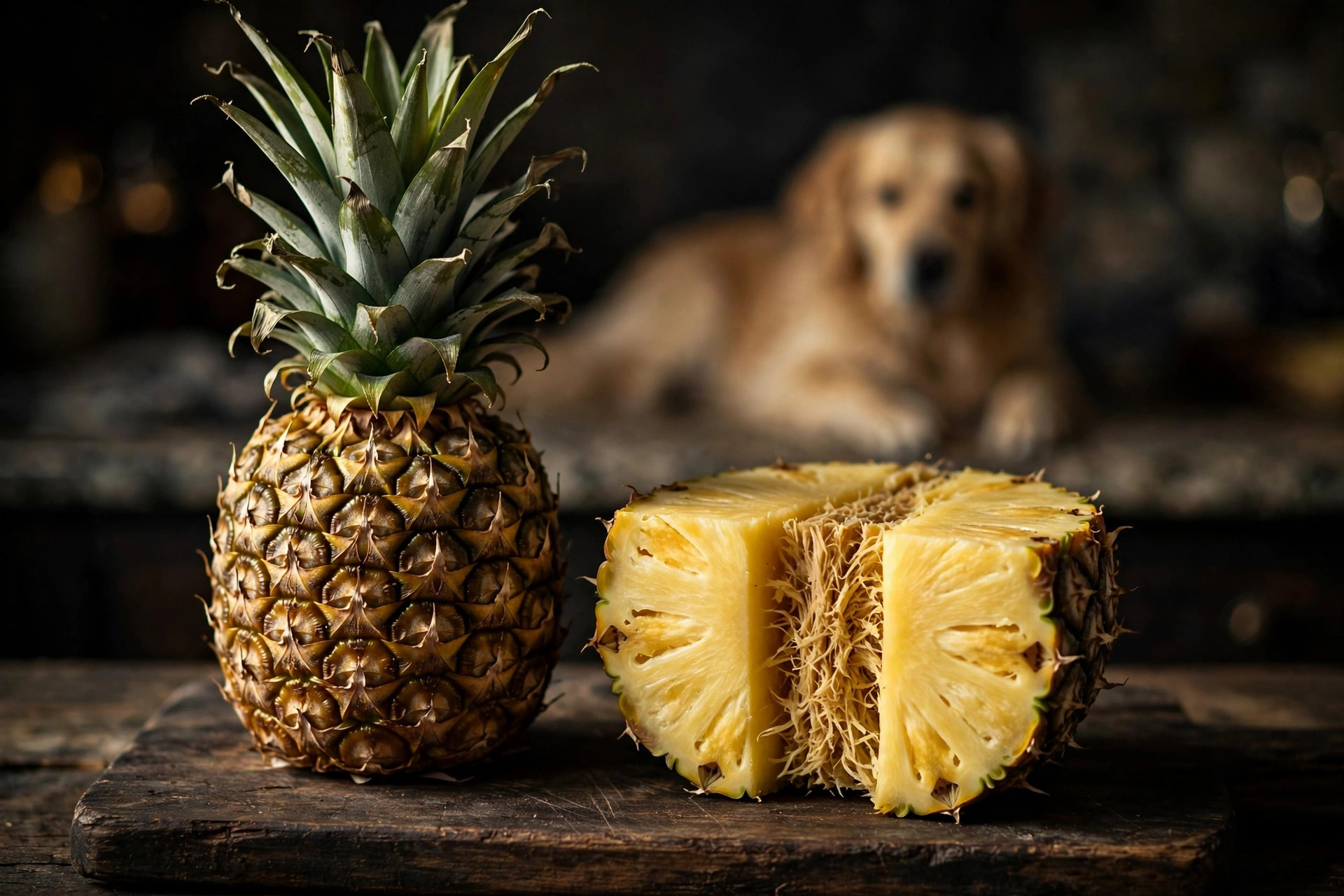
Although pineapple is safe for many dogs, feeding it the wrong way — or too much of it — can cause real problems.
1. High Natural Sugar Content
Fresh pineapple contains about 10g of natural sugar per 100g. For most healthy dogs this is fine in tiny amounts, but dogs with diabetes, obesity, or blood-sugar issues should avoid pineapple unless your veterinarian says otherwise. Regular overfeeding of sugary fruit can also contribute to weight gain and dental problems.
2. Digestive Upset From Overfeeding
Too much pineapple at once can overwhelm your dog’s stomach thanks to its fiber and natural acids. Watch for vomiting, diarrhea, gas, or stomach discomfort — signs you’ve served more than their system can handle.
3. Skin, Core, and Leaves Are Dangerous
Never feed your dog the tough outer skin, the fibrous core, or the sharp leaves. These parts are difficult to digest and can cause:
- Choking, especially in small breeds
- Mouth or throat irritation
- Intestinal blockage
- Stomach pain
Always cut away every inedible part before serving.
4. Canned Pineapple and Juice Are Unsafe
Canned pineapple in syrup is loaded with added sugar and preservatives, and pineapple juice is too acidic and concentrated for dogs. Stick to fresh, raw pineapple only.
5. Rare Allergic Reactions
Though uncommon, some dogs can be sensitive to pineapple. After the first tiny taste, watch for itching, swelling, or vomiting. If any of these appear, stop feeding pineapple and contact your veterinarian.
How Much Pineapple Can Dogs Eat?
Pineapple should only ever be an occasional treat — not a daily snack. Use this simple serving guide:
| Dog Size | Weight | Safe Serving |
|---|---|---|
| Small dogs | Under 20 lbs | 1–2 small chunks |
| Medium dogs | 20–50 lbs | 2–3 chunks |
| Large dogs | Over 50 lbs | 3–4 chunks |
When in doubt, start with a single small piece and see how your dog reacts before offering more.
How to Prepare Pineapple for Dogs
Safe preparation takes just a few minutes:
- Choose a fresh, ripe pineapple (it should smell sweet at the base).
- Cut off the spiky skin, the crown/leaves, and the tough inner core.
- Slice the soft flesh into small, bite-sized chunks appropriate for your dog’s size.
- Serve plain — never add sugar, syrup, or seasoning.
- Offer a small amount as an occasional treat, or mix a chunk or two into their regular meal.
For a cooling summer treat, try freezing the chunks for an hour before serving.
What If My Dog Eats Too Much Pineapple?
If your dog raids the fruit bowl and eats a large amount of pineapple, don’t panic — but do monitor them closely. Too much pineapple most often causes temporary digestive upset: loose stool, vomiting, or gas.
Contact your veterinarian right away if you notice severe or ongoing vomiting or diarrhea, abdominal swelling, lethargy, loss of appetite lasting more than 24 hours, or if your dog ate the skin, core, or leaves (blockage risk).
Can Puppies Eat Pineapple?
Yes, puppies can eat a tiny amount of fresh pineapple once they are fully weaned and eating solid food. Because puppies have sensitive digestive systems, start with one very small piece and watch for any stomach upset over the next 24 hours before offering more. As with adults, keep it an occasional treat only.
Healthy Alternatives to Pineapple
If your dog doesn’t care for pineapple — or you’d like to rotate their treats — these fruits are also safe in moderation:
- Blueberries (antioxidant-packed and low in sugar)
- Apples — seeds and core removed
- Bananas — in small amounts due to sugar content
- Watermelon — seedless, rind removed
- Strawberries
Always introduce any new food gradually and in small portions.
Also Read: Can Dogs Eat Shrimp? Benefits, Risks & Safe Feeding Guide (Vet-Reviewed Tips)
Frequently Asked Questions
Can dogs eat pineapple every day?
No. Pineapple’s natural sugar content makes it an occasional treat only — a few times a week at most, in the small portions listed above.
Can dogs eat pineapple core?
No. The core is tough, fibrous, and a choking hazard. It can also cause intestinal blockage. Always remove it.
Can dogs eat pineapple skin?
No. The spiky skin is indigestible and can injure your dog’s mouth or cause digestive blockage. Remove all skin before serving.
Is canned pineapple safe for dogs?
No. Canned pineapple in syrup contains added sugars and preservatives that are unhealthy for dogs and can upset their stomach. Only fresh pineapple is safe.
Can dogs drink pineapple juice?
No. Pineapple juice is too acidic and concentrated, with far more sugar per serving than the whole fruit. Skip it.
Can diabetic dogs eat pineapple?
It’s best to avoid it. The natural sugars can spike blood glucose. Always check with your veterinarian before giving fruit to a diabetic dog.
Final Thoughts
So, can dogs eat pineapple? Absolutely — when it’s fresh, properly prepared, and served in moderation. A few juicy chunks make a hydrating, vitamin-rich treat most dogs love. Just remember the golden rules: flesh only, no skin or core, no canned or juiced versions, and keep portions small.
As with any new food, introduce pineapple slowly and watch how your dog responds. And when in doubt, your veterinarian is always the best source of advice for your individual pup’s diet.