
It’s Thanksgiving, the house smells incredible, and your dog is parked beside the table with those irresistible puppy-dog eyes. As the stuffing comes out of the oven, it’s only natural to wonder: can dogs eat stuffing, or is this holiday side one your pup must never taste?
The short answer is a firm no. Stuffing is one of the most dangerous Thanksgiving foods for dogs — it almost always contains onions and garlic, which are toxic to dogs, plus loads of fat, salt, and butter that can trigger pancreatitis. Even a small serving is risky, and there is no safe “just a bite” version of the family recipe.
Table of Contents
- Is Stuffing Safe for Dogs?
- Why Is Stuffing Dangerous for Dogs?
- Symptoms If Your Dog Ate Stuffing
- What to Do If Your Dog Eats Stuffing
- Thanksgiving Table: Safe vs Unsafe Foods
- Safe Thanksgiving Treats for Dogs Instead
- Can Puppies Eat Stuffing?
- Frequently Asked Questions
Is Stuffing Safe for Dogs?
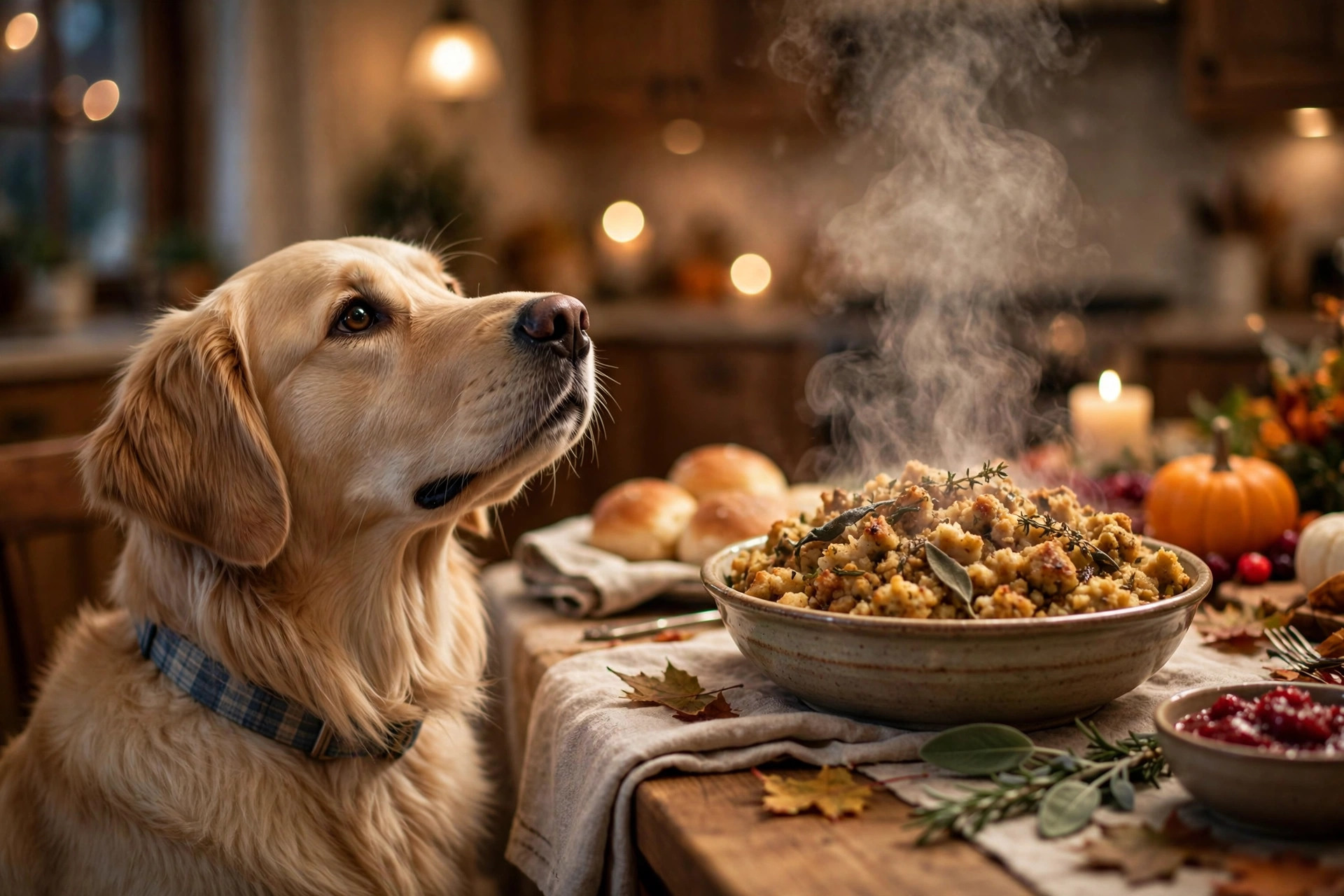
No — stuffing is not safe for dogs in any amount. Veterinary sources including PetMD list stuffing among the Thanksgiving foods dogs should never eat, because it routinely contains toxic ingredients such as onions, garlic, and sometimes raisins or grapes.
The danger isn’t the bread itself. A piece of plain bread won’t hurt your dog. The problem is everything mixed into a typical stuffing recipe: diced onions and celery, garlic, butter or turkey drippings, broth seasoned with herbs, sausage, and heavy salt. Even “boxed” stuffing mixes hide onion and garlic powder in their seasoning packets.
With stuffing, though, the rule is simpler than the usual 10% treat allowance: none at all.
The holiday rule is simple: no stuffing or dressing from anyone’s plate, no stuffing cooked inside the turkey, and no stuffing scraps or trash-digging after dinner. There is no safe amount.
Also Read: Can Dogs Eat Turkey? Safe Feeding Guide (2026)
Why Is Stuffing Dangerous for Dogs?
Stuffing looks harmless — soft, savory, and made of bread. But from a dog’s perspective, it’s a stack of hazards in a single dish. Here are the three main dangers.
1. Onions, Garlic, and Other Alliums Are Toxic
This is the biggest threat. Almost every stuffing recipe — homemade or boxed — contains onions, garlic, leeks, shallots, or chives, all members of the Allium family. These contain thiosulfate compounds that damage a dog’s red blood cells, causing a condition called hemolytic anemia.
No part of an onion or garlic plant is safe, and cooking does not make them safe — the toxic compounds survive heat. Even the dried onion and garlic powder in boxed stuffing mix count. The more a dog eats, the more severe the red blood cell damage — and symptoms are delayed by a day or more, so a dog can look fine at first and crash later.
2. High Fat and Salt Can Trigger Pancreatitis
Stuffing is a fatty, salty dish by design: butter, turkey drippings, sausage, and sometimes bacon go into most recipes, plus a heavy hand with salt. A rich meal like this can trigger pancreatitis — a painful, potentially life-threatening inflammation of the pancreas. Veterinary emergency clinics see a spike in pancreatitis cases after Thanksgiving, and rich holiday leftovers are a classic cause.
Signs of pancreatitis include repeated vomiting, a hunched or “praying” posture, severe belly pain, lethargy, dehydration, and loss of appetite. It can require hospitalization and IV fluids, so it’s not something to wait out at home.
3. Hidden Extras: Raisins, Sausage, and Rich Spices
Depending on the family recipe, stuffing can hide even more dangers:
- Raisins or dried cranberries: some regional recipes mix dried fruit into stuffing — and grapes and raisins can cause sudden kidney failure in dogs.
- Sausage: adds more fat, salt, and often additional garlic and onion seasoning.
- Sage, pepper, and other spices: heavy seasoning irritates a dog’s stomach and can cause vomiting and diarrhea.
- Butter and turkey drippings: concentrated fat that adds to the pancreatitis risk.
- Sugar-free ingredients: if a recipe uses sugar substitutes, xylitol is a medical emergency — it causes a sudden, dangerous drop in blood sugar.
Also Read: Can Dogs Eat Mashed Potatoes? Guide (2026)
Symptoms If Your Dog Ate Stuffing
Dogs that get into stuffing may show different symptoms depending on how much they ate and which ingredients were in it. Watch for any of the following, especially in the 24–72 hours after the meal:
- Vomiting or diarrhea
- Loss of appetite or refusing food
- Weakness, lethargy, or unusual tiredness
- Abdominal pain, whimpering, or a hunched posture
- Pale or yellowish gums (a sign of red blood cell damage)
- Rapid or labored breathing
- Dark or reddish-colored urine
- Collapse
Onion and garlic symptoms are delayed 24–72 hours, so call your vet right away rather than waiting to see how things go.
What to Do If Your Dog Eats Stuffing
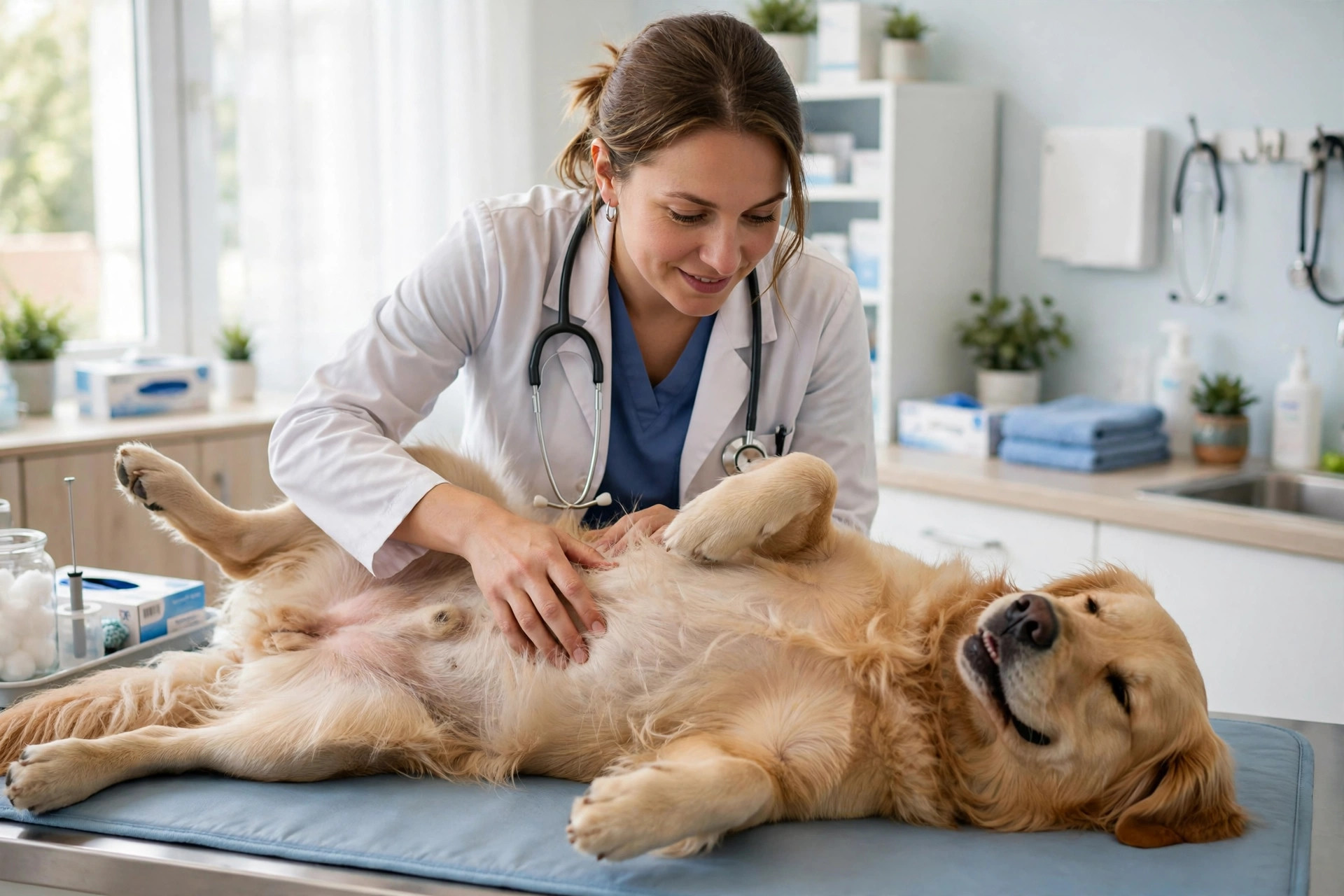
If your dog snatched stuffing off a plate or raided the trash, act quickly but stay calm:
- Secure the food. Remove any remaining stuffing so your dog can’t eat more, and clean up the table and trash area.
- Figure out what and how much. Check the recipe if you can — did it contain onion, garlic, raisins, or xylitol? Note roughly how much your dog ate and when.
- Call your veterinarian or an emergency clinic immediately. This is a true emergency — call even if your dog seems fine. Onion and garlic symptoms are delayed, and early treatment makes a huge difference.
- Have the poison helpline ready. Save the Pet Poison Helpline (855-764-7661) in your phone before the holidays. If your vet is unavailable, they can advise on urgency and treatment.
- Do NOT try to make your dog vomit at home. Inducing vomiting can cause more harm, including aspiration. Only do it if your veterinarian or a poison-control professional specifically tells you to.
- Monitor closely for 48–72 hours. Watch for vomiting, lethargy, pale gums, breathing trouble, or loss of appetite — and head to the vet at the first sign.
Also Read: Pet Emergency First Aid: Vet Guide (2026) — what to do in the critical first minutes of any poisoning emergency.
Thanksgiving Table: Safe vs Unsafe Foods
Stuffing is just one of the table dangers. Keep this quick-reference chart in mind — and make sure guests know the rules too:
| Food | Safe for Dogs? | Notes |
|---|---|---|
| Plain turkey breast | Yes, small amounts | Boneless, skinless, unseasoned |
| Plain green beans | Yes | No butter, salt, or casserole |
| Plain sweet potato | Yes | No marshmallows or brown sugar |
| Plain pumpkin | Yes | 100% pure — never pie |
| Stuffing / dressing | No | Onion, garlic, fat, salt |
| Gravy | No | High fat and salt, often onion/garlic |
| Onions / garlic / leeks | No — toxic | Damages red blood cells |
| Grapes / raisins | No — toxic | Can cause kidney failure |
| Turkey skin & bones | Never | Pancreatitis risk; bones splinter |
| Chocolate desserts | No — toxic | Theobromine poisoning |
| Xylitol sweets | No — deadly | Toxic even in tiny amounts |
| Raw bread dough | No | Yeast expands in the stomach |
Pro tip: Tell your guests in advance — and take the trash out promptly. More than half of holiday ER visits for dogs start with a well-meaning guest sharing scraps or a dog raiding the garbage.
Safe Thanksgiving Treats for Dogs Instead
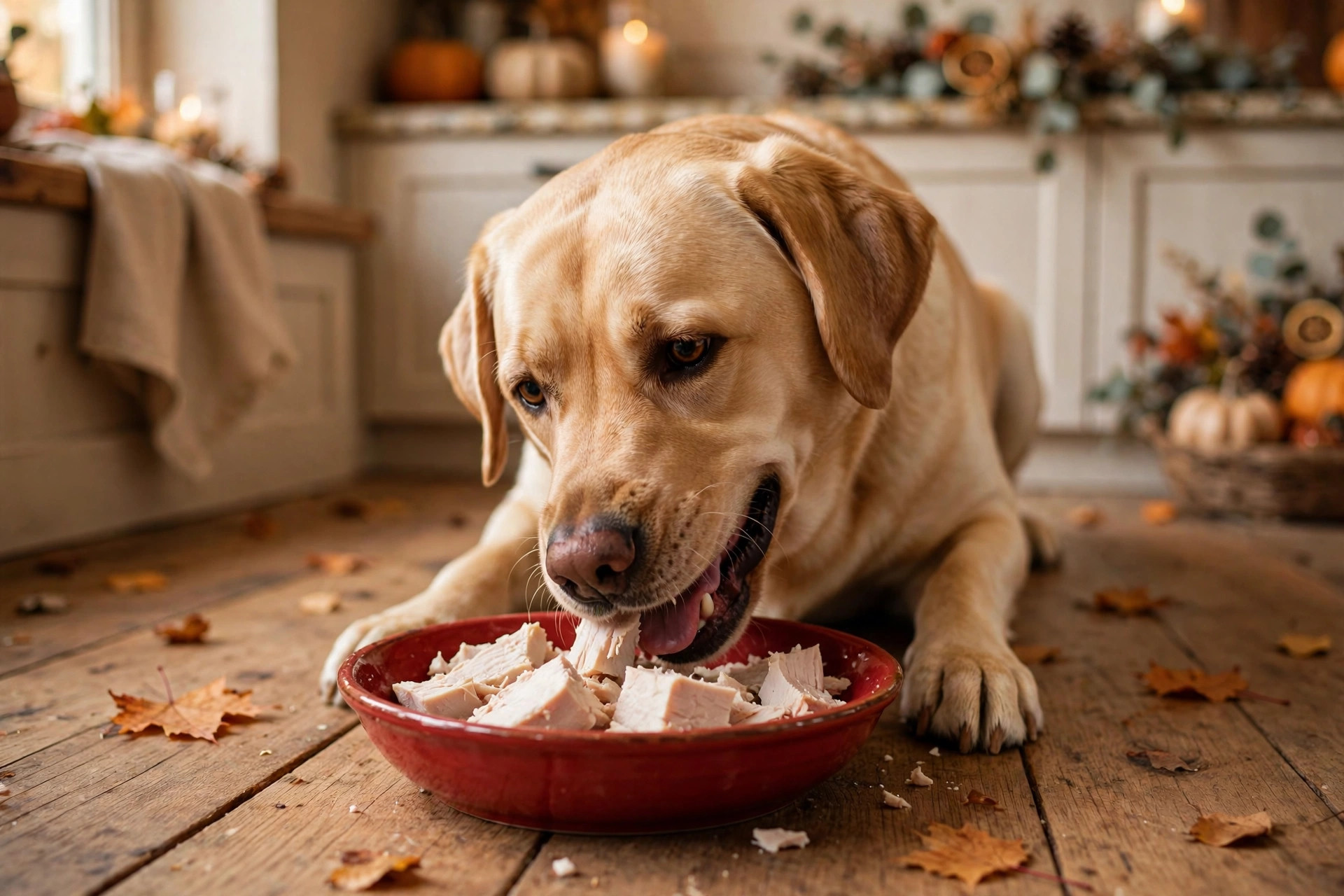
Your dog doesn’t have to miss out on the holiday. Set aside a small “dog plate” before you add butter, salt, or seasonings to the family dishes:
- Small pieces of plain, fully cooked turkey breast (boneless, skinless, unseasoned)
- Plain steamed green beans
- A spoonful of plain cooked or canned pumpkin (100% pumpkin, never pie filling)
- Plain boiled carrots, cut into small pieces
- A few apple slices (seeds and core removed)
- A tablespoon of plain cooked sweet potato
Serve these in your dog’s own bowl, in small portions, as part of their regular treat allowance. It’s the safest way to include your pup in the celebration — and it keeps begging for the dangerous stuff to a minimum.
Also Read: Can Dogs Eat Turkey? Safe Feeding Guide (2026) — exactly how much plain turkey is safe and how to prepare it.
Can Puppies Eat Stuffing?
No. Puppies should never eat stuffing — and they’re actually at higher risk than adult dogs. Puppies are smaller, so a given amount of onion or garlic represents a larger dose relative to body weight. Their digestive systems are also more sensitive to rich, fatty foods, making pancreatitis more likely.
Keep puppies completely away from the holiday table, the kitchen during cooking, and the trash. If you’re hosting, a puppy gate or a quiet room with their own toys and a safe chew is the kindest option.
Frequently Asked Questions
Can dogs eat stuffing if it has no onion or garlic?
Even without onion and garlic, stuffing is too fatty, salty, and richly seasoned for dogs. The butter, drippings, and salt alone can cause vomiting, diarrhea, or pancreatitis. There is no safe stuffing recipe for dogs at a typical holiday table.
How much stuffing is toxic to dogs?
Any amount is risky, and toxicity depends on the recipe and your dog’s size. Even a few tablespoons of onion-heavy stuffing can damage red blood cells in a small dog. Always call your vet after any stuffing ingestion, no matter how small.
Is boxed stuffing mix safe for dogs?
No — boxed stuffing mix is often worse. The seasoning packets contain concentrated onion and garlic powder, plus high sodium and preservatives. Keep boxes stored out of reach too.
What Thanksgiving foods can dogs safely eat?
Plain turkey breast (boneless, skinless, unseasoned), plain green beans, plain sweet potato, plain pumpkin puree, carrots, and apple slices — all in small amounts. Keep stuffing, gravy, turkey skin, bones, grapes, chocolate, and xylitol products completely away.
Final Thoughts
So, can dogs eat stuffing? No — never. What looks like a harmless bread dish is packed with onion, garlic, fat, and salt that can poison your dog, destroy their red blood cells, or trigger life-threatening pancreatitis. There is no safe version of the family recipe and no safe serving size.
The good news: your dog can still join the celebration with a small plate of plain turkey, green beans, pumpkin, or carrots — prepared before the seasonings go in. Set the rules with guests ahead of time, secure the trash, and save the poison helpline number in your phone.
By Dr. Ayaz Ali