

As a dog owner, you’ve probably been there: you’re enjoying a delicious seafood dinner, and suddenly your dog is sitting beside you with those irresistible puppy eyes. It’s only natural to wonder: can dogs eat shrimp, or should it stay off their menu?
The good news is yes, dogs can eat shrimp, but there are a few important rules to follow. Shrimp should always be fully cooked, served plain, and offered only as an occasional treat. While shrimp is packed with protein and nutrients, feeding it the wrong way can upset your dog’s stomach or even lead to serious health problems.
We’ll cover everything you need to know about feeding shrimp to your dog, including the health benefits, potential risks, serving sizes, cooking tips, and answers to the most common questions dog owners ask.
Is Shrimp Safe for Dogs?
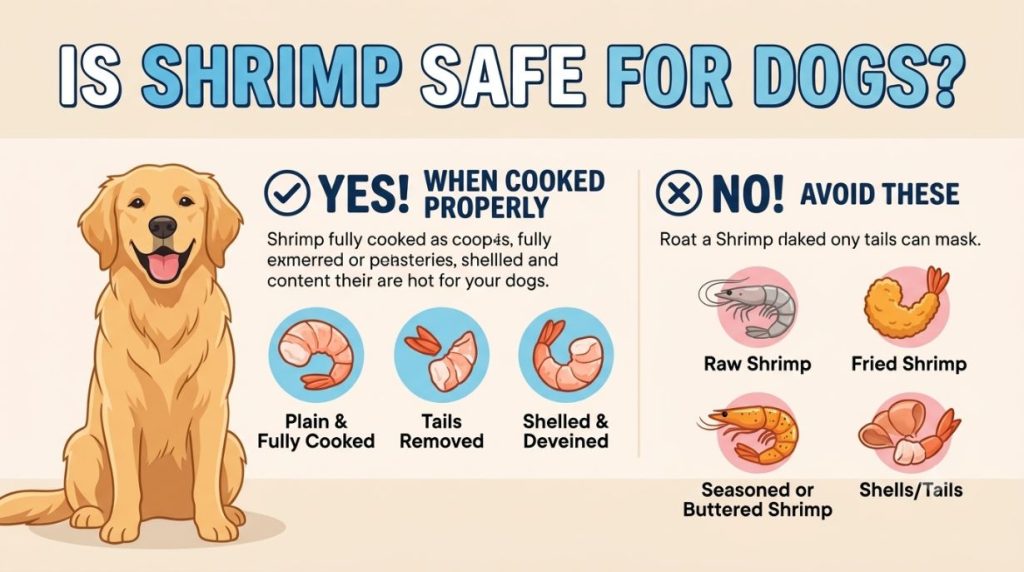
Yes, cooked shrimp is generally safe for healthy dogs when served in moderation.
Shrimp is rich in lean protein, vitamins, and minerals that support your dog’s overall health. However, it should never replace a balanced dog food diet. Think of shrimp as an occasional reward rather than a regular meal.
Before serving shrimp, make sure it is:
- Fully cooked
- Peeled
- Deveined
- Free from shells and tails
- Not seasoned with salt, garlic, onions, butter, or spices
Following these simple steps greatly reduces the risk of digestive problems or choking hazards.
Also Read: Can Dogs Eat Watermelon? Benefits, Risks & Safe Feeding Guide (2026)
Nutritional Benefits of Shrimp for Dogs
Shrimp may be small, but it’s loaded with nutrients that can benefit your dog when fed responsibly.
1. High in Lean Protein
Protein is one of the most important nutrients in a dog’s diet. It helps build muscles, repair tissues, and maintain healthy skin and fur.
Shrimp is naturally high in protein while being relatively low in fat, making it a healthier treat than many processed snacks.
2. Rich in Vitamin B12
Vitamin B12 supports:
- Healthy brain function
- Nervous system health
- Red blood cell production
- Energy metabolism
Dogs need adequate B vitamins to stay active and healthy.
3. Contains Omega-3 Fatty Acids
Shrimp contains small amounts of omega-3 fatty acids, which may support:
- Healthy skin
- A shiny coat
- Joint function
- Heart health
Although fish like salmon provide more omega-3s, shrimp can still contribute to a balanced diet.
4. Provides Important Minerals
Shrimp contains several essential minerals, including:
- Phosphorus for strong bones and teeth
- Selenium, an antioxidant that supports the immune system
- Zinc for skin health and wound healing
These nutrients help keep your dog healthy when shrimp is served occasionally.
Are There Any Risks?
Although shrimp is safe for many dogs, there are situations where it can become dangerous.
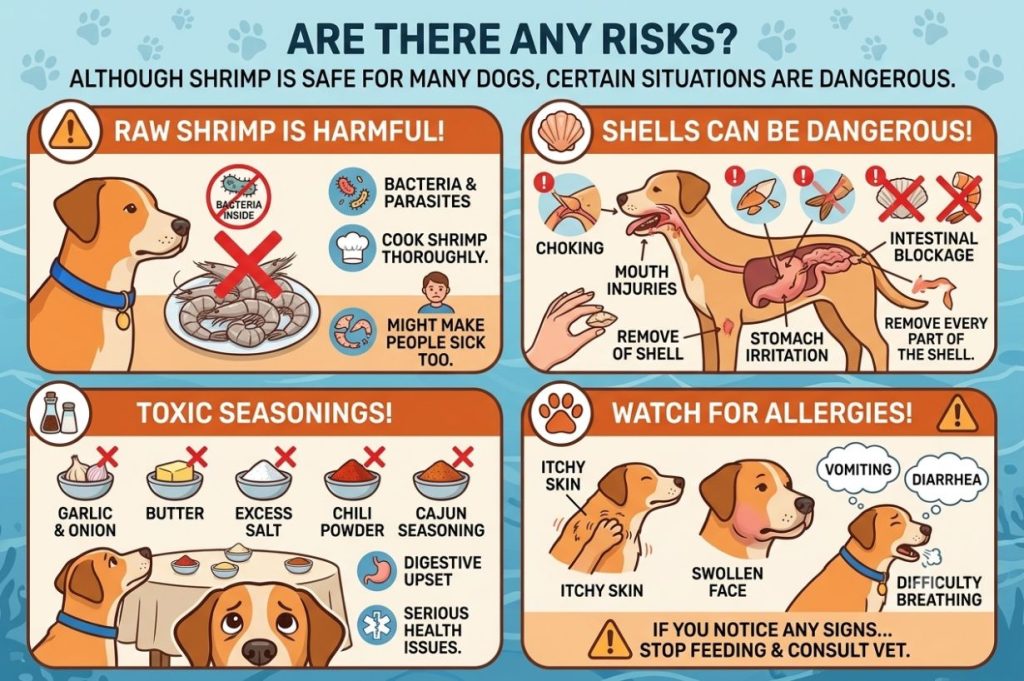
Raw Shrimp Can Contain Harmful Bacteria
Never feed your dog raw shrimp.
Raw seafood may contain bacteria and parasites that can make both pets and people sick. Cooking shrimp thoroughly kills most harmful microorganisms.
Shrimp Shells Can Be Dangerous
The shell, tail, and legs are difficult to digest.
They may cause:
- Choking
- Mouth injuries
- Intestinal blockage
- Stomach irritation
Always remove every part of the shell before feeding shrimp to your dog.
Seasonings Can Be Toxic
Many shrimp recipes include ingredients that are unsafe for dogs, such as:
- Garlic
- Onion
- Butter
- Excess salt
- Chili powder
- Cajun seasoning
Even if the shrimp itself is safe, these ingredients can cause digestive upset or more serious health issues.
Some Dogs May Be Allergic
Although uncommon, dogs can develop allergies to seafood.
Watch for symptoms such as:
- Itchy skin
- Swollen face
- Vomiting
- Diarrhea
- Difficulty breathing
If you notice any of these signs after your dog eats shrimp, stop feeding it immediately and contact your veterinarian.
Can Puppies Eat Shrimp?
Yes, puppies can eat a small amount of cooked shrimp, but only after they have transitioned to solid foods and are eating a balanced puppy diet.
Introduce shrimp slowly and give only a tiny piece the first time. Monitor your puppy for any signs of stomach upset or an allergic reaction.
Because puppies have sensitive digestive systems, treats like shrimp should be given only occasionally.
Can Dogs Eat Raw Shrimp?
No.
Raw shrimp is not recommended because it can carry harmful bacteria such as Salmonella or Vibrio. These bacteria may cause vomiting, diarrhea, and other digestive issues.
Always cook shrimp thoroughly before offering it to your dog.
Can Dogs Eat Fried Shrimp?
Fried shrimp should be avoided.
The batter and cooking oil add unnecessary fat and calories, which can upset your dog’s stomach and may increase the risk of pancreatitis, especially in smaller breeds.
Can Dogs Eat Boiled Shrimp?
Yes.
Plain boiled shrimp is one of the safest ways to prepare shrimp for dogs. Simply boil the shrimp until fully cooked, allow it to cool, remove the shell and tail, and serve in small pieces.
Also Read: Can Dogs Eat Bananas? Yes
How Much Shrimp Can Dogs Eat?
Shrimp should only be an occasional treat.
A simple serving guide:
| Dog Size | Recommended Amount |
|---|---|
| Small Dogs | 1 small shrimp |
| Medium Dogs | 2–3 shrimp |
| Large Dogs | 3–4 shrimp |
Treats should make up no more than 10% of your dog’s daily calorie intake.
How to Prepare Shrimp for Dogs
The safest method is simple:
- Wash the shrimp thoroughly.
- Cook it completely by boiling or steaming.
- Remove the shell, tail, and vein.
- Let it cool.
- Cut into bite-sized pieces.
- Serve plain without any seasoning.
Avoid adding sauces, lemon juice, butter, or spices.
Signs Your Dog Ate Too Much Shrimp
Eating too much shrimp may cause:
- Vomiting
- Diarrhea
- Gas
- Stomach discomfort
- Reduced appetite
If symptoms are severe or last longer than a day, contact your veterinarian.
Healthy Alternatives to Shrimp
If your dog doesn’t like shrimp or has a seafood allergy, consider these healthy protein treats:
- Cooked chicken
- Turkey
- Salmon (fully cooked)
- Eggs
- Lean beef (plain)
Always introduce new foods gradually.
Frequently Asked Questions
Can dogs eat shrimp every day?
No. Shrimp should only be an occasional treat because it doesn’t provide all the nutrients your dog needs for a complete diet.
Can dogs eat shrimp tails?
No. Shrimp tails are hard, difficult to digest, and may become a choking hazard.
Is frozen shrimp safe for dogs?
Yes, as long as it is thawed properly, cooked thoroughly, and served plain without seasoning.
My dog accidentally ate raw shrimp. What should I do?
Monitor your dog closely for vomiting, diarrhea, or unusual behavior. If symptoms develop or your dog ate a large amount, contact your veterinarian.