
As a dog owner, you’ve probably been there: it’s holiday season, cranberries are everywhere — in the sauce bowl, in the fruit bowl, in the trail mix — and your dog is watching every move with hopeful eyes. It’s only natural to wonder: can dogs eat cranberries, or should this tart holiday berry stay off your pup’s menu?
The good news is yes, dogs can eat cranberries — but only plain, fresh or frozen berries served in small amounts. While cranberries are packed with antioxidants, fiber, and vitamins, their oxalate content, the tartness, and all the sweetened holiday versions mean there are important rules to follow.
In this complete guide, we’ll walk you through everything you need to know about feeding cranberries to dogs: the health benefits, the potential risks, safe serving sizes by dog size, which cranberry products to avoid, and answers to the most common questions dog owners ask.
Table of Contents
- Are Cranberries Safe for Dogs?
- Health Benefits of Cranberries for Dogs
- Risks of Feeding Cranberries to Dogs
- How Many Cranberries Can Dogs Eat?
- How to Prepare Cranberries for Dogs
- What If My Dog Eats Too Many Cranberries?
- Can Puppies Eat Cranberries?
- Healthy Alternatives to Cranberries
- Frequently Asked Questions
Are Cranberries Safe for Dogs?

Yes, plain fresh or frozen cranberries are generally safe for healthy dogs when served correctly. Veterinary sources including the American Kennel Club (AKC) confirm that cranberries are not inherently toxic to dogs, as long as they are plain, properly portioned, and fed in moderation.
Here’s the funny part: cranberries are so tart that most dogs self-limit. Many pups will try one, make a face, and walk away — which is nature’s way of keeping portions tiny. But some dogs genuinely like them, and that’s where the portion rules matter. As with any treat, cranberries should make up no more than 10% of your dog’s daily calories, with the rest coming from a complete, balanced dog food.
Before offering cranberries, make sure you serve only:
- Fresh or plain frozen cranberries (just rinsed)
- Cut in half for small dogs and puppies (choking safety)
- Completely plain — no sugar, no seasoning, no cooking fats
- Occasionally — as a treat, never as a daily habit
Health Benefits of Cranberries for Dogs
Cranberries may be a simple berry, but they pack a surprising nutritional punch for dogs when fed responsibly.
1. Antioxidants That Fight Inflammation
Cranberries are rich in polyphenol antioxidants — the same compound family behind blueberries’ reputation. These antioxidants help protect your dog’s cells from oxidative damage and may support overall immune health. A cup of whole cranberries carries roughly 46 calories and 3.6 grams of fiber, making them a genuinely low-calorie treat.
2. Vitamins and Minerals
Cranberries provide vitamin C, manganese, vitamin E, vitamin K, and B vitamins, plus fiber and copper. While dogs make their own vitamin C, the supporting cast — especially manganese and antioxidants — can complement a balanced diet nicely in small amounts.
3. Possible Urinary Tract Support
Cranberries contain compounds called proanthocyanidins (PACs) that may help prevent E. coli bacteria from sticking to the urinary tract walls — the mechanism behind cranberry’s famous UTI-prevention reputation. A 2015 study on dogs found oral cranberry extract helped prevent UTI development, though most strong evidence still comes from human research. Either way, a dog showing UTI signs needs a veterinarian and antibiotics — not a handful of berries.
4. Fiber for Digestive Health
The natural fiber in cranberries supports healthy digestion and regular bowel movements. Frozen cranberries can also double as crunchy, low-calorie enrichment on a hot day.
Also Read: Can Dogs Eat Pineapple? Benefits, Risks & Safe Feeding Guide (2026)
Risks of Feeding Cranberries to Dogs
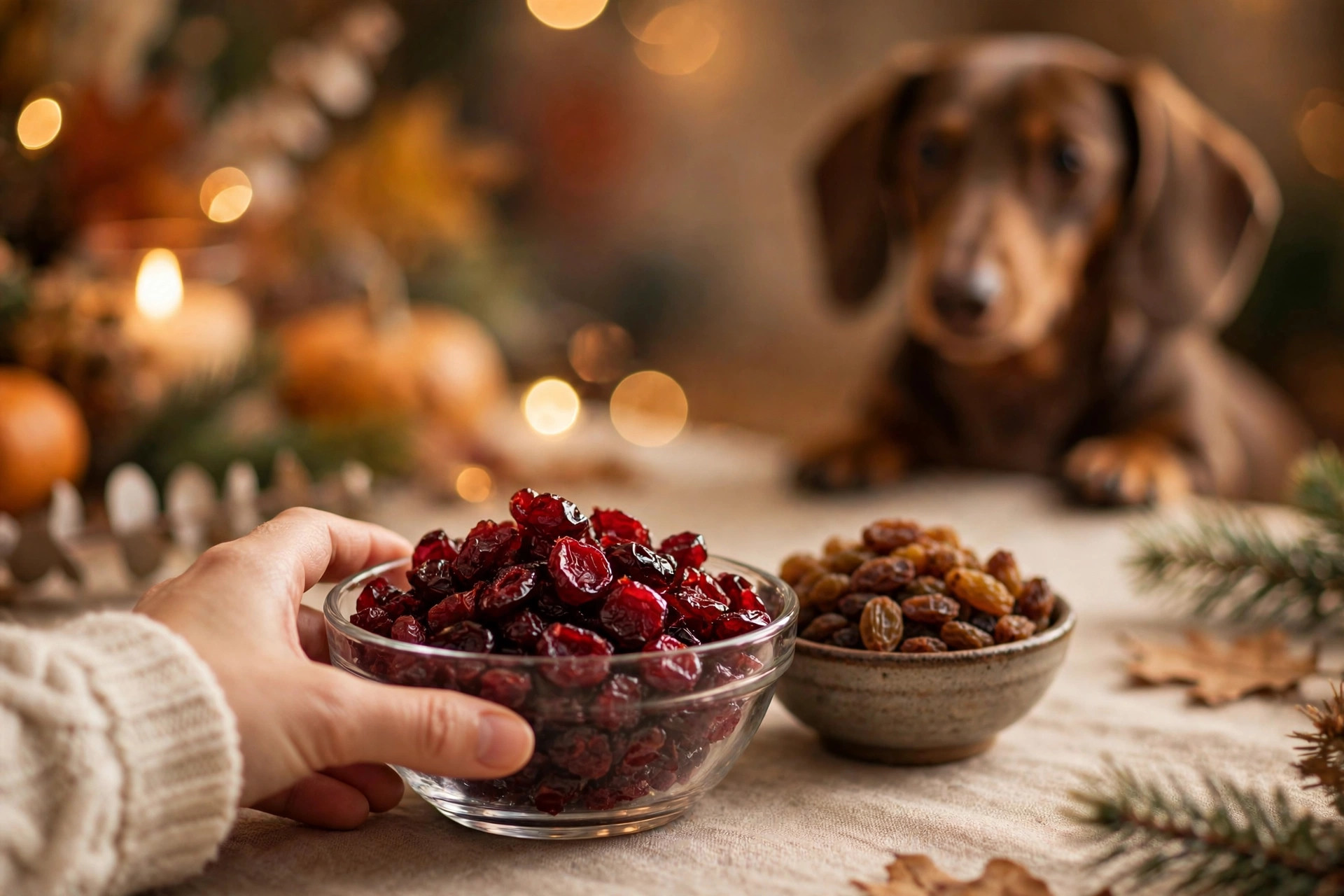
The berry itself is safe — nearly all the danger sits in the packaging around it. Sweetened holiday versions and mixed products are where cranberries turn risky.
1. Oxalates and Bladder Stones
Cranberries contain oxalates, which can bind with calcium and contribute to calcium oxalate bladder or kidney stones — especially if a dog eats large amounts regularly. This is why “a few berries occasionally” is fine but “handfuls every day” is not. Dogs with a history of urinary stones should skip cranberries entirely unless your veterinarian approves.
2. Digestive Upset From Overfeeding
Too many cranberries at once can overwhelm your dog’s stomach. Watch for vomiting, diarrhea, gas, or stomach discomfort — signs you’ve served more than their system can handle. Their intense tartness can also make some dogs drool or refuse them altogether.
3. Dried Cranberries Are Rarely Dog-Safe
Most commercial dried cranberries (like Craisins) are made with added sugar, and some dried-cranberry products and trail mixes use xylitol — a sweetener that is severely toxic to dogs even in tiny amounts. Dried cranberry mixes are also frequently packaged with raisins, which are toxic to dogs. When in doubt, don’t share dried cranberries.
4. Cranberry Sauce and Juice Are Unsafe
Cranberry sauce is loaded with sugar (homemade versions too), and many recipes include grapes, raisins, currants, or even brandy — all toxic or unhealthy for dogs. Cranberry juice is too sugary and acidic for dogs as well. Skip both entirely.
5. Choking Hazard for Small Dogs
Whole cranberries are the perfect size to lodge in a small dog’s throat. Always halve or quarter the berries for small breeds and puppies, and supervise while they eat.
6. Medication Interaction (Warfarin)
Cranberry products can interact with warfarin, an anticoagulant prescribed to some dogs with heart or clotting conditions. If your dog takes blood thinners, don’t offer cranberry products without explicit veterinary guidance.
How Many Cranberries Can Dogs Eat?
Cranberries should only ever be an occasional treat — think of them like seasoning, not a side dish. Use this simple serving guide:
| Dog Size | Weight | Safe Serving |
|---|---|---|
| Extra-small dogs | 2–20 lbs | 1–2 berries (halved) |
| Small dogs | 21–30 lbs | 2–3 berries (halved) |
| Medium dogs | 20–50 lbs | 5–6 berries |
| Large dogs | Over 50 lbs | 8–10 berries |
When in doubt, offer less. A tiny handful is plenty even for an average-sized dog, and remember that all treats combined should stay under 10% of daily calories.

How to Prepare Cranberries for Dogs
Safe preparation takes just a couple of minutes:
- Choose fresh, firm cranberries (they should bounce slightly when dropped on the counter).
- Rinse them thoroughly under cold water.
- Halve or quarter the berries for small dogs and puppies; large dogs can usually handle them whole.
- Serve plain — never add sugar, syrup, seasoning, or butter.
- Offer a small amount as an occasional treat, or mix two or three berries into their regular meal.
Unsweetened frozen cranberries work well too — they’re crunchy, low-calorie, and most dogs find them more interesting. You can also simmer cranberries in plain water (no sugar) and let them cool as a meal topper.
What If My Dog Eats Too Many Cranberries?
If your dog raids the fruit bowl and eats a large amount of fresh cranberries, don’t panic — but do monitor them closely. Too many cranberries most often cause temporary digestive upset: loose stool, vomiting, or gas.
Contact your veterinarian right away if you notice severe or ongoing vomiting or diarrhea, bloody urine, straining to urinate, lethargy, or if your dog ate sweetened dried cranberries with unknown ingredients (xylitol risk) or cranberries mixed with raisins.
Can Puppies Eat Cranberries?
Yes, puppies can eat one or two fresh cranberries once they are fully weaned and eating solid food. Because puppies have sensitive digestive systems — and whole cranberries are a choking hazard for tiny mouths — start with a single halved berry and watch for any stomach upset over the next 24 hours before offering more. As with adults, keep it an occasional treat only.
Healthy Alternatives to Cranberries
If your dog doesn’t care for cranberries’ tart bite — or you’d like to rotate their treats — these fruits are also safe in moderation:
- Blueberries (antioxidant-packed and low in sugar)
- Apples — seeds and core removed
- Bananas — in small amounts due to sugar content
- Watermelon — seedless, rind removed
- Strawberries
Always introduce any new food gradually and in small portions.
Also Read: Can Dogs Eat Mango? Safe Feeding Guide (2026)
Frequently Asked Questions
Can dogs eat cranberries every day?
No. Because of their oxalate content and tartness, cranberries are an occasional treat only — a few berries once or twice a week at most, in the small portions listed above.
Can dogs eat dried cranberries?
It’s best to avoid them. Commercial dried cranberries are usually sweetened with sugar, and some products use xylitol, which is severely toxic to dogs. Dried cranberries are also frequently mixed with raisins, which are toxic.
Can dogs eat cranberry sauce?
No. Cranberry sauce is high in sugar and often contains grapes, raisins, currants, or alcohol — all dangerous for dogs. Skip it entirely.
Can dogs drink cranberry juice?
No. Cranberry juice is too sugary and acidic for dogs. It offers none of the fiber benefits of whole berries. Skip it.
Do cranberries help with UTIs in dogs?
Cranberries may have mild preventive support thanks to proanthocyanidins that discourage bacterial adhesion, but they cannot treat an active urinary tract infection. A dog showing UTI signs needs a veterinarian — antibiotics, not berries.
Can dogs eat cranberries if they have kidney problems?
Ask your veterinarian first. Cranberries’ oxalate content can contribute to calcium oxalate stones, so dogs with kidney or bladder issues should generally avoid them.
Why can dogs eat cranberries but not grapes?
Grapes and raisins contain compounds toxic to dogs that can cause kidney failure. Cranberries lack those toxic compounds, so the plain berry is safe in small amounts — which is exactly why you must never confuse the two, especially in dried mixes.
Final Thoughts
So, can dogs eat cranberries? Absolutely — when they’re fresh, plain, and served in moderation. A few tart berries make a low-calorie, antioxidant-rich treat most dogs find interesting (or at least amusing to reject). Just remember the golden rules: fresh only, never the sauce or juice, check every dried product for raisins and xylitol, and keep portions tiny.
As with any new food, introduce cranberries slowly and watch how your dog responds. And when in doubt, your veterinarian is always the best source of advice for your individual pup’s diet.
By Dr. Ayaz Ali