

Is your rescue dog part Labrador, part mystery? You are not alone in wondering. A dog DNA test promises to decode your dog’s breed mix, flag inherited health risks, and even find your pup’s long-lost relatives — all from a simple cheek swab you do at home. With searches for dog DNA tests now running into the tens of thousands every month, more owners than ever are asking whether these kits are worth the money.
The short answer: a good dog DNA test is genuinely useful, but only if you understand what it can and cannot tell you. In this complete 2026 guide, we explain how dog DNA tests work, what the results actually mean, how accurate they are, what the leading kits cost, and when a test is worth it — and when it is not.
Table of Contents
- What Is a Dog DNA Test?
- How Does a Dog DNA Test Work?
- What Does a Dog DNA Test Tell You?
- How Accurate Are Dog DNA Tests?
- How Much Does a Dog DNA Test Cost?
- Is a Dog DNA Test Worth It?
- What Dog DNA Tests Cannot Tell You
- Frequently Asked Questions
What Is a Dog DNA Test?
A dog DNA test is an at-home kit that analyzes your dog’s genetic material to identify breed ancestry and, in the more comprehensive kits, screen for inherited health conditions. You swab the inside of your dog’s cheek, mail the sample to the company’s laboratory, and receive a report a few weeks later — usually through an app or a web dashboard.
The two biggest names in the category are Embark and Wisdom Panel, and together they dominate the market. Both compare your dog’s DNA against a reference database of hundreds of recognized breeds, types, and varieties. Embark screens against 400+ breeds using more than 200,000 genetic markers, while Wisdom Panel’s database covers 365+ breeds and can report ancestry down to as little as 1% of your dog’s makeup.
There are three main types of kits:
- Breed identification only: the cheapest option — a percentage breakdown of your dog’s breed mix and a family tree going back about three generations.
- Breed plus health screening: adds screening for 200–270+ inherited health conditions, from drug sensitivity to eye disease.
- Breed plus health plus traits: the premium tier, which adds physical traits (coat type, size, shedding), behavior insights, and a relative finder that matches your dog with genetic relatives in the company’s database.
For most owners, the breed-plus-health kit is the sweet spot: the health screening is the part your veterinarian can actually use.
How Does a Dog DNA Test Work?
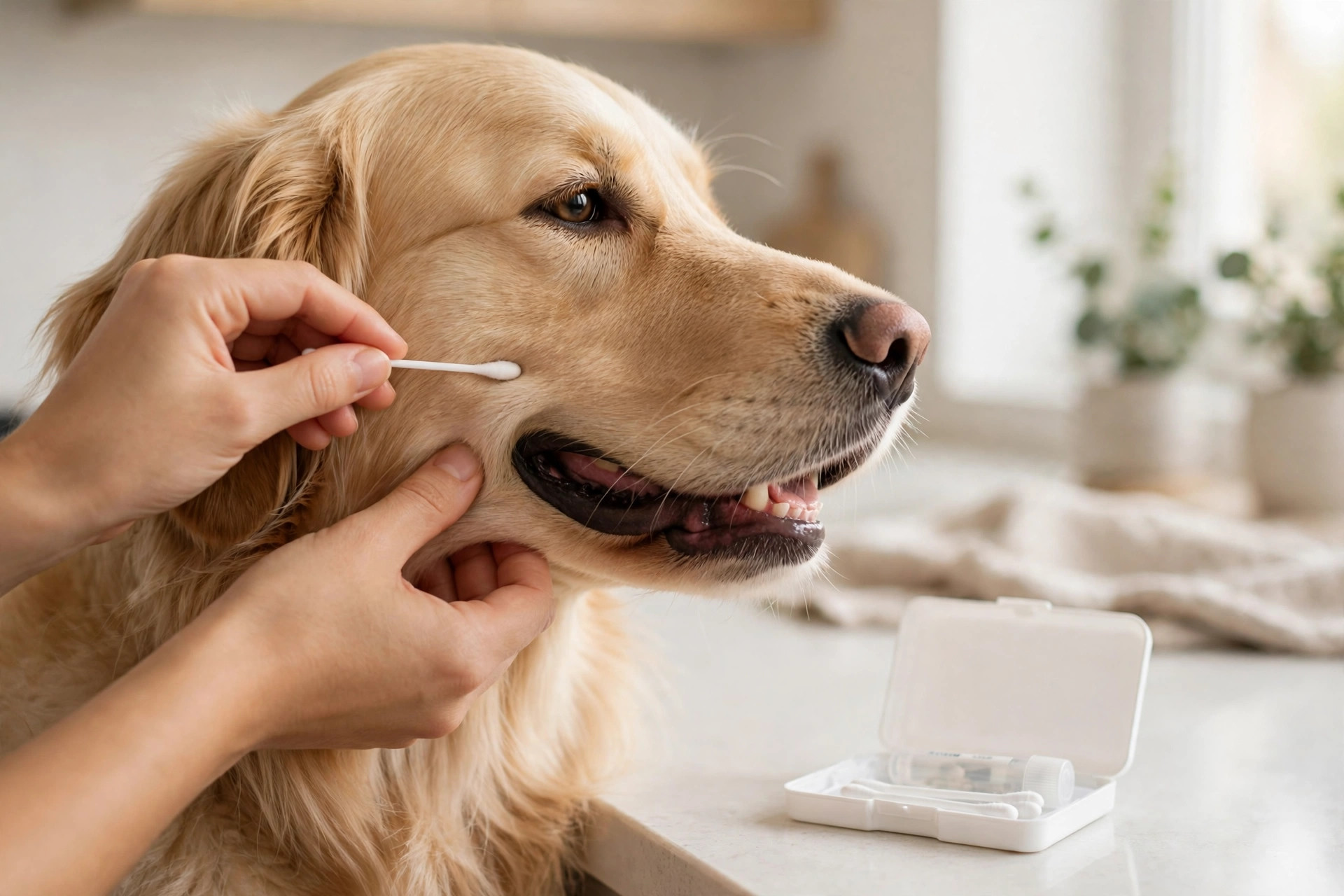
Testing your dog is simple, painless, and takes about five minutes. Here is the process, step by step:
- Order the kit and register it online using the code printed on the box, so the lab can link the sample to your account.
- Collect the sample: rub the provided swab firmly along the inside of your dog’s cheek for 30–60 seconds. Most kits include two swabs — use both. Keep your dog away from food, treats, and other dogs for at least 30 minutes before swabbing, so the sample is not contaminated.
- Mail it back in the prepaid envelope. The sample is stable at room temperature, so no refrigeration is needed.
- Wait for the lab: the lab extracts the DNA and runs it through SNP genotyping — a microarray that reads hundreds of thousands of single-letter differences across your dog’s genome.
- Get your results: the company compares your dog’s markers against its reference database and generates your report, typically in 2–5 weeks. Breed-only kits from Wisdom Panel are usually fastest at 2–3 weeks; Embark’s breed-plus-health kits take 2–4 weeks.
Sample quality matters. A swab contaminated with food, or one that barely touched the cheek, can produce a weak or failed result — follow the kit instructions exactly, and swab right after a nap when your dog is calm.
What Does a Dog DNA Test Tell You?
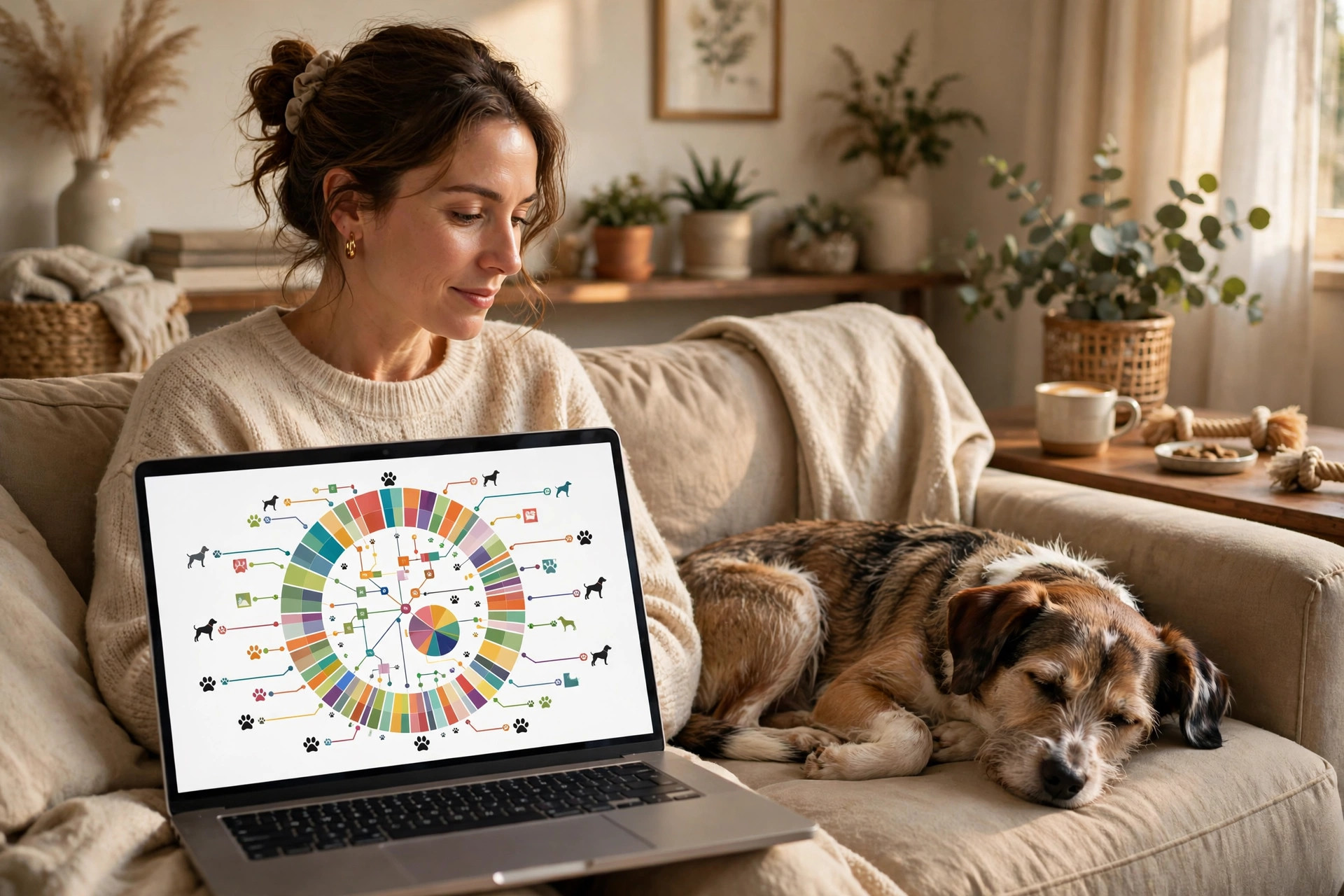
A modern dog DNA test delivers far more than a list of breeds. Here is what a good report includes:
1. Breed Ancestry Breakdown
The headline feature: a percentage breakdown of your dog’s breed mix, usually tracing ancestry back three generations to great-grandparents. A result might read “50% Labrador Retriever, 25% Poodle, 12.5% Cocker Spaniel, 12.5% Supermutt” — with the family tree showing how those percentages came together. Knowing the mix helps you predict adult size, energy level, coat care, and exercise needs.
Also Read: German Shepherd: Breed Guide, Training & Care (2026) — once you know the breeds in your dog’s mix, learn what each one needs.
2. Genetic Health Screening
Premium kits screen for 200–270+ inherited conditions. The most useful findings include:
- MDR1 drug sensitivity — a gene mutation, common in herding breeds, that changes how a dog processes certain medications. Knowing this before surgery or treatment can genuinely change your vet’s drug choices.
- Degenerative myelopathy — a progressive spinal disease linked to the SOD1 gene, common in German Shepherds and several other breeds.
- Progressive retinal atrophy (PRA) — inherited blindness that can be monitored and managed if caught early.
- Exercise-induced collapse — a muscle disorder that causes weakness during intense exercise.
- Von Willebrand disease — a bleeding disorder that matters before any surgery.
Results come back as “at risk,” “carrier,” or “clear.” A carrier result means your dog carries one copy of a variant — important for breeding decisions, but usually not a health problem for the dog itself.
3. Physical Traits and Relatives
Tests can also predict coat length and type, shedding level, muzzle length, eye color, and adult weight range. Both major companies run a relative finder too — Embark reports that 94% of tested dogs have at least one relative as close as a human first cousin in its database, a fun feature that helps rescue owners piece together a dog’s history.
Also Read: Pit Bull Breed Guide: Temperament, Myths & Care (2026) — DNA testing often reveals pit bull ancestry in mixed-breed dogs; here is what that actually means.
How Accurate Are Dog DNA Tests?
This is the question every owner asks, and the honest answer is: very accurate for breed identification, with important limits.
The two leading companies claim 98–99%+ accuracy for breed identification in well-documented breeds, and independent testing largely supports those claims for major breeds — though a 2024 analysis in the Journal of the American Veterinary Medical Association found meaningful variability between brands, even when testing registered purebred dogs.
Accuracy depends on three things:
- Database size: the bigger and better-curated the reference database, the more reliable the match. Rare or regional breeds that are poorly represented in a database are the least accurate calls — the algorithm may assign that ancestry to the closest available breed instead.
- Strength of the signal: a single breed at 70–80% or more is a very reliable call. A long tail of tiny percentages (2% here, 1% there) is a statistical estimate, not a precise measurement.
- Sample quality: a contaminated or poorly collected swab reduces accuracy. Follow the kit instructions exactly.
For health screening, single-gene results — where one known mutation drives the risk, like MDR1 or von Willebrand disease — are the most reliable, because the test directly checks for that specific variant. Polygenic risk scores, which combine many small-effect variants to estimate risk for complex conditions like hip dysplasia or allergies, are far less certain and should be treated as rough estimates, not predictions.
One more caution: different companies can give different breed mixes for the same dog, usually because their reference databases and algorithms differ — not because one test is “wrong.” Treat percentages as estimates, and trust the strong signals over the small ones.
How Much Does a Dog DNA Test Cost?
Prices vary by brand and tier. Here is what to expect in 2026:
| Kit | What You Get | Typical Price | Results Time |
|---|---|---|---|
| Embark Breed ID | Breed mix only, 400+ breeds | $99–$129 | 2–4 weeks |
| Embark Breed + Health | Breed mix + 270+ health conditions + traits + relatives | $159–$199 | 2–4 weeks |
| Wisdom Panel Essential | Breed mix + 25+ health conditions + 50+ traits | $99 | 2–3 weeks |
| Wisdom Panel Premium | Breed mix + 265+ health conditions + behavior traits + vet consultation | $159 | 2–3 weeks |
| DNA My Dog (budget) | Breed mix only | $70–$80 | 2 weeks |
Prices change with sales — both major brands run frequent discounts, especially around holidays — so check the current price before ordering. As a rule of thumb: breed-only kits run $70–$130, while kits with health screening run $160–$300+ at full price.
Our recommendation: if your budget allows, buy the breed-plus-health tier. A breed-only result is fun for a week; a health screening gives you and your veterinarian information you can act on for years.
Is a Dog DNA Test Worth It?
For most owners, yes — but it depends on what you want from it.
A dog DNA test is worth it if:
- You adopted a mixed-breed dog and want to know what breeds are in the mix, so you can tailor exercise, training, and grooming.
- You want a health screening your vet can use — especially MDR1 status, which can change medication choices.
- You are choosing a breeder and want proof of health testing for the parents (reputable breeders already test; ask for the results).
- You are curious about your dog’s relatives or family tree, or you want to predict adult size for a puppy.
Skip it (or save your money) if:
- You only want to register your dog as a purebred — a consumer DNA test cannot do that (see below).
- You expect a diagnosis. A DNA test flags genetic risk; it does not diagnose disease, and a clean result does not guarantee your dog will never get sick.
- You already know your dog’s breed from pedigree papers — the ancestry report adds little, though the health screening may still be useful.
The best use of a test is as a conversation starter with your veterinarian. Bring the report to your next checkup and ask which findings change your dog’s care plan. A flagged MDR1 result, for example, is worth its weight in gold at the vet’s office. A 3% trace of an obscure breed is not.
Also Read: Fall Pet Wellness Checkup Guide (2026) — the ideal appointment to bring your dog’s DNA results to, so your vet can build them into a care plan.
What Dog DNA Tests Cannot Tell You
DNA tests are powerful, but they have hard limits. Knowing them keeps you from over-reading the results.
1. They Cannot Register Your Dog With the AKC
A consumer DNA test will not register your dog as a purebred with the American Kennel Club. The AKC’s system is built on documented pedigrees — registration proves who a dog’s parents are, while a consumer test only estimates what breeds are in the mix. The AKC does offer its own DNA profiling for parentage verification, and its AKC DNA + Health Kit screens 328 genetic variants for health and traits, but that kit is designed for breeders working within the AKC system — not for identifying an unknown mixed-breed dog.
2. A Genetic Risk Is Not a Diagnosis
Carrying a gene variant does not mean your dog will develop the condition — many conditions need variants from both parents, or never develop at all. Conversely, a clean panel only means the specific mutations the test screens for were not found. Always discuss flagged results with your veterinarian before worrying.
3. They Cannot Predict Behavior
Genetics shape tendencies, not destiny. Training, socialization, and environment play a massive role in how a dog behaves. A test that says your dog is part herding breed does not mean it will herd your children, and a “high energy” breed mix does not doom you to a hyperactive dog — exercise and training matter far more than percentages.
4. They Cannot Diagnose Cancer or Most Complex Diseases
Validated clinical tests for hip dysplasia, most cancers, and allergy diagnosis still sit outside mainstream consumer kits. Some newer cell-free DNA blood tests screen for early signs of cancer and organ damage, but those are veterinary tools, not cheek-swab kits.
Frequently Asked Questions
Are dog DNA tests accurate?
For breed identification in well-documented breeds, yes — the leading companies claim 98–99%+ accuracy, and independent testing largely supports that for major breeds. Accuracy drops for rare breeds and for tiny ancestry percentages, which are statistical estimates. Single-gene health results are the most reliable part of the report.
How long does a dog DNA test take?
Most kits return results in 2–5 weeks from the day the lab receives your sample. Wisdom Panel is usually fastest at 2–3 weeks; Embark breed-plus-health kits take 2–4 weeks. Budget kits typically take about 2 weeks.
How much does a dog DNA test cost?
Breed-only kits cost $70–$130, while breed-plus-health kits cost $160–$300+ at full price. Embark Breed + Health runs $159–$199 and Wisdom Panel Premium runs around $159, with frequent sales bringing both down.
What is the best dog DNA test?
Embark is the best overall pick for breed-and-health depth (400+ breeds, 270+ health conditions), while Wisdom Panel Premium is the strongest value (365+ breeds, 265+ health conditions, plus an included vet consultation for notable findings). Budget buyers can use DNA My Dog for breed identification only.
Can a dog DNA test tell me if my dog is purebred?
It can estimate whether your dog is mostly one breed, but it cannot prove purebred status or register your dog with the AKC. Purebred registration requires a documented pedigree proving parentage. A strong single-breed signal (above 70–80%) is usually trustworthy as an ancestry estimate.
Final Thoughts
So, is a dog DNA test worth it? For most mixed-breed owners, the answer is yes — especially if you choose a breed-plus-health kit. You get a reliable picture of your dog’s ancestry, a health screening your veterinarian can actually use, and a few delightful surprises (relatives, traits, and the occasional breed nobody guessed). Just go in with open eyes: percentages are estimates, a genetic risk is not a diagnosis, and no cheek swab can replace regular vet care.
Order the kit, swab the cheek, and bring the report to your next vet visit. Your dog’s DNA is a useful map — your veterinarian is the one who knows how to read it for your individual dog.
By Dr. Ayaz Ali