
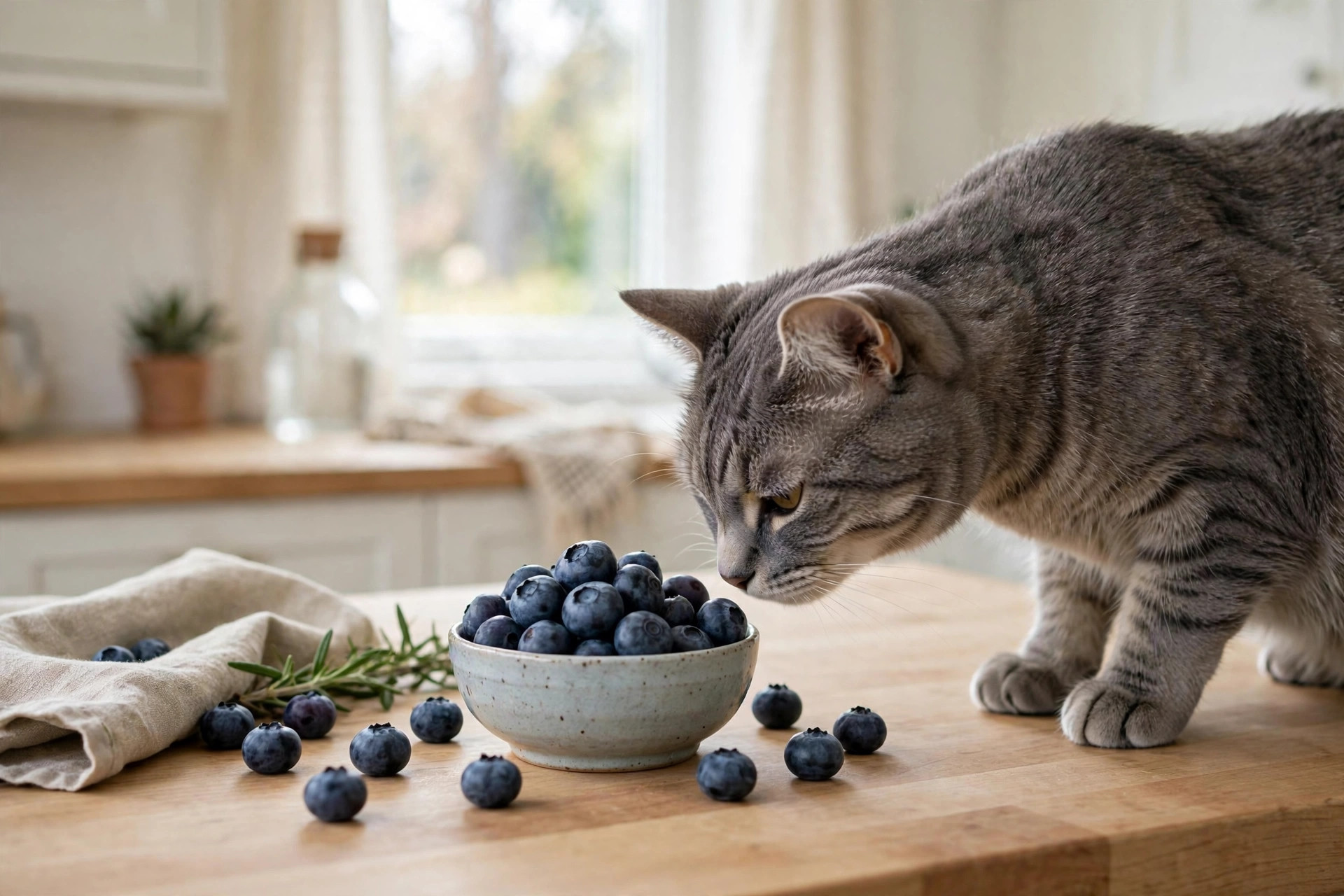
If your cat has ever batted a blueberry across the kitchen floor like a tiny blue ball, you have probably found yourself asking: can cats eat blueberries, or should this little fruit stay out of your feline’s reach?
The good news is yes, cats can eat blueberries — they are not toxic to felines. But because cats are obligate carnivores with a metabolism built for meat, blueberries should only ever be an occasional, carefully portioned treat. Their natural sugar content and tiny round shape come with rules worth knowing.
In this guide, we will cover the benefits, risks, exact serving sizes, and safe preparation — so you can decide with confidence whether blueberries belong in your cat’s treat rotation.
Table of Contents
- Can Cats Eat Blueberries? Vet-Backed Safety Guide
- Health Benefits of Blueberries for Cats
- Risks of Feeding Blueberries to Cats
- How Many Blueberries Can Cats Eat?
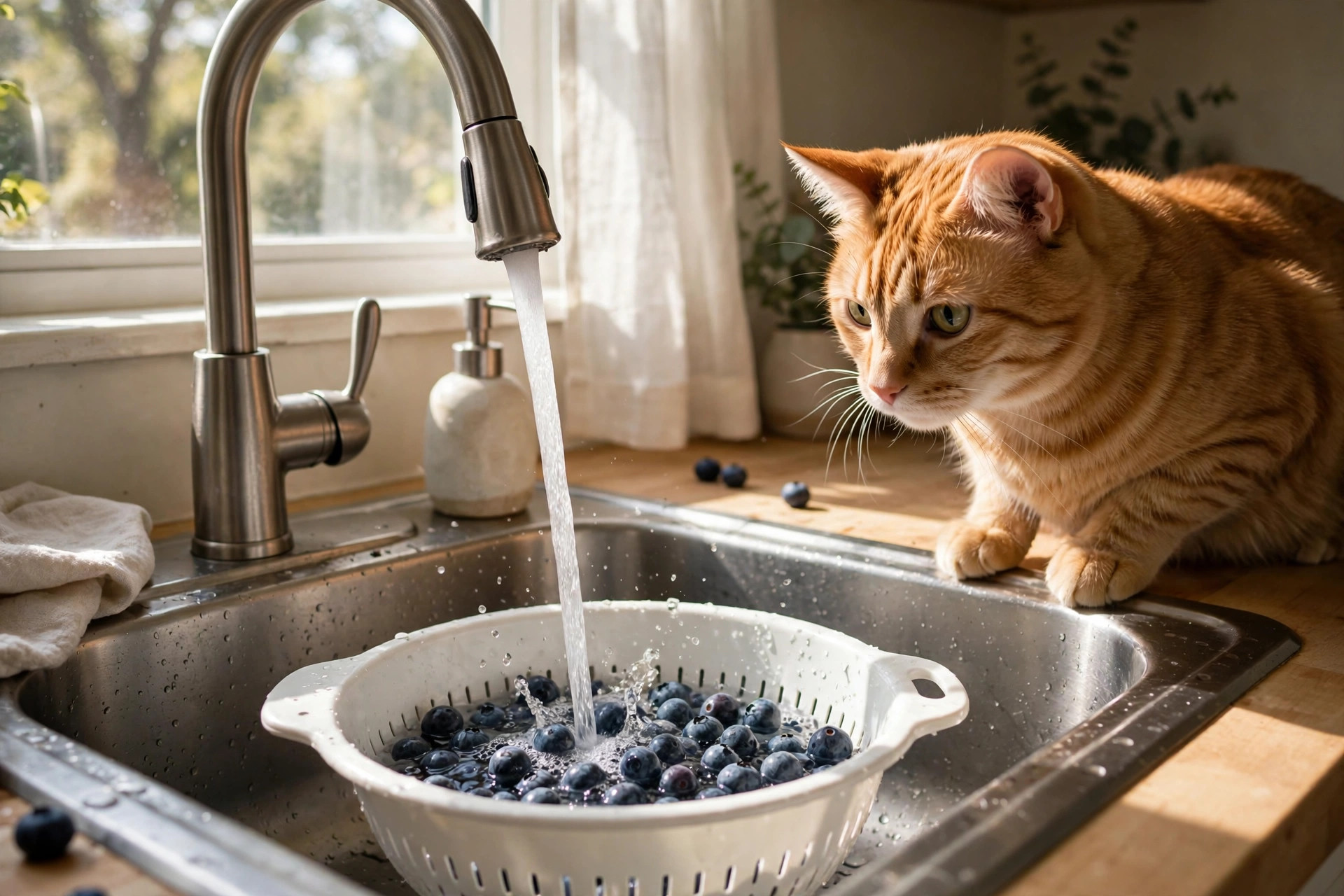
- How to Prepare Blueberries for Cats
- What If My Cat Eats Too Many Blueberries?
- Can Kittens Eat Blueberries?
- Healthier Treat Alternatives to Blueberries
- Frequently Asked Questions
Can Cats Eat Blueberries? Vet-Backed Safety Guide

Yes, blueberries are not toxic to cats. They do not appear on the ASPCA’s list of foods harmful to felines, and veterinary sources including PetMD confirm that a plain blueberry or two is safe for a healthy cat.
That is an important distinction, because blueberries sit in a very different category from genuinely dangerous fruits like grapes and raisins, which can cause acute kidney failure in pets. Blueberries contain no such poisonous compounds.
However, “not toxic” is not the same as “freely feed.” Keep these ground rules in mind:
- Offer only fresh or thawed frozen blueberries, plain and unsweetened
- Serve them washed, at room temperature, cut in halves for small cats and kittens
- Keep them an occasional treat — never part of your cat’s daily diet
- All treats combined should stay under 10% of your cat’s daily calories
Cats lack the taste receptors that detect sweetness, so your cat’s interest will be about the blueberry’s round, bouncy shape and texture rather than its flavor. Some cats will bat one around the floor and never eat it — that is completely normal too.
Health Benefits of Blueberries for Cats
Blueberries earned their “superfood” reputation in human nutrition, and a few of their qualities carry over — modestly — to cats.
1. Antioxidants That Fight Free Radicals
Blueberries are packed with antioxidants, including anthocyanins, flavonoids, and vitamin C. Antioxidants help neutralize free radicals, unstable molecules that contribute to inflammation and cellular damage. You will even spot blueberries on the ingredient lists of some commercial cat foods for this reason.
2. Fiber for Digestive Support
The fiber in blueberries can help support healthy digestion and regular bowel movements. In the tiny quantities cats eat, this is a gentle bonus rather than a digestive fix — but it is a real one.
3. Natural Hydration
Blueberries are about 85% water. For cats that drink too little on their own — a common feline trait — a juicy berry offers a small but welcome hydration boost.
Blueberries also supply vitamins A, C, E, and K, plus manganese and potassium — though in the tiny quantities cats eat, these deliver only minimal real benefit compared to a meat-based diet.
Also Read: Can Cats Eat Plums?
Risks of Feeding Blueberries to Cats
Blueberries are safe in tiny amounts, but feeding them the wrong way — or too many — can cause genuine problems.
1. High Natural Sugar Content
Blueberries contain roughly 10 grams of natural sugar per 100 grams — about double the sugar in strawberries. A single berry is negligible, but the sugar adds up fast in a creature as small as a cat. Cats with diabetes should avoid blueberries entirely, since the sugar can spike blood glucose, and regular overfeeding of sugary fruit can contribute to weight gain.
2. Digestive Upset From Overfeeding
Cats are obligate carnivores, and their digestive systems are not built for large amounts of fruit. Too many blueberries at once can cause vomiting, diarrhea, gas, or stomach discomfort — especially in cats that are not used to eating fruit.
3. Choking Hazard
A whole blueberry is round, smooth, and just the right size to be swallowed whole. Small cats and kittens that gulp their food can choke if a berry lodges in the windpipe or esophagus. Always cut berries into halves or quarters for small cats and kittens.
4. Not Nutritionally Necessary
Cats do not need fruit in their diet at all. Offering too many blueberries can fill your cat up without delivering the protein, taurine, and other essential nutrients they actually require — displacing the food that matters.
5. Sweetened and Flavored Products Are Unsafe
Never give your cat blueberry jam, jelly, syrup, pie filling, blueberry yogurt, or baked goods. These contain added sugars, preservatives, and dairy (most adult cats are lactose-intolerant). Blueberry products sweetened with xylitol are extremely dangerous, and chocolate-covered blueberries are toxic because of the chocolate. If your cat eats any of these, contact your veterinarian promptly.
How Many Blueberries Can Cats Eat?
Blueberries are an occasional treat — not a daily snack. Veterinary guidance (including PetMD) suggests up to three blueberries at once, no more than a few times a week. A more conservative starting point is even better: one berry, once or twice a week.
| Cat Size | Weight | Safe Serving |
|---|---|---|
| Small cats | Under 9 lbs (4 kg) | ½ to 1 blueberry, cut in halves |
| Medium cats | 9–13 lbs (4–6 kg) | 1 blueberry |
| Large cats | Over 13 lbs (6 kg) | Up to 2 blueberries |
Always introduce blueberries slowly: offer a single tiny piece first and watch for stomach upset over the next 24 hours before offering more. And remember the 10% rule — all treats combined should never exceed 10% of daily calories.
How to Prepare Blueberries for Cats
Safe preparation takes about a minute:
- Choose fresh, ripe blueberries — never moldy or spoiled fruit.
- Rinse them well under running water to remove pesticides and dirt.
- Cut each berry in halves or quarters for small cats and kittens.
- Serve at room temperature — plain, with nothing added. Thaw frozen berries fully first.
- Offer by hand or in an empty dish, and watch your cat while they eat.
Skip dried blueberries (concentrated sugar), syrup, and anything baked or flavored. Plain and fresh is the only safe way.
What If My Cat Eats Too Many Blueberries?
If your cat raids the fruit bowl and eats a handful of plain blueberries, do not panic — a few berries are unlikely to cause serious harm in an otherwise healthy cat. Monitor them for vomiting, diarrhea, or lethargy over the next few hours; these symptoms are usually temporary and resolve on their own.
Contact your veterinarian right away if vomiting or diarrhea is severe or lasts more than a day, or if your cat ate blueberries mixed with chocolate or xylitol. Cats with diabetes, inflammatory bowel disease, or pancreatitis should not be offered blueberries without veterinary guidance.
Can Kittens Eat Blueberries?
It is best to wait. Kittens have more sensitive digestive systems than adult cats and need a specialized kitten diet to grow properly. If your veterinarian gives the go-ahead, offer only a tiny mashed piece and watch closely — but very young kittens do not need fruit at all.
Healthier Treat Alternatives to Blueberries
If your cat ignores blueberries — or you want more nutritionally meaningful treats — these options suit an obligate carnivore better:
- Small pieces of plain, cooked chicken or turkey
- Freeze-dried meat treats made for cats
- A teaspoon of plain canned pumpkin (not pie filling) for fiber
- Seedless watermelon — a couple of tiny cubes, rind and seeds removed
- Cantaloupe pieces (many cats love the smell)
Always introduce any new food gradually and in small portions.
Also Read: Can Cats Eat Peaches?
Frequently Asked Questions
Are blueberries toxic to cats?
No. Blueberries are not toxic to cats and are not listed among foods harmful to felines. That said, “not toxic” does not mean “feed freely” — keep portions tiny and infrequent.
Can cats eat frozen blueberries?
Yes, but only fully thawed and at room temperature. Frozen berries are too hard and cold for cats — thaw, wash, and cut them before serving.
Can cats eat blueberry yogurt or blueberry muffins?
No. These contain added sugar, dairy, and often xylitol or other ingredients that are harmful to cats. Offer only plain, fresh blueberries.
Why does my cat like to play with blueberries?
Cats lack sweet taste receptors, so they are usually attracted to the blueberry’s round, bouncy shape and texture — not its flavor. Batting one around the floor is play, not a craving.
Can diabetic cats eat blueberries?
No. The natural sugar in blueberries can spike blood glucose in diabetic cats. Avoid blueberries entirely if your cat has diabetes, and consult your veterinarian about safe treat options.
So, Can Cats Eat Blueberries?
Yes — cats can eat blueberries safely when they are fresh, plain, washed, and cut into small pieces. A berry or two makes a fun, low-calorie occasional treat, but blueberries will never replace the meat-based nutrition your cat actually needs. Keep portions tiny, watch how your cat reacts, and skip them for diabetic cats.
Introduce blueberries slowly and observe your cat’s response. And when in doubt, your veterinarian is always the best source of advice for your individual cat’s diet.