
Big, shaggy, and famously dog-like, the Maine Coon turns heads everywhere it goes. But behind that magnificent coat sits one of the largest domestic cats on the planet — a slow-maturing, highly social breed with very real needs. If you’re wondering whether this gentle giant fits your home, this maine coon breed guide covers everything you need to know before you commit: temperament, size, grooming, health risks, diet, and the true cost of ownership.
Table of Contents
- What Is a Maine Coon Cat?
- Maine Coon Breed at a Glance
- Maine Coon Breed Guide: Temperament & Personality
- Size, Appearance & Coat
- Maine Coon Care: Daily Needs
- Maine Coon Breed Guide: Health Issues to Know
- Is a Maine Coon Right for You?
- Maine Coon Kitten & Breeder Tips
- Frequently Asked Questions
What Is a Maine Coon Cat?
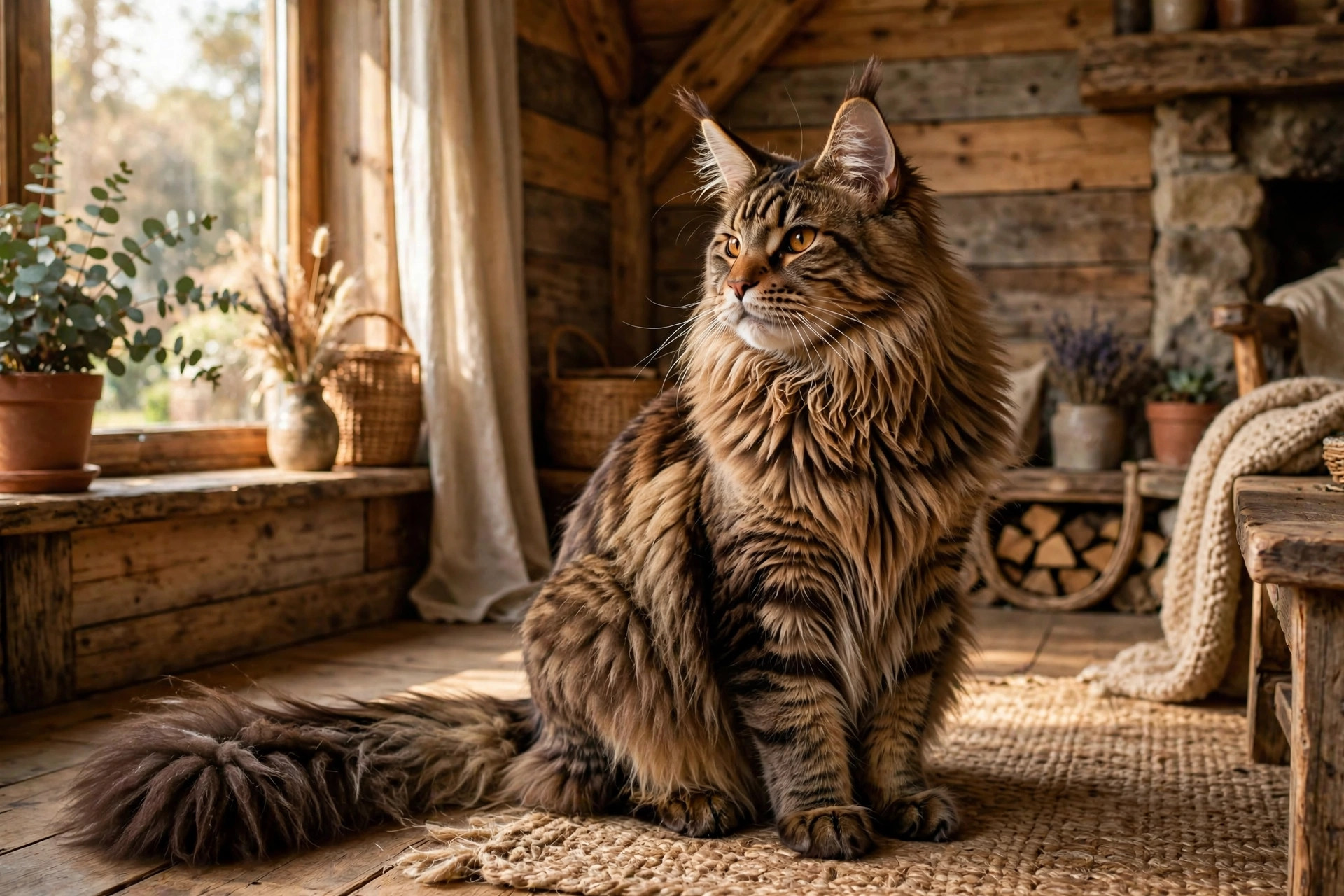
The Maine Coon is a large, semi-longhaired breed that developed naturally in New England — Maine named it the official state cat. It evolved as a hardy farm cat built for harsh winters: a heavy, water-resistant coat, a long bushy tail the cat wraps around itself when sleeping, and heavily tufted paws that work like snowshoes.
Maine Coons are famously slow to mature. While most cats reach full size by their first birthday, a Maine Coon keeps growing until age 3 to 5. Don’t be surprised if your 18-month-old “adult” still looks gangly — the big shaggy cat you’re imagining takes years to arrive.
Maine Coon Breed at a Glance
| Trait | Details |
|---|---|
| Origin | Maine, USA (natural breed) |
| Size | Very large — males 13–18 lbs, females 8–12 lbs |
| Maturity | Very slow — full size and coat at 3–5 years |
| Coat | Long, shaggy, water-resistant — moderate to heavy shedding |
| Lifespan | 12–15 years with proper care |
| Best for | Families, multi-pet homes, first-time owners, active households |
Maine Coon Breed Guide: Temperament & Personality
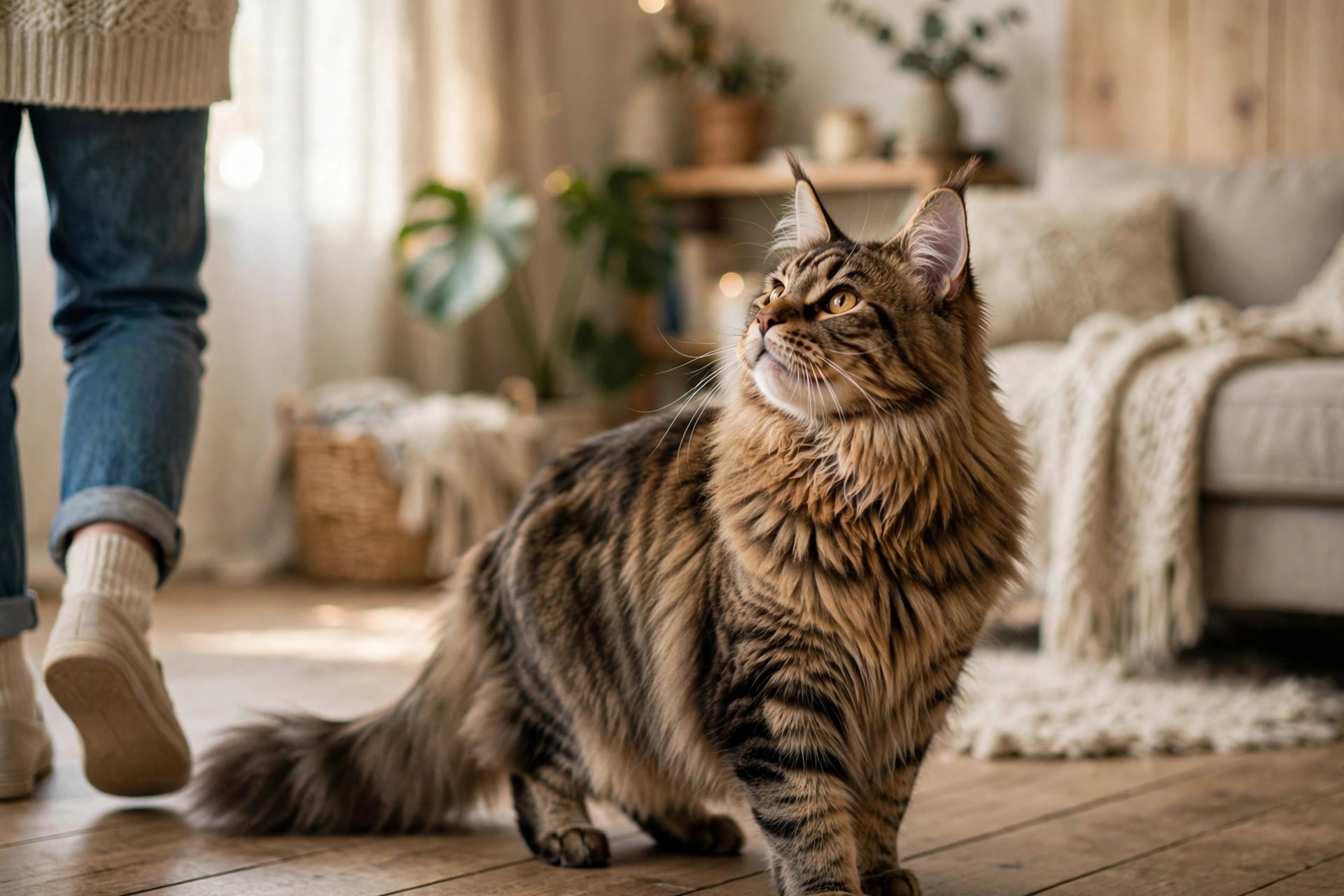
The “gentle giant” nickname exists for a reason. Temperament is the main reason people fall for this breed — and it rarely disappoints:
1. Dog-Like Loyalty
Maine Coons follow their people from room to room, greet them at the door, and often learn to play fetch. They bond deeply with the whole family rather than fixating on one person.
2. Gentle With Kids and Other Pets
This is one of the most tolerant breeds alive. Maine Coons are famously patient with children and get along exceptionally well with cat-friendly dogs — their large size and confidence mean they’re rarely intimidated. A top pick for multi-pet households.
3. Playful, Intelligent, and Kittenish for Years
They love puzzle toys and interactive wand games, and many learn tricks, routines, and even leash walking. A bored Maine Coon will invent its own entertainment, usually at your expense.
4. Communicative Chirps and Trills
Instead of loud meowing, Maine Coons talk with distinctive chirps and trills — a soft, musical sound they use with their people. It’s one of the breed’s most endearing quirks.
Also Read: Ragdoll Cat Breed Guide: Temperament, Care & Health (2026)
Size, Appearance & Coat
Maine Coons are among the largest domestic cats: males commonly weigh 13–18 pounds, females 8–12 pounds — with exceptional males topping 20 pounds of bone and frame. The coat is the visual signature: long, shaggy, and silky, with a ruff around the neck, longer fur on the belly and britches, and a gloriously bushy tail. Signature details include large tufted ears, heavily tufted paws, and the widest color and pattern variety of any longhaired breed, with brown tabby the most classic.
Maine Coon Care: Daily Needs
A big, active cat has big, active needs. Here’s the routine that keeps a Maine Coon healthy and happy:
Grooming: 2–3 Times a Week
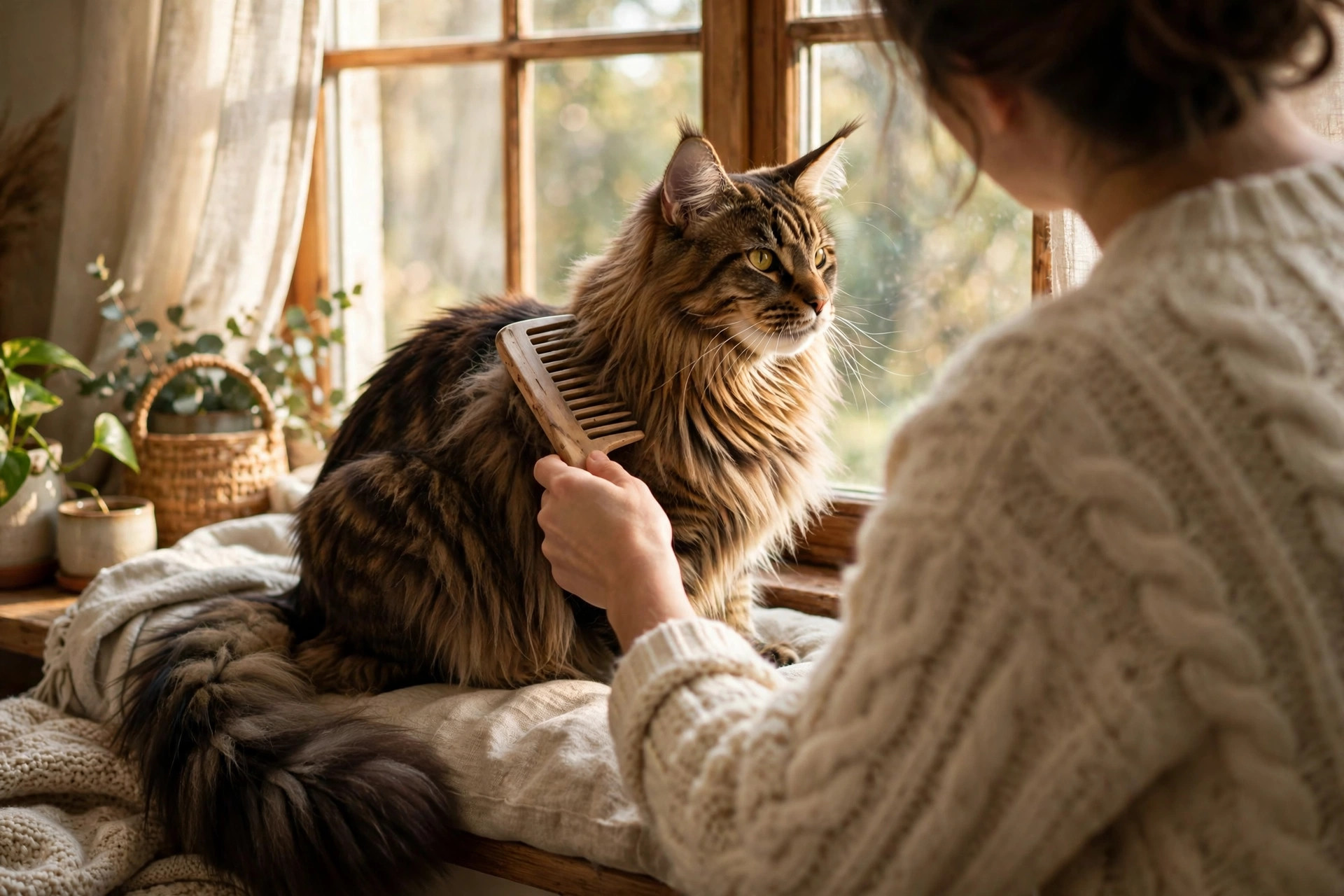
Brush with a wide-toothed stainless-steel comb two to three times a week, concentrating on the armpits, belly, groin, and behind the ears where tangles start. Increase to 3–4 short sessions during the spring and autumn shedding seasons. Trim nails every 2–3 weeks. Bathing is rarely necessary.
Diet and Feeding
Feed a high-quality, protein-rich diet with measured portions — never free-feed. A large, food-motivated cat can gain weight quietly, and extra pounds strain joints and compound heart risk. Look for animal protein first, taurine for heart and eye health, and omega fatty acids for coat quality. Kittens need 3–4 small meals a day; adults do well on two measured meals. Keep treats under 10% of daily calories.
Exercise and Enrichment
Plan on 15–30 minutes of interactive play daily — feather wands, puzzle feeders, and fetch games suit this breed’s retrieving instincts. Buy a cat tree rated for large breeds, because a flimsy tower won’t survive a 17-pound athlete. A secure outdoor enclosure gives this adventurous breed safe fresh-air time.
Also Read: Catio Ideas: Safe Outdoor Cat Enclosure Guide (2026)
Litter Box and Routine
A big cat needs a big box — choose an extra-large, low-sided litter box and scoop daily. Keep feeding times, play sessions, and bedtime predictable; this routine-driven breed gets stressed by sudden schedule changes.
Maine Coon Breed Guide: Health Issues to Know
Maine Coons are generally robust, but the breed has well-documented genetic concerns every owner must know:
1. Hypertrophic Cardiomyopathy (HCM)
HCM — abnormal thickening of the heart muscle — is the breed’s most serious concern. A genetic mutation has been identified in Maine Coons and DNA testing exists, but UC Davis School of Veterinary Medicine notes that echocardiograms (heart ultrasounds), not DNA tests alone, are what actually diagnose the disease. Responsible breeders screen breeding cats with regular heart scans — ask for written results.
2. Hip Dysplasia
The breed’s large frame puts extra stress on joints, and hip dysplasia occurs in Maine Coons more than in most cat breeds. Watch for stiffness after rest, reluctance to jump, or an odd gait. Keeping your cat lean is the single best prevention, and reputable breeders screen parents with hip X-rays.
3. Spinal Muscular Atrophy (SMA)
SMA is an inherited condition causing progressive muscle weakness in kittens, usually noticeable at 3–4 months as a swaying hindquarter gait. A DNA test exists, and ethical breeders test and never breed two carriers together. It has no cure — another reason to demand test results.
4. Obesity
A big, food-loving, indoor cat is an obesity risk. Weigh your Maine Coon regularly, measure every meal, and keep up daily play. Extra weight worsens hip and heart strain in an already large breed.
5. Dental Disease
Like many purebreds, Maine Coons benefit from dental attention: tooth brushing, dental treats, and vet dental checks. Dental disease is painful and easy to miss in a stoic cat.
Schedule vet checkups every 6–12 months, keep vaccinations current, and ask your vet about baseline heart screening in young adulthood — especially if the parents’ HCM status is unknown.
Is a Maine Coon Right for You?
A Maine Coon is a great fit if: you want a large, sociable, dog-like companion; you have children or other pets and need a tolerant breed; you enjoy interactive play and training; and you can commit to brushing several times a week and measured feeding.
Reconsider if: you’re away from home for very long hours (Maine Coons crave company); you want a quiet, low-energy lap cat; you can’t commit to regular grooming; or you hoped for a hypoallergenic breed — Maine Coons shed moderately to heavily and are not hypoallergenic.
Maine Coon Kitten & Breeder Tips
A responsible breeder provides written HCM, hip, and SMA test results for both parents, raises kittens in a home with early socialization, offers a written health guarantee, screens buyers, and never sells unvaccinated kittens “cheap, no papers.”
Expect to pay roughly $800–$2,000+ for a pet-quality kitten from a reputable breeder. Also consider breed-specific rescues — adult Maine Coons and mixes regularly need homes, and an adult’s temperament and size are already predictable.
Also Read: Why Is My Cat Not Eating? Warning Signs & When to Worry (2026)
Frequently Asked Questions
How big do Maine Coon cats get?
Males typically weigh 13–18 pounds and females 8–12 pounds, with some large males exceeding 20 pounds. They reach full size slowly, usually between 3 and 5 years of age.
Are Maine Coons good with dogs?
Yes — they’re one of the best cat breeds for dog households. Their large size, confidence, and dog-like social nature mean they typically coexist with cat-friendly dogs exceptionally well.
Do Maine Coons shed a lot?
Moderately to heavily, with heavier seasonal shedding in spring and autumn. Brushing 2–3 times a week keeps loose hair manageable and prevents tangles.
Are Maine Coons hypoallergenic?
No. No cat breed is truly hypoallergenic — Maine Coons shed and produce the Fel d 1 protein like all cats, so spend time with the breed before committing.
How long do Maine Coons live?
A healthy Maine Coon typically lives 12–15 years with proper nutrition, regular veterinary care, and an indoor lifestyle.
Final Thoughts
So, is the Maine Coon right for you? If you want a large, gentle, dog-like companion that stays playful for years, few breeds deliver like the Maine Coon. Just commit to regular brushing, measured meals, HCM/hip/SMA testing from your breeder, and the daily play and company they crave. Do that, and you’ll understand: once you live with a gentle giant, no other cat quite compares.