
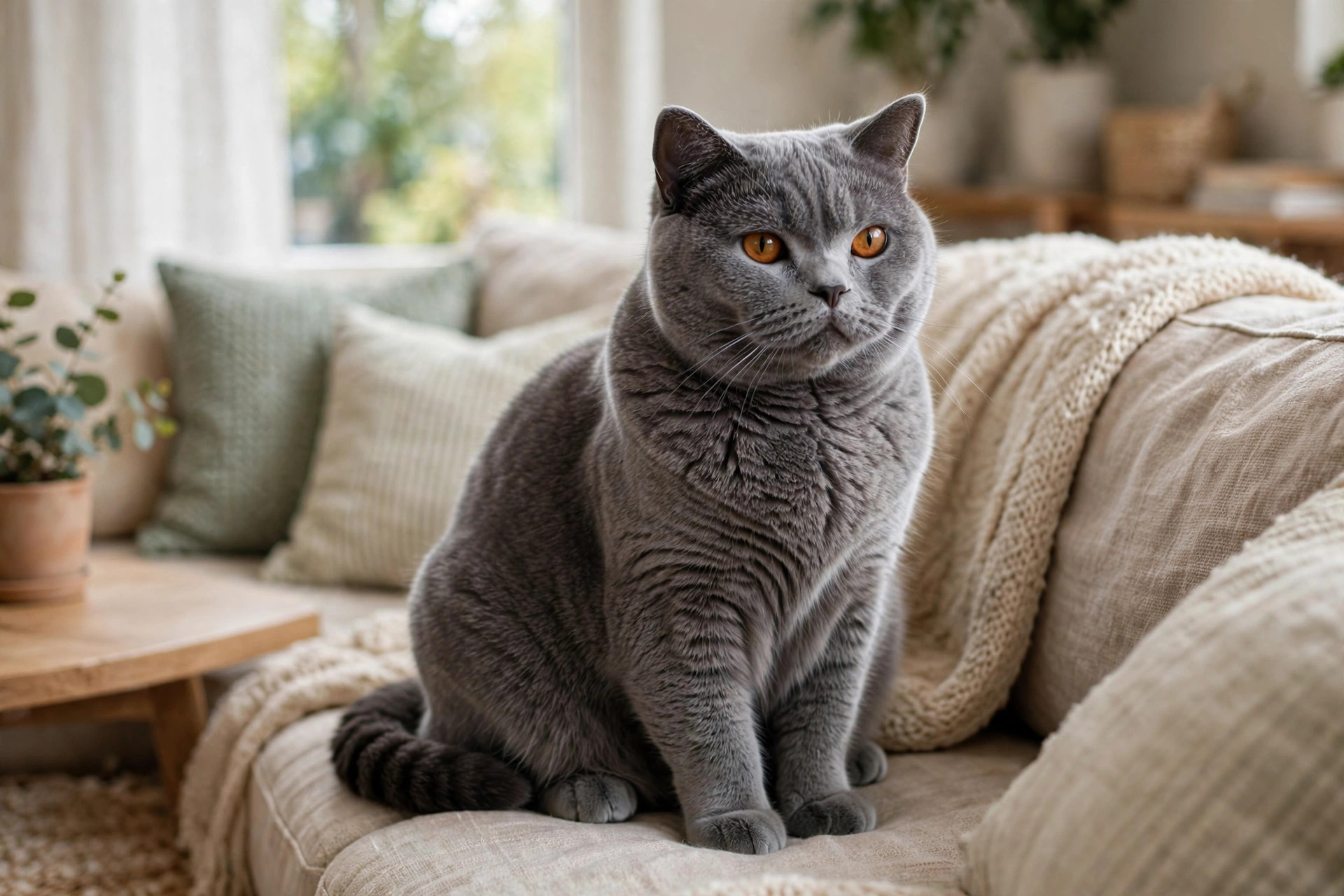
With their round teddy-bear faces, dense plush coats, and famously calm demeanor, British Shorthairs have become one of the most searched cat breeds on the planet. If you are weighing up whether this dignified “British Blue” is the right cat for your home, this british shorthair breed guide covers everything you need to know: temperament, care needs, grooming, health risks, lifespan, and the true cost of ownership.
By Dr. Ayaz Ali, Veterinarian
Dr. Ayaz Ali is a practicing veterinarian with years of experience in small-animal care. He writes evidence-based pet health guides for Pets Addicters.
In this vet-informed guide, we will walk through the breed’s personality, what daily life with a British Shorthair actually looks like, the health screenings a responsible breeder should show you, and how to tell if this easygoing breed fits your lifestyle.
Table of Contents
- What Is a British Shorthair?
- British Shorthair Breed at a Glance
- British Shorthair Breed Guide: Temperament & Personality
- Size, Appearance & Coat
- British Shorthair Care: Daily Needs
- British Shorthair Breed Guide: Health Issues to Know
- Is a British Shorthair Right for You?
- British Shorthair Kitten & Breeder Tips
- Frequently Asked Questions
- Final Thoughts
What Is a British Shorthair?
The British Shorthair is one of the oldest recognized cat breeds in England, with roots tracing back to the domestic cats the Romans brought to Britain nearly 2,000 years ago. Those hardy street cats became Britain’s natural mousers, and in the 1800s, cat fancier Harrison Weir began selectively breeding the finest of them into a distinct breed.
The breed made history in 1871, when a 14-year-old British Shorthair took Best in Show at the first formal cat show ever held, at London’s Crystal Palace — a fact noted in VCA Animal Hospitals’ breed profile. The two world wars nearly wiped the breed out; it was rebuilt afterward with carefully chosen outcrosses to Persians, Russian Blues, and Chartreux, which is why today’s British Shorthair carries that famously round, cobby look.
The breed earned championship status with the Cat Fanciers Association in 1980 and has grown steadily ever since, becoming a favorite of apartment dwellers, families, and first-time owners who want a cat that is calm without being boring.
British Shorthair Breed at a Glance
| Trait | Details |
|---|---|
| Origin | Great Britain — one of the oldest English breeds |
| Size | Medium-large — males 9–17 lbs, females 7–12 lbs |
| Maturity | Slow — full size and build at 3–5 years |
| Coat | Short, dense, plush and “crisp” — moderate shedding |
| Lifespan | 12–17 years, some reach 20 with good care |
| Best for | Apartments, working owners, families, first-time cat owners |
British Shorthair Breed Guide: Temperament & Personality
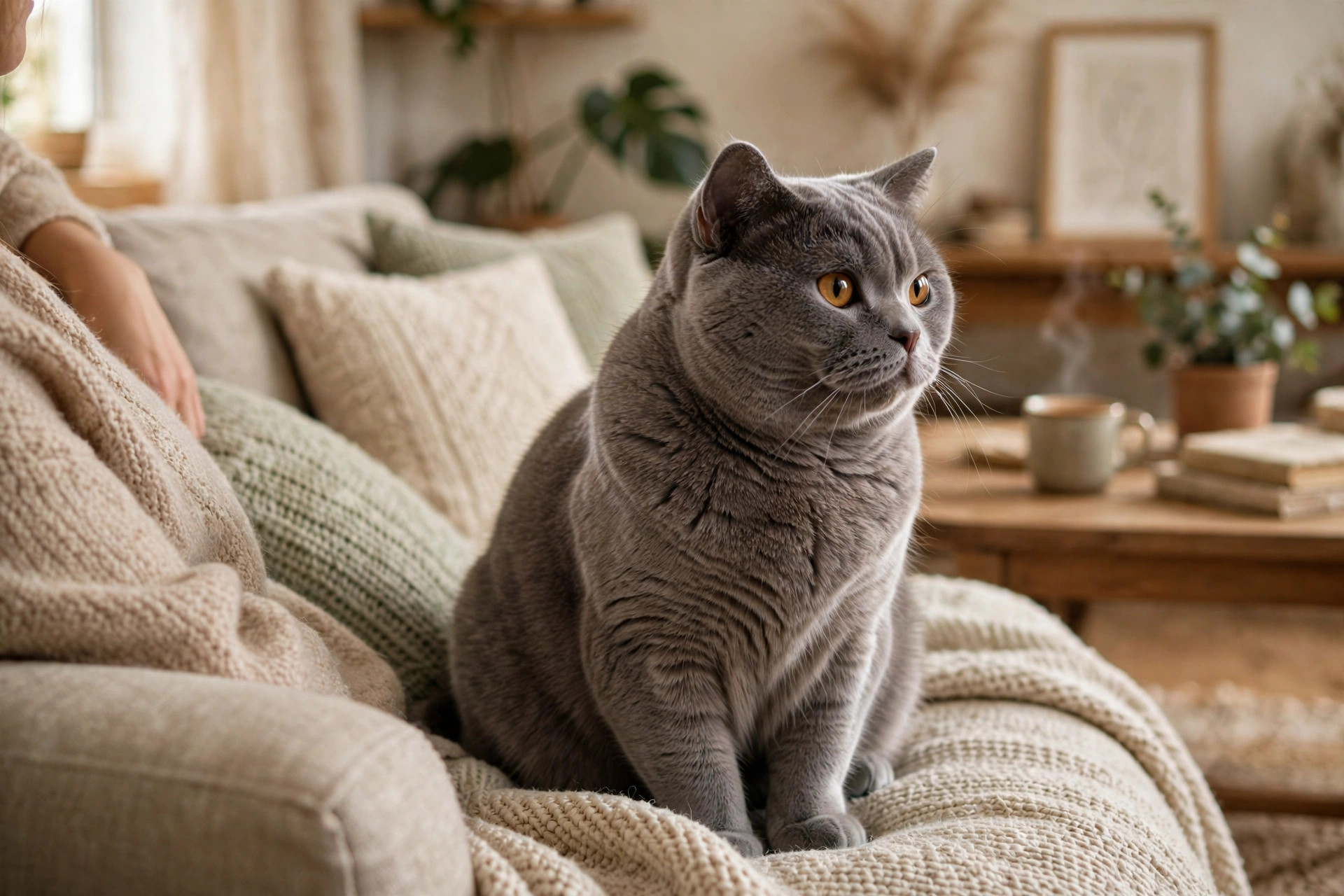
Temperament is the number-one reason people fall for this breed. The British Shorthair is famously undramatic — a steady, good-natured companion rather than a whirlwind of energy:
1. Calm, Dignified, and Easygoing
This is a cat that takes life as it comes. British Shorthairs are quiet, patient, and rarely rattled by normal household noise or routine changes. They are often described as having the manners of an English gentleman — considerate, composed, and never needy.
2. Affectionate — On Their Own Terms
British Shorthairs love their people, but they show it with quiet devotion rather than clinginess. Many will happily sit beside you on the sofa yet step away from a lap — their thick coat plus your body heat simply makes them too warm. Expect a cat that follows you from room to room and sleeps nearby, not one glued to your chest.
3. Quiet and Independent
Unlike the famously chatty Siamese, the British Shorthair is not a vocal breed. They cope well with being home alone during the workday, making them one of the best breeds for owners with full-time jobs. They greet you calmly when you return rather than staging a protest.
4. Good With Kids and Other Pets
Their sturdy build and tolerant nature make them excellent family cats. They accept children, other cats, and cat-friendly dogs with patience — though like all cats, they appreciate a child-free retreat when they have had enough.
5. Playful in Short, Comical Bursts
Do not mistake “calm” for “lazy.” British Shorthairs enjoy interactive play — feather wands, toy mice, and puzzle games — and they have a well-documented comical streak. They simply prefer several short play sessions to marathon zoomies.
Also Read: First-Time Cat Owner Checklist: 12 Things to Buy & Do (2026)
Size, Appearance & Coat
The breed standard can be summed up in one word: round. Round head, round eyes, round cheeks, round paws — a cobby, well-boned body on short, thick legs with a medium-length tail that is thick at the base.
Males are noticeably larger than females: mature males typically weigh 9–17 pounds, females 7–12 pounds. One quirk new owners should know: British Shorthairs mature very slowly, not reaching their full size, cheek fullness, and coat density until 3–5 years of age. A lanky 18-month-old is completely normal.
The iconic “British Blue” — a solid blue-grey coat with vivid copper or amber eyes — is the most famous color, but the breed comes in more than 30 colors and patterns, including black, white, cream, tabby, bicolor, and shaded varieties. The coat itself is the breed’s signature: short, very dense, and plush with a firm, “crisp” texture that springs back when you stroke it. Fun fact: the Cheshire Cat’s famously broad grin is widely believed to have been inspired by this breed’s perpetually smiling round face.
British Shorthair Care: Daily Needs
A British Shorthair is genuinely low-maintenance compared with longhaired breeds — but “low-maintenance” is not “no-maintenance.” Here is the routine that keeps one healthy:
Grooming: Once a Week
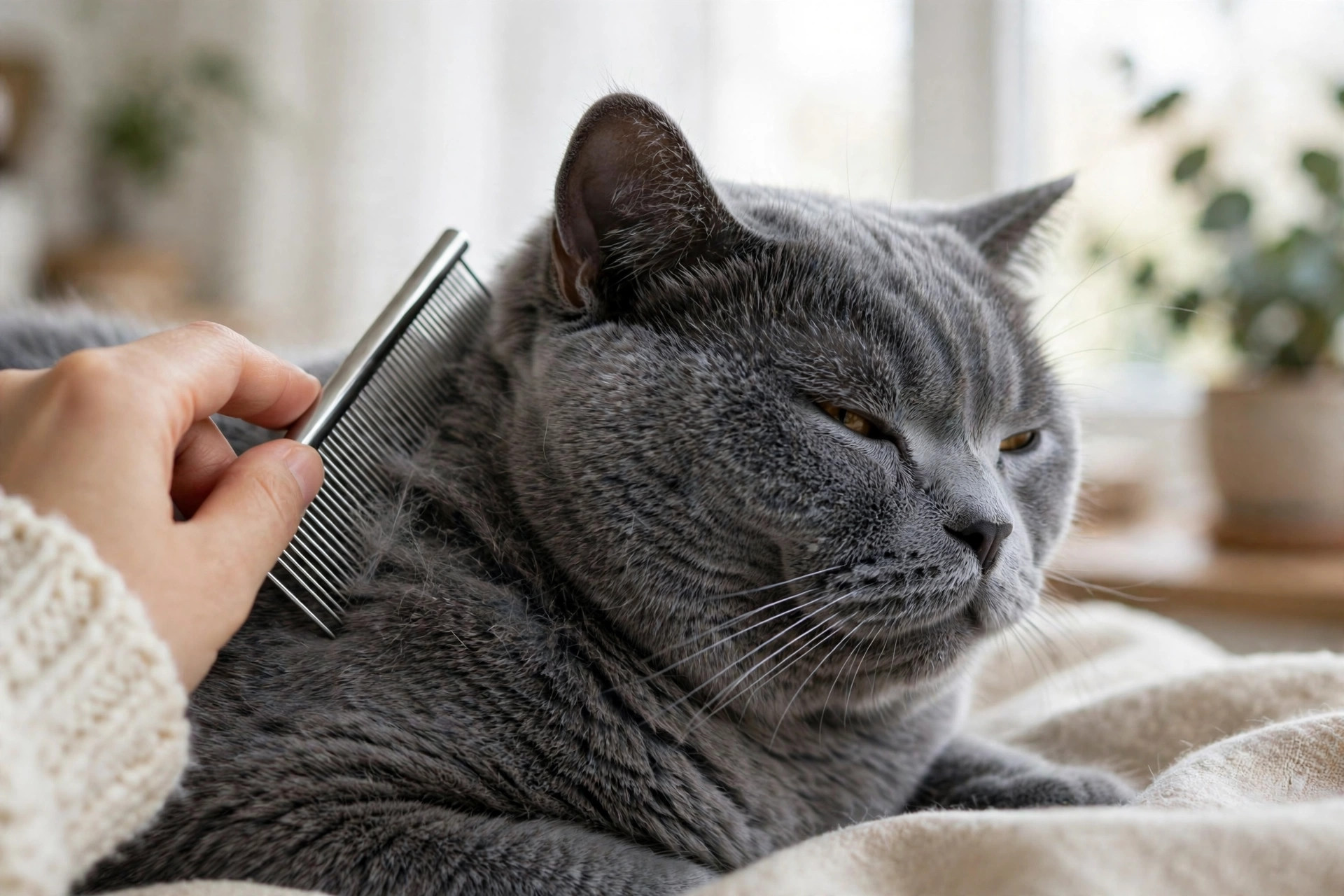
Run a basic metal or curry comb through that dense coat at least once a week to remove loose hair and keep it looking crisp. Increase to several short sessions during the spring and autumn shedding seasons. Trim nails every 2–3 weeks, check ears for buildup, and keep up with dental care — brushing teeth or using vet-approved dental products — since the breed can be prone to gingivitis.
Diet and Feeding: Measure Every Meal
This is the most important care rule for the breed: British Shorthairs gain weight easily. Their hearty appetite plus a relaxed lifestyle is a recipe for obesity, which in turn raises the risk of diabetes, arthritis, and urinary problems. Feed a high-quality, protein-rich cat food in measured portions — never free-feed — and keep treats under 10% of daily calories. Weigh your cat regularly; a slow creep upward is the earliest warning sign.
Exercise and Enrichment
Plan on 10–15 minutes of interactive play daily. British Shorthairs are not athletes, but they do need engagement: wand toys, puzzle feeders, and a sturdy cat tree they can survey their kingdom from. Because they are indoor cats by nature (their docile temperament makes them poor street fighters), a window perch or secure catio gives them safe stimulation.
Litter Box and Routine
Follow the n+1 rule — one box per cat plus one extra — scoop daily, and keep feeding and play times predictable. This routine-loving breed settles fastest in a stable household rhythm.
British Shorthair Breed Guide: Health Issues to Know
British Shorthairs are generally robust, healthy cats, but like all purebreds they carry a few breed-specific risks. A responsible breeder tests for these and shares written results:
1. Hypertrophic Cardiomyopathy (HCM)
HCM — abnormal thickening of the heart muscle — is the most serious inherited concern in the breed. Reputable breeders screen their breeding cats regularly with echocardiograms (heart ultrasounds) by a veterinary cardiologist. Ask for the results in writing before you commit to a kitten.
2. Obesity
Obesity is the single biggest manageable health risk for British Shorthairs. Excess weight strains the heart and joints and predisposes cats to diabetes and urinary tract disease. Measured meals, daily play, and regular weigh-ins are the entire prevention plan.
3. Polycystic Kidney Disease (PKD)
PKD is a hereditary condition in which cysts develop in the kidneys and can eventually cause kidney failure. It is more famous in Persians but occurs in British Shorthairs too — a DNA test exists, and responsible breeders screen for it.
4. Hemophilia B
A rare inherited bleeding disorder noted in some British Shorthair bloodlines, affecting mainly males. Ethical breeders are aware of it and manage their breeding programs to avoid passing it on.
5. Dental Disease
Like many breeds, British Shorthairs can be prone to gingivitis and dental problems. Home dental care plus professional cleanings when your vet recommends them keep painful dental disease at bay.
Schedule annual veterinary checkups (twice a year once your cat passes 7), keep vaccinations and parasite prevention current, and discuss baseline heart screening with your vet in young adulthood — especially if the parents’ HCM status is unknown.
Also Read: Senior Cat Checkups: 7 Vet Screenings for Cats Over 7 (2026)
Is a British Shorthair Right for You?
A British Shorthair is a great fit if: you want a calm, quiet, undemanding companion; you live in an apartment; you work full-time and need an independent cat; you have children or other pets and want a tolerant breed; and you are prepared to manage meals carefully to prevent weight gain.
Reconsider if: you dream of a cat that sleeps on your lap for hours (this breed usually will not); you want a highly interactive, trainable, dog-like cat — a Maine Coon may suit you better; or anyone in the home has cat allergies, since no breed is truly hypoallergenic.
British Shorthair Kitten & Breeder Tips
A responsible breeder provides written HCM and PKD screening results for both parents, raises kittens in the home with early socialization, offers a written health guarantee, screens buyers, and never sells unvaccinated kittens “cheap, no papers.”
Expect to pay roughly $1,500–$3,500 for a pet-quality kitten from a reputable breeder, with rare colors commanding more. Also consider breed-specific rescues — adult British Shorthairs regularly need homes, and an adult’s temperament, size, and health history are already known quantities.
Frequently Asked Questions
Are British Shorthairs good apartment cats?
Yes — they are one of the best apartment breeds. They are quiet, low-energy, and content indoors, and VCA Animal Hospitals notes they are ideally suited to apartment living. A cat tree and window perch keep them happily occupied in small spaces.
Do British Shorthairs like to cuddle?
They are affectionate but not typically cuddly. Most prefer sitting beside you rather than on you, partly because their dense coat makes close body contact too warm. They show love through quiet companionship — staying near you, head-butting, and slow blinks.
Are British Shorthairs hypoallergenic?
No. No cat breed is truly hypoallergenic. British Shorthairs shed moderately and produce the Fel d 1 allergen protein like all cats, so spend time with the breed before committing if allergies are a concern.
Why is my British Shorthair kitten so big and chunky?
That is normal for the breed. British Shorthairs are slow to mature and keep filling out until 3–5 years of age. Distinguish healthy breed “chunk” (broad chest, round cheeks) from actual obesity — your vet can confirm with a body condition score.
Do British Shorthairs shed a lot?
Moderately. The dense coat sheds year-round with heavier seasonal shedding in spring and autumn. Weekly brushing (more in shedding season) keeps loose hair manageable.
How long do British Shorthairs live?
A healthy British Shorthair typically lives 12–17 years, and some reach 20 with proper nutrition, weight management, and regular veterinary care.
Final Thoughts
So, is the British Shorthair right for you? If you want a calm, dignified, low-drama companion that asks for little and gives steady, quiet devotion in return, few breeds deliver like the British Shorthair. Just commit to measured meals, weekly brushing, daily short play sessions, and a breeder who can show you written HCM and PKD test results. Do that, and that round, smiling face will be greeting you at the door for 15 years or more.
Dr. Ayaz Ali, Veterinarian — Dr. Ayaz Ali is a practicing veterinarian with years of experience in small-animal care. He writes evidence-based pet health guides for Pets Addicters.