
You come home from a walk and your dog is at it again — licking his paws over and over, the rhythmic slurp-slurp going on long after his feet could possibly be dirty. Why does your dog lick his paws so much, and when does this common habit turn into a sign that something is wrong?
A little paw licking is normal dog grooming. But when it becomes constant, intense, or focused on one spot, your dog is usually trying to soothe real discomfort — itch, pain, or irritation he can’t tell you about. Veterinary experts agree that medical causes are far more common than behavioral ones, so the first step is always detective work, not scolding.
In this 2026 vet-style guide, we’ll walk you through the 7 most common reasons dogs lick their paws excessively, how to tell normal grooming from a problem, the safe home-care steps that actually help, and the red flags that mean it’s time to call your veterinarian.
Table of Contents
- Normal Grooming vs. Problem Paw Licking
- 1. Allergies — The Most Common Cause
- 2. Yeast or Bacterial Skin Infection
- 3. Injury or Something Stuck in the Paw
- 4. Parasites
- 5. Pain or Arthritis
- 6. Anxiety, Boredom, or Habit
- How to Stop Your Dog Licking His Paws
- When to Call the Vet
- Frequently Asked Questions
- Final Thoughts
Normal Grooming vs. Problem Paw Licking
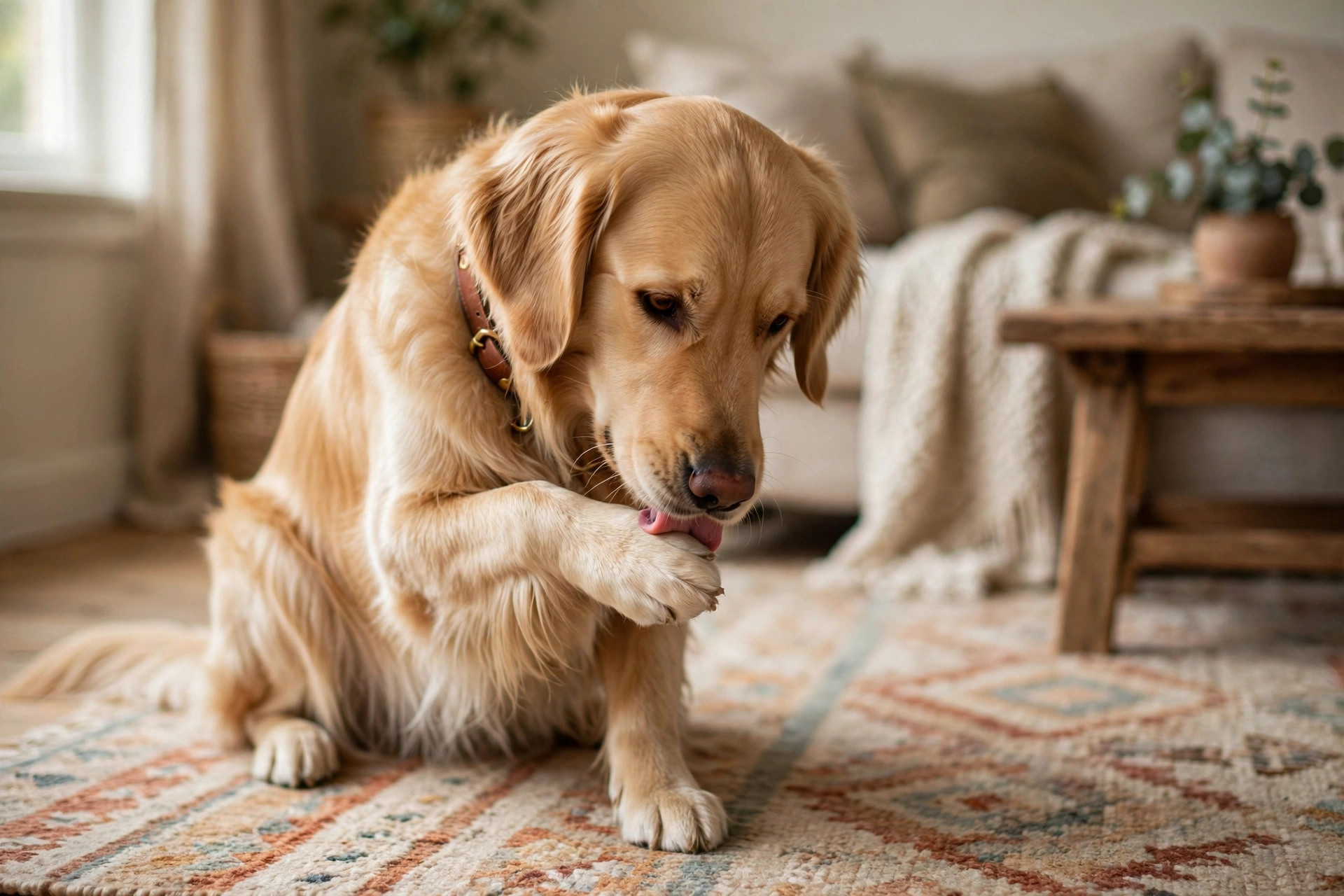
Dogs lick their paws for the same reason cats groom themselves — it’s basic hygiene. A few licks after a walk on sandy or muddy ground, a quick clean of a paw that stepped in something sticky, or an occasional grooming session before a nap is completely normal.
The licking becomes a problem when you notice any of these patterns:
- It’s constant or hard to interrupt — your dog returns to the same paw within seconds, even when distracted.
- It’s focused on one paw or one spot — especially if it started suddenly.
- There’s chewing involved — nibbling between the toes, not just licking.
- You can see changes — redness, swelling, brownish saliva staining on light fur, hair loss, a yeasty or musty smell, or raw, moist skin.
- Your dog is limping or flinches when you touch the paw.
Think of paw licking as a symptom, not a diagnosis. Your job is to figure out why the paws bother him — because the fix depends entirely on the cause.
1. Allergies — The Most Common Cause
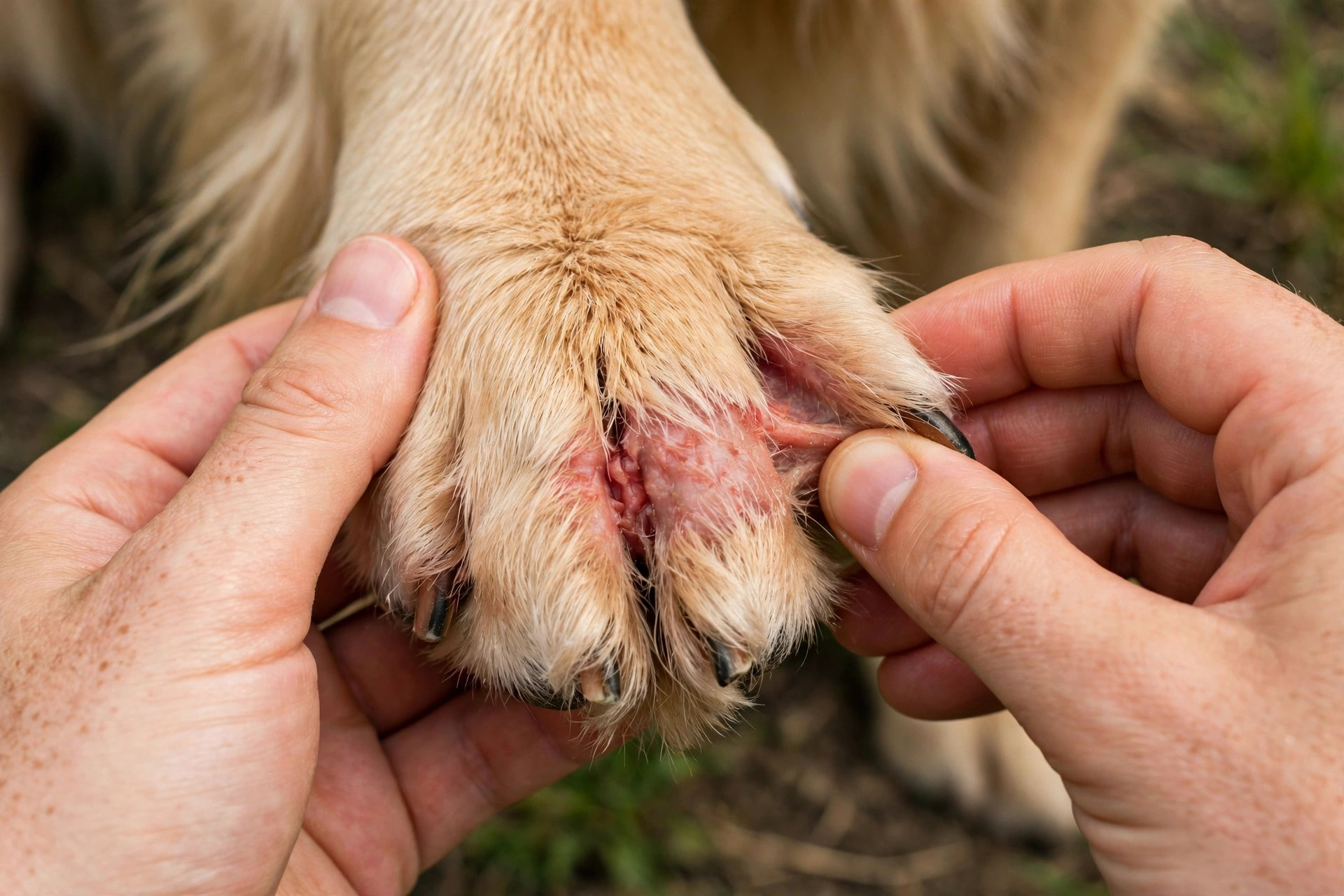
Veterinarians consistently name allergies as the number-one cause of excessive paw licking in dogs. Unlike people, dogs rarely sneeze from allergies — they itch, and the paws are often the itchiest part. Dogs walk through pollen, grass, and mold barefoot, then bring the allergens home on their feet.
Environmental allergies
Pollen, grasses, mold spores, and dust mites can all trigger paw itching. This type is often seasonal — worse in spring and fall — and tends to affect all four paws fairly evenly. Red, inflamed skin between the toes and reddish-brown staining on light-colored fur are classic clues.
Food allergies
Certain food ingredients can cause year-round itchy paws, often alongside itchy ears, face, or belly. Food allergies don’t follow a calendar, so itching that never takes a season off points this way. Diagnosis usually requires a strict elimination diet trial under veterinary supervision.
Contact irritation
Things the paws touch directly can irritate them: lawn chemicals, fertilizers, winter sidewalk salt and ice melt, or residue from floor cleaners. If the licking spikes after walks in specific areas or in winter, contact irritation moves up the list.
Also Read: Fall Allergies in Dogs: Signs & Relief (2026) — our guide to the seasonal triggers hitting paws hardest right now, plus the post-walk routine that actually helps.
2. Yeast or Bacterial Skin Infection
The warm, moist webbing between your dog’s toes is prime real estate for microorganisms. Yeast (Malassezia) and bacteria often move in after something else — usually allergies — has made the skin itchy. The dog scratches and licks, breaks the skin, and infection sets in, which makes the itch worse in a vicious cycle.
Signs of an interdigital infection include:
- A musty or “corn chip” smell coming from the paws
- Redness, swelling, or discharge between the toes
- Brown or black waxy buildup in the toe webbing
- Licking that keeps getting more intense instead of better
Skin infections need proper diagnosis — your vet may take a skin scraping or cytology sample to identify whether yeast, bacteria, or both are involved, since each needs different treatment. This is one cause that genuinely won’t resolve with home care alone.
Also Read: Hot Spots on Dogs: Causes, Treatment & Home Care (2026) — relentless licking can spiral into painful infected sores; this guide explains how vets break the itch-scratch cycle.
3. Injury or Something Stuck in the Paw
When licking is sudden and focused on a single paw, think physical cause first. Dogs step on all kinds of things:
- Cuts or scrapes on the paw pads
- Thorns, splinters, or grass seeds (foxtails) lodged between the toes
- A broken, torn, or ingrown nail
- Burns from hot pavement in summer
- Insect stings or bites
- Painful interdigital cysts (nodules between the toes)
Gently part the toes and check the pads, the webbing, and each nail. Look for swelling, a visible thorn or seed, a cracked nail, or one spot your dog guards when you touch it. Small debris you can safely remove is fine to take out — but anything embedded, a torn nail, or a wound that looks deep needs a vet.
4. Parasites
Fleas and mange mites (Demodex and Sarcoptes) can make paws intensely itchy, especially around the feet and lower legs. In a dog with flea allergy dermatitis, even a single flea bite can trigger obsessive licking. If your flea and tick prevention has lapsed — or your dog has been around wildlife or stray animals — parasites move up the suspect list. Part the fur and look for flea dirt (tiny black specks) or patchy hair loss.
5. Pain or Arthritis
Dogs sometimes lick a paw because something underneath it hurts. Older dogs with arthritis often lick the paw over a sore wrist or toe joint — frequently a single rear paw. The licking is a self-soothing response to the ache. Some dogs will even lick a front paw continuously when the actual pain is elsewhere in the body.
If the skin looks fine but the licking never stops — especially in a senior dog, or a dog that’s stiff after rest, hesitant on stairs, or lagging on walks — ask your veterinarian to evaluate for pain. Veterinary sources including the American Kennel Club note that pain-driven licking requires proper diagnosis and treatment by a veterinarian, not guesswork at home.
6. Anxiety, Boredom, or Habit
Boredom, stress, and anxiety can cause chronic paw licking — but veterinary dermatologists treat this as a diagnosis of exclusion, meaning it’s considered only after skin disease and pain have been ruled out. True anxiety-driven licking is less common than most owners assume, and what looks like a nervous habit very often has itch or pain hiding underneath it.
That said, under-exercised dogs and dogs adjusting to big changes (a move, a new schedule, being left alone longer) sometimes develop rhythmic, trance-like licking as self-soothing. Left unchecked, chronic licking can create a lick granuloma (acral lick dermatitis) — a thickened, infected sore from the licking itself — which then needs veterinary treatment on top of addressing the original cause.
Also Read: Separation Anxiety in Dogs: Signs & Help Guide (2026) — if the licking happens mainly when your dog is left alone, anxiety may be part of the picture; this guide covers the training plan vets recommend.
How to Stop Your Dog Licking His Paws
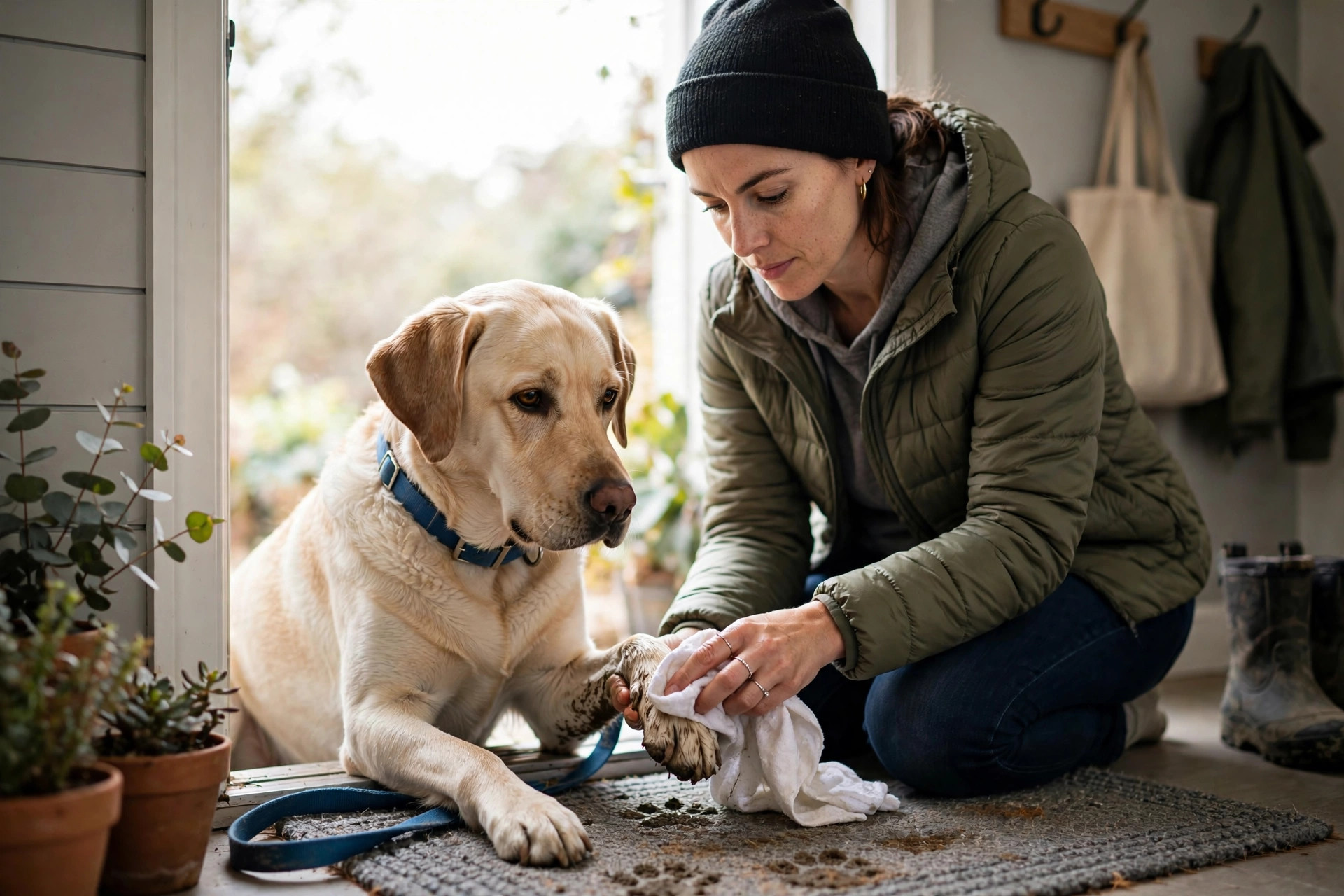
There’s no single fix — the right approach flows from the cause. But these steps are safe for almost every licking dog and help while you investigate:
- Inspect the paws first. Check pads, the webbing between every toe, and each nail for cuts, thorns, swelling, redness, or discharge. Do this in good light — small grass seeds hide well.
- Rinse after walks. A quick rinse with plain water or a wipe with pet-safe wipes removes pollen, salt, lawn chemicals, and debris before your dog licks them off. Keep a towel by the door.
- Keep toe fur trimmed. Long hair between the toes traps moisture and debris, creating the damp environment yeast loves.
- Block the licking temporarily. A recovery cone, inflatable collar, or a clean sock/paw wrap (changed daily) can break the lick-damage cycle while the underlying cause is treated. Don’t wrap a raw or oozing sore tightly — those need air and a vet.
- Beat boredom. More walks, playtime, training sessions, and puzzle feeders redirect an under-stimulated dog’s energy away from his feet.
- Don’t reach for human products. Never apply human creams, ointments, or anti-itch sprays unless your vet specifically recommends them — most are unsafe if licked off, and the wrong product can make things worse.
If the licking persists beyond a couple of days of these measures, or any red flags below appear, the next step is your veterinarian — who can test for allergies, take skin samples, and check for pain or infection directly.
When to Call the Vet
Book a veterinary appointment promptly if you notice any of these:
- Licking that is constant, worsening, or hasn’t improved after 2–3 days
- Redness, swelling, discharge, bleeding, or open sores on the paws
- A strong yeasty or foul odor from the feet
- Limping, reluctance to walk, or pain when the paw is touched
- Sudden, intense licking of one paw (possible injury or foreign body)
- Hair loss, thickened skin, or spreading crusty patches
- Lethargy, appetite loss, or behavior changes alongside the licking
Treat facial swelling, hives, or trouble breathing as an emergency — those signal a severe allergic reaction, not a paw problem.
Frequently Asked Questions
Is it normal for dogs to lick their paws every day?
A few licks as part of normal grooming — especially after walks — is fine. Daily, prolonged, or obsessive licking is not normal and usually means allergies, infection, injury, or pain. The pattern matters more than the act itself.
Why does my dog lick his paws at night?
Evening licking is common because the day’s allergens have accumulated on the paws, and a tired, winding-down dog may also lick as self-soothing. Try a paw wipe-down after the last walk of the day — if the licking still doesn’t ease, look into the medical causes above.
Why is my dog licking one paw all of a sudden?
Sudden one-paw licking most often means something physical: a thorn or grass seed between the toes, a cut pad, a torn nail, a sting, or an interdigital cyst. Inspect that paw carefully in good light, and see your vet if you find swelling, a wound, or anything embedded.
Can I put coconut oil on my dog’s paws to stop licking?
Coconut oil is sometimes suggested for dry pads, but it won’t fix itching from allergies or infection — and most dogs find it delicious, which can actually increase licking. Treat the underlying cause instead, and only use paw products your vet approves.
Will a cone stop my dog from licking his paws?
A cone or recovery collar stops the licking but doesn’t treat the cause — use it as a temporary shield to prevent further skin damage while your vet diagnoses and treats the real problem.
Does paw licking mean my dog has anxiety?
Not necessarily. Anxiety and boredom can cause licking, but vets rule out medical causes first because allergies, infections, and pain are far more common. If the licking happens mainly when your dog is left alone, anxiety is more likely to be involved.
Final Thoughts
So, why does your dog lick his paws so much? In most cases, the answer is medical, not behavioral: allergies are the top suspect, followed by yeast or bacterial infections between the toes, an injury or something stuck in the paw, parasites, or underlying pain. Occasional grooming licks are nothing to worry about — but constant, focused, or worsening licking is your dog’s way of asking for help.
Start with a careful paw inspection and a post-walk wipe-down routine, block the licking if the skin is getting damaged, and bring your veterinarian in early rather than late. Once the real cause is found and treated, the licking usually stops on its own — and your dog gets his comfortable feet back.
By Dr. Ayaz Ali