
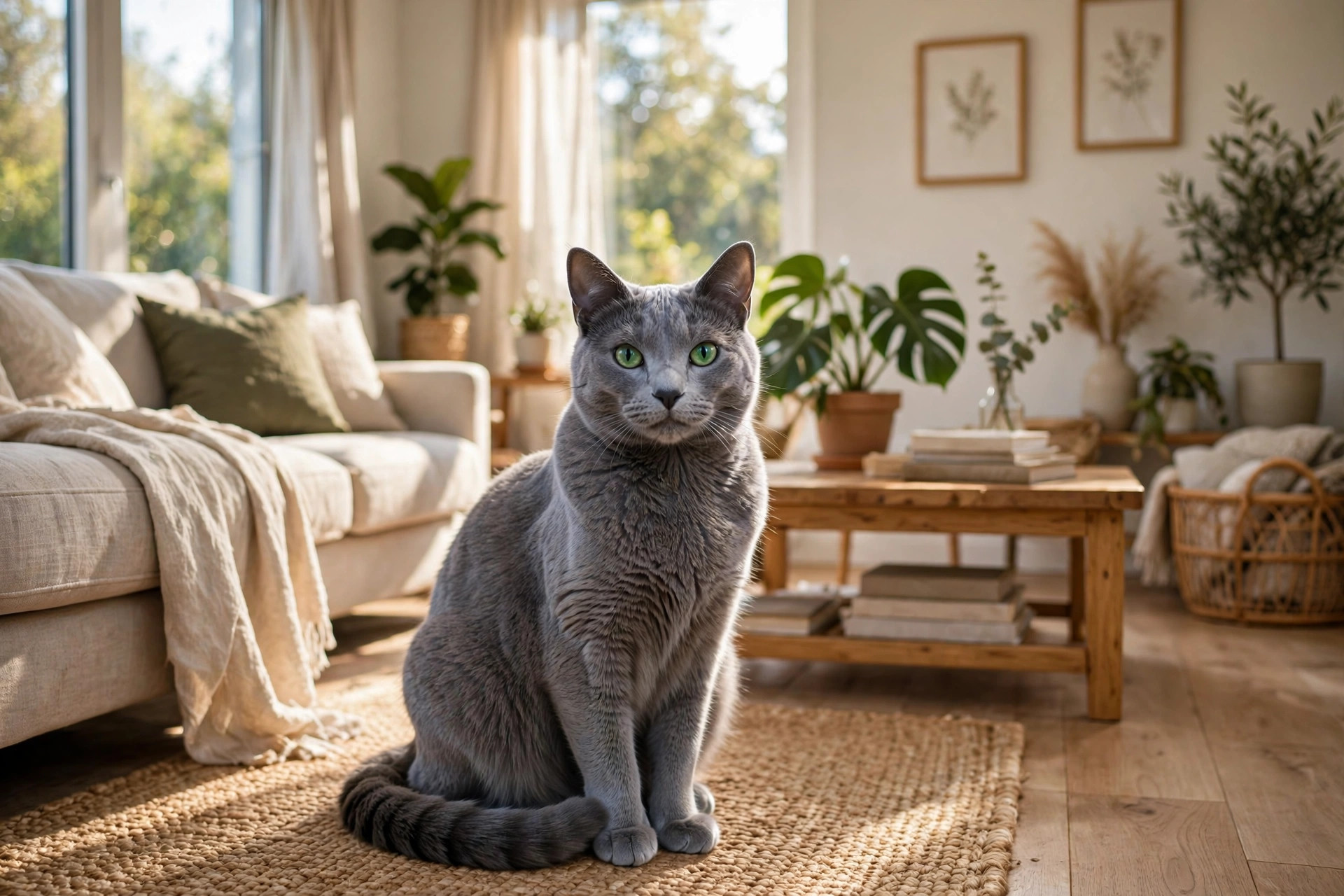
Few cats turn heads like the Russian Blue. With its shimmering silver-blue coat, emerald-green eyes, and quiet aristocratic bearing, it looks like a feline carved from moonlight. But this russian blue breed guide is about more than looks — the Russian Blue is one of the most loyal, intelligent, and routine-loving cats you can bring home, if your lifestyle suits its sensitive nature.
In this complete guide, we’ll walk you through everything you need to know about the Russian Blue: its temperament, appearance, grooming needs, daily care, health risks, and what to look for in a kitten or breeder — so you can decide whether this silver-coated companion is the right cat for you.
Table of Contents
- What Is a Russian Blue Cat?
- Russian Blue Breed at a Glance
- Russian Blue Breed Guide: Temperament & Personality
- Size, Appearance & the Silver-Blue Coat
- Russian Blue Cat Care: Daily Needs
- Russian Blue Breed Guide: Health Issues to Know
- Is a Russian Blue Right for You?
- Russian Blue Kitten & Breeder Tips
- Frequently Asked Questions
- Final Thoughts
What Is a Russian Blue Cat?
The Russian Blue is an ancient natural breed believed to have originated around Arkhangelsk, the northern Russian port once called Archangel — which is why the breed was historically nicknamed the Archangel Cat. Sailors reportedly carried these striking blue-grey cats home to England and Scandinavia, where they appeared at some of the very first cat shows in the late 1800s.
Today, the Russian Blue is a fixture on top-10 breed lists: the Cat Fanciers’ Association (CFA) named it the #10 most popular cat breed of 2026. Its reputation rests on a rare combination — breathtaking looks, a low-maintenance coat, and a personality that is equal parts loyal shadow and dignified independent.
According to veterinary references including WebMD Pets, Russian Blues are highly intelligent cats that evaluate a situation before getting involved, love interactive play (many will happily fetch), and do best with predictable daily routines.
Russian Blue Breed at a Glance
| Trait | Details |
|---|---|
| Origin | Arkhangelsk, Russia (natural breed) |
| Size | Medium — 7–12 lbs (3–5.5 kg), males larger than females |
| Coat | Short, dense, plush double coat; silver-blue with silver-tipped guard hairs |
| Eye color | Bright emerald green (kittens’ eyes develop color over months) |
| Temperament | Reserved with strangers, deeply loyal to family, intelligent, routine-loving |
| Lifespan | 15–20 years with proper care |
| Best for | Calm households, quiet homes, owners who love routine |
Russian Blue Breed Guide: Temperament & Personality
The Russian Blue’s personality is its most misunderstood trait. New owners expecting instant cuddles can be disappointed — but those who earn this cat’s trust get something remarkable. Here’s what living with one actually feels like:
1. Reserved With Strangers, Devoted to Family
Russian Blues are famously shy around visitors. Many will politely vanish when the doorbell rings, observing newcomers from a distance before deciding they are safe. But with their chosen humans, they are intensely affectionate — following you from room to room, greeting you at the door, and settling beside you with a quiet, contented purr.
2. Highly Intelligent and Curious
These are problem-solving cats. Owners routinely report Russian Blues that figure out how to open doors, cabinets, and treat jars. That intelligence is a joy — they can learn tricks, play fetch, and master puzzle feeders — but it also means they get bored easily. Interactive toys and daily play sessions are non-negotiable.
3. Creatures of Habit
Russian Blues love routine: meals at the same time, play at the same time, a calm predictable rhythm. Sudden schedule changes, loud parties, or a chaotic household can genuinely stress them, and stress in this breed can translate into litter-box issues or digestive upset. A stable, quiet home is where they shine.
4. Quiet, Not Silent
Unlike famously vocal breeds, the Russian Blue communicates softly — gentle trills, quiet meows, and meaningful looks. They are excellent apartment cats in this regard, though they will still let you know when dinner is late.
Also Read: Ragdoll Cat Breed Guide: Care & Temperament (2026)
Size, Appearance & the Silver-Blue Coat
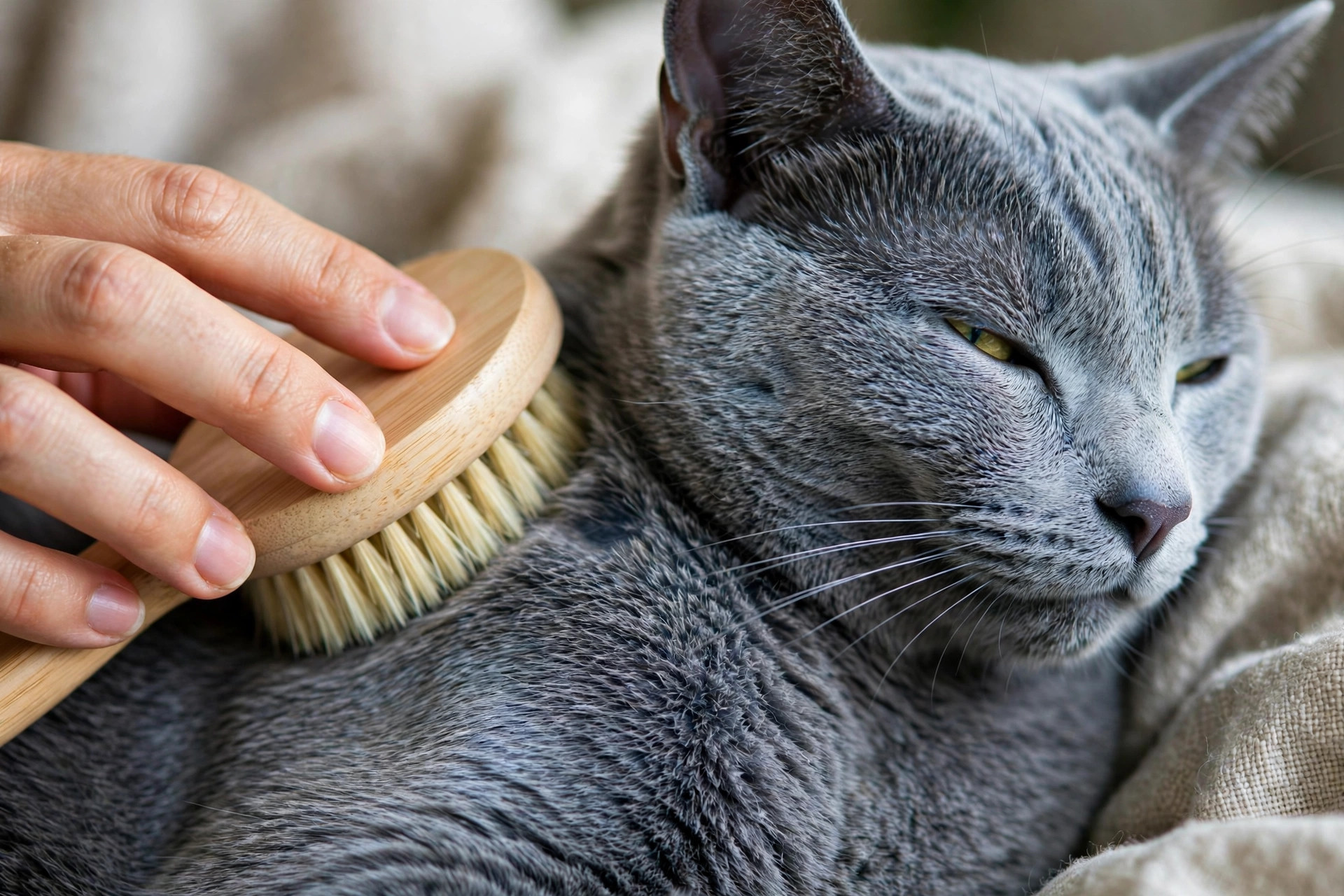
The Russian Blue is a medium-sized cat with a fine-boned yet muscular, elegant body — long legs, a tapered tail, a wedge-shaped head with large ears, and that famous emerald gaze. But the coat is the true showpiece: short, dense, and velvet-soft, with silver-tipped guard hairs that catch the light and give the cat its luminous sheen.
The coat’s density comes from an unusual feature: the undercoat is as long as the top coat, which makes the fur stand out from the body rather than lying flat. Despite its plushness, this is a genuinely low-maintenance coat. A quick brushing once or twice a week removes loose hairs, and most Russian Blues keep themselves immaculate.
One common confusion: not every grey cat is a Russian Blue. The Korat and the blue-grey British Shorthair look similar, but only the Russian Blue combines the dense double coat, green eyes, and fine-boned build. Also Read: British Shorthair Breed Guide: Temperament, Care & Health (2026)
Russian Blue Cat Care: Daily Needs
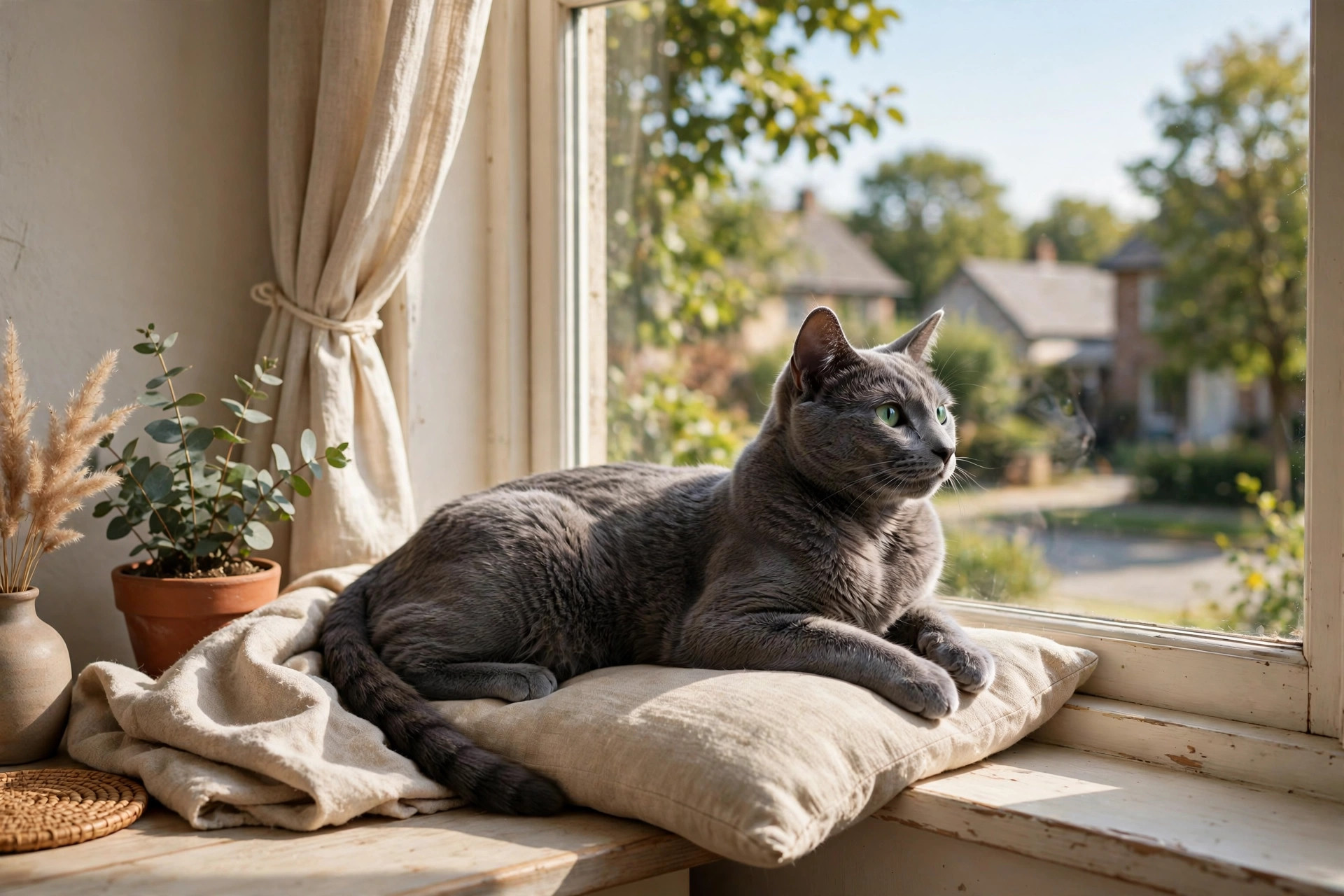
Russian Blues are refreshingly straightforward to care for, as long as their environment stays calm. Here’s the routine:
Grooming: Weekly Brushing
Brush once or twice a week with a soft-bristle brush or grooming glove. During seasonal coat changes, a little extra brushing helps. Trim nails every 2–3 weeks, clean ears gently when you notice buildup, and introduce tooth brushing early — dental care matters for every breed.
Diet and Feeding
Feed a high-quality, protein-rich diet with strictly measured portions — never free-feed. Russian Blues tend to be food-obsessed and gain weight easily, and extra weight raises the risk of diabetes and urinary problems. Keep treats under 10% of daily calories. Wet food is especially valuable for this breed because it boosts moisture intake, which supports urinary health.
Water: Encourage Drinking
Adequate water intake is critical for Russian Blues. Many owners find a cat water fountain encourages drinking, since these cats often prefer running water. Keep the water bowl away from the food bowl — cats tend to drink more when the two are separated.
Exercise and Enrichment
Give your Russian Blue 15–20 minutes of interactive play daily: feather wands, puzzle feeders, and fetch games suit their sharp minds. Climbing shelves and a sunny window perch let them exercise and observe on their own terms.
Litter Box and Routine
Scoop daily, keep boxes in quiet locations, and protect the daily routine as much as you can. If your household is about to change — a move, a new baby, renovations — give your Russian Blue quiet hiding spots and let them adjust at their own pace.
Russian Blue Breed Guide: Health Issues to Know
Russian Blues are among the healthiest, longest-lived purebreds, with few breed-specific genetic diseases. That said, every owner should know these concerns:
1. Urinary Stones (Urolithiasis)
This breed has a noted tendency to form struvite or calcium oxalate stones in the bladder and urinary tract. Prevention is the best medicine: a moisture-rich diet, plenty of fresh water (fountains help), and regular urinalysis at vet checkups. Straining to urinate, crying in the litter box, or blood in the urine is a vet emergency, especially in males.
2. Obesity
Their love of food plus a tendency toward quiet indoor life makes weight gain easy. Weigh your cat regularly, measure every meal, and treat food as a training tool rather than free entertainment. An overweight Russian Blue faces higher risks of diabetes and urinary disease.
3. Stress-Related Bladder Issues (Feline Idiopathic Cystitis)
The breed’s sensitivity to change means stressful events can trigger sterile bladder inflammation. Stable routines, hiding spots, and calm introductions to new people or pets go a long way. Also Read: Cat UTI Symptoms: Urinary Problems Every Owner Must Know (2026)
4. Dental Disease
Like most cats, Russian Blues can develop tartar and gum disease by middle age. Regular tooth brushing and vet dental checks keep painful dental disease from hiding behind a stoic face.
Schedule vet checkups every 6–12 months, keep vaccinations current, and ask about periodic blood work and urinalysis as your cat ages — catching urinary or kidney changes early makes all the difference.
Is a Russian Blue Right for You?
A Russian Blue is a great fit if: you want a deeply loyal, quiet companion; you keep a calm, predictable home; you enjoy interactive play and puzzle toys with a smart cat; you work from home or keep regular hours; and you can commit to measured feeding and low-key grooming.
Reconsider if: your household is loud, chaotic, or constantly changing; you want an instantly cuddly cat that adores every stranger (a Russian Blue takes time to warm up); you expect a truly hypoallergenic breed — no cat is allergen-free; or you’re away for very long hours with no enrichment, since a bored Russian Blue will find its own entertainment.
Russian Blue Kitten & Breeder Tips
If you decide on a Russian Blue, choose your source carefully. A responsible breeder will:
- Raise kittens in a home environment with early handling and socialization
- Provide written health records and a health guarantee (typically 1–2 years)
- Ask you questions about your home — good breeders screen buyers too
- Never sell unvaccinated, unregistered kittens “cheap, no papers”
Expect to pay roughly $800–$1,500+ for a pet-quality kitten from a reputable breeder; show-quality lines cost more. Russian Blues can be hard to find in some regions, so waiting lists are common. Also consider breed-specific rescues — adult Russian Blues and mixes regularly need homes, and an adult’s temperament is already predictable.
Frequently Asked Questions
Are Russian Blue cats hypoallergenic?
No — no cat breed is truly hypoallergenic. Russian Blues shed relatively little, so some mildly allergic owners tolerate them better, but don’t get a Russian Blue expecting an allergy-free cat.
How long do Russian Blue cats live?
A healthy Russian Blue typically lives 15–20 years with proper nutrition, regular vet care, and a safe indoor environment — among the longest lifespans of any purebred cat.
Do Russian Blue cats shed a lot?
No. Their short, dense coat sheds lightly year-round, with slightly heavier seasonal shedding. Weekly brushing keeps loose hair under control.
Are Russian Blues good with kids and dogs?
Yes, with calm, respectful children and cat-friendly dogs. They do best with older children who understand gentle handling, and they bond well with other pets after a proper, gradual introduction.
How much does a Russian Blue cat cost?
From a reputable breeder, expect $800–$1,500+ for a pet-quality kitten, with show-quality lines costing more. Budget also for quality food, litter, grooming supplies, and annual vet care.
Why does my Russian Blue hide when guests come over?
That’s normal breed behavior — Russian Blues are naturally reserved with strangers. Let them retreat to a safe spot and emerge on their own terms. Never force interaction; most will warm up to regular visitors over time.
Final Thoughts
So, is the Russian Blue the right cat for you? If you want an elegant, intelligent, quietly devoted companion that treats you like the center of its world — and your home is calm and predictable — few breeds deliver like the Russian Blue. Go in with open eyes: measure the meals, brush the coat weekly, encourage drinking, and give this sensitive cat the routine it craves.
Do that, and you’ll understand what Russian Blue owners always say: behind that serene silver-blue face is one of the most loyal cats you will ever meet.
By Dr. Ayaz Ali