
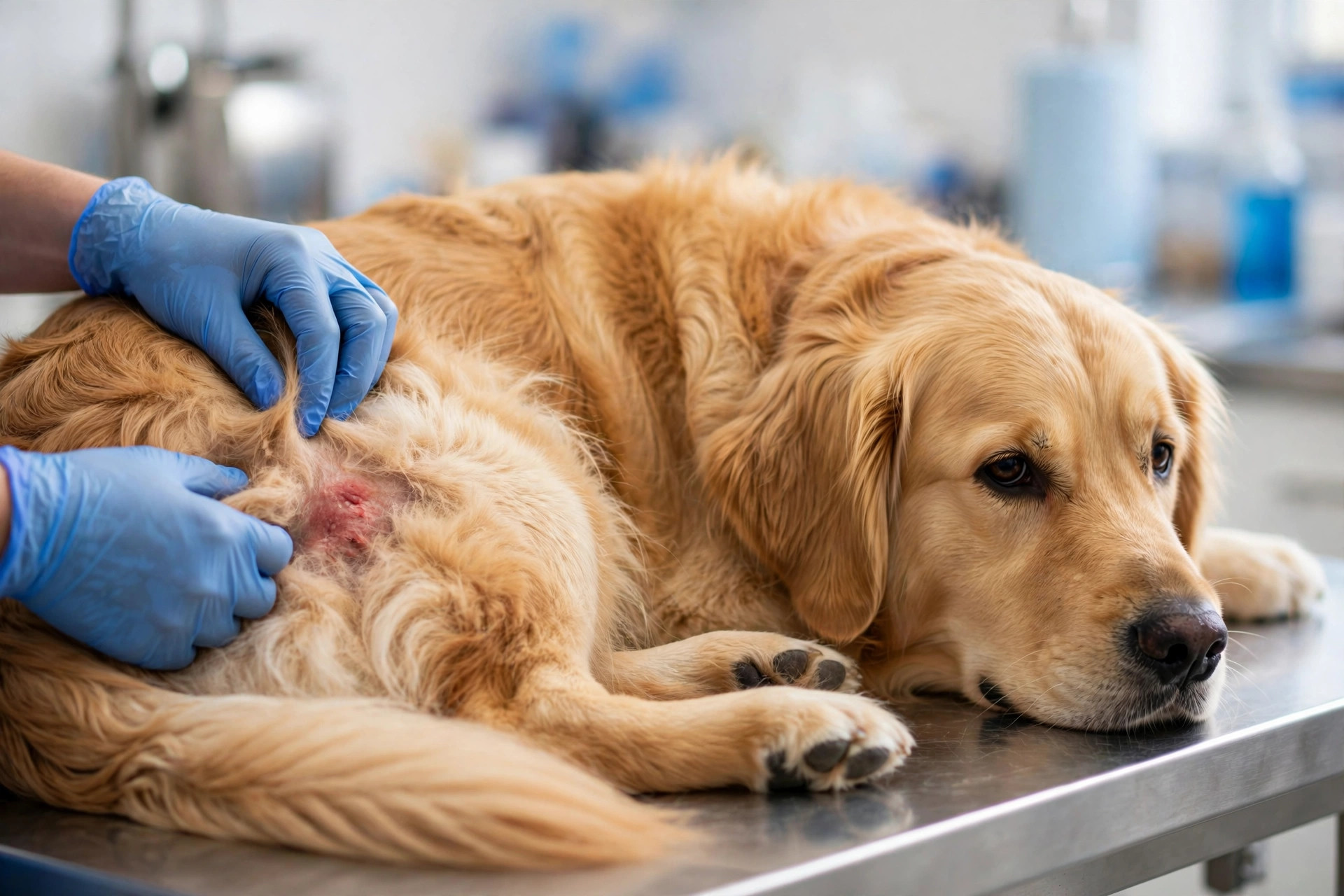
You wake up and your dog is chewing frantically at the same spot on his hip. Yesterday there was nothing — today there is a raw, red, angry patch of skin that seems to have appeared overnight. If that sounds familiar, you are probably dealing with hot spots on dogs, one of the most common — and most alarming-looking — skin problems veterinarians treat, especially in warm, humid weather.
The good news is that hot spots on dogs are very treatable, and most clear up within days once the cycle of itch, scratch, and infection is broken. In this complete 2026 vet guide, we will walk you through what hot spots are, what they look like, what causes them, how your veterinarian will treat them, the safe home-care steps you can take right now, and how to keep them from coming back.
Table of Contents
- What Are Hot Spots on Dogs?
- What Does a Hot Spot on a Dog Look Like?
- What Causes Hot Spots on Dogs?
- Breeds Most Prone to Hot Spots
- How Vets Treat Hot Spots on Dogs
- Home Care: What You Can Safely Do
- What NOT to Put on a Hot Spot
- How to Prevent Hot Spots on Dogs
- When to Call the Vet
- Frequently Asked Questions
What Are Hot Spots on Dogs?
A hot spot is the common name for acute moist dermatitis — a localized area of skin that becomes red, raw, moist, and infected. The word “acute” matters: hot spots can literally appear within hours. A small itchy patch in the morning can become a large, painful, oozing sore by evening because every lick and scratch traumatizes the skin further, and bacteria already living on the skin invade the damaged tissue.
Veterinary sources including the American Kennel Club explain that hot spots grow rapidly as continued scratching keeps damaging the area. They are painful and intensely itchy, which is why your dog cannot leave them alone — and that self-trauma is exactly what makes them worse. Breaking the itch-scratch cycle is the whole point of treatment.
Hot spots most often show up on the head, neck, hips, and sides, but they can appear anywhere a dog can reach with its mouth or paws.
What Does a Hot Spot on a Dog Look Like?
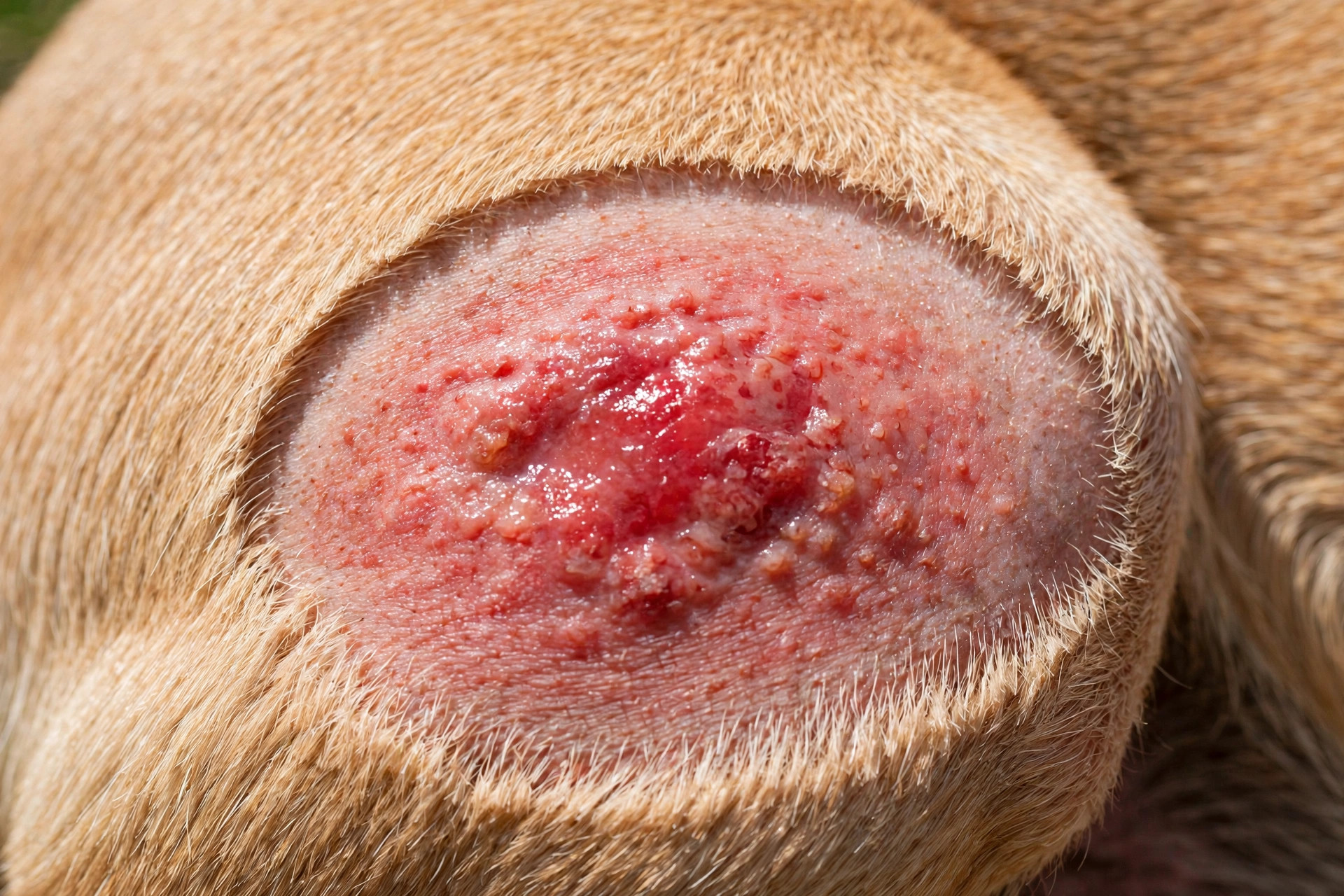
Hot spots have a fairly unmistakable look once you know what to check for:
- A round or oval patch of red, raw, inflamed skin, often moist or weeping
- Hair loss or matted, damp fur stuck to the sore
- Pus, crusting, or scabbing on the surface
- A foul or sour smell from the lesion
- Your dog licking, chewing, or scratching at the spot constantly
- Pain or flinching when you touch near it
- Restlessness or irritability from the discomfort
The surrounding fur often mats over the sore, hiding it — which is why many owners are shocked by how large the lesion is once the fur is parted. A hot spot that looks small from the outside is frequently bigger underneath.
What Causes Hot Spots on Dogs?
Hot spots are a secondary problem: something first makes the skin itchy or sore, and the dog’s scratching does the rest. Finding that original trigger matters, because without treating it, hot spots keep coming back.
1. Allergies — the #1 Trigger
Environmental allergies (pollen, mold, dust mites) and food sensitivities make dogs itchy, and itchy dogs scratch hot spots into existence. In dogs with flea allergy dermatitis, even a single flea bite can set off the intense itching that starts a hot spot.
Also Read: Fall Allergies in Dogs: Signs & Relief (2026) — allergies are the most common underlying cause of hot spots, and this guide covers the seasonal triggers and relief that actually works.
2. Moisture Trapped Against the Skin
Bacteria thrive in warm, damp conditions. Moisture from swimming, baths, rain, or humid weather can stay trapped under a thick coat, matted fur, or even a damp collar left on too long — creating the perfect breeding ground for a hot spot. This is also why hot spots are often called “summer sores.”
3. Ear Infections
Dogs with painful, itchy ears scratch and rub the head and neck relentlessly, and hot spots often form right where the scratching lands. Recurring ear infections and head-area hot spots frequently go together.
Also Read: Signs of Ear Infection in Dogs: Vet Guide (2026) — if your dog’s hot spot is on the head or neck, check the ears too.
4. Parasites and Insect Bites
Fleas, ticks, and mites all cause itching that can escalate into a hot spot. Flea allergy dermatitis is the classic culprit: the dog is not reacting to the bite count, but to the saliva, so one bite is enough.
5. Matted Fur and Poor Grooming
Mats trap moisture and irritants against the skin, block airflow, and tug painfully — all of which invite chewing and hot spots underneath the tangle.
6. Boredom, Stress, and Habitual Licking
Some dogs lick or chew themselves as a stress response or out of sheer boredom. Dogs with separation anxiety, for example, may chew their paws or flanks when left alone — and a lick granuloma or hot spot can follow.
Also Read: Separation Anxiety in Dogs: Signs & Help Guide (2026) — anxiety-driven licking is a real hot spot trigger; this guide covers the training plan vets recommend.
7. Underlying Pain
Dogs sometimes lick a joint or limb obsessively because it hurts — arthritis pain, for instance — and the constant licking breaks the skin. If the hot spot keeps returning in the same place, ask your vet to check for pain underneath.
Breeds Most Prone to Hot Spots
Any dog can develop a hot spot, but thick-coated, long-haired breeds get them most often because their dense fur traps moisture and heat. Golden Retrievers, Labrador Retrievers, German Shepherds, Rottweilers, and St. Bernards are among the breeds veterinarians see most for this problem, and dogs with skin folds or a history of allergies are at higher risk too.
How Vets Treat Hot Spots on Dogs
If you suspect a hot spot, see your veterinarian promptly. Waiting rarely helps — hot spots almost always get bigger and more painful the longer the itch-scratch cycle runs. At the clinic, treatment for hot spots on dogs typically involves some combination of the following:
- Clipping the fur around the lesion to expose the skin, prevent matting, and let air reach the wound.
- Cleaning the area with a gentle antiseptic cleanser such as chlorhexidine, sometimes with a chlorhexidine shampoo bath.
- Topical or oral antibiotics to treat the secondary bacterial infection.
- Topical or oral steroids to calm inflammation and shut down the itch.
- Allergy medication when an underlying allergy is driving the itch.
- Medicated wipes or solutions for gentle daily cleaning at home.
- An e-collar (cone) or recovery suit to physically stop the dog from licking and scratching while it heals.
Your vet will also look for the underlying cause — fleas, allergies, an ear infection — because treating the sore without treating the trigger guarantees a repeat. The encouraging part: once treatment starts, most dogs improve rapidly, and many hot spots resolve in as little as three to seven days.
Home Care: What You Can Safely Do
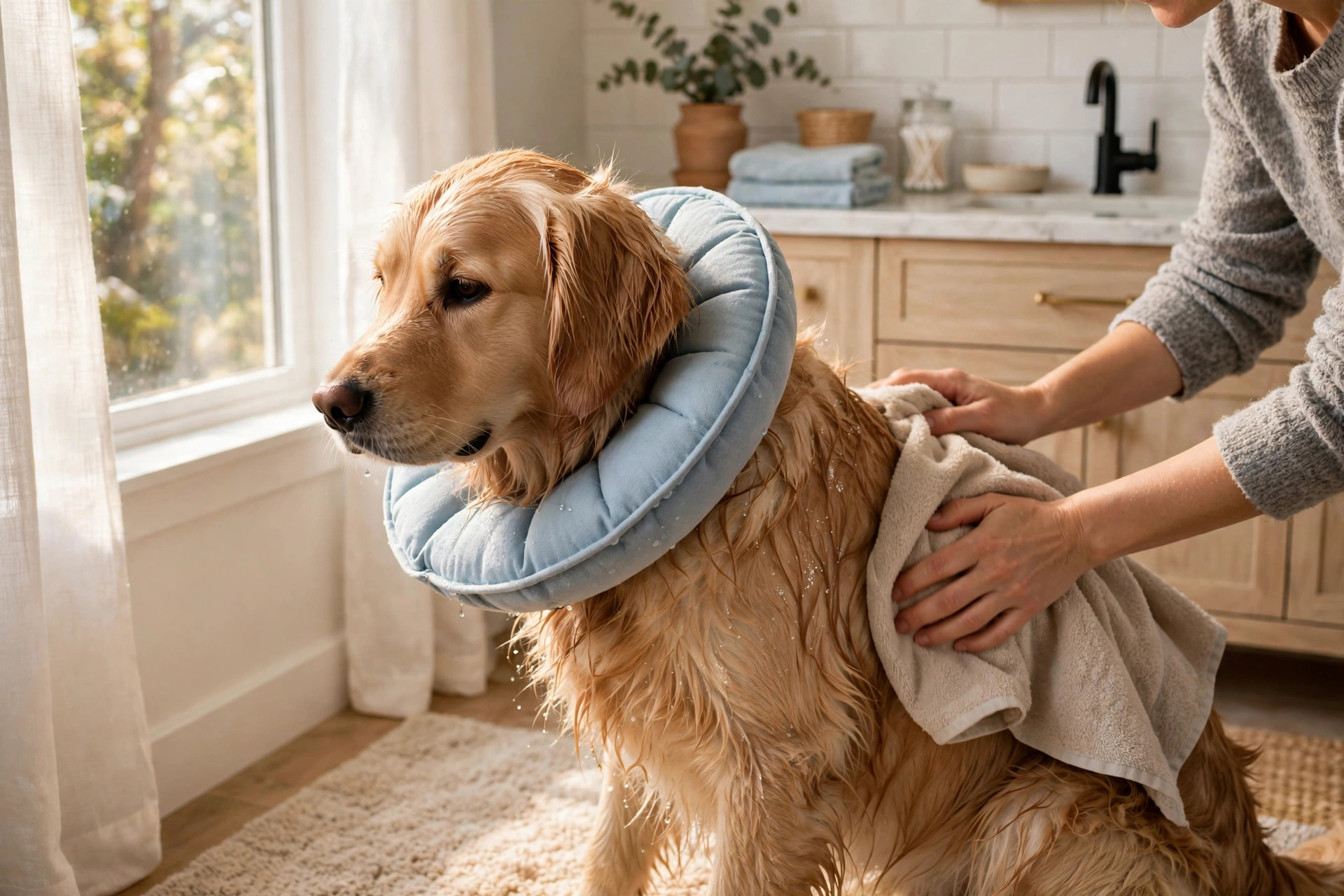
Home care supports veterinary treatment — it does not replace it. While you wait for your vet appointment (or alongside the prescribed plan), these steps help:
- Stop the licking first. Put on an e-collar or recovery suit. This single step matters more than any cream, because every lick re-infects and re-damages the skin.
- Trim the fur carefully. If you can do it safely, clip the matted fur around the spot with pet clippers — never scissors close to irritated skin, where one flinch can cause a cut. When in doubt, let your vet do the clipping.
- Keep it clean and dry. Gently rinse with sterile saline or clean lukewarm water, pat dry with clean gauze — do not scrub. Moisture is the enemy, so keep the area dry between cleanings.
- Cool compress. A clean, cool, damp cloth held on the spot for 5–10 minutes, a couple of times a day, can ease itching and inflammation.
- Watch and record. Note the size, smell, and discharge. If it spreads, oozes more, or your dog develops fever, lethargy, or appetite loss, call your vet sooner.
What NOT to Put on a Hot Spot
Well-meaning home remedies can backfire on broken skin. Avoid these unless your veterinarian specifically recommends them:
- Human creams and ointments (hydrocortisone, antibiotic ointments) — formulated for human skin pH, and most are unsafe if your dog licks them off.
- Zinc oxide products (diaper-rash creams) — zinc is toxic to dogs if ingested, and dogs will lick anything you apply.
- Alcohol, hydrogen peroxide, or witch hazel — they sting raw tissue, delay healing, and can worsen inflammation.
- Essential oils — many are toxic to dogs, and applying them to an open, inflamed lesion is never safe.
- Bandages or wraps that seal the area — hot spots need air; trapping moisture under a wrap makes them worse.
When in doubt, use only products made for dogs and cleared by your veterinarian.
How to Prevent Hot Spots on Dogs
Preventing hot spots means removing the conditions that start them:
- Year-round flea prevention. One flea bite can trigger a hot spot in an allergic dog — do not stop prevention in cooler months.
- Dry the coat thoroughly after every swim, bath, or rainy walk, and remove damp collars until both collar and fur are dry.
- Groom regularly. Brush out your dog’s coat to prevent mats, remove debris, and improve airflow to the skin.
- Manage allergies proactively. If your dog itches every fall or spring, work with your vet on a seasonal plan before the scratching starts.
- Treat ear infections early so head-shaking never escalates to head-area hot spots.
- Beat boredom. Daily exercise, training, and enrichment toys cut the anxious licking that starts many hot spots.
- Check the skin weekly. Part the fur and look — catching a small irritated patch early means a vet visit instead of a crisis.
When to Call the Vet
Call your veterinarian right away if you notice any of the following:
- The hot spot is spreading rapidly or your dog has multiple spots
- Thick pus, heavy crusting, or a strong foul odor
- Swelling of the face or the surrounding area
- Fever, lethargy, or loss of appetite
- Your dog is in obvious pain or will not let you near the area
- No improvement after a few days of treatment, or it keeps coming back in the same spot
Recurring hot spots in the same location deserve a deeper workup — chronic allergies, an unaddressed ear infection, or joint pain underneath are the usual suspects.
Frequently Asked Questions
Can hot spots on dogs heal on their own?
Rarely — and waiting usually makes them worse. Because the dog keeps licking and scratching, the lesion keeps growing and the infection deepens. Veterinary treatment breaks the cycle, and most hot spots then resolve within 3–7 days.
How long does it take for a hot spot on a dog to heal?
Once your veterinarian starts treatment, most hot spots show clear improvement within a few days and resolve in about a week. Severe or deeply infected cases may need several weeks of medication and follow-up.
Are hot spots on dogs contagious to other pets or people?
No. Hot spots themselves are not contagious — they are a localized bacterial skin infection caused by self-trauma. However, the underlying trigger (like fleas or mites) can spread, so keep up parasite prevention for all your pets.
Why does my dog keep getting hot spots in the same spot?
Recurrence in one location usually means the underlying cause was never fixed: an untreated allergy, a chronic ear infection nearby, or pain (such as arthritis) under the skin that drives obsessive licking. Ask your vet to investigate the trigger, not just the sore.
Should I shave the fur around my dog’s hot spot?
Clipping the fur helps the area dry and lets medication reach the skin — but do it with pet clippers, carefully, or let your vet do it. Scissors near inflamed, painful skin are risky because a sudden flinch can cause a cut.
Can I use coconut oil on my dog’s hot spot?
It is not recommended as a treatment. Oils trap moisture against the skin — exactly what a hot spot does not need — and your dog will lick it straight off, restarting the trauma cycle. Use the antiseptic plan your vet prescribes instead.
Final Thoughts
So, what should you do about hot spots on dogs? Act fast, see your vet, and break the itch-scratch cycle: clip and clean the area, treat the infection and the itch, block the licking with a cone, and track down the underlying trigger — allergies, moisture, parasites, or pain. Most hot spots clear within days of proper treatment.
The best hot spot is the one that never forms. Keep up flea prevention, dry that coat after every swim, groom out the mats, and manage allergies before the scratching starts — and you will rarely have to deal with these painful sores again.
By Dr. Ayaz Ali, Veterinarian
Dr. Ayaz Ali is a practicing veterinarian with years of experience in small-animal care. He writes evidence-based pet health guides for Pets Addicters.