
As a dog owner, you have probably been there: you are trimming Brussels sprouts for the Christmas dinner, and your dog is watching every move with hopeful eyes. It is only natural to wonder: can dogs eat Brussels sprouts, or should this little green vegetable stay on the human side of the table?
The good news is yes, dogs can eat Brussels sprouts — but only plain, cooked, and in very small amounts. These mini cabbages are packed with fiber, vitamins, and antioxidants, yet they carry one notorious side effect: gas. Served the wrong way, they can leave your pup bloated and uncomfortable.
In this complete guide, we will walk you through the benefits, the risks, safe serving sizes by dog size, how to prepare them, the Christmas-dinner dangers to avoid, and answers to the most common questions dog owners ask.
Table of Contents
- Are Brussels Sprouts Safe for Dogs?
- Nutritional Benefits of Brussels Sprouts for Dogs
- Risks of Feeding Brussels Sprouts to Dogs
- Brussels Sprouts at Christmas: What to Watch For
- How Many Brussels Sprouts Can Dogs Eat?
- How to Prepare Brussels Sprouts for Dogs
- What If My Dog Eats Too Many Brussels Sprouts?
- Can Puppies Eat Brussels Sprouts?
- Healthy Alternatives to Brussels Sprouts
- Frequently Asked Questions
Are Brussels Sprouts Safe for Dogs?
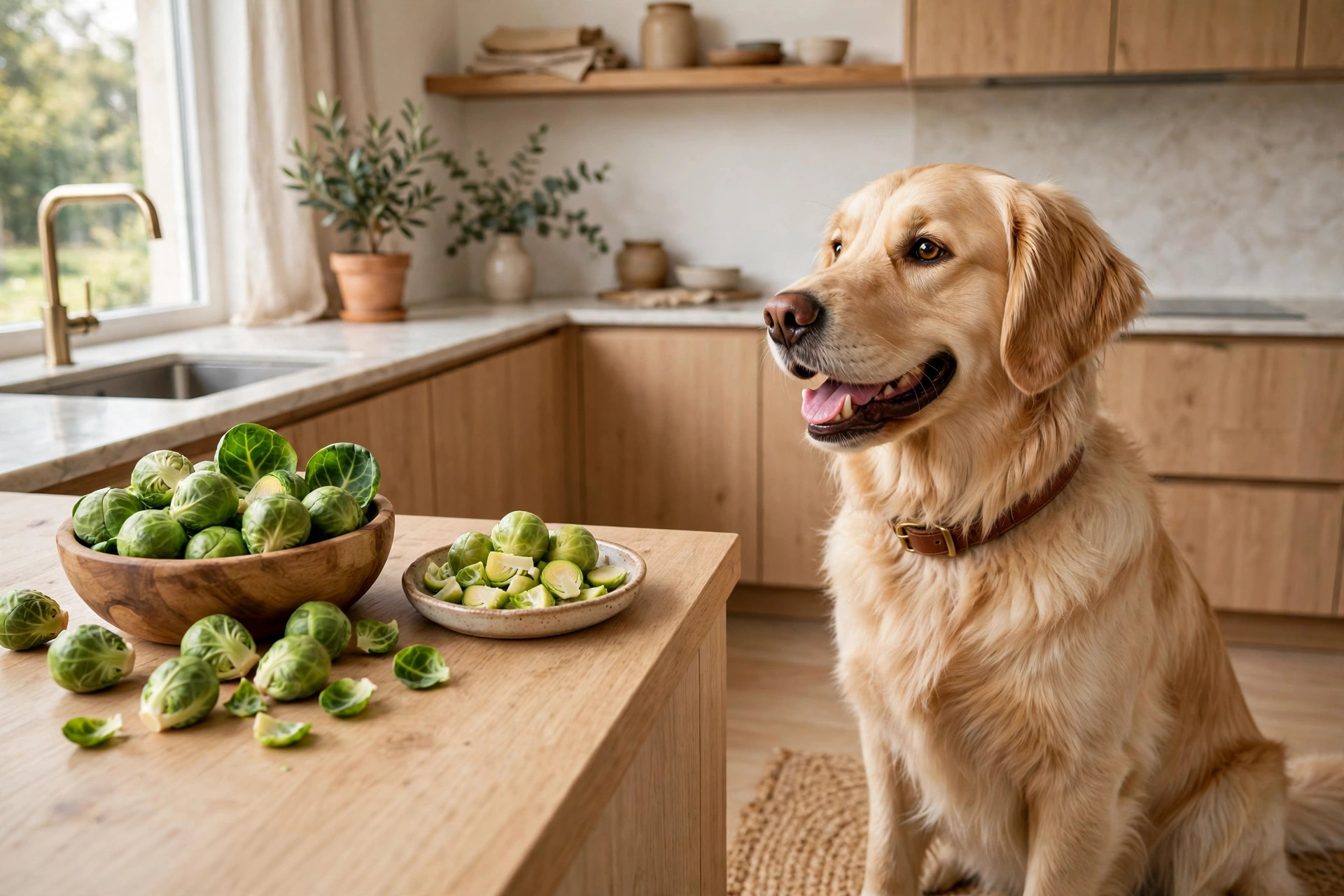
Yes, plain Brussels sprouts are generally safe for healthy dogs when served correctly. Veterinary sources including PetMD confirm that dogs can eat Brussels sprouts in moderation, as long as they are cooked plain and portioned carefully.
Brussels sprouts belong to the cruciferous vegetable family, alongside broccoli, cauliflower, and cabbage. Like their cousins, they are rich in nutrients — but they share the family trait too: they are high in fiber and complex plant sugars that ferment in the gut, which is why Brussels sprouts have a well-earned reputation for causing gas in dogs.
As with any treat, the 10% rule applies: treats — including vegetables like Brussels sprouts — should make up no more than 10% of your dog’s daily calories, with the rest coming from a complete, balanced dog food.
Before offering Brussels sprouts, make sure you serve only:
- Fresh, plain Brussels sprouts — cooked, never raw and whole
- Cut into small, bite-sized pieces appropriate for your dog’s size
- With the tough stem trimmed away
- With no salt, butter, oil, cheese sauce, or seasoning
- Never cooked with garlic or onion, which are toxic to dogs
Nutritional Benefits of Brussels Sprouts for Dogs
Brussels sprouts may be small, but they pack a surprising nutritional punch for dogs when fed responsibly.
1. Vitamin K for Bones and Blood Clotting
Brussels sprouts are one of the richest vegetable sources of vitamin K, which plays a role in blood clotting and bone metabolism — so even a few small pieces give your dog a meaningful boost.
2. Vitamin C and Antioxidants
Brussels sprouts provide vitamin C for immune health, plus sulforaphane and other antioxidant compounds studied for their anti-inflammatory properties.
3. Fiber for Healthy Digestion
Brussels sprouts are rich in dietary fiber, which supports regular bowel movements and feeds the beneficial bacteria in your dog’s gut. In small amounts, that fiber helps keep digestion moving smoothly.
4. Low in Calories, Great for Weight Management
A cup of cooked Brussels sprouts contains only about 56 calories, yet the sprouts are bulky and satisfying. For dogs that need to lose weight, swapping a few high-calorie treats for plain sprout pieces is a smart, vet-friendly move — the fiber helps your dog feel full while adding almost no fat to the day. They also supply folate for healthy cell function, manganese for bone health and metabolism, and potassium for healthy muscles and nerves.
Also Read: Can Dogs Eat Broccoli? Benefits, Risks & Safe Feeding Guide (2026)
Risks of Feeding Brussels Sprouts to Dogs
Although Brussels sprouts are safe for many dogs, feeding them the wrong way — or too much of them — can cause real problems.
1. Gas, Bloating, and Stomach Upset
This is the headline risk. Brussels sprouts contain raffinose, a complex plant sugar that dogs (and people) lack the enzyme to fully digest. When raffinose reaches the large intestine undigested, gut bacteria ferment it and produce gas — lots of gas. In dogs, the effect is even stronger than in humans because their digestive tracts are shorter, giving less time for breakdown before the raffinose hits the colon. Too much at once can cause noticeable flatulence, bloating, stomach cramps, and loose stools. Introduce Brussels sprouts slowly, starting with a piece or two.
2. Choking Hazard From Whole Sprouts
Never feed your dog a whole Brussels sprout. Their round, firm shape is large enough to lodge in a dog’s throat, especially in small breeds, and can cause an intestinal obstruction if swallowed whole. Always cut sprouts into small, bite-sized pieces — and cut them even smaller for small dogs and enthusiastic gulpers. The thick stalk at the base of each sprout is not toxic, but it is tough and fibrous, so trim it away before cooking.
3. Seasonings and Human Recipes Are Dangerous
Plain Brussels sprouts are safe, but the way humans usually cook them is not. Common sprout-dish ingredients that are harmful or toxic to dogs include:
- Garlic and onion — toxic to dogs, even in small amounts; they damage red blood cells
- Bacon and butter — too rich and can trigger stomach upset or pancreatitis
- Oil and cheese sauce — high fat, hard on a dog’s digestion
- Excess salt — dangerous for dogs with heart or kidney conditions
- Spices, glazes, and flavorings — many are unsafe or upsetting for dogs
Set aside a separate plain portion for your dog before you season the family’s batch.
4. Rare Allergic Reactions
Though uncommon, some dogs can be sensitive to Brussels sprouts. After the first tiny taste, watch for itching, swelling, or vomiting — and stop feeding them if any appear.
Also Read: Can Dogs Eat Cauliflower? Benefits, Risks & Safe Feeding Guide (2026)
Brussels Sprouts at Christmas: What to Watch For

Brussels sprouts are a fixture at the Christmas dinner table, and that is exactly when most dogs get their first taste. The sprout itself is rarely the problem — the holiday recipe is. Christmas sprouts are usually roasted with bacon, tossed in butter, or cooked with garlic and shallots, and each of those additions turns a safe vegetable into a risky one: bacon brings fat and salt that can trigger pancreatitis, garlic and shallots are toxic to dogs, and butter adds fat your dog does not need. Watch out for chestnuts in the dish too — sweet chestnuts are fine in small amounts, but horse chestnuts are toxic.
The fix is easy: when you trim and cook the sprouts, pull out a few before the butter, bacon, or garlic goes in. Cook them plain, let them cool, and they are ready for the dog. Tell your guests the same rule as for any holiday food: no table scraps without asking first.
Also Read: Can Dogs Eat Cranberries? Safe Feeding Guide (2026)
How Many Brussels Sprouts Can Dogs Eat?
Brussels sprouts should only ever be an occasional treat — not a daily snack. Because of the gas and bloating risk, portions are smaller than for many other vegetables:
| Dog Size | Weight | Safe Serving |
|---|---|---|
| Extra-small dogs | 2–20 lbs | 1 small piece, halved |
| Small dogs | 21–30 lbs | 1–2 small pieces |
| Medium dogs | 31–50 lbs | 2–3 small pieces |
| Large dogs | 51–90 lbs | 3–4 small pieces |
| Extra-large dogs | Over 90 lbs | 4–5 small pieces |
When in doubt, start with a single small piece and see how your dog reacts over the next 24 hours before offering more. Remember the 10% rule: all treats combined should stay under 10% of your dog’s daily calories.
How to Prepare Brussels Sprouts for Dogs
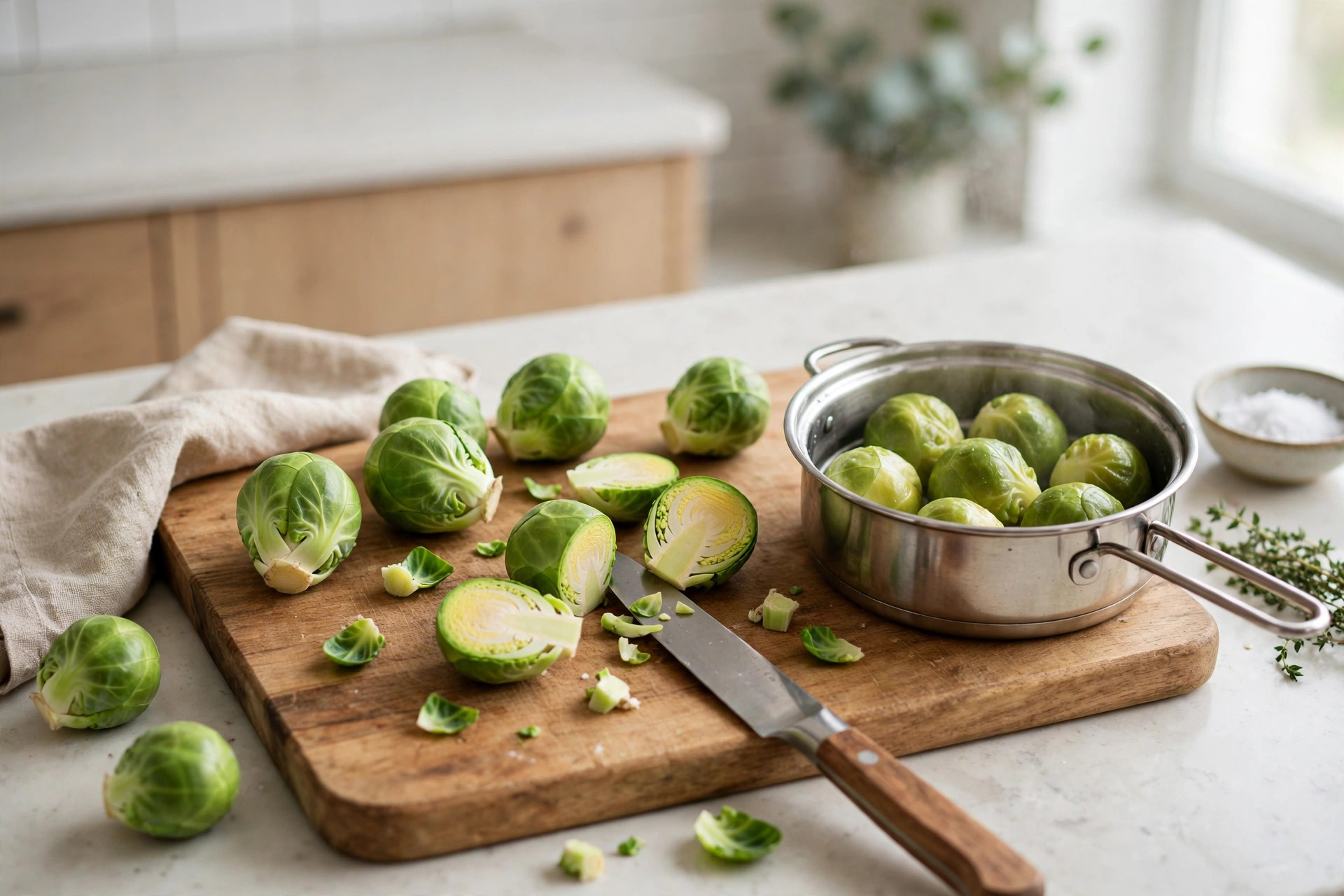
Safe preparation takes just a few minutes:
- Choose fresh, firm sprouts with tight green leaves — cut away any yellowed or moldy spots.
- Rinse them thoroughly under cold water.
- Trim off most of the stem and peel away any loose outer leaves.
- Cut each sprout into small, bite-sized pieces for your dog’s size — halve them for small dogs, quarter them for extra-small dogs.
- Steam or boil the pieces plain until just tender (5–7 minutes), with no salt, oil, butter, or seasoning.
- Let them cool completely before serving.
- Offer a small amount as an occasional treat, or mix a few pieces into their regular meal.
Can dogs eat raw Brussels sprouts? Technically yes, but cooked is the better choice. Raw sprouts are bitter, tough to chew, and harder to digest, which makes gas and stomach discomfort more likely — and a whole raw sprout is a choking hazard.
What If My Dog Eats Too Many Brussels Sprouts?
If your dog raids the kitchen and eats a large amount of plain Brussels sprouts, don’t panic — but do monitor them closely. Too many sprouts most often cause temporary digestive upset: gas, bloating, loose stool, or vomiting. Contact your veterinarian right away if you notice severe or ongoing vomiting or diarrhea, abdominal swelling or pain, lethargy, loss of appetite lasting more than 24 hours, or if your dog ate a seasoned dish containing garlic, onion, bacon, or heavy sauces.
Can Puppies Eat Brussels Sprouts?
It is best to skip Brussels sprouts for puppies. Their sensitive, still-developing digestive systems handle high fiber poorly, and the gas risk is higher for young tummies. Once your dog is an adult, introduce a single tiny, soft, cooked piece and watch for stomach upset over the next 24 hours.
Healthy Alternatives to Brussels Sprouts
If your dog doesn’t care for Brussels sprouts — or you’d like to rotate their treats — these vegetables and fruits are also safe in moderation:
- Green beans
- Carrots
- Cauliflower — same family, same gas rules: tiny amounts only
- Broccoli — same family, same gas rules: tiny amounts only
- Cucumber
- Sweet potatoes
- Blueberries
Always introduce any new food gradually and in small portions.
Frequently Asked Questions
Can dogs eat Brussels sprouts every day?
No. Their raffinose content makes them an occasional treat only — a few times a week at most, in the small portions listed above.
Can dogs eat raw Brussels sprouts?
Yes, in tiny amounts, but cooked is better. Raw sprouts are tougher to digest and a whole raw sprout is a choking hazard. Lightly steamed sprouts are the gentler option.
Can dogs eat Brussels sprouts with bacon?
No. Bacon adds fat and salt that can upset your dog’s stomach and trigger pancreatitis. Set aside plain sprouts for your dog before adding bacon to the family dish.
Can dogs eat frozen Brussels sprouts?
Yes, if they are plain with no added seasoning. Thaw them and steam them lightly, then chop the pieces small for smaller dogs.
Final Thoughts
So, can dogs eat Brussels sprouts? Absolutely — when they are plain, cooked, cut small, and served in tiny portions. A few tender pieces make a low-calorie, fiber-rich, vitamin-packed treat. Just remember the golden rules: plain only, cut small, never seasoned with garlic, onion, or bacon, and keep the portions tiny to avoid the dreaded cruciferous gas.
As with any new food, introduce Brussels sprouts slowly and watch how your dog responds. And when in doubt, your veterinarian is always the best source of advice for your individual pup’s diet.
By Dr. Ayaz Ali