
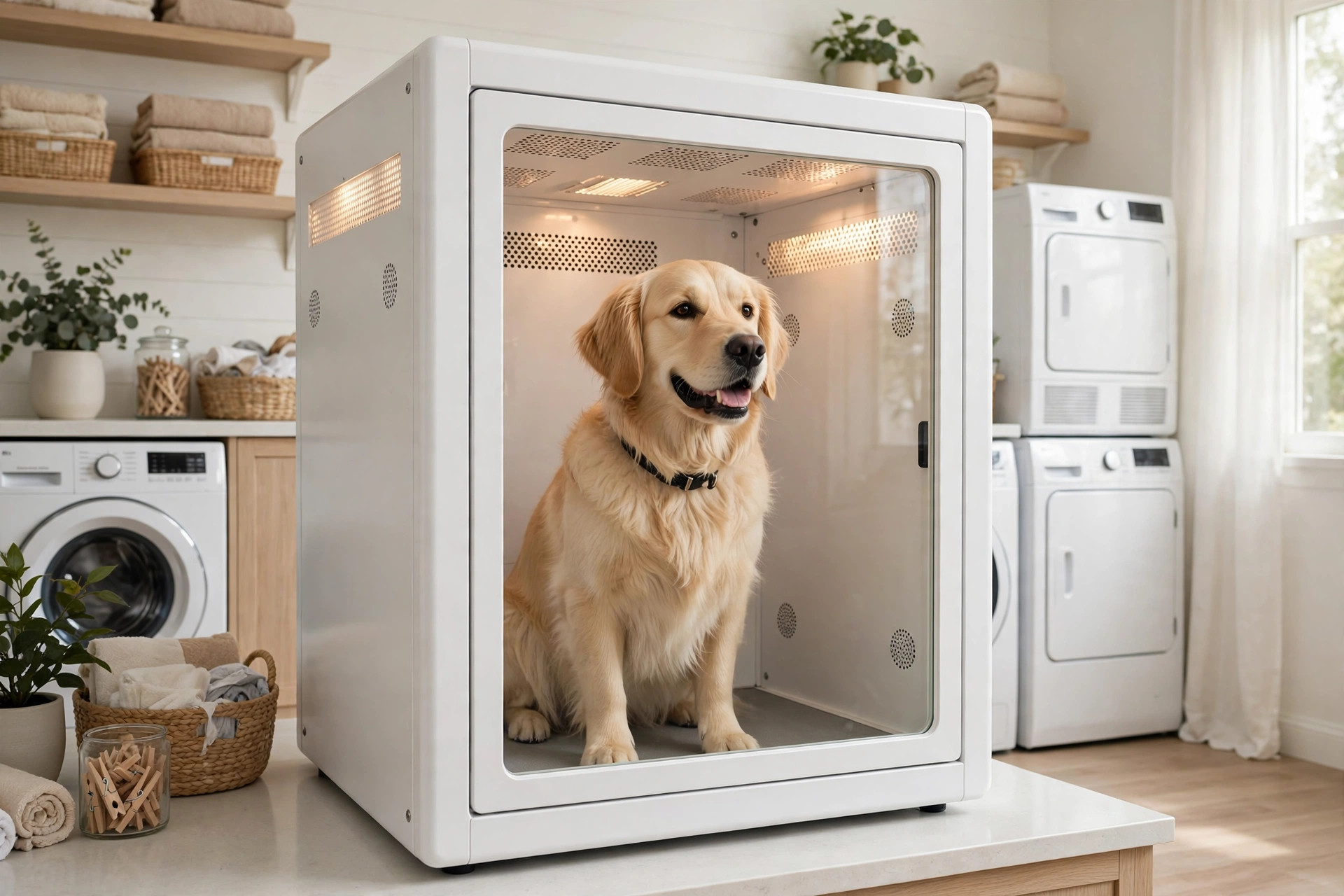
If your dog trembles at the sound of a hair dryer, or your cat bolts the moment the bath towel appears, you have probably seen the ads: a calm pet sitting inside a sleek little cabinet while warm air does all the work. So it is fair to ask — do pet dryer boxes actually work, or are they just an expensive box with a fan?
The short answer is yes, a pet dryer box can dry a small dog or cat more calmly than a handheld dryer — but it is slower than the ads suggest, it does not fully replace hand-drying, and used wrongly it can be dangerous. In this 2026 guide, we explain how dryer boxes work, what a working groomer found after six months of daily use, the safety rules that matter, and which pets should skip them.
Table of Contents
- What Is a Pet Dryer Box?
- Do Pet Dryer Boxes Work?
- Benefits of a Pet Dryer Box
- The Safety Rules That Matter Most
- Dryer Box vs Towel vs Handheld Dryer
- How to Choose the Right Pet Dryer Box
- How to Use a Pet Dryer Box Safely
- Who Should Skip a Pet Dryer Box?
- Frequently Asked Questions
What Is a Pet Dryer Box?
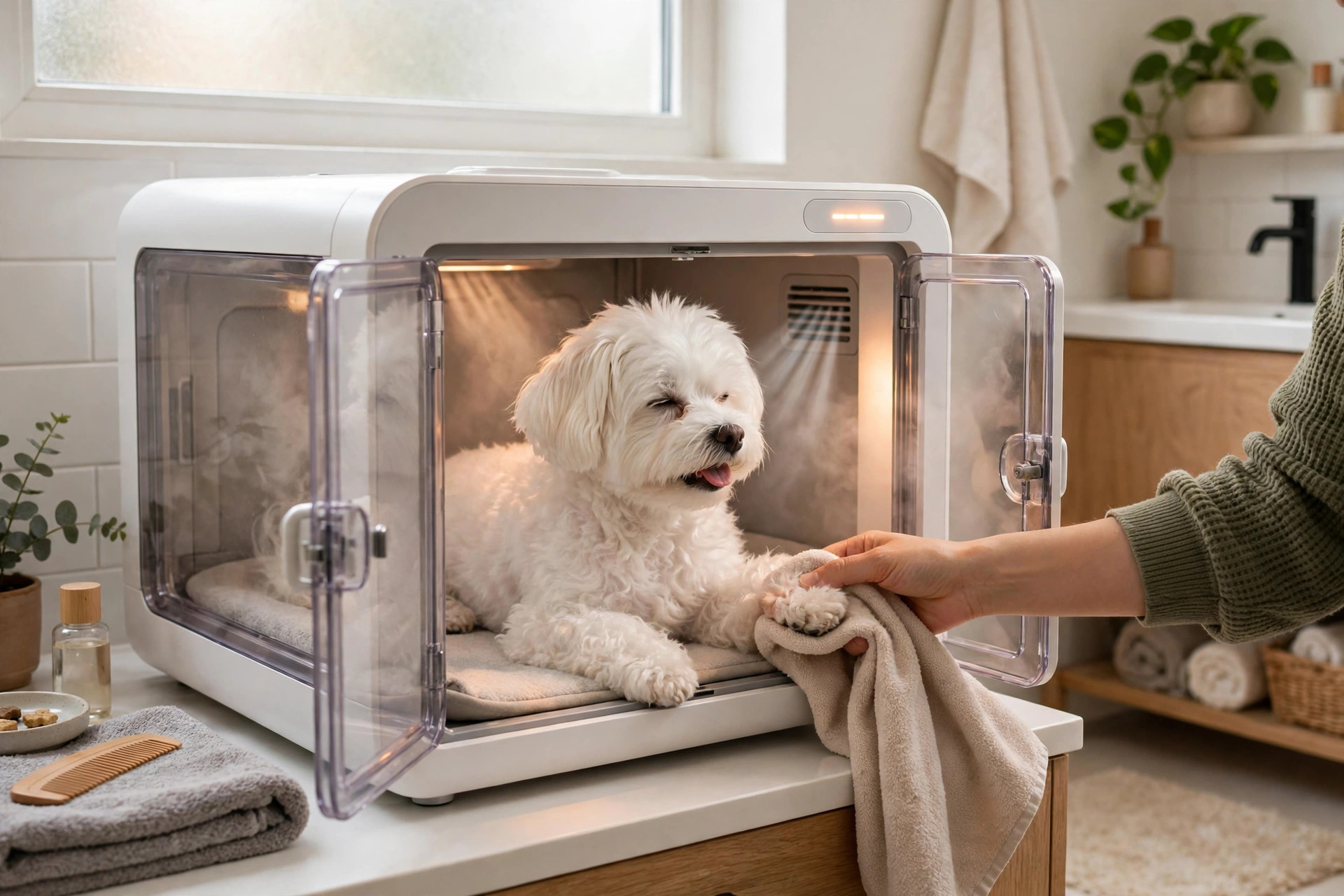
A pet dryer box — also called a pet drying cabinet or drying cabin — is an enclosed unit your pet sits inside after a bath. Instead of a person aiming a dryer at the coat, the box circulates warm air evenly around the animal, usually from several vents, while built-in sensors hold the temperature steady. Most quality models let you set the temperature, airflow, and a timer, and many add ionizers, humidity sensors, and app control.
The idea is simple: a contained, quieter space should feel calmer than a loud handheld dryer waved inches from a frightened animal. The category has grown fast — search interest in pet dryer boxes rose about 49% year over year into 2026 — and prices now run roughly $150 to $500 depending on size and features.
Inside, three things are controlled at once: air temperature, airflow, and humidity. Good boxes cap the temperature at around 100–105°F (38–40°C), warm enough to evaporate water but well below the 140–180°F (60–82°C) a human hair dryer can reach on high. Separate intake and exhaust ports pull moist air out as it is released, so the coat dries evenly instead of trapping damp air against the belly and legs.
Do Pet Dryer Boxes Work?
Yes — with one important correction to the marketing. The listings promise hands-free, fully dry, stress-free drying. Real-world use tells a more measured story.
A practicing cat groomer who added an enclosed drying cabinet to her salon in October 2025 and used it daily for months found that most cats tolerate the box reasonably well — then still need a few minutes of hand-finishing afterward. Paws and bellies, in particular, very often come out damp no matter which box is used. Her verdict: it is a genuinely useful tool for specific situations — anxious cats, aggressive cats, seniors, kittens, or when drying one animal while bathing the next — but not a universal replacement for hands-on drying.
Drying time is the other surprise. A full dry in a box typically takes 45 minutes to 1.5 hours, against roughly 15–20 minutes with a high-velocity handheld dryer on the same animal. That is the trade-off: the box is quieter and calmer, but much slower. If you bathe your pet weekly and value your time, that matters. If your pet panics at dryer noise, the extra time may be worth it.
Also Read: Do Pet GPS Trackers Work? Buying Guide (2026)
Benefits of a Pet Dryer Box
When the box fits the pet and the situation, the advantages are real. Most boxes run at roughly 40–55 decibels — closer to a quiet conversation than the roar of a handheld dryer — which alone can turn bath day from a wrestling match into a manageable routine for noise-sensitive cats and dogs.
Once the pet is settled and the timer is set, your hands are free to clean up or prep brushes — but “hands-free” does not mean “walk away.” You should stay within earshot and check on your pet regularly. Air also circulates from multiple vents instead of blasting one spot, lowering the risk of the hot spots and burns a concentrated handheld dryer can cause.
Drying thoroughly matters: a damp coat mats, tangles, and can harbor bacteria that lead to skin infections. The American Kennel Club stresses drying dogs completely after baths, swimming, or wet walks — and a box that finishes the job while you do something else makes that easier to actually do.
The Safety Rules That Matter Most
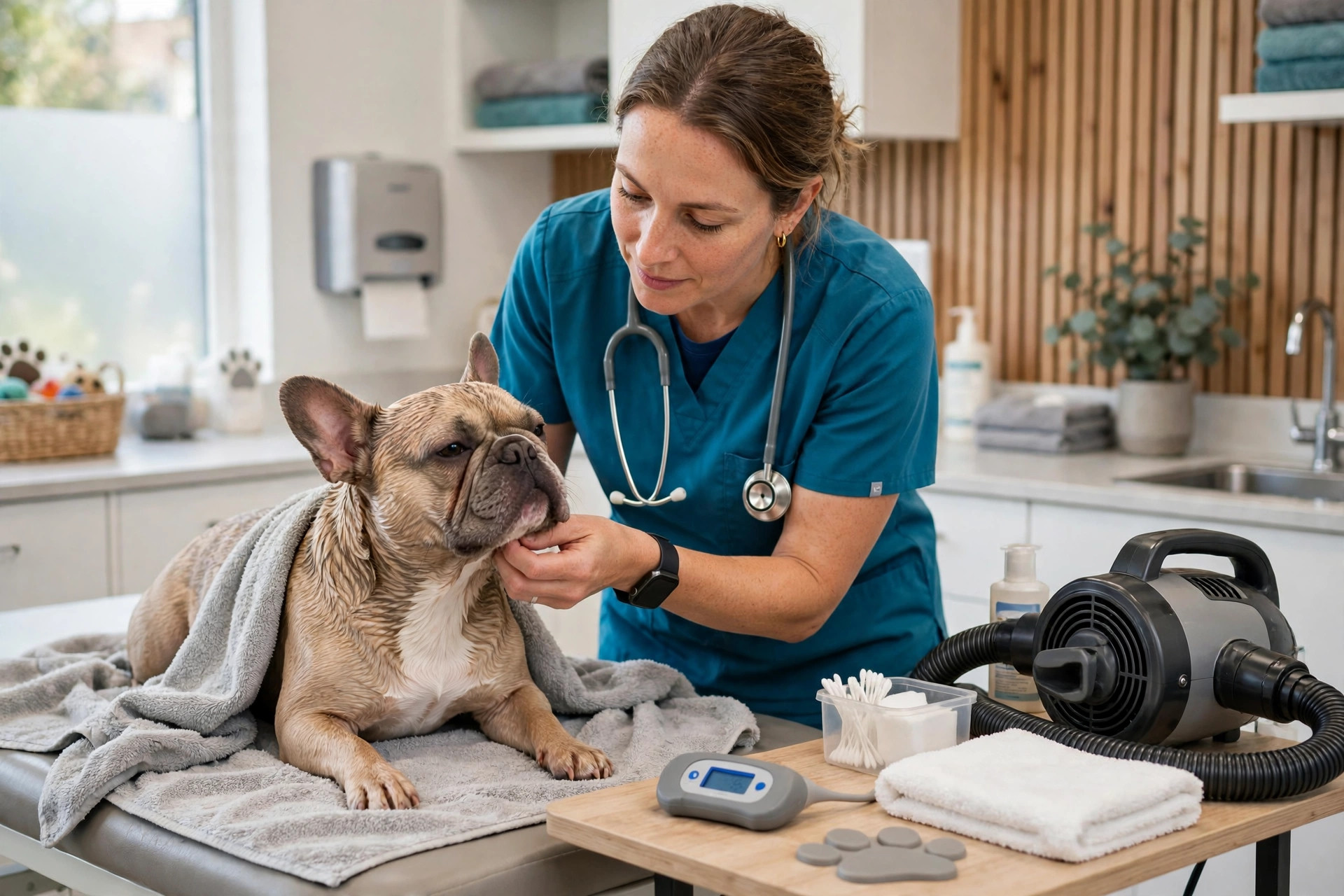
A dryer box is a heated, enclosed space, and that combination demands respect. The American Animal Hospital Association (AAHA) warns that cage dryers should never be used as warming devices: enclosed, unmonitored heat can cause burns, overheating, and heatstroke, especially in animals that are already ill or compromised. Follow these rules every time:
- Never leave your pet unattended. Stay in the room, check every few minutes, and watch for panting, restlessness, drooling, or distress. If your pet becomes distressed, take it out — do not wait for the machine to signal a problem.
- Cap the temperature. Use the lowest setting that gets the job done, generally no higher than 104°F (40°C). The highest available setting is a maximum, not a default.
- One pet per session. AKC grooming guidance calls for one pet per kennel with enough room to sit comfortably, stand, and turn around. Never crowd two animals into a box sized for one.
- Check the fit. Your pet must be able to stand up, lie down, and turn around. Too small and the box becomes a source of anxiety; too large and the airflow dilutes and drying drags on.
- Use it only on healthy pets. Elderly pets, pets recovering from illness, and pets with respiratory problems need an individual assessment — ask your veterinarian first.
- Watch flat-faced breeds closely. Bulldogs, French Bulldogs, Pugs, and Persian cats already struggle to regulate heat and breathe efficiently. Use the lowest temperature and shortest sessions — or skip the box entirely for them.
- Never use a box as a warmer. A dryer box is for drying a wet, healthy pet after a bath, not for heating a cold, sick, or hypothermic animal.
Also Read: Winter Paw Care for Dogs: Salt & Ice Guide (2026)
Dryer Box vs Towel vs Handheld Dryer
Each method has a place. The practical routine most owners settle on is a combination: towel-dry first (press, do not rub, to avoid tangles), then finish in the box or with a handheld dryer. Towel-drying first also cuts box time noticeably.
| Method | Drying time | Stress level | Best for |
|---|---|---|---|
| Towel drying | Slow, partial | Low | Short coats; first step before any dryer |
| Handheld dryer | 15–20 minutes | High (noise, handling) | Thick coats; fast full dries |
| Pet dryer box | 45–90 minutes | Low to medium | Cats and small dogs that fear handheld dryers |
| High-velocity dryer | 15–20 minutes | High | Heavy-coated breeds; professional use |
How to Choose the Right Pet Dryer Box
Judge the machine on these points — not the marketing:
1. Size and capacity
Measure your pet standing and lying down, then compare against the interior dimensions — not the exterior. Most consumer boxes suit cats and small-to-medium dogs. Large or giant breeds usually do not fit comfortably; for them, a high-velocity dryer is the better-suited tool.
2. Temperature control and sensors
Look for multiple temperature sensors (not just one), a clear adjustable range up to about 104°F (40°C), and automatic overheat shutoff. A single-sensor budget model can develop dangerous hot spots.
3. Noise level
Aim for 40–55 decibels. Be skeptical of decibel claims alone — a poorly designed motor can still whine at an irritating pitch. If possible, check video reviews where the box is running.
4. Ventilation and humidity control
Proper boxes have separate intake and exhaust ports and, on better models, humidity sensors that vent moist air automatically. Random holes or a single vent leave damp pockets against the belly and legs, which can irritate skin over time.
5. Ease of cleaning and brand reliability
Fur, dander, and moisture collect inside — a removable floor tray and wipe-clean surfaces make the difference between a box you use weekly and one that gathers dust. Budget models start around $150–$180; smart, app-controlled models run $300–$500. Pick an established brand with real customer support: a drying box is a heated appliance, and you want a company that will still answer the phone if a sensor fails.
How to Use a Pet Dryer Box Safely
Follow this routine for the safest, calmest sessions:
- Towel-dry first. Press a microfiber towel into the coat to absorb as much water as possible. This shortens box time by a lot.
- Introduce the box gradually. Let your pet sniff and explore it with the door open and the fan off, with treats inside, for a few days before the first real session.
- Set a low temperature and a timer. Start at the lowest warm setting and a 15–20 minute timer. You can extend it — you cannot undo overheating.
- Stay in the room. Check every few minutes. Panting or pawing at the door means the session is over.
- Hand-finish paws and belly. When the timer ends, take your pet out and towel-dry the paws, belly, and ears — the spots boxes miss most.
- Brush while the coat is nearly dry. A quick brush-through now prevents the mats that form when a damp coat is left to finish drying on its own.
- Clean the box after every use. Wipe it out and empty the tray so moisture and fur do not build up between sessions.
Who Should Skip a Pet Dryer Box?
A dryer box is not for every pet. Skip it — or talk to your vet first — if your pet is sick, injured, or recovering from surgery or illness; elderly or very young; flat-faced (Bulldogs, Pugs, French Bulldogs, and Persian cats overheat faster and cannot cool themselves as efficiently); anxious in enclosed spaces (a pet that panics in a carrier will likely panic in a box, and a traumatic session makes every future bath harder); or too large for the box (if your dog cannot stand and turn around inside, the box is the wrong tool).
For these pets, the classic routine — a good towel-dry followed by a low-heat handheld dryer held at least a foot away and kept moving — remains the safest option.
One more warning: skip DIY dryer boxes. The common build — a plastic storage bin with holes drilled in it and a household hair dryer attached — misses the three things that make a real box safe: a temperature cap around 100–105°F, even airflow with proper exhaust, and humidity control. A human hair dryer can hit 140–180°F and burn a dog’s skin in minutes, and random holes leave dead spots where moisture stays trapped against the belly and legs.
Also Read: Fall Pet Wellness Checkup Guide (2026)
Frequently Asked Questions
Do pet dryer boxes really work?
Yes, for cats and small dogs — especially ones that fear handheld dryers. They dry more slowly (45–90 minutes) and usually leave paws and bellies damp, so expect to hand-finish. They are a calm alternative, not a magic hands-free solution.
Are pet dryer boxes safe?
Yes, when designed properly and used as directed — with temperature control, good ventilation, and a pet that is healthy and monitored throughout. They are unsafe when used on sick or flat-faced pets, left unattended, or run at high heat. Veterinary guidance warns that enclosed, unmonitored heat can cause burns and heatstroke.
How long does a pet dryer box take?
Typically 45 minutes to 1.5 hours for a full dry, depending on coat thickness and how well you towel-dried first. A high-velocity handheld dryer does the same job in about 15–20 minutes but is much louder.
Can large dogs use a pet dryer box?
Usually not. Most consumer boxes are sized for cats and small-to-medium dogs. A large dog that cannot stand up and turn around inside should not be put in one — a high-velocity dryer is the better tool for big breeds.
Do cats like pet dryer boxes?
Many cats tolerate them better than handheld dryers because they are quieter and less hands-on, but “tolerate” is the right word — most still need hand-finishing, and cats that dislike enclosed spaces may panic. Introduce the box gradually with treats and the fan off first.
What temperature should a pet dryer box be set to?
Use the lowest setting that dries effectively, and never above 104°F (40°C). Quality boxes cap out around 100–105°F. Start low, check your pet often, and remember the highest setting is a maximum, not a recommendation.
Final Thoughts
So, do pet dryer boxes work? Yes — for the right pet and the right reason. If your cat or small dog dreads the hair dryer, a well-made box with real temperature control and good ventilation can turn bath day into a calmer routine. But go in with honest expectations: it is slower than a handheld dryer, it will not get paws and bellies fully dry on its own, and it is not a tool for sick, elderly, flat-faced, or large pets.
Buy for safety features first — multiple temperature sensors, overheat shutoff, proper ventilation, and a size your pet can actually move in — and stay in the room every time it runs. Done that way, a pet dryer box earns its place in the grooming cupboard.
By Dr. Ayaz Ali