

If your dog has ever slipped a leash or your cat has vanished through an open window, you know the panic. It’s no wonder so many owners now ask: do pet GPS trackers work — and are they worth buying? The short answer is yes: true GPS trackers are remarkably effective at finding lost pets. But not every device sold as a “pet tracker” is a real GPS tracker, and the differences matter when your pet’s safety is on the line.
In this 2026 guide, we cover how pet GPS trackers work, whether they live up to the hype, the best pet GPS collars available today, what the subscriptions really cost, and the limitations nobody puts on the box.
Table of Contents
- How Do Pet GPS Trackers Work?
- Do Pet GPS Trackers Actually Work?
- The Best Pet GPS Trackers in 2026
- Do You Need a Subscription?
- GPS Tracker vs. Microchip vs. AirTag
- Limitations to Know Before You Buy
- Is a GPS Tracker Worth It for Your Pet?
- Frequently Asked Questions
How Do Pet GPS Trackers Work?
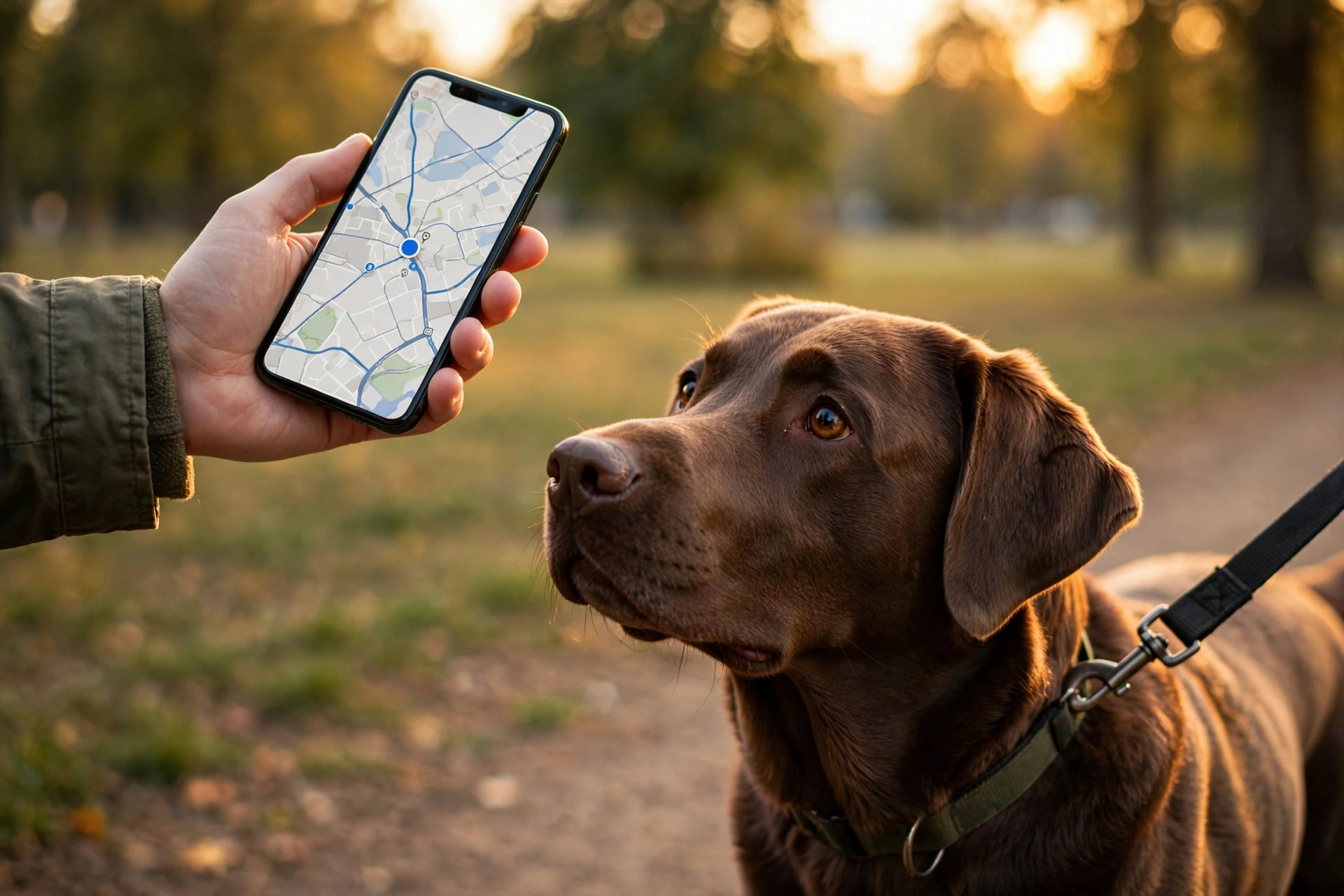
A true pet GPS tracker does two things. First, it listens to GPS satellites to pinpoint your pet — the same tech as your car’s navigation, accurate to roughly 5–10 meters (about 16 feet) under open sky. Second, it sends that location to your phone over a cellular data connection, so you can watch your pet’s position update live in an app.
That cellular link is why almost every GPS pet tracker needs a subscription: the plan pays for the data connection. Without it, the device is just a pendant on a collar. Most trackers also offer virtual fences (geofences) that alert you within about a minute of your pet leaving a safe zone, a live tracking mode refreshing every few seconds, and activity tracking — some models even flag changes in activity or sleep that can hint at health issues.
Do Pet GPS Trackers Actually Work?
For their core job — finding an escaped pet fast — yes. A geofence alert means you often know your dog has bolted within a minute, and live tracking lets you follow them in real time instead of driving around shouting their name. For escape-prone dogs, that early alert can mean the difference between a quick recovery and a multi-day search.
But they aren’t magic. Accuracy depends on a clear view of the sky: 5–10 meters in the open, but degraded to 20–50 meters (or lost signal) under dense tree cover, between tall buildings, or inside concrete structures. A tracker also can’t tell you which floor of a building your cat is hiding on.
The other honest limitation: a tracker can only find the collar it’s attached to. Collars come off, and if your dog slips theirs mid-escape, the tracker is lying in a field while your dog is elsewhere. That’s why a GPS tracker should always be paired with a microchip — never a replacement for one.
Also Read: Pet Emergency First Aid: Vet Guide (2026) — what to do in the critical first minutes when your pet escapes and comes home injured or overheated.
The Best Pet GPS Trackers in 2026
The 2026 market has narrowed to a few serious options. Tractive DOG 6 (~$50 + ~$5–10/month) is the pick of most independent reviewers, including Wirecutter and Consumer Reports: live updates every 2–3 seconds, battery up to 14 days, 175+ country coverage, plus activity and sleep tracking. Fi Series 3+ ($299–$349 + ~$19/month) is the premium smart collar with the longest battery life — weeks to 3 months between charges — though it’s US-centric.
Jiobit (~$130 + $9–15/month) is the smallest GPS tracker at just 17 grams — the go-to for cats and toy breeds — but US-only. Tractive CAT (~$50 + ~$5–10/month, up to 5 days battery) is the international alternative for cats. Want no subscription? Radio-frequency trackers like Aorkuler (~$250, no monthly fee) beam GPS coordinates to a handheld controller and work completely off-grid — but range is limited to about 3.5 miles with no smartphone app.
What NOT to buy: Whistle. Tractive acquired Whistle in July 2025 and shut the platform down on August 31, 2025 — every Whistle tracker stopped working overnight. Don’t buy leftover Whistle stock from resellers; it won’t function.
| Tracker | Best For | Device | Plan | Battery |
|---|---|---|---|---|
| Tractive DOG 6 | Most dog owners | ~$50 | ~$5–10/mo | Up to 14 days |
| Fi Series 3+ | Escape artists (premium) | $299–$349 | ~$19/mo | ~$19/mo |
| Jiobit | Cats & small dogs (US) | ~$130 | $9–15/mo | 1–2 weeks |
| Tractive CAT | Cats (worldwide) | ~$50 | ~$5–10/mo | Up to 5 days |
| Aorkuler | No-subscription rural use | ~$250 | None | Multi-day |
When comparing prices, always add device + one year of subscription — that total reverses a lot of “cheap tracker” conclusions.
Also Read: Best Fetch Toys for Dogs: Fetch Day Guide (2026) — a tired dog is a dog that’s less likely to bolt.
Do You Need a Subscription?
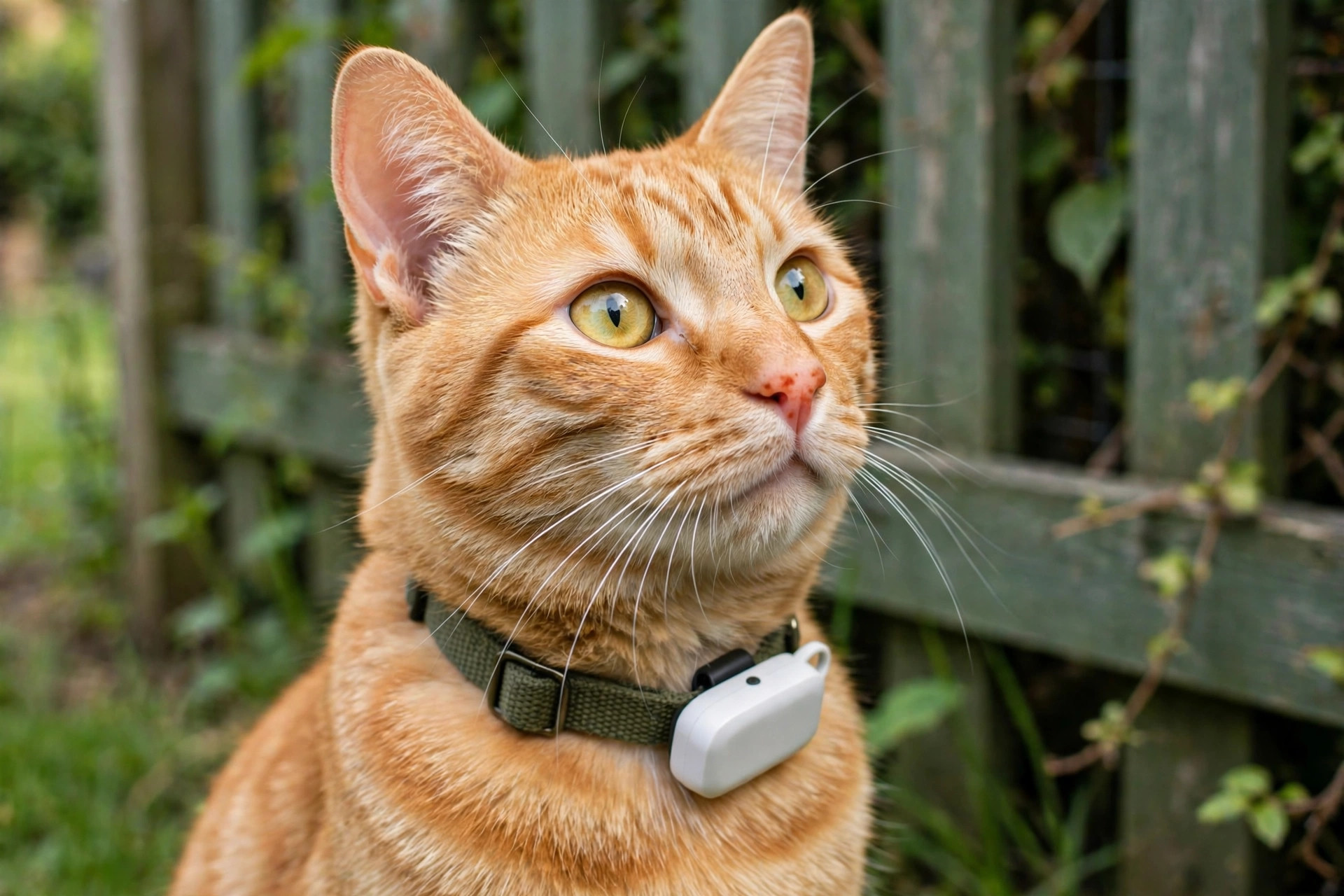
For any cellular GPS tracker — Tractive, Fi, Jiobit — yes, a subscription is mandatory, typically $5–19/month, with annual prepayments almost always cheaper than month-to-month. Genuine no-subscription alternatives exist but carry real trade-offs: radio-frequency trackers (Aorkuler) have limited range and need a separate handheld receiver; Bluetooth tags (Apple AirTag, Tile) have no fee and year-long batteries, but are NOT GPS trackers — an AirTag’s direct range is about 30 feet and it depends on nearby strangers’ phones to relay location, which is unreliable in rural areas and useless in a real emergency. Apple itself warns against using AirTags to track pets.
Bottom line: if you want live, unlimited-range tracking on your phone, you pay a subscription. Anything advertised as “GPS tracking with no subscription” is almost certainly a Bluetooth tag, not GPS.
GPS Tracker vs. Microchip vs. AirTag
These three solve different problems — and the safest setup uses them together:
| Feature | GPS Tracker | Microchip | AirTag / Bluetooth |
|---|---|---|---|
| Shows live location | Yes | No | Only near other phones |
| Escape alerts | Yes | No | No |
| Can come off | Yes (collar) | No (implanted) | Yes (collar) |
| Needs charging | Yes | No | ~Yearly battery |
| Helps a stranger return your pet | Only if attached | Yes (via registry) | Sometimes |
| Cost | Device + subscription | One-time, low | One-time, low |
A GPS tracker helps you find your pet. A microchip helps someone else return your pet — which is how most recoveries actually happen, since a lost animal is usually found by a person first. For more on how microchips work, see AKC Reunite’s guide to microchipping.
Limitations to Know Before You Buy
- No cell signal, no live tracking. Cellular trackers log coordinates locally and upload them once coverage returns, but in a true dead zone you’re blind until then. Radio trackers are the off-grid exception.
- Battery vs. update speed is a trade-off. Fast live updates drain batteries — Tractive in live mode needs charging every several days, while Fi sips power but only pings every few minutes until you switch on Lost Dog Mode. Know which behavior you’re buying before the day it matters.
- Size and weight matter. Veterinary guidance says a wearable tracker shouldn’t exceed about 5% of your pet’s body weight. Most modern units (25–40 g) are fine, but bulkier radio units can be too much for tiny pets.
- You’re renting the company’s servers. Whistle owners learned this in August 2025: when the platform shut down, every device became a paperweight overnight. Stick with established players.
- GPS needs the sky. In parking garages, dense forest valleys, or concrete buildings, expect degraded accuracy or lost signal until your pet moves back into the open.
Is a GPS Tracker Worth It for Your Pet?
A GPS tracker earns its subscription for: escape artists (fence-jumpers, door-dashers), newly adopted dogs still learning the home, off-leash hikers in unfamiliar terrain, indoor-outdoor cats in busy areas, and travel — holidays, moves, and boarding stays are when pets most often get lost.
It’s less essential for strictly indoor cats who never see an open door. But even then, one slipped leash or one open gate is all it takes — and a geofence alert buys you the first critical minutes.
Also Read: Adopt a Shelter Dog Month 2026: What to Know Before Adopting — rescue dogs are at higher escape risk in their first weeks home, which is exactly when a tracker earns its keep.
Frequently Asked Questions
Do pet GPS trackers work without a subscription?
Cellular GPS trackers (Tractive, Fi, Jiobit) do not — the subscription pays for the data connection. Radio-frequency trackers like Aorkuler work with no subscription but have limited range and no smartphone app. Bluetooth tags like AirTags have no subscription but aren’t GPS trackers at all.
How accurate are pet GPS trackers?
Under open sky, most achieve 5–10 meters of accuracy — enough to find a dog in a field in seconds. Accuracy degrades under dense tree cover, between tall buildings, or indoors, where it can drop to 20–50 meters or lose signal entirely.
Can I use an Apple AirTag as a pet GPS tracker?
Not reliably. An AirTag is a Bluetooth finder, not a GPS tracker: no live tracking, no geofence escape alerts, and it depends on nearby iPhones to relay location. Apple explicitly warns against using AirTags to track pets. It’s a cheap urban backup, not a primary safety device.
Do GPS trackers work for cats?
Yes — choose a lightweight unit. The Jiobit (17 g, US only) and Tractive CAT are made for cats. Pair it with a breakaway collar, and keep the tracker under 5% of your cat’s body weight.
Is a microchip enough, or do I need a GPS tracker too?
They do different jobs. A microchip is permanent ID that helps a stranger return your pet — but it can’t show you where they are. A GPS tracker shows live location but can come off with the collar. Use both.
Final Thoughts
So, do pet GPS trackers work? Yes — a true GPS tracker with a cellular connection is one of the most effective tools a pet owner can buy. The escape alert alone, pinging your phone within a minute of your pet leaving the yard, is worth the subscription for any escape-prone pet. Buy from an established brand, add a full year of subscription to the device price before comparing, keep the microchip as backup, and remember the tracker’s one weakness: it only works while it’s on your pet.
By Dr. Ayaz Ali