
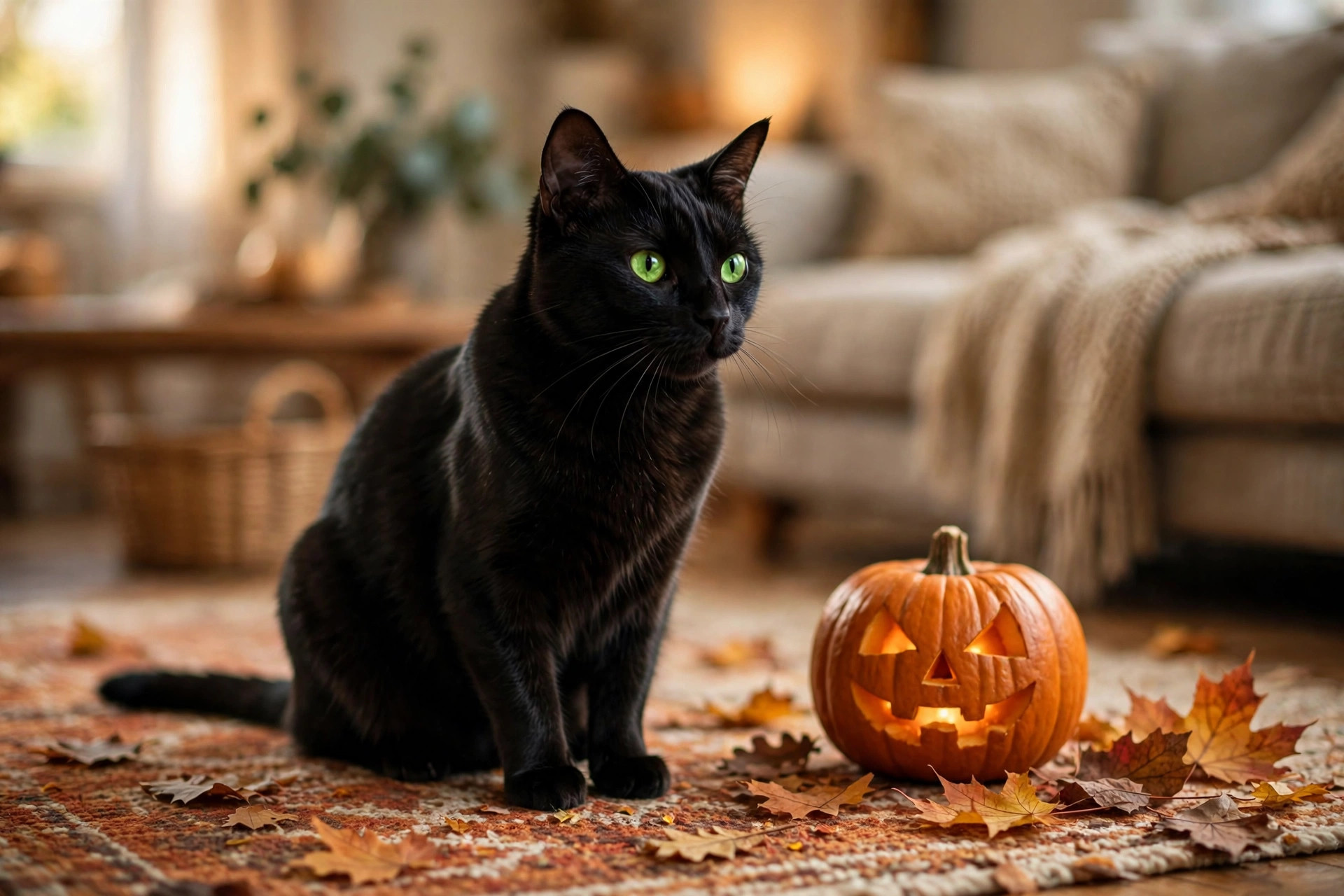
Every October, shelter kennels across the country fill with sleek black cats — and every October, many of them are the last ones chosen. If you have ever wondered whether the stories about black cats are true, or whether it is really harder to adopt one at Halloween, you are not alone. Black cat adoption myths are some of the most persistent beliefs in the pet world, and they have real consequences for the cats themselves.
In this guide, we break down the biggest myths about black cats — the bad-luck stories, the Halloween shelter bans, the claims about temperament — and separate folklore from fact. You will also learn why black cats wait longest for homes, how to keep your dark-coated cat safe through the spooky season, and what you can do to help.
Table of Contents
- Myth 1: Black Cats Are Bad Luck
- Myth 2: Shelters Ban Black Cat Adoptions at Halloween
- Myth 3: Black Cats Are Less Friendly or More Aggressive
- Myth 4: Black Cats Are Harder to Care For
- Myth 5: Black Cats Are Adopted Just as Halloween Decorations
- Why Black Cats Wait Longest for Homes
- Halloween Safety Tips for Black Cats
- How to Help Black Cats Find Homes
- Frequently Asked Questions
Myth 1: Black Cats Are Bad Luck
The most famous myth of all: a black cat crossing your path means bad luck. This belief has medieval roots. In the Middle Ages, black cats were associated with witches — some people believed witches could transform into black cats, or that the cats were witches’ familiars. The superstition was strong enough to cost real cats their lives in Europe.
But there is no evidence — none — that black cats bring misfortune. In fact, the “bad luck” story flips depending on where you live: in Japan, Scotland, and parts of the UK, black cats are considered symbols of good luck and prosperity. It is the same animal; only the folklore changes.
The real damage is quieter than broken mirrors: surveys and shelter records show that lingering superstition still makes some adopters skip the black cat’s kennel in favor of a more “colorful” option. That unconscious bias is a myth tax that black cats keep paying.
Myth 2: Shelters Ban Black Cat Adoptions at Halloween
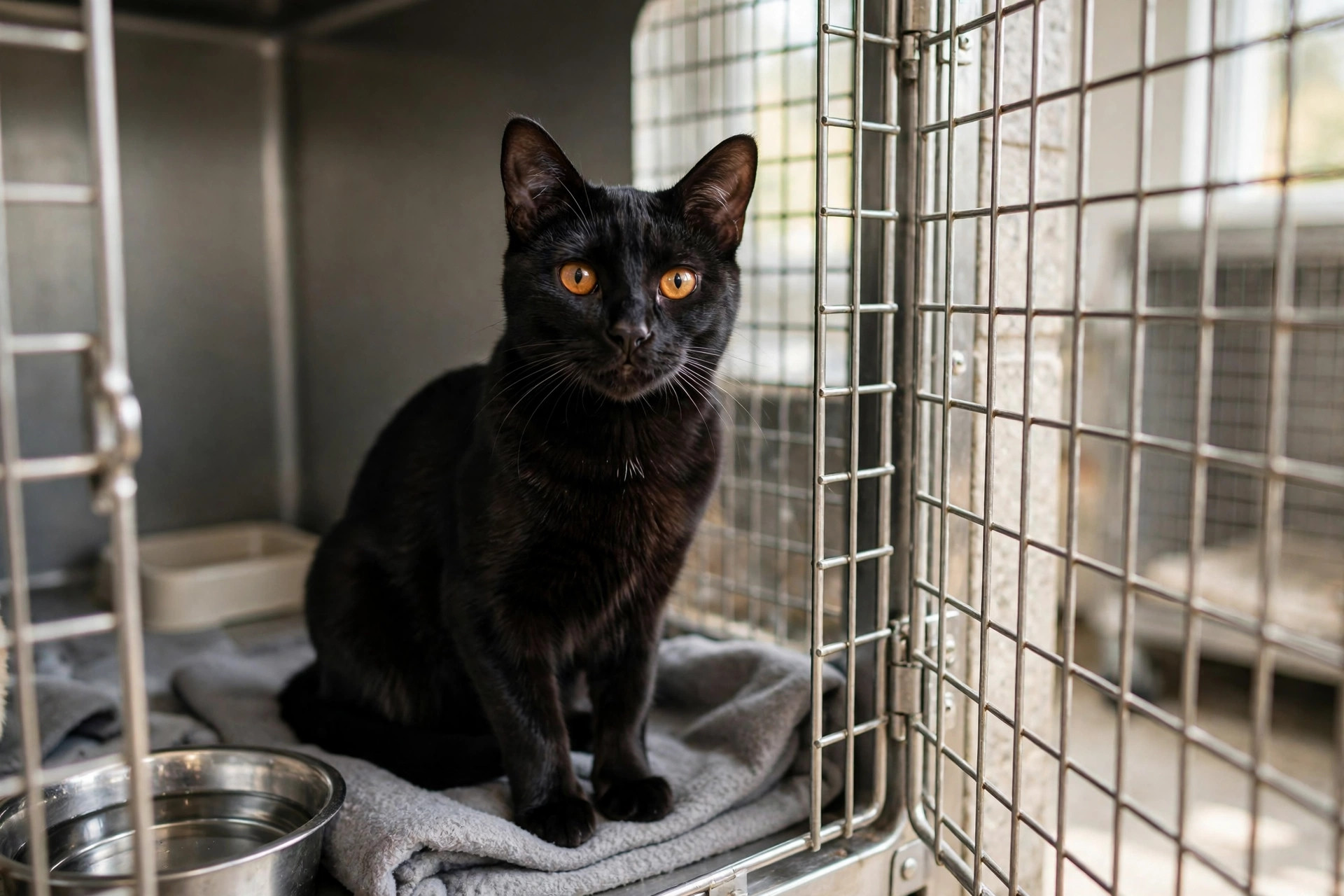
You may have heard that shelters refuse to adopt out black cats in October for fear they will be used in Halloween rituals. Years ago, some shelters did pause black-cat adoptions around Halloween — but the practice is fading fast, and both the ASPCA and the Humane Society of the United States now recommend against October bans.
Why? Because there are no confirmed statistics, court cases, or studies showing that black cats face a spike in cruelty around Halloween. Animal welfare experts investigated these claims repeatedly in the 1980s and 1990s and came up empty. Shelters that still adopt black cats through October — like Berkeley Humane, which publishes its policy publicly — simply screen every applicant carefully, exactly as they do all year.
There is a grain of truth behind the legend, but it is not the one people expect. Shelter workers do see a real October pattern: impulse adoptions of black cats as living Halloween decorations, followed by surrender spikes in November. The risk is not ritual cruelty — it is under-commitment. The fix is thorough screening, not a ban that keeps deserving cats kennelled for weeks.
Myth 3: Black Cats Are Less Friendly or More Aggressive
Coat color has nothing to do with personality. A cat’s temperament comes from genetics, socialization, and life experience — not the pigment in its fur. There is no scientific evidence that black cats are more aggressive, less affectionate, or otherwise different in behavior from cats of any other color.
Interestingly, a 2026 study of 1,004 U.S. participants found something revealing: when shown adoption photographs, people rated black cats as less adoptable than white, orange tabby, or brown tabby cats — and more often read their expressions as fearful or angry. The twist? Self-reported superstition did not explain the difference. The bigger factor was photographic: dark fur hides facial expressions in still photos, so viewers felt less confident reading the cat’s emotions and rated the cat less adoptable.
In other words, the “scary black cat” is largely a lighting problem, not a personality problem. Meet a black cat in person and the illusion dissolves — black cats are just as affectionate, playful, and loving as any others.
Myth 4: Black Cats Are Harder to Care For
Black cats have exactly the same care needs as cats of any other color: the same food, the same litter habits, the same vet schedule. Their coat color has no bearing on their health or upkeep.
There is even a hint of an upside. Researchers have noted that the genes behind black coat color in cats may be linked to stronger resistance against certain diseases, including feline immunodeficiency virus (FIV). The science is still developing, but it is a far cry from “harder to care for.”
The one genuinely practical difference has nothing to do with health: a black cat moving through a dark hallway is genuinely hard to see, especially for older adults or people with reduced contrast vision. A few inexpensive fixes solve it — a night-light in the hallway and a breakaway collar with a reflective strip. Problem solved.
Myth 5: Black Cats Are Adopted Just as Halloween Decorations
This one is half true, which is why it persists. Shelters do report an uptick in October interest in black cats from people who want a living Halloween prop — and those impulsive homes are the ones most likely to return the cat in November.
But banning adoptions to stop it backfires. Shelters that pulled black cats off the adoption floor for two weeks every October found that intake kept coming while adoptions froze — cats got stressed, some got sick, and fewer black cats were adopted overall. The better approach, and the one most shelters now use, is same screening, October or not: a thorough application, a conversation about the commitment, and a home check when appropriate.
If you want to adopt a black cat in October — or on Halloween itself — a reputable shelter will welcome you with open arms. Just be ready to show you are adopting a family member, not a decoration.
Why Black Cats Wait Longest for Homes
Also Read: National Cat Day 2026: 9 Celebration Ideas (2026)
Across the United States, roughly 3.2 million cats enter shelters each year. Black cats are consistently the least adopted, the longest to wait, and the most at risk of euthanasia. The ASPCA has found black cats have the lowest adoption rates of any coat color. Here is what actually drives it:
| Factor | How It Hurts Black Cats |
|---|---|
| Lingering superstition | Some adopters unconsciously skip dark-coated cats for more “colorful” ones |
| Hard to photograph | Shelter photos in poor lighting hide facial features, so profiles get less engagement |
| Facial-expression bias | 2026 research shows people misread black cats as fearful or angry in photos |
| Over-supply in autumn | Black cats make up a large share of autumn shelter populations as kitten season winds down |
| Longer stays, more stress | Waiting longer in a kennel stresses cats, making them show less well to visitors |
The cycle is vicious: hard-to-photograph cats get fewer clicks, so they stay longer; longer stays stress them, so they show worse in the kennel; worse showings mean longer stays. Breaking the cycle starts with understanding it — and with adopters giving the black cat’s kennel a second look.
Halloween Safety Tips for Black Cats
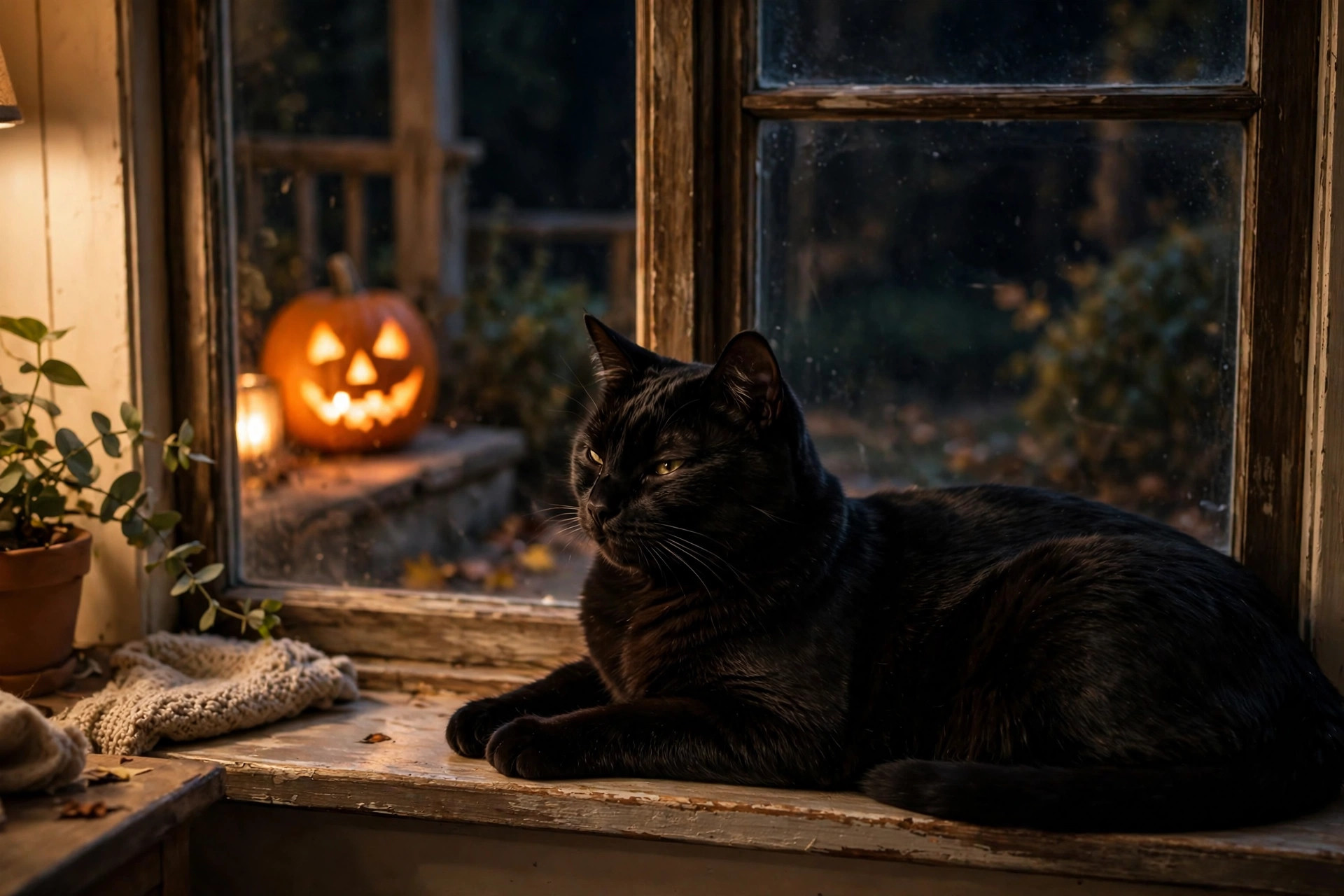
Halloween is a riskier night for all pets — including black cats, who can be targets for pranks. Follow our Halloween Pet Safety Tips and add these black-cat-specific rules:
- Keep all black cats indoors from October 29 through Halloween night — National Cat Day through the holiday itself.
- Make sure ID is current: a breakaway collar with an up-to-date tag, plus a registered microchip. A dark cat that slips out at night is hard to find and hard to identify.
- Set up a quiet room away from the front door with bedding, water, and a hiding spot — the doorbell marathon terrifies most cats.
- Never dye a black cat’s fur for Halloween, and skip costumes unless the cat is genuinely comfortable. A reflective collar is the only festive accessory a cat needs.
- Lock away candy: chocolate and xylitol are toxic to cats, and foil wrappers can cause intestinal blockages.
How to Help Black Cats Find Homes
You do not have to adopt to change a black cat’s life this October:
- Share shelter posts featuring black cats — well-lit, good photos work wonders, and shares are free.
- Visit the kennel, not just the website. Black cats photograph poorly but shine in person. Spend five minutes with one and you will see the difference.
- Foster in October. Fostering a black cat frees a kennel spot and lets the cat show its true personality outside shelter walls.
- Ask shelters about black-cat events. Many rescues run National Black Cat Day (October 27) adoption specials with waived or reduced fees.
- Donate or volunteer. Shelters always need money, food, litter, blankets, and people willing to socialize shy cats.
Also Read: Adopt a Shelter Dog Month 2026: What to Know Before Adopting — the same adoption wisdom applies to cats.
Frequently Asked Questions
Are black cats really bad luck?
No. The “bad luck” belief is a medieval superstition with no basis in reality — in Japan, Scotland, and parts of the UK, black cats are considered good luck.
Can I adopt a black cat on Halloween?
Yes — most shelters welcome black-cat adoptions year-round, including October. The old October “bans” were based on unproven fears of ritual abuse; shelters now screen every adopter carefully instead.
Are black cats harder to adopt than other cats?
Statistically, yes. ASPCA research finds black cats have the lowest adoption rates of any coat color — driven by lingering superstition and by the difficulty of photographing dark coats, not by temperament.
Do black cats have different personalities?
No. A cat’s personality comes from genetics, socialization, and experience — not coat color. Black cats are just as affectionate and playful as any others.
Why are black cats hard to photograph?
Dark fur absorbs light, so facial features disappear in poor lighting. Photograph black cats in bright, natural light and focus on the eyes — their expressions come alive.
Is it true that some shelters stop adopting out black cats in October?
A few still pause October adoptions, but the practice is disappearing — the ASPCA and the Humane Society of the United States recommend against it, and most shelters screen applicants year-round instead.
What is National Black Cat Day?
National Black Cat Day is observed on October 27 — two days before National Cat Day. Shelters use it to promote black-cat adoption with events and reduced fees.
Final Thoughts
Black cat adoption myths have kept some wonderful cats waiting far too long. Black cats are not bad luck, they are not temperamental, they are not harder to care for, and Halloween is not the danger-zone legend made it out to be. The real story is quieter and sadder: dark-coated cats are skipped because of old superstition and bad photography, and they pay for it with longer shelter stays.
October — from Black Cat Awareness Month through National Black Cat Day on October 27, National Cat Day on October 29, and Halloween itself — is the best time of year to rewrite that story. Visit your local shelter, look past the photo, and spend five minutes with the cat everyone else walks by. You might just meet your new best friend.
By Dr. Ayaz Ali