
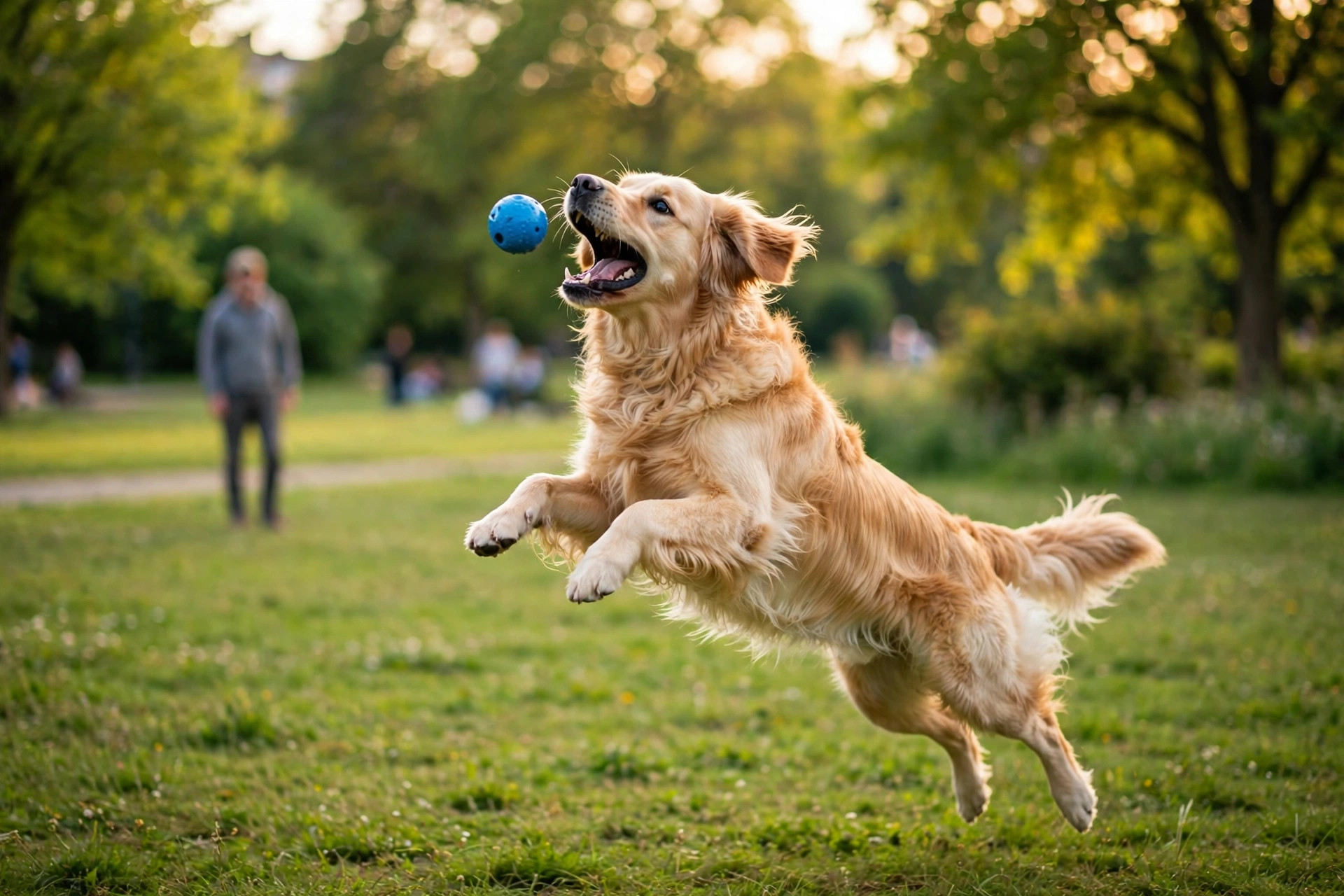
There are few sights in dog ownership as joyful as your dog sprinting across the grass with a ball in their mouth, tail wagging, ready to do it all over again. With National Fetch Day 2026 landing on Saturday, October 17, there’s never been a better excuse to upgrade your dog’s toy box — and this guide to the best fetch toys for dogs will help you pick toys that are fun, durable, and actually safe.
Fetch is one of the best all-around exercises a dog can get. But not every toy is a good fetch toy — the classic tennis ball carries dental and choking risks many owners never hear about. Below: the five best fetch toy types, the truth about tennis balls, size and safety rules, how to teach fetch, and fun ways to celebrate National Fetch Day.
Table of Contents
- What Is National Fetch Day?
- Why Fetch Is One of the Best Exercises for Dogs
- 5 Best Fetch Toys for Dogs in 2026
- Are Tennis Balls Bad for Dogs?
- Fetch Toy Size and Safety Rules
- How to Teach a Dog to Play Fetch
- How to Celebrate National Fetch Day 2026
- Frequently Asked Questions
What Is National Fetch Day?
National Fetch Day is celebrated every year on the third Saturday of October — in 2026, that’s October 17. It was created in 2018 by the dog-toy brand Chuckit! (owned by Petmate) to mark the 20th anniversary of its famous ball launcher, first introduced in 1998.
What started as a brand celebration is now a genuine pet holiday across the US, Canada, the UK, and Australia. Owners mark it with park meetups, fetch parties, and social media photos under #NationalFetchDay. The message behind it is simple: fetch is one of the easiest, cheapest, most effective ways to keep a dog healthy and happy.
Why Fetch Is One of the Best Exercises for Dogs
Fetch works a dog’s body and brain at the same time, which is exactly why trainers love it:
1. Serious Exercise in Minutes
A 10–15 minute fetch session burns more energy than a much longer walk — one of the most time-efficient workouts for busy owners.
2. Mental Stimulation
Tracking the toy, timing the catch, and finding it in the grass all engage your dog’s brain. Trainers estimate roughly 10 minutes of focused mental work tires a dog out about as much as 30 minutes of physical exercise.
3. Training Disguised as Play
Every game reinforces recall (“come”), impulse control (“wait”), and the all-important “drop it” — skills that transfer to the rest of life.
4. Bonding Time
The eye contact, the chase, the celebration when your dog brings the toy back — it all builds trust between you and your dog.
Also Read: Best Puzzle Toys for Dogs 2026: Vet Buying Guide — for rainy days when outdoor fetch isn’t possible, puzzle toys deliver a similar mental workout indoors.
5 Best Fetch Toys for Dogs in 2026
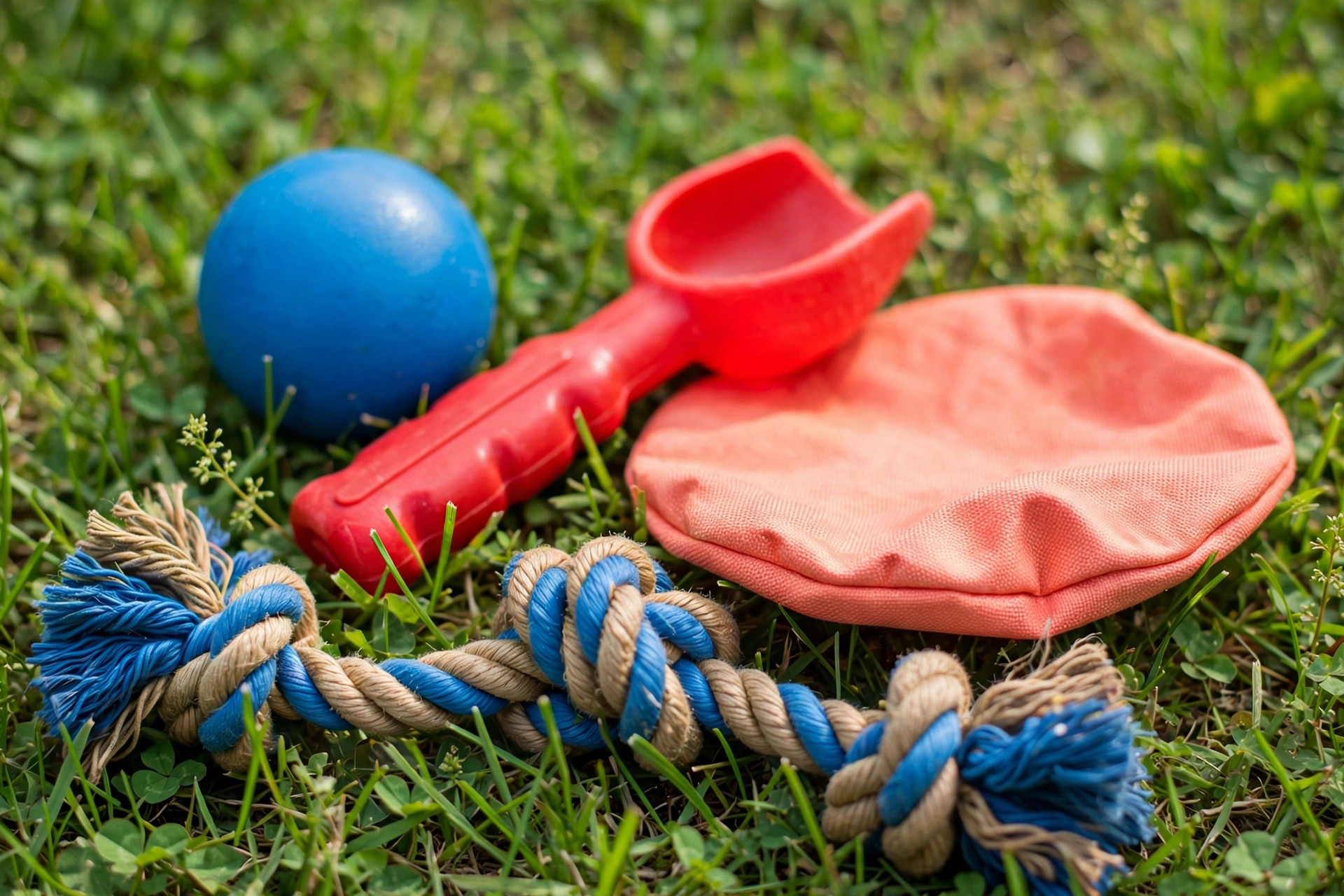
1. Smooth Rubber Fetch Balls — Best All-Rounder
The safest upgrade from a tennis ball: smooth, solid rubber made for dog mouths, with no abrasive felt, glue, or fuzz to shred. They bounce well, survive heavy chewing, and many float. Look for non-toxic rubber sized to your dog’s jaw.
2. Ball Launchers — Best for Big Throws
A launcher throws two to three times farther than your arm and scoops the ball off the ground so you never touch the slobber. Perfect for high-energy breeds like retrievers, Border Collies, and German Shepherds. Pair it with launcher-compatible rubber balls for the safest setup.
3. Soft Flying Discs — Best for Catchers
Flexible fabric or soft-rubber discs are gentler on teeth and gums than hard plastic frisbees, and fly slower and straighter than discs designed for humans — fewer awkward mid-air collisions.
4. Tug-and-Fetch Combos — Best for Dogs That Love Both Games
Rope tugs with a ball or bumper attached combine two favorite games in one toy. Research has found tug play does not increase aggression — dogs that play tug show more confidence and better command responsiveness. Never leave a dog unsupervised with a rope toy: shredded strands can cause dangerous intestinal blockages.
5. Floating Water Fetch Toys — Best for Water Dogs
For retrievers, spaniels, and every dog that dives for the ball at the lake, buoyant rubber toys stay visible on the surface and resist waterlogging. Rinse them after use to wash off pond and pool chemicals.
Color tip: Dogs see blue and yellow far better than red, green, or orange. A blue or yellow fetch ball is dramatically easier for your dog to spot on green grass than a classic orange ball.
Are Tennis Balls Bad for Dogs?
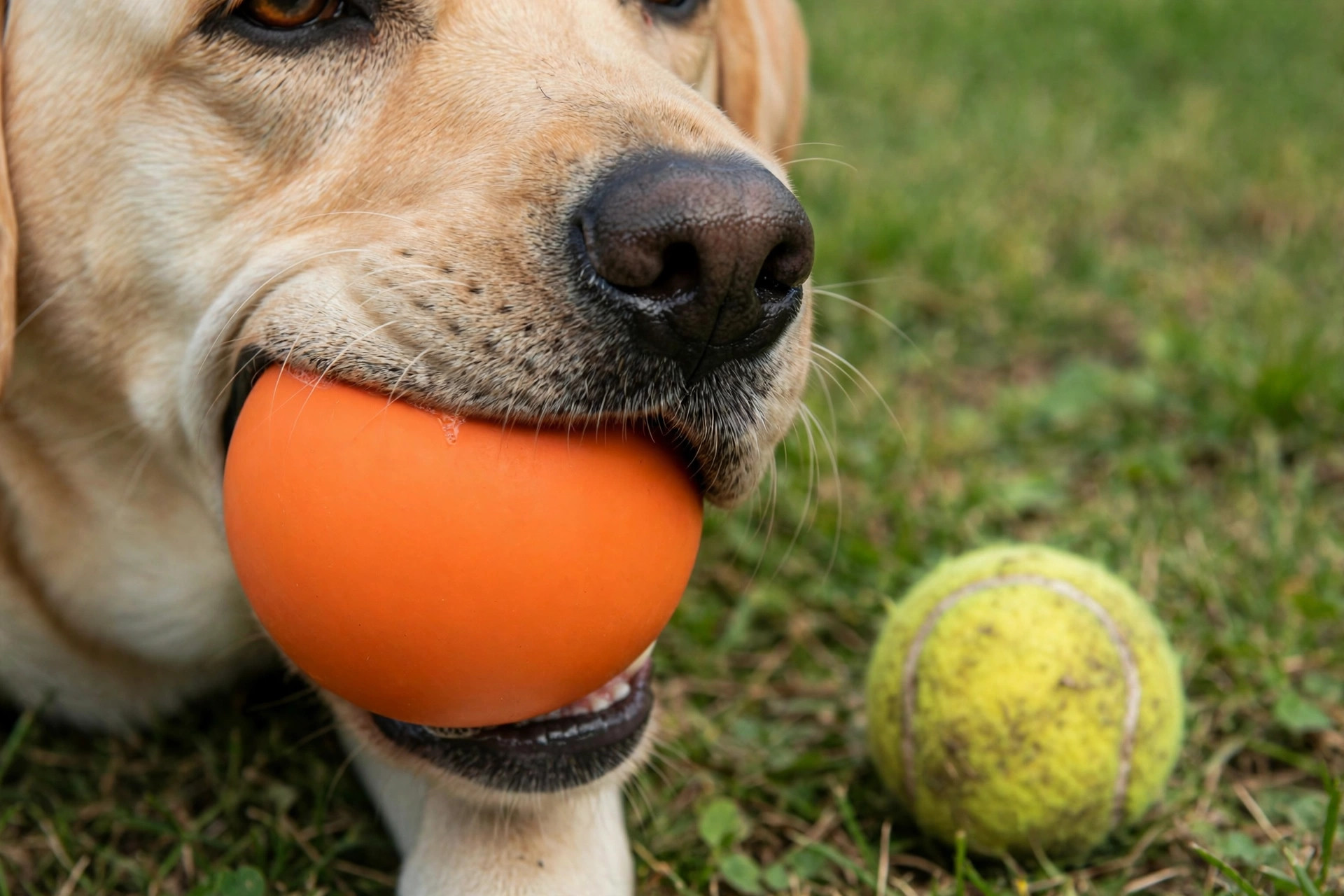
The American Kennel Club flags three main risks with tennis balls. First, tooth wear: the fuzzy coating acts like sandpaper, gradually wearing down teeth — a process vets call “blunting” — which can eventually expose tooth pulp and cause dental disease. Second, choking: powerful-jawed dogs can compress and break tennis balls, and a half-ball or a slick saliva-covered ball can lodge in the back of the throat. Third, swallowed materials: tennis balls are designed for throwaway use in sports, not daily gnawing, and their rubber, glue, and coating can contain chemicals you’d never want your dog ingesting.
Using tennis balls safely: limit them to supervised fetch sessions — never leave them as chew toys. Train a reliable “drop it” so you can take the ball back instantly, and switch to a smooth rubber fetch ball for dogs that chew hard.
Fetch Toy Size and Safety Rules
The right toy in the wrong size is still dangerous:
| Dog Size | Ball Diameter | Rule of Thumb |
|---|---|---|
| Small (under 20 lbs) | 2–2.5 inches | Wider than the dog’s muzzle |
| Medium (20–50 lbs) | 2.5–3 inches | Too big to fit fully inside the mouth |
| Large (over 50 lbs) | 3+ inches | When in doubt, size up |
- Always supervise. No fetch toy is meant for unsupervised use — put toys away when the game ends.
- Inspect before every session. Retire any toy with cracks, tears, missing chunks, or unraveling rope.
- Watch for fatigue. Ball-obsessed dogs won’t stop on their own — end the game before exhaustion, especially in heat.
- Warm up seniors and puppies. Repeated hard stops stress joints; obsessive fetching can contribute to joint strain over time.
Also Read: What Is a Pupsicle? The Freezable Dog Toy Guide (2026) — a frozen enrichment toy that gives ball-obsessed dogs a calm-down activity after fetch.
How to Teach a Dog to Play Fetch
- Start indoors in a hallway or small room, where the toy can’t roll far and distractions are low.
- Reward the return. The moment your dog comes back with the toy, celebrate — trade for a treat if needed. The exchange teaches “bringing it back pays.”
- Use the two-toy method. Toss one toy; when your dog grabs it, produce a second and toss it the other way. Most dogs drop the first to chase the second — your opening to add the “drop it” cue.
- Move outside gradually — yard first, then the park — adding distance and distractions slowly.
If your dog runs off with the toy and won’t come back, never chase — that’s a game your dog will always win. Turn around and walk away, or use the two-toy trade instead.
How to Celebrate National Fetch Day 2026
Saturday, October 17 is the perfect day to make fetch special:
- Upgrade one toy — replace a worn tennis ball with a smooth rubber fetch ball or try a ball launcher.
- Host a fetch party — invite friends with dogs to a park for a group session and treats.
- Post with #NationalFetchDay — share photos or videos of your dog mid-fetch.
- Try a new game — frisbee, water fetch, or the two-toy method make good Fetch Day debuts.
- Visit a shelter — a fetch session brightens a shelter dog’s day.
Also Read: What Is a Snuffle Mat? The Complete Foraging Enrichment Guide (2026) — a good calm-down activity after an energetic fetch session.
Frequently Asked Questions
When is National Fetch Day 2026?
Saturday, October 17, 2026 — it’s celebrated every year on the third Saturday of October.
Are tennis balls really bad for dogs?
For casual, supervised fetch they are commonly used, but the abrasive felt wears down tooth enamel over time (“blunting”), and powerful chewers risk choking on broken pieces. Smooth rubber fetch balls are the safer daily alternative.
What is the safest fetch toy for a power chewer?
A large, smooth, solid rubber ball made from non-toxic rubber, sized so it can’t fit fully inside your dog’s mouth. Avoid tennis balls, unsupervised rope toys, and hard plastic discs for aggressive chewers.
How often should I play fetch with my dog?
Most adult dogs thrive on one or two 10–20 minute sessions a day. Puppies and seniors need shorter, gentler games. Stop before your dog is exhausted — watch for heavy panting or limping.
Can I play fetch indoors?
Yes — use soft, lightweight toys (soft discs, plush balls) and keep throws short. Indoor fetch is a great rainy-day backup.
So, what are the best fetch toys for dogs? The ones that match your dog’s size, chewing style, and play preferences — smooth rubber balls for daily games, a launcher for distance, a soft disc for catchers, always under your supervision. Celebrate National Fetch Day on October 17 with a new toy, a park session, and a happy, tired dog.
By Dr. Ayaz Ali