
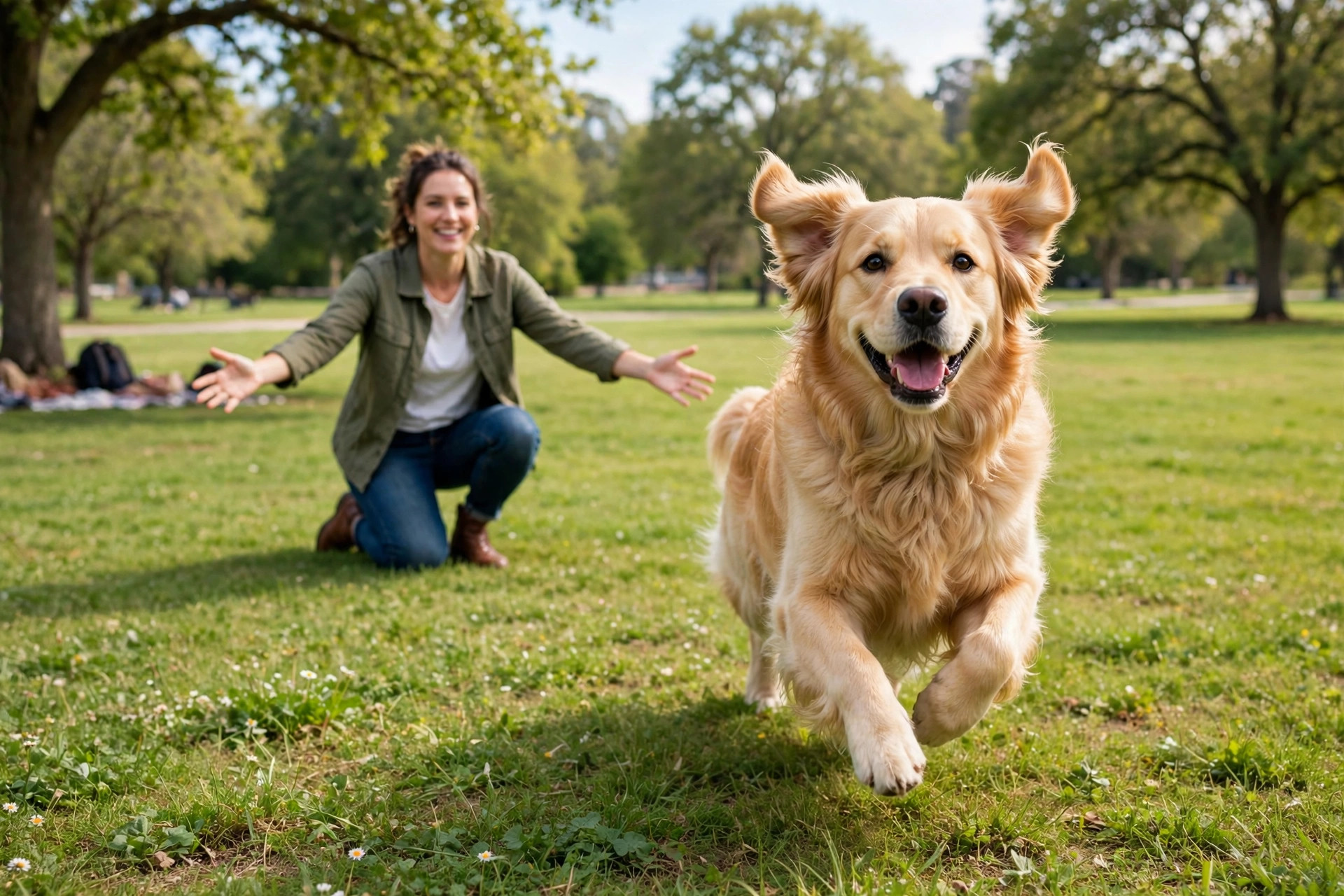
You call your dog’s name across the park, full of confidence — and your dog looks straight at you, then trots off in the opposite direction. If you have ever wondered why won’t my dog come when called, you are far from alone: a weak recall is one of the most common complaints dog owners have, and it is also one of the most fixable. Recall is not about obedience for its own sake. A dog that comes reliably can run safely off leash, be called away from roads, other dogs, and trouble, and enjoy far more freedom than a dog that cannot be trusted to return.
The good news is that most recall failures are not stubbornness. Dogs ignore the “come” cue for predictable reasons: the cue was never properly trained, coming to you has accidentally become less rewarding than whatever they were doing, or you are asking for it in an environment that is far too distracting for their current skill level. In this guide, we will walk through why dogs ignore recall, the foundations to fix first, and a step-by-step training plan that builds a reliable come cue from your living room to the park.
Table of Contents
- Why Dogs Ignore Recall
- Before You Start: 3 Foundations
- The Step-by-Step Recall Training Plan
- Recall Games That Make Coming Fun
- Proofing Recall Around Distractions
- 7 Mistakes That Ruin Recall
- When to Call a Trainer
- Frequently Asked Questions
Why Dogs Ignore Recall
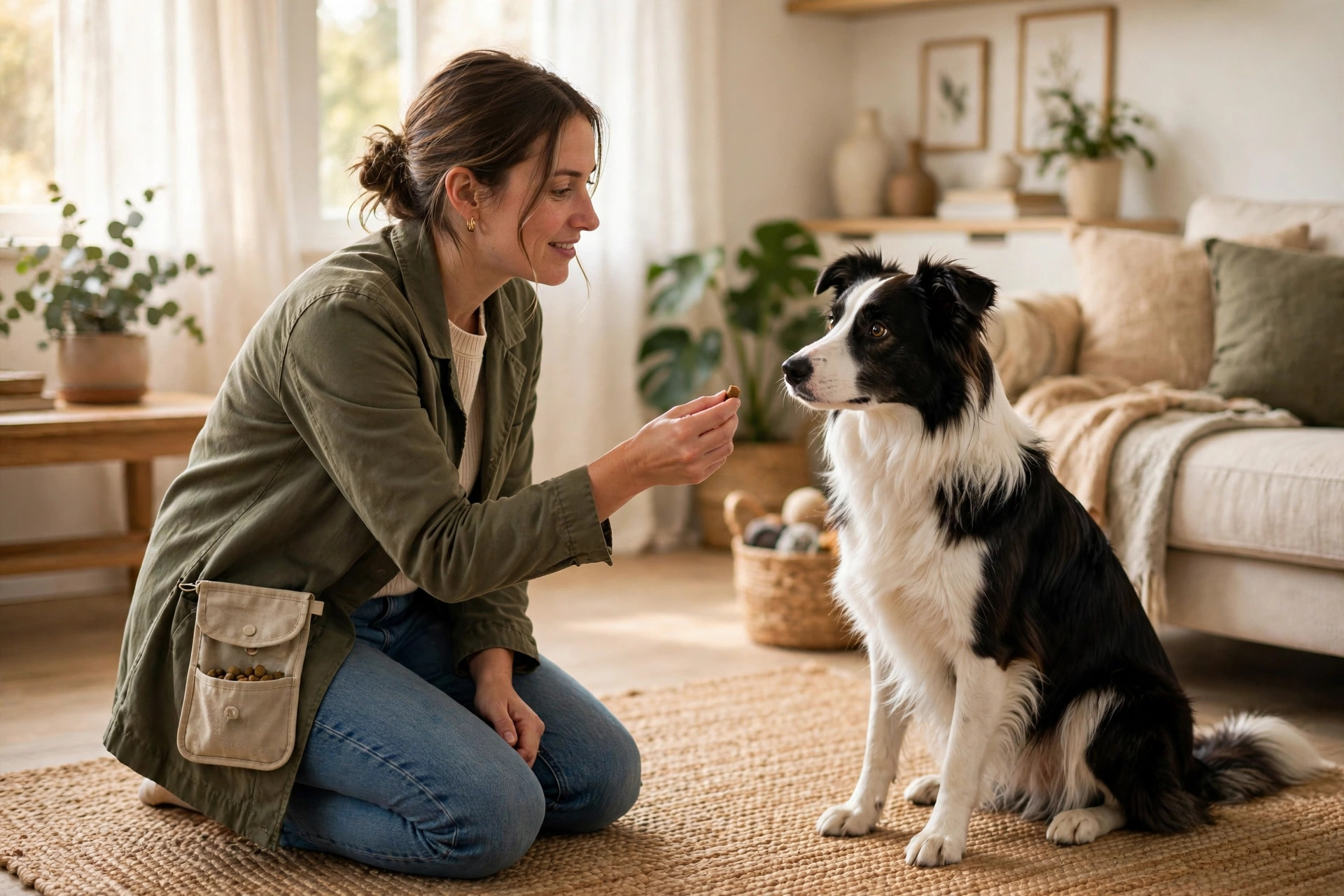
Before you can fix recall, it helps to understand what your dog has actually learned so far. In most cases, one or more of these is true:
1. Coming to you ends the fun
If “come” usually means the walk ends, the leash goes on, bath time starts, or play stops, your dog has learned that returning predicts the end of everything good. Dogs repeat what pays off. If running away pays better than coming back, they will keep running away.
2. The cue was poisoned
A cue is “poisoned” when it has been repeated dozens of times with no response, or followed by something unpleasant — being scolded for taking too long, grabbed roughly, or punished after finally coming back. Once a word predicts nagging or punishment, dogs tune it out. Trainers often recommend starting over with a brand-new word in this case.
3. You skipped the easy steps
Many owners train “come” in the kitchen a few times, then test it at the dog park — the hardest possible environment — and conclude the dog is stubborn. Recall is a skill built in layers: short distance, then long distance, then mild distractions, then real-world chaos. Skipping layers guarantees failure.
4. The reward does not compete
A dry biscuit cannot compete with a squirrel, another dog, or a fascinating smell. Recall training needs the best rewards you have: tiny pieces of cooked chicken, cheese, or whatever your dog genuinely goes wild for. The American Kennel Club’s recall guidance stresses exactly this point — make yourself the most exciting thing in your dog’s environment, and reward with what your dog loves most. Read the AKC’s step-by-step recall guide here: American Kennel Club — How to Train Your Dog to Come When Called.
5. Your dog was never actually taught
Saying a word at a dog is not teaching it. If your dog was never systematically rewarded for turning, moving toward you, and arriving at your side, they do not know what “come” means — they just know it is a sound humans make before getting annoyed.
Before You Start: 3 Foundations
Set these up before your first formal session. They take a day or two and make everything that follows dramatically easier.
Foundation 1: The name game
Your dog’s name should mean “look at me.” In a quiet room, wait until your dog is looking away, say their name in a happy tone, and the instant they glance at you, mark it with “yes!” and deliver a treat. Repeat ten times a day. Soon, the name alone snaps their attention to you — and attention is the first half of recall.
Foundation 2: One cue, used by everyone
Pick one short cue — “come” or “here” — and make sure every person in the household uses the same word, the same way. If your cue is already poisoned from months of being ignored, pick a fresh word (“close,” “presto,” or a whistle) and start clean. Consistency across the family matters more than which word you choose.
Foundation 3: The collar grab game
Many dogs dodge when you reach for their collar, which turns every successful recall into a wrestling match. Fix it now: lure your dog close with a treat, say “gotcha,” gently touch their collar, then release the treat. Repeat until collar touches predict treats, not capture. When your dog arrives on recall, you want to be able to calmly hold them, reward, and release — not chase a moving target.
Also Read: Stop Your Dog Pulling on the Leash: 7 Trainer Tips (2026)
The Step-by-Step Recall Training Plan
Work through these stages in order. Only move on when your dog succeeds about 8 times out of 10 at the current stage. Keep sessions to 5–10 minutes, two or three times a day — short and fun beats long and frustrating.
Stage 1: A few feet away, indoors
Stand a few feet from your dog in a quiet room. Say their name, then your cue — “Bella, come!” — and encourage them with pats on your legs, a happy voice, or a visible treat. The moment they move toward you, praise; when they arrive, mark with “yes,” reward generously, and ask for a sit. Repeat from slightly different spots in the room.
Stage 2: Across the room, then room to room
Gradually increase the distance indoors. Then call from another room — this teaches your dog that the cue works even when they cannot see you, which is the whole point of recall. If they struggle, go back to a shorter distance; never repeat the cue louder and louder. Say it once, then go and gently guide them if needed.
Stage 3: The garden on a long line
Move outside on a long training leash (30–50 feet) in a quiet garden. Let your dog wander to the end of the line, then call. The long line is a safety net, not a pulling tool — never yank it. If they do not respond, calmly walk closer and try again from an easier distance. Reward every return with a jackpot: several treats in a row, plus praise and play.
Stage 4: Short off-leash recalls in a safe area
Only when the long-line stage is solid, try off-leash recalls in a fully fenced, low-distraction area. Start close, call, reward, and — crucially — release your dog back to play most of the time. If coming to you usually means “fun continues,” your dog will come happily. If it always means “fun ends,” they will stop coming.
| Stage | Where | Move On When |
|---|---|---|
| 1. Close indoors | Quiet room, a few feet | Comes happily 8/10 times |
| 2. Room to room | Around the house | Comes from another room 8/10 times |
| 3. Garden, long line | Quiet garden, 30–50 ft line | Comes from end of line 8/10 times |
| 4. Fenced, off leash | Safe enclosed area | Comes and is released to play again |
| 5. Real world | Quiet park, then busier places | Reliable around mild distractions |
Recall Games That Make Coming Fun
Drills get boring; games build a dog that sprints to you. Rotate these into your sessions:
- Hot potato: Two or more people stand apart with treats and take turns calling the dog between them. Every arrival earns a treat. This is fantastic for families and children.
- Hide and seek: Once your dog knows the cue, hide behind a door or furniture and call. Finding you becomes the reward, and distance builds naturally.
- Catch me: On leash, get your dog’s attention, turn, and jog a few steps while calling. Dogs love a chase — running away from your dog makes coming to you a game, not a chore.
- Random recalls during play: While your dog is playing in the garden, call them, reward hugely, then release them straight back to play. This is the single most powerful lesson: coming to you does not end the fun.
Also Read: Puppy Socialization Checklist: First 16 Weeks (2026)
Proofing Recall Around Distractions
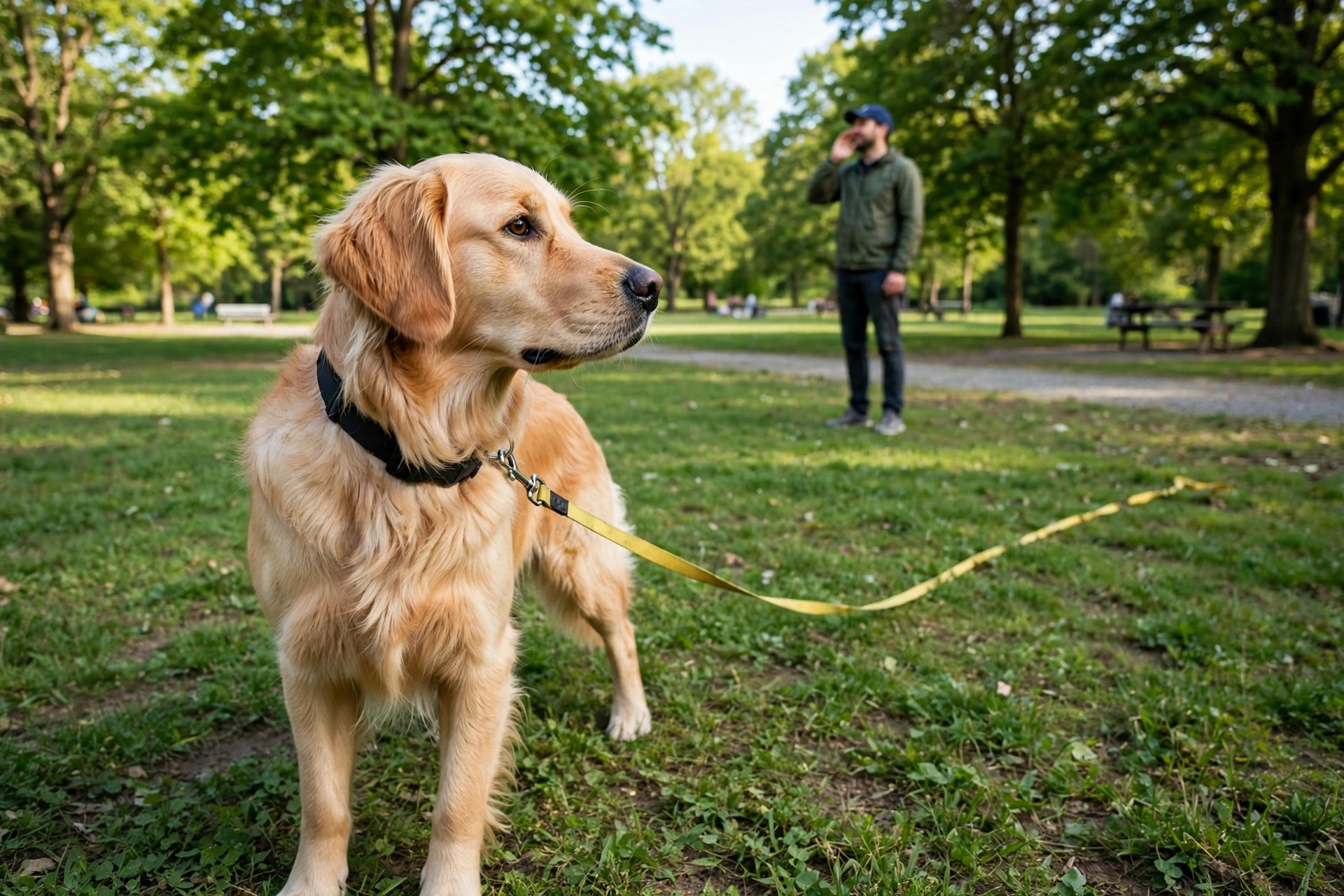
Proofing means practicing around gradually harder distractions, one variable at a time. Rank your dog’s distractions from easiest to hardest — a quiet street, a distant dog, a squirrel, a dog park fence — and work up the list slowly, always on the long line until a level is reliable.
Three rules for proofing: first, never test recall off leash somewhere you cannot afford failure (near a road, for example) until the long-line version is solid. Second, if your dog fails twice at a level, drop back to an easier one — failure repeated is practice at ignoring you. Third, keep rewarding: even a reliable adult dog deserves a treat, praise, or game for coming away from something exciting. Recall is a behavior you pay for life, not a trick you finish paying for.
Winter note: shorter days and darker walks make reliable recall more urgent, not less. A dog that comes promptly is a dog you can let run in a safe field even as daylight shrinks — and a long line plus a reflective harness keeps practice safe after dusk.
7 Mistakes That Ruin Recall
1. Repeating the cue over and over
“Come! Come! COME!” teaches your dog that the first four calls are meaningless. Say it once. If there is no response, go closer, reduce the distraction, and try again — do not train your dog to wait for the fifth shout.
2. Chasing your dog
Chasing turns recall into a game where running away wins. If your dog bolts, run the other way, crouch, make excited noises, or drop to the ground — be more interesting than the escape, and let them come to you.
3. Punishing a slow return
Never scold a dog for coming back, even if it took ten minutes. Punishing the return teaches exactly one lesson: do not come back. Praise every return, however late.
4. Only calling when fun is over
If “come” always means bath, crate, or leaving the park, your dog will rationally avoid it. Call during fun, reward, and release back to fun — at least half the time.
5. Testing too hard, too soon
The dog park on day three is a final exam, not a lesson. Build through the stages above and accept that a reliable recall takes weeks of short sessions, not a weekend.
6. Using recall for everything
Do not use your recall cue to summon your dog for nail trims, medicine, or baths. Use a different cue (or just go and get them) for unpleasant tasks, so “come” stays purely positive.
7. Fading rewards too fast
Going from treats every time to no treats overnight kills recall. Fade gradually over months — from every return, to most returns, to random jackpots — while keeping praise constant forever.
When to Call a Trainer
Most recall problems resolve with the plan above and a few weeks of consistency. Get professional help sooner if your dog bolts into roads or traffic, shows aggression or extreme fear around other dogs or people, or panics and shuts down during training. Look for a certified professional trainer who uses positive-reinforcement methods, and ask specifically about their recall-training approach before booking.
Also Read: Crate Training Your Puppy: Step-by-Step Guide (2026)
Frequently Asked Questions
Why won’t my dog come when called outside but comes inside?
Because indoors is easy and outdoors is hard. Distractions, smells, and space all raise the difficulty enormously. Your dog has not generalized the skill yet — go back to the long line and rebuild distance and distraction gradually, exactly as in the stages above.
At what age should I start recall training?
As early as 8 weeks for puppies, with very short, playful sessions. Adult and rescue dogs can absolutely learn recall too — it may take longer if they have practiced ignoring the cue for years, but the same stages work at any age.
Should I use treats forever for recall?
Not every time, but keep rewarding for life. Fade from every return to random jackpots — an occasional jackpot keeps the behavior strong for years. Praise stays constant even when treats become intermittent.
Is it too late if my dog has ignored “come” for years?
No. Pick a brand-new cue word, rebuild from stage 1, and treat the old word as retired. Dogs learn new cues readily when the new word consistently predicts great rewards.
Can I train recall without a long leash?
You can start indoors without one, but a long line is the safest way to practice outdoors before off-leash freedom. It prevents your dog from rehearsing running away and keeps them safe while they learn.
What if my dog only comes when I have treats?
That is normal early on — and it means the training is working, not failing. Gradually hide the treat, reward from a pouch after arrival, and mix in play, praise, and real-life rewards (a game, a sniff break) so “coming” pays in many currencies, not just food.
Final Thoughts
So, why won’t my dog come when called? Almost always, because coming to you has not yet been made worth it — or because the cue was asked in too hard a place, too soon, or too many times. The fix is unglamorous but reliable: one fresh cue, high-value rewards for every return, short daily sessions, and a slow climb from your living room to the park on a long line. Protect the cue, never punish a return, and let coming to you mean good things most of the time.
Give it a few consistent weeks and you will notice the change: a head that turns faster, a trot that becomes a run, and eventually a dog that sprints back to you even with distractions around. That is not just good training — it is freedom, for both of you.
By Dr. Ayaz Ali