
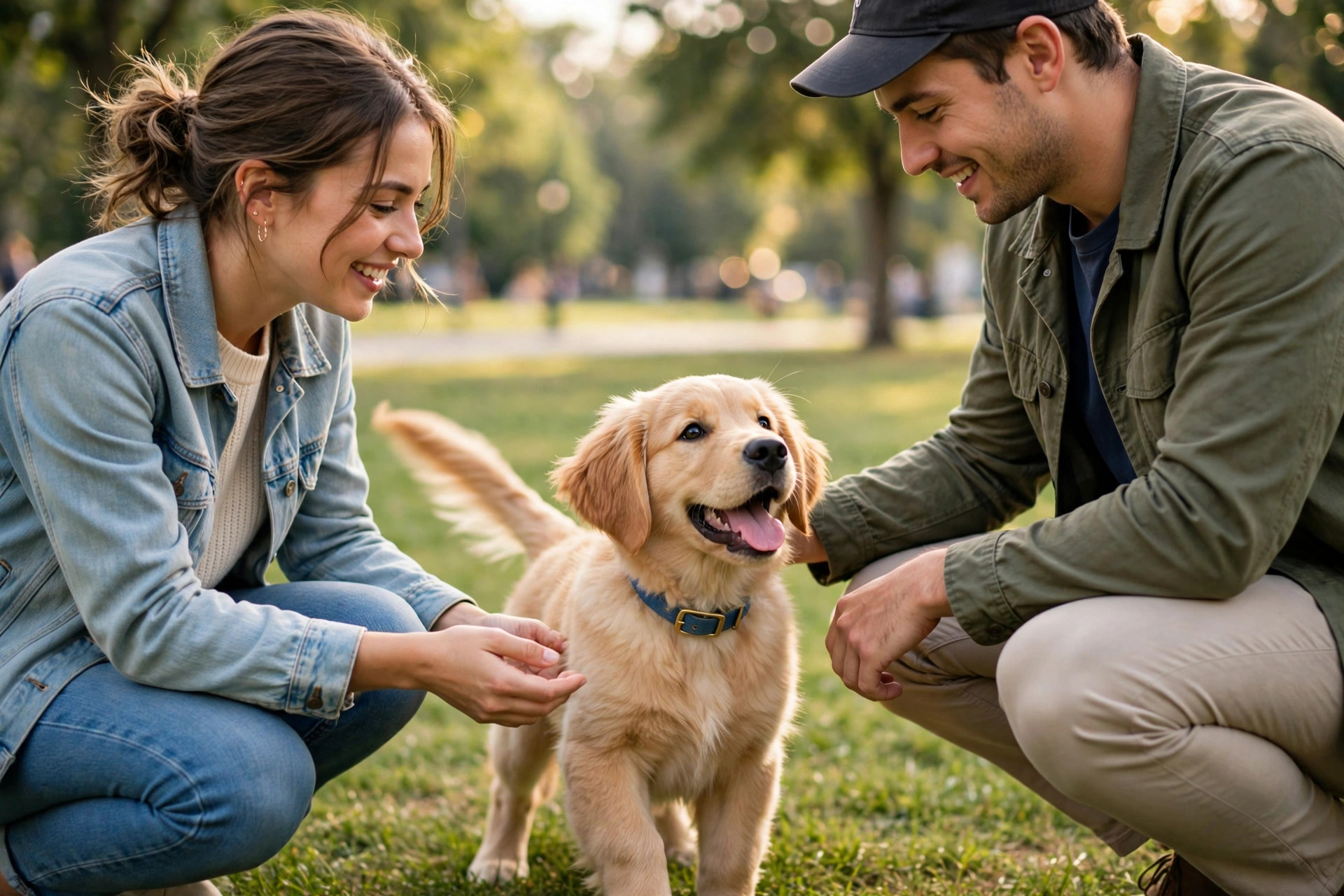
Bringing home a new puppy is one of life’s great joys — and one of its biggest responsibilities. Between the potty training, the chewing, and the 3 a.m. whimpers, many new owners miss the single most important job of the early weeks: following a proper puppy socialization checklist. The experiences your puppy has between roughly 3 and 16 weeks of age shape how they will react to the world for the rest of their life.
The good news is that socialization doesn’t mean complicated training drills. It means calm, positive introductions to the sights, sounds, people, and places your puppy will meet as an adult — paired with treats and praise so every new experience predicts good things.
In this 2026 guide, we’ll walk you through the complete puppy socialization checklist for the first 16 weeks: what to expose your puppy to week by week, how to socialize safely before vaccinations are finished, the mistakes that undo good work, and what to do if you adopted an older puppy and missed the window.
Table of Contents
- What Is Puppy Socialization (and Why 16 Weeks Matters)
- The Puppy Socialization Checklist: Weeks 8–12
- Puppy Socialization Checklist: Weeks 13–16
- How to Socialize Safely Before Full Vaccination
- 7 Puppy Socialization Mistakes to Avoid
- Missed the Window? Socializing Older Puppies
- Frequently Asked Questions
What Is Puppy Socialization (and Why the 16-Week Window Matters)
Puppy socialization is the process of introducing your puppy to the world in a way that builds confidence instead of fear. It is not just about meeting other dogs — it covers people of all ages and appearances, sounds (traffic, vacuum cleaners, thunderstorms), surfaces (grass, tile, gravel), handling (paws, ears, mouth), and environments (parks, pet-friendly stores, car rides).
Veterinary behaviorists identify roughly 3 to 16 weeks as the sensitive period when puppies absorb new experiences most readily. During this window, unfamiliar things are more likely to be filed under “normal” rather than “scary.” After it closes, the same new experience is more likely to trigger caution or fear — not impossible to overcome, but much harder. The UC Davis veterinary school’s socialization guidance recommends aiming for around 90 different positive experiences by about 14 weeks of age, keeping each encounter brief and pleasant.
The goal is simple: quality beats quantity. One calm, treat-filled five minutes watching traffic from your arms beats an hour at a chaotic dog park.
The Puppy Socialization Checklist: Weeks 8–12
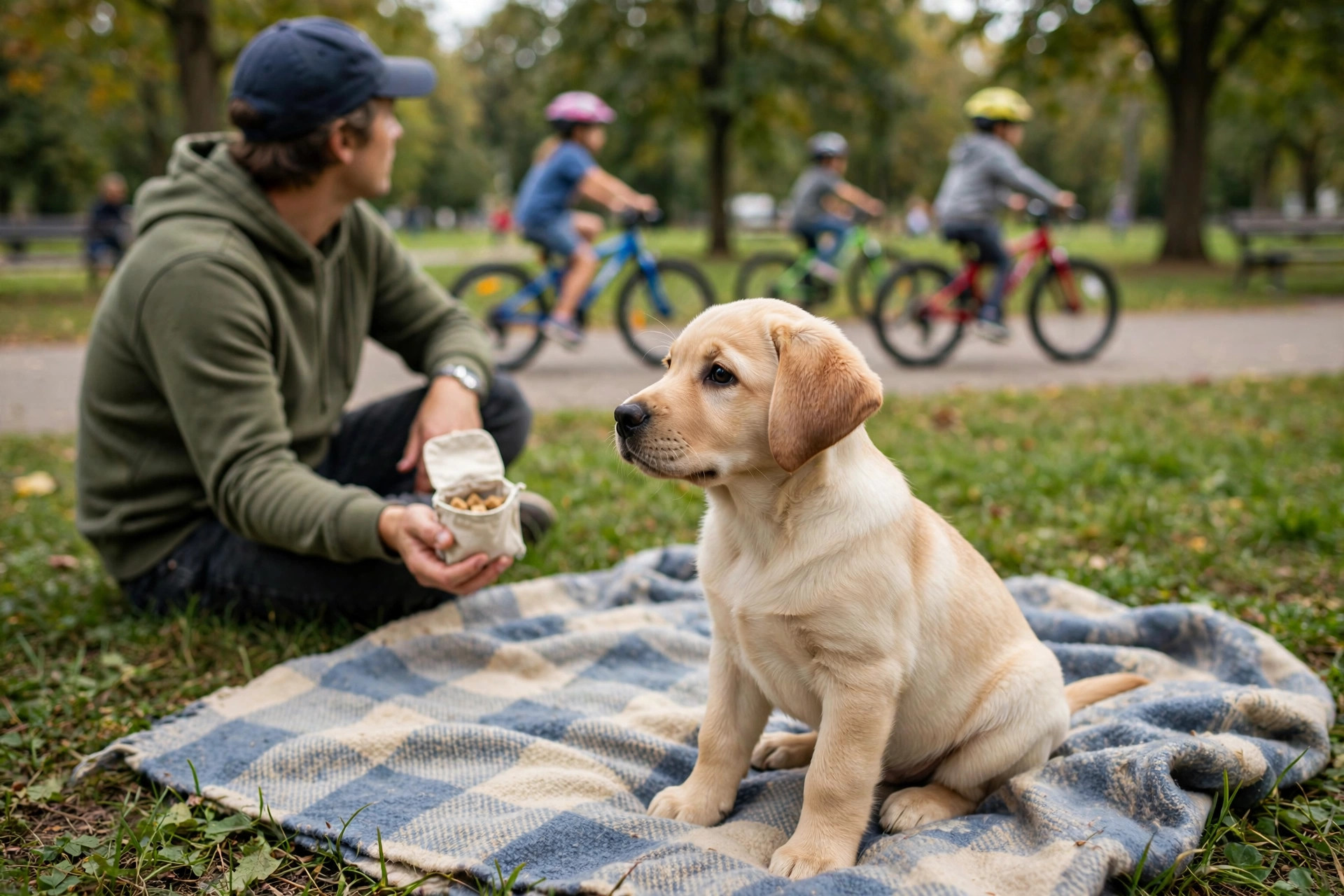
Most puppies come home around 8 weeks, so this is where your work starts. The priority now is trust and gentle first exposures — keep everything low-pressure and protect rest.
People
- Men, women, and children of different ages
- People wearing hats, sunglasses, hoodies, and uniforms
- People with beards, canes, wheelchairs, or strollers
- Gentle visitors to your home (one or two at a time, not a party)
Sounds
- Doorbell and knocking (from another room first)
- Vacuum cleaner (off, then on briefly at a distance)
- Traffic noise, sirens, and garbage trucks (from a safe distance)
- Thunderstorm or fireworks recordings at low volume, paired with treats
Surfaces and handling
- Grass, concrete, gravel, tile, carpet, and wet pavement
- Wobble boards or low, stable platforms
- Gentle handling of paws, ears, mouth, belly, and tail — always with treats
- Wearing a collar and leash indoors for short, happy sessions
Environments
- Car rides (short, ending somewhere pleasant)
- Sitting on a blanket at the edge of a park, watching the world go by
- Pet-friendly stores (carried or in a cart if unvaccinated)
- A “happy visit” to the vet clinic — weigh-in and treats, no exam
For each experience, follow the golden sequence: let the puppy observe first, pair the experience with treats or play, keep an exit route open, and stop while your puppy is still coping well. Record what you did and how your puppy reacted — not just a ticked box.
Puppy Socialization Checklist: Weeks 13–16
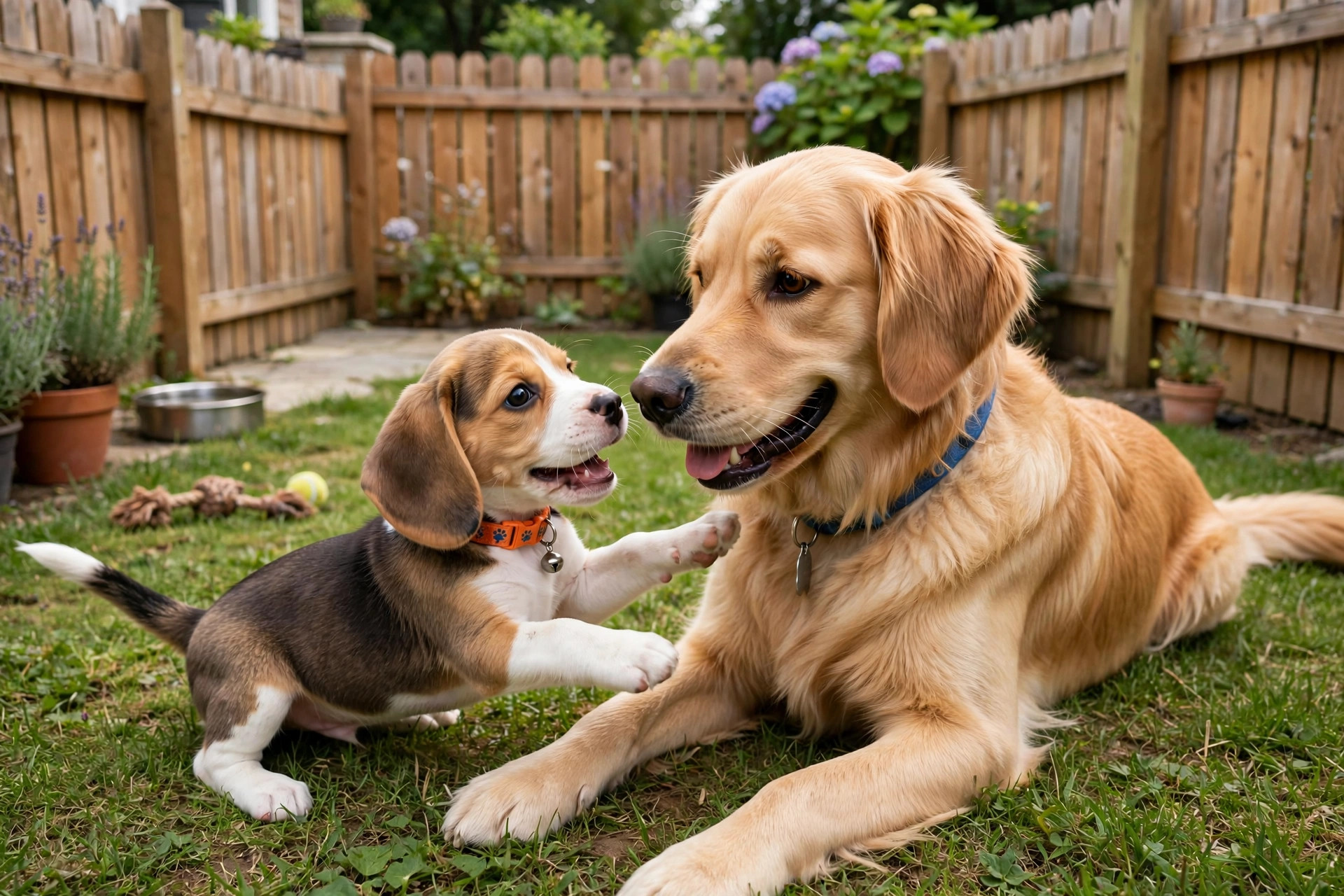
By now your puppy trusts you and has a foundation of positive exposures. The job shifts to generalizing — repeating earlier lessons in new places and adding complexity.
Dogs and social skills
- Supervised play with calm, vaccinated, friendly adult dogs
- One-on-one playdates with a known puppy in a clean, secure yard
- Enrolling in a well-run puppy class (trainers should require first vaccines and use reward-based methods)
- Practicing polite greetings: brief sniffs, then moving on — not every dog is a playmate
Public spaces and novelty
- Sitting outside a café or store on a mat, watching foot traffic
- New locations weekly: a different park, a friend’s house, a quiet street fair
- Stairs, elevators, automatic doors, and narrow passages
- Umbrellas, balloons, skateboards, and shopping carts at a distance
Independence and alone time
- Brief, positive separations in a safe space with a chew or frozen toy
- Settling on a mat while life happens around them
- Short car waits (cool weather only, always in sight, minutes at most)
Also Read: Adopt a Shelter Dog Month 2026: What to Know Before Adopting — October is peak adoption month, and rescue puppies benefit from the same socialization plan.
How to Socialize Safely Before Full Vaccination
One of the biggest myths in puppy raising is that you must keep your puppy locked indoors until the last vaccine at around 16 weeks. Veterinary behaviorists are clear: the risk of lifelong behavior problems from missing socialization is greater than the disease risk — as long as you socialize smartly.
| Safe Strategy | How It Works |
|---|---|
| Carry or use a stroller | Your puppy sees the world from your arms — traffic, crowds, dogs at a distance — without touching the ground. |
| Observation sessions | Sit on a blanket in a quiet corner of a park and let your puppy watch people, bikes, and dogs from a safe distance. |
| Known, vaccinated dogs only | Playdates with healthy, fully vaccinated dogs you know — in your yard or theirs, never at a public dog park. |
| Invite the world home | Friends with calm, vaccinated dogs can visit you; new people bring treats for your puppy to earn. |
| Car field trips | Park near schools, markets, or stations and let your puppy watch the bustle from the car. |
Avoid unclean, high-traffic dog areas (public dog parks, rest stops, pet-store floors) until your vet confirms vaccinations are complete — usually around 16 weeks. When in doubt, ask your vet about disease risk in your specific area.
7 Puppy Socialization Mistakes to Avoid
1. Forcing interaction
Dragging a frightened puppy toward a stranger or a barking dog teaches one lesson: new things are scary. Let your puppy choose to approach, and reward every brave step.
2. Flooding with too much at once
A busy festival on day one is not socialization — it is overwhelm. Build from quiet to busy in small steps.
3. Skipping the boring stuff
Owners remember dogs and people but forget sounds, surfaces, and handling. The vacuum cleaner, the nail-trim handling, the umbrella — these are the exposures that prevent phobias later.
4. Dog parks too early
Unpredictable, over-aroused strange dogs plus an unfinished vaccine schedule is the worst possible classroom. Save dog parks for well-socialized adolescents, if at all.
5. Punishing fear
A puppy that cowers at a loud noise is not being disobedient. Scolding fear makes it worse — comfort calmly and create distance instead.
6. Only socializing with dogs
Dog-dog play is a small slice of the checklist. A puppy that plays beautifully but panics at umbrellas, traffic, or children is not socialized.
7. Stopping at 16 weeks
The sensitive window closes, but learning continues. Adolescence (6–18 months) brings a second fear period — keep up weekly novel, positive experiences through the first year.
Also Read: Crate Training Your Puppy: Step-by-Step Guide (2026) — pair socialization outings with a solid home routine.
Missed the Window? Socializing Older Puppies
Adopted a 5-month-old rescue or a puppy that spent its early weeks with little exposure? Don’t give up. Older puppies and adult dogs can still learn — unfamiliar experiences just need to be introduced more gradually, at lower intensity, with generous rewards.
The method is desensitization plus counterconditioning: find the distance or intensity where your dog notices the scary thing but can still take treats, reward calm behavior there, and shrink the distance over days and weeks. Keep sessions short, end on a win, and never push through panic.
If your dog freezes, flees, or panics at everyday things, bring in a certified professional trainer or veterinary behaviorist early — fear-based behavior is far easier to fix at six months than at two years. And start alone-time training from day one, since undersocialized puppies are also at higher risk of panic when left.
Also Read: Separation Anxiety in Dogs: Signs & Help Guide (2026) — how to tell normal new-home jitters from genuine distress.
Frequently Asked Questions
What is the most important socialization period for puppies?
Roughly 3 to 16 weeks of age. During this sensitive window, puppies form lasting impressions about what is normal and safe — which is why positive exposure to people, dogs, sounds, and places matters most in these weeks.
How many people should my puppy meet before 16 weeks?
Trainers commonly suggest around 100 different people, plus dozens of dogs, sounds, surfaces, and places. The exact number matters less than variety and positivity — brief, treat-filled encounters beat long, overwhelming ones.
Can I socialize my puppy before vaccinations are finished?
Yes — and you should. Carry your puppy or use a stroller, arrange playdates with known vaccinated dogs in clean yards, invite visitors home, and avoid high-traffic dog areas like public dog parks until your vet confirms the vaccine series is complete.
Should I take my puppy to the dog park to socialize?
No — not as a young puppy. Dog parks combine unpredictable strange dogs with disease risk for unvaccinated puppies. Supervised playdates and well-run puppy classes are far safer classrooms.
How do I know if my puppy is scared during socialization?
Watch for cowering, tucked tail, lip licking, yawning, freezing, or trying to flee. These are stress signals, not disobedience — calmly increase distance, let your puppy observe from farther away, and reward calm behavior.
Is it too late to socialize my 6-month-old dog?
No. The prime window has closed, but dogs keep learning for life. Introduce new things gradually at low intensity with rewards, keep sessions short, and get professional help early if fear is already entrenched.
Final Thoughts
So, how do you socialize a puppy? Start early, keep it positive, and think breadth: people, dogs, sounds, surfaces, places, and handling — in short, treat-paired sessions that always end while your puppy is still happy. The puppy socialization checklist above gives you the full 16-week roadmap, but the principle behind it is simpler than any list: let your puppy choose to engage, reward bravery, and never force it.
The few minutes you invest each day during these early weeks pay off for a decade or more — in a dog that greets the world with a wagging tail instead of fear. And when in doubt, your veterinarian or a certified trainer is the best guide for your individual puppy.
By Dr. Ayaz Ali