
With a flowing coat, a pushed-in face, and a personality convinced your lap exists for one purpose only, the Shih Tzu is one of the most recognisable small dogs in the world. If you are weighing up this ancient companion breed, this Shih Tzu breed guide covers what matters before you bring one home: temperament, grooming, exercise, training, health problems, and the real cost of ownership.
Bred for centuries as a lapdog for Chinese royalty, the Shih Tzu was never meant to herd, hunt, or guard. The American Kennel Club puts it plainly: the breed’s sole purpose is companionship. That history explains almost everything about how a Shih Tzu behaves today — affectionate, people-focused, and happiest within a few feet of you.
Table of Contents
- Shih Tzu Breed at a Glance
- Shih Tzu Temperament: What Are Shih Tzus Like?
- Is a Shih Tzu Right for You?
- Shih Tzu Grooming: The Coat Is the Commitment
- Shih Tzu Exercise and Training
- Shih Tzu Health Problems to Watch For
- Feeding a Shih Tzu
- Shih Tzu Puppies: Before You Buy or Adopt
- How Much Does a Shih Tzu Cost?
- Frequently Asked Questions
Shih Tzu Breed at a Glance

| Trait | Shih Tzu |
|---|---|
| Height | 9–10.5 inches at the shoulder |
| Weight | 9–16 pounds |
| Lifespan | 10–18 years (median about 12.7 years in a large UK vet study) |
| AKC group | Toy |
| Coat | Long, dense double coat; many colours including black, white, gold, and red |
| Shedding | Low — but no dog breed is truly hypoallergenic |
| Energy level | Low to moderate; about 20–30 minutes of daily activity |
| Good with children | Yes, with gentle, respectful children |
| Good with other pets | Yes, generally friendly with dogs and cats |
| Apartment friendly | Excellent — small, quiet indoors, and low exercise needs |
The name “Shih Tzu” means “lion dog” in Chinese, a nod to the breed’s lion-like mane. The dogs descend from Tibetan temple dogs crossed with Pekingese-type dogs in China, were kept by Chinese emperors, and nearly disappeared in the early 1900s before being revived from a handful of surviving dogs. The American Kennel Club formally recognised the breed in 1969.
Shih Tzu Temperament: What Are Shih Tzus Like?
The AKC breed standard describes the Shih Tzu temperament as outgoing, happy, affectionate, friendly, and trusting towards all — and owners will tell you that is not marketing language. A Shih Tzu is a diplomat among small dogs: it greets strangers as admirers, accepts other dogs and cats as housemates, and genuinely enjoys children. It is one of the least suspicious, least yappy toy breeds.
That affection is constant but not frantic. A Shih Tzu wants to be on you or near you, monitoring household events from a cushion. They are loyal lap dogs that form deep bonds with their people and dislike being left alone for long stretches — a dog that follows you from room to room is normal for this breed, not a problem to fix.
The stubborn streak
Shih Tzus are smart and eager to please, but they also carry a real stubborn streak. A Shih Tzu that has decided against something simply plants itself and waits you out — a negotiation style refined over centuries of never needing to compromise. Short, upbeat training sessions with food rewards work far better than repetition or scolding. House training in particular takes patience: small bladders and a stubborn streak mean accidents can continue for months, so expect a long, consistent routine rather than a quick win.
Alert barking
Shih Tzus were historically kept as alert dogs in palaces, and they still bark to announce that someone — or something new — is arriving. The barking is usually brief and friendly rather than aggressive, but it is worth training a “quiet” cue early if you live in an apartment with thin walls.
Also Read: Puppy Socialization Checklist: First 16 Weeks (2026) — the early experiences that shape a confident adult Shih Tzu.
Is a Shih Tzu Right for You?
A Shih Tzu is a strong match if you want a small, affectionate companion, live in an apartment, work from home, or have older children. They adapt to almost any living situation as long as they are with their people, and their modest exercise needs suit owners who cannot manage long daily hikes.
Think twice if you want a jogging partner, a guard dog, or a dog you can leave alone for a full working day. Shih Tzus are not athletes, they will not protect your home, and they can develop separation anxiety when left alone too long. The other honest deal-breaker is grooming: if daily brushing and a professional groomer every month sound like a chore rather than a ritual, this is not your breed.
Allergy sufferers should also be cautious. Shih Tzus shed very little and are often marketed as hypoallergenic, but no dog breed is truly hypoallergenic — people react to dander and saliva, not just shed hair, and a Shih Tzu still produces both.
Shih Tzu Grooming: The Coat Is the Commitment
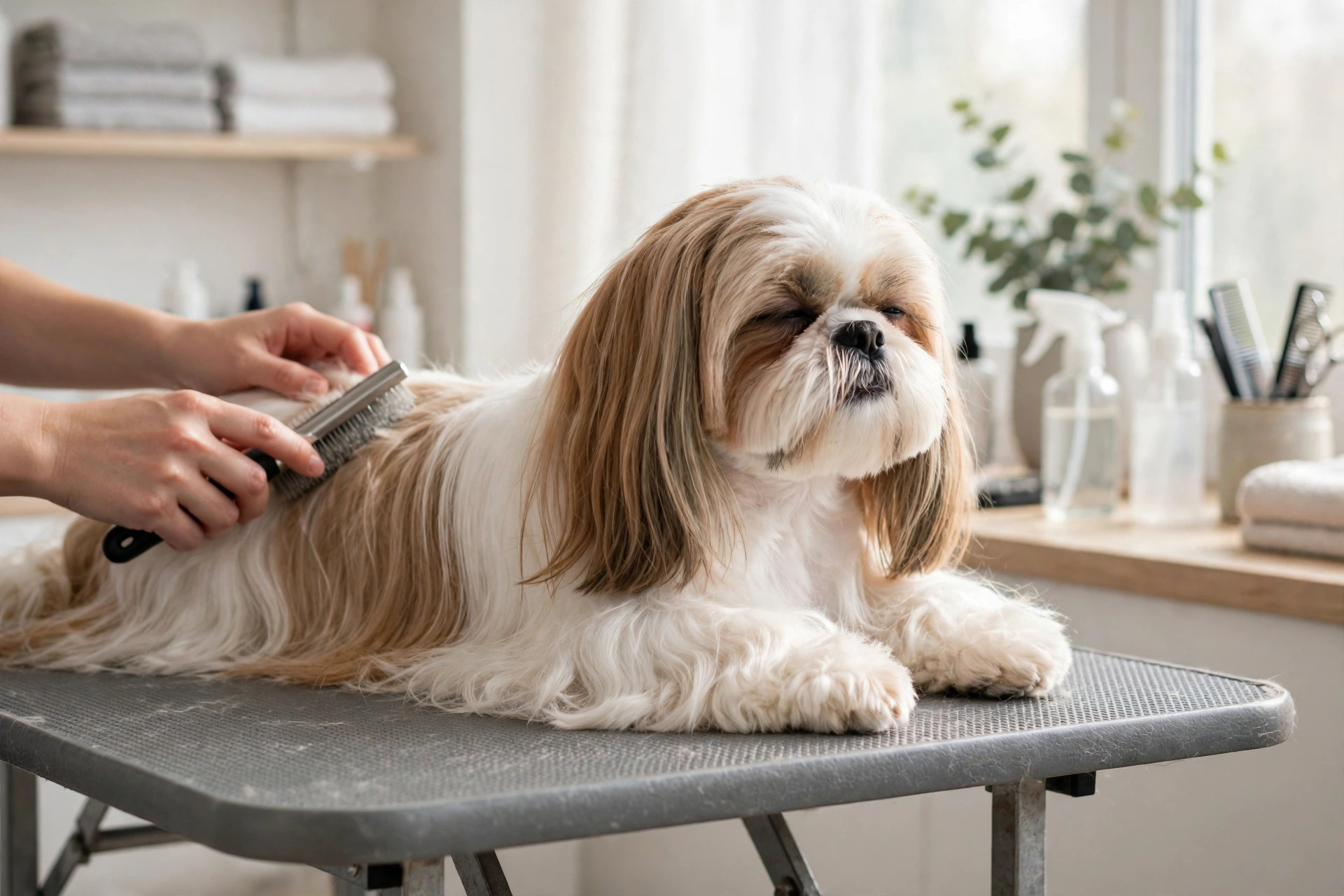
If there is one thing every prospective Shih Tzu owner must understand, it is this: the imperial coat is the tax. The long, dense double coat grows continuously and tangles easily. Kept long, it needs daily brushing right down to the skin, plus topknots to keep hair out of the eyes. Most pet owners choose the practical “puppy cut” — a short clip all over — which still needs a thorough brush-through every day or two and a professional trim every four to six weeks, forever.
The face needs more attention than the body. Wipe around the eyes daily, keep the hair trimmed away from them, and dry the beard after meals and drinks — a damp beard quickly becomes a smelly, stained one. Tear staining is common in this breed; while mostly cosmetic, brown or reddish streaks that worsen suddenly deserve a vet check rather than a cosmetic fix.
Other routine care: baths every 3–4 weeks with a gentle dog shampoo; weekly ear checks, since heavy ear hair traps moisture and ear infections are one of the breed’s most common problems (ask your vet or groomer to show you the correct cleaning method — cleaning too deeply can cause damage); nail trims every 3–4 weeks; and daily tooth brushing, because the small, crowded mouth is the breed’s single biggest health weak spot.
Mats are not just a cosmetic problem. They pull the skin, trap moisture, hide sores, and make movement uncomfortable. If your household cannot maintain daily brushing, the puppy cut is the kinder choice — a short coat on a happy dog beats a long coat on a miserable one.
Shih Tzu Exercise and Training
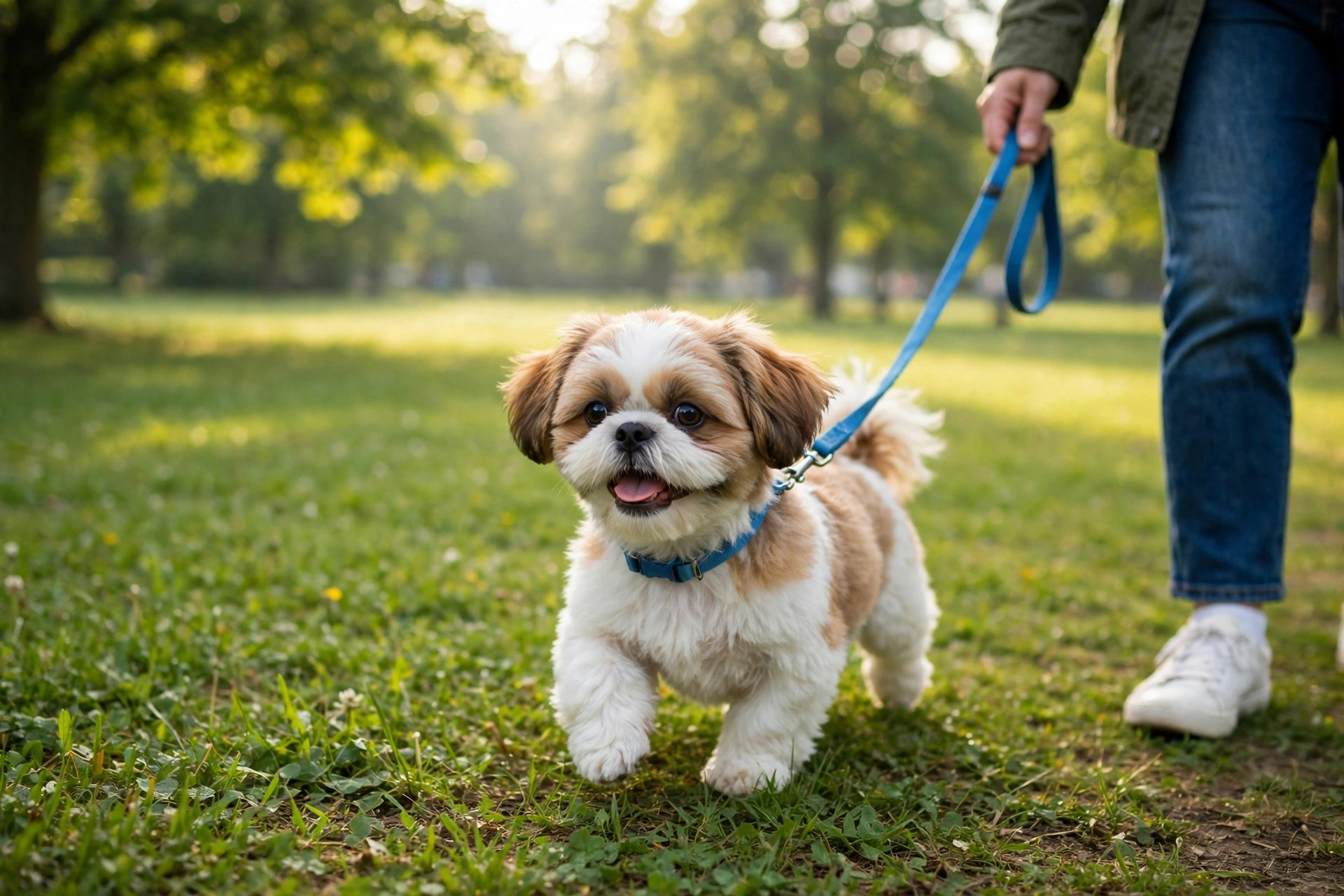
Shih Tzus are not exactly athletes. A daily walk of about 20–30 minutes, split into two short outings, plus indoor playtime is enough to keep most of them fit and content. They enjoy games, puzzle feeders, and gentle training sessions, but they tire quickly and overheat easily — especially in summer, when their flat faces make cooling down harder. Walk them in the morning or evening during hot weather, carry water, and never push a panting Shih Tzu to keep going.
Training should start early and stay positive. Shih Tzus respond to treats, praise, and short sessions; they shut down under harsh corrections. Prioritise house training on a strict schedule, early socialisation to 100+ people and many new sights and sounds before 16 weeks, recall and leash manners (small dogs still need to come when called), and alone-time training built up gradually from day one.
Also Read: Crate Training Your Puppy: Step-by-Step Guide (2026) — a crate gives your Shih Tzu a safe den and speeds up house training.
Shih Tzu Health Problems to Watch For
Shih Tzus are considered a healthy breed overall and live a long time, but their flat faces, prominent eyes, and tiny mouths shape a predictable health file. A large 2024 UK study of Shih Tzus under veterinary care found the most common specific problems were periodontal disease (9.5%), anal sac impaction (7.4%), and ear disorders (5.5%), with skin, dental, and eye problems the most common groups overall. Veterinary sources including PetMD list the breed’s average lifespan at 10–18 years.
Brachycephalic airway syndrome
The short, squished muzzle puts Shih Tzus at risk of brachycephalic obstructive airway syndrome (BOAS): narrowed nostrils, an elongated soft palate, and noisy breathing. Most Shih Tzus snore, but loud snorting, exercise intolerance, and struggling in heat are signs to discuss with your vet. Keep them cool, avoid midday summer walks, and never leave a Shih Tzu in a hot car.
Eye problems
Those large, prominent eyes are beautiful and vulnerable. Dry eye (keratoconjunctivitis sicca), corneal ulcers from scratches, cataracts, and progressive retinal atrophy are all seen in the breed. Any squinting, pawing at the eye, cloudiness, or discharge is a same-week vet appointment — eye injuries in this breed can worsen quickly.
Dental disease
Crowded teeth in a small jaw make periodontal disease the breed’s most common diagnosed problem. Daily brushing, vet-approved dental chews, and professional cleanings are not optional extras for a Shih Tzu — they are core care. Bad breath, bleeding gums, or difficulty chewing need a dental check.
Ears, knees, hips, and kidneys
Ear infections are common thanks to heavy ear hair and trapped moisture; head shaking, odour, or brown debris all point to a vet visit. Patellar luxation (slipping kneecaps) affects some lines, and hip dysplasia occurs despite the breed’s small size. Some Shih Tzus inherit renal dysplasia, a kidney condition responsible breeders screen for — ask about it before buying a puppy. Weight control matters enormously here: an overweight Shih Tzu loads its joints and its airway at the same time.
Book a vet visit promptly for squinting or eye discharge, laboured breathing or collapse in heat, persistent head shaking or smelly ears, bleeding gums or loose teeth, limping or reluctance to jump, or excessive drinking and urination.
Also Read: Why Does My Dog Lick His Paws? Vet Explains (2026) — Shih Tzus with allergies or skin irritation often lick their paws first; this guide explains how to tell normal grooming from a problem.
Feeding a Shih Tzu
Feed a complete, balanced food formulated for small breeds, measured by weight rather than by eye — Shih Tzus gain weight easily, and extra pounds worsen breathing, joints, and dental health. Most adults do well on two measured meals a day rather than free feeding, with treats under 10% of daily calories. Puppies need small-breed puppy food until about 12 months, fed in three to four small meals a day. Always keep fresh water available, and ask your vet about portion size at every checkup — the right amount changes as your dog ages.
Shih Tzu Puppies: Before You Buy or Adopt
Shih Tzu puppies are in high demand, which attracts puppy mills and irresponsible breeders. A reputable breeder will let you meet the mother, show health screening results (including eye and kidney screening), raise puppies in the home, and ask you as many questions as you ask them. Red flags include puppies always available, no health records, prices far below the local average, and sellers who refuse home visits.
Consider rescue first: breed-specific rescues and shelters regularly have Shih Tzus and Shih Tzu mixes, including seniors whose owners could no longer manage the grooming. An adult rescue often comes house trained, with a known temperament and a known coat. Budget for the first year beyond the purchase price: vaccinations, spay/neuter, microchip, a crate and grooming tools, and the first professional grooms — and book your puppy’s first vet visit within a week of coming home.
How Much Does a Shih Tzu Cost?
| Expense | Typical range (USD) |
|---|---|
| Purchase from a reputable breeder | $1,000–$3,000 |
| Adoption / rescue fee | $100–$500 |
| Professional grooming (every 4–6 weeks) | $50–$80 per session |
| Food (small-breed formula) | $30–$60 per month |
| Routine vet care + dental cleanings | $300–$800 per year |
Grooming is the recurring cost that surprises new owners most: at $50–$80 every four to six weeks, it adds $500–$1,000 a year. Add dental cleanings — which this breed needs more often than most — and the Shih Tzu is a small dog with a medium-sized annual budget.
Frequently Asked Questions
Are Shih Tzus good family dogs?
Yes. They are affectionate, sturdy for their size, and generally patient with gentle children. Supervise toddlers, who can accidentally hurt a small dog, and teach children to handle the dog calmly.
Do Shih Tzus shed?
Very little. Their coat grows continuously like hair rather than shedding seasonally, which is why it needs regular trimming. Low shedding does not mean hypoallergenic — no breed is truly hypoallergenic.
Are Shih Tzus easy to train?
They are smart and eager to please, but stubborn and slow to house train. Short, reward-based sessions work best; expect house training to take several months of consistency.
Can Shih Tzus be left alone?
Not for long stretches. They bond closely to their people and can develop separation anxiety. Most adult Shih Tzus cope with 4–6 hours alone if trained gradually, but a full working day alone every day is not fair to this breed.
Do Shih Tzus bark a lot?
Moderately. They bark to alert you to visitors and new sounds, but they are not constant barkers. Early training and enough socialisation keep alert barking under control.
How long do Shih Tzus live?
On average 10–18 years, with a median of about 12.7 years in a large UK veterinary study. Good dental care, weight control, and regular vet visits are the biggest factors in reaching the upper end of that range.
Final Thoughts
So, is a Shih Tzu the right dog for you? If you want a devoted, cheerful companion that thrives in small spaces, adores people, and asks for little more than your lap and a short daily walk, the answer is very likely yes. Just go in with your eyes open: the coat demands daily care, the flat face demands heat awareness, and the small mouth demands real dental attention.
Meet the breed in person before committing — spend time with a Shih Tzu at a breeder, a rescue, or a friend’s home, and watch how it moves through a day. If the grooming routine feels like a pleasure rather than a chore, you have found a companion that will happily share your sofa for the next decade and beyond. And when in doubt about any health question, your veterinarian is always the best guide for your individual dog.
By Dr. Ayaz Ali