
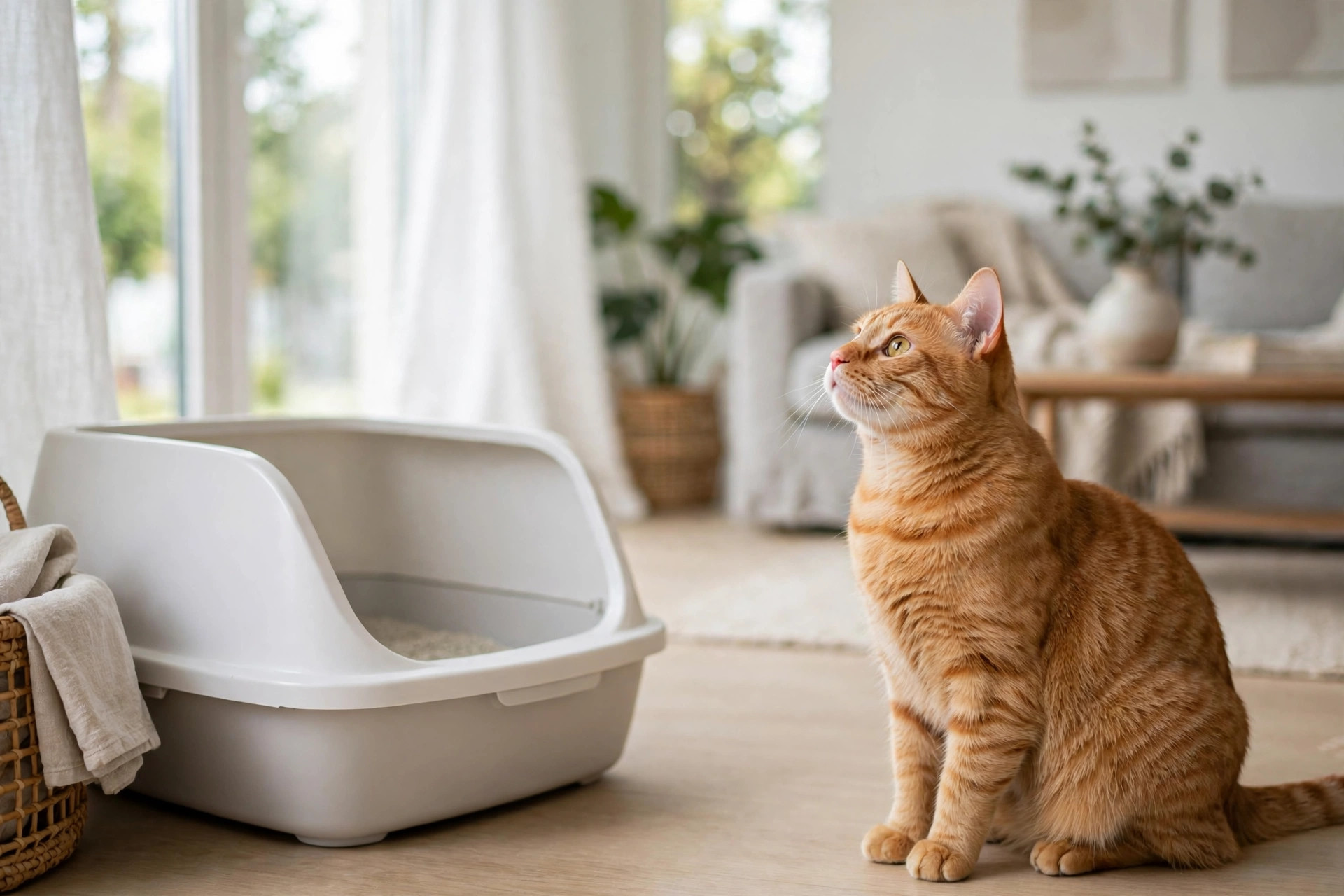
Finding a puddle on the rug or a mess behind the sofa is every cat owner’s nightmare — and the first question is always the same: why is my cat not using the litter box? The good news is that most cats do not abandon their litter box out of spite. They are telling you something, and once you find out what, the problem is usually fixable.
According to the ASPCA, at least 10% of all cats develop elimination problems at some point in their lives. The cause is usually medical, a problem with the box itself, or stress — and often a mix of all three. In this 2026 guide, we will walk you through the 7 most common reasons cats stop using the litter box, how to tell a medical emergency from a setup problem, and the fixes that get cats back to the box.
Table of Contents
- Is It Normal for a Cat to Stop Using the Litter Box?
- Rule Out Medical Causes First
- The 7 Reasons Cats Stop Using the Litter Box
- How to Fix It: The Cat-Friendly Litter Box Setup
- Retraining a Cat That Has Stopped Using the Box
- What NOT to Do
- When to Call the Vet Right Away
- Frequently Asked Questions
Is It Normal for a Cat to Stop Using the Litter Box?
Cats are famously fastidious animals. A healthy cat with a clean, accessible box almost always uses it — burying waste is an instinct left over from their wild ancestors, who hid their scent from predators. So when a litter-trained cat suddenly starts going elsewhere, it is not normal behavior and it is not random. Something has changed, and your cat is the only one who knows what.
The important thing to understand is that litter box avoidance is a symptom, not a behavior problem on its own. Punishing the cat, or simply moving the box and hoping for the best, rarely solves anything. The fix starts with figuring out which of three buckets the cause falls into: medical, the box itself, or stress. Work through them in that order — medical first, always.
One distinction matters from the start. Voiding is emptying the bladder or bowels in the wrong place, usually in large amounts on horizontal surfaces like rugs or beds. Spraying or marking is different: small amounts of pungent urine on vertical surfaces like walls or furniture legs, usually by an unneutered male or a stressed cat. Marking needs a different approach, so if your cat is spraying rather than voiding, talk to your vet about that specific issue.
Rule Out Medical Causes First

Before you change a single thing about the litter box, book a vet visit. Pain and illness are among the most common reasons a cat stops using the litter box, and a cat can look perfectly fine while being seriously unwell. Veterinary schools including Cornell’s Feline Health Center all give the same advice: medical conditions must be ruled out by a veterinarian before you treat the problem as behavioral.
These are the medical problems most often behind litter box avoidance:
1. Urinary tract infection (UTI) and bladder inflammation
A urinary tract infection makes urination painful, so the cat starts to associate the litter box with pain — and avoids it. Feline idiopathic cystitis (FIC), a sterile inflammation of the bladder with no infection, is the most common cause of urinary symptoms in young to middle-aged cats, and stress is a major trigger. Watch for frequent trips to the box with only small amounts of urine, straining, crying while urinating, or blood in the urine.
Also Read: Cat UTI Symptoms: Urinary Problems Guide (2026)
2. Bladder stones and crystals
Mineral crystals in the urine irritate the bladder lining and can form stones. In male cats, crystals can clump into a plug that blocks the urethra completely. A blocked cat strains hard but produces little or no urine — this is a life-threatening emergency that can be fatal within 24–48 hours.
3. Kidney disease and diabetes
Both conditions make cats drink and urinate far more than usual. A cat that needs to go constantly may simply not make it to the box in time. Increased thirst combined with accidents outside the box is a classic early warning sign in senior cats.
4. Arthritis and mobility problems
An older cat with stiff, painful joints may struggle to climb into a high-sided or top-entry box, or to walk to a box kept downstairs. The cat is not being stubborn — the box has become physically hard to use. Low-entry boxes and a box on every floor solve this.
5. Constipation and digestive problems
A cat that strains to defecate because of constipation, inflammatory bowel disease, or a swallowed foreign object may avoid the box for the same pain-association reason. Hard, dry stools or going days without a bowel movement all deserve a vet call.
6. Cognitive dysfunction in senior cats
Older cats can develop a form of dementia that makes them forget where the box is. The ASPCA notes that feline cognitive dysfunction affects over 55% of cats between 11 and 15 years old. A senior cat that seems confused or eliminates in odd places needs a vet assessment, not a scolding.
At the vet visit, expect a physical exam, a urinalysis, and possibly blood work, X-rays, or an ultrasound. Never give your cat human painkillers or leftover antibiotics while you wait — many are toxic to cats and they can mask the symptoms your vet needs to see.
The 7 Reasons Cats Stop Using the Litter Box
If the vet gives your cat a clean bill of health, the cause is almost certainly in the box, the litter, or the home. Here are the seven reasons, in the order owners most often find them.
Reason 1: The box is dirty
This is the single most common non-medical cause. Cats have a far stronger sense of smell than we do, and many will refuse a box that has not been scooped. The ASPCA recommends scooping at least once a day and fully emptying and washing the box with mild, unscented soap at least once a week. Replace the box itself about every two years — deep scratches in old plastic trap odors no amount of washing removes.
Reason 2: Not enough boxes
The golden rule is one box per cat, plus one extra. In a two-cat home, that means three boxes. Many cats refuse to use a box another cat has already used, and a timid cat may be blocked from the only box. Spread the boxes around the house in different rooms — three boxes side by side in one room still count as one location to a cat.
Reason 3: The wrong litter
Most cats prefer unscented, clumping litter with a soft, sandy texture, filled just 1–2 inches deep. Scented litters, strong deodorizers, and deep litter beds put many cats off. If you recently switched brands, switch back — and if you want to try a new litter, introduce it gradually by mixing it with the old one over a week.
Reason 4: The wrong box
Covered boxes, top-entry boxes, and boxes that are too small are all common culprits. Most cats prefer a large, uncovered box they can stand and turn around in, with a clear view of their surroundings and an easy escape route. Senior, overweight, and arthritic cats need a low-sided entry they can step into without jumping.
Reason 5: The wrong location
Cats want privacy, quiet, and an easy escape route — not a laundry room next to a rattling washing machine, a dark basement, or a box wedged behind a door that sometimes closes. Keep boxes away from food and water bowls, away from noisy appliances, and somewhere the cat can reach at all times, day and night.
Reason 6: Stress or conflict in the home
Moves, new pets, a new baby, visitors, construction noise, or tension with another cat can all drive a cat away from the box. Stress is also the main trigger for feline idiopathic cystitis, so a stressed cat can develop a genuine medical problem on top of the behavioral one. A cat that was startled or trapped by another pet while using the box may develop a lasting aversion to that spot — the ASPCA notes that a single bad experience can create a permanent association.
Also Read: Why Is My Cat Suddenly Hiding? Guide (2026)
Reason 7: A surface or location preference has formed
Once a cat avoids the box for any reason, the avoidance can become a habit. The cat develops a preference for a particular surface (a soft rug, a pile of laundry, a potted plant) or a particular location, and keeps returning to it. This is why quick action matters: the longer the pattern runs, the harder it is to break. Clean old spots with an enzymatic cleaner — never bleach or ammonia-based products, which smell like urine to a cat.
How to Fix It: The Cat-Friendly Litter Box Setup
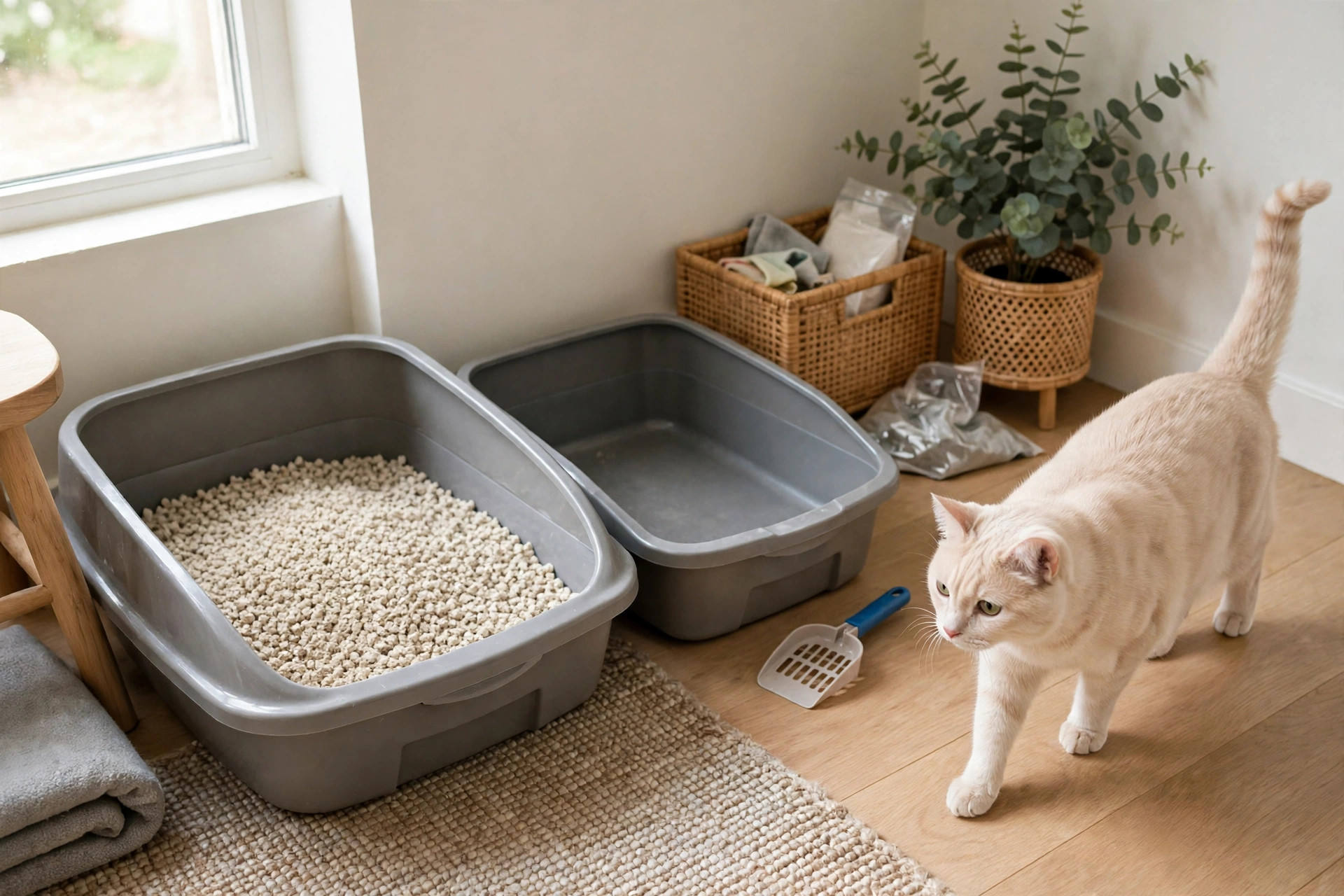
Work through this checklist in order. Change one thing at a time and give your cat 2–3 days to respond before changing the next, so you can tell what actually worked.
| Fix | What to Do | Why It Works |
|---|---|---|
| Box count | One box per cat, plus one extra, in separate rooms | Stops guarding and queueing in multi-cat homes |
| Box type | Large, uncovered, low-entry; at least 1.5x your cat’s body length | Cats can turn, see around, and escape easily |
| Litter | Unscented clumping litter, 1–2 inches deep | Matches most cats’ texture and scent preference |
| Cleaning | Scoop daily; full wash with mild unscented soap weekly | A clean box is the single biggest motivator |
| Location | Quiet, private, always accessible, away from food and noisy appliances | Cats will not use a box they cannot reach or feel safe in |
| Senior access | Low-sided box on every floor; add a ramp if needed | Arthritic cats need an easy step-in |
If your cat has been using an automatic box, consider going back to a traditional open pan while you troubleshoot — the ASPCA advises switching back to a traditional box if litter-box problems start with an automatic one, and some cats are put off by the motor noise or the enclosed drum.
Also Read: Do Self-Cleaning Litter Boxes Work? (2026)
Retraining a Cat That Has Stopped Using the Box
Once the cause is fixed, most cats return to the box on their own. If the habit has stuck, a short, patient retraining plan helps:
- Keep a log. Note where accidents happen, when, and on what surface. The pattern tells you whether it is a surface preference, a location preference, or a timing issue.
- Place a box where accidents happen. If your cat keeps using the same corner, put a clean box there temporarily. Once the cat is using it reliably, move it a few inches a day toward your preferred spot.
- Clean accidents with an enzymatic cleaner. Regular cleaners leave behind scent traces a cat can still smell. A black light (UV light) can reveal old accident spots you missed.
- Make accident spots less appealing. Cover the spot with aluminum foil or double-sided tape for a few weeks — but only after a box is available nearby. Keep deterrents in place for at least six weeks after your cat is consistently using the box again.
- Reward, never punish. Praise and a treat when you see your cat use the box correctly. Never rub a cat’s nose in a mess or shout — fear makes litter-box problems worse, not better.
- Reduce stress. Keep routines predictable, add vertical space and hiding spots, play daily, and consider a pheromone diffuser in multi-cat homes. If conflict between cats is the trigger, add resources (boxes, food stations, water, resting spots) in separate locations so no cat has to compete.
For kittens or newly adopted cats that never learned the box, the same approach works: confine the cat to one small room with the box, food, water, and a bed for a few days, then expand its territory gradually once the box habit is solid.
What NOT to Do
- Never punish your cat. Yelling, spraying water, or rubbing a cat’s nose in an accident only creates fear — and a frightened cat avoids the box even more.
- Never use bleach or ammonia cleaners on accidents. Ammonia smells like urine to a cat and can actually attract them back to the spot. Use an enzymatic cleaner made for pet messes.
- Never move the box suddenly. Cats rely on routine. If the box must move, shift it a little at a time.
- Never switch litter brands overnight. Mix the new litter into the old one gradually over a week.
- Never ignore a sudden change. A cat that was perfectly litter-trained and suddenly stops is almost always sick, in pain, or seriously stressed. Waiting it out lets a medical problem — and a bad habit — get worse.
When to Call the Vet Right Away
Some litter-box changes are emergencies. Call your veterinarian immediately — do not wait until morning — if you notice any of these:
| Sign | Why It Is Urgent |
|---|---|
| Straining to urinate with little or no urine | Possible urinary blockage — fatal within 24–48 hours in male cats |
| Blood in the urine | Infection, stones, or bladder inflammation need same-day care |
| Crying or howling while using the box | A strong pain signal — do not wait |
| No urination for 24 hours | Possible blockage or kidney problem |
| Vomiting, lethargy, or collapse alongside litter-box changes | Signs of a serious systemic illness |
| Sudden change plus not eating for 24 hours | Cats risk fatty liver disease after just 24–48 hours without food |
Even without a red flag, a cat that has stopped using the box deserves a vet appointment within 24–48 hours. You know your cat’s normal better than anyone — when that normal changes, trust it and make the call.
Frequently Asked Questions
Why is my cat not using the litter box all of a sudden?
A sudden change usually means pain, illness, or stress. Urinary infections, bladder inflammation, kidney disease, and arthritis are the most common medical causes, while a dirty box, a moved box, a new litter, or a new pet can trigger it behaviorally. Always rule out medical causes with a vet visit first.
Why is my cat peeing outside the litter box but pooping in it?
Many cats use the box for one and not the other. Peeing outside the box while still pooping in it often points to a urinary problem (pain when urinating) or a litter texture the cat dislikes. A vet check plus a fresh, clean box usually sorts it out.
How do I get my cat to use the litter box again?
Rule out illness at the vet, then fix the setup: one box per cat plus one extra, large uncovered boxes, unscented clumping litter 1–2 inches deep, scooped daily, in a quiet spot. Place a box where accidents happen, clean old spots with an enzymatic cleaner, and reward correct use. Most cats return within a week or two once the cause is fixed.
Do cats stop using the litter box when stressed?
Yes. Moves, new pets, visitors, loud work, or conflict with another cat can all drive a cat away from the box — and stress is also the main trigger for feline idiopathic cystitis, a painful bladder inflammation. Keep routines predictable and use a pheromone diffuser if stress is the likely cause.
Should I punish my cat for peeing outside the litter box?
No. Punishment does not teach a cat to use the box — it teaches the cat to fear you and to hide when it eliminates, which makes the problem harder to fix. Find and fix the cause instead, and reward your cat when it uses the box correctly.
How many litter boxes should I have for two cats?
Three. The standard rule is one box per cat, plus one extra, placed in separate rooms — not side by side. Many cats refuse to use a box another cat has already used, and a timid cat may be blocked from a single box by a more confident housemate.
Final Thoughts
So, why is my cat not using the litter box? In most cases, the answer is simple once you look in the right order: a medical problem that hurts, a box the cat dislikes or cannot reach, or stress in the home. The fix is almost never punishment — it is a vet visit, a cleaner and better-placed box, and a little patience while your cat relearns to trust the spot.
The rule to remember is this: a cat that suddenly stops using the litter box is asking for help, not making a mess on purpose. Rule out illness first, fix the setup second, and give it a week. If the problem persists after both, your vet can refer you to a feline behavior specialist — most litter-box problems are solvable, and the sooner you act, the easier the fix.
For more on feline elimination problems, the ASPCA’s guide is a useful reference: ASPCA — Litter Box Problems in Cats.
By Dr. Ayaz Ali