
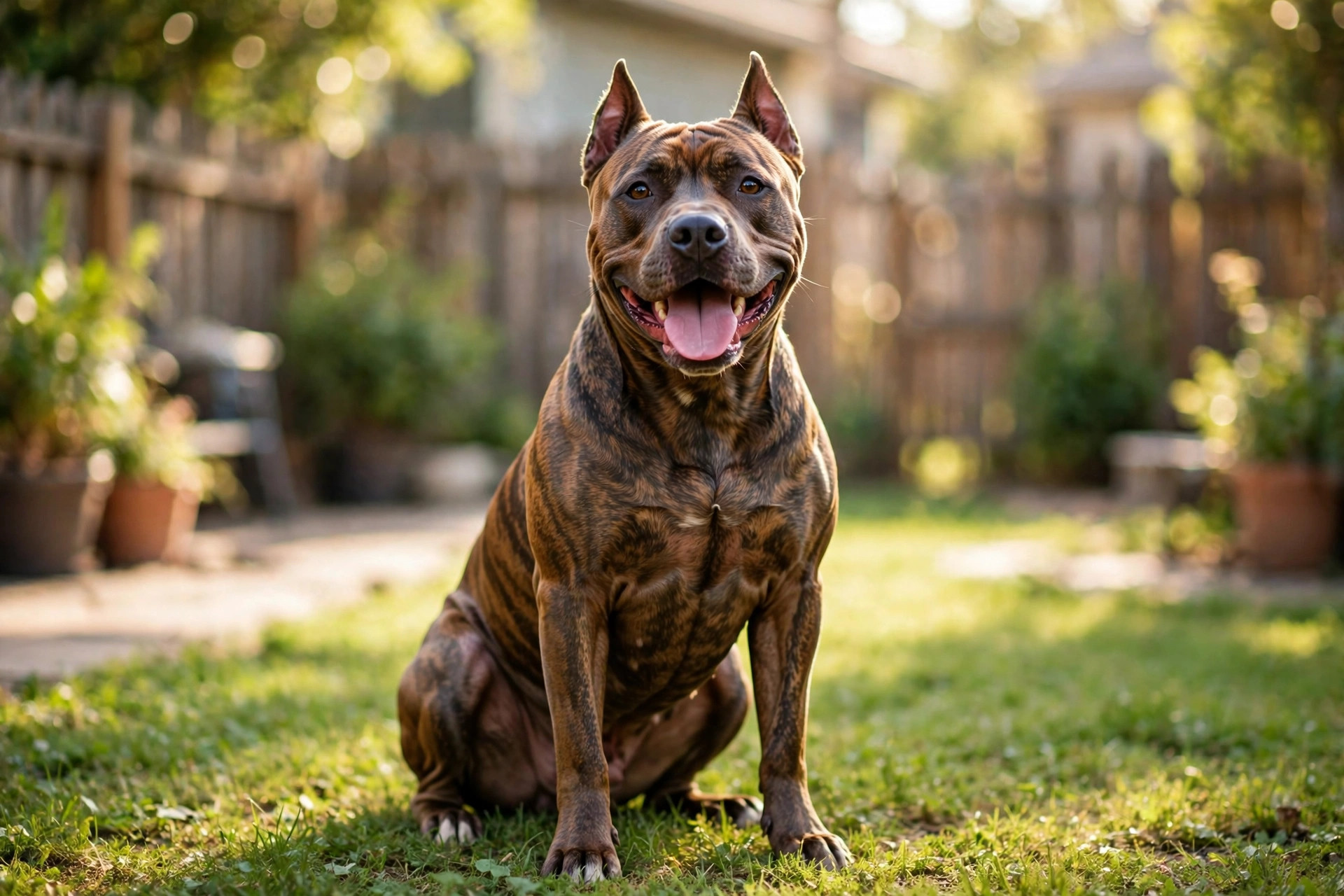
Few dog breeds spark as much debate as the pit bull — loyal family companion to its fans, misunderstood risk to its critics. If you’re considering bringing one home, you deserve facts, not headlines. This complete pit bull breed guide gives you the honest picture: what “pit bull” actually means, the breed’s temperament, care and training needs, health risks, and the truth behind the biggest myths.
Here’s the short version: pit bull-type dogs are athletic, affectionate, people-obsessed companions that thrive with structure, early socialization, and about an hour of hard exercise every day. They are not beginner-proof apartment pets, and they are not the villains of tabloid stories either. Read on for everything you need to know before you decide.
Table of Contents
- What Exactly Is a “Pit Bull”?
- Pit Bull Breed at a Glance
- Pit Bull Temperament & Personality
- Pit Bull Myths vs. Facts
- Training & Socialization: Non-Negotiable
- Exercise Needs: Built for Action
- Grooming & Feeding
- Pit Bull Health Issues to Know
- Is a Pit Bull Right for You?
- Adopting During National Pit Bull Awareness Month
- Frequently Asked Questions
What Exactly Is a “Pit Bull”?
Here’s something most debates skip: “pit bull” is not a single breed. It’s a blanket term used to describe several closely related breeds and their mixes, including the American Pit Bull Terrier, American Staffordshire Terrier, Staffordshire Bull Terrier, American Bulldog, and Bull Terrier. Dog DNA tests can even help you find out if your own dog is classified as a pit bull type.
The American Kennel Club does not recognize “pit bull” as a distinct breed, but the United Kennel Club recognized the American Pit Bull Terrier in 1898 — its founder registered his own dog as the very first American Pit Bull Terrier. These dogs descended from 19th-century English bulldog-and-terrier crosses, and immigrants brought them to America where they worked as farm dogs, catch dogs for livestock, and family companions. For authoritative breed details, see the PetMD American Pit Bull Terrier breed page.
Pit Bull Breed at a Glance
| Trait | Details |
|---|---|
| Size | Medium; males 35–70 lbs, 18–21 in; females 30–60 lbs, 17–20 in |
| Lifespan | 12–16 years with good care |
| Coat | Short, smooth, glossy; all colors and patterns, moderate shedding |
| Energy level | High — needs 60–90 minutes of vigorous activity daily |
| Temperament | Loyal, affectionate, intelligent, courageous, eager to please |
| Good with kids/pets | Often wonderful with children when raised together; can be dog-selective — supervise other pets |
| Watchdog ability | Alert and protective of family; not naturally hostile to strangers |
| Best for | Active, experienced owners with time for exercise and training |
Pit Bull Temperament & Personality
Strip away the headlines and the pit bull temperament is surprisingly clear: these are people dogs. Pit bull-type breeds were historically bred to be handled closely by humans, and most are intensely loyal, physically affectionate (expect a 60-pound lap dog), and eager to please. Breed temperament testing organizations have consistently scored them among the most stable, friendly breeds.
1. Loyal and Deeply Bonded
Pit bulls attach hard to their humans. They want to be near you, touching you, involved in whatever you’re doing. That devotion is the breed’s greatest gift — and its biggest risk: a pit bull left alone for long stretches can develop separation anxiety, which leads to destructive chewing and escape attempts.
Also Read: Separation Anxiety in Dogs: Signs, Causes & How to Help (2026)
2. Intelligent and Eager to Please
Pit bulls are smart and highly trainable, responding best to positive reinforcement — treats, play, and praise. But they’re also strong-willed at times, and intelligence without structure turns into mischief: chewing, digging, and door-dashing when bored.
3. Courageous but People-Oriented
Despite their tough reputation, pit bulls are generally not people-aggressive by nature. Most are friendly to the point of being terrible guard dogs — they’ll happily greet your guests. What they can be is selective or reactive with other dogs, especially as adults, so supervised, controlled introductions are always the smart move.
4. High Energy, High Affection
This is not a couch-potato breed. Pit bulls are athletes who need a job, a game, or a long workout every day. In return, they give you one of the most devoted, playful companions in the dog world.
Pit Bull Myths vs. Facts
No pit bull breed guide would be complete without addressing the misinformation. Let’s separate myth from fact:
MYTH: Pit bulls have “locking jaws.”
FACT: There is no special locking mechanism in a pit bull’s jaw. Their jaws are anatomically no different from other breeds — they’re simply strong, muscular dogs, so their bite is powerful. The “locking jaw” is a myth with zero veterinary evidence behind it.
MYTH: All pit bulls are inherently aggressive.
FACT: Temperament depends overwhelmingly on upbringing, training, and socialization — not breed alone. Well-raised pit bulls are consistently among the most affectionate, loyal family dogs. Studies of dog-bite factors point to owner behavior and management, not breed, as the decisive factor.
MYTH: Pit bulls can’t live with children.
FACT: With proper socialization, pit bull-type dogs are often patient and protective with children. As with any powerful breed, all interactions between dogs and small children should be supervised.
MYTH: Pit bulls are banned everywhere.
FACT: Ownership is legal in most places, but some cities and countries impose breed-specific legislation (BSL) restricting or banning pit bull-type dogs. These laws are controversial and debated for effectiveness — but they exist, so always check your local laws before bringing one home.
MYTH: A pit bull’s brain grows too big for its skull, causing aggression.
FACT: Completely false — there is no such growth pattern in any dog breed. This old rumor has no basis in veterinary science.
Training & Socialization: Non-Negotiable
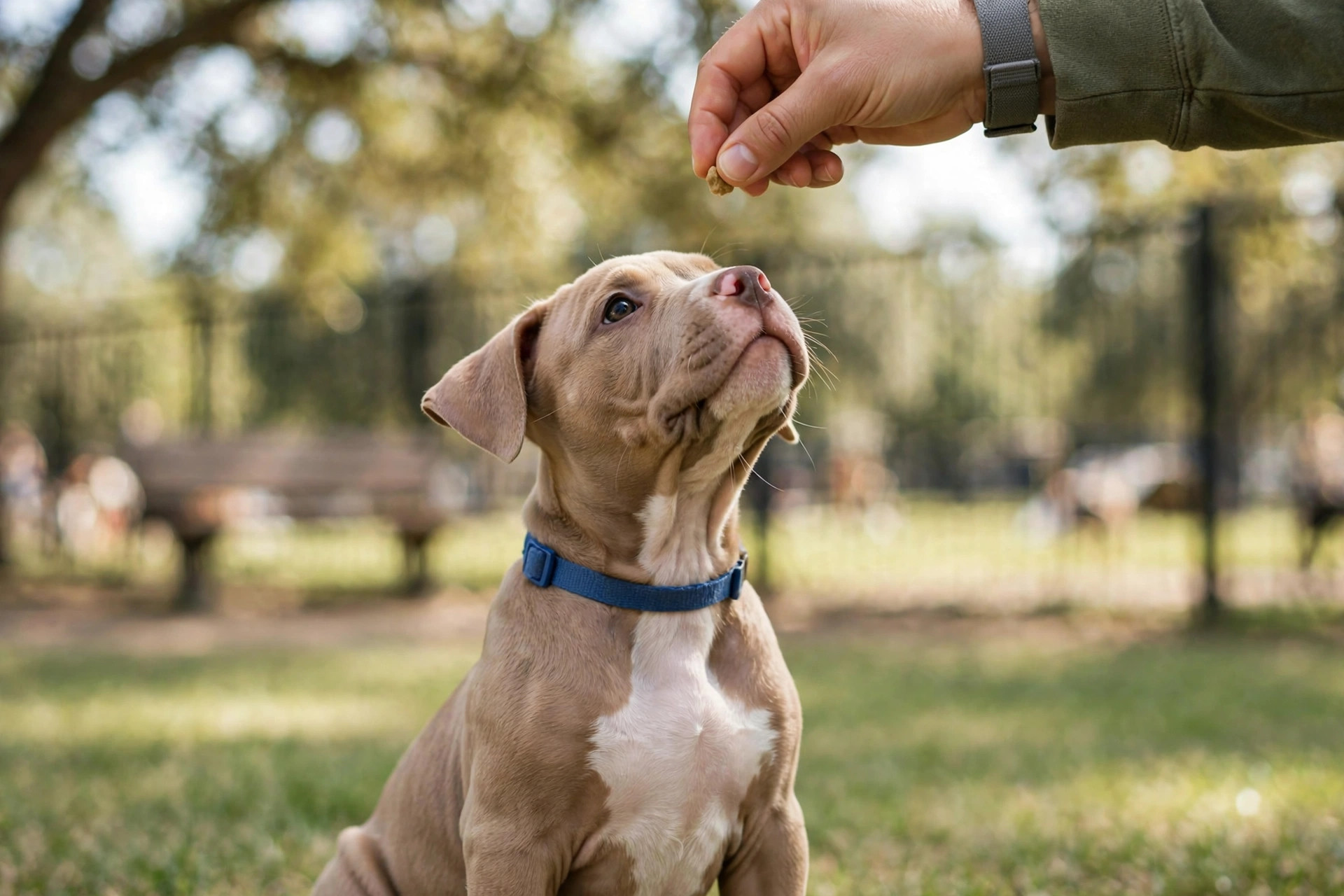
With a breed this strong, training is a safety issue — not a hobby. The good news: pit bulls are among the most trainable breeds when you start early and stay consistent.
1. Early Socialization (8–16 Weeks)
Expose your pit bull puppy to dozens of people, friendly dogs, sights, sounds, and surfaces — calmly and positively. This is the single most important investment you’ll ever make in this breed. Enroll in a puppy obedience class for structured practice.
2. Positive Reinforcement Only
Pit bulls respond to praise, treats, and play — not harsh corrections. Aversive methods (alpha rolls, yelling, shock collars) damage trust, and an anxious, powerful dog is dangerous precisely because of its strength. Teach sit, stay, recall, and “leave it” — solid recall is essential for safety.
3. Loose-Leash Walking
A muscular pit bull that pulls is a liability on walks. Train polite leash walking early with the “be a tree” method and generous rewards for a slack leash. See our trainer-approved method: Stop Your Dog Pulling on the Leash: 7 Trainer Tips (2026).
4. Never Train for Aggression
Never encourage guarding or attack behavior, and never leave a pit bull running loose unsupervised. Even a well-trained pit bull can be dog-selective as an adult — always supervise interactions with unfamiliar dogs, and secure your yard with a locked gate (this also protects your dog from theft).
Exercise Needs: Built for Action
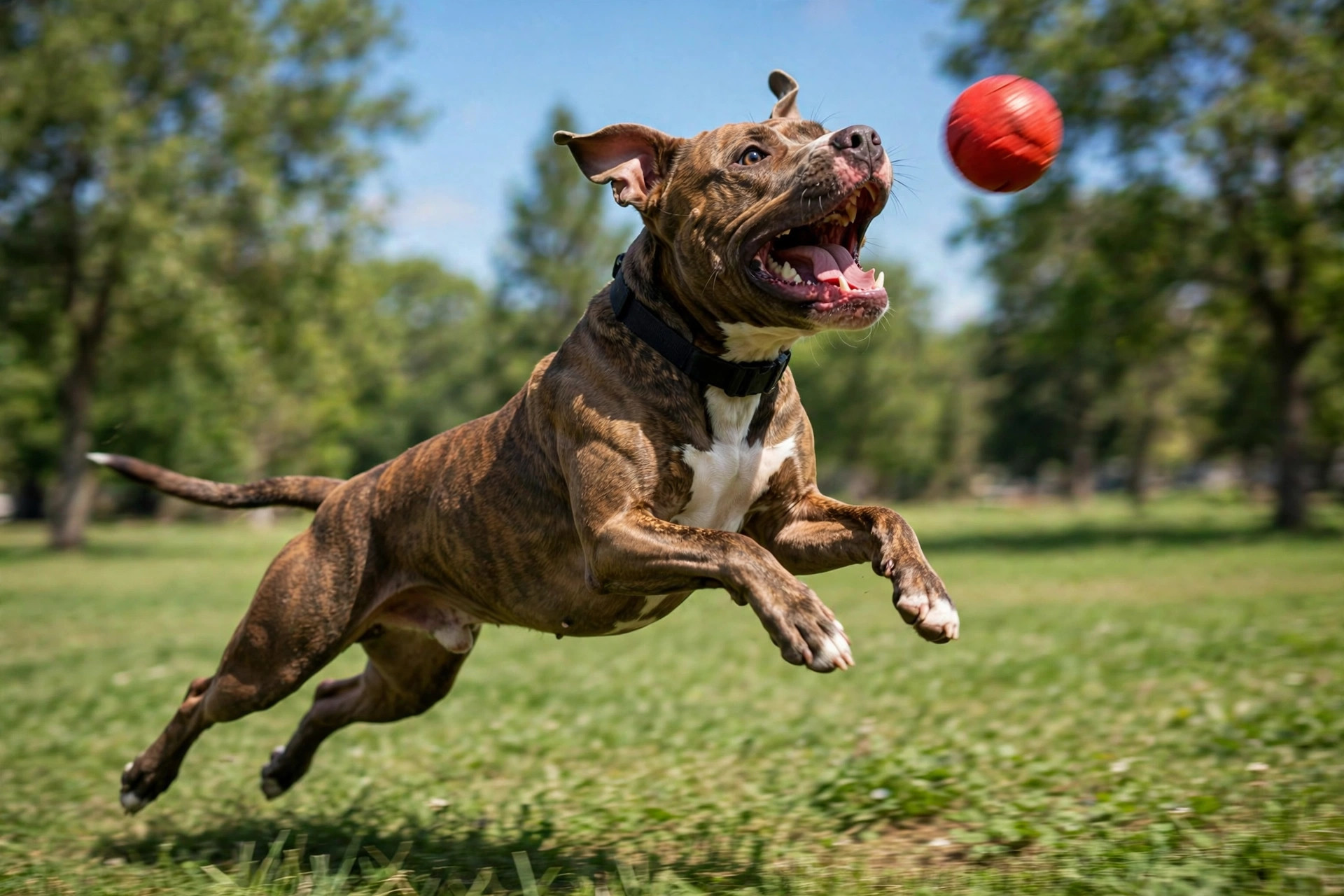
Under-exercising is the number one reason pit bulls develop behavior problems. A healthy adult pit bull needs at least 60–90 minutes of vigorous activity daily: brisk walks, jogging, fetch, swimming, flirt-pole play, or dog sports like agility and weight pull.
Mental exercise counts too. Ten to fifteen minutes of training practice, puzzle feeders, or scent games tires this breed’s brain as effectively as a long walk. A tired pit bull is a calm, happy, well-behaved dog; an under-exercised one is destructive, anxious, and loud.
Also Read: Best Fetch Toys for Dogs 2026: National Fetch Day Guide — fetch is one of the best outlets for this breed’s athleticism.
Grooming & Feeding
The pit bull’s short, smooth coat is one of its easiest features: weekly brushing, occasional baths, and regular nail trims are all it takes. They shed moderately year-round. One caution: pale or white-coated pit bulls can be sun-sensitive — talk to your vet about dog-safe sun protection — and keep their skin clean and dry, since the breed is prone to allergies.
Feeding-wise, pit bulls do best on high-quality, protein-rich dog food with measured portions — free-feeding is a mistake with this breed. They gain weight easily, and extra pounds punish joints already prone to dysplasia. You should be able to feel — but not see — the ribs. Keep treats and food scraps within the 10% treat rule: extras under 10% of daily calories.
Pit Bull Health Issues to Know
Pit bull-type dogs are generally healthy and long-lived, but several breed-specific health concerns deserve your attention:
1. Hip Dysplasia (and Elbow Dysplasia)
The breed’s most famous health problem — a developmental joint disorder causing pain, lameness, and arthritis. Responsible breeders screen both parents’ hips. Keeping your dog lean and avoiding excessive high-impact exercise in puppies reduces risk.
2. Skin Allergies
Pit bulls are notably prone to environmental and food allergies: itchy paws, red skin, ear infections, and hot spots. Persistent itching deserves a vet workup, not guesswork — allergies are manageable with the right diet, medications, and skin care.
3. Heart Disease
Aortic stenosis and other congenital heart conditions occur in the breed. Regular vet checkups with heart screening help catch problems early.
4. Hypothyroidism
An underactive thyroid can cause weight gain, lethargy, and coat thinning. It’s easily diagnosed with a blood test and managed with daily medication.
5. Knee Issues (Luxating Patella)
Dislocation of the kneecap is a known risk — watch for a skipping or hopping gait. Mild cases are managed; severe cases may need surgery.
Schedule vet checkups at least annually — twice a year for seniors. Early screening is the difference between a manageable condition and a crisis.
Is a Pit Bull Right for You?
A pit bull is a great fit if: you are an active owner who can commit to 60–90 minutes of daily exercise plus training; you want a deeply loyal, affectionate, highly trainable companion; you are home often enough to avoid long alone stretches; and you’ve checked your local breed-specific legislation.
Reconsider if: you are a first-time dog owner with no training experience; your household is sedentary or away 10+ hours a day; you want a low-energy, independent dog; you live somewhere with breed bans or strict restrictions; or you’re not prepared for the breed’s social stigma (strangers will judge the dog, and sometimes you).
Also Read: German Shepherd: Breed Guide, Training & Care (2026) — another powerful, intelligent breed with similar exercise and training demands.
Adopting During National Pit Bull Awareness Month
October is National Pit Bull Awareness Month — a month dedicated to busting myths and celebrating the breed’s true character. Shelters are full of pit bull-type dogs waiting for homes, often the longest of any breed type because of the stigma this very guide addresses.
If you’re ready for this breed, adopting an adult pit bull has real advantages: their temperament, size, and energy level are already known — no puppy guesswork. Ask shelters about the dog’s history with kids, cats, and other dogs. Reputable rescues will match you honestly, not just hand you a leash.
Frequently Asked Questions
Are pit bulls good family dogs?
Yes — in the right household. Pit bulls are loyal, affectionate, and often wonderful with children they were raised with. But they need experienced owners, early socialization, and serious daily exercise. They are a poor fit for sedentary or first-time households.
Are pit bulls naturally aggressive?
No. Pit bulls are not aggressive by nature — temperament depends on upbringing, training, and socialization. They are powerful dogs, however, so responsible ownership, early training, and supervision around unfamiliar dogs are essential.
Do pit bulls have locking jaws?
No. There is no locking mechanism in a pit bull’s jaw — their jaws are anatomically like any other breed’s. They are simply strong, muscular dogs with a powerful bite.
How much exercise does a pit bull need?
At least 60–90 minutes of vigorous daily exercise for a healthy adult — walks, jogging, fetch, swimming, or dog sports — plus training and mental enrichment like puzzle games and scent work.
Are pit bulls good for first-time dog owners?
Honestly, they can be a stretch for beginners. Pit bulls demand consistent training, heavy socialization, and high daily exercise. A committed beginner with trainer support can succeed, but most trainers recommend a more forgiving breed for a first dog.
Are pit bulls illegal anywhere?
Ownership is legal in most places, but some cities and countries have breed-specific legislation (BSL) that bans or restricts pit bull-type dogs. Always check your local laws and rental or insurance policies before bringing one home.
How long do pit bulls live?
About 12–16 years on average. Keeping your pit bull lean, well-exercised, and on a vet-monitored health plan — with early screening for joint and heart problems — gives it the best shot at the long end of that range.
Final Thoughts
So, should you bring home a pit bull? If you’re an active, committed owner ready to match this breed’s energy — daily exercise, serious training and socialization, responsible management, and proactive vet care — few dogs reward you like a well-raised pit bull. The loyalty, playfulness, and affection of these dogs is the reason their owners become lifelong advocates.
But go in with open eyes: this is a powerful, high-energy athlete, not an easy pet. Accept the exercise commitment, check your local laws, socialize relentlessly, and never skip training. Do that, and you’ll understand why pit bull people keep saying the same thing — there’s no more devoted companion.
And if this October you meet a shelter pittie with sad eyes and a wagging tail, you’ll know exactly what you’re looking at: not a headline, but a dog.
By Dr. Ayaz Ali