
By Dr. Ayaz Ali
Few dogs command respect the way a German Shepherd does. The upright ears, the steady gaze, the athletic frame — it is no wonder this german shepherd breed guide is one of the most requested topics among people considering a large, intelligent dog. German Shepherds serve as police K-9s, search-and-rescue dogs, and service dogs worldwide, but they are also loyal, affectionate family companions — in the right home.
This 2026 guide covers everything you need to know before bringing one home: German Shepherd temperament, exercise and training needs, grooming and shedding, feeding, common health issues, and the honest truth about whether this powerful working breed fits your lifestyle.
Table of Contents
- German Shepherd Breed at a Glance
- German Shepherd Temperament & Personality
- Size, Appearance & Coat
- Exercise & Training Needs
- Grooming & Shedding
- Feeding Your German Shepherd
- German Shepherd Health Issues to Know
- Is a German Shepherd Right for You?
- German Shepherd Puppy & Breeder Tips
- Frequently Asked Questions
German Shepherd Breed at a Glance
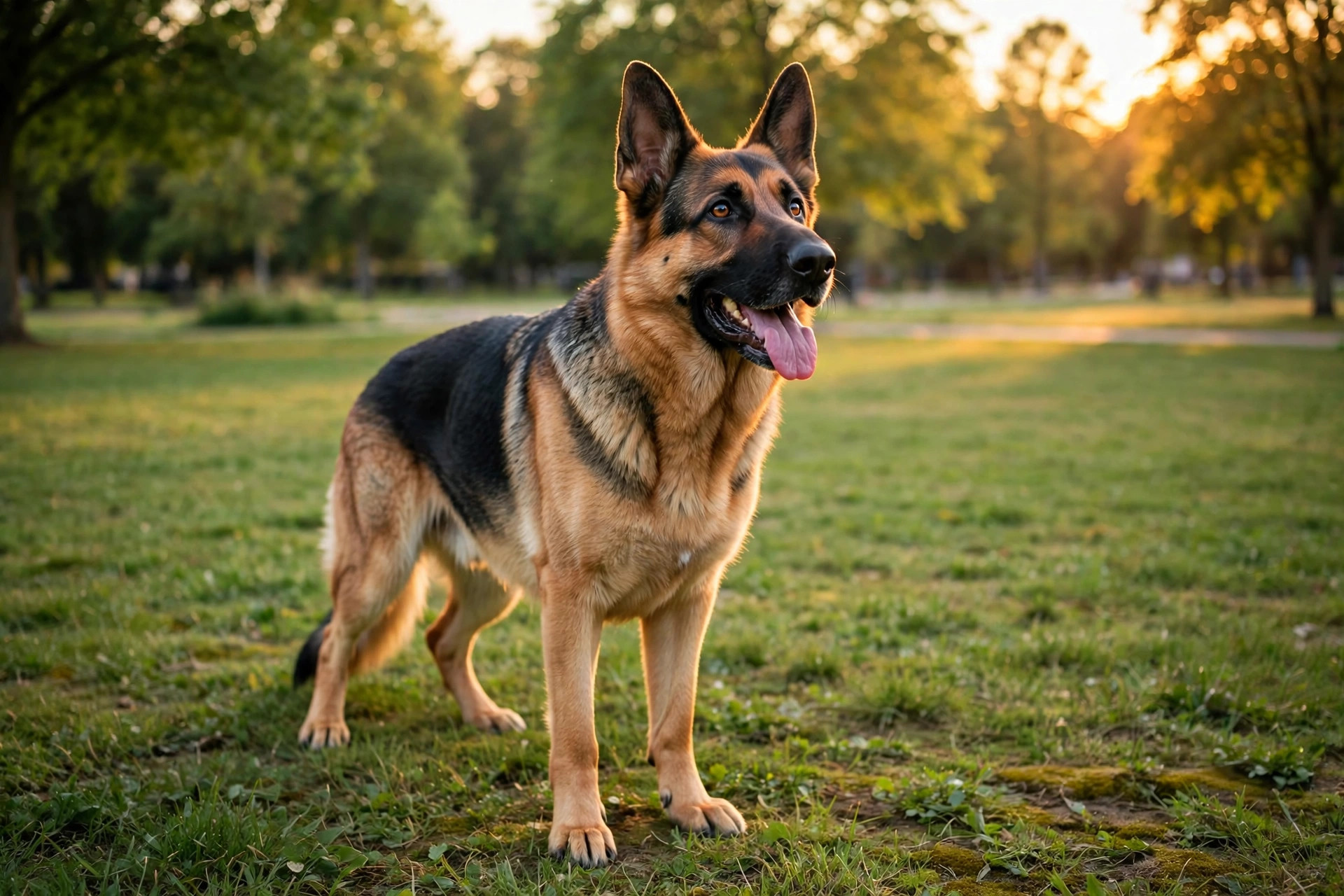
| Trait | Details |
|---|---|
| Origin | Germany, late 1800s — developed for herding sheep |
| AKC group | Herding |
| Size | Males 24–26 in, 65–90 lbs; females 22–24 in, 50–70 lbs |
| Lifespan | 9–13 years |
| Coat | Dense double coat; heavy shedder with seasonal blow-outs |
| Energy level | Very high — needs 1.5–2 hours of daily exercise |
| Temperament | Loyal, confident, courageous, intelligent, protective |
| Good with kids/pets | Good with kids when raised together; needs early socialization with pets |
| Watchdog ability | Excellent — naturally alert and protective |
| Best for | Experienced, active owners with time for training |
German Shepherds were developed in Germany in the late 1800s by Captain Max von Stephanitz, who wanted the ultimate herding and working dog. The breed’s intelligence and versatility quickly made it the world’s go-to choice for police, military, and service work — and one of the most recognizable and consistently popular dog breeds for over a century.
German Shepherd Temperament & Personality
The German Shepherd temperament is best summed up in three words: loyal, confident, and courageous. The American Kennel Club describes the breed as steady and noble — a dog of high intelligence that forms an intense bond with its family. Here is what that actually feels like day to day:
1. Fiercely Loyal and Deeply Bonded
German Shepherds attach hard to their people. They want to be near you, work with you, and know where you are at all times. That devotion is the breed’s greatest gift — and its biggest risk, because a Shepherd left alone for long hours can develop separation anxiety in dogs. They are not a breed for owners who are gone 10 hours a day.
2. Intelligent and Eager to Work
This is one of the smartest breeds alive, capable of learning new commands in a handful of repetitions. But intelligence is not the same as ease: a clever German Shepherd learns good behavior fast with a consistent owner — and bad behavior equally fast with an inconsistent one. A bored Shepherd invents its own job, and you will not like its choices: chewing, digging, barking, and escape artistry.
3. Naturally Protective and Reserved With Strangers
German Shepherds are alert and aloof with unfamiliar people — an outstanding trait for a guardian, but one that demands early, thorough socialization. Without it, protectiveness curdles into suspicion and reactivity. A well-socialized Shepherd is calm and discerning; a poorly socialized one is a liability.
4. Courageous but Sensitive
For all their toughness, Shepherds are sensitive souls that shut down under harsh corrections. They respond best to firm, fair, positive-reinforcement training. Yelling, alpha-rolls, and prong collars damage their trust — and an anxious 85-pound dog is dangerous precisely because of its strength.
Size, Appearance & Coat
German Shepherds are medium-large, powerful, and athletic, with a distinctive outline: strong sloping back, deep chest, bushy tail, and those unmistakable upright ears (puppies’ ears may flop for months before standing). The classic color is black and tan with a saddle marking, but solid black, sable, and other variations occur.
Their double coat — a dense, weather-resistant outer coat over a thick undercoat — makes them comfortable in cold weather. But that coat comes with a catch: German Shepherds shed constantly, with dramatic seasonal “blow-outs” twice a year. If dog hair on everything bothers you, this is not your breed.
Exercise & Training Needs
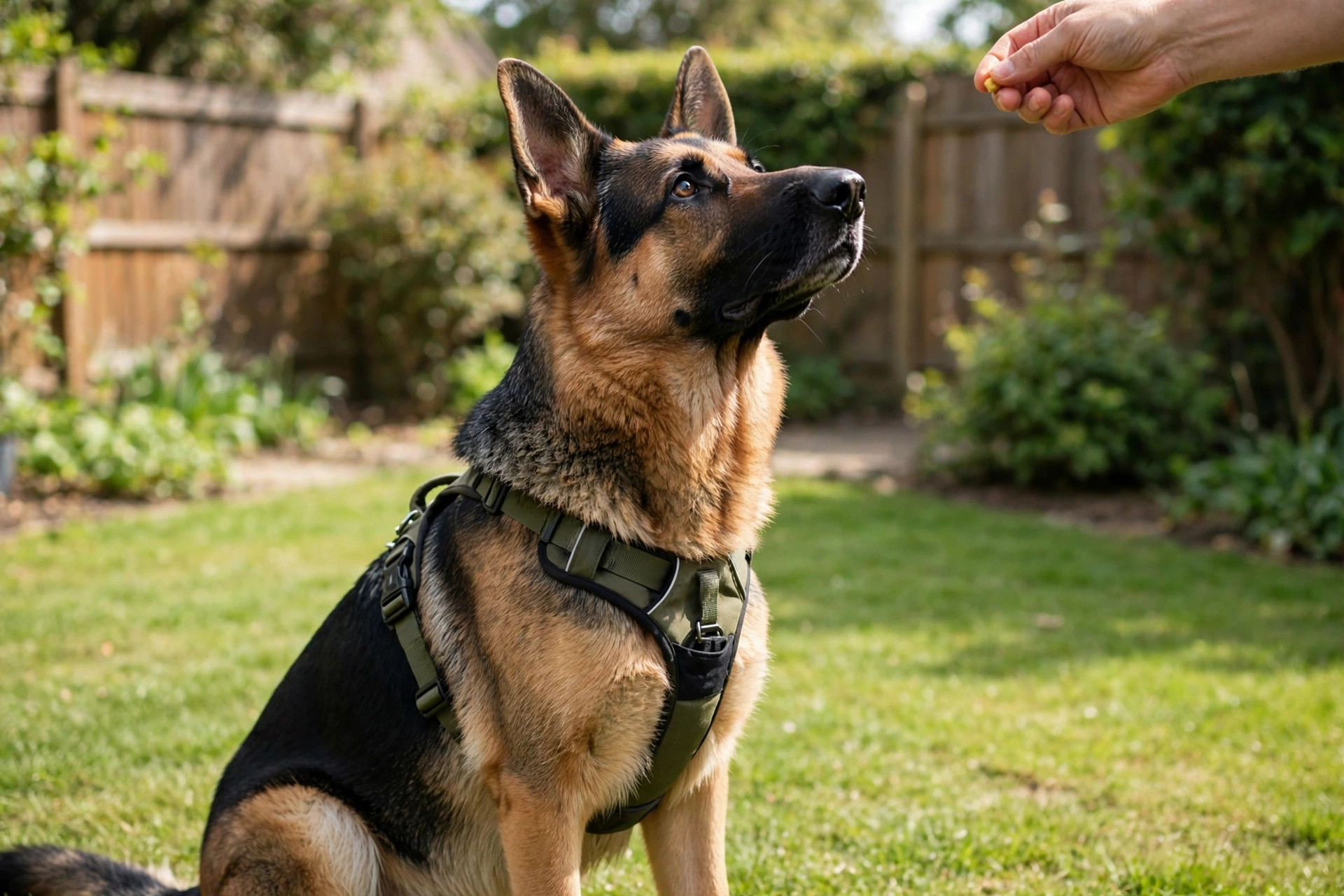
This is the section to read twice, because under-exercise is the number one reason German Shepherds end up rehomed. A healthy adult German Shepherd needs at least 1.5–2 hours of real activity every day — brisk walks, running, hiking, fetch, swimming, or dog sports like agility, tracking, or obedience. A tired Shepherd is a calm, happy dog; an under-exercised one is destructive, anxious, and loud.
Training Is Non-Negotiable
With a breed this strong and intelligent, training is a safety issue, not a hobby. Start the week your puppy arrives:
- Early socialization (8–16 weeks): Expose your puppy to dozens of people, dogs, sights, sounds, and surfaces — positively and calmly. This is the single most important thing you will ever do for a German Shepherd.
- Basic obedience: Sit, down, stay, recall, and loose-leash walking. Shepherds learn fast, but they need consistent rules from every family member.
- Daily mental work: 10–15 minutes of training practice, puzzle feeders, or scent games tires this breed’s brain as much as a long walk. Mental stimulation prevents the boredom behaviors owners complain about.
- Loose-leash walking: An 80-pound dog that pulls is a hazard. Train polite walking early — see our guide: Stop Your Dog Pulling on the Leash: 7 Trainer Tips (2026).
Continue training through adolescence (roughly 6–18 months), when Shepherds test every boundary. Consistency beats intensity: short daily sessions always win.
Grooming & Shedding
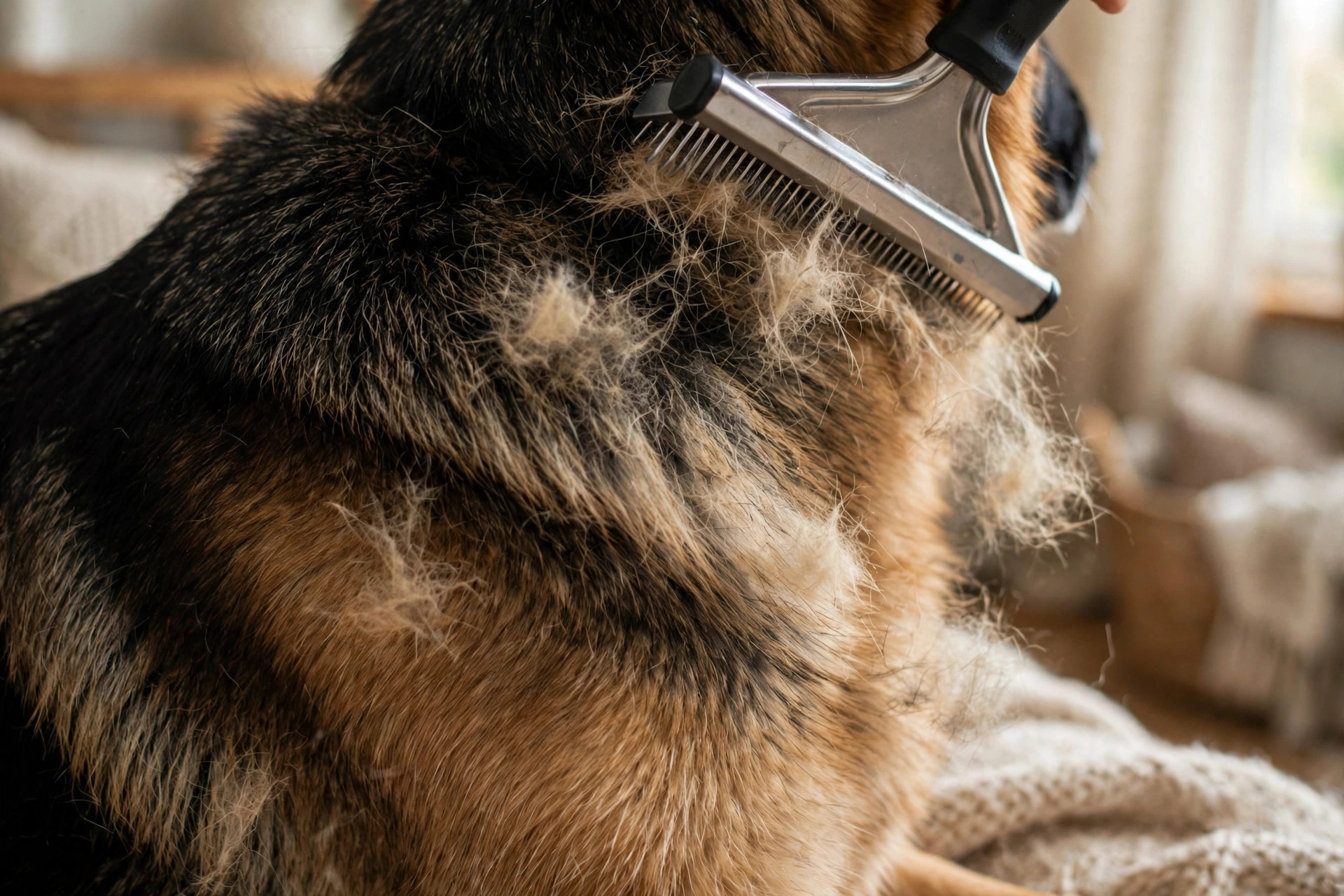
German Shepherd grooming is straightforward but constant. Here is the realistic routine:
- Brush 3–4 times a week with a slicker brush and undercoat rake; brush daily during spring and fall shedding blow-outs.
- Never shave a German Shepherd. The double coat regulates body temperature year-round — shaving damages it permanently and does not reduce shedding.
- Bathe every 6–8 weeks (or when dirty) with a dog-specific shampoo; overbathing strips the coat’s natural oils.
- Trim nails every 3–4 weeks, check ears weekly, and brush teeth regularly — dental disease is painful and common in every breed.
Regular brushing doubles as a health check: run your hands over the body to catch lumps, skin irritation, or hot spots early.
Feeding Your German Shepherd
Feed a high-quality, balanced dog food formulated for large breeds, with measured portions divided into two meals a day — never free-feed. A typical adult eats roughly 3–4 cups of dry food daily, but follow your veterinarian’s guidance over any generic chart.
Two feeding rules matter more than usual for this breed:
- Prevent bloat: German Shepherds are a high-risk breed for gastric dilatation-volvulus (bloat), a life-threatening emergency where the stomach twists. Feed two smaller meals instead of one large one, avoid vigorous exercise right before and after meals, and consider a slow feeder bowl.
- Keep them lean: Extra weight punishes joints already prone to dysplasia. You should be able to feel — but not see — the ribs. Treats and food scraps stay within the 10% treat rule: extras under 10% of daily calories.
Also Read: Is My Dog Overweight? Body Condition Score & Weight Loss Plan (2026) — learn to score your Shepherd’s condition at home.
German Shepherd Health Issues to Know
German Shepherds are generally robust working dogs, but the breed carries several well-documented health risks. Knowing them helps you choose a breeder wisely and catch problems early.
1. Hip and Elbow Dysplasia
The breed’s most famous health problem. These developmental joint disorders cause pain, lameness, and arthritis, and they have a strong genetic component. Responsible breeders screen both parents’ hips and elbows — always ask for verifiable results. Keeping your dog lean and avoiding excessive high-impact exercise in puppies reduces risk.
2. Degenerative Myelopathy
A progressive spinal cord disease, similar in effect to ALS in humans, that typically appears in older Shepherds: hind-leg weakness and loss of coordination that worsens over months. There is a DNA test for the risk gene — reputable breeders test for it.
3. Bloat (Gastric Dilatation-Volvulus)
As covered above, this deep-chested breed is at high risk. A swollen, hard abdomen with unproductive retching is a rush-to-the-emergency-vet sign — bloat can kill within hours. Ask your vet about preventive gastropexy (stomach tacking) for high-risk dogs.
4. Skin Allergies and Digestive Sensitivities
Shepherds are prone to skin allergies (itchy paws, ears, and hot spots) and digestive issues including exocrine pancreatic insufficiency (EPI). Persistent itching or chronic soft stools deserve a vet workup, not guesswork.
Schedule vet checkups at least annually — twice a year for seniors. For authoritative breed-standard details, see the AKC’s German Shepherd Dog breed page.
Is a German Shepherd Right for You?
A German Shepherd is a great fit if: you are an experienced, active owner who can give 1.5–2 hours of daily exercise plus training; you want a loyal, protective, highly trainable companion and can socialize it thoroughly; you are home often enough to avoid long alone stretches; and you accept heavy shedding and the breed’s health realities.
Reconsider if: you are a first-time dog owner; your household is sedentary or very busy; you live in a small apartment with no serious exercise plan; you want a low-shedding or easygoing dog; or you are not prepared for the training commitment and potential vet costs.
Also Read: Golden Retriever Breed Guide: Temperament & Care (2026) — a more beginner-friendly large breed for comparison.
German Shepherd Puppy & Breeder Tips
If you decide on a Shepherd, choose your source carefully. A responsible breeder will:
- Provide written health clearances for hips, elbows, and the degenerative myelopathy gene for both parents — never accept “the parents are healthy” at face value.
- Raise puppies in a home environment with early socialization, and offer a written health guarantee (typically 1–2 years for genetic conditions).
- Ask you questions about your home, schedule, and experience — good breeders screen buyers too, and never sell unvaccinated puppies “cheap, no papers.”
Expect to pay roughly $1,500–$4,000 for a well-bred pet-quality puppy, plus $1,000–$2,000 in first-year supplies and vet costs. Also consider German Shepherd rescues — adult Shepherds regularly need homes, and an adult’s temperament, size, and health are already known.
Frequently Asked Questions
Are German Shepherds good family dogs?
Yes — in the right household. German Shepherds are loyal, gentle, and protective with their own family, including children they were raised with. But they need experienced owners, early socialization, and plenty of exercise. They are a poor fit for first-time or low-energy households.
How much exercise does a German Shepherd need?
At least 1.5–2 hours of daily exercise for a healthy adult — walks, running, hiking, fetch, or dog sports — plus training and mental enrichment like puzzle games and scent work.
Do German Shepherds shed a lot?
Yes — heavily, year-round, with dramatic seasonal blow-outs in spring and fall. Brush 3–4 times a week (daily in shedding season) and never shave the double coat.
Are German Shepherds aggressive?
Not by nature — they are loyal and discerning, not hostile. But they are powerful, protective dogs, and without early socialization and consistent training, protectiveness can turn into reactivity or over-guarding. Socialization is the difference-maker.
How long do German Shepherds live?
About 9–13 years on average. Keeping your Shepherd lean, well-exercised, and on a vet-monitored health plan — with early screening for joint problems — gives it the best shot at the long end of that range.
Are German Shepherds good for first-time dog owners?
Honestly, no — most trainers recommend a more forgiving breed for beginners. German Shepherds demand consistent training, heavy socialization, and high daily exercise. An experienced owner who enjoys training will find them extraordinary; a beginner often finds them overwhelming.
Final Thoughts
So, should you bring home a German Shepherd? If you are an experienced, active owner ready to match the breed’s energy — daily exercise, serious training and socialization, regular grooming, measured feeding, and proactive vet care — few breeds reward you like a German Shepherd. The partnership of a well-raised Shepherd with its family is genuinely unmatched.
But go in with open eyes: this is a powerful working dog, not an easy pet. Accept the shedding, commit to the exercise, insist on health-tested parents, and socialize relentlessly. Do that, and you will understand why German Shepherd owners keep saying the same thing: once you live with one, no other dog quite compares.