
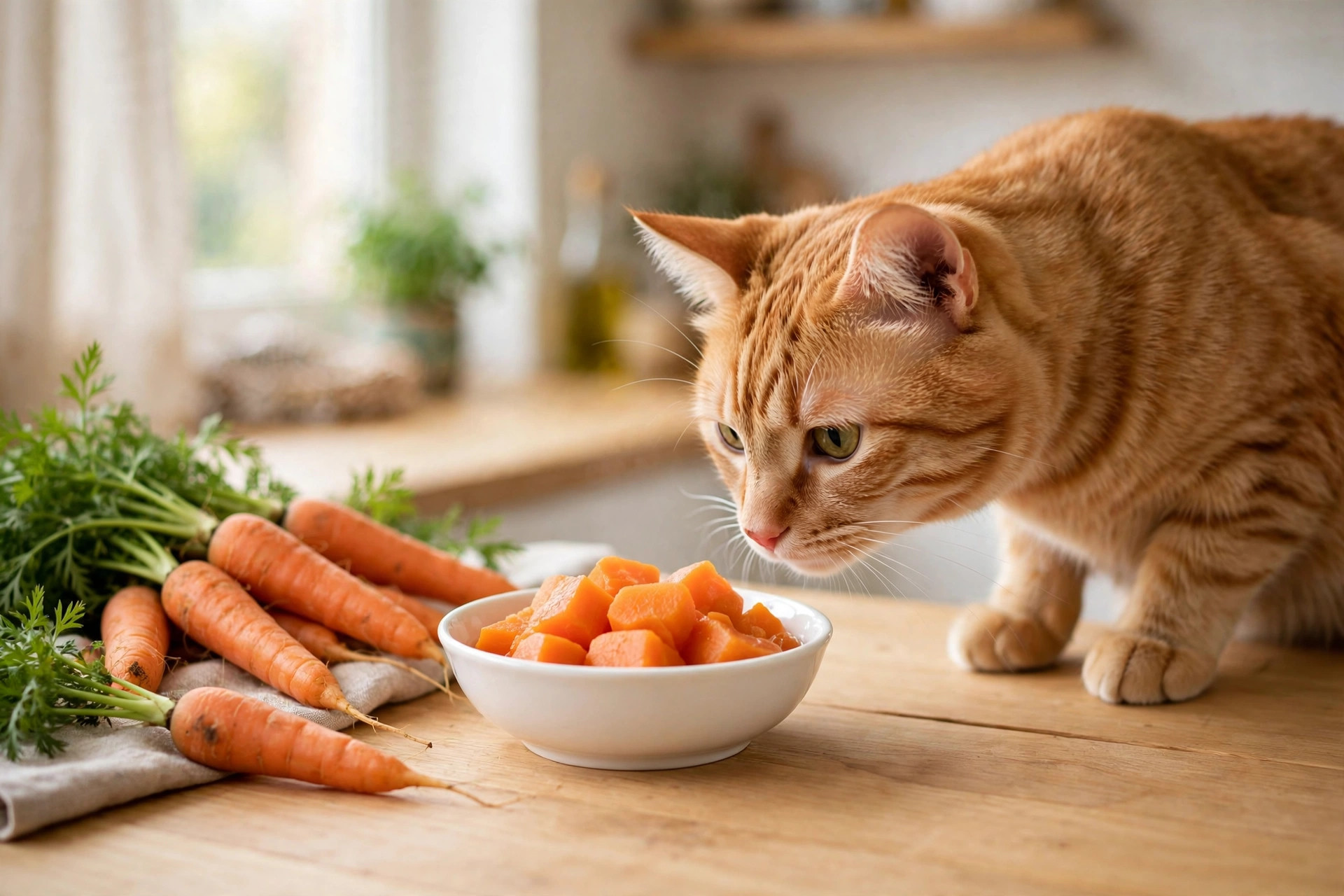
If your cat has ever batted a stray carrot across the kitchen floor, you have probably asked yourself: can cats eat carrots, or should vegetables stay off a feline’s menu?
The good news is yes, cats can eat carrots — they are non-toxic to felines — but only when cooked until soft, served completely plain, and kept to tiny portions. Raw carrots carry real choking and digestive risks, and as an obligate carnivore, your cat gains no real nutrition from vegetables.
In this complete guide, we’ll walk you through everything you need to know about feeding carrots to cats: the real benefits and risks, exact serving sizes, step-by-step preparation, and answers to the questions cat owners ask most often.
Table of Contents
- Are Carrots Safe for Cats?
- Nutritional Benefits of Carrots for Cats
- Risks of Feeding Carrots to Cats
- How Many Carrots Can Cats Eat?
- How to Prepare Carrots for Cats
- What If My Cat Eats Too Many Carrots — or Raw Carrots?
- Can Kittens Eat Carrots?
- Healthy Alternatives to Carrots
- Frequently Asked Questions
Are Carrots Safe for Cats?
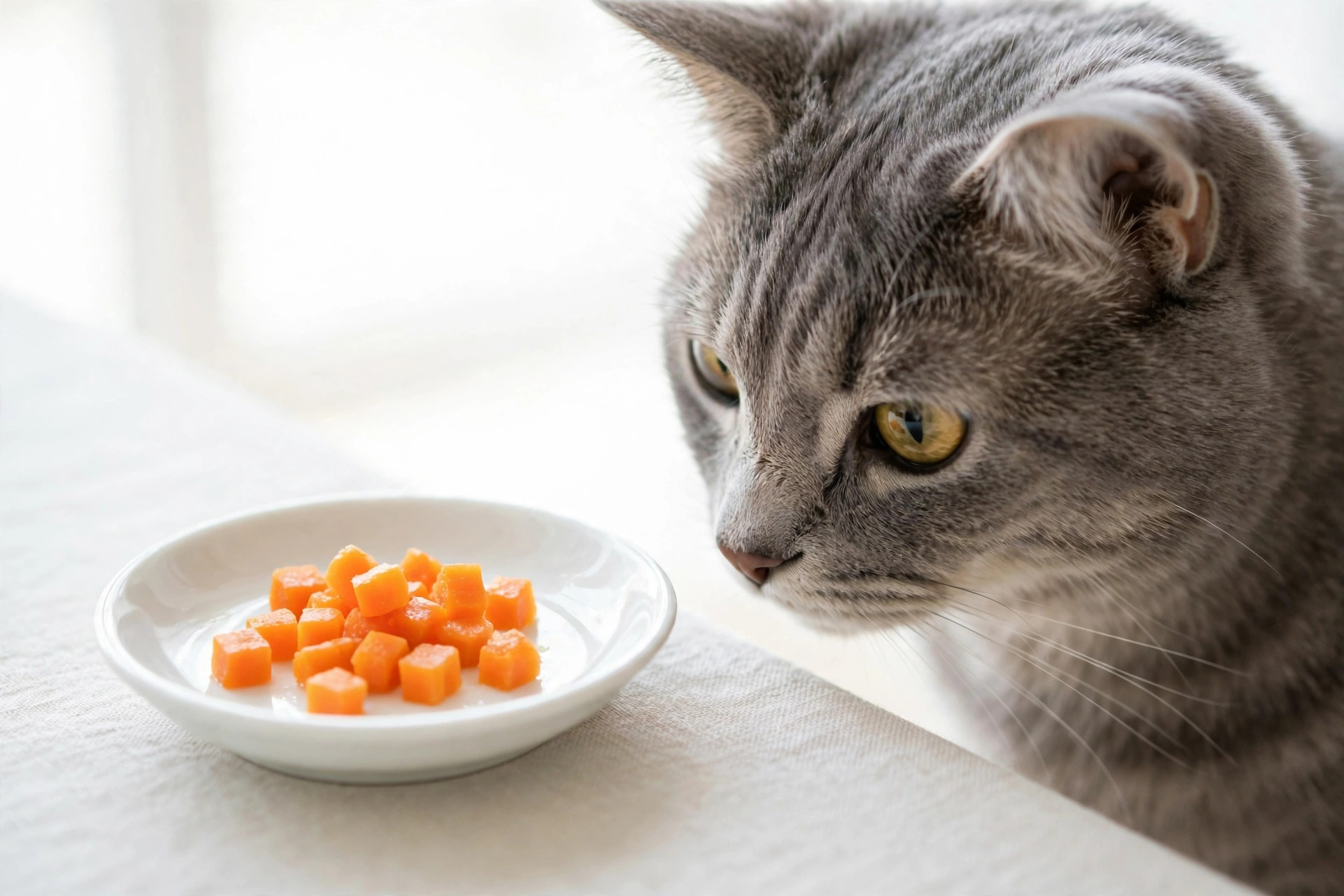
Yes, carrots are non-toxic to cats. The ASPCA lists carrots as non-toxic to felines, and veterinary sources including PetMD confirm that carrots are nontoxic and likely safe for cats in small amounts.
But “not toxic” is not the same as “good for cats.” One fact every cat owner should know: cats cannot efficiently convert beta-carotene (the pigment that makes carrots orange) into vitamin A, the way humans and dogs can. A cat’s ability to convert it is extremely limited — so cats must get vitamin A ready-made from animal foods. Carrots simply cannot replace that.
Before offering carrots, follow these ground rules:
- Offer only plain, cooked carrots — never raw, glazed, or seasoned
- Cook until very soft, then mash or cut into pea-sized pieces
- Keep it an occasional treat, never part of daily diet
- All treats combined should stay under 10% of your cat’s daily calories
Also Read: Can Cats Eat Eggs? Vet-Reviewed Safety Guide (2026)
Nutritional Benefits of Carrots for Cats
Let’s be honest: carrots are not a superfood for cats — your cat’s body is built to run on animal protein, not vegetables. Still, a few of carrots’ qualities carry over modestly in tiny amounts.
1. Fiber for Gentle Digestive Support
Carrots contain dietary fiber, which can support healthy digestion and regular bowel movements. In the teaspoon-sized portions cats eat, this is a gentle bonus rather than a digestive fix.
2. Hydration Boost
Carrots are roughly 88% water, so soft cooked carrots mixed into a meal add a small bit of welcome moisture for cats that barely drink.
3. Vitamins and Minerals (in Small Doses)
Carrots supply vitamins A, K, and B6, plus potassium and calcium — but in the tiny portions cats should eat, these add only minimal benefit, and your cat cannot convert beta-carotene into usable vitamin A the way you can.
4. A Low-Calorie Treat Alternative
Plain cooked carrots are extremely low in calories and fat, so a pea-sized piece is a far better nibble than a handful of calorie-dense treats — though a meat-based treat suits a cat’s biology better.
Risks of Feeding Carrots to Cats
Carrots are non-toxic, but feeding them the wrong way — or too many — can cause genuine problems.
1. Raw Carrots Are a Choking Hazard
This is the biggest risk. Raw carrots are hard and difficult to chew thoroughly — small cats can choke if a chunk lodges in the windpipe, and swallowed pieces are tough on a cat’s digestive tract. Always cook carrots until very soft before offering them.
2. Digestive Upset From Overfeeding
A cat’s digestive system is not built for plant foods in quantity. Too much carrot at once can cause vomiting, diarrhea, gas, or stomach discomfort — especially in cats not used to vegetables.
3. Natural Sugar Content
Almost half of the carbohydrates in carrots come from sugar, which adds up fast in a creature as small as a cat. Cats with diabetes should not be offered carrots without your veterinarian’s approval.
4. Dangerous Seasonings and Cooking Add-Ins
Never share carrots cooked with onions or garlic (toxic to cats), salt, butter, oils, glaze, or honey. Also skip canned carrots packed in brine or syrup, and carrot juice, which concentrates the sugar.
5. Carrots Cannot Replace Meat
Too many carrots can displace the protein, taurine, and preformed vitamin A your cat’s body actually requires. Carrots should never replace part of a meat-based diet.
6. Rare Allergic Reactions
Vegetable allergies in cats are uncommon but real. After the first tiny taste, watch for itching, swelling, or vomiting — and stop if any appear.
How Many Carrots Can Cats Eat?
Carrots are an occasional treat — not a daily snack. Stick to a few pea-sized pieces of soft, mashed cooked carrot, once or twice a week:
| Cat Size | Weight | Safe Serving | |
|---|---|---|---|
| Small cats | Under 9 lbs (4 kg) | 1–2 pea-sized pieces of mashed cooked carrot | |
| Medium cats | 9–13 lbs (4–6 kg) | 1 teaspoon of mashed cooked carrot | |
| Large cats | Over 13 lbs (6 kg) | Up to 1 tablespoon of mashed cooked carrot |
When in doubt, offer less. A single pea-sized piece is a perfectly good first taste — introduce any new food slowly, watching for stomach upset over the next 24 hours, and keep all treats under 10% of daily calories.
How to Prepare Carrots for Cats
Preparation takes about 15–20 minutes, most of it hands-off:
- Wash the carrots well and peel them.
- Cut into small coins or chunks (they will cook faster).
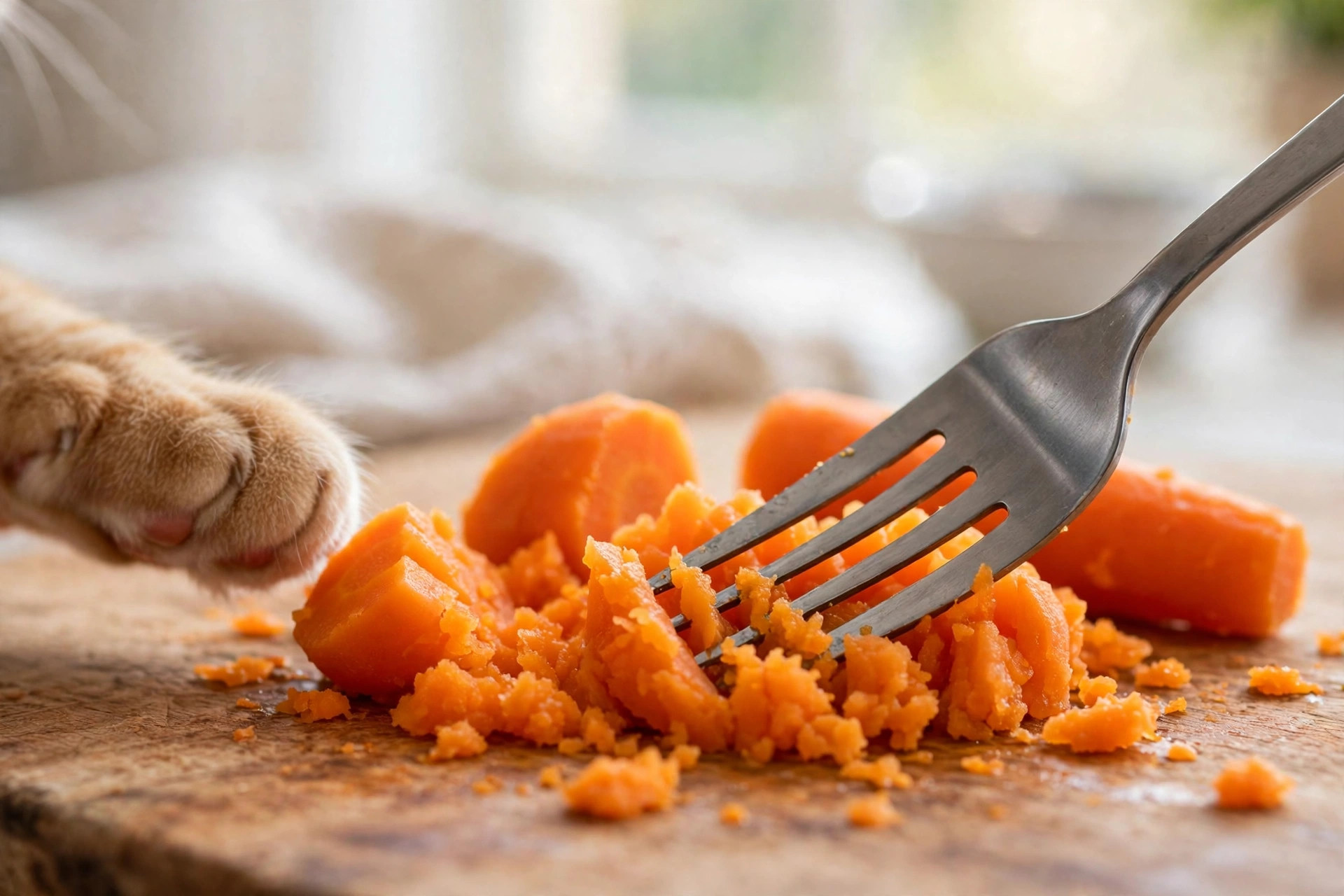
- Boil or steam until very soft — a fork should slide through with no resistance.
- Drain, then mash with a fork or blend into a smooth puree. This is the safest texture for cats.
- Let it cool completely to room temperature.
- Serve a tiny portion plain — mixed into wet food or in a clean dish. No salt, butter, oil, garlic, onion, or any seasoning.
Skip glazed or roasted carrots, canned carrots in brine or syrup, carrot juice, and anything seasoned — plain, soft, and unseasoned is the only safe way.
What If My Cat Eats Too Many Carrots — or Raw Carrots?
If your cat steals a raw carrot coin or a big serving of plain cooked carrot, don’t panic — carrots are not toxic. Monitor them for vomiting, diarrhea, or lethargy over the next few hours; these symptoms are usually temporary and resolve on their own.
Contact your veterinarian right away if vomiting or diarrhea is severe or lasts more than a day, if your cat is choking after eating raw carrot, or if the carrots were cooked with garlic or onion (toxic to cats).
Can Kittens Eat Carrots?
It is best to wait. Kittens need a specialized, complete kitten diet to grow properly — they do not need vegetables at all. If your veterinarian gives the go-ahead, offer only a tiny mashed piece and watch closely.
Healthy Alternatives to Carrots
If your cat ignores the carrot — or you want more nutritionally meaningful treats — these suit an obligate carnivore better:
- Small pieces of plain, cooked chicken or turkey
- Freeze-dried meat treats made for cats
- A teaspoon of plain canned pumpkin (not pie filling) for fiber
- A few soft-cooked peas, mashed
- Cooked green beans, cut into tiny pieces
Always introduce any new food gradually and in small portions.
Also Read: Can Cats Eat Blueberries? Vet Guide & Tips (2026)
Frequently Asked Questions
Are carrots toxic to cats?
No. Carrots are non-toxic to cats per the ASPCA’s list — but “not toxic” does not mean “feed freely”: keep portions tiny and infrequent, and always cook them until soft.
Can cats eat raw carrots?
Not recommended — raw carrots are a choking hazard and hard for cats to digest. Always boil or steam until very soft and mash before offering.
Can cats eat carrots every day?
No — an occasional treat only, once or twice a week at most in the tiny portions above. Daily vegetables add too much sugar and fiber for a cat’s carnivorous digestive system.
Can diabetic cats eat carrots?
With caution and your vet’s approval. Carrots contain natural sugars that can affect blood glucose. Ask your veterinarian before offering carrots to a diabetic cat.
Can cats eat baby carrots?
Yes — the same rules apply: peel, cook until very soft, and mash into pea-sized pieces. Raw baby carrots are still a choking hazard for small cats.
Can cats eat carrot tops or greens?
The leafy tops are not poisonous, but they are tough, fibrous, and hard to digest, with no nutritional value for cats. Skip them — serve only the cooked, mashed root.
Final Thoughts
So, can cats eat carrots? Yes — when they are peeled, cooked until very soft, mashed, and served plain in tiny amounts. A teaspoon of mashed carrot once or twice a week is a harmless, fiber-friendly nibble. Just remember the golden rules: cooked only (never raw), no seasoning, keep portions tiny, and never let vegetables displace the meat-based nutrition your cat needs.
Introduce carrots slowly and watch how your cat responds. And when in doubt, your veterinarian is the best source of advice for your individual cat.