
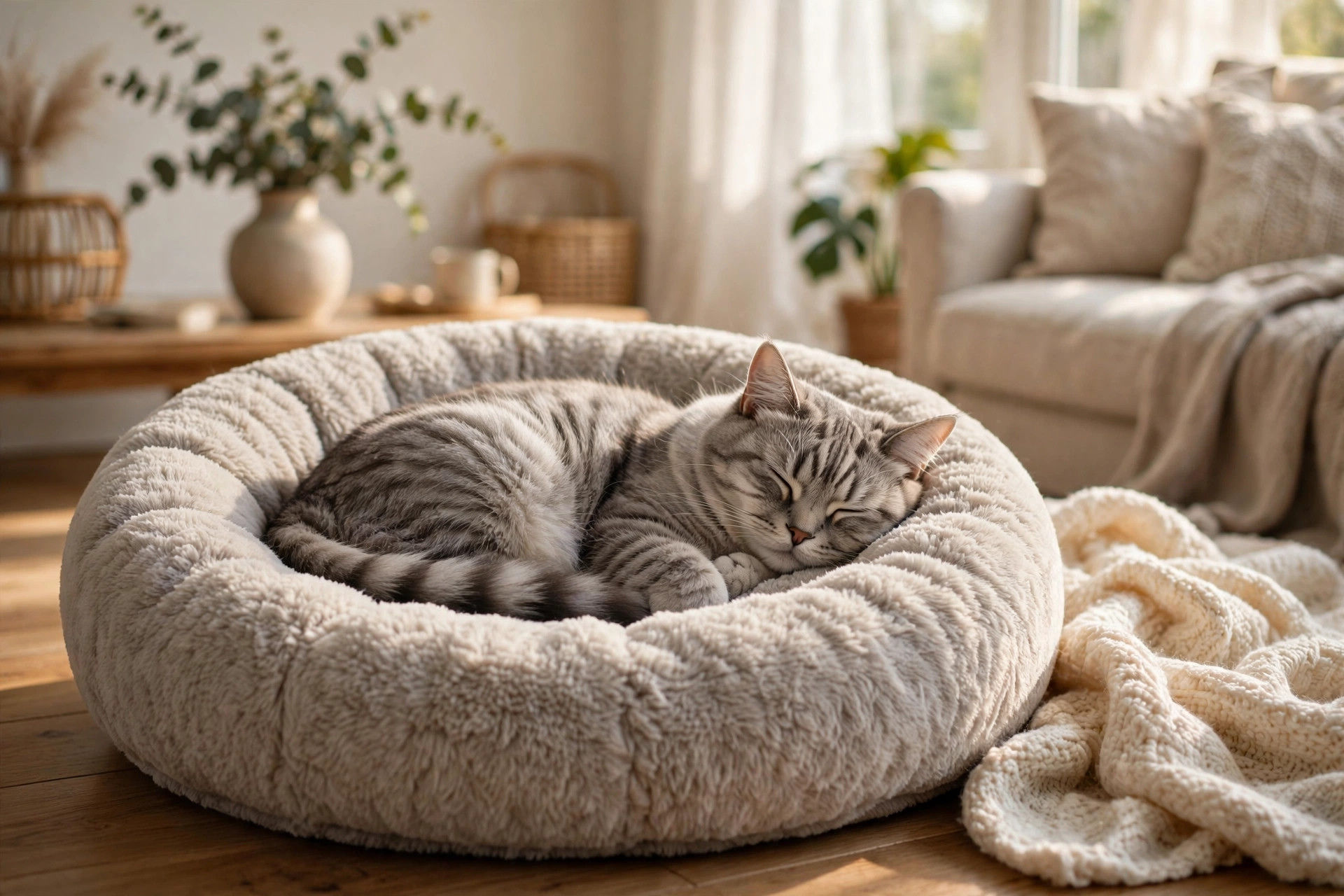
Scroll through any pet supply store in 2026 and you’ll see them everywhere: round, fluffy donut beds with raised rims, marketed as “calming” for anxious cats. But do calming cat beds work — or are they just a cozy marketing trick? If your cat hides under the bed during fireworks, overgrooms when you travel, or tenses up around visitors, it’s natural to wonder whether one of these beds could actually help.
The short answer is yes, calming cat beds genuinely help many cats feel more secure — but not for the reasons the packaging claims, and not for every kind of anxiety. The raised-rim design taps into real feline instincts for enclosed, warm sleeping spots, and veterinary behavior advice consistently recommends giving anxious cats exactly that kind of safe space. What a calming bed cannot do is fix serious anxiety, pain, or medical problems on its own.
In this complete 2026 guide, we’ll break down what calming cat beds actually are, the science behind why the design appeals to cats, when they help versus when they’re just hype, how to choose the right one, and how to get your cat to actually use it.
Table of Contents
- What Are Calming Cat Beds?
- How Do Calming Cat Beds Work?
- Do Calming Cat Beds Really Work? What Vets Say
- When They Help: 5 Situations
- When They’re Just Hype: Limitations
- How to Choose the Right Calming Cat Bed
- How to Get Your Cat to Use a Calming Bed
- Cleaning & Maintenance
- Frequently Asked Questions
What Are Calming Cat Beds?
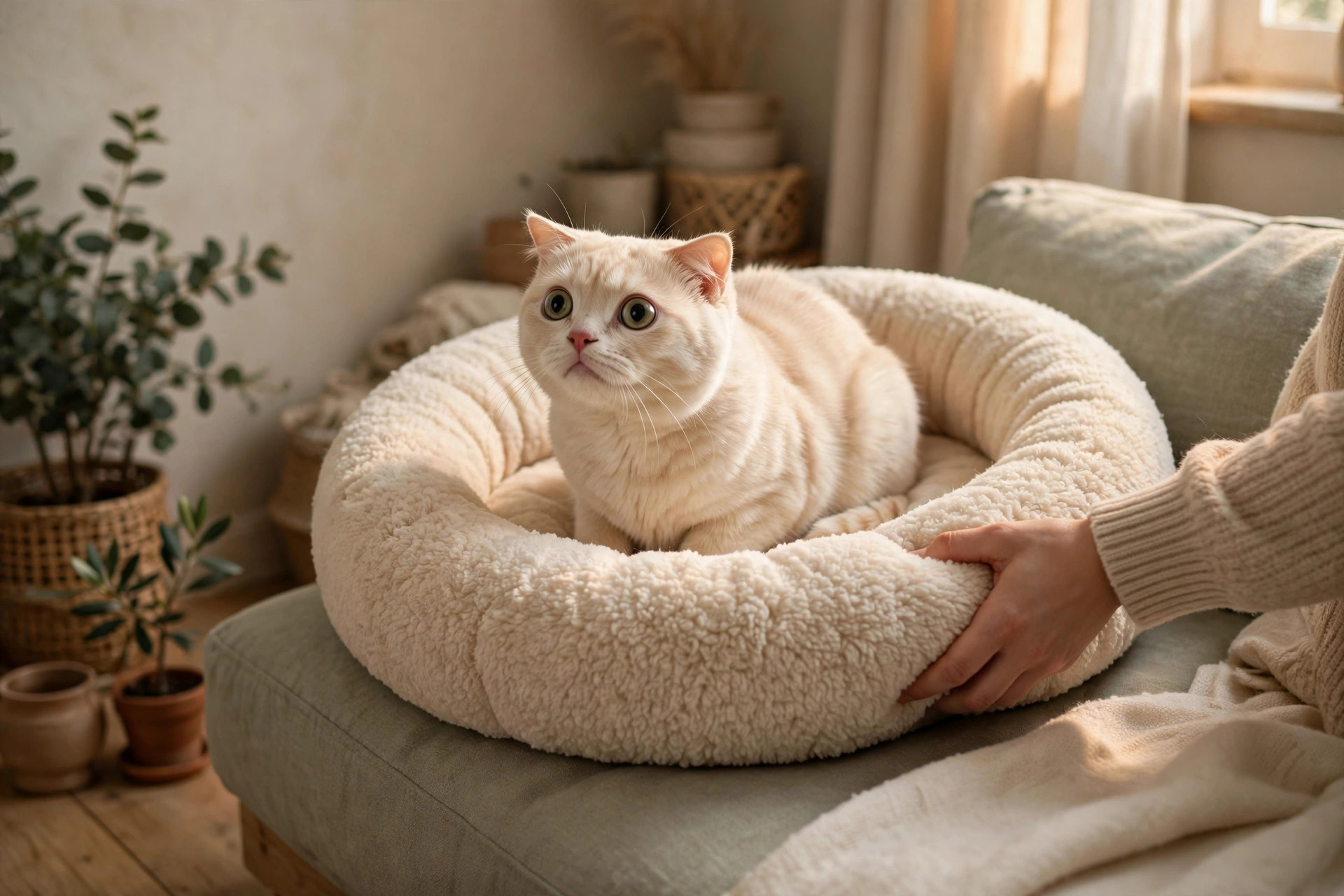
A calming cat bed is a round or oval pet bed with a high, cushioned rim — usually 3–6 inches tall — made of long faux-fur plush. The most recognizable versions are the “donut cuddler” style, where the raised edge circles the entire bed. Some models add a self-warming reflective layer that bounces your cat’s body heat back at them, and some convert into a hooded “cave” for extra enclosure.
The “calming” claim rests on three design ideas:
- Enclosure: the raised rim creates a nest-like depression, giving cats a defined, sheltered spot rather than an exposed flat surface.
- Warmth: the plush material and smaller footprint trap body heat, keeping the sleeping surface warmer than a room-temperature bed or floor.
- Head support: the rim doubles as a headrest or “chin rest” — cats love resting their chin on a raised edge.
Prices in 2026 typically run from around $20 for basic plush donuts to $60+ for stainless-steel-trimmed or heated versions. They come in sizes from about 20″ (kittens, small cats) to 30″+ (large breeds like Maine Coons).
Also Read: Why Does My Cat Bite Me? Love Bites Explained (2026) — anxious cats bite more, and calming routines reduce fear-driven biting.
How Do Calming Cat Beds Work?
No bed contains medicine, pheromones (unless specially infused), or anything that chemically calms a cat. The effect is purely behavioral and environmental — and that’s exactly why vets take the idea seriously.
The Safe-Space Instinct
Cats are both predators and prey animals, and their wild ancestors survived by sleeping in small, concealed spots. Veterinary behavior resources like PetMD advise giving anxious cats a dedicated safe area with cozy hiding options — and specifically mention covered cat beds as part of that setup. A calming bed is essentially a soft, warm, pre-made version of that hiding spot.
Warmth Reduces Arousal
Cats have a higher resting body temperature than humans and lose heat quickly when stressed. A warm sleeping surface lowers the physical cost of rest, which makes it easier for a tense cat to actually fall asleep — and sleep is when the nervous system recovers. This is also why anxious cats gravitate toward sunbeams, laundry piles, and laptop keyboards.
Routine and Territory
Cats are comforted by predictability. A bed that stays in one quiet spot, smells like the cat, and is always available becomes a territorial anchor — a known-good place to retreat to when the world feels chaotic. Behaviorists note that consistent routines and safe spots reduce stress-driven behaviors like overgrooming and urine marking.
Do Calming Cat Beds Really Work? What Vets Say
Let’s be honest about the evidence. No peer-reviewed clinical trials have proven that “calming beds” reduce feline anxiety by a specific percentage. The marketing numbers you see (“95% of owners report calmer cats”) come from manufacturer surveys, not controlled studies — treat them as marketing, not science.
But here’s the vet-informed view: the principles behind the design are well supported. Veterinary behaviorists consistently recommend:
- A quiet, enclosed resting place away from household traffic (exactly what a hooded or raised-rim bed provides)
- Soft bedding in a warm spot for nervous cats
- A consistent “home base” the cat can retreat to during stressful events
So while the bed itself isn’t therapy, giving an anxious cat a warm, sheltered, predictable place to sleep is genuinely vet-approved advice — the calming bed just packages it conveniently. Think of it as a comfort tool, not a treatment.
| Claim | Reality |
|---|---|
| “Clinically proven to reduce anxiety” | Not proven in clinical trials; the design principles behind it are vet-recommended |
| “Works like medication” | No — it provides comfort only; serious anxiety needs a vet’s plan |
| “Every cat will use it” | Some cats ignore any new bed for weeks; a few prefer flat surfaces |
| “The rim is the magic” | The magic is the secure, warm, consistent spot — the rim is just one way to build it |
When They Help: 5 Situations
Calming beds shine as situational comfort — mild, predictable stressors where a safe retreat genuinely changes how a cat copes.
1. New Home or New Family Member
The first weeks after a move or adoption are the classic use case. Setting up the calming bed in a small, quiet starter room gives a nervous cat one known-safe spot while everything else is unfamiliar. Let her explore the rest of the house on her own schedule.
2. Fireworks, Thunderstorms, and Loud Events
With noise season (fireworks, autumn storms) hitting right now, a calming bed placed in the most sound-insulated room gives a frightened cat a default refuge. Pair it with closed curtains, low background sound (TV or fan), and closed windows — and never drag a hiding cat out; let her come to you.
3. Multi-Cat Household Tension
Cats in shared homes need resource separation — one safe resting spot per cat, in different areas. A calming bed gives a lower-ranking or shy cat her own territory that the confident cat can’t claim from across the room. (Pair this with separated food, water, and litter stations.)
4. Senior Cats Seeking Warmth
Older cats with thinner coats or stiff joints actively seek warm spots. A self-warming calming bed with a low, easy entry is a favorite for seniors — just choose a model with a low front rim so arthritic cats can climb in without jumping.
5. Post-Vet Recovery and Travel
A familiar bed that travels with the cat turns a scary carrier or new room into something less alien. If your cat is recovering from surgery, a plush donut bed makes an excellent low-activity rest spot — vet-permitted, of course.
Also Read: Cat UTI Symptoms: Urinary Problems Guide (2026) — stress is a major trigger of feline lower urinary tract disease, so managing household stress protects more than just mood.
When They’re Just Hype: Limitations
Calming beds are not a fix for these situations. If any of these describe your cat, the bed can only be a supporting actor — the main plan needs your veterinarian.
- Sudden behavior changes: a normally social cat that suddenly hides, stops eating, or becomes aggressive may be in pain or sick. Pain, urinary blockages, dental disease, and thyroid problems all cause behavior changes that look like “anxiety.” A vet visit comes first, a new bed second.
- Severe separation anxiety: if your cat destroys things, overgrooms bald patches, or vocalizes for hours when you leave, that’s a disorder — it needs behavior modification, and sometimes anti-anxiety medication prescribed by your vet.
- Aggression between cats: a bed won’t resolve real conflict over territory or resources. Inter-cat aggression needs a full separation-and-reintroduction plan.
- Litter-box problems: inappropriate urination has medical and territorial causes; a cozy bed doesn’t address either.
- Overgrooming to baldness: excessive grooming can be allergies, pain, or compulsive disorder — it deserves a medical workup before comfort products.
The honest framing: buy a calming bed for comfort, not as treatment. If your cat’s stress is ongoing, worsening, or sudden, call your vet before you shop.
How to Choose the Right Calming Cat Bed
Not all calming beds are equal. Use this vet-informed checklist:
Get the Size Right
This is the #1 mistake. A bed that’s too large loses the “nest” feeling — the cat should be able to curl with her back touching the rim. Measure your cat from nose to tail base while she’s stretched out, then add a couple of inches. Roughly:
- ~20–23 inches: kittens, small breeds (under ~8 lbs)
- ~24 inches: average adult cats (8–12 lbs) — the most popular size
- ~28–30 inches: large breeds (Maine Coons, Ragdolls, 13+ lbs)
Material and Safety
- Machine-washable — non-negotiable. Beds collect fur, dander, and oils fast. Look for removable, zippered covers.
- Non-toxic, low-shed plush: avoid beds that shed long fibers kittens might chew and swallow.
- Non-slip base: a bed that slides across hardwood when the cat jumps in gets abandoned instantly.
- Sturdy rim that holds shape: cheap beds flatten within weeks, losing the whole point. Check reviews for durability.
- No small detachable parts: bells, ribbons, and loose buttons are choking hazards.
Self-Warming vs. Plain Plush
Self-warming beds use a thin reflective mylar or foil layer that bounces body heat back — no electricity, no cords, nothing to overheat. They genuinely add warmth (several degrees), which seniors and short-haired breeds appreciate. But cheap versions can crinkle loudly when the cat moves — and a crinkly bed terrifies noise-sensitive cats. If your cat is sound-sensitive, pick a noiseless plain-plush model.
Donut vs. Cave Style
Donut beds (open top, raised rim) suit cats that like to survey the room while resting. Cave/hooded beds suit cats that fully hide under blankets when scared. If your cat always burrows under furniture, go cave. If she sleeps on chair backs watching the door, go donut.
Also Read: Stop Cat Scratching Furniture: Vet Tips (2026) — stressed cats scratch more; calming the environment helps redirect destructive scratching too.
How to Get Your Cat to Use a Calming Bed
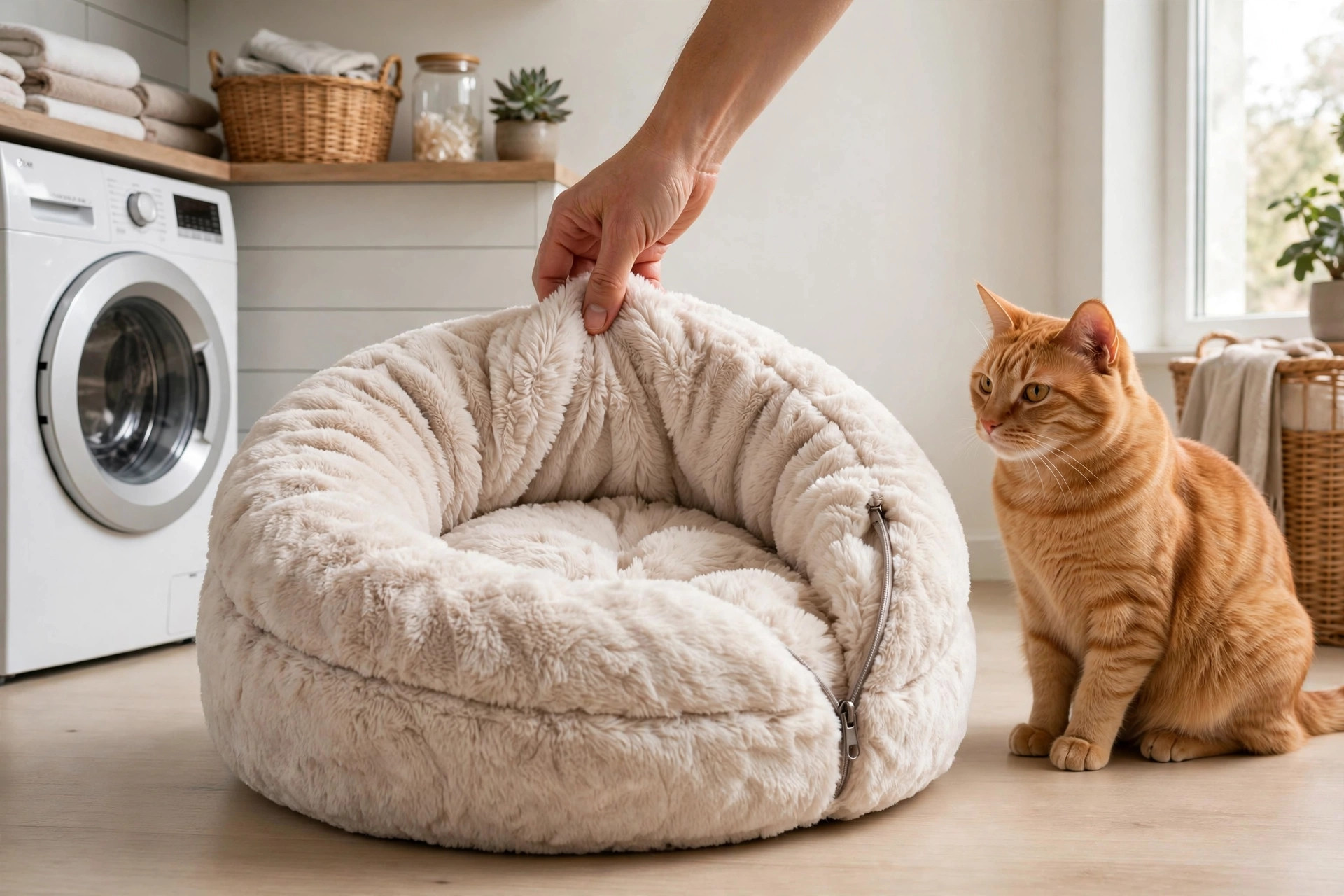
Bought the perfect bed and your cat is sleeping next to it, on the cardboard box it came in? Completely normal. Cats distrust new things — and especially new smells. Use this slow introduction plan:
- Place it where she already sleeps. Location beats the bed itself. Put the calming bed in her current favorite napping spot (the sunny chair, the corner of the couch) — not in a random corner you chose for her.
- Make it smell familiar. Rub a worn t-shirt of yours over it, or place a blanket she already sleeps on inside the bed for a few days.
- Lure, don’t force. Sprinkle a little catnip or place treats in the bed. Never pick her up and place her in it — forced placement teaches her the bed is a trap.
- Let her investigate on her terms. Give it 1–3 weeks. Cats often circle new objects for days, then claim them overnight as if it was always theirs.
- Keep it in a quiet spot long-term. Once she adopts it, don’t move it to a noisy hallway. The bed’s value is its predictability — a noisy, high-traffic location defeats the purpose.
- Warm it up on cold days. A folded towel from the dryer (cooled to safe warmth) placed in the bed for a few minutes makes it irresistible in winter.
If she still ignores it after a month, she may simply prefer flat or elevated surfaces — some cats are window-perch cats, not nest cats. That’s fine; donate the bed and put a cushion in her favorite perch instead.
Cleaning & Maintenance
A dirty bed becomes a bed nobody uses. Most quality calming beds are machine-washable — follow the label, but the general routine is:
- Wash the cover every 1–2 weeks (more often in shedding season or multi-cat homes)
- Use a gentle, fragrance-free detergent — strong scents can put cats off the bed
- Tumble dry low or air dry; high heat can melt the plush fibers and flatten the rim
- Shake out or vacuum between washes to control fur and litter tracking
- Replace the bed when the rim goes flat and won’t fluff back, the cover thins, or your cat starts avoiding it
Frequently Asked Questions
Do calming cat beds really work?
They genuinely help many cats feel more secure, because the raised rim creates a warm, enclosed sleeping spot — and vets consistently recommend giving anxious cats exactly that kind of safe space. But they’re a comfort tool, not a treatment: they won’t fix serious anxiety disorders, pain, or medical causes of stress.
How do calming cat beds work?
The raised rim forms a nest-like depression that taps into cats’ instinct to sleep in small, sheltered spots. The plush material traps body heat, and the bed becomes a familiar, predictable “home base” the cat can retreat to during stressful events like fireworks or visitors.
Are calming beds safe for kittens?
Yes, as long as you choose the right size (small, low rim so they can climb in) and a bed with no loose fibers or small detachable parts. Avoid long-shag plush that kittens might chew and swallow.
Do self-warming cat beds actually warm up?
Yes — they use a thin reflective layer that bounces your cat’s own body heat back, typically raising the surface temperature by several degrees with no electricity. They won’t feel warm to the touch until a cat lies on them, so they only heat up when occupied.
Why won’t my cat sleep in her calming bed?
Usually it’s placement, smell, or patience — the bed may be in a spot she doesn’t like, smell unfamiliar, or she simply needs 1–3 weeks to accept it. Move it to her current favorite napping spot, add a familiar-smelling blanket, and lure her with treats rather than forcing her in.
Which size calming cat bed should I get?
Measure your cat from nose to tail base while stretched out and add a few inches — for most adult cats that’s about 24 inches. The cat should be able to curl with her back touching the rim; too large, and the bed loses its secure “nest” feeling.
Final Thoughts
So, do calming cat beds work? For the right cat and the right situation — yes. A warm, enclosed, predictable sleeping spot is one of the simplest, most vet-aligned things you can give an anxious cat, and calming beds package that idea beautifully. They’re perfect for mild, situational stress: moves, visitors, noise season, multi-cat tension, and senior cats seeking warmth.
Just keep expectations honest: a bed is comfort, not a cure. If your cat’s anxiety is severe, sudden, or paired with appetite loss, hiding, or litter-box changes, see your veterinarian first — and let the calming bed be the cozy finishing touch on a real plan, not a substitute for one.