
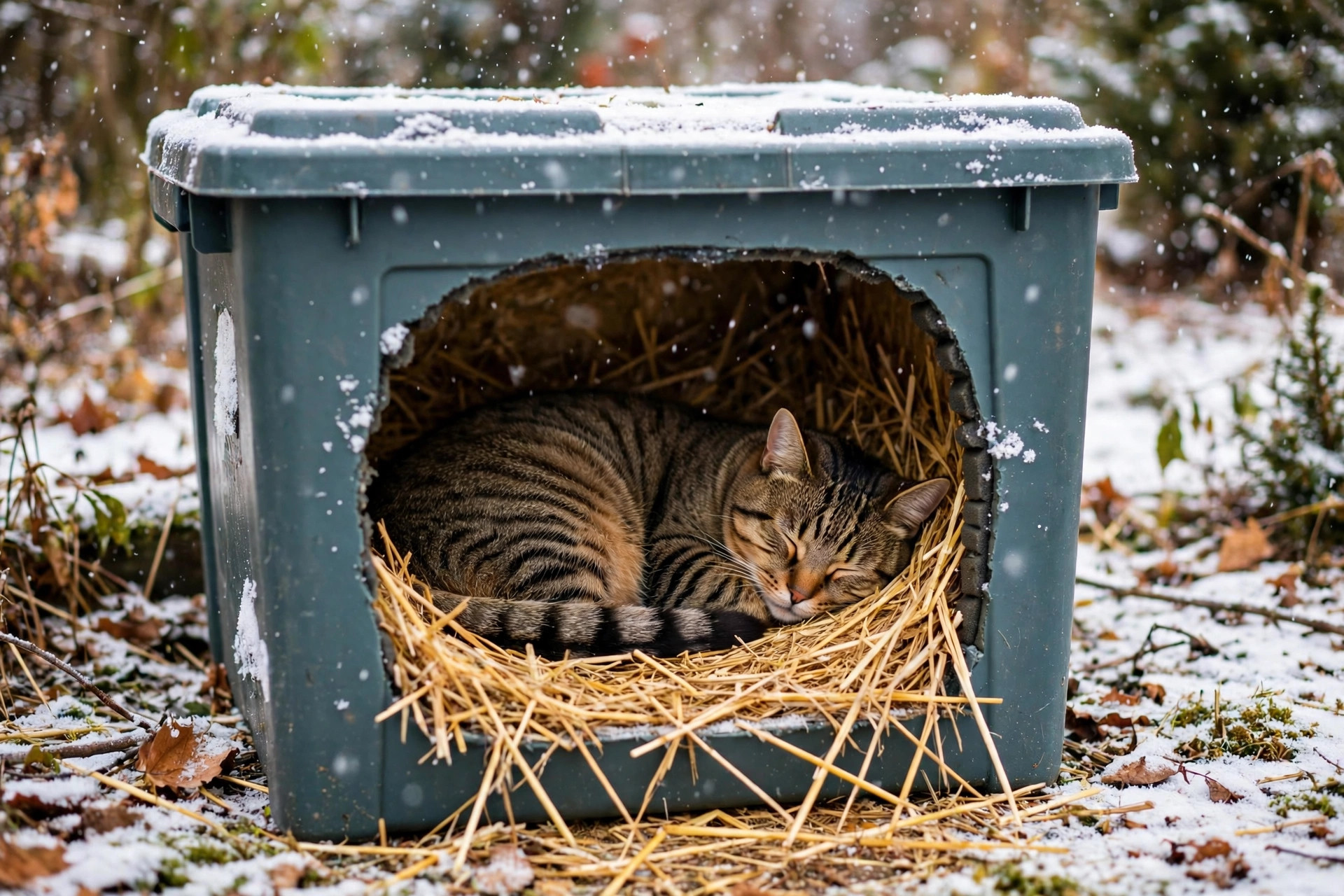
When the temperature drops, the outdoor cats in your neighborhood do not simply grow a thicker coat and carry on. Stray, feral, and community cats face real cold-weather risks every winter, and knowing how to keep outdoor cats warm in winter can be the difference between a cat that survives the season comfortably and one that does not. The good news is that helping them takes less than you might think: a small insulated shelter, the right bedding, extra food, and unfrozen water cover almost everything a cat needs.
In this complete 2026 guide, we will walk you through building a winter shelter that actually works, choosing bedding that stays dry, feeding outdoor cats through the cold months, keeping their water from freezing, and spotting the warning signs that mean a cat needs help right away.
Table of Contents
- Why Outdoor Cats Need Help in Winter
- The Shelter: Small, Insulated, and Raised
- How to Build a Winter Cat Shelter in an Afternoon
- Straw, Not Hay or Blankets
- Where to Place the Shelter
- Winter Feeding: Outdoor Cats Need More Calories
- Keeping Water Unfrozen
- Hidden Winter Dangers: Antifreeze, Salt, and Cars
- Warning Signs a Cat Is Too Cold
- Your Weekly Winter Cat-Care Checklist
- Frequently Asked Questions
Why Outdoor Cats Need Help in Winter
Cats are tougher than they look, but they are not built for deep cold. A healthy adult cat’s normal body temperature is around 100.5–102.5°F, and cats start to feel cold when the temperature drops below about 45°F. In a hard freeze, frostbite on the ear tips, tail, and toes is a real risk, and a cat that gets wet and cannot dry off can slide toward hypothermia surprisingly fast.
Kittens, senior cats, and thin or sick cats are the most vulnerable. A well-fed adult with a thick coat and a dry place to curl up can handle a cold night; a kitten, an elderly cat with arthritis, or a cat that has missed meals cannot. That is why a little help from the humans nearby matters so much — and why it matters most during the coldest snaps, not just on average winter days.
The single most important thing to understand is that a shelter does not heat a cat. The cat heats the shelter. Everything about a good winter shelter comes down to trapping the cat’s own body heat in a small, dry, draft-free space.
The Shelter: Small, Insulated, and Raised
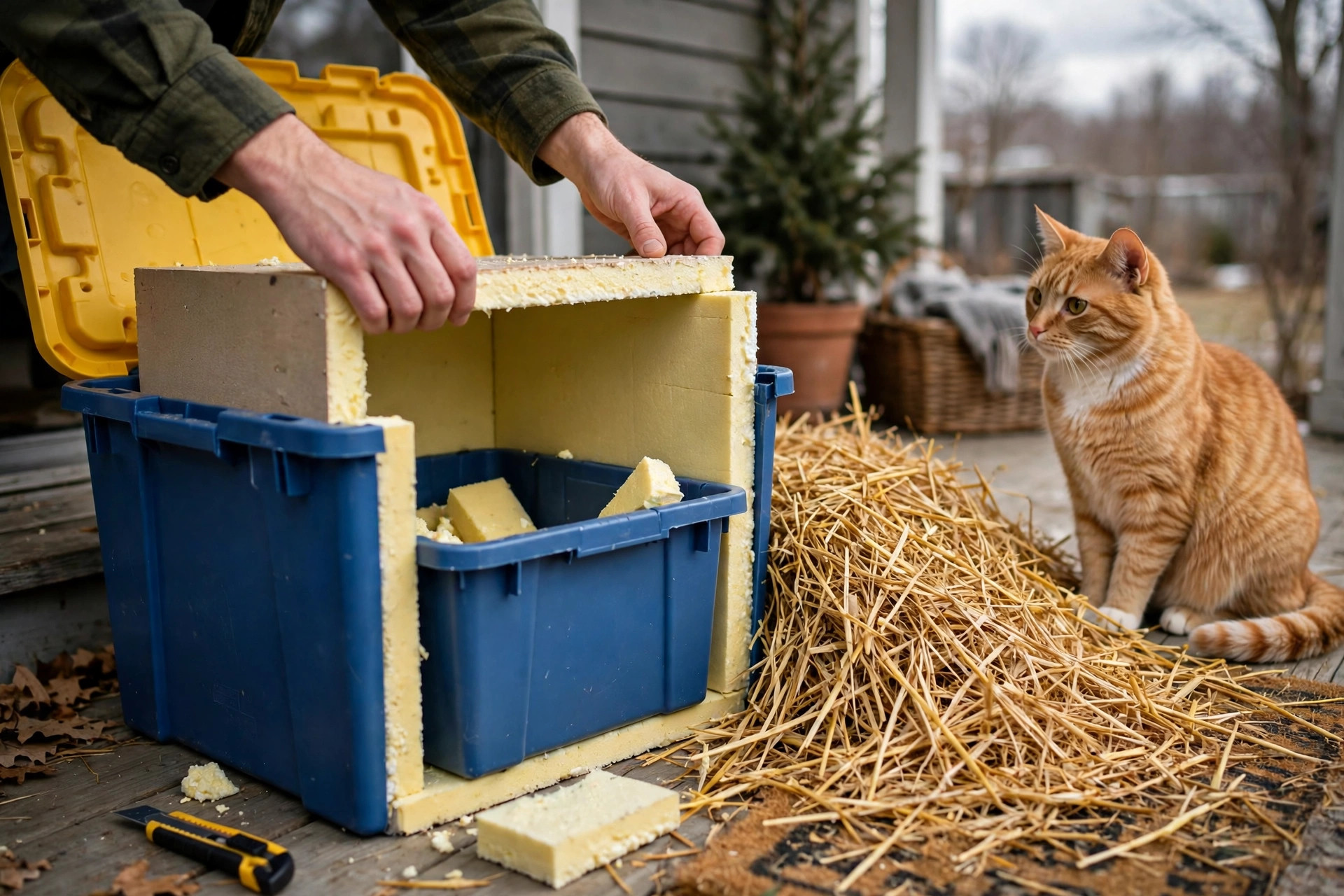
The best winter shelter for an outdoor cat is smaller than most people expect. A big box has more air to warm, and one or two cats cannot heat it. Community-cat groups recommend a shelter of roughly 2 feet by 3 feet and at least 18 inches high, which comfortably fits three to five cats huddled together without leaving cold empty space. For a larger colony, build several small shelters instead of one big one.
Three design rules matter more than anything else:
- Keep the entrance cat-sized. The doorway should be about 5½ to 6 inches wide — roughly the width of a cat’s whiskers — and cut a few inches above the floor so rain and snow do not run in. A small opening also discourages raccoons and other larger animals from moving in. A heavy plastic door flap over the entrance cuts drafts further.
- Insulate every surface. Walls, floor, and lid all need a layer that slows heat loss. Rigid foam board or a thick styrofoam cooler both work well, and lining the inside walls with Mylar reflects body heat back toward the cats.
- Raise it off the ground. A shelter sitting flat on frozen ground loses heat downward into the earth. Set it on a pallet, a couple of bricks, or a wooden platform, with a layer of straw underneath for extra insulation, and give it a slight slant so rain and melting snow drain away.
A foam cooler about 2 inches thick makes an excellent ready-made shelter: it is waterproof, insulated, and cheap. Dog houses, igloos, and pet carriers are generally poor winter shelters for cats as they come — the doors are too big and the spaces too tall for cats to warm with body heat. If that is what you have, shrink the door, add foam insulation inside, and fill it with straw.
Also Read: Global Cat Day 2026: Community Cats, TNR & How to Help
How to Build a Winter Cat Shelter in an Afternoon
You can build a proper insulated shelter in under an hour from materials that cost around $20–$35. The two-tote method is the most popular design:
- Pick two plastic storage totes, one small enough to nest inside the other with a gap of a few inches all around. The outer tote should have a snug-fitting lid.
- Cut a doorway about 6 inches wide in the same spot on both totes, a few inches above the bottom edge. Smooth the cut edges with sandpaper or cover them with duct tape so cats do not catch fur or skin.
- Insulate the gap. Line the inside of the outer tote with rigid foam board, then set the inner tote in place and pack straw or foam offcuts into the gap between them.
- Add a foam lid layer under the tote lid for insulation, then fill the inside loosely with straw.
- Raise it and secure it. Set the shelter on a pallet or bricks, weigh the lid down with a paver or brick so wind cannot lift it, and place it somewhere sheltered from wind.
If you need something today, a sturdy cardboard box with straw inside is better than no shelter at all in an emergency — but keep it elevated and protected from rain, and replace it with a waterproof insulated shelter as soon as you can, because cardboard collapses once it gets wet.
One safety rule is absolute: never use space heaters, heat lamps, candles, or anything with an open flame inside a straw-filled shelter. If you add heat at all, use only low-watt heated pads made specifically for pets, on a protected outdoor-rated outlet.
Straw, Not Hay or Blankets
The bedding choice is the single most common mistake in outdoor cat shelters — and the easiest to get right. Use straw, the dry, hollow stalk left after grain is harvested. Straw repels moisture, so cats can burrow into it and stay dry, and its hollow stems trap small pockets of air that insulate.
Do not use hay, blankets, towels, or newspaper. Hay looks like straw but soaks up moisture, turns soggy, and can grow mold. Blankets and towels absorb water from the weather and from the cats themselves, then stay cold and can freeze — a damp blanket draws heat out of a cat’s body instead of keeping it in. Fill the shelter loosely, about half to two-thirds full, so cats can dig in and shape a nest around themselves, and replace any bedding that gets wet or soiled.
A quick way to remember it: straw is for strays. If you are not sure which bale you are buying, ask for untreated straw and store the spare bale dry and off the ground.
Where to Place the Shelter
Location matters as much as construction. Put the shelter somewhere protected from wind and predators — against a wall, behind a fence, or under a porch overhang. Face the entrance toward a wall or another protected area when you can, so wind and driving snow do not blow straight in. If dogs are a concern, place the shelter behind a barrier they cannot cross.
Consider a second, smaller exit hole if predators are common in your area: it gives a cat an escape route if another animal blocks the main door. The trade-off is that two openings let in more cold air, so add flaps to both entrances if you go this route.
Check the shelter regularly through winter, especially after snowstorms. Clear snow from the entrance before it blocks the way in or out, and make sure the straw inside is still dry after heavy rain or melting snow.
Winter Feeding: Outdoor Cats Need More Calories
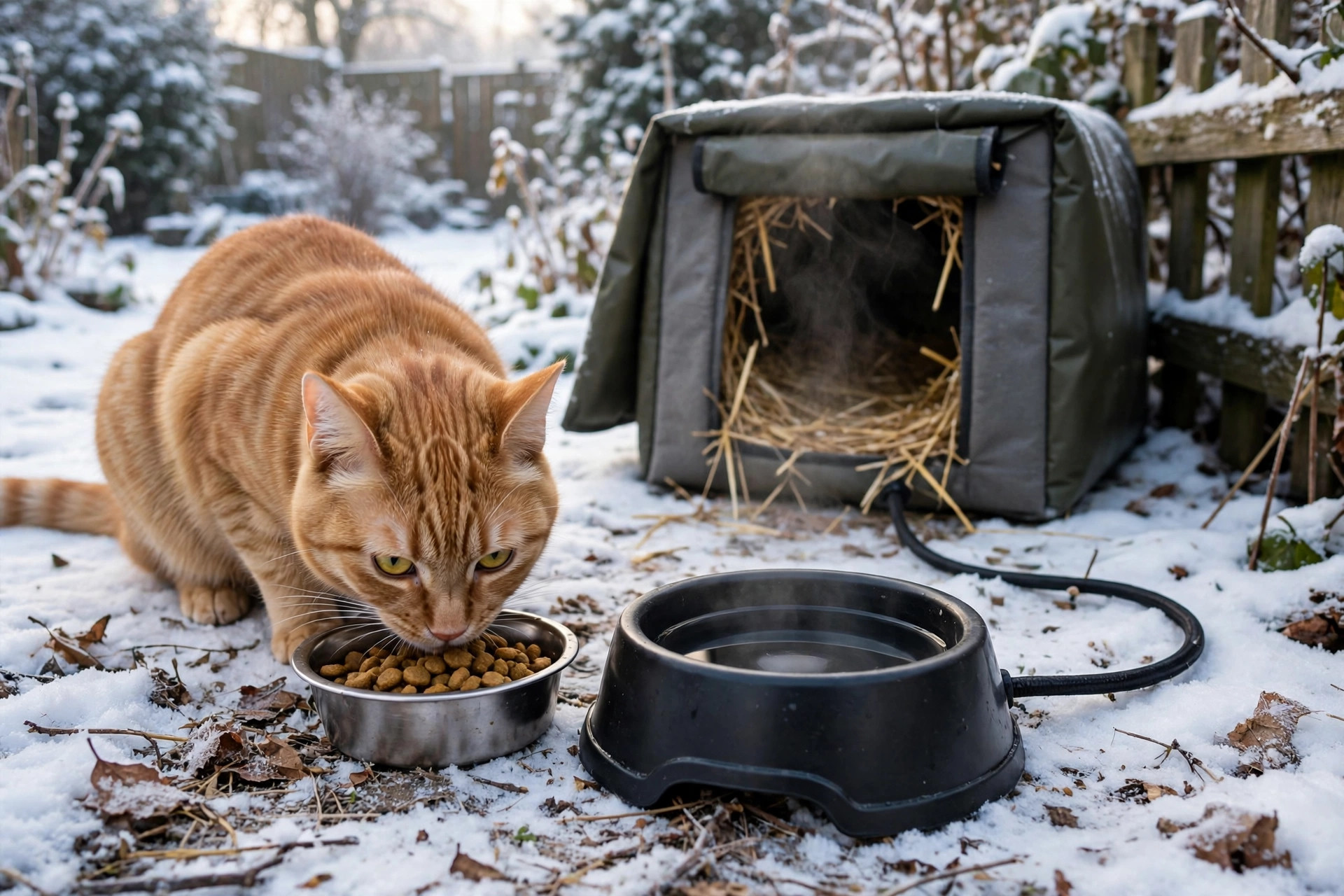
Outdoor cats burn more calories in winter just staying warm, so they need more food than they do in summer. Feed a good-quality cat food — wet food provides extra moisture, but it freezes quickly in cold weather, so many caretakers switch to dry food in the coldest months or serve wet food at set times and remove what is not eaten. Offer food twice a day on a regular schedule, and put the bowls outside the shelter, never inside it: a spill inside soaks the bedding and ruins the insulation.
Keep the feeding station itself sheltered from snow if you can, and clean the bowls regularly. Uneaten wet food left out in freezing weather becomes an ice block, and food left overnight attracts raccoons and other wildlife. If your outdoor cat has become a regular, a predictable feeding routine also helps you notice quickly when something is wrong — a cat that suddenly stops showing up for meals needs checking on.
Also Read: Indoor Cat Enrichment for Winter: 10 Ideas (2026)
Keeping Water Unfrozen
Water is the part of winter cat care most people forget, and it may be the most important. Cats that cannot find liquid water become dehydrated, and dehydration in winter raises the risk of urinary and kidney problems — especially in cats eating mostly dry food. Water bowls freeze fast in cold weather, so check them frequently and replace frozen water with fresh water.
A heated water bowl is the most reliable fix if you have a protected outdoor outlet. They are inexpensive, use very little power, and keep water just above freezing all day. Without power, use a deep, dark-colored bowl placed in a sunny, sheltered spot — dark bowls absorb more of the sun’s warmth — and swap in fresh lukewarm water at each feeding time. Never add antifreeze or salt to a cat’s water, and never place the water bowl inside the shelter, where a spill would soak the straw.
Hidden Winter Dangers: Antifreeze, Salt, and Cars
Cold weather brings hazards that have nothing to do with temperature. Watch for these three:
Antifreeze
Ethylene glycol antifreeze tastes sweet and is highly toxic to cats — the ASPCA Animal Poison Control Center warns that even a very small amount can cause fatal kidney failure. Clean up any spills or leaks from cars immediately, store antifreeze containers where cats cannot reach them, and consider switching to a propylene glycol-based antifreeze, which is far less toxic. If you ever suspect a cat has licked antifreeze, treat it as an emergency and call a veterinarian at once.
Road salt and de-icers
Salt and chemical ice-melting products irritate paw pads and are toxic if a cat licks them off while grooming. Avoid spreading salt or de-icers near shelters, feeding areas, and water sources, and use pet-friendly ice-melting products on the paths instead. If an outdoor cat comes in with salt on its paws, wipe them with a damp cloth.
Warm car engines
On cold nights, cats climb into car engine bays and wheel wells to sleep in the warmth. Always knock loudly on the hood, honk the horn, and wait a moment before starting your car in winter — it takes seconds and can save a cat’s life.
For more detail on shelter design and cold-weather safety from an authoritative source, see the ASPCA’s guide to winter shelters for community cats.
Also Read: Holiday Plants Toxic to Pets: Vet Guide (2026)
Warning Signs a Cat Is Too Cold
Most outdoor cats cope well with a proper shelter, but some need intervention. Call a veterinarian or a local rescue promptly if you see a cat that is shivering for a long time, moving stiffly or reluctantly, unusually lethargic, hiding in odd places, or not eating. Cold, pale ear tips, paws, or tail can signal frostbite, and a cat that feels cold to the touch, is weak, or is barely responsive may be hypothermic — wrap it loosely in a dry towel, bring it somewhere warm, and get veterinary help immediately rather than trying to warm it quickly with a heater or hot water.
Kittens found alone in cold weather, cats with wet or matted fur in freezing temperatures, and any cat that has stopped using its shelter are all reasons to act the same day. If a cat will not use the shelter you built, do not assume it is fine — check where it actually sleeps and improve that spot instead, for example by adding straw to a covered corner it already trusts.
Your Weekly Winter Cat-Care Checklist
Winter care is mostly routine once the shelter is built. Use this checklist to stay on top of it:
| Task | How Often | Why It Matters |
|---|---|---|
| Check and refresh water | Twice daily in freezing weather | Prevents dehydration and urinary problems |
| Feed extra food | Twice daily | Covers the calories burned staying warm |
| Check straw bedding | Weekly, and after rain or snow | Wet bedding draws heat away instead of holding it |
| Clear snow from entrances | After every snowfall | A blocked entrance traps cats outside — or inside |
| Inspect shelter condition | Weekly | Cracked lids, loose insulation, and wind damage need fixing fast |
| Clean up antifreeze and salt | Immediately, whenever seen | Both are toxic if licked from paws or puddles |
| Knock on the car hood | Every cold morning | Cats sleep in warm engine bays overnight |
Frequently Asked Questions
How cold is too cold for outdoor cats?
Cats start to feel cold below about 45°F, and temperatures below freezing are dangerous without a dry, insulated shelter. Kittens, seniors, and sick or thin cats are at risk first. If the temperature drops well below freezing for days, bring outdoor cats inside if you possibly can.
Do outdoor cats need a heated shelter?
No — a well-built insulated shelter with straw bedding is usually enough, because the cats warm it with their own body heat. A heated pad made for pets can help in extreme cold, but never use space heaters, heat lamps, or open flames in a straw-filled shelter.
What is the best bedding for an outdoor cat shelter?
Straw. It repels moisture and lets cats burrow into a warm nest. Never use hay, blankets, towels, or newspaper — they absorb moisture, stay cold, and can freeze.
How do I keep outdoor cat water from freezing?
Use a heated water bowl on a protected outdoor outlet if you can. Otherwise, use a deep, dark-colored bowl in a sunny, sheltered spot and replace frozen water with fresh lukewarm water at each feeding time.
Why won’t my outdoor cat use the shelter I built?
Most often the shelter is too big, too exposed, or smells unfamiliar. Try a smaller shelter, move it to a quieter spot near where the cat already sleeps, add a door flap, and put a little catnip or a treat just inside the entrance. Some cats also need a second exit before they feel safe going in.
Can I bring a feral cat inside for the winter?
Most truly feral cats are stressed by indoor life and do better with a good outdoor shelter. If a cat is friendly, injured, very young, or elderly, bringing it inside — even into a garage or spare room — is the kinder choice, and a local rescue can help with trapping and socialization.
Final Thoughts
So, how do you keep outdoor cats warm in winter? Start with a small, insulated, raised shelter filled with straw, place it somewhere sheltered from wind, feed a little extra, and keep the water from freezing. Add a quick daily check for snow-blocked entrances, antifreeze spills, and salt near the feeding area, and you have covered almost everything a community cat needs to get through the cold months safely.
It is a small effort with an outsized payoff: one afternoon of building can keep the cats on your street warm all winter. And if you care for a colony, remember that neutering and vaccinating them — the TNR work covered in our Global Cat Day guide — is the other half of keeping them healthy year-round.
By Dr. Ayaz Ali