
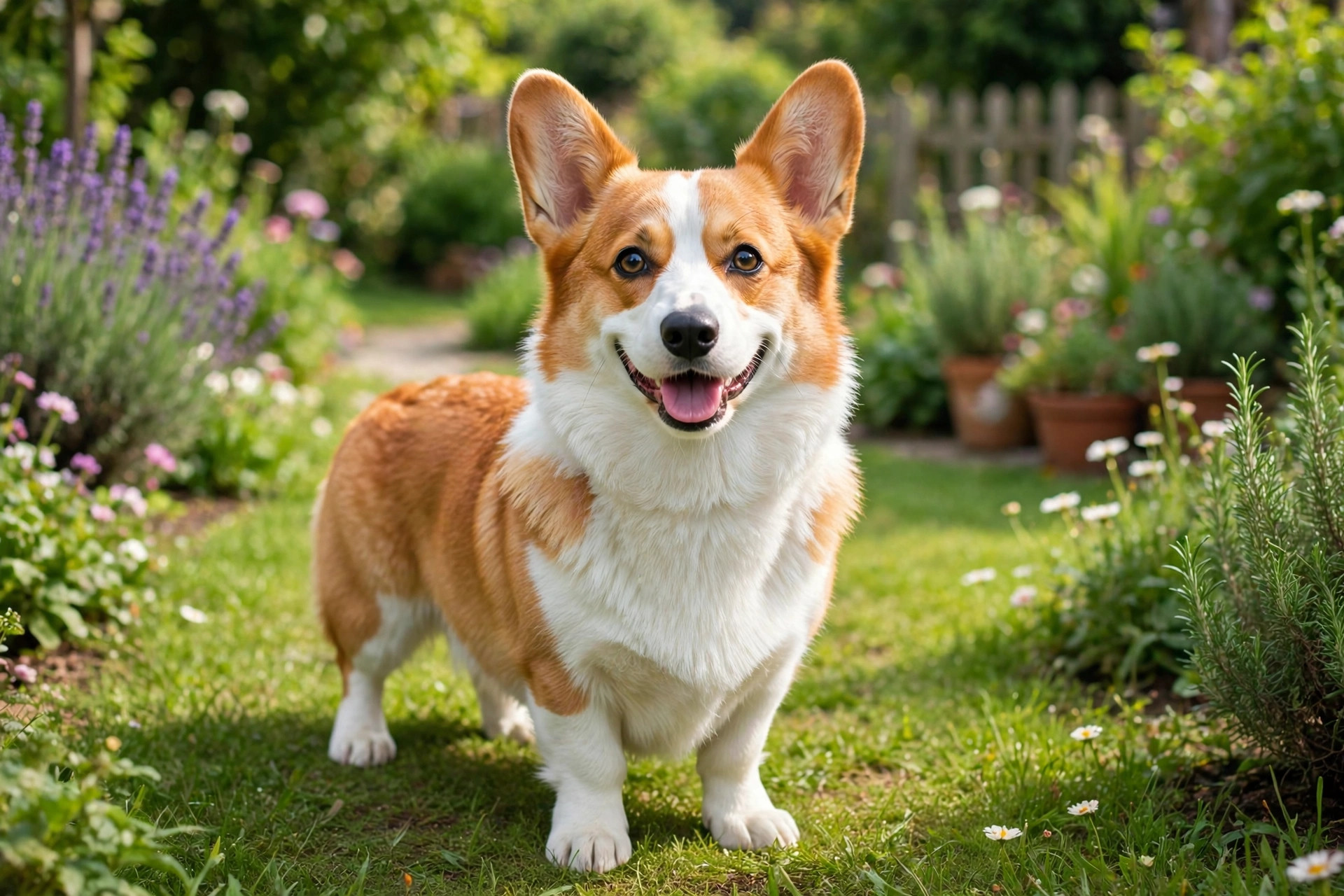
With their short legs, long bodies, upright ears, and fox-like smiles, Pembroke Welsh Corgis are impossible to miss — and their popularity keeps climbing. But behind the cute silhouette is a real working dog with strong opinions, a heavy coat, and a back that needs protecting. This complete corgi breed guide covers everything you need to know before bringing one home: temperament, size, exercise, grooming, feeding, common health problems, and the honest truth about whether a corgi fits your life.
Originally bred in Wales to herd cattle, corgis are smart, bold, and surprisingly athletic for their size — famously food-motivated, famously vocal, and famously devoted to their people.
Table of Contents
- Corgi Breed at a Glance
- Corgi Temperament & Personality
- Pembroke vs Cardigan: What Is the Difference?
- Size, Appearance & Coat
- Exercise & Training Needs
- Grooming & Shedding
- Feeding Your Corgi & Weight Control
- Corgi Health Problems to Know
- Is a Corgi Right for You?
- Corgi Puppies & Breeder Tips
- Frequently Asked Questions
Corgi Breed at a Glance
| Trait | Details |
|---|---|
| Full name | Pembroke Welsh Corgi |
| Origin | Wales — cattle-herding roots traced to Flemish weavers in 1107 |
| AKC group | Herding |
| Height | 10–12 inches at the shoulder |
| Weight | Males up to 30 lbs; females up to 28 lbs |
| Lifespan | 12–13 years (median 13.2 years in a large 2024 UK study) |
| Coat | Medium-length double coat; heavy shedder |
| Energy level | Moderate to high — up to 1 hour of exercise a day |
| Temperament | Smart, bold, affectionate, outgoing, sometimes stubborn |
| Good with kids/pets | Good with older children and other pets when socialized; may herd small children |
| Best for | Active owners who enjoy training and can commit to weight control |
Corgis were developed to drive cattle by nipping at their heels and ducking under kicks — work that explains almost everything about the modern pet: the low, sturdy build, the fearlessness around much bigger animals, and the habit of herding anything that moves.
Corgi Temperament & Personality

The American Kennel Club describes the Pembroke as alert, affectionate, and smart — and owners usually add a fourth word: opinionated. Corgis are cheerful, confident dogs that love being involved in everything their people do.
1. Affectionate and People-Oriented
Corgis bond hard with their families and want to be where the action is. They follow their owners from room to room, lean in for attention, and are generally wonderful with children they were raised with — patient, playful, and tolerant.
2. Smart — Sometimes Too Smart
Corgis rank among the most intelligent breeds and learn commands quickly. The flip side is that a bored corgi invents its own entertainment: opening low cupboards, counter-surfing, and finding the one gap in the garden fence.
3. A Herding Instinct That Never Switches Off
The same instinct that made them great cattle dogs can show up at home as heel-nipping at running children or chasing other pets. This is not aggression — it is the job they were bred for — but it must be trained out early with redirection and consistent rules.
4. Vocal and Watchful
Corgis bark — at the doorbell, at strangers, at squirrels, at nothing much at all. They make excellent watchdogs, but barking can become a habit without training. Teach a “quiet” cue from puppyhood and reward calm behavior.
5. Bold, Not Nervous
The breed standard calls for a dog that is bold, outgoing, and friendly, never nervous or aggressive. A well-socialized corgi is confident with strangers and other dogs; an under-socialized one can become bossy or reactive.
Also Read: German Shepherd Breed Guide: Temperament, Training & Care (2026) — another herding breed, with a very different energy level and training demand.
Pembroke vs Cardigan: What Is the Difference?
There are two corgi breeds, and they are easy to confuse. The Pembroke is the famous one — the late Queen Elizabeth II kept Pembrokes for over 70 years — while the Cardigan is the older, slightly larger cousin.
- Tail: Pembrokes are born with a short or docked tail; Cardigans have a long, fox-like tail.
- Size: Cardigans are a little bigger and heavier (up to about 38 pounds) with slightly larger, rounder ears.
- Temperament: Pembrokes tend to be more outgoing and social; Cardigans are often described as a touch more reserved and territorial.
- History: The two were shown as one breed until 1934, when kennel clubs recognized them separately.
Most of the care advice in this guide — weight control, back protection, grooming — applies to Cardigans too.
Size, Appearance & Coat
A Pembroke is a medium-sized dog on short legs: 10 to 12 inches at the shoulder and up to 30 pounds for males, 28 for females. The outline is unmistakable — long body, short legs, big upright ears, and a fox-like head, often with a broad “corgi smile.” Common coat colors are red, sable, fawn, and black and tan, usually with white markings on the chest, neck, and legs.
The double coat — a soft, thick undercoat under a coarser outer coat — is weatherproof and built for Welsh farm work. It also sheds constantly, with heavy seasonal blow-outs in late spring and early summer. If dog hair on your clothes and furniture bothers you, this is a real consideration, not a minor one.
Exercise & Training Needs
Do not let the short legs fool you: corgis are working dogs that need up to an hour of real activity every day — brisk walks, play, and training sessions, plus mental work like puzzle feeders and scent games. A tired corgi is a calm, happy dog; an under-exercised one barks, chews, and herds the household.
Start training the week your puppy arrives:
- Positive reinforcement only: Corgis are sensitive dogs that respond best to rewards and shut down under harsh corrections.
- Short, fun sessions: Five to ten minutes, several times a day, beats one long drilling session.
- Early socialization (8–16 weeks): Expose your puppy to dozens of people, dogs, sounds, and surfaces — calmly and positively.
- Teach “leave it” and recall early: Both help manage the herding and chasing instincts.
- House training takes patience: Corgis are smart but can be slow to house-train. A strict schedule and crate training help enormously.
Because corgis are so food-motivated, training treats work brilliantly — but every treat counts toward the daily total, which brings us to the breed’s biggest daily management issue.
Grooming & Shedding
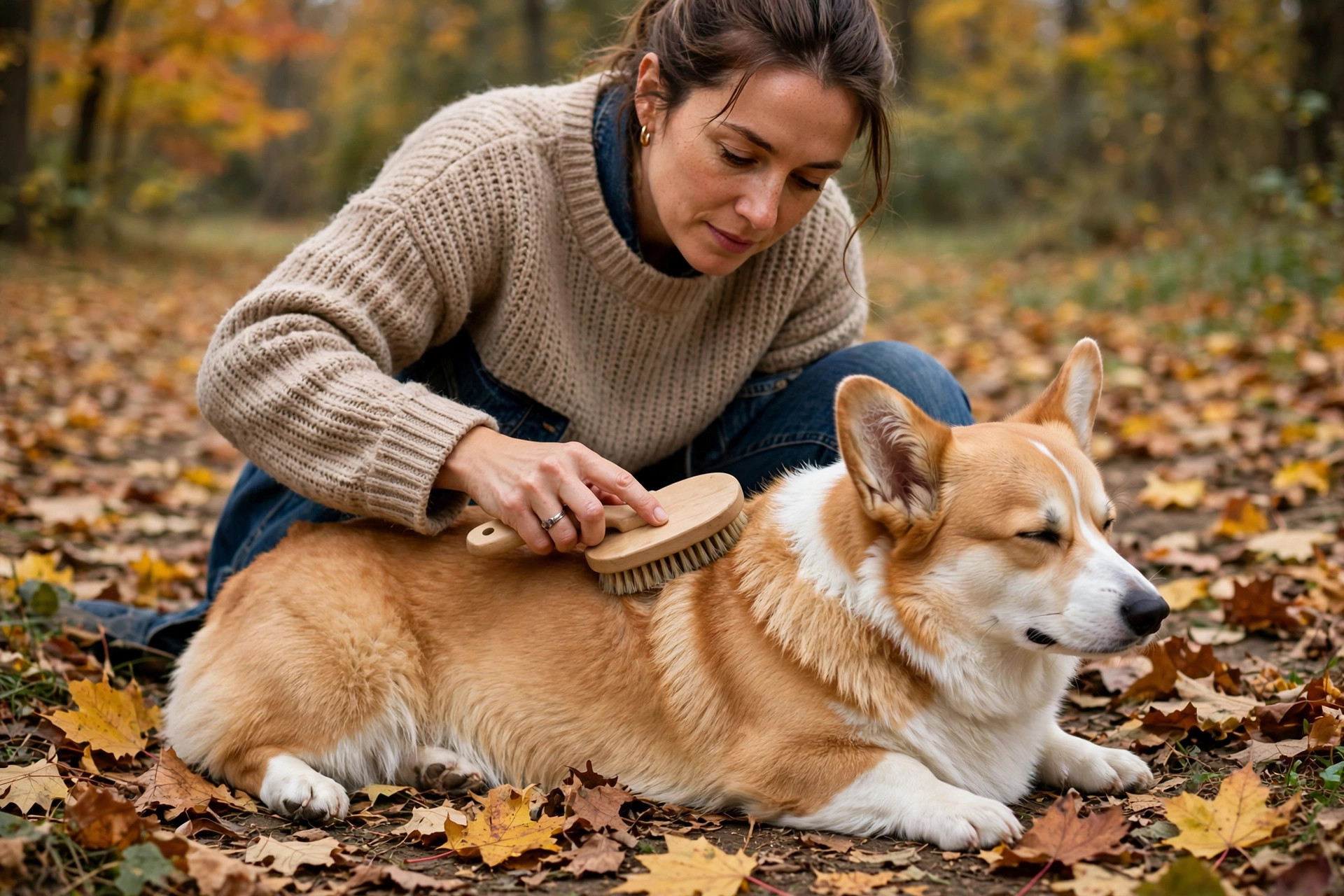
Corgi grooming is simple but constant. A quick daily once-over with a comb and slicker brush removes much of the shed hair before it ends up all over the house, and daily brushing is worth it during the spring and summer coat blows.
- Brush several times a week (daily in shedding season) with a slicker brush and undercoat rake.
- Never shave a corgi. The double coat regulates body temperature year-round — shaving damages it and does not reduce shedding.
- Bathe every 6–8 weeks (or when dirty) with a dog-specific shampoo; overbathing strips the coat’s natural oils.
- Check ears weekly for signs of infection, trim nails every 3–4 weeks, and brush teeth regularly — dental disease is common in the breed.
Regular brushing doubles as a health check: run your hands over the body to catch lumps, skin irritation, or weight changes early.
Feeding Your Corgi & Weight Control
Weight control is the single most important part of caring for a corgi. These dogs love food, gain weight easily, and every extra pound loads a long spine and joints that are already under strain. The breed club specifically warns owners not to let Pembrokes become overweight.
Feed a measured amount of a quality food formulated for medium breeds, split into two meals a day — never free-feed. A typical adult eats roughly 1 to 1.5 cups of dry food daily, but follow your veterinarian’s guidance over any generic chart. Treats — including training rewards — must stay under 10% of daily calories, and low-calorie options like baby carrots or green beans work well for training.
Also Read: Is My Dog Overweight? Body Condition Score & Weight Loss Plan (2026) — learn to score your corgi’s condition at home in three minutes.
Corgi Health Problems to Know
The AKC considers the Pembroke a generally healthy breed, and responsible breeders screen for the conditions below. Knowing them helps you choose a breeder wisely and catch problems early.
1. Intervertebral Disc Disease (IVDD)
The corgi’s long back and short legs put it among the breeds most at risk of IVDD, where the discs between the vertebrae harden, bulge, or rupture and press on the spinal cord. Pembrokes rank among the top five breeds most affected. Warning signs include reluctance to jump or climb stairs, yelping when picked up, a hunched back, and wobbliness in the hind legs. Keeping your corgi lean, using ramps instead of stairs, and using a harness rather than a collar all reduce the risk. Our Dachshund Breed Guide covers the same back-protection habits in detail — dachshunds share the same long-back risk.
2. Degenerative Myelopathy (DM)
DM is a progressive disease of the spinal cord, similar in effect to ALS in humans, that causes painless hind-leg weakness and loss of coordination, usually starting after age 8. There is a DNA test for the SOD1 risk gene — reputable breeders test for it — but an “at risk” result is not a diagnosis, and only a small share of at-risk dogs ever develop the disease. There is no cure, but physical therapy and mobility carts can extend quality of life.
3. Hip and Elbow Dysplasia
These developmental joint disorders cause pain, lameness, and arthritis, and they have a strong genetic component. Responsible breeders screen both parents’ hips and elbows — always ask for verifiable results. Keeping your dog lean and avoiding excessive high-impact exercise in puppies reduces risk.
4. Von Willebrand’s Disease
An inherited bleeding disorder that affects about 6% of Pembroke Welsh Corgis. Affected dogs can live a normal, healthy life, but they may need clotting support during surgery — another reason to tell your vet about the breed risk before any procedure.
5. Eye Problems
Progressive retinal atrophy (PRA) and cataracts occur in the breed. Regular vet eye exams catch problems early, and breeders should screen breeding dogs with an ophthalmologist evaluation.
6. Obesity
Not a disease of bad luck but of the food bowl — and the amplifier for nearly every other problem on this list. Extra weight worsens IVDD, arthritis, hip dysplasia, diabetes, and heart disease. Because corgis are small, even two or three extra pounds is a serious health issue.
For the official breed standard and health-testing recommendations, see the official AKC breed standard published by the Pembroke Welsh Corgi Club of America.
Is a Corgi Right for You?
A corgi is a great fit if: you want a smart, funny, devoted companion; you can give up to an hour of daily exercise plus training; you enjoy teaching a clever dog and can stay consistent; you accept heavy shedding and the barking that comes with a watchdog; and you will commit to strict weight control and back care for life.
Reconsider if: you want a quiet, low-shedding, or low-energy dog; you have very small children and no time to train out heel-nipping; you live in a small apartment with no serious exercise plan; or you are not prepared for the training commitment and the possibility of serious back problems. Corgis reward their people enormously — but they are not a low-maintenance breed.
Corgi Puppies & Breeder Tips
If you decide on a corgi, choose your source carefully. A responsible breeder will:
- Provide written health clearances for hips, elbows, eyes, and the degenerative myelopathy gene for both parents — never accept “the parents are healthy.”
- Raise puppies in a home environment with early socialization, and offer a written health guarantee (typically 1–2 years for genetic conditions).
- Ask you questions about your home, schedule, and experience — good breeders screen buyers too, and never sell unvaccinated puppies “cheap, no papers.”
Expect to pay roughly $1,000–$2,500 for a well-bred pet-quality puppy, plus $1,000–$1,500 a year in routine care before insurance. Also consider corgi rescues — adult corgis regularly need homes, and an adult’s temperament, size, and health are already known.
Frequently Asked Questions
Are corgis good family dogs?
Yes — in the right household. Corgis are loyal, affectionate, and playful with their own family, including children they were raised with. But they need training to curb heel-nipping at running children, and they are a poor fit for households that cannot give them daily exercise and attention.
How long do corgis live?
About 12–13 years on average, with a median of 13.2 years in a large 2024 UK study. Keeping your corgi lean, well-exercised, and on a vet-monitored health plan — with early screening for back and joint problems — gives it the best shot at the long end of that range.
Do corgis shed a lot?
Yes — heavily, year-round, with dramatic seasonal blow-outs in late spring and early summer. Brush several times a week (daily in shedding season) and never shave the double coat.
Are corgis easy to train?
They learn fast, which is both the good news and the challenge. Corgis are smart and food-motivated, so reward-based training works brilliantly — but they also have a mind of their own and will test inconsistent rules. Short, fun, consistent sessions win.
Are corgis good apartment dogs?
They can be, as long as their exercise needs are met. Corgis adapt to smaller spaces, but they do not like being left alone for long stretches, and barking can become a problem in thin-walled buildings without training.
Do corgis have back problems?
Yes — their long backs and short legs put them at high risk of intervertebral disc disease (IVDD). Keep them lean, use ramps for furniture and cars, avoid repetitive jumping, and see your vet the same day if you notice back pain, wobbliness, or reluctance to move.
Final Thoughts
So, what should you take away from this corgi breed guide? The Pembroke Welsh Corgi is a smart, bold, affectionate little herding dog with a big personality and a royal fan club — but it comes with two non-negotiable responsibilities: training that stubborn, clever brain, and protecting that long back. Keep your corgi lean, exercise it daily, brush that famous coat, and socialize it relentlessly, and you will have a devoted companion for 12–13 years.
If the corgi’s personality wins you over, do your homework on breeders, start training on day one, and put a ramp by the sofa before your new friend ever learns to jump.
By Dr. Ayaz Ali