
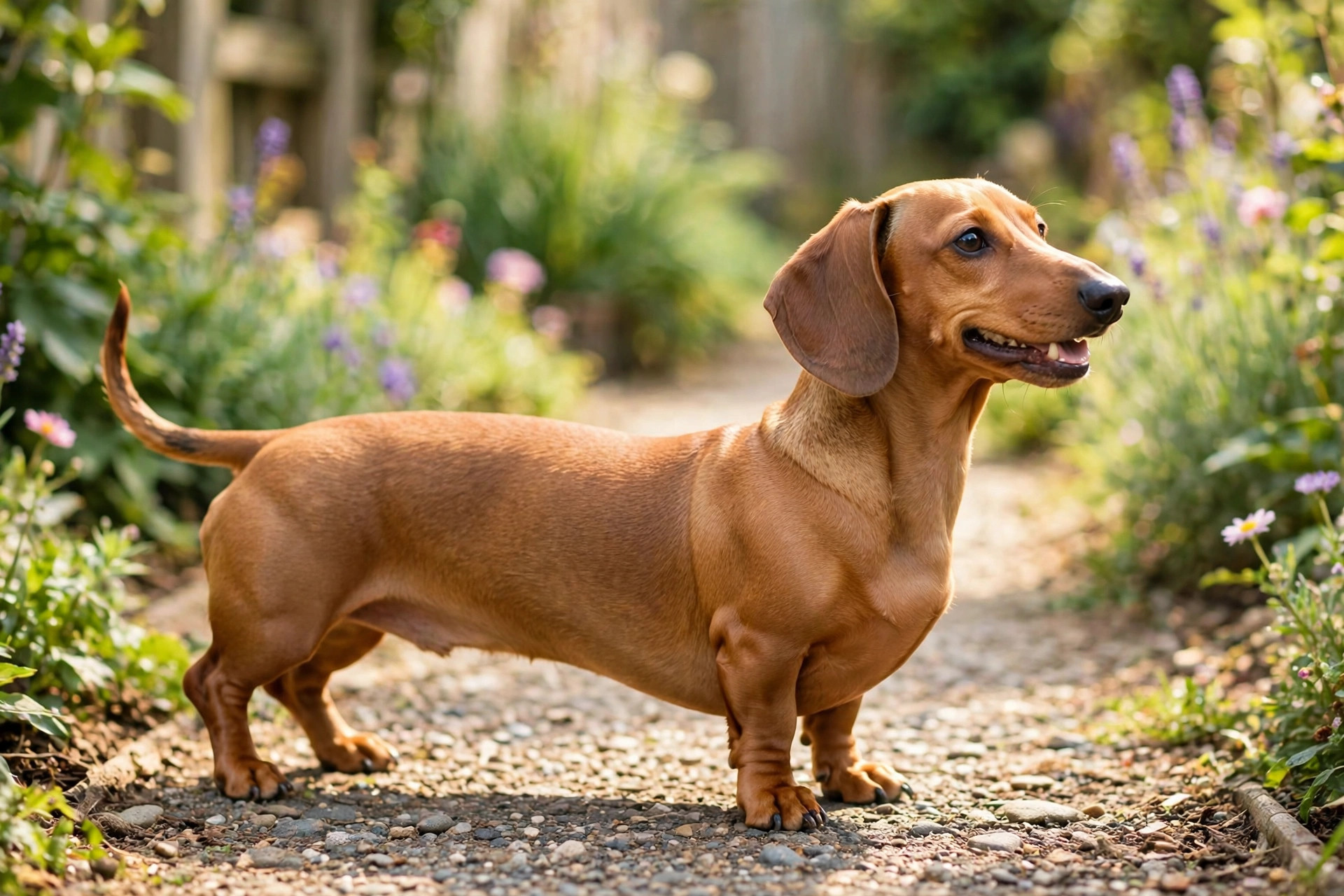
Few dogs pack as much personality into such a small frame as the dachshund breed. With their famously long bodies, short legs, and fearless attitude, dachshunds — affectionately called “wiener dogs” or “sausage dogs” — have been charming families for centuries. But behind the cute silhouette is a serious consideration: that long back needs real protection.
In this complete dachshund breed guide, you will learn everything you need to know before bringing one home: temperament, sizes and coat types, training, grooming, exercise, and the back-care habits that keep a dachshund healthy for its full 12–16 year lifespan.
Table of Contents
- A Brief History of the Dachshund
- Dachshund Temperament: Big Personality, Small Dog
- Sizes and Coat Types
- Back Health and IVDD: The Most Important Section
- Training a Dachshund: Patience Wins
- Exercise and Daily Life
- Grooming by Coat Type
- Feeding and Weight Control
- Dachshund Puppies: What to Expect
- Other Health Problems to Know
- Is a Dachshund Right for You?
- Frequently Asked Questions
A Brief History of the Dachshund
The dachshund was developed in Germany — the name literally means “badger dog” — to hunt badgers and other burrowing animals. Their shape was engineered for the job: short legs to enter tunnels, a long body to navigate underground, large paws for digging, and a deep chest for stamina. Standard dachshunds tackled badgers and even wild boar, while smaller versions were bred for foxes and rabbits.
The breed reached America by 1885 and was registered with the American Kennel Club, and it has ranked among America’s most popular breeds for decades. That hunting heritage still shows today: dachshunds dig, chase, bark loudly, and investigate every hole in the garden with total confidence.
Dachshund Temperament: Big Personality, Small Dog
Ask any dachshund owner and you will hear the same description: bold, clever, funny, and devoted. The American Kennel Club describes the breed as bold and vivacious, and that confidence is real — dachshunds genuinely believe they are much bigger than they are.
What to expect from a dachshund’s personality:
- Deeply loyal: Dachshunds bond hard with their people and love to be involved in everything, including sitting on your lap under a blanket.
- Playful and clownish: They are entertainers, with a mischievous streak that makes them endlessly funny — and occasionally in trouble.
- Watchful and vocal: Their loud bark makes them excellent watchdogs, but barking can become a habit without training.
- Independent and a little stubborn: That hound independence means they will sometimes weigh your request against their own plans.
- Prey-driven: Squirrels, rabbits, and anything that runs will trigger the chase instinct. Recall off-leash is rarely reliable.
Dachshunds are usually good with older children, but they have limited patience for rough handling, so interactions with small children need adult supervision. With other dogs, early socialization matters: a well-socialized dachshund is friendly, but an under-socialized one can be snappy with unfamiliar dogs.
Also Read: How to Stop Puppy Biting: Vet Training Guide (2026)
Sizes and Coat Types
Dachshunds come in two sizes and three coat types, giving six combinations in total. The AKC standard lists standard dachshunds at 16–32 pounds, while miniatures are 11 pounds and under at 12 months of age.
| Variety | Weight | Height | Best Known For |
|---|---|---|---|
| Standard | 16–32 lbs | 8–9 inches | The original badger hunter; sturdier and bolder |
| Miniature | Under 11 lbs | 5–6 inches | Apartment-friendly size; slightly more timid with strangers |
| Smooth coat | — | — | Short, sleek coat; lowest grooming needs |
| Longhaired coat | — | — | Soft, flowing coat; often the calmest temperament |
| Wirehaired coat | — | — | Dense, wiry coat with a beard; boldest, most terrier-like |
Coat type also hints at temperament: wirehaired dachshunds tend to be the boldest and most mischievous, longhaired dachshunds the quietest and most affectionate, and smooth dachshunds sit somewhere in between. These are tendencies, not guarantees — individual dogs vary.
Back Health and IVDD: The Most Important Section
Intervertebral disc disease (IVDD) is the dachshund breed’s single most serious health problem. Because of their chondrodystrophic genetics, the discs between their vertebrae harden and can slip or rupture, pressing on the spinal cord. Estimates put the lifetime risk at roughly 1 in 4 dachshunds — far higher than any other breed.
Warning signs of a disc problem include:
- Reluctance to jump, climb stairs, or move normally
- A hunched back or tense, painful belly
- Yelping when picked up or touched along the back
- Wobbliness, dragging feet, or weakness in the back legs
- Sudden loss of bladder or bowel control
Any of these signs means a vet visit the same day — early treatment, from strict crate rest to surgery, makes a major difference in outcomes.
Daily habits that protect a dachshund’s back
- Keep them lean. Extra weight is the single biggest risk factor for IVDD because it loads the long spine. You should be able to feel the ribs easily and see a waist from above.
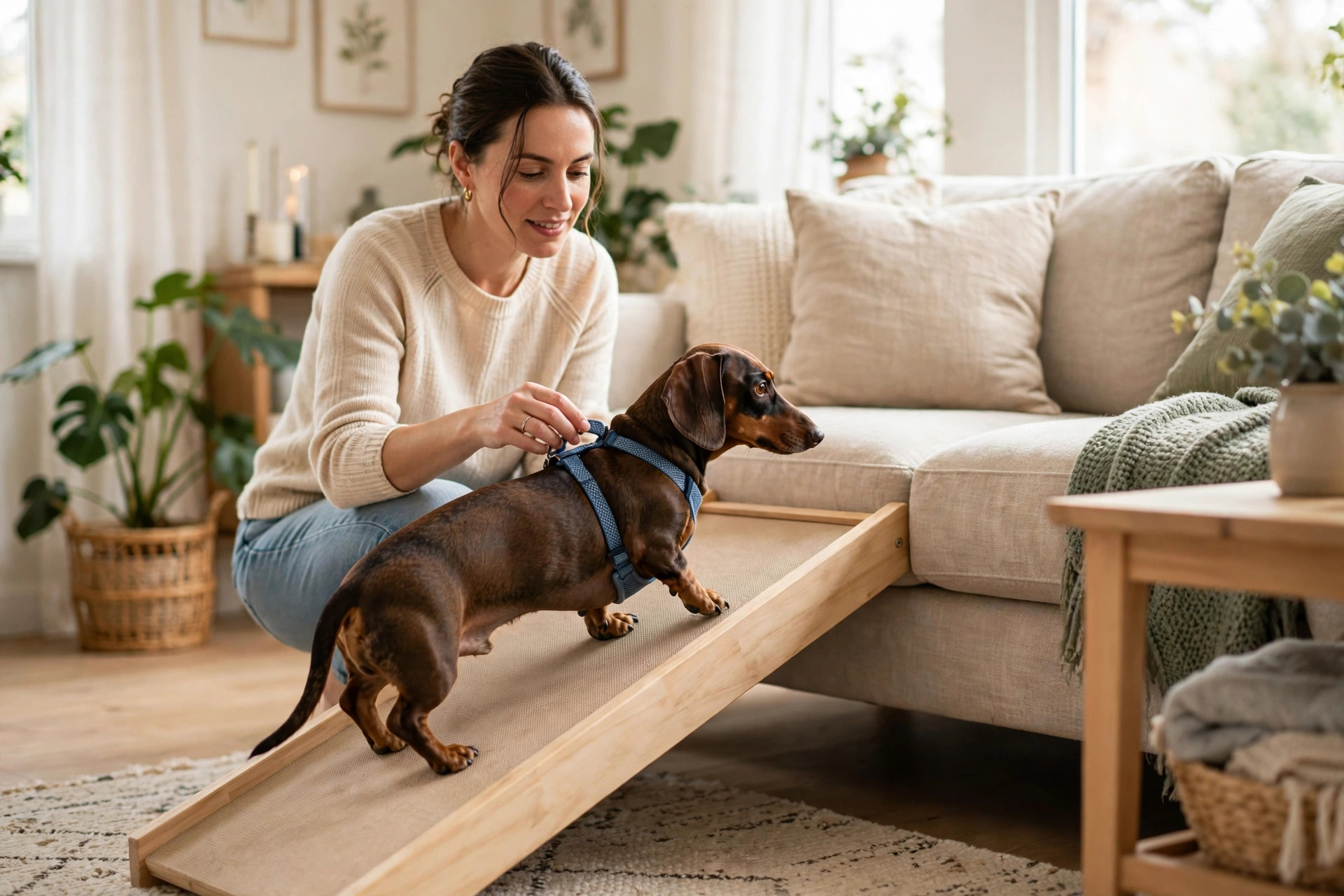
- Use ramps and steps. Train your dachshund to use a ramp for the sofa, bed, and car instead of jumping on and off furniture.
- Limit repetitive stairs. Carry your dachshund on steep staircases where practical, especially puppies and seniors.
- Use a harness, not a collar. A harness spreads pressure across the chest instead of jerking the neck and spine on the leash.
- Support the whole body when lifting. Always hold the chest and the rear end together so the back stays level — never let a dachshund dangle with its back unsupported.
- Build core strength gently. Regular moderate walks on level ground keep back and core muscles strong; avoid high-impact jumping games.
Also Read: Is My Dog Overweight? Body Condition Score & Weight Loss Plan (2026)
Training a Dachshund: Patience Wins
Dachshunds are intelligent and learn quickly — but their independence means they will test you. The winning approach is short, fun, reward-based sessions with high-value treats, and total consistency from everyone in the household.
- House training takes longer than average. Dachshunds are famously slow to house-train. Expect months, not weeks: use a strict schedule, crate training, and celebrate every outdoor success.
- Teach “quiet” early. Barking is the breed’s default setting. Reward silence, teach a “quiet” cue, and never reward barking with attention.
- Recall is a long game. Because of their prey drive, most dachshunds should stay on-leash in unfenced areas. Practice recall in safe, enclosed spaces with big rewards.
- Socialize early and widely. Puppy classes, calm introductions to people and dogs, and positive experiences with sounds and handling all prevent the snappiness the breed can develop.
- Never use harsh corrections. Dachshunds shut down or push back under harsh handling. Positive reinforcement gets far better results with this breed.
Exercise and Daily Life
Despite their short legs, dachshunds are active little hounds that need 30–60 minutes of daily exercise: two moderate walks plus play and scent games. Sniffy walks are ideal — let them use that powerful nose. Nose work, puzzle feeders, and digging boxes all burn mental energy that would otherwise go into barking or mischief.
Dachshunds adapt well to apartment living as long as their exercise needs are met, but they do not like being left alone for long stretches. Boredom plus separation anxiety is the recipe for barking complaints and destructive chewing. If you work long hours, plan for a midday walker or daycare.
Grooming by Coat Type
- Smooth coat: The easiest — a weekly wipe or brush, plus regular nail trims and ear checks.
- Longhaired coat: Brush several times a week to prevent tangles behind the ears and on the legs; trim feathering as needed.
- Wirehaired coat: Brush weekly and hand-strip (or clip) a few times a year to keep the wiry texture; clipping softens the coat over time.
All dachshunds need monthly nail trims, regular ear cleaning (those floppy ears trap moisture), and dental care — small breeds are prone to dental disease, so daily brushing is worth the effort.
Feeding and Weight Control
Weight control is not cosmetic for a dachshund — it is back protection. Feed a measured amount of a quality small-breed food, split into two meals, and count treats toward the daily total. Treats should stay under 10% of daily calories. Dachshunds are enthusiastic beggars and skilled at guilt-tripping; resist the extra snacks, and use low-calorie fillers like green beans or carrot pieces for training rewards.
If you cannot easily feel your dachshund’s ribs, talk to your vet about a weight-loss plan before the extra pounds become a back problem.
Dachshund Puppies: What to Expect
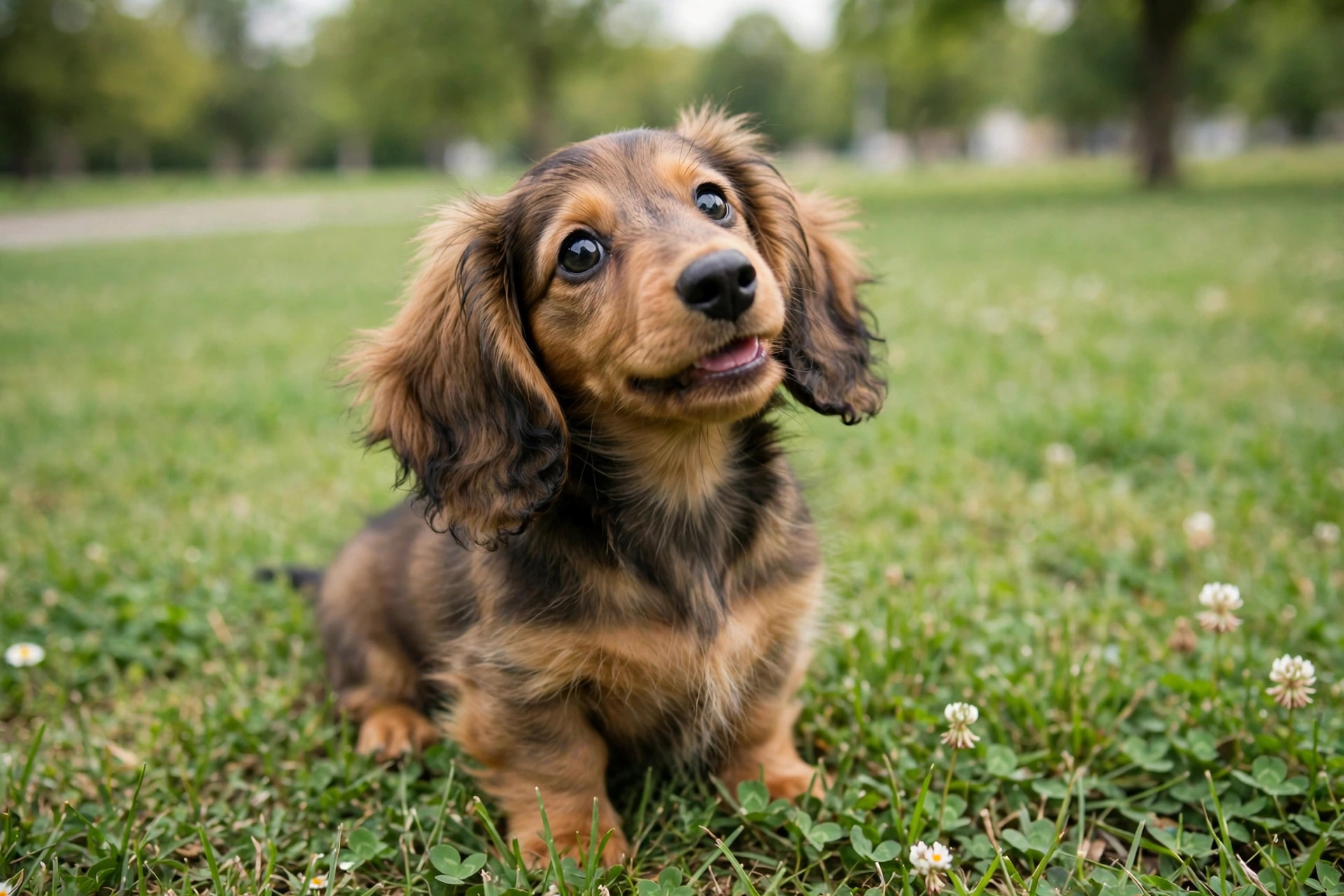
Dachshund puppies are irresistible — and a real commitment. Expect a long house-training road, a teething phase with plenty of chewing, and a puppy that wants to be with you constantly. Start crate training on day one, socialize widely during the first 16 weeks, and begin ramp training early so “no jumping” is a habit, not a rule you fight later.
When choosing a puppy, look for a breeder who health-tests parents for IVDD risk factors and eye problems, and never buy from a breeder producing “double dapple” puppies — breeding two dapple-patterned dogs together produces puppies at high risk of blindness and deafness.
Also Read: Crate Training Your Puppy: Step-by-Step Guide (2026)
Other Health Problems to Know
Beyond IVDD, dachshunds are prone to:
- Obesity — the root cause of many secondary problems, including back disease and diabetes.
- Dental disease — crowded small jaws make tartar buildup common; brush teeth and schedule dental checks.
- Eye problems — progressive retinal atrophy (PRA) and cataracts occur in the breed.
- Patellar luxation — slipping kneecaps, more common in miniatures.
- Ear infections — floppy ears and hair in the ear canal trap moisture; check ears weekly.
- Diabetes and Cushing’s disease — both appear more often in dachshunds than in many breeds, and both are easier to manage when caught early.
With good care, most dachshunds live 12–16 years — one of the longer lifespans among dog breeds, and a commitment worth planning for.
Is a Dachshund Right for You?
A dachshund is a great fit if you want a loyal, funny, portable companion, you are home often enough to give them company, and you are willing to commit to back care, patient training, and weight control for life. They suit apartments, families with older children, and owners who enjoy an active, involved little dog.
Think twice if you need a quiet dog, want reliable off-leash recall, dislike barking, or cannot commit to ramps, weight management, and the possibility of a serious back problem. Dachshunds reward their people enormously — but they are not a low-maintenance breed.
Frequently Asked Questions
Are dachshunds good family dogs?
Yes, for families with older children and adults who understand the breed. Dachshunds are loyal and affectionate, but they have limited patience for rough handling, so young children need supervision around them.
How long do dachshunds live?
Dachshunds typically live 12–16 years, one of the longest lifespans among dog breeds, provided their weight and back are managed well.
What is IVDD in dachshunds?
IVDD (intervertebral disc disease) is a condition where the discs between the vertebrae harden, slip, or rupture and press on the spinal cord. It affects roughly 1 in 4 dachshunds. Keeping your dog lean, using ramps, and avoiding jumping all reduce the risk.
Do dachshunds bark a lot?
Yes — barking is one of the breed’s defining traits. They were bred as watchdogs with a loud bark. Early training, a “quiet” cue, and enough exercise and enrichment keep barking manageable.
Are dachshunds hard to house-train?
They are slower than average. Expect several months of consistent scheduling and crate training. Patience and a strict routine get most dachshunds fully house-trained.
Can dachshunds climb stairs?
They can, but repetitive stair use strains their long backs. Use ramps or carry your dachshund on steep stairs where possible, especially for puppies and seniors.
Are miniature dachshunds calmer than standards?
Not necessarily. Miniatures are often slightly more timid with strangers, while standards tend to be bolder. Temperament varies more by individual dog and coat type than by size alone.
Final Thoughts
So, what should you take away from this dachshund breed guide? The dachshund is a bold, loyal, hilarious little hound with a big-dog attitude and a long lifespan — but it comes with one non-negotiable responsibility: protecting that long back. Keep your dachshund lean, use ramps, train with patience, and give them the company they crave, and you will have a devoted companion for 12–16 years.
If the dachshund’s personality wins you over, do your homework on breeders, start training on day one, and put a ramp by the sofa before your new friend ever learns to jump.
By Dr. Ayaz Ali