
You run your hand along your cat’s back and notice a dusting of white flakes on her dark fur — and on your hand, and on the sofa. Your first thought is probably the obvious one: does my cat have dandruff, and should I be worried?
The short answer is that cat dandruff is very common, and in most cases it is a simple, fixable problem — dry indoor air, a little too little grooming, or a diet that needs more healthy fats. But those same white flakes can also be the first visible sign of parasites, allergies, or an illness underneath. This 2026 guide explains what cat dandruff is, the most common causes, the warning signs that mean “see the vet,” and the home care plan that clears most cases up.
Table of Contents
- What Is Cat Dandruff?
- Signs of Cat Dandruff
- What Causes Cat Dandruff?
- Walking Dandruff: When the Flakes Move
- How to Treat Cat Dandruff at Home
- What Your Vet Can Do
- When to See the Vet
- Frequently Asked Questions
What Is Cat Dandruff?
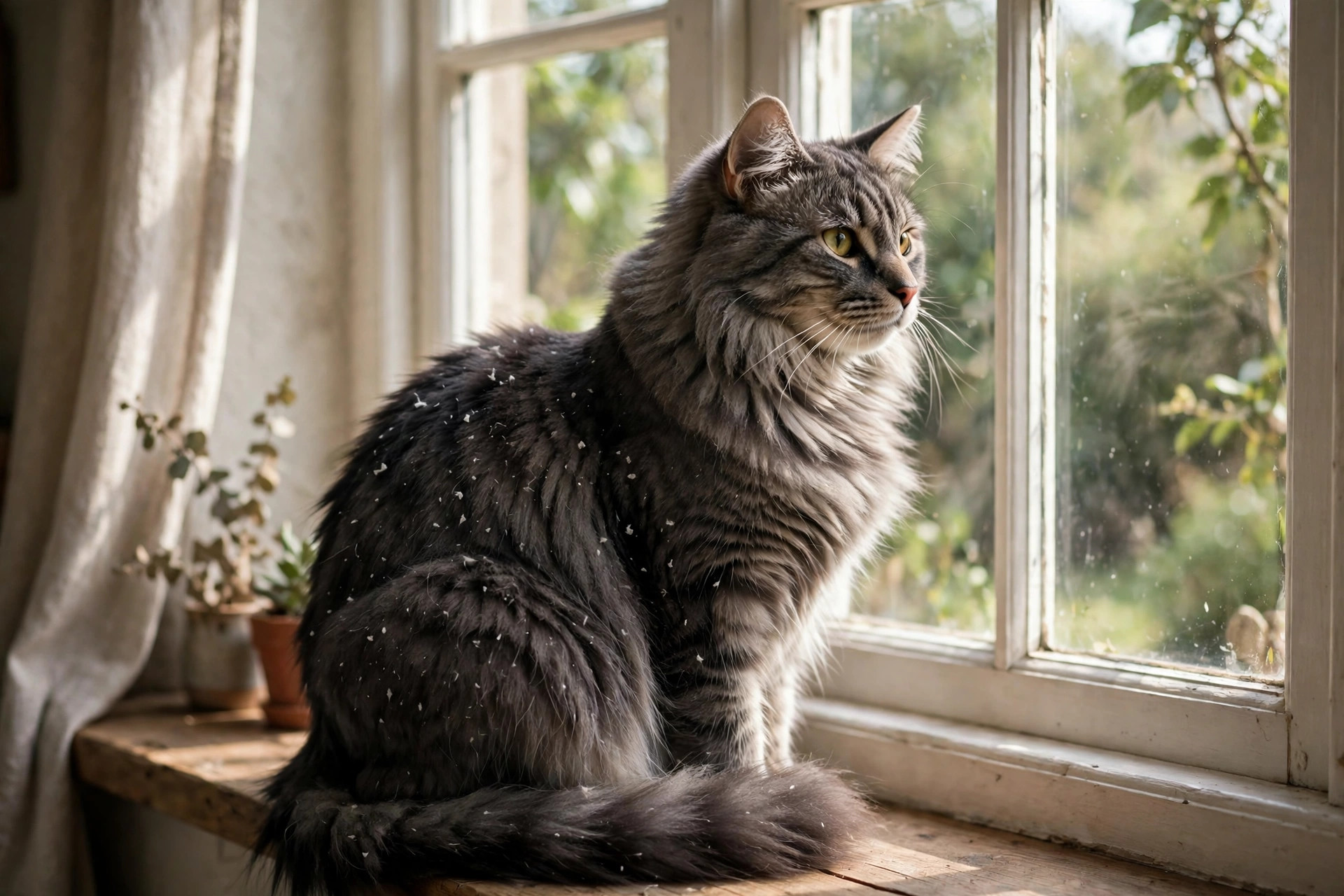
Cat dandruff is a buildup of white or greyish flakes on the skin and under the coat. The flakes are clusters of dead skin cells. In a healthy cat, skin cells shed slowly and invisibly — your cat’s constant grooming sweeps them away before you ever see them. Dandruff appears when those cells either cannot shed properly or are being produced far faster than normal, so they pile up into visible flakes.
It helps to know the difference between dandruff and dander. Dander is the normal, microscopic shedding of skin cells that every cat produces — invisible and harmless, though it is what triggers allergies in people. Dandruff is visible flaking, and it means something has thrown the skin’s normal cycle off balance. Veterinary sources including PetMD confirm that dandruff can be caused by dehydration, stress, poor nutrition, and poor grooming — but it can also be a sign of medical conditions that need investigation.
Signs of Cat Dandruff
Look for these signs when you brush or pet your cat: white flakes scattered through the coat, especially along the back and tail base; dry, dull-looking fur that has lost its usual shine; flaky or scaly patches of skin visible when you part the fur; itching or over-grooming of one area; hair loss or thinning around the flaky patches; redness, scabs, or sores under the flakes; and flakes that appear to move — a sign of mites.
What Causes Cat Dandruff?
The causes of cat dandruff fall into two groups: everyday causes that are easy to fix at home, and medical causes that need a vet to diagnose and treat.
| Cause | Key Signs | Vet Needed? |
|---|---|---|
| Dry air / low humidity | Mild flaking, worse in winter | No |
| Poor grooming | Flakes on the back and tail base | No, unless caused by pain |
| Diet low in omega-3s | Dull coat plus dandruff | If no improvement in 4 weeks |
| Obesity or arthritis | Dandruff on hard-to-reach areas | For weight and mobility assessment |
| Parasites (mites, fleas) | Intense itching, moving flakes, hair loss | Yes |
| Allergies or skin infection | Persistent dandruff plus redness or sores | Yes |
| Underlying illness | Dandruff plus weight or appetite changes | Yes |
1. Dry Indoor Air
The single most common cause of cat dandruff is simply dry air. Indoor heating in winter dries out your cat’s skin just as it dries out yours, which is why so many cats develop flakes in November and December even if their coat was perfect all summer. A home humidifier that keeps indoor humidity around 40–60% often helps noticeably within a few weeks.
2. Not Grooming Well Enough
Overweight cats often cannot reach their back and tail base, so dead skin builds up exactly there. Older cats with arthritis have the same problem: bending and twisting to groom hurts, so they groom less. If your cat’s dandruff sits mainly on the lower back, the flakes may really be telling you about her weight or her joints.
Also Read: Is My Cat Overweight? Body Condition Guide (2026)
3. Diet, Parasites, and Allergies
Healthy skin needs omega-3 and omega-6 fatty acids plus good-quality protein. Most complete commercial cat foods provide these, but cats on unbalanced home-made diets — or on a cheap food that is low in animal fat — can run short, leaving the skin dry and the coat dull. Fleas, lice, and especially Cheyletiella mites can also cause heavy flaking; the mites are nicknamed “walking dandruff” because the flakes seem to move as they crawl underneath. Cats can also be allergic to pollen, dust, flea bites, or food ingredients, and bacterial or fungal skin infections — including ringworm, which causes flaky, scaly patches and hair loss — also produce dandruff-like flaking.
Also Read: Ringworm in Cats: Signs, Treatment & Guide (2026)
4. Underlying Illness
Persistent dandruff can be the first visible sign of an illness underneath — most commonly hyperthyroidism, diabetes, or kidney disease, all of which can leave the coat dry and unkempt. Cats that feel unwell often stop grooming, so a sudden coat change in a senior cat is worth taking seriously.
Also Read: Senior Cat Checkups: 7 Vet Screenings for Cats Over 7 (2026)
Walking Dandruff: When the Flakes Move
If you look closely at the flakes and they seem to crawl, you are probably looking at Cheyletiella mites — a condition vets call cheyletiellosis, or “walking dandruff.” These mites live on the skin surface and feed on skin secretions, causing heavy dandruff, itching, and sometimes hair loss along the back. It is highly contagious: it spreads through direct contact with an infected animal, and through shared bedding, brushes, or grooming tools, and mites can survive off the host for up to 10 days. If one pet in the house has it, every dog, cat, and rabbit in the home usually needs treatment, and your vet will prescribe the right anti-parasite product.
How to Treat Cat Dandruff at Home
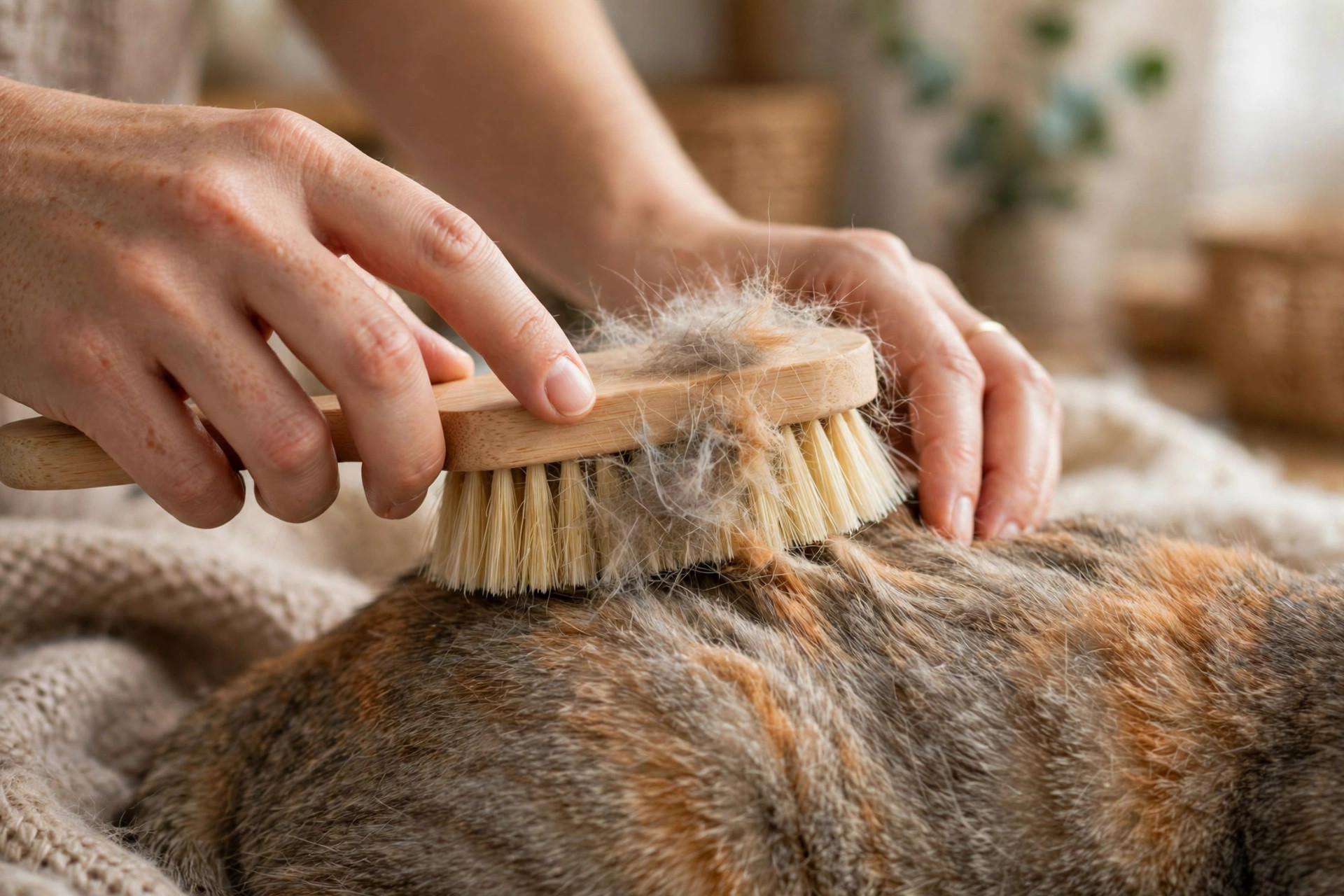
This home care plan is for a cat that is otherwise healthy — eating well, active, and not itchy or losing hair. If your cat has any of the warning signs listed below, skip straight to the vet.
Brush regularly. Regular brushing is the single most useful thing most cat owners can do for flaky skin. It removes dead skin and loose fur and spreads the skin’s natural oils through the coat. A soft brush or comb a few times a week is enough for most short-haired cats; long-haired cats need daily brushing.
Add moisture to the air and the diet. Run a humidifier in the rooms where your cat sleeps, aiming for 40–60% indoor humidity. Feed some or all meals as wet food, and make water easy to reach with several bowls around the house. Ask your vet about an omega-3 supplement or a food formulated for skin and coat health — use a cat-specific product and the dose your vet recommends, and give any diet change 4–8 weeks before judging the result.
Help with weight and mobility, and keep up parasite prevention. If your cat is overweight, gradual weight loss with your vet’s help often fixes dandruff on the back, simply because your cat can reach it again. Use a vet-recommended, cat-safe parasite product all year round, even for indoor cats — fleas and mites are far easier to prevent than to clear once they have spread.
Never use human dandruff shampoo on your cat. Human shampoos have the wrong pH for cat skin and some contain ingredients that are toxic to cats. If your cat needs a medicated shampoo, your vet will prescribe one made for cats — usually an anti-seborrheic formula used a few times a week.
What Your Vet Can Do
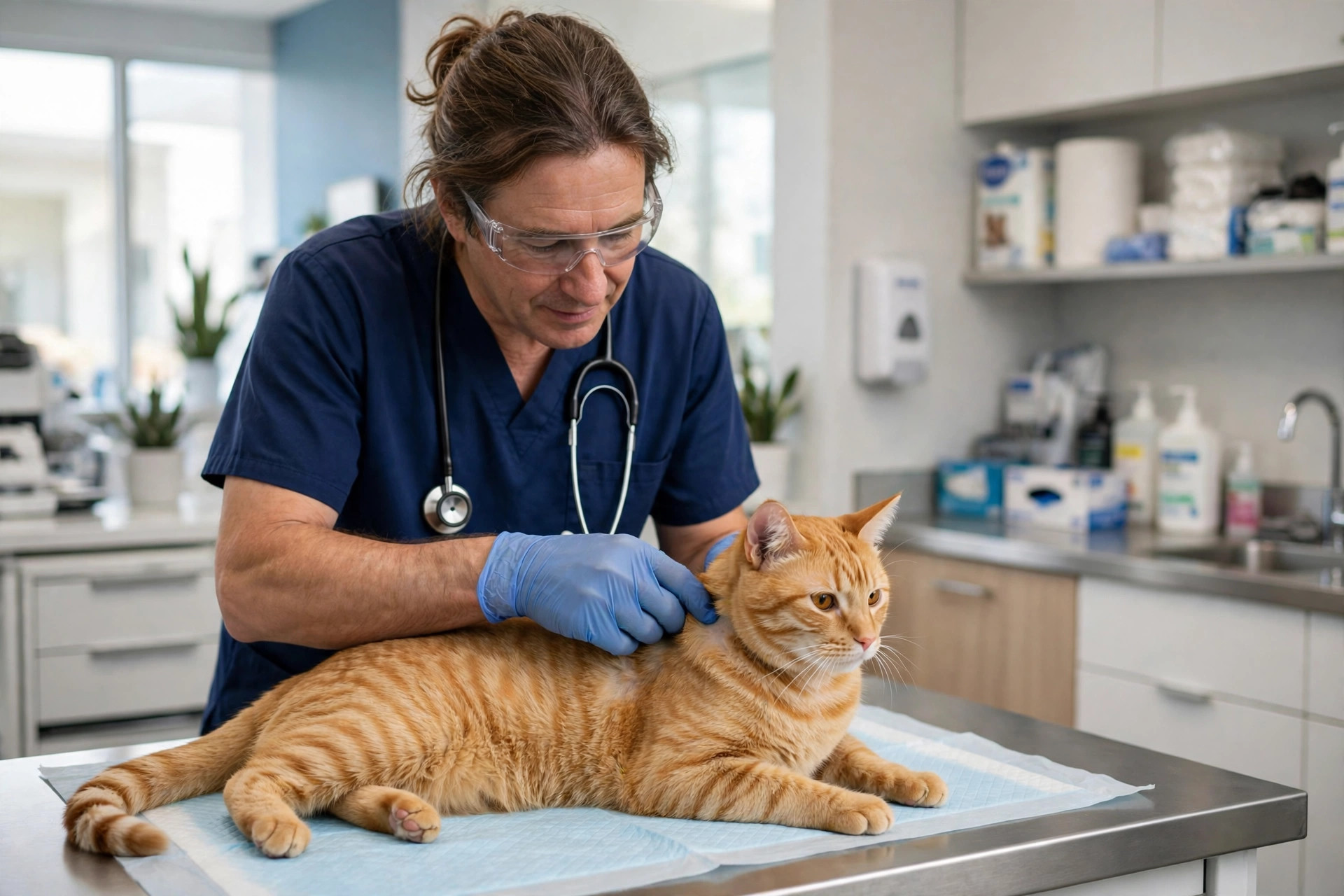
A vet visit for dandruff is usually quick and non-invasive. Your vet will start with a full skin exam and often a simple test — either a skin scrape or a piece of clear tape pressed to the coat — to capture mites, flakes, and surface cells for examination under a microscope. Blood work may follow if an underlying illness is suspected. Treatment follows the cause rather than the flakes: parasites get a course of cat-safe anti-parasite medication; skin infections get medicated shampoo, topical sprays, or oral antibiotics or antifungals; allergies get a food elimination trial or allergy management plan; and underlying disease gets treatment of the condition itself, which usually improves the coat as the disease comes under control.
When to See the Vet
Book a vet visit promptly if you notice any of these: flakes come with itching, scratching, redness, scabs, or sores; hair loss or bald patches alongside the flakes; flakes that seem to move (possible walking dandruff mites); dandruff that does not improve after 3–4 weeks of home care; dandruff plus weight loss, weight gain, or appetite changes; dandruff plus increased thirst or urination; your cat seems lethargic, painful, or unlike herself; or you or another family member develops an itchy rash after handling the cat. Most mild dandruff clears up at home within 4–8 weeks. Once the flakes are gone, keep them away with regular brushing, a balanced diet with adequate omega-3s, 40–60% indoor humidity in winter, fresh water in several spots, year-round parasite prevention, a healthy weight, and regular vet checkups — senior cats (7+) should be seen at least once a year, twice a year after age 10.
Frequently Asked Questions
Is cat dandruff normal?
A few white flakes, especially in winter when indoor heating dries the air, are common and usually harmless. But persistent, heavy, or worsening dandruff is not normal — it means something is throwing the skin’s balance off, and it is worth finding out what.
What causes cat dandruff most often?
The most common causes are dry indoor air (especially in winter), not grooming well enough (often because of obesity or arthritis), a diet low in omega-3 fatty acids, parasites like Cheyletiella mites, allergies, and underlying conditions such as hyperthyroidism, diabetes, or kidney disease.
Can I use human dandruff shampoo on my cat?
No. Human dandruff shampoos have the wrong pH for cat skin and may contain ingredients toxic to cats. Only use shampoos made for cats, ideally one your vet recommends for your cat’s specific cause.
How do I get rid of cat dandruff at home?
Brush your cat 2–3 times a week, run a humidifier to keep indoor humidity at 40–60%, feed wet food and offer plenty of fresh water, and ask your vet about an omega-3 supplement. Give the routine 4–8 weeks. If flakes persist or come with itching or hair loss, see your vet.
Is cat dandruff contagious to humans?
Ordinary dandruff is not contagious. But the causes behind it can be: Cheyletiella mites (“walking dandruff”) and ringworm both spread to people and cause itchy rashes. If your flakes move, or anyone in the house develops a rash, see your vet — and your doctor.
Final Thoughts
So, what should you do about cat dandruff? Start simple: brush more, humidify the air, and feed for skin health. In most cases, that is all it takes — about 70% of mild cat dandruff clears up at home with humidity control, omega-3s, and regular brushing. Give it 4–8 weeks and watch for improvement.
But do not ignore flakes that come with itching, hair loss, sores, or a change in your cat’s behavior or appetite. Those are the cases where dandruff is a messenger, not the problem itself — and the message is worth hearing early. A quick vet visit and a targeted treatment plan will sort out the cause and get your cat’s coat back to the glossy, flake-free fur it should be.
By Dr. Ayaz Ali