
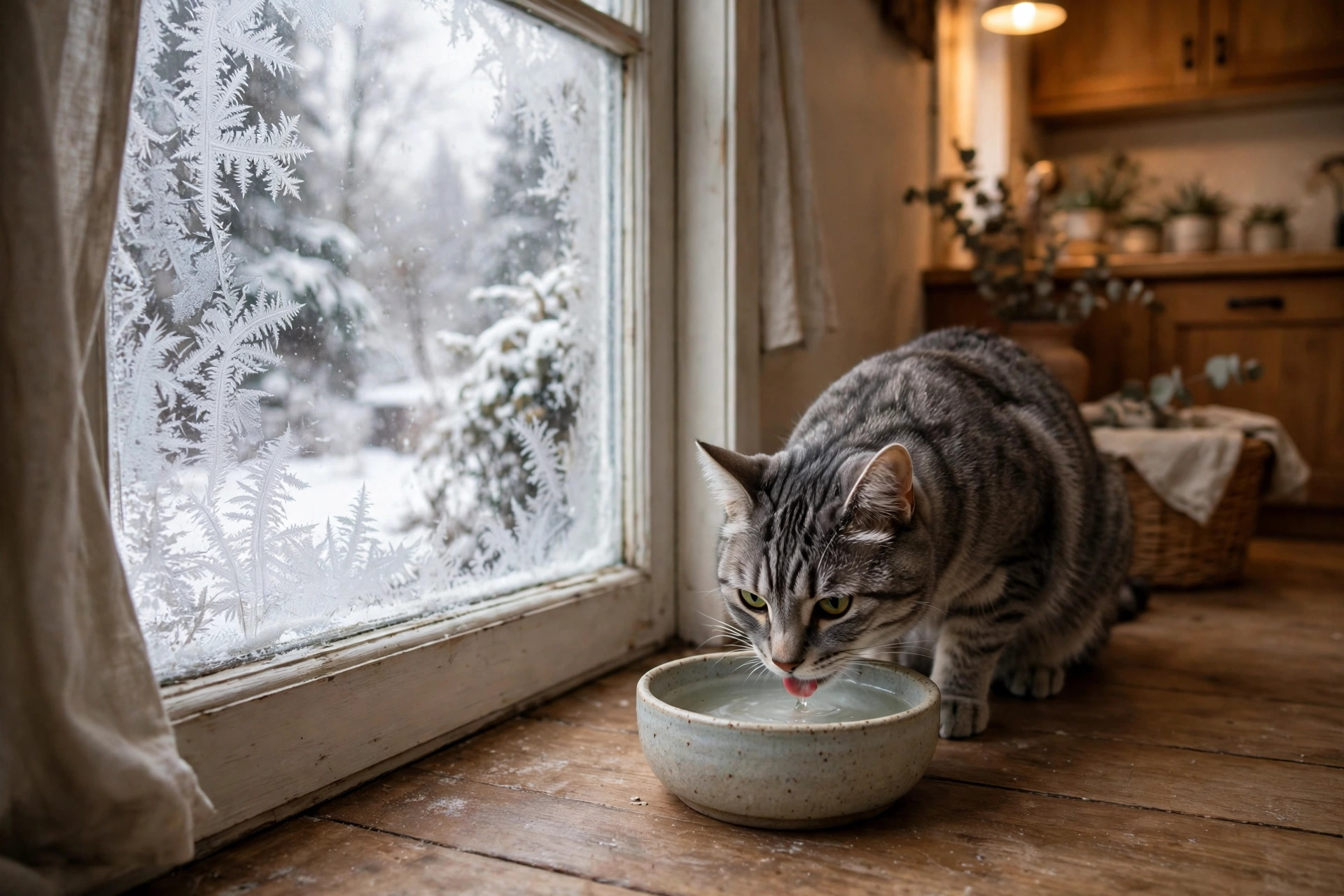
When the temperature drops, most pet owners worry about keeping their dog or cat warm — but few think about water. Yet winter dehydration in pets is a real and surprisingly common problem: as the weather turns cold, cats and dogs quietly drink less, heated indoor air dries them out, and the first signs are easy to miss. By the time an owner notices, a pet can already be heading toward urinary trouble or a vet visit.
The good news is that winter dehydration is almost entirely preventable. In this 2026 guide, we explain why pets drink less in cold weather, the warning signs to check in under a minute, and eight practical ways to keep them hydrated all winter.
Table of Contents
- Why Do Pets Drink Less Water in Winter?
- Signs of Winter Dehydration in Pets
- Two 60-Second Checks You Can Do at Home
- Why Winter Dehydration in Pets Is Dangerous
- How Much Water Does Your Pet Need in Winter?
- 8 Ways to Keep Your Pet Hydrated All Winter
- When to Call the Vet
- Frequently Asked Questions
Why Do Pets Drink Less Water in Winter?
Winter changes a pet’s drinking habits in several ways at once — and none of them mean the body needs less water.
1. Cold weather lowers the thirst drive
In summer, panting and heat make pets seek water constantly. In winter there is no panting and no obvious overheating, so the urge to drink fades — even though the body still loses moisture through breathing, urination, and normal metabolism. Shorter days also keep pets indoors and less active, so a dog napping by the fire or a cat curled up in a warm spot may walk past the water bowl for hours.
2. Heated indoor air dries pets out
Central heating keeps homes warm, but it also dries the air. That dry air pulls moisture from a pet’s skin, nose, and airways around the clock — the same reason your own skin and lips feel dry in January. A pet can slowly lose more water to dry indoor air than it replaces at the bowl.
3. Cats are low drinkers by nature
Cats evolved as desert animals and are famously reluctant drinkers. Many get a large share of their water from food rather than a bowl, and in winter their already-low drinking can drop further. Cats eating mostly dry kibble are the most vulnerable: dry food is only about 10% water, so a cat on a dry-food diet must drink far more from the bowl to stay hydrated.
Also Read: How to Keep Outdoor Cats Warm in Winter (2026)
Signs of Winter Dehydration in Pets
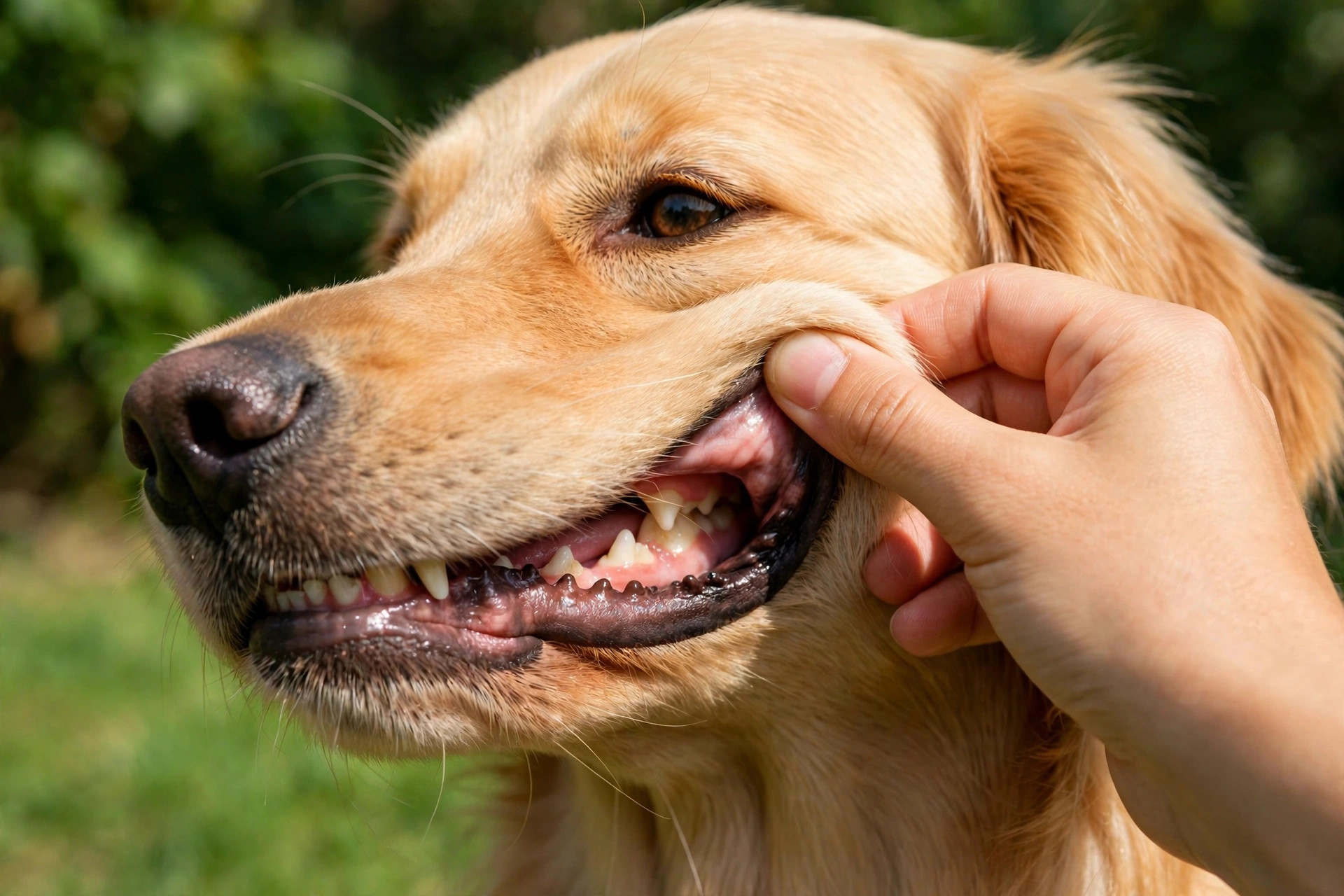
Dehydration develops gradually, and cats in particular are skilled at hiding it. Watch for these warning signs — any combination of them is a reason to check your pet more closely and, if they persist, call your vet:
- Dry or sticky gums — healthy gums are pink, moist, and slippery; dehydrated gums feel tacky, and your finger may stick to them
- Thick, ropey saliva — normal saliva is thin and watery; dehydration makes it stringy and clingy
- Lethargy or low energy — a pet that sleeps far more than usual or has lost interest in play
- Loss of appetite — a dehydrated pet often goes off food as well as water
- Sunken eyes — a sign of more serious dehydration that needs prompt veterinary care
- Dark yellow urine, or urinating less often — concentrated urine is one of the earliest clues
- Constipation or firmer stools — the body pulls water from the bowel when it is short on fluids
Cats often show almost no outward signs until dehydration is advanced, which is why the two quick checks below matter. Veterinary guidance from PetMD confirms these are the standard at-home signs to look for.
Two 60-Second Checks You Can Do at Home
You do not need any equipment to spot early dehydration. These two tests take under a minute and are worth doing once a week through winter.
The skin-pinch test (skin tent)
Gently lift a fold of loose skin at the back of your pet’s neck, then let it go. In a well-hydrated pet, the skin springs back within one to two seconds. If it stays tented, or returns slowly, your pet may be dehydrated. The test is less reliable in very old or very thin pets, whose skin is naturally less elastic, so pair it with the gum check.
The gum check
Lift your pet’s lip and look at the gums. Healthy gums are bubblegum pink and glisten with moisture; press a fingertip against the gum and it should turn pale for a second, then pink again quickly. Gums that look dry, dull, or sticky — or a fingertip that sticks to them — point to dehydration. Pale or blue-tinged gums need a vet the same day.
Neither test can diagnose dehydration on its own, but together they are a useful early warning. If either test looks off, offer fresh water and watch your pet closely over the next few hours.
Why Winter Dehydration in Pets Is Dangerous
Mild, short-term dehydration is uncomfortable. Left unchecked through a whole winter, it quietly raises the risk of several serious problems.
Urinary crystals, stones, and blockages
This is the biggest winter risk, especially for cats. When a pet drinks less, the urine becomes more concentrated, and concentrated urine makes it easier for mineral crystals to form. In male cats, those crystals can clump into a plug that blocks the urethra — a life-threatening emergency that can turn fatal within 24 to 48 hours. Even without a blockage, concentrated urine irritates the bladder.
Also Read: Cat UTI Symptoms: Urinary Problems Every Owner Must Know (2026)
Kidney strain, constipation, and low energy
The kidneys need a steady flow of water to filter waste from the blood. Chronic low intake forces them to work with concentrated urine day after day, which strains them and can worsen existing kidney disease — common in senior cats and dogs. Pets with kidney disease, diabetes, or heart problems need the closest monitoring. Water also keeps the digestive tract moving: when the body is short on fluids, it pulls water from the bowel, leaving hard, dry stools. A mildly dehydrated pet often seems tired or simply “off” — sleeping more and playing less.
How Much Water Does Your Pet Need in Winter?
Needs vary with diet, activity, and health, but these are the standard vet guidelines — and they do not drop in winter just because thirst does:
| Pet | Daily Water Guideline | What That Looks Like |
|---|---|---|
| Small dog (10 lbs) | About 10 fl oz per day | Just over 1 cup |
| Medium dog (25 lbs) | About 25 fl oz per day | About 3 cups |
| Large dog (50 lbs) | About 50 fl oz per day | About 6 cups |
| Average cat (10 lbs) | About 100 ml per kg of body weight | Roughly 2 cups total, including water from food |
The rule of thumb for dogs is about 1 ounce of water per pound of body weight per day. For cats, roughly 100 ml per kilogram — but that is total water, including moisture in food. A cat eating wet food, which is 70 to 80% water, may barely visit the bowl and still be well hydrated, while a cat on dry kibble must drink far more directly. Fill the bowl to a marked level each morning and see how much is gone by evening.
8 Ways to Keep Your Pet Hydrated All Winter
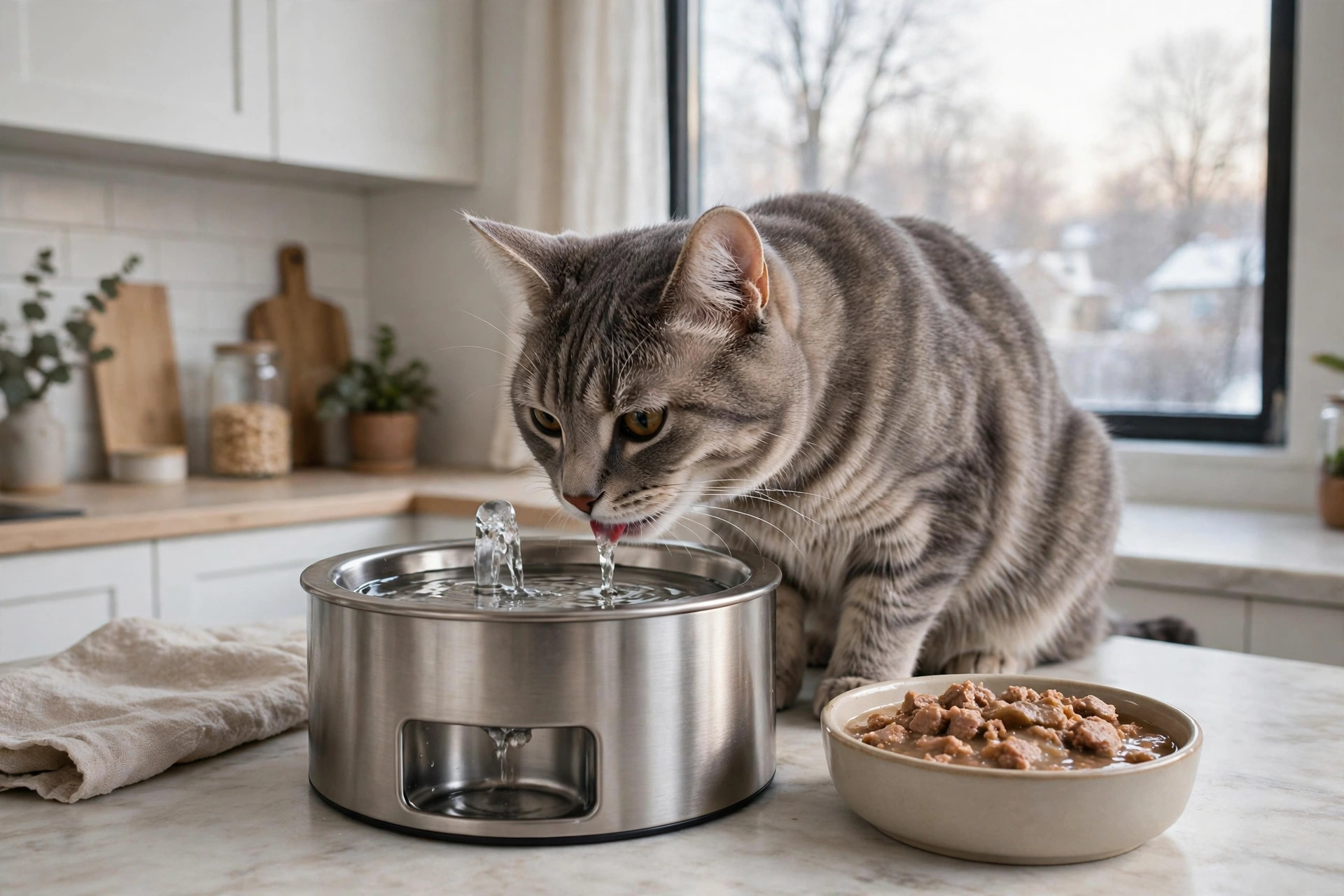
Keeping a pet hydrated in winter is mostly about making water easy, appealing, and available. These eight steps cover the habits that work best:
1. Refresh the water twice a day
Stale water is unappealing to most pets, and cats in particular will walk away from a bowl that has sat all day. Empty, rinse, and refill bowls morning and evening, and wash them properly a few times a week.
2. Put water in more than one place
Place extra bowls in the rooms where your pet actually spends time — near the bed, by the favorite sunny window, and on each floor of the house. The shorter the walk to water, the more a pet drinks.
3. Add wet food to the diet
This is the single most effective trick for cats. Swapping even one dry meal a day for wet food adds a large amount of water with no extra effort from your pet. For dogs, stir a little water or low-sodium broth into kibble — keep it plain, with no onion, garlic, or added salt.
4. Try a pet water fountain
Many cats drink noticeably more from moving water than from a still bowl. Place the fountain away from the food bowl and the litter box — cats prefer to drink away from where they eat and toilet.
5. Offer lukewarm water
Cold water straight from the tap can be unappealing on a freezing day. Lukewarm water is often more tempting, and it will not chill a pet that is already cold. Avoid hot water, which can scald a mouth or discourage drinking entirely.
6. Keep outdoor water unfrozen
Check outdoor bowls at least twice a day in freezing weather. A heated water bowl on a protected outdoor outlet is the most reliable fix. Without power, use a deep, dark-colored bowl in a sunny, sheltered spot and swap in fresh lukewarm water at each feeding time. Never add antifreeze or salt to a pet’s water.
7. Track intake for a week
For one week, fill the bowl to the same marked level each morning and note how much is left each evening. A sudden drop in intake is worth a vet call even before other symptoms appear — and a sudden increase can signal kidney disease or diabetes.
8. Run a humidifier indoors
Dry heated air is a hidden cause of winter dehydration. A humidifier in the room where your pet sleeps adds moisture back to the air, helping their skin, nose, and airways. Keep water bowls away from radiators and heat vents, where the water evaporates faster.
Also Read: Winter Paw Care for Dogs: Salt, Ice & Cracked Pads (2026)
When to Call the Vet
Most mild winter dehydration improves within a day once fresh water is available and appealing. Call your vet promptly — or an emergency vet if your regular clinic is closed — if you notice skin that stays tented after the skin-pinch test, tacky, pale, or blue-tinged gums, lethargy combined with reduced or no urination, sunken eyes, weakness or collapse, vomiting or diarrhea (especially if your pet cannot keep water down), no food or water for 24 hours, or a male cat straining in the litter box with little or no urine — treat that last one as an emergency.
If your pet is only mildly dehydrated — tacky gums but no other symptoms — offer a small amount of cool water and call your vet for advice: about a teaspoon every few hours for a small dog, a tablespoon to a quarter cup for a medium or large dog. Never offer a large volume at once, as a thirsty pet may drink too fast and vomit. Moderate or severe dehydration needs veterinary fluids, given under the skin or by IV, plus treatment for whatever caused it.
Frequently Asked Questions
Do pets need less water in winter?
No. A pet’s body still needs the same amount of water in winter as in summer — roughly 1 ounce per pound of body weight per day for dogs, and about 100 ml per kilogram for cats. Cold weather only lowers the feeling of thirst, which is exactly why winter dehydration is so easy to miss.
How can I tell if my cat is dehydrated?
Check the gums and the skin-pinch test: healthy gums are pink and moist, and lifted skin should spring back within one to two seconds. Also watch for lethargy, loss of appetite, dark yellow urine, constipation, and sunken eyes. Cats hide illness well, so test weekly through winter even if your cat seems fine.
Can winter dehydration cause urinary problems in cats?
Yes. Drinking less concentrates the urine, which makes crystals and stones more likely to form and irritates the bladder lining. In male cats, crystals can block the urethra entirely — a fatal emergency within 24 to 48 hours. Keeping urine dilute with wet food and fresh water is one of the best preventions.
Final Thoughts
So, is winter dehydration in pets something you need to worry about? Yes — but it is one of the easiest winter problems to prevent. Cold weather, dry heated air, and shorter days all quietly push your pet to drink less, while the body’s need for water stays exactly the same. A weekly gum and skin check, fresh water in several spots, a wet-food meal each day, and a bowl that never freezes will cover almost everything.
The rule to remember is simple: reduced thirst does not mean reduced need. Watch the bowl, watch the litter box, and watch your pet’s energy — and if anything changes suddenly, your vet is always the best next call.
By Dr. Ayaz Ali