
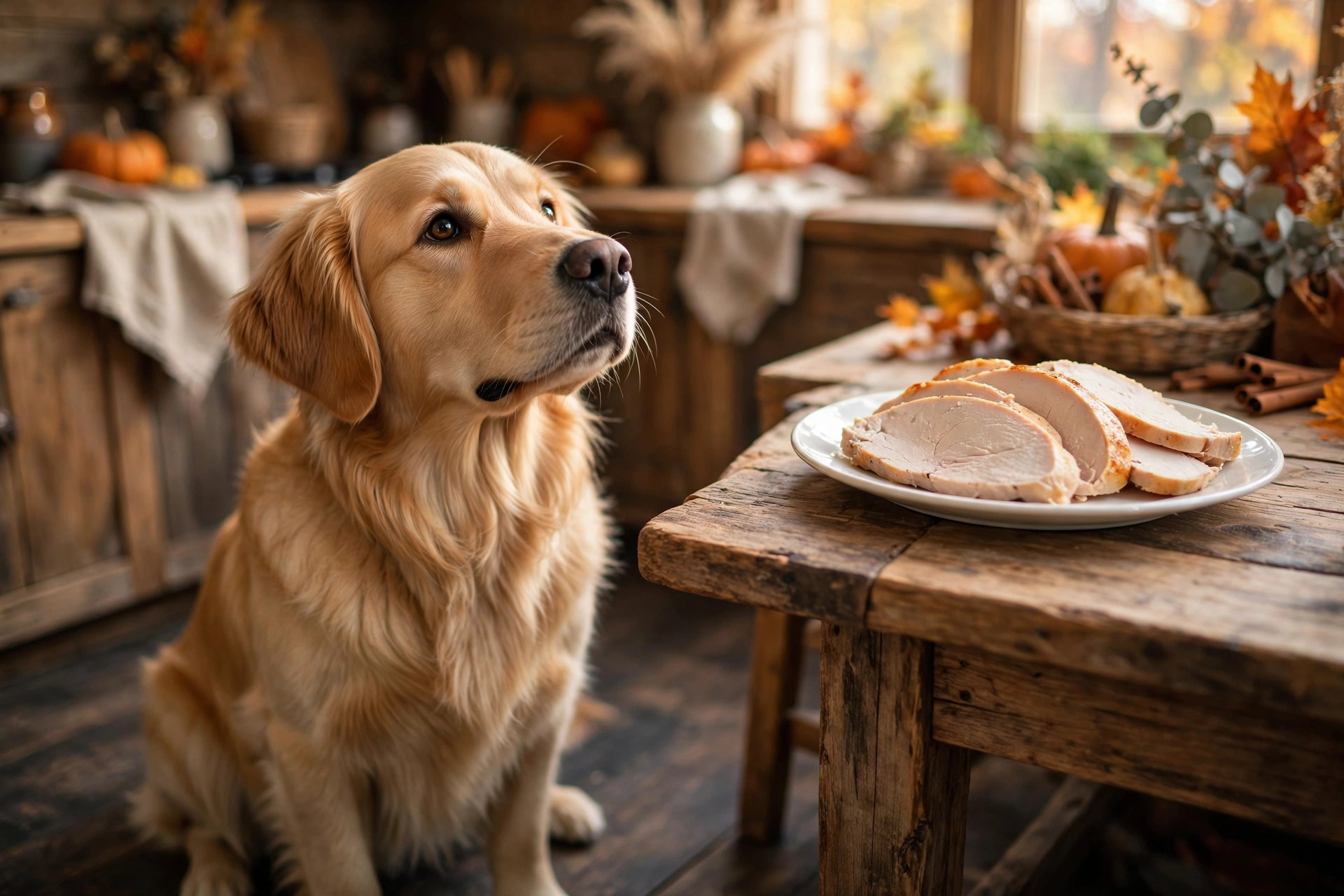
As a dog owner, you’ve probably been there: it’s Thanksgiving, you’re carving the turkey, and your dog is parked beside the table with those irresistible puppy-dog eyes. It’s only natural to wonder: can dogs eat turkey, or should this holiday centerpiece stay off your pup’s menu?
The good news is yes, dogs can eat turkey — but only plain, fully cooked meat, with the skin, fat, bones, and seasonings removed, served in small amounts. While turkey is a lean, protein-rich treat, the way most Thanksgiving turkeys are actually cooked makes most of the bird off-limits.
In this complete 2026 guide, we’ll walk you through everything you need to know about feeding turkey to dogs: the health benefits, the real risks (skin, bones, seasoning, and Thanksgiving table dangers), safe serving sizes by dog size, how to prepare it, and answers to the most common questions dog owners ask.
Table of Contents
- Is Turkey Safe for Dogs?
- Health Benefits of Turkey for Dogs
- Risks and Dangers of Turkey for Dogs
- How Much Turkey Can Dogs Eat?
- How to Prepare Turkey Safely for Dogs
- Thanksgiving Table: Safe vs Unsafe Foods
- What If My Dog Eats Turkey Bones or Too Much?
- Can Puppies Eat Turkey?
- Healthy Alternatives to Turkey
- Frequently Asked Questions
Is Turkey Safe for Dogs?
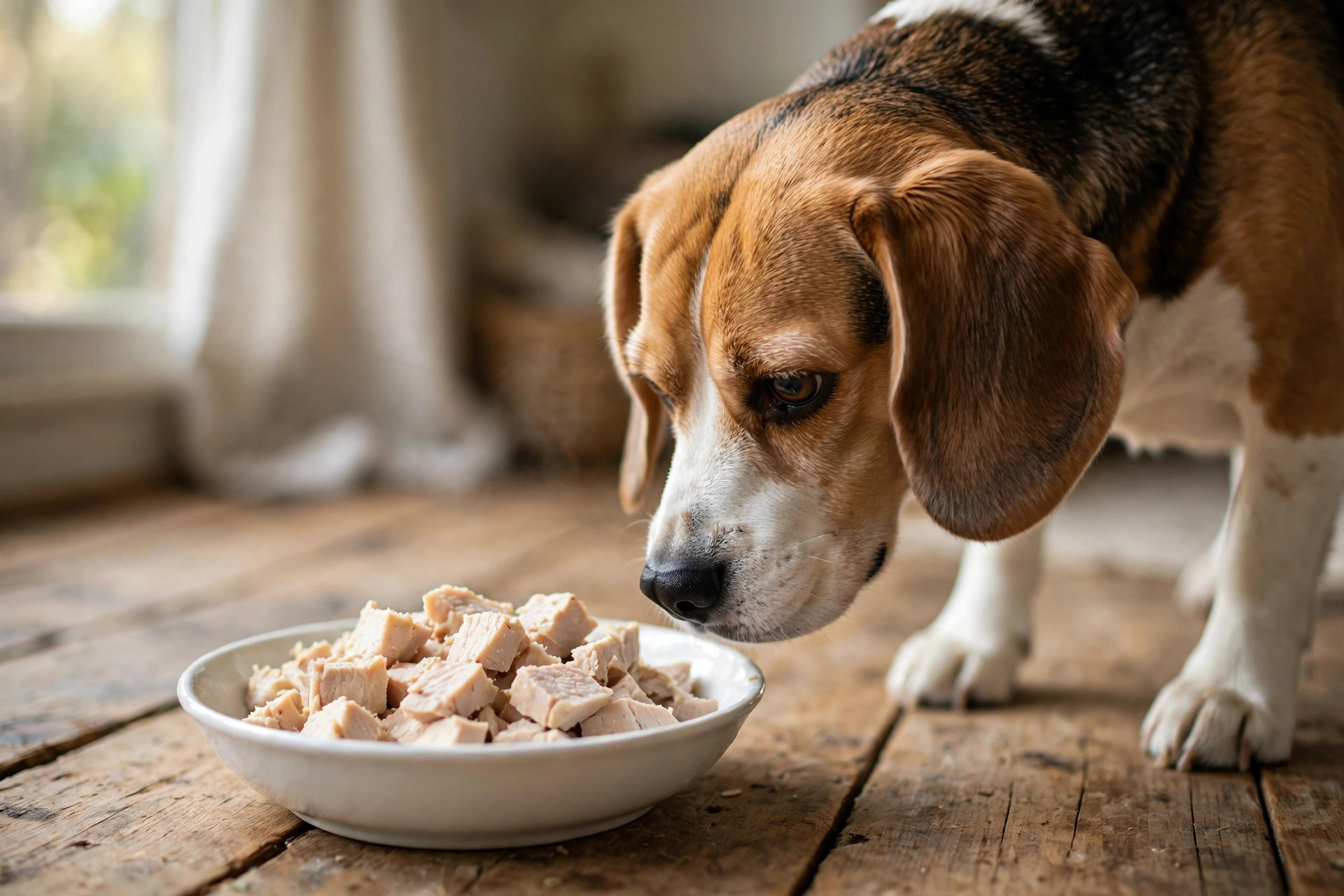
Yes, plain turkey meat is generally safe for healthy dogs when served correctly. Veterinary sources including PetMD confirm that turkey can be a healthy, occasional treat for dogs — it is even a main ingredient in many commercial dog foods.
Turkey is a lean protein, and the white meat of the breast is especially low in fat while being rich in protein. But the key phrase is plain and properly prepared. A roasted holiday turkey — buttered, seasoned, basted in its own fatty juices — is not the same food as a piece of plain boiled turkey breast. Treats — including turkey — should make up no more than 10% of your dog’s daily calories, with the rest coming from a complete, balanced dog food.
Before offering turkey, make sure you serve only:
- Fully cooked, plain turkey meat (white breast meat is best)
- Completely boneless — no bones of any kind
- Skin and visible fat fully removed
- Unseasoned — no salt, butter, garlic, onion, or spices
- In small portions, as an occasional treat
Health Benefits of Turkey for Dogs
When prepared the right way, turkey is more than just a tasty bite — it’s a genuinely nutritious protein for dogs.
1. Lean, High-Quality Protein
Turkey breast is a lean animal protein that supports muscle maintenance and energy. White meat is notably higher in protein than dark meat, making it the better pick for a treat.
2. B Vitamins and Essential Minerals
Turkey naturally contains vitamin B6, vitamin B12, niacin, plus minerals like zinc, selenium, phosphorus, choline, magnesium, and potassium. These nutrients support metabolism, immune function, and healthy skin and coat.
3. Gentle on Most Stomachs
Plain, boiled turkey breast is mild and easy to digest — which is why veterinarians often suggest plain poultry with rice as part of a bland diet for dogs recovering from stomach upset (only on veterinary advice, of course).
4. A Motivating Training Treat
Small pieces of plain turkey are high-value rewards that most dogs find irresistible. Because it’s lean, it’s a smarter choice than cheese or fatty treats during training sessions.
Also Read: Can Dogs Eat Cranberries? Safe Feeding Guide (2026) — the other holiday-season treat dog owners ask about every year.
Risks and Dangers of Turkey for Dogs
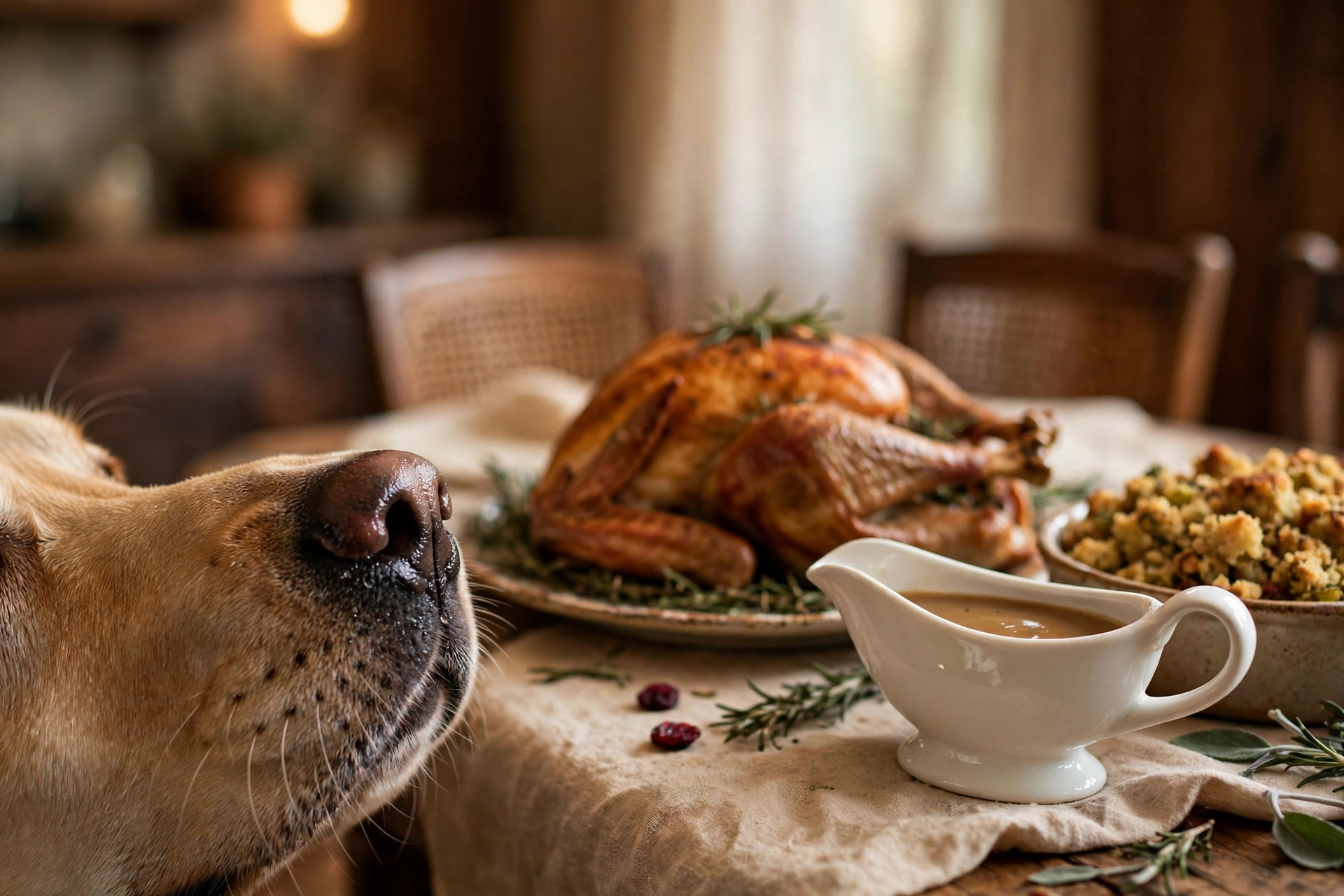
The meat itself is safe — nearly every danger comes from how turkey is cooked and served. Holiday turkey is where the risks pile up.
1. Turkey Skin and Fat Can Trigger Pancreatitis
Turkey skin is the most dangerous part of the bird. It’s extremely high in fat and usually coated in butter or oil, and holiday skin is loaded with salt. Feeding fatty foods like skin and trimmings can cause pancreatitis — a painful, potentially life-threatening inflammation of the pancreas. Even a small amount of rich, fatty turkey can be enough to trigger it in sensitive dogs. Dark meat (legs and thighs) is also much higher in fat and calories than white meat.
2. Turkey Bones Splinter — Never Feed Them
Cooked turkey bones are one of the most dangerous things a dog can chew. They splinter into sharp fragments that can choke your dog, cut the mouth and throat, puncture the stomach or intestines, or cause a painful intestinal blockage. Never give your dog turkey bones — not the legs, not the carcass, not the “leftover” bones, and don’t let your dog near the trash after dinner.
3. Seasonings: Garlic, Onion, and Herbs Are Toxic
Holiday turkey is typically rubbed with salt, butter, and herbs — and basted with juices containing garlic and onion. Garlic and onions are toxic to dogs in all forms, damaging red blood cells. Sage, heavy salt, pepper, and spicy rubs can all upset your dog’s stomach. Only plain, unseasoned turkey is safe.
4. Raw or Undercooked Turkey Carries Bacteria
Never offer your dog raw turkey or meat snatched from the cutting board while carving. Raw poultry can carry salmonella and other harmful bacteria that can make both your dog and your family sick.
5. Deli, Smoked, and Processed Turkey
Deli turkey slices, smoked turkey, and turkey bacon are loaded with sodium, preservatives, and seasonings — far too salty and processed for dogs. Skip them entirely.
6. Poultry Allergies
Some dogs are genuinely allergic to poultry, including turkey. If your dog has a known chicken allergy, assume turkey is risky too. After a first small taste, watch for itching, ear redness, paw chewing, or digestive upset — and stop feeding turkey if any appear.
Also Read: Pet Emergency First Aid: Vet Guide (2026) — what to do in the critical first minutes if your dog chokes on a bone or eats something toxic.
How Much Turkey Can Dogs Eat?
Turkey should only ever be an occasional treat — not a second dinner. Use this guide based on veterinary recommendations (PetMD’s vets suggest about 40 grams of white meat for a 25-pound dog — roughly an ounce and a half):
| Dog Size | Weight | Safe Serving (plain white meat) |
|---|---|---|
| Small dogs | Under 20 lbs | 1–2 small bite-sized pieces |
| 20–50 lbs | Medium dogs | A few small pieces (about 1–1.5 oz) |
| Large dogs | Over 50 lbs | 2–3 oz of plain breast meat |
Remember: 40 grams is only a couple of your bites, not a drumstick. Keep all treats under 10% of daily calories, and always reduce regular food slightly on treat days to avoid overfeeding.
How to Prepare Turkey Safely for Dogs
Safe preparation is simple — the rule is to keep it as plain as possible:
- Choose plain turkey breast (or set aside a piece of the bird before you add butter, oil, or seasonings).
- Cook it fully — boiling is the safest method because it keeps the fat content low. Never serve raw or pink turkey.
- Remove all skin and visible fat.
- Check carefully for every bone — including small rib and wishbone fragments.
- Shred or chop into bite-sized pieces appropriate for your dog’s size.
- Serve plain with no salt, butter, gravy, garlic, or onion — ever.
- Offer a small amount as an occasional treat, or mix a piece or two into their regular meal.
If you want to cook plain giblets (liver, heart, gizzard), these are also safe in small amounts when boiled plain — just like the breast meat.
Thanksgiving Table: Safe vs Unsafe Foods
Turkey isn’t the only temptation at the holiday table. Keep this quick-reference chart in mind — and make sure guests know the rules too:
| Food | Safe for Dogs? | Notes |
|---|---|---|
| Plain turkey breast | Yes, small amounts | Boneless, skinless, unseasoned |
| Plain green beans | Yes | No butter, salt, or casserole |
| Plain sweet potato | Yes | No marshmallows or brown sugar |
| Plain pumpkin | Yes | 100% pure canned or cooked — never pie |
| Turkey skin | No | High fat — pancreatitis risk |
| Turkey bones | Never | Splinter — choking and puncture risk |
| Stuffing / dressing | No | Often contains onion, garlic, raisins |
| Gravy | No | High fat and salt, often onion/garlic |
| Onions / garlic / leeks | No — toxic | Damages red blood cells |
| Grapes / raisins | No — toxic | Can cause kidney failure |
| Chocolate desserts | No — toxic | Theobromine poisoning |
| Xylitol sweets | No — deadly | Toxic even in tiny amounts |
| Raw bread dough | No | Yeast expands in the stomach |
| Alcohol | No — toxic | Keep all drinks out of reach |
Pro tip: Tell your guests in advance — and take the trash out promptly. More than half of holiday ER visits for dogs start with a well-meaning guest sharing scraps or a dog raiding the garbage.
What If My Dog Eats Turkey Bones or Too Much?
If your dog snatched a turkey leg or raided the table, act quickly but stay calm:
- Ate plain turkey meat (too much): Most often causes temporary digestive upset — loose stool, vomiting, or gas. Withhold food for a few hours, offer water, and monitor.
- Ate turkey bones: This is more serious. Do not try to pull a lodged bone from the throat yourself. Watch for choking, gagging, drooling, pawing at the mouth, vomiting, abdominal pain, bloody stool, or straining to defecate — and call your veterinarian or emergency clinic immediately. Splinters can puncture the digestive tract, and time matters.
- Ate turkey skin or fatty leftovers: Monitor closely for 24–48 hours. Signs of pancreatitis — repeated vomiting, hunched posture, belly pain, lethargy, loss of appetite — warrant an urgent vet visit.
- Ate stuffing, grapes, raisins, chocolate, or xylitol products: Contact your veterinarian or a poison-control hotline right away, even if your dog seems fine. These are true emergencies.
Can Puppies Eat Turkey?
Yes, puppies can eat a tiny amount of plain, fully cooked turkey once they are fully weaned and eating solid food. Because puppies have sensitive digestive systems, start with one very small piece of plain boiled breast meat and watch for any stomach upset over the next 24 hours before offering more. As with adults, keep it an occasional treat only — and be extra careful with bones, since puppy teeth and throats are small.
Healthy Alternatives to Turkey
If your dog doesn’t care for turkey — or you’d like to rotate their treats — these proteins and foods are also safe in moderation:
- Plain cooked chicken breast (boneless, skinless)
- Blueberries (antioxidant-packed and low in sugar)
- Apples — seeds and core removed
- Plain green beans (a great low-calorie holiday-safe veggie)
- Watermelon — seedless, rind removed
- Carrots — raw or cooked, in small pieces
Always introduce any new food gradually and in small portions.
Also Read: Can Dogs Eat Pineapple? Benefits, Risks & Safe Feeding Guide (2026)
Frequently Asked Questions
Can dogs eat turkey every day?
No. Even plain turkey should be an occasional treat, not a daily food. It doesn’t provide complete nutrition on its own, and regular feeding unbalances your dog’s diet.
Is turkey skin safe for dogs?
No. Turkey skin is very high in fat and usually coated in butter, oil, and salt. It can cause stomach upset and pancreatitis. Always remove all skin.
Can dogs eat turkey bones?
Never. Cooked turkey bones splinter and can choke your dog or puncture the stomach and intestines. Keep all bones — and the trash — away from your dog.
Can dogs eat deli turkey or lunch meat?
It’s best to avoid it. Deli and smoked turkey are high in sodium, preservatives, and seasonings that are unhealthy for dogs.
Can dogs eat ground turkey?
Yes, as long as it’s plain, fully cooked, and unseasoned (no onion or garlic powder). Drain off excess fat after cooking. The same portion rules apply.
Is turkey better than chicken for dogs?
They’re nutritionally similar lean proteins. Turkey breast is slightly lower in fat than some chicken cuts. The best choice depends on your dog’s preferences and any poultry allergies — some dogs allergic to chicken also react to turkey.
Final Thoughts
So, can dogs eat turkey? Absolutely — when it’s plain, fully cooked, boneless, skinless, and served in moderation. A few bites of plain white meat make a protein-rich holiday treat most dogs love. Just remember the golden rules: no skin, no bones, no seasoning, and keep Thanksgiving table dangers — stuffing, gravy, grapes, chocolate, and xylitol — completely out of reach.
As with any new food, introduce turkey slowly and watch how your dog responds. And when in doubt, your veterinarian is always the best source of advice for your individual pup’s diet.
By Dr. Ayaz Ali