
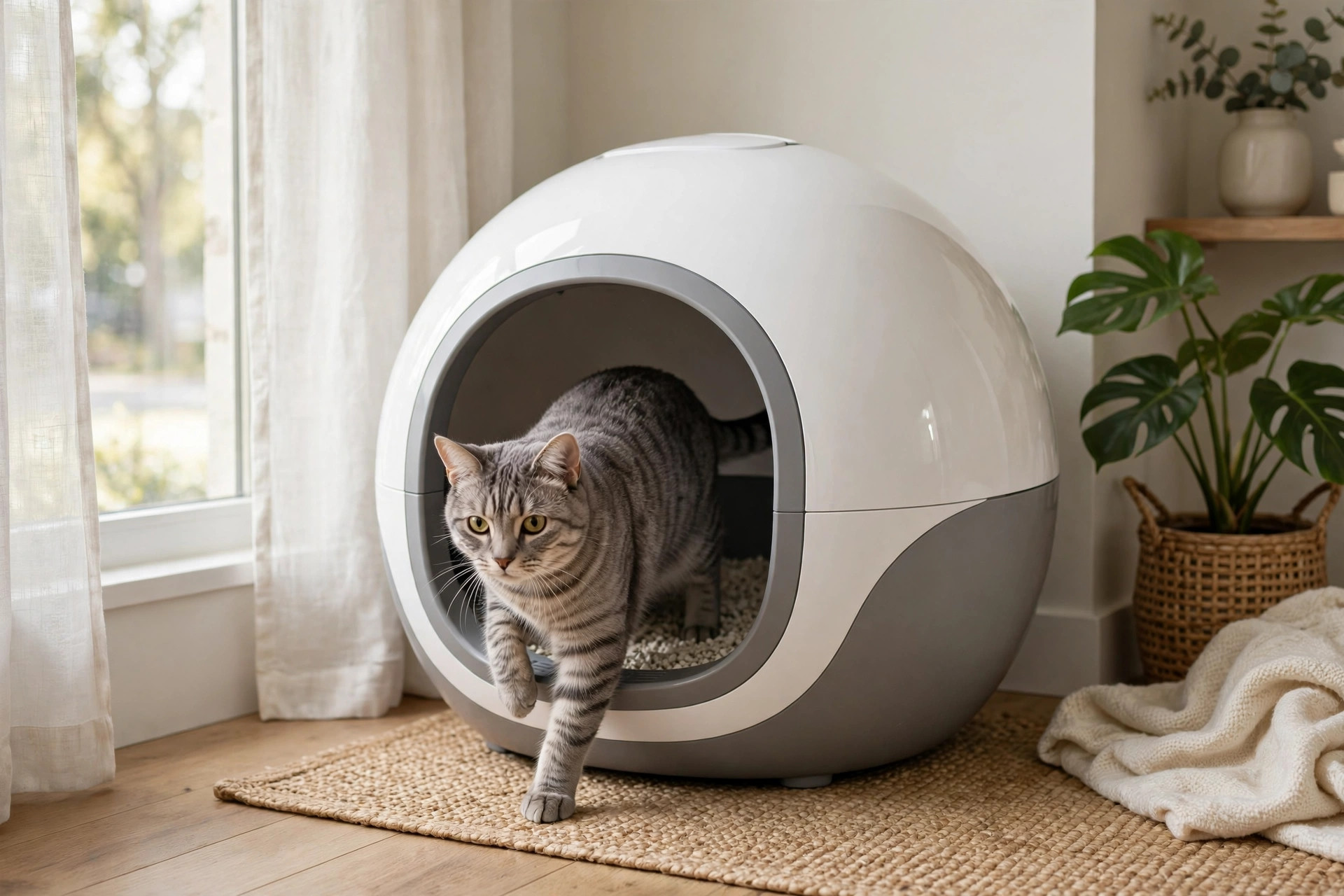
If you have ever come home to a litter box that desperately needs attention — or felt guilty skipping a scoop after a long day — you have probably wondered: do self-cleaning litter boxes work, or are they an expensive gadget that cats refuse to use?
The short answer is yes, self-cleaning litter boxes work — and most cats accept them readily. These automatic boxes scoop waste after each use, cut down on odor, and keep the litter cleaner between your manual cleanings. But they are not completely hands-off, and they are not right for every cat or every budget.
In this 2026 vet-informed guide, we will explain how self-cleaning litter boxes work, the real pros and cons, which cats should avoid them, how to choose the right model, and how to help your cat make the switch.
Table of Contents
- How Do Self-Cleaning Litter Boxes Work?
- Do Self-Cleaning Litter Boxes Actually Work?
- Benefits of Automatic Litter Boxes
- The Downsides Nobody Mentions
- Who Should Avoid Them: Safety Notes
- How to Choose the Right Model
- How to Get Your Cat to Use One
- Frequently Asked Questions
- Final Thoughts
How Do Self-Cleaning Litter Boxes Work?
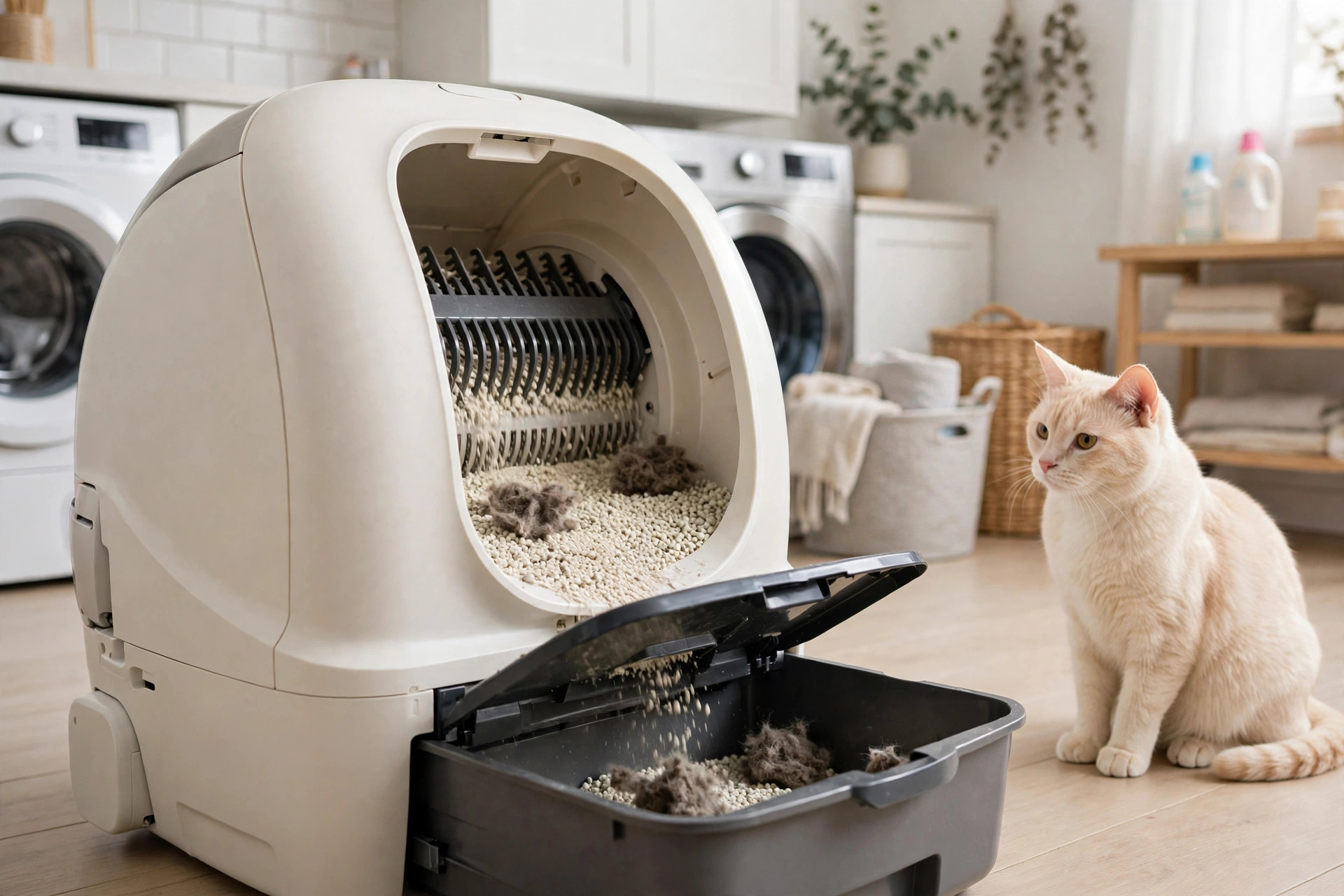
Most self-cleaning litter boxes work on a simple principle: separate the clumps from the clean litter automatically, shortly after your cat leaves. Sensors detect when the cat exits, a timer counts down (usually 7–20 minutes), and then the cleaning mechanism runs.
There are three main designs:
- Rake boxes: a motorized rake pushes across the litter and drags clumps into a sealed waste compartment. Simple, open-top, and usually the cheapest.
- Globe/rotating boxes: the whole drum slowly rotates, sifting clean litter through a screen while clumps drop into a waste drawer below. Quieter and better at containing odor, but enclosed — some cats find the drum confining.
- Sifting/spinning boxes: a hybrid that spins the litter bed to separate waste. Open-top designs like these tend to be accepted fastest by wary cats.
Almost all models require clumping clay litter — the mechanism depends on waste forming firm balls that can be sifted or raked. Non-clumping, crystal, or pine pellet litters will jam the mechanism and can void the warranty. Premium smart models add app connectivity, weight sensors, and usage tracking that monitors how often your cat visits — data that can flag urinary problems early.
Also Read: First-Time Cat Owner Checklist: 12 Essentials (2026)
Do Self-Cleaning Litter Boxes Actually Work?
Yes — at their core job, they work well. Waste is removed without you lifting a scoop, and because cleaning happens after every visit, the litter stays consistently cleaner than a manually scooped box (be honest: you skip days). Reviewers and veterinarians agree the time savings are real: automatic boxes save roughly 25–35 minutes of scooping per week, and the payoff is bigger in multi-cat homes where manual scooping can take 10–15 minutes a day.
Most veterinarians consider self-cleaning litter boxes a helpful tool, especially for busy households and owners with mobility issues. As the ASPCA notes, “self-cleaning boxes are generally cleaner than traditional types of litter boxes,” and many cats accept them readily. Where the “smart” premium models earn their price is health monitoring: weight and visit-frequency data can reveal patterns — more frequent trips, smaller visits — that are classic early signs of urinary blockage, kidney disease, or diabetes.
That said, “work” does not mean “perfect.” The sections below cover the honest downsides so you know exactly what you are buying.
Benefits of Automatic Litter Boxes
1. No More Daily Scooping
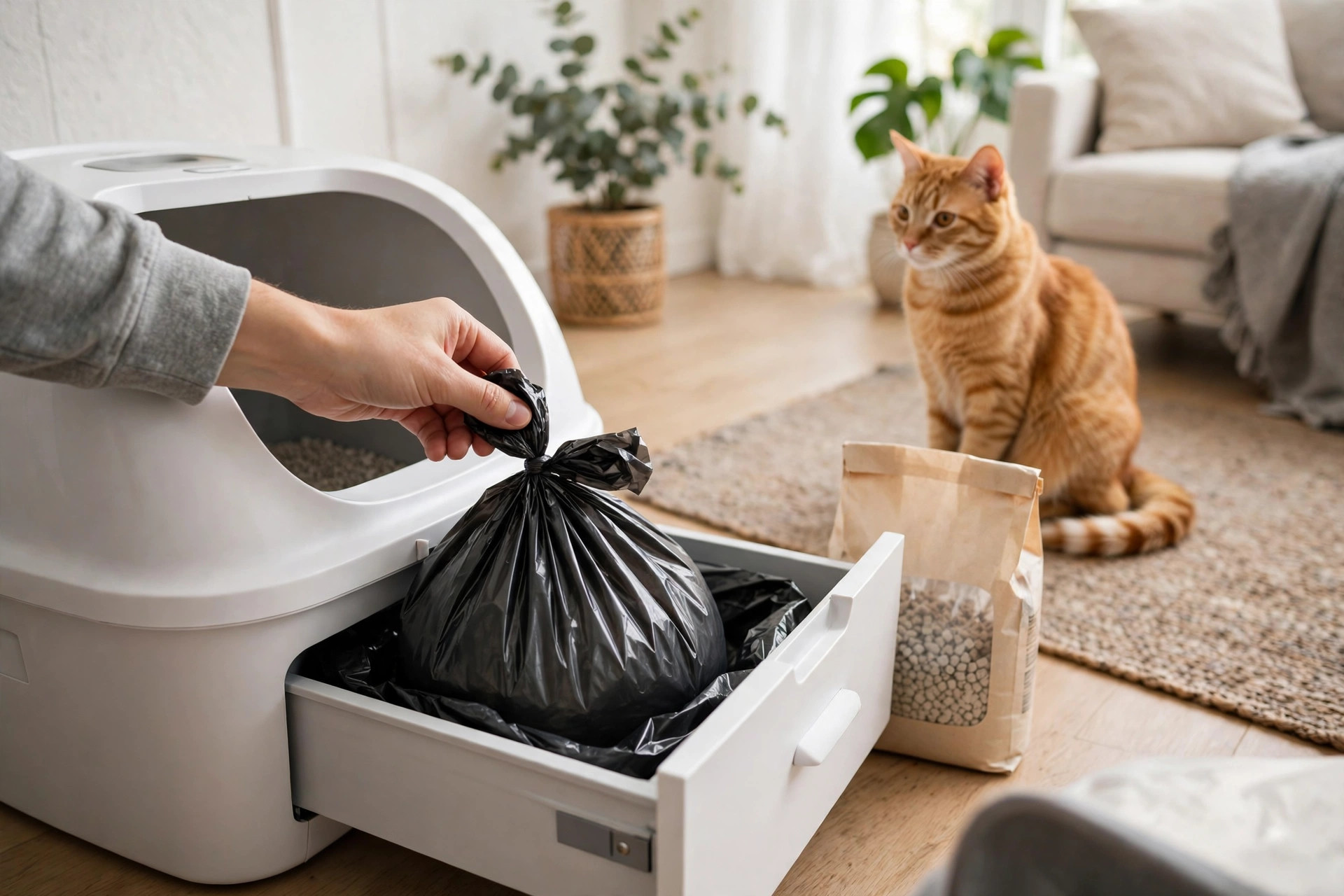
The headline benefit: the box cleans itself after every use. You trade a daily scoop for emptying a waste drawer every few days (daily in large multi-cat homes, weekly for a single cat). For anyone who has ever dreaded the evening scoop, this alone is worth it.
2. Cleaner Litter, Happier Cats
Cats are fastidious — many prefer a spotless box and will avoid one that smells used. Because automatic boxes clear waste within minutes, your cat almost always finds a clean box. Cleaner litter also means less bacterial growth and less odor in your home.
3. Real Odor Control
Globe-style models with sealed waste drawers and carbon filters contain smells far better than an open pan. Owners in studio apartments and homes without a dedicated “litter room” report the biggest difference here.
4. Health Monitoring (Smart Models)
Connected boxes track visit frequency, duration, and weight. A sudden spike in trips can be the first sign of a urinary problem — and since cats hide illness, this early data is genuinely valuable. If you notice changes in your cat’s bathroom patterns, read our guide on Cat UTI Symptoms: Urinary Problems Guide (2026) to know the warning signs.
5. A Win for Multi-Cat Homes
More cats mean more scooping. In two- or three-cat households, an automatic box keeps the main box usable all day without a midday scoop. Remember though: a self-cleaning box still counts as one box — vets recommend one box per cat plus one extra, in separate locations.
The Downsides Nobody Mentions
Self-cleaning boxes are better than ever, but honest reviewers flag the same issues repeatedly:
1. The Price
Budget rake models start around $100–$200, but the reliable smart globe models most vets recommend run $350–$750. Add recurring costs: waste bags, carbon filters, and proprietary trays that add up over the year.
2. Clumping Litter Only
This is the single biggest limitation. Every mechanism depends on clumping clay litter. If your cat uses crystal, pine pellet, or non-clumping litter, switching litters is mandatory — and some cats refuse.
3. Not Every Cat Accepts One
Most cats adjust within a week or two, but some — especially anxious cats and seniors used to an open pan — never take to the enclosed globe designs or the whirring motor. Always keep a traditional backup box during the transition, and if your cat starts avoiding the box entirely, switch back rather than fight it.
4. Noise and Mechanical Hiccups
Cleaning cycles are quiet on the best models (around 32dB), but budget models can wake light sleepers. Drum jams, sensor errors, and app glitches happen — read long-term reviews, not just launch-day praise, before buying.
5. They Are Not Maintenance-Free
You still empty the waste drawer regularly, top up litter, deep-clean the unit monthly, and replace parts. An automatic box reduces scooping — it does not eliminate litter-box chores.
Who Should Avoid Them: Safety Notes
Self-cleaning boxes are safe for most adult cats, but skip one if any of these apply:
- Kittens under 4–6 months: curious kittens can be startled or caught by moving parts, and clumping litter itself is a swallowing hazard for very young kittens. Wait until they are older.
- Very large cats (over ~20 lbs): most globe entry openings and weight sensors are sized for average cats. Measure your cat against the manufacturer’s specs.
- Senior or arthritic cats: high entry lips and steep ramps can be painful. A low-sided open pan is kinder to stiff joints.
- Cats with urinary problems: if your cat is currently straining, crying in the box, or going outside it, see your vet first — and the ASPCA advises switching back to a traditional box if litter-box problems start with an automatic one.
- Three or more cats sharing one box: even the best automatic box is still a single box. Follow the n+1 rule with boxes in separate rooms.
How to Choose the Right Model
Start with the design comparison, then match to your household:
| Design | Typical Price | Best For | Watch Out For |
|---|---|---|---|
| Rake (open top) | $100–$200 | Budget buyers, cats that hate enclosed boxes | Weaker odor control; rake can miss small bits |
| Globe (rotating drum) | $350–$750 | Odor control, health tracking, multi-cat homes | Some cats find the drum confining; needs clumping litter |
| Open-top sifting | $200–$450 | Nervous cats, easy inspection | More litter scatter; less odor containment |
Before buying, run through this checklist:
- Size fit: interior length at least 1.5× your cat’s body length (nose to tail base).
- Litter compatibility: confirm it works with the clumping litter your cat already uses.
- Safety sensors: look for weight sensors that pause the cycle when the cat is inside.
- Noise rating: aim for 35dB or below if the box sits near bedrooms.
- Waste capacity: bigger drawers mean less emptying — check the per-cat emptying interval for your household size.
- Trial period: premium brands typically offer 60–90-day trials — buy from a seller that lets you return it if your cat rejects it.
How to Get Your Cat to Use One
Never swap the old box for the new one overnight. Follow this gradual transition over 1–2 weeks:
- Place the new box next to the old one, turned OFF, with some used litter mixed into the fresh litter so it smells familiar.
- Let your cat explore for 3–5 days with the motor disabled. Reward curiosity with treats near (not in) the box.
- Run one manual cycle while your cat is in another room, so the first sound is not a surprise mid-use.
- Turn on automatic mode once your cat is using it confidently. Keep the old box alongside for at least a week.
- Remove the old box only when the new one is being used consistently.
If your cat stops using the box at any stage, go back one step. Cats that refuse after two weeks of patient transition are telling you something — keep the traditional box and try again later, or accept that your cat prefers the classic pan.
Frequently Asked Questions
Do vets recommend self-cleaning litter boxes?
Most veterinarians consider them a helpful tool, particularly for busy households and owners with mobility issues. Vets caution that no automatic box replaces regular monitoring — and models with health-tracking features get the warmest recommendations, since weight and visit data can catch early signs of urinary or kidney problems.
Are self-cleaning litter boxes safe for cats?
Yes, for healthy adult cats. Reputable models have weight sensors that stop the cleaning cycle if the cat re-enters. Kittens under 4–6 months and very large cats over ~20 lbs should not use most models — check the manufacturer’s size limits.
How often do you still clean a self-cleaning litter box?
Empty the waste drawer every 2–7 days depending on cat count, top up litter weekly, and deep-clean the whole unit (wash the drum, replace filters) about once a month.
Do self-cleaning litter boxes smell less?
Yes — especially enclosed globe models with sealed waste drawers and carbon filters, since waste is removed within minutes of each visit instead of sitting until your next scoop. Open-top rake models smell less than a manual pan but more than sealed globe designs.
Can you use any litter in a self-cleaning litter box?
No. Nearly all automatic boxes require clumping clay litter — the sifting or raking mechanism only works when waste forms firm clumps. Crystal, pine pellet, and non-clumping litters will jam the mechanism.
Are self-cleaning litter boxes worth the money?
For most cat owners, yes — the 25–35 minutes of weekly scooping you get back, plus better odor control, justify the cost for many households. The value is highest in multi-cat homes. If you only want automatic scooping without app features, a basic rake box at $100–$200 delivers most of the benefit.
Final Thoughts
So, do self-cleaning litter boxes work? Yes — they genuinely reduce scooping, keep litter cleaner, and control odor better than a manual pan, and most cats accept them within a week or two. They are not magic: they need clumping litter, regular maintenance, and the right cat. But if you pick a model that fits your cat’s size and temperament, introduce it gradually, and keep a backup box during the transition, an automatic litter box can be one of the best upgrades a cat household makes.
By Dr. Ayaz Ali