
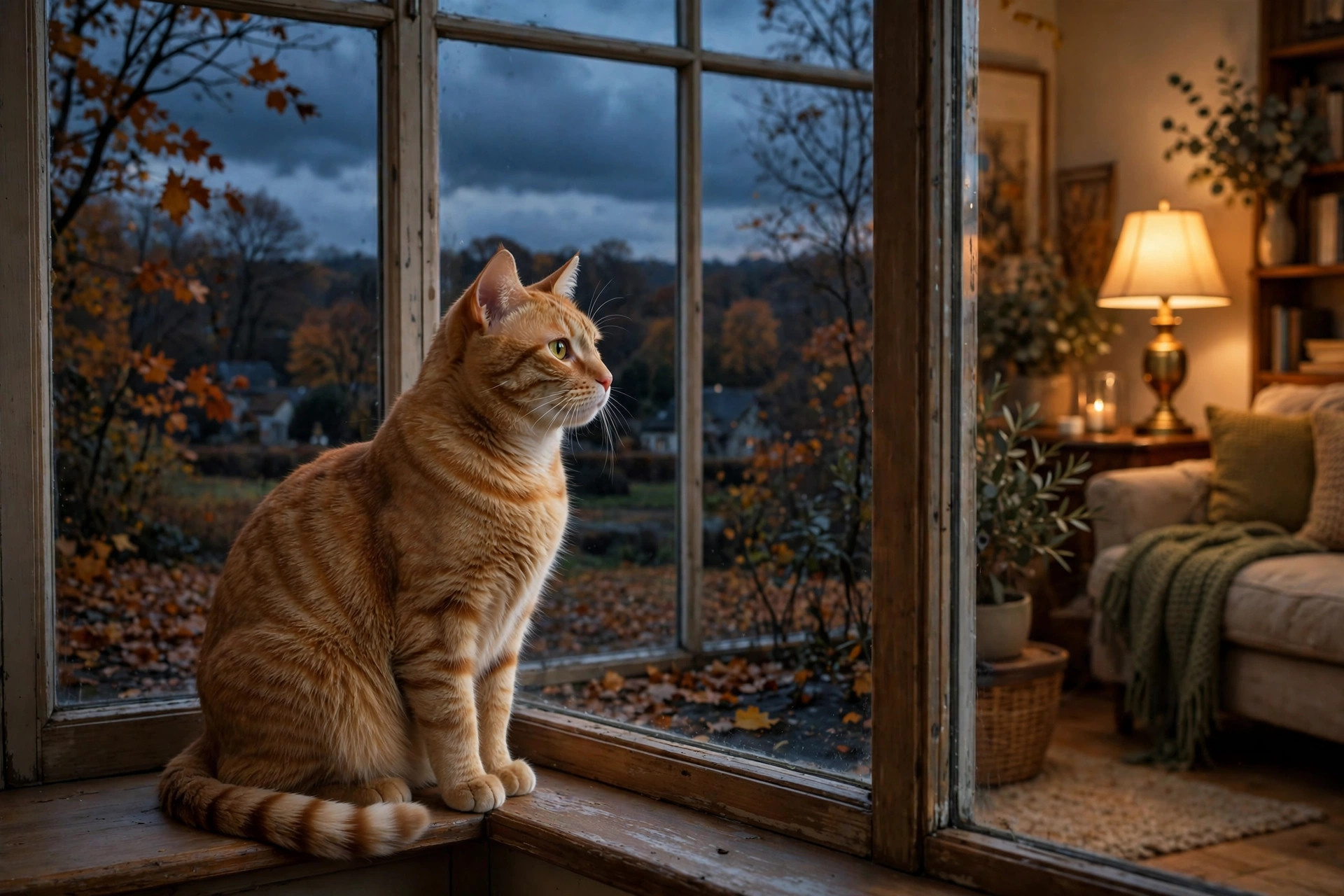
On Sunday morning after the clocks change, your cat is sitting on your chest at 4 a.m., yowling — because by feline standards, breakfast is an hour late. So does the time change affect cats? Yes, genuinely. Cats run on internal body clocks tuned by light, dawn, dusk, and your daily routine, and when all of those shift at once, many cats spend a few days off-balance. The good news: most cats settle within a few days, especially with a gradual adjustment plan.
Table of Contents
- Does the Time Change Really Affect Cats?
- 8 Signs Your Cat Is Struggling After the Clocks Change
- Why “Fall Back” Hits Mealtimes and Mornings Hardest
- The 7-Day Cat Time-Change Plan
- If Your Cat Takes Timed Medication
- The Week After: What to Expect
- Frequently Asked Questions
- Final Thoughts
Does the Time Change Really Affect Cats?
Circadian researchers explain that animals tell time through a biological clock synchronized with natural light and dark cycles — and for pets, that clock is heavily influenced by social cues from their humans: when you get up, when the food bowl appears, when evening play starts.
Cats are crepuscular, wired to be most active at dawn and dusk. When daylight saving time ends — in the U.S., clocks fall back at 2 a.m. on Sunday, November 1, 2026 (in the U.K., on October 25, 2026) — dawn and dusk suddenly arrive an hour “late” by their body clock, while your schedule shifts by the clock. That mismatch is what throws cats off.
8 Signs Your Cat Is Struggling After the Clocks Change
Watch for these in the week after the clocks fall back. One or two mild signs are normal and temporary; a cluster of them, or anything lasting more than a week, deserves a vet call.
1. Waking you up earlier
The classic sign. Your cat’s body still thinks it’s dawn an hour earlier, so the 5 a.m. paw-to-the-face routine becomes a 4 a.m. one.
2. Louder meowing at mealtimes
Cats track feeding times with uncanny precision. When food arrives an hour “late,” expect dramatic complaints.
3. Restlessness at the old playtime
Your usual evening play session now lands when your cat’s body clock says it’s wind-down time. Expect zoomies and toy ambushes at unexpected hours.
4. Appetite changes
Some cats eat less when their routine is disrupted; others demand extra meals. A day or two of appetite wobble is typical — not eating for 24+ hours is always a vet concern.
5. Clinginess or withdrawal
Routine is security for cats. When the day feels “wrong,” some shadow their owners; others retreat under the bed. Both are normal short-term stress responses.
6. Litter box accidents
A cat whose body clock says it’s not yet bathroom time may misjudge the schedule. If accidents appear only around the time change and vanish within days, the clock is the likely culprit.
7. Mild digestive upset
Circadian rhythm researchers warn that sudden schedule shifts can trigger anxiety and even an upset stomach in pets, since feeding and digestion run on the same body clock.
8. Disrupted sleep patterns
Watch for changes in when the deep sleeps happen — wide awake at midnight or dozing at odd hours in the days after the change.
Also Read: Autumn Pet Hazards: Fall Dangers for Cats (2026) — the other seasonal disruptors hitting your cat right now.
Why “Fall Back” Hits Mealtimes and Mornings Hardest
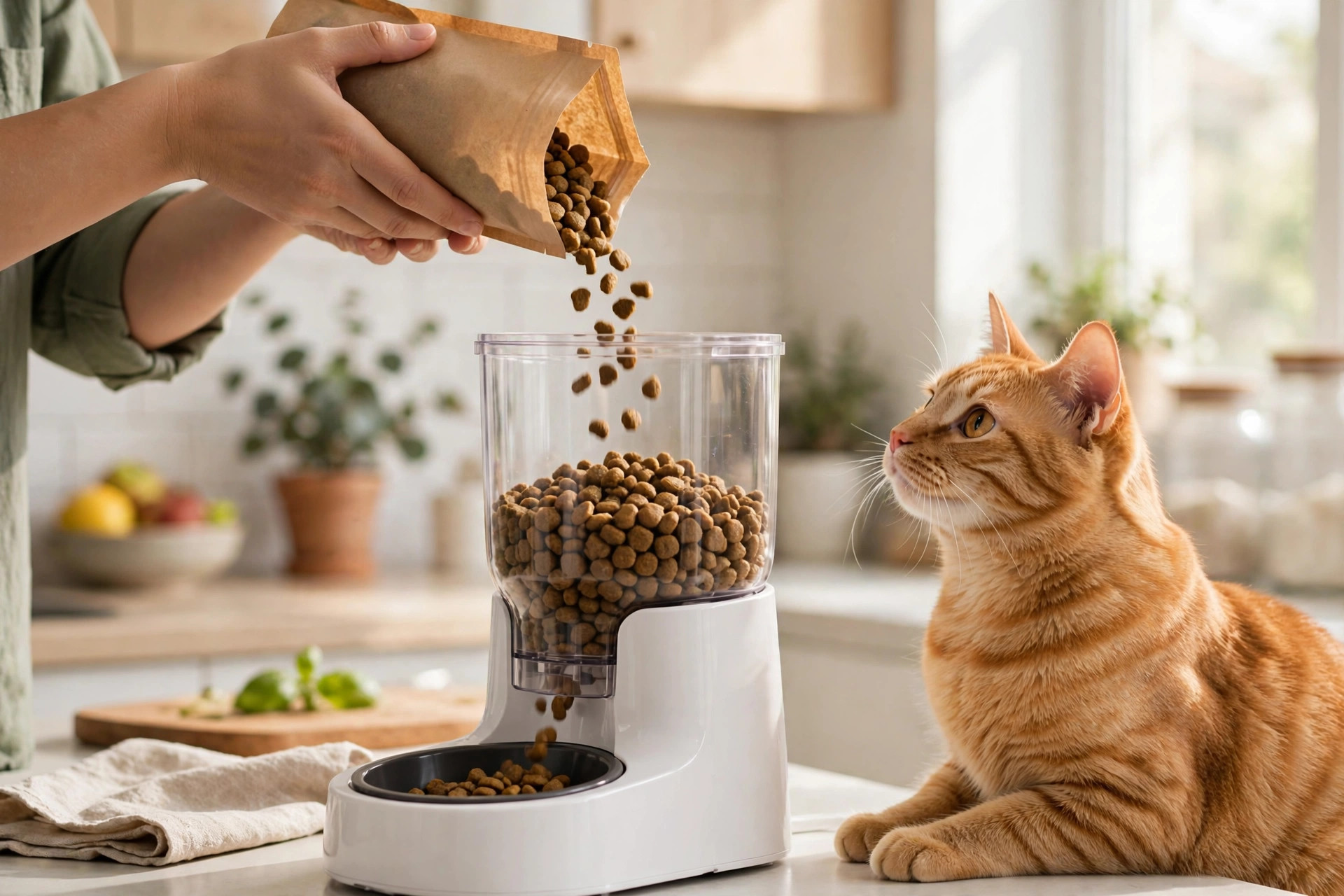
The autumn shift (“fall back”) is the trickier direction for cats, and it’s all about food. In spring, meals come an hour early; in autumn, breakfast and dinner arrive an hour late by the cat’s internal clock — an extra hour of fasting on top of the usual overnight fast. That hunger gap drives the 4 a.m. wake-up calls. Cats fed on a strict twice-daily schedule feel it most; grazers with dry food out all day often sail through unaffected.
Mornings are the second pressure point: if your alarm now goes off an hour “later” relative to sunrise, your cat’s dawn burst of energy lands while you’re still asleep. With dusk arriving earlier each week, your cat’s evening active window slides into your dinner-prep time instead of playtime. Cornell University’s College of Veterinary Medicine also notes that cats seek warmth as the weather cools — a warm sleeping spot matters more once evenings go dark early.
The 7-Day Cat Time-Change Plan
The single most effective strategy, endorsed by both circadian researchers and animal behaviorists, is to start the shift before the clocks change — about 10 to 15 minutes later each day, since your cat will be living by the new clock after Sunday.
| Day | What to Do |
|---|---|
| Monday–Wednesday | Move breakfast and dinner 15 minutes later each day. Keep play sessions and bedtime on their normal schedule for now. |
| Thursday–Friday | Shift play sessions and bedtime 15 minutes later per day too. Open curtains during daylight hours — morning light helps reset the internal clock. |
| Saturday | Meals are now about an hour later than last Sunday — tonight’s official clock change becomes almost invisible to your cat. |
| Sunday (clock change) | Feed at the new clock time. Keep the day calm, quiet, and routine. |
| Mon–Tue after | Hold the new schedule firmly. Most cats settle within these first few days; be patient with early wake-ups. |
Beyond the timetable, these details make a real difference:
- Use a timed automatic feeder if your cat is a strict schedule-watcher. Set it to the new meal times a few days early and let the machine absorb the blame.
- Don’t reward the 4 a.m. wake-up call. Getting up to feed your cat at their old time teaches them the yowling works. A brief play session as a distraction is fine; breakfast itself should wait for the new time.
- Keep the evening play session. With dusk arriving earlier, your cat’s active window now lands during your evening. A 10–15 minute interactive play session (feather wand, chase toy) before dinner burns off the crepuscular energy and protects your sleep.
- Dim the lights at night. Bright overhead lighting late in the evening can delay melatonin release. Lamps over ceiling lights, and curtains drawn against streetlights, help the new sleep schedule stick.
- Keep everything else constant. Same food, same litter, same spots — routine is the antidote to change.
If Your Cat Takes Timed Medication
For most cats, a one-hour shift is a comfort issue, not a medical one. But if your cat is diabetic or takes medication on a strict 12-hour schedule — insulin, thyroid pills, heart medication — an hour matters more: for insulin in particular, an early or late dose changes the overlap between doses and can affect blood sugar.
The standard approach is the same gradual one — move the dose 15 minutes at a time over several days — but talk to your veterinarian first, especially if your cat’s condition is tightly managed.
The Week After: What to Expect
Most cats adjust within three to seven days. By the weekend after the change, the new schedule should feel normal. Senior cats and cats with chronic conditions may take longer — age slows how quickly the internal clock resets, so give them extra grace.
Call your veterinarian if any of these last more than a week after the change: appetite loss or refusal to eat, repeated vomiting or diarrhea, litter box avoidance that started with the time change, or a behavior shift (hiding, aggression, lethargy) that doesn’t fade. Those point to something beyond clock confusion.
Also Read: First-Time Cat Owner Checklist: 12 Things to Buy & Do (2026) — routine-building basics that make every transition easier.
Frequently Asked Questions
Does the time change affect cats?
Yes. Cats run on circadian rhythms synced with daylight and your daily schedule, so the one-hour shift can disrupt feeding, sleep, and activity patterns for 3–7 days. Meal-oriented cats notice it most.
Why does my cat wake me up earlier after the clocks change?
Your cat’s body clock still thinks it’s an hour earlier — dawn and breakfast haven’t moved for them. Shift meals 10–15 minutes later each day in the week before the change, and don’t reward pre-dawn wake-ups with food.
Do cats adjust to daylight saving time on their own?
Most do, within three to seven days, since cats’ internal clocks are partly independent of human schedules. But a gradual pre-shift of meals and routines makes the transition much smoother, especially for senior cats.
Can the time change make my cat sick?
Usually no — it’s temporary stress, not illness. But researchers warn that sudden schedule changes can cause anxiety and mild digestive upset. If vomiting, diarrhea, appetite loss, or litter box problems last more than a week, see your veterinarian.
Final Thoughts
So, does the time change affect cats? Absolutely — their bodies keep meticulous time, and the autumn “fall back” lands hardest on mealtimes and mornings. But it’s one of the easiest pet problems to solve: shift meals 10–15 minutes later each day now, keep play and bedtime steady, and the extra hour of your Sunday will pass peacefully. When in doubt about appetite changes, medication timing, or anything that doesn’t settle within a week, your veterinarian is always the best source of advice for your cat.
Also Read: National Cat Day 2026: 9 Ways to Celebrate With Your Cat
By Dr. Ayaz Ali