
Bringing home your first cat is one of life’s happiest moments — and one of its most chaotic. Between the cardboard box she’ll love more than any toy and the 3 a.m. zoomies across your bed, new cat parents quickly learn that preparation changes everything. This first time cat owner checklist covers what to buy, what to do, and the first-week mistakes to avoid — so your cat’s first days feel calm instead of overwhelming.
Table of Contents
- The First-Time Cat Owner Checklist: 12 Essentials to Buy
- Kitten-Proofing Your Home Before Day One
- The First Week: Helping Your New Cat Settle In
- First Vet Visit: What to Expect
- Feeding Your New Cat: Schedules by Age
- Litter Box Rules That Prevent Problems
- What Does a First Cat Really Cost?
- First-Time Cat Owner Checklist: FAQs
The First-Time Cat Owner Checklist: 12 Essentials to Buy

Buy these before adoption day. A stressed new cat should never have to wait while you run to the store.
1. Litter Box (and One More)
The rule is one box per cat, plus one extra — so a single cat needs two. Choose a box big enough for your cat to turn around in, and low sides for kittens.
2. Unscented Cat Litter
Cats strongly prefer unscented, dust-free litter. Use clumping litter for adults; non-clumping for kittens under 4 months, since curious kittens may swallow clumping granules.
3. A Sturdy Scoop
You will scoop daily — a rigid scoop makes the 60-second job painless. A clean box is the single biggest factor in avoiding litter-box problems.
4. Age-Appropriate Cat Food
Ask the shelter exactly what the cat has been eating and start with the same food — sudden diet changes cause diarrhea. Switch brands gradually over 7–10 days. Kittens need calorie-dense kitten food; adults need adult food.
5. Food and Water Bowls
Stainless steel or ceramic beats plastic, which can harbor bacteria. Place water away from food — many cats drink more when the two are separated.
6. A Tall, Stable Scratching Post
Scratching is a healthy, hard-wired instinct for claw maintenance, stretching, and marking. A tall sisal post placed near the sofa from day one protects your furniture far better than scolding ever will.
Also Read: How to Stop Your Cat Scratching the Furniture: Vet-Approved Tips (2026)
7. Toys and Enrichment
A feather wand, a few toy mice, and a puzzle feeder cover the hunting instinct. Ten to fifteen minutes of interactive play a day is the fastest way to bond and burn off nervous energy.
8. A Cozy Bed and Hiding Spots
New cats feel safest in small, enclosed spaces. Provide a warm bed plus a hiding spot — a covered bed or a cardboard box with a doorway. Familiar-smelling blankets help enormously on the first nights.
Also Read: Do Calming Cat Beds Work? Vet-Approved Guide (2026)
9. A Secure Cat Carrier
A hard-sided carrier is non-negotiable for adoption day, vet visits, and emergencies. Leave it out with treats inside so it becomes a safe den, not a scary box that only appears before the vet.
10. Breakaway Collar and ID Tag
Even indoor-only cats escape sometimes. A breakaway collar (it releases if it catches) with your phone number is cheap insurance. Better still: get your cat microchipped at the first vet visit.
11. Grooming Basics
A slicker brush or comb, pet nail clippers, and cat-safe toothpaste. Start handling paws, ears, and mouth gently from week one so grooming becomes routine, not a wrestling match.
12. Enzymatic Cleaner
Accidents happen — especially in week one. An enzymatic cleaner breaks down urine proteins instead of masking the smell, which prevents repeat accidents in the same spot.
Kitten-Proofing Your Home Before Day One

A new cat explores the world with her mouth. Veterinary sources including PetMD flag the same household hazards repeatedly — walk through your home checking for:
- Toxic plants: lilies are deadly to cats (even the pollen). Check every houseplant against the ASPCA toxic-plant list and move or rehome offenders.
- Electrical cords: bundle dangling cords in cord covers — chewing kittens can be electrocuted.
- Medicines and chemicals: lock away medications, cleaning products, and antifreeze. Anything on a cat’s paws ends up in her mouth.
- Open windows and balconies: secure all screens. Falls from open windows are a real emergency-vet staple (“high-rise syndrome”).
- Small swallowables: rubber bands, hair ties, string, and sewing thread can cause fatal intestinal blockages. Keep toilet lids closed and bins lidded.
The First Week: Helping Your New Cat Settle In
Veterinary behaviorists agree on one rule above all: let the cat set the pace. Most cats hide for the first day or two — that’s normal, not a sign something is wrong.
- Start with one room. A quiet “safe room” with the litter box at one end, food and water at the other, plus the bed, hiding spot, and scratching post. A whole house is overwhelming on day one.
- Visit, don’t chase. Sit in the room reading so your cat gets used to your presence, and let her come to you. Never drag a hiding cat out.
- Keep a predictable routine. Feed, play, and scoop at the same times daily — predictability is calming for cats.
- Expand slowly. Once she’s eating, playing, and using the litter box confidently (usually 3–7 days), open the door and let her explore on her terms.
- Separate resident pets. With other cats or a dog in the house, keep everyone apart for about two weeks with scent-swapping under the door before any face-to-face meetings. Slow introductions prevent months of conflict. For more on those first days, PetMD’s guide to the first 30 days after adopting a cat is an excellent vet-reviewed resource.
First Vet Visit: What to Expect
Book a wellness exam within the first week of bringing your cat home. It usually covers:
- Full physical exam — weight, heart, lungs, ears, eyes, teeth, skin, and coat.
- Vaccination plan — core vaccines (FVRCP and rabies). Kittens need boosters every few weeks until about 16 weeks old.
- Parasite check — fecal test for worms plus flea and ear-mite screening, then monthly prevention.
- Spay/neuter timing — if your cat isn’t already fixed, your vet will recommend a date (often 4–6 months).
- Microchipping — permanent ID under the skin. Collars come off; chips don’t.
Ask about pet insurance too. Emergencies are expensive, and policies are cheapest when cats are young and healthy — early coverage avoids pre-existing-condition exclusions.
Feeding Your New Cat: Schedules by Age
Cats are obligate carnivores — they need meat-based, high-protein food and can’t survive on dog food or vegetarian diets. Use this schedule as a starting point, then adjust with your vet:
| Age | Meals per Day | Notes |
|---|---|---|
| Under 6 months | 3–4 | Kitten food only; frequent small meals support growth |
| 6–12 months | 2–3 | Transition toward adult portions gradually |
| Adult (1–7 years) | 2 | Measured portions beat free-feeding for weight control |
| Senior (7+ years) | 2 | Ask your vet about senior-formula food |
Wet food gives cats valuable extra moisture that supports urinary health. Choose food labeled complete and balanced for your cat’s life stage, and keep fresh water available at all times.
Litter Box Rules That Prevent Problems
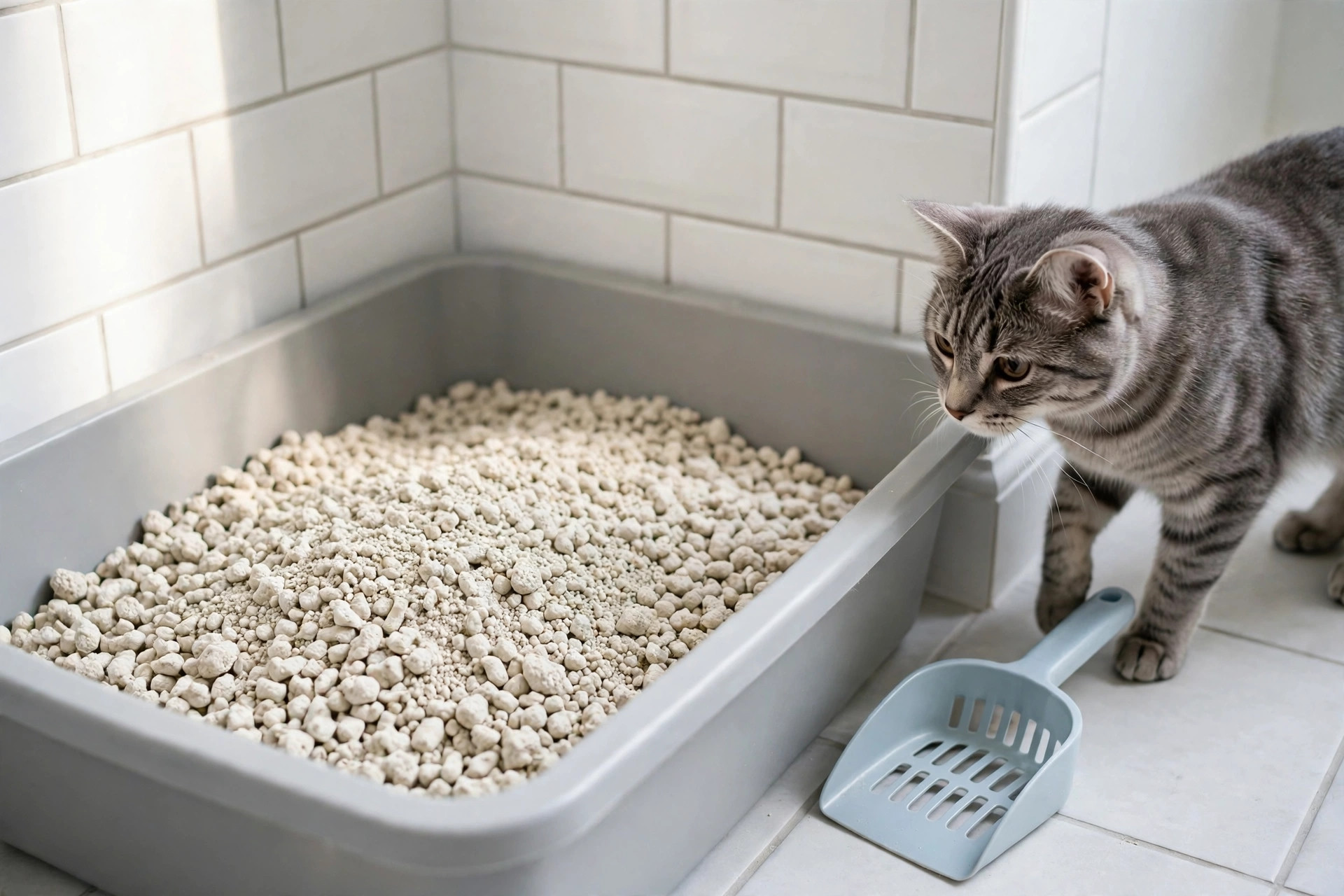
Litter-box avoidance is a top reason cats are surrendered — and it’s almost always preventable:
- The n+1 rule: one box per cat plus one extra, in different locations. Two boxes side by side count as one in a cat’s mind.
- Good location: quiet, low-traffic spots with an escape route — never next to food and water.
- Scoop daily: waste removed daily, litter topped up weekly, box washed monthly. Cats avoid dirty boxes.
- 2–3 inches of litter: too little feels wrong underfoot; too much puts some cats off.
- Never punish accidents: scolding teaches fear, not better aim — it usually means the box setup needs fixing.
What Does a First Cat Really Cost?
Adoption day isn’t the expensive part — the first year is. A realistic range for an indoor cat in 2026:
| Expense | Typical Cost |
|---|---|
| Adoption fee (shelter) | $50–$200 (often includes spay/neuter + first vaccines) |
| The 12 starter supplies | $120–$250 |
| First-year vet care | $200–$400 |
| Annual food + litter | $300–$600 |
Cats can live 15–20 years — budget the yearly costs, not just the adoption-day ones.
First-Time Cat Owner Checklist: FAQs
How long does it take a new cat to adjust?
Most cats hide for 1–3 days, explore within a week, and feel at home in 2–4 weeks. Shy or previously stray cats can take 2–3 months. Patience beats pressure every time.
Should I get one kitten or two?
Two kittens — especially bonded pairs — are often easier than one: they exercise each other, learn bite inhibition together, and suffer less separation stress.
Can I leave my new cat alone during the day?
Yes, once she’s settled with food, water, a clean litter box, and safe toys. Adult cats handle 8–10 hours alone; kittens under 6 months need a midday check-in.
What if my new cat won’t eat?
A day or two of appetite loss is common with moving stress. If she refuses food for more than 24–48 hours (24 hours for kittens), call your vet — cats can develop serious liver problems from not eating.
How often should I clean the litter box?
Scoop daily at minimum, top up litter weekly, and fully wash the box monthly. A clean box is the best insurance against litter-box problems.
Final Thoughts
Bringing home your first cat doesn’t have to be a scramble. Buy the 12 essentials on this first time cat owner checklist, kitten-proof the hazards, set up a quiet safe room, and give your new cat the gift she needs most: time. Within weeks, the hiding spot she retreated to on night one will be the bed she naps in every afternoon.
Once she’s settled, consider enrichment upgrades like safe outdoor access — a window catio can be a game-changer for an indoor cat’s quality of life.
Also Read: Catio Ideas: Safe Outdoor Cat Enclosure Guide (2026)