
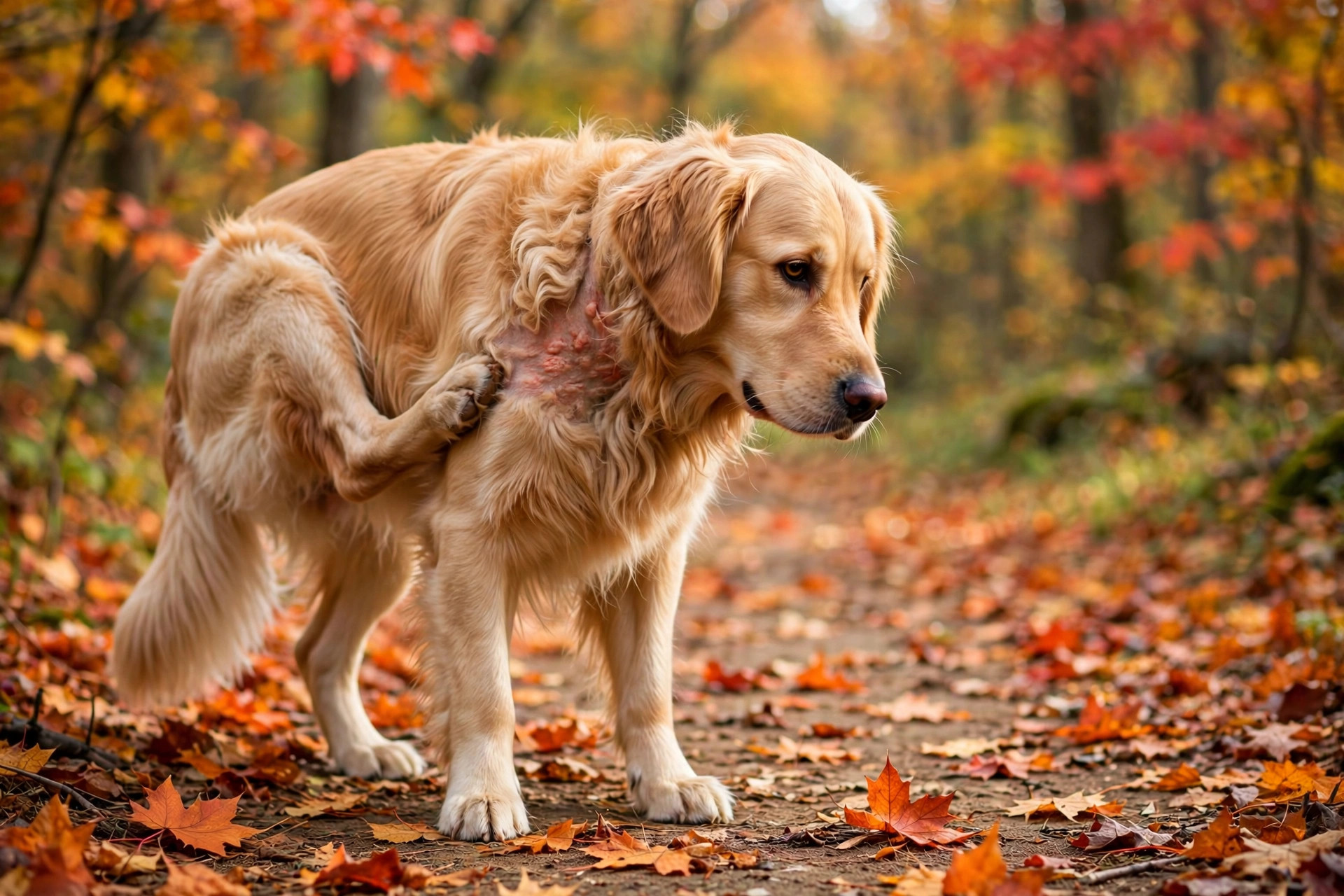
You get home from a crisp October walk and your dog immediately starts chewing his feet, rubs his face on the carpet, and scratches behind his ears. Fine all summer, miserable every autumn? You are probably looking at fall allergies in dogs.
Unlike people, dogs show seasonal allergies through their skin — paw licking, itchy bellies, yeasty ears, and face rubbing are the classic autumn pattern. This 2026 vet guide covers the causes of fall allergies in dogs, the signs to watch for, home relief that actually helps, and when to call your veterinarian.
Table of Contents
- Can Dogs Really Get Fall Allergies?
- What Causes Fall Allergies in Dogs?
- Signs of Fall Allergies in Dogs
- Home Relief for Fall Allergies in Dogs
- Vet Treatments for Fall Allergies
- Breeds More Prone to Seasonal Allergies
- Fall Allergies vs. Fleas, Food Allergies & Infection
- When to Call the Vet
- Frequently Asked Questions
Can Dogs Really Get Fall Allergies?
Yes — and fall is one of the worst seasons for them. Dogs develop seasonal allergies (veterinarians call the environmental kind atopic dermatitis), and autumn brings its own heavy trigger load. Many dogs suffer just as badly in October as in May.
The difference is how allergies show up. Humans get sneezing and a runny nose; dogs push the reaction out through their skin. If your dog’s itch follows the calendar — comfortable most of the year, miserable every August, September, or October — seasonal allergies are the likely cause.
What Causes Fall Allergies in Dogs?
Fall has a different allergen lineup than spring, which is why a dog who breezed through April can fall apart in October:
1. Ragweed Pollen
Ragweed is the top fall trigger for dogs and people alike. It pollinates from late summer through October, and dogs collect it on their coat and paws during walks, then carry it indoors.
2. Mold Spores From Damp Leaves
Decaying leaf litter is a mold factory. As autumn leaves pile up and stay damp, mold and mildew spores multiply — and your dog walks through them, rolls in them, and carries them home on his body.
3. Dust Mites and Indoor Allergens
As windows close and heating kicks on, dust mites and household dust get stirred up. Dogs spending more time indoors in fall meet these allergens exactly when outdoor triggers are peaking too.
4. Debris Clinging to the Coat
Dry grass, leaf fragments, and weed debris cling to fur and work down to the skin — especially on the paws, belly, and armpits. That is why the itchiest spots are usually the lowest ones.
Signs of Fall Allergies in Dogs
Watch for these signs of fall allergies in dogs, especially when they appear or worsen after outdoor time:
1. Itchy Skin and Scratching
Persistent scratching at the sides, belly, armpits, or groin is the hallmark sign — often with redness, rashes, or scabs on the same spot. Itching that worsens after walks and eases indoors points strongly to outdoor allergens.
2. Paw Licking and Chewing
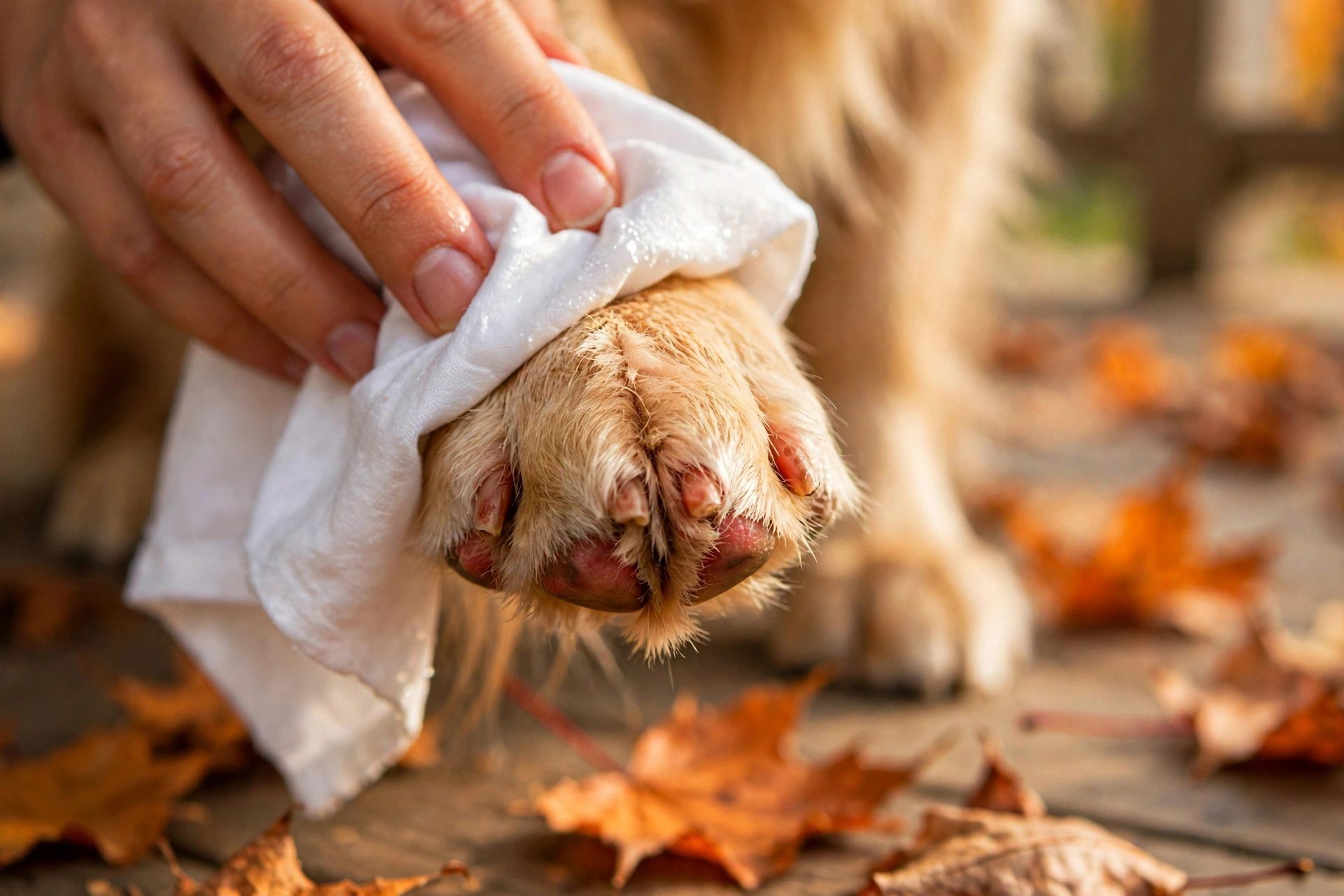
Allergens settle directly on the paws, and dogs try to lick them off. Check for red, inflamed skin between the toes, plus reddish-brown staining on light-colored fur — a telltale sign of chronic licking.
3. Recurrent Ear Infections
Allergies are the number-one underlying cause of repeat ear infections in dogs: head shaking, ear scratching, yeasty odor, redness inside the ear flap, dark discharge. Some dogs show allergies only through their ears.
Also Read: Signs of Ear Infection in Dogs: Vet Guide (2026) — learn the early warning signs, since allergies are the #1 underlying cause of recurring ear infections.
4. Watery Eyes, Sneezing, and Face Rubbing
Some dogs get watery or red eyes, occasional sneezing, and face rubbing — dragging the muzzle along carpet or furniture. Redness around the muzzle and eyes is common with ragweed sensitivity.
5. Hot Spots and Hair Loss
Unchecked itching causes self-inflicted damage: hot spots (moist, painful, fast-spreading sores) where a dog has licked relentlessly, thinning fur, bald patches, and secondary bacterial or yeast infections needing veterinary treatment.
Home Relief for Fall Allergies in Dogs
You cannot eliminate autumn allergens, but you can cut exposure and soothe the itch:
1. Wipe Paws and Belly After Every Walk
This single habit makes the biggest difference. A damp cloth on paws, legs, and belly after every outing removes pollen, mold, and leaf debris before your dog licks it off. Keep a towel by the door so it becomes automatic.
2. Bathe Smart: Oatmeal Shampoos, Not Over-Bathing
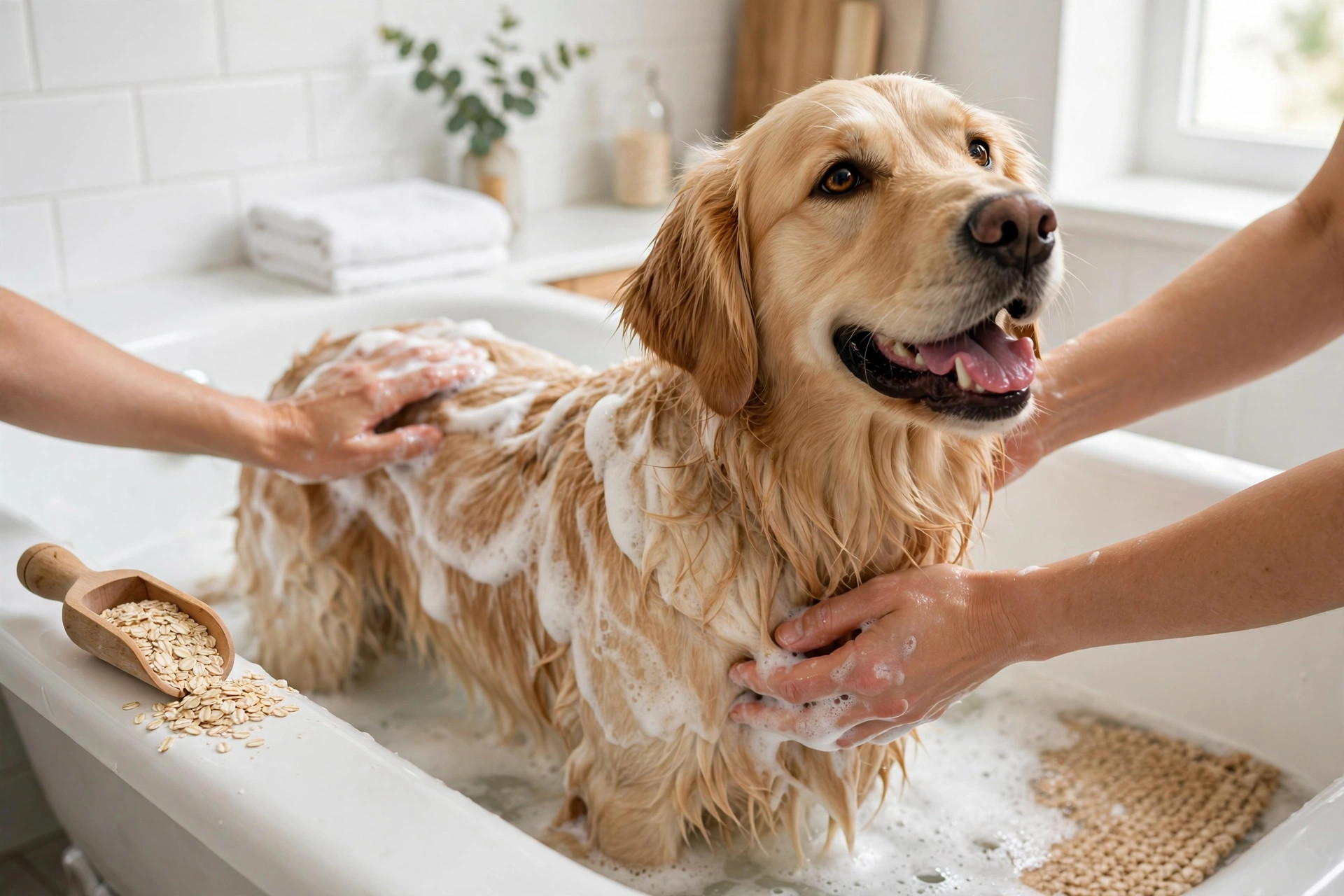
A weekly bath with a gentle, dog-specific oatmeal or hypoallergenic shampoo washes allergens out of the coat and calms irritated skin. Too-frequent bathing strips natural oils and worsens itching — lukewarm water and a thorough rinse are the rules.
3. Wash Bedding and Tame Indoor Allergens
Wash your dog’s bedding weekly in hot water to knock down dust mites. Vacuum sleeping areas often, run a HEPA purifier where your dog naps most, and keep windows closed on high-pollen days.
4. Add Omega-3s for Skin Support
Omega-3 fatty acids (fish oil or a vet-recommended supplement) strengthen the skin barrier and calm inflammation from the inside out. It takes several weeks of consistent use, but allergic skin grows noticeably more resilient over a season.
5. Brush, Groom, and Stay Current on Flea Prevention
Regular brushing lifts loose allergens and debris out of the coat. Keep flea prevention going year-round too — flea allergy dermatitis looks almost identical to seasonal allergies.
| When | Relief Task | Why It Helps |
|---|---|---|
| After every walk | Wipe paws, legs, and belly with a damp cloth | Removes pollen and mold before it is licked off |
| Weekly | Oatmeal bath + wash bedding in hot water | Clears coat allergens; kills dust mites |
| Daily | Quick brush + omega-3 supplement | Lifts debris; strengthens skin barrier |
| Season-long | HEPA filter + closed windows on high-pollen days | Cuts indoor allergen load |
Vet Treatments for Fall Allergies in Dogs
Home care handles mild cases; moderate-to-severe allergies need a veterinarian:
- Antihistamines: Your vet may suggest an over-the-counter antihistamine for mild itching — but never dose on your own. The AKC’s guide to Benadryl for dogs stresses that dosing must come from your veterinarian.
- Prescription itch relief: Modern veterinary medications target the itch signal directly and bring fast relief when antihistamines fall short.
- Allergy testing and immunotherapy: For severe cases, testing identifies the exact triggers, and allergy shots or drops gradually desensitize the immune system — the closest thing to a long-term fix.
- Treating secondary infections: Bacterial or yeast skin and ear infections need their own medication. Clearing infection first often reveals how much of the problem was allergy alone.
Breeds More Prone to Seasonal Allergies
Any dog can develop fall allergies, but Golden Retrievers, Labrador Retrievers, Bulldogs, Boxers, Pugs, and most terriers are genetically more prone. If you own one of these breeds, start your autumn relief routine before the itching begins.
Also Read: Golden Retriever Breed Guide: Temperament & Care (2026) — Goldens are among the most allergy-prone breeds, so their grooming and skin-care routine matters even more in fall.
Fall Allergies vs. Fleas, Food Allergies & Infection
Itchy skin has several lookalikes:
- The calendar is the biggest clue. Itching that arrives every August–October and fades in winter points at environmental allergies. Fleas and food allergies do not follow a calendar.
- Fleas: Flea allergy itching concentrates at the tail base and hind legs. Part the fur and look for flea dirt (tiny black specks).
- Food allergies: Year-round itching, sometimes with digestive upset, that does not improve when pollen season ends. Diagnosis needs a strict elimination diet trial under vet supervision.
- Skin infection: Bad smell, oozing, or spreading crusty sores mean infection has likely joined in — and it needs medication, not just oatmeal baths.
When to Call the Vet
- Itching that does not improve after 1–2 weeks of consistent home care
- Hot spots, open wounds from scratching, or spreading sores
- Ear symptoms: head shaking, odor, discharge, or pain when ears are touched
- Hair loss, thickened or darkened skin, or a bad yeasty smell from the skin
- Lethargy, appetite loss, or behavior changes alongside the itch
- Facial swelling, hives, or trouble breathing — treat as an emergency
Frequently Asked Questions
Can dogs get allergies in the fall?
Yes. Fall is a peak allergy season for many dogs: ragweed pollen (late summer through October), mold spores from damp decaying leaves, and rising indoor dust-mite levels as windows close.
How do I know if my dog has fall allergies or fleas?
The calendar is your best clue: allergies follow the seasons, fleas do not. Flea allergy itching concentrates at the tail base and hind legs; seasonal allergy itching hits the paws, belly, ears, and face.
What home remedy helps an itchy dog in fall?
Wipe paws and belly after every walk, give weekly oatmeal baths, wash bedding in hot water, and add omega-3 fatty acids for skin support.
Can I give my dog Benadryl for fall allergies?
Only under your veterinarian’s guidance. The product, dose, and suitability depend on your dog’s size, health, and other medications — the wrong choice can be harmful.
Do fall allergies in dogs go away on their own?
Flare-ups usually fade after the first hard frosts, but the sensitivity returns every year — and repeated scratching can cause infections. Manage each season rather than waiting it out.
Why does my dog lick his paws more in the fall?
Paws collect the heaviest dose of autumn allergens — ragweed pollen, mold spores, leaf debris — on every walk. Licking tries to remove the irritants but inflames the skin further, causing redness and staining between the toes.
Final Thoughts
Fall allergies in dogs are frustrating but highly manageable: cut exposure with post-walk wipe-downs and smart bathing, support the skin with good nutrition and clean bedding, and bring in your vet when itching outruns home care.
Start the routine now, in the middle of ragweed and mold season, and your dog can get back to enjoying those crisp autumn walks. If the same pattern returns every fall, ask your vet about allergy testing — your dog deserves better than three miserable months a year.