
You leave the house for 20 minutes to grab groceries. You come back to scratch marks on the front door, couch cushions torn apart, and a note from your neighbor about the nonstop howling. Your first thought might be that your dog is being naughty or “getting revenge” — but vets see this very differently. What you’re looking at is very likely separation anxiety in dogs, one of the most common behavior problems in dogs, and it is a genuine stress disorder, not disobedience.
Dogs with separation anxiety panic when left alone. They are not being spiteful; they are in real distress. The good news is that with the right approach — exercise, gradual training, calm routines, and sometimes veterinary help — most dogs can learn to feel safe on their own.
In this 2026 guide, we’ll walk you through everything you need to know about separation anxiety in dogs: the signs, what causes it, how to tell it apart from plain boredom or medical problems, the step-by-step training plan vets recommend, and when it’s time to call your vet.
Table of Contents
- What Is Separation Anxiety in Dogs?
- Signs of Separation Anxiety in Dogs
- What Causes Separation Anxiety in Dogs?
- Rule Out Medical and Other Behavior Issues First
- How to Help a Dog With Separation Anxiety: Step-by-Step
- What NOT to Do With an Anxious Dog
- When to See the Vet: Medications and Professional Help
- Frequently Asked Questions
- Final Thoughts
What Is Separation Anxiety in Dogs?
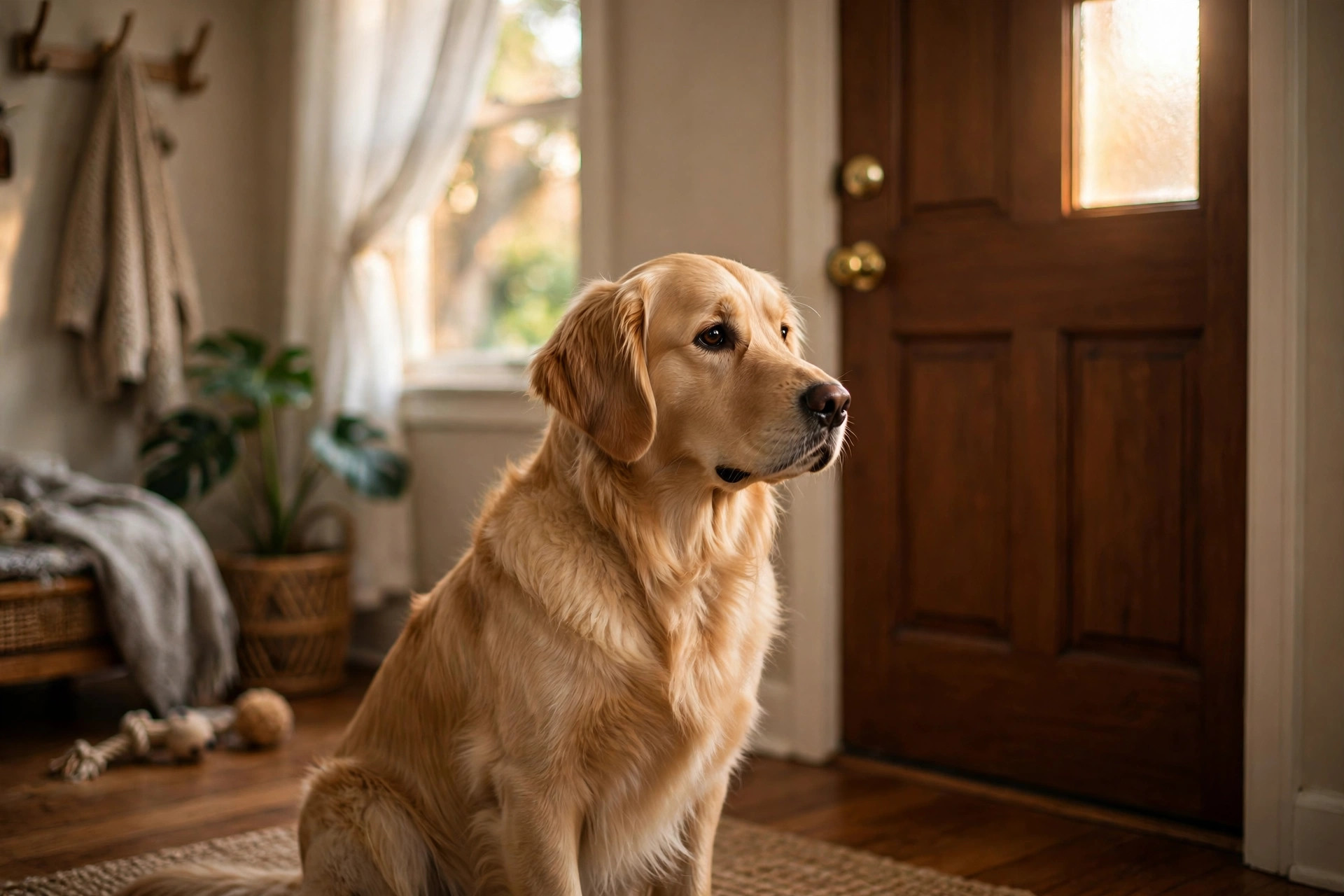
Separation anxiety in dogs is a panic response to being left alone or separated from a specific person. It ranges from mild unease — a little whining at the door — to full-blown panic, where a dog injures itself trying to escape the house.
It typically kicks in soon after you leave, often within minutes, and stops when you return. That pattern — calm when you’re home, destructive or vocal only when you’re gone — is the hallmark that separates it from general anxiety or boredom.
Some dogs are genetically more prone to it (companion breeds like Labrador Retrievers, German Shepherds, and Border Collies show up often in behavior clinic data), and rescue dogs or dogs that were rehomed multiple times are at higher risk. But any dog can develop separation anxiety, especially after a big life change.
Signs of Separation Anxiety in Dogs
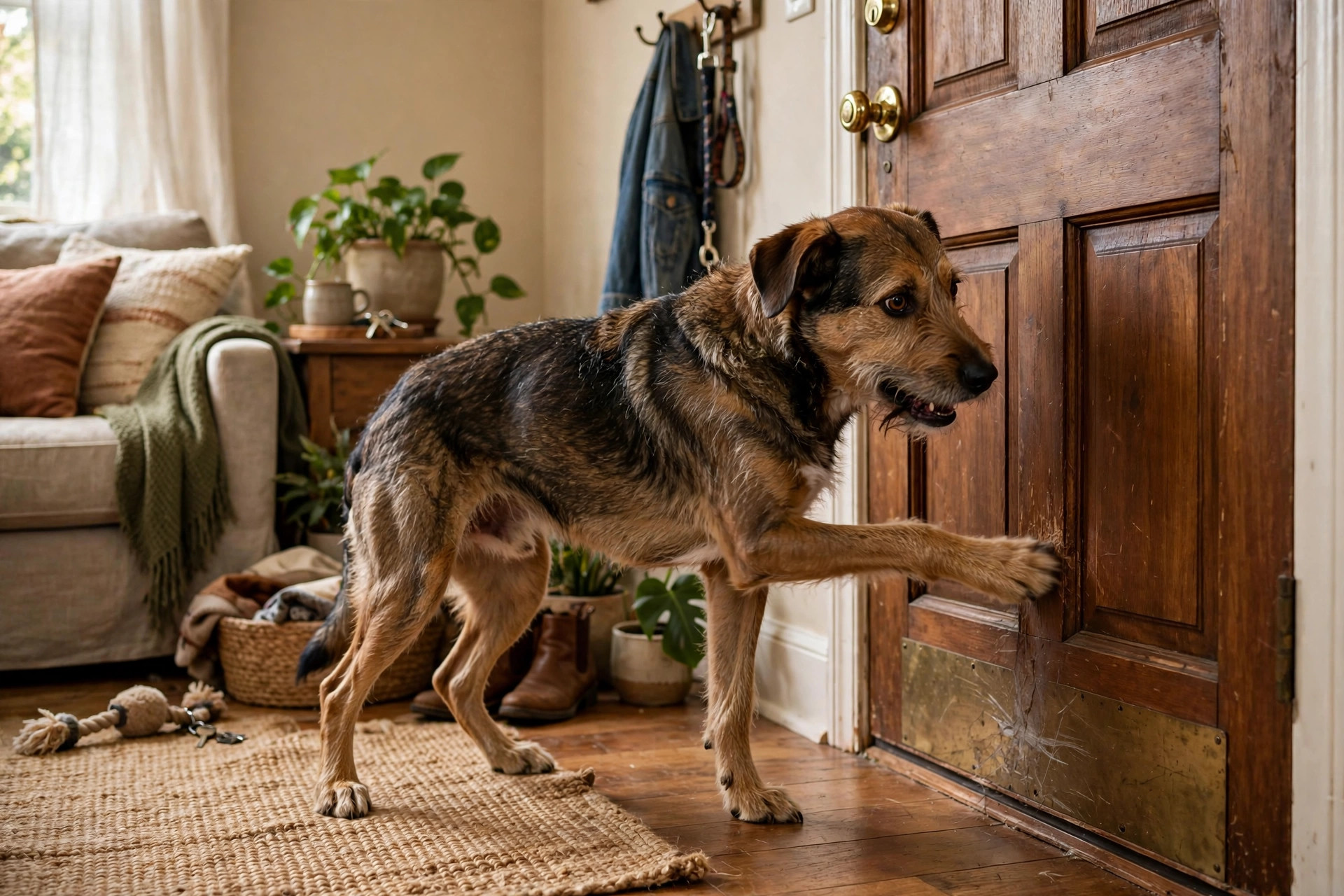
The signs of separation anxiety in dogs are hard to miss — if you know what you’re looking for. Watch for these behaviors, which typically occur only when the dog is left alone:
1. Excessive Barking, Howling, or Whining
Nearly constant vocalization that starts shortly after you leave is the most common sign. This is usually the one neighbors notice first — and the one that prompts many owners to look for help.
2. Destructive Behavior
Chewing door frames, digging at doors and windows, shredding furniture, pillows, or bedding. The damage is usually concentrated around exit points — doors, windows, and gates — as the dog desperately tries to get out and find you.
3. House Soiling
Urinating or defecating indoors despite being fully house-trained. Stress can make a dog temporarily “forget” its training, or simply overwhelm bladder control. Note that if this also happens while you’re home, the cause may be medical or incomplete house-training instead.
4. Escape Attempts and Pacing
Dogs may claw, dig, or chew their way out of crates, rooms, or yards — sometimes injuring their paws, teeth, or nails in the process. Restless pacing in a fixed pattern, circling, or following your scent around the house are also classic signs.
5. Excessive Drooling, Panting, or Trembling
Physical stress signs — drool, panting when it’s not hot, trembling, and dilated pupils — often appear even before you leave, when the dog picks up on your departure cues: keys jingling, shoes going on, the bag being packed.
6. Anxiety When You Prepare to Leave
Watching you with worried eyes, clinging, or starting to panic the moment you show signs of leaving (grabbing your coat, putting on shoes) is a telltale early indicator.
Also Read: Halloween Pet Safety Tips for Dogs and Cats (2026) — fireworks, doorbells, and costumes spike many dogs’ anxiety, and this guide shows how to keep them calm.
What Causes Separation Anxiety in Dogs?
No single cause explains every case, but behaviorists point to several common triggers:
- A change in routine: Returning to office work after months at home, a new work schedule, or children going back to school can leave a dog suddenly alone for much longer stretches.
- Moving house: A new home smells and feels unfamiliar, removing the safe territory the dog had learned to relax in.
- Loss of a family member: The death or departure of a person (or another pet) the dog was bonded to.
- Rehoming or shelter stays: Dogs that have lost a home once are statistically more likely to panic when left, fearing abandonment again.
- A traumatic experience alone: A loud thunderstorm, fire alarm, or break-in while home alone can “teach” a dog that being alone is dangerous.
- Lack of independence training: Dogs that are never taught to settle by themselves — always followed, always fussed over — can struggle the first time real alone time arrives.
Rule Out Medical and Other Behavior Issues First
Before assuming separation anxiety in dogs is the diagnosis, rule out the look-alikes. This step matters, because the wrong treatment wastes time and money.
- Medical problems: Urinary tract infections, gastrointestinal issues, and age-related cognitive decline can all cause house soiling or restlessness. Senior dogs may pace, whine, or eliminate indoors due to canine cognitive dysfunction — a vet check is essential, especially if the behavior is new in an older dog.
- Incomplete house-training or juvenile destruction: Puppies chew and have accidents for lots of reasons that have nothing to do with anxiety.
- Boredom: An under-exercised young dog will invent its own entertainment. The difference: bored dogs are often destructive even when you’re home, while anxious dogs are angels until you walk out the door.
- Barking at triggers: Some dogs bark when alone because they hear other dogs, delivery drivers, or passers-by — that’s territorial or alert barking, a different problem with different solutions.
A quick way to tell: set up a phone or camera to record your dog while you’re away. Seeing exactly when the behaviors start (usually within minutes of your departure) confirms separation-related panic rather than random misbehavior.
How to Help a Dog With Separation Anxiety: Step-by-Step

Treating separation anxiety in dogs works best as a combined plan. Veterinary behavior sources including the ASPCA recommend these steps:
1. Tire Them Out Before You Leave
A long walk, fetch session, or play date before departure burns off nervous energy. A tired dog is a calmer dog — physical exercise reduces stress hormones and makes resting alone much easier. Mental exercise counts too: 10 minutes of training practice can be as tiring as a run.
2. Make Departures Boring (Desensitization)
Desensitize your dog to your departure cues. Pick up your keys and sit back down. Put on your shoes, then take them off. Repeat until the cues stop triggering panic. Then practice real departures: step out for 30 seconds, return calmly. Then 2 minutes, then 10. Build up gradually over days and weeks — never make the jump from 5 minutes to 5 hours.
3. Counterconditioning: Alone Time Means Good Things
Pair your departure with something your dog loves. Every time you leave, offer a special stuffed KONG (peanut butter and banana frozen inside works well), a long-lasting chew, or a puzzle feeder — treats your dog only ever gets when alone. Over time, your leaving predicts good things instead of panic. For mild cases, this alone can resolve the problem.
4. Keep Arrivals and Departures Low-Key
Big emotional goodbyes signal that something dramatic is happening. When leaving, give a calm pat, say a short goodbye, and go. When you return, greet your dog quietly and wait until they’re calm before giving attention. It feels cold at first — but you’re teaching your dog that coming and going is no big deal.
5. Practice Short Alone Periods Daily
Leave your dog home while you run a quick errand, even on days you don’t “need” to. Have them settle in another room while you cook or shower. Regular, successful short absences build the dog’s confidence that you always come back.
6. Create a Safe, Comforting Space
Some dogs settle better in one dog-proofed room or a properly introduced crate (never as punishment). Add familiar bedding, a worn t-shirt that smells like you, and calm background sound — soft music or a TV. White noise can mask outside sounds that trigger barking.
Also Read: Signs of Ear Infection in Dogs: Vet Guide (2026) — restless head-shaking and scratching aren’t always anxiety; rule out painful ear problems too.
What NOT to Do With an Anxious Dog
Well-meaning owners often make separation anxiety worse. Avoid these common mistakes:
- Never punish or scold after the fact. Coming home angry and punishing your dog for the shredded couch teaches nothing — your dog cannot connect your anger to something it did an hour ago. Punishment increases fear and makes the anxiety worse.
- Don’t make departures dramatic. Long, emotional goodbyes (“Mommy loves you, be good, I’ll be back, I promise!”) tell your dog something is wrong. Keep it short and boring.
- Don’t get a second pet as a “cure.” Another dog can help some anxious dogs, but it can also double the problem — or the anxious dog can teach its new housemate to panic too.
- Don’t crate a dog that panics in the crate. If your dog injures itself trying to escape the crate, the crate is increasing the panic. Stop crating and try a dog-proofed room instead.
- Don’t rush the training. Progress is not linear. Bad days happen. Pushing absences longer than your dog can handle sets the training back — always move at the pace of your slowest, most successful sessions.
When to See the Vet: Medications and Professional Help
See your veterinarian if your dog injures itself, won’t eat at all when alone, destroys things despite consistent training for several weeks, or if the anxiety is getting worse. Severe separation anxiety in dogs is a medical-behavioral condition, and medication is a legitimate part of treatment.
Your vet may prescribe anti-anxiety medication alongside behavior training. Two medications are approved for separation anxiety in dogs in many countries — clomipramine and fluoxetine — which lower baseline stress so training can work. Medication alone rarely fixes the problem; it works best as a support for the training plan above. For complex cases, your vet may refer you to a certified animal behaviorist (look for CAAB or DACVB credentials).
Frequently Asked Questions
Can separation anxiety in dogs be cured?
Yes, in most cases it can be significantly improved or resolved with consistent training — especially when caught early. Mild to moderate cases often improve within weeks of a structured desensitization plan. Severe cases take months and may need medication, but the majority of dogs do improve.
How long does separation anxiety training take?
There’s no fixed timeline, but owners who follow a gradual desensitization plan consistently usually see clear improvement within 4–8 weeks for mild cases. Severe cases may take several months. Consistency matters more than speed — skipping steps usually backfires.
Should I crate my dog if it has separation anxiety?
Only if the dog is already comfortable in the crate. Forcing a panicking dog into a crate makes things worse and risks injury. If the crate isn’t a happy place, use a dog-proofed room instead and work on crate training separately, in tiny positive steps.
Will getting another dog help my dog’s separation anxiety?
Sometimes, but it’s a gamble — not a treatment. Some anxious dogs do settle with company, but others panic just as much, and the new dog can pick up the anxious behavior. Fix the problem with training first; add a second dog only if you want one for its own sake.
Does my dog barking when I leave always mean separation anxiety?
No. Dogs also bark alone because of outside noises, boredom, or incomplete training. True separation anxiety barking starts soon after you leave and is usually paired with other distress signs like destruction or drooling. A camera recording is the fastest way to tell.
Can puppies have separation anxiety?
Yes. Puppies are actually a high-risk group, especially those adopted very young or never left alone during the socialization window. Start alone-time training early: short, positive practice sessions from day one prevent most puppy panic.
Final Thoughts
Separation anxiety in dogs is heartbreaking to watch — but it’s also one of the most treatable behavior problems in dogs. The formula is simple, even if the execution takes patience: exercise before you leave, make departures boring, pair alone time with great things, and build up absences gradually.
Remember that your dog isn’t giving you a hard time — your dog is having a hard time. Meet the panic with calm structure instead of frustration, rule out medical causes, and don’t hesitate to bring in your vet or a certified behaviorist when the problem is severe. Most dogs come through it, and the dog on the other side is a calmer, happier, more confident companion.