
You know the look. You’re making a sandwich, the peanut butter jar opens with that familiar pop, and your dog materializes out of thin air, eyes locked on the spoon, tail thumping like a drum. It’s only natural to ask: can dogs eat peanut butter, or should this pantry staple stay off your pup’s menu?
The good news is yes, dogs can eat peanut butter — most plain, unsweetened varieties are a safe and much-loved treat. But there is one critical exception that every dog owner must know: some peanut butters contain xylitol, an artificial sweetener that is extremely toxic to dogs and can be deadly even in small amounts.
In this complete 2026 guide, we’ll walk you through everything you need to know about feeding peanut butter to dogs: the nutritional benefits, the xylitol danger, other risks to watch for, safe serving sizes by dog size, how to pick a safe jar at the store, and fun ways to serve it.
Table of Contents
- Can Dogs Eat Peanut Butter? The Short Answer
- Nutritional Benefits of Peanut Butter for Dogs
- The Xylitol Warning: When Peanut Butter Is Toxic
- Other Risks of Feeding Peanut Butter to Dogs
- How Much Peanut Butter Can Dogs Eat?
- How to Choose a Safe Peanut Butter
- Fun Ways to Serve Peanut Butter to Dogs
- Can Dogs Eat Peanut Butter Every Day?
- Can Puppies Eat Peanut Butter?
- Healthy Alternatives to Peanut Butter
- Frequently Asked Questions
Can Dogs Eat Peanut Butter? The Short Answer
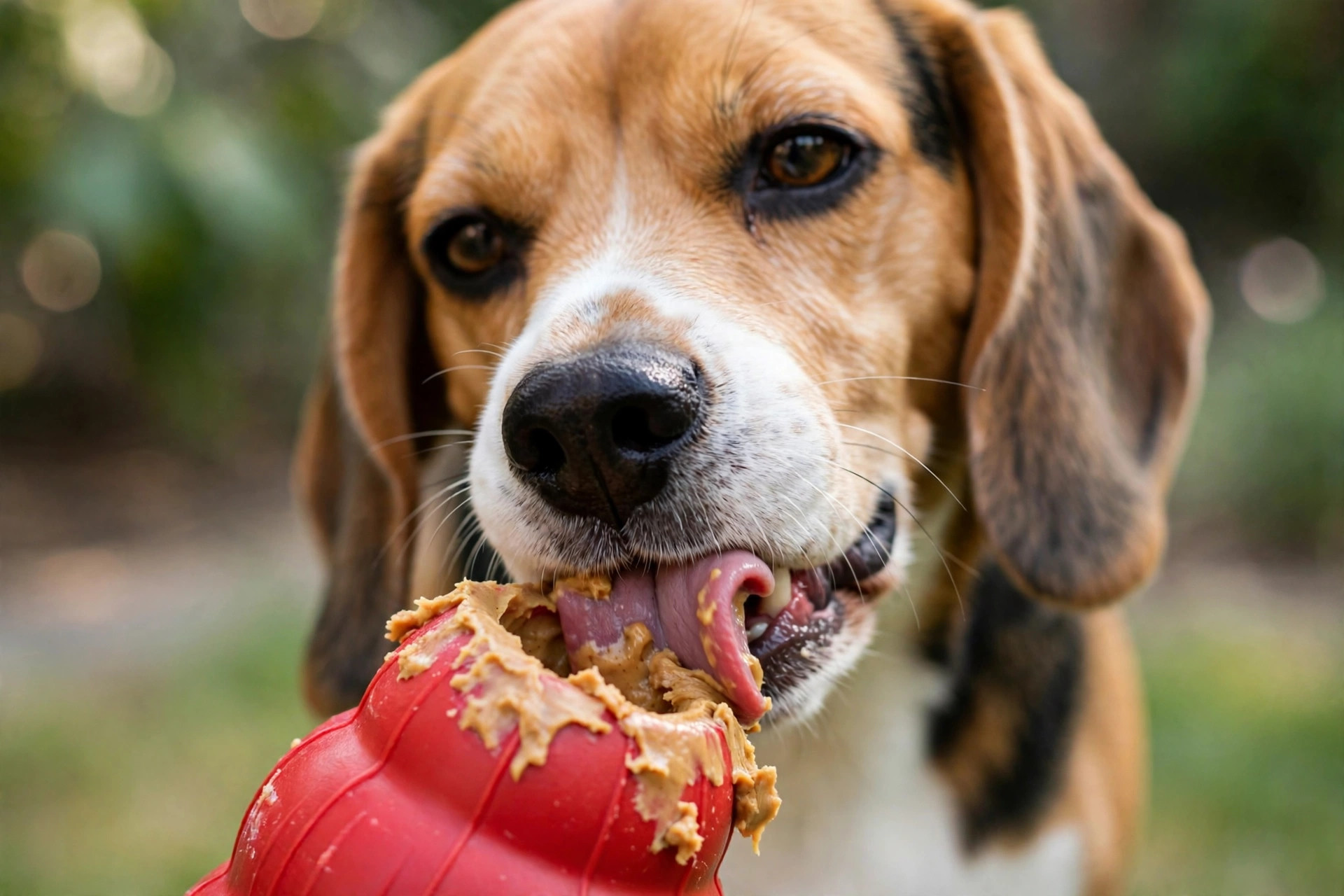
Yes, plain peanut butter is generally safe for healthy dogs when fed in moderation. Veterinary sources including PetMD confirm that most peanut butter is a fine occasional treat for dogs — as long as you check the label for xylitol first.
Peanut butter is one of the most useful training and enrichment foods in a dog owner’s toolkit. It is protein-rich, dogs adore the taste, and its sticky texture makes it perfect for stuffing into puzzle toys that keep a bored pup busy for an hour.
The key word, as always, is moderation. Peanut butter is calorie-dense, so treats — including peanut butter — should make up no more than 10% of your dog’s daily calories, with the rest coming from a complete, balanced dog food.
Before offering peanut butter, always check that it is:
- Free of xylitol (check the ingredients list every time — formulations change)
- Plain and unsweetened — no chocolate, no added sugar alcohols
- Served in a small, dog-appropriate portion
- An occasional treat, not a daily meal replacement
Nutritional Benefits of Peanut Butter for Dogs
Peanut butter isn’t just tasty — in small amounts, it brings real nutritional value to the table.
1. Good Source of Protein
Peanuts are naturally rich in plant-based protein, which supports muscle maintenance and overall body function. While peanut butter can never replace your dog’s main protein sources, it adds a small protein boost as a treat.
2. Healthy Fats for Skin and Coat
Peanut butter contains monounsaturated fats that, in small quantities, can contribute to healthy skin and a shiny coat. These fats also make peanut butter an energy-dense food — which is exactly why portions must stay small.
3. Vitamins and Minerals
Peanut butter provides vitamin B, vitamin E, and niacin. Vitamin E acts as an antioxidant supporting immune health, while B vitamins play roles in energy metabolism and maintaining healthy skin and eyes.
4. A Training and Enrichment Superstar
Beyond nutrition, peanut butter’s greatest strength is behavioral. Its sticky, lickable texture makes it ideal for stuffing into rubber toys and lick mats, hiding bitter pills, and rewarding good behavior during training sessions. A frozen peanut-butter-stuffed toy is one of the simplest forms of mental enrichment you can offer a dog.
Also Read: Can Dogs Eat Pineapple? Benefits, Risks & Safe Feeding Guide (2026)
The Xylitol Warning: When Peanut Butter Is Toxic
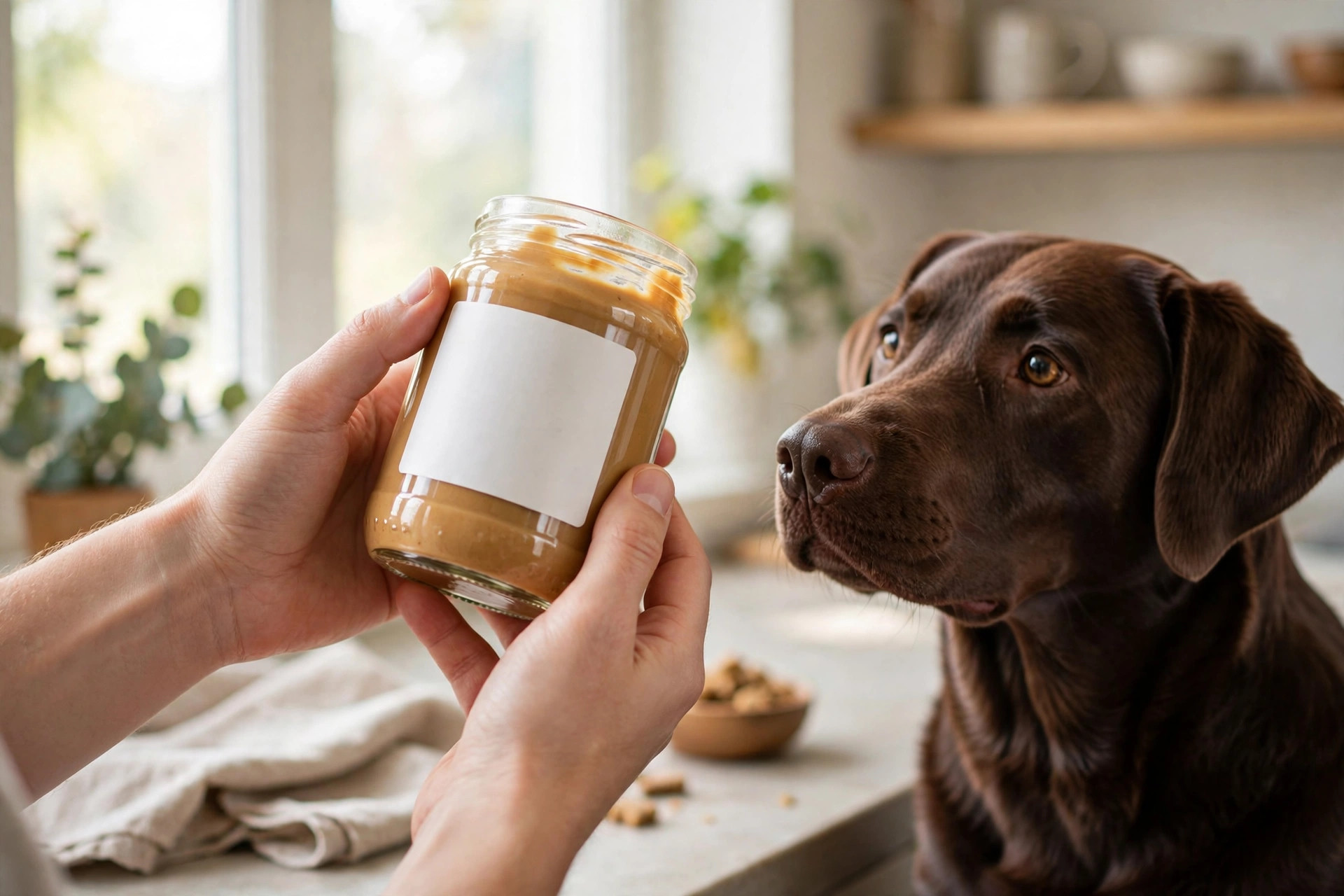
This is the single most important section of this guide. Xylitol (sometimes labeled as “birch sugar”) is a sugar substitute used in some “sugar-free” or “no sugar added” peanut butters — and it is extremely toxic to dogs.
Even a small amount of xylitol can trigger a rapid, massive release of insulin in a dog’s body, causing dangerous hypoglycemia (low blood sugar). In higher doses it can cause acute liver failure. Xylitol poisoning can be fatal, and it acts fast.
Signs of Xylitol Poisoning
Watch for these symptoms, which can appear within minutes to an hour of ingestion:
- Vomiting
- Weakness and lethargy
- Staggering or lack of coordination
- Collapse
- Seizures
If you suspect your dog has eaten peanut butter containing xylitol, contact your veterinarian or an emergency animal clinic immediately. This is not a wait-and-see situation — early treatment saves lives.
Brands That Have Contained Xylitol
Peanut butter brands that have sold products containing xylitol include Go Nuts Co., Krush Nutrition, Nuts ‘n More, and P28 Foods. However, product formulations change over time, so never trust a brand name alone — always read the current ingredient label on the jar in your hand.
Be especially cautious with peanut butters marketed as “sugar-free,” “no sugar added,” “low sugar,” or aimed at low-carb dieters. These are the most likely to contain xylitol or other artificial sweeteners. When in doubt, don’t feed it until you’ve confirmed the ingredients.
Other Risks of Feeding Peanut Butter to Dogs
Even xylitol-free peanut butter has downsides if you’re not careful.
1. High in Calories and Fat
Peanut butter packs roughly 90–100 calories per tablespoon. Regular overfeeding can quickly lead to weight gain and obesity, which strain your dog’s joints, heart, and overall health. Dogs prone to pancreatitis should be especially cautious with fatty treats — check with your vet first.
2. Added Sugar and Salt
Many commercial peanut butters contain added sugars, palm oil, and extra salt. While not acutely toxic like xylitol, these add empty calories and offer your dog nothing nutritionally. Choose jars with the shortest ingredient list possible — ideally just peanuts, and maybe a little salt.
3. Chocolate and Flavored Varieties
Never feed chocolate-flavored peanut butter or peanut butter swirled with chocolate — chocolate is toxic to dogs. Also avoid peanut butter mixed with macadamia nuts, which are toxic to dogs even in small amounts.
4. Possible Allergies
Just like people, some dogs are allergic or sensitive to peanuts. After the first tiny taste, watch for itching, redness, swelling, digestive upset, or difficulty breathing. If any of these appear, stop feeding peanut butter and contact your veterinarian.
How Much Peanut Butter Can Dogs Eat?
Peanut butter should only ever be an occasional treat — a few times a week at most, never a dietary staple. As a starting point, use these general guidelines (based on veterinary feeding advice), and always follow your own vet’s recommendations:
| Dog Size | Weight | Safe Serving |
|---|---|---|
| Extra-small dogs | 2–10 lbs | ½ teaspoon, once daily |
| Small dogs | 11–20 lbs | ½ teaspoon, up to twice daily |
| Medium dogs | 21–50 lbs | 1 teaspoon, once daily |
| Large dogs | 51–90 lbs | 1 teaspoon, up to twice daily |
| Extra-large dogs | 91+ lbs | 1 tablespoon, once daily |
Remember the 10% rule: all treats combined — peanut butter included — should stay under 10% of your dog’s total daily calories. When in doubt, serve less, and adjust based on your dog’s size, weight, and activity level.
How to Choose a Safe Peanut Butter
Picking a dog-safe jar takes thirty seconds in the grocery aisle:
- Read the ingredients list — not the front of the jar. Look for the word “xylitol” or “birch sugar.” If it’s there, put the jar back.
- Choose the shortest ingredient list. The safest peanut butters contain just peanuts, and sometimes salt. “Natural” or “unsweetened” varieties are usually the best bet.
- Be wary of “sugar-free” and “no sugar added.” These labels are the biggest red flags for xylitol or other artificial sweeteners.
- Skip flavored varieties — chocolate, honey-roasted with extra additives, or anything with macadamia nuts.
- Re-check every new jar. Manufacturers change formulations without warning, so check the label each time you buy, even for a brand you’ve used before.
Creamy peanut butter is slightly easier for small dogs to lick and swallow than crunchy, though both are fine as long as they’re xylitol-free. Avoid feeding whole peanuts in large amounts — they’re a choking hazard for small dogs and add unnecessary fat.
Fun Ways to Serve Peanut Butter to Dogs
Peanut butter truly shines as an enrichment tool. Try these vet-approved ideas:
- Stuffed rubber toys: Smear peanut butter inside a hollow rubber toy, add a few kibbles, and freeze it for 3–4 hours. This turns a 30-second treat into 30+ minutes of happy licking — perfect for crate training or rainy days.
- Lick mats: Spread a thin layer on a textured lick mat. Slow licking releases calming endorphins and keeps anxious dogs settled during storms or fireworks.
- Training rewards: A tiny dab on your fingertip or a squeeze tube makes a high-value reward for recall and trick training.
- Pill disguise: Wrap bitter medication in a small ball of peanut butter. Most dogs swallow it without noticing the pill inside.
- Bath-time bribe: Smear peanut butter on the tub wall or a suction-cup lick mat to keep your dog happily occupied during baths.
Also Read: Can Dogs Eat Mango? Safe Feeding Guide (2026)
Can Dogs Eat Peanut Butter Every Day?
It’s best not to make peanut butter a daily habit. While a small daily dab inside a puzzle toy is fine for many healthy, active dogs, peanut butter is calorie-dense and nutritionally incomplete — it should never become a regular part of your dog’s diet.
Think of it as a few-times-a-week enrichment treat. If you use it daily for training or enrichment, reduce your dog’s other treats and meal portions slightly to keep total calories in check, and mention it to your vet at your next visit — especially if your dog is overweight, diabetic, or prone to pancreatitis.
Can Puppies Eat Peanut Butter?
Yes, puppies can have a tiny amount of xylitol-free peanut butter once they are fully weaned and eating solid food. Because puppies have sensitive stomachs and are still learning what’s food, start with just a fingertip-sized dab and watch for any digestive upset or allergic reaction over the next 24 hours.
Peanut butter is actually wonderful for puppy training and crate conditioning — a lick mat with a thin smear can make a crate feel like a happy place. Just keep portions extra small for little bodies.
Healthy Alternatives to Peanut Butter
If your dog doesn’t care for peanut butter — or you’d like to rotate their enrichment treats — these options are also safe in moderation:
- Bananas — mashed, in small amounts due to sugar content
- Apples — seeds and core removed
- Blueberries — antioxidant-packed and low in sugar
- Carrots — crunchy, low-calorie, and great for teeth
- Plain pumpkin purée — not pie filling, excellent for digestion
Always introduce any new food gradually and in small portions.
Frequently Asked Questions
Can dogs eat crunchy peanut butter?
Yes, as long as it’s xylitol-free. Crunchy peanut butter is safe for most dogs, though creamy is easier for small dogs and puppies to lick up. The peanut chunks in crunchy varieties are not a problem for medium and large dogs.
Is Jif or Skippy peanut butter safe for dogs?
Most standard varieties of major brands like Jif and Skippy do not contain xylitol — but you must check the label on your specific jar, because formulations change and “natural” or “reduced fat” lines can differ. Never assume; always read the ingredients.
Can dogs eat almond butter or other nut butters?
Plain almond butter and cashew butter are generally safe in small amounts, following the same rules: no xylitol, no chocolate, small portions. Never feed macadamia nut butter — macadamia nuts are toxic to dogs.
What should I do if my dog ate peanut butter with xylitol?
Contact your veterinarian or an emergency clinic immediately — do not wait for symptoms. Note the brand, how much was eaten, and when, so the vet can act fast. Xylitol poisoning is a genuine emergency.
Can diabetic dogs eat peanut butter?
Check with your veterinarian first. Peanut butter is high in calories and fat, and “sugar-free” versions marketed to diabetics are exactly the ones most likely to contain xylitol. Your vet can advise whether a tiny amount of plain peanut butter fits your dog’s diet plan.
Can dogs eat peanut shells?
No. Peanut shells are tough, fibrous, and difficult to digest — they can cause choking or intestinal irritation. Always shell peanuts before sharing, and stick to smooth peanut butter for small dogs.
Final Thoughts
So, can dogs eat peanut butter? Absolutely — when it’s plain, xylitol-free, and served in small, occasional portions. A spoonful of peanut butter is one of the most joyful treats you can offer your dog, and one of the most useful tools in your training kit.
Just remember the golden rules: read every label for xylitol, choose the simplest ingredient list, keep servings small, and treat peanut butter as enrichment — not dinner. Do that, and those hopeful eyes staring at your sandwich can finally get their well-earned taste.
As with any new food, introduce peanut butter slowly and watch how your dog responds. And when in doubt, your veterinarian is always the best source of advice for your individual pup’s diet.